Sopapilla Cheesecake Bars — Buttery, Crispy and Totally Addictive
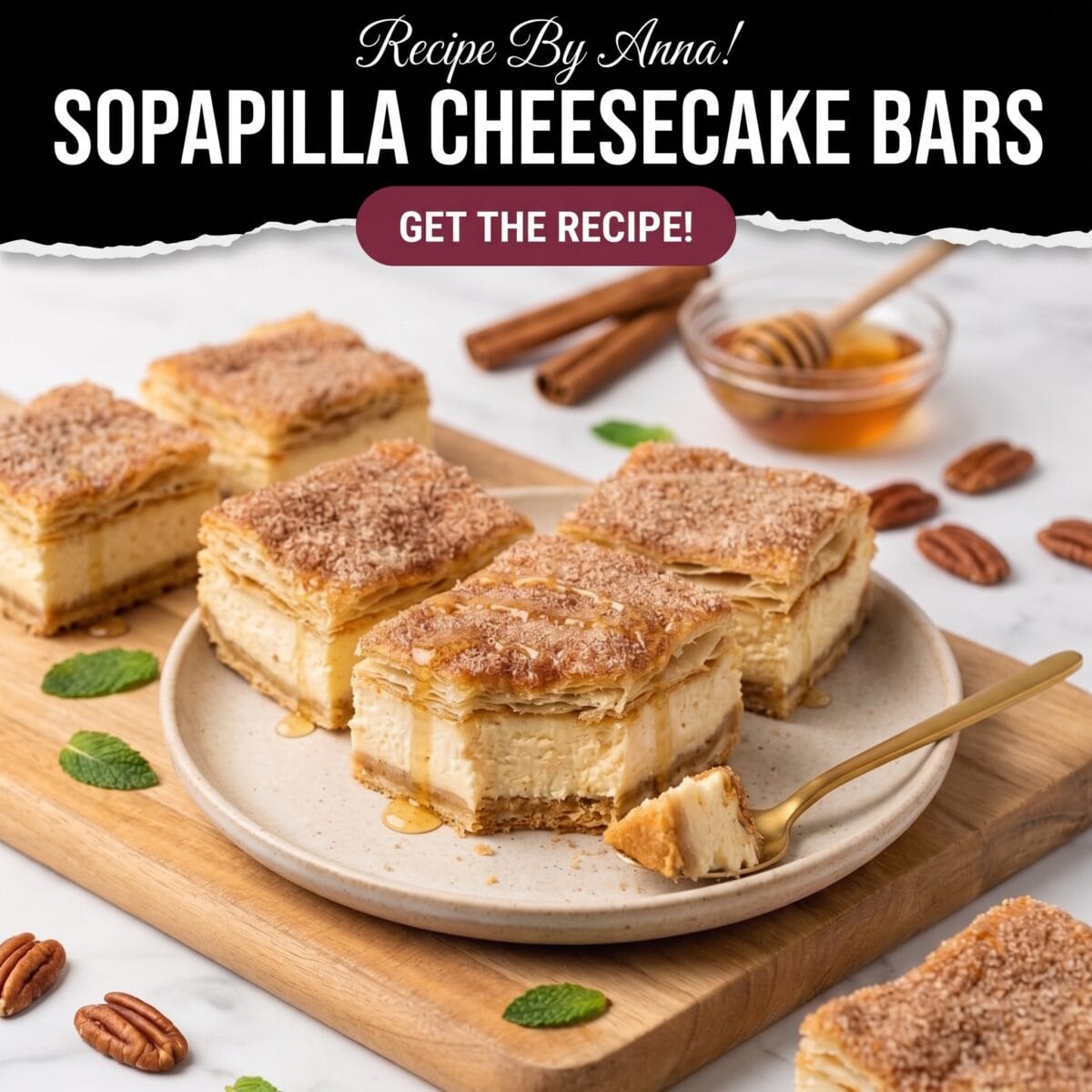
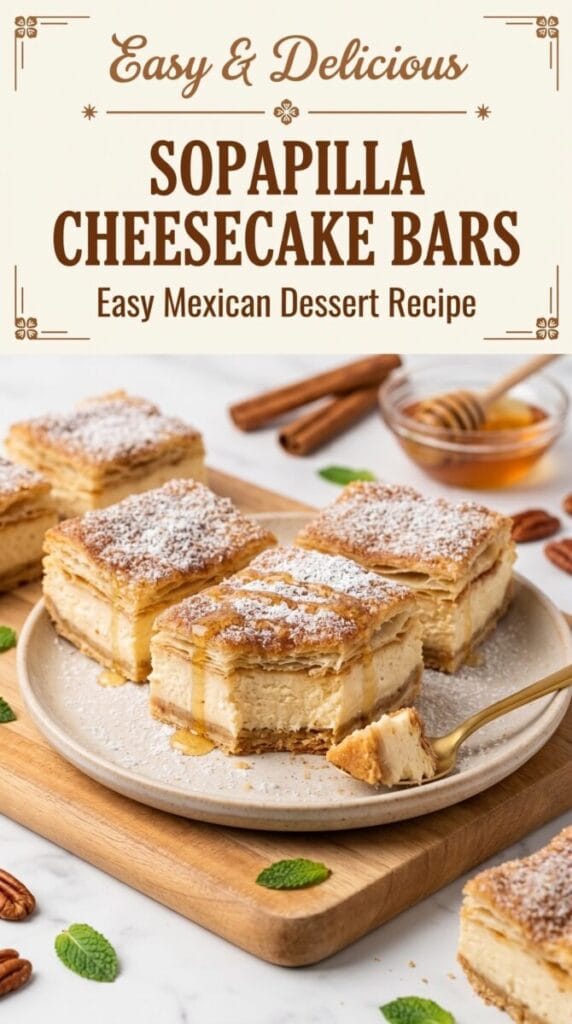
These Sopapilla Cheesecake Bars are the potluck recipe that always runs out first — layers of buttery, flaky crescent dough wrapped around a thick, vanilla cream cheese filling with a cinnamon sugar crust that caramelises in the oven into something simultaneously crispy, buttery, and almost caramel-like. They cut into clean bars, travel beautifully, and taste like a cross between a sopapilla, a cheesecake, and a cinnamon roll all convinced to become the same dessert.
The original sopapilla is a traditional fried pastry from New Mexico and throughout Latin America — light, hollow, and drizzled with honey after frying. The cheesecake bar version is an American Tex-Mex adaptation that borrows the cinnamon-sugar coating and the flaky dough character of the original but bakes everything into a layered bar that’s significantly easier to make for a crowd than deep-fried pastries. It’s the kind of recipe that starts with store-bought crescent dough and produces something that looks and tastes homemade and impressive.
The whole thing comes together in 15 minutes of prep and bakes in about 35 minutes — making it genuinely one of the fastest impressive desserts you can pull from an oven and cut into at a gathering.
Why These Disappear from Every Table They’re Set On
They hit three different textural experiences simultaneously — the flaky, buttery crescent dough on top and bottom, the dense, creamy cheesecake center, and the crunchy caramelised cinnamon sugar crust — which makes them more interesting to eat than a standard bar dessert where every bite is the same texture from first to last.
They’re also served at room temperature rather than warm or cold, which means they can be made hours ahead and cut into just before serving without any reheating logistics.
- Prep Time: 15 minutes
- Cook Time: 35 minutes
- Cooling Time: 30 minutes before cutting
- Total Time: 1 hour 20 minutes
- Yield: 24 bars from a 9×13 inch pan
What You Need
For the crescent dough layers:
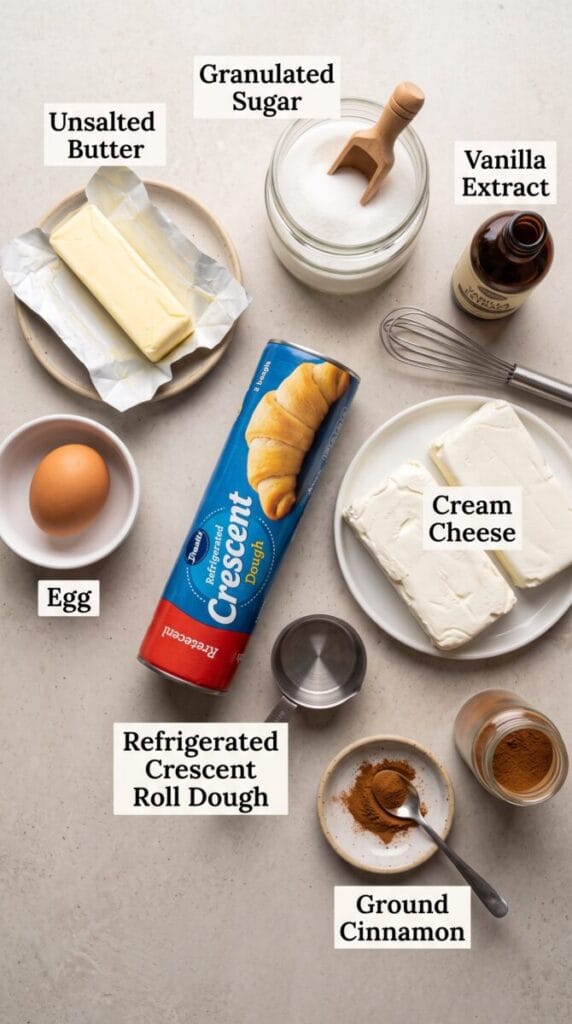
- Refrigerated crescent roll dough, full sheets (not pre-cut triangles — look for “seamless” or “dough sheet”): 2 cans (8 oz each)
- Unsalted butter, melted: 1/4 cup (56g)
For the cheesecake filling:
- Full-fat cream cheese, softened: 16 oz (two 8-oz bricks / 452g)
- Granulated sugar: 1 cup (200g)
- Pure vanilla extract: 1 1/2 teaspoons
- Large egg: 1
For the cinnamon sugar topping:
- Granulated sugar: 1/4 cup (50g)
- Ground cinnamon: 1 1/2 teaspoons
- Unsalted butter, melted: 2 tablespoons
How to Make Them
- Preheat the oven to 350°F (175°C) and grease a 9×13 inch baking pan generously with butter or non-stick spray — these bars are sticky from the cinnamon sugar and butter, so thorough greasing matters.
- Beat the softened cream cheese, sugar, vanilla, and egg together in a large bowl until completely smooth and no lumps remain — the egg gives the filling a slightly firmer, more sliceable set than cream cheese and sugar alone. Set aside.
- Unroll the first can of crescent dough and press it evenly into the bottom of the prepared pan, stretching it gently to reach all four corners and pressing any seams together to create a continuous sheet. If using seamless dough sheet, simply unroll and press it into an even layer.
- Brush the bottom dough layer evenly with half the melted butter (2 tablespoons).
- Pour the cream cheese filling over the buttered bottom dough layer and spread into an even, smooth layer with an offset spatula.
- Unroll the second can of crescent dough and carefully lay it over the cream cheese filling, again pressing any seams together and stretching gently to cover the filling completely to the edges of the pan.
- Brush the top dough layer with the remaining 2 tablespoons of melted butter.
- Stir the cinnamon and sugar together in a small bowl, then sprinkle evenly and generously over the entire buttered surface — do not be shy with the topping, it caramelises into a crust that is the defining characteristic of these bars.
- Bake for 30 to 35 minutes until the top is deep golden brown and the cinnamon sugar has caramelised into a slightly sticky, crispy crust that is darker than you might expect before you’ve made these before — pale bars are underbaked bars.
- Remove from the oven and let cool in the pan for at least 30 minutes before cutting — hot filling is too soft to cut cleanly and the cinnamon sugar crust needs time to set from its caramelised state into something that slices rather than shatters.
- Cut into 24 bars and serve at room temperature.
If you love easy bars and squares that are built on cream cheese and something buttery underneath, our Easy Box Mix Turtle Cake is the chocolate-caramel companion in the same spirit — both start with a simple base, build up in layers, and produce something that tastes more involved than the effort required.
Why These Work So Well When They’re So Simple
The crescent dough layers are the structural and textural backbone — they create the flaky, buttery pastry quality without requiring any pastry-making skill, and they bake into a genuinely laminated-style dough texture from the store-bought product when handled gently. The key is pressing the seams shut completely and not stretching the dough until it tears — a thin, even layer is what creates a consistent bottom and top rather than thick spots and holes.
The egg in the cream cheese filling is the stability ingredient — cream cheese and sugar alone produces a filling that is too soft to hold the top dough layer in place without sliding, while the addition of one egg sets the filling into a firmer, sliceable layer as it bakes. According to King Arthur Baking, the proteins in eggs coagulate during baking and create a network that holds a cream cheese filling in a stable, sliceable structure — the same principle that makes a classic baked cheesecake hold its shape, applied here at a smaller scale to a bar filling.
The cinnamon sugar topping caramelises rather than just sweetening during the high-butter, high-heat bake — the butter acts as a medium that transfers heat evenly to the sugar, producing a caramelised crust rather than a dry, powdery one. More butter on the top layer equals a better crust, which is why the recipe specifies the full amount rather than a light brush.
What to Serve Alongside Them
These bars are rich and sweet and work best alongside something that provides contrast — a scoop of vanilla ice cream on the side of a slightly warm bar is the simplest and most satisfying combination, where the cold ice cream against the warm cinnamon filling is exactly the contrast the richness needs.
For a full dessert spread at a gathering, our Irresistible Chocolate Cream Pie is the contrast dessert that works alongside these bars — the rich, cold chocolate cream against the warm, cinnamon-spiced cheesecake bars gives guests two genuinely different dessert experiences from the same table.
For a lighter option alongside the bars for guests who want something less rich, our Best Strawberry Spinach Salad with Feta served as a starter or light side keeps the table from feeling like every item is competing for the same sweet-and-rich register.
Variations That Take the Same Formula Further
Spread a thin layer of strawberry or raspberry jam over the cream cheese filling before laying on the top dough sheet for a fruit-forward version that adds brightness and acidity to cut through the richness — 1/4 cup of jam spread thinly is enough to flavour every bite without making the filling too wet to set properly.
Add 1/2 cup of mini chocolate chips scattered over the cream cheese filling for a chocolate-cinnamon cheesecake bar direction that makes these taste even more like something from a high-end bakery — the chocolate chips melt into the filling during baking and create pockets of richness throughout.
Drizzle 3 tablespoons of honey over the cinnamon sugar topping immediately after it comes out of the oven for the most direct nod to the original sopapilla — the honey soaks into the hot caramelised crust and sets into something sticky and deeply flavoured as the bars cool, which is worth the extra step if you want to lean into the origin.
For another cinnamon-forward bar dessert that uses a similarly layered approach, our Easy Apple Cinnamon Muffins share the same warm cinnamon sugar topping philosophy in a muffin format — a good companion bake for the same gathering where you want to offer two different cinnamon-spiced options from the same flavour family.
Nutritional Information
| Nutrient | Amount Per Bar (based on 24 bars) |
|---|---|
| Calories | 190 kcal |
| Protein | 3 g |
| Carbohydrates | 19 g |
| Fats | 11 g |
These values are estimates based on standard full-fat cream cheese and full-fat crescent dough, divided by 24 bars. Cutting into 20 larger bars increases each to approximately 230 calories. The values reflect an indulgent dessert bar honestly — these are not a low-calorie item, and the estimate is accurate rather than optimistic.
Storing These So They Stay at Their Best
Store cooled bars in an airtight container at room temperature for up to 2 days — the cinnamon sugar crust stays relatively crisp at room temperature, while refrigerating causes it to soften from the humidity of the fridge and lose the textural contrast that makes these bars worth making over a standard cheesecake.
After 2 days, refrigerate in an airtight container for up to 4 more days — let them come to room temperature for 20 minutes before serving so the cream cheese filling softens from its cold, dense state back toward its baked texture. The crust won’t be as crisp as fresh from the oven but the flavour remains excellent.
These bars freeze well — wrap individual bars in plastic wrap and freeze in a sealed bag for up to 2 months. Thaw at room temperature for 1 to 2 hours. The cinnamon sugar crust softens considerably through freezing and thawing but the filling texture holds well, and a brief 3 to 5 minute warming in a 300°F oven after thawing restores some of the crust’s original texture.
Mistakes That Produce Underbaked or Soggy Bars
Pulling the pan out when the top looks lightly golden rather than deep golden brown produces an underbaked bottom layer and a filling that hasn’t fully set — these bars need to bake to a genuinely deep golden colour, darker than most people’s instinct says is right for a baked dessert. The caramelised crust needs that heat and time, and underbaking is the most common reason these bars don’t cut cleanly.
Using crescent dough with pre-cut perforations rather than seamless sheets produces bars with gaps in both the top and bottom dough layers that allow the filling to seep through — look specifically for the “seamless sheet” or “dough sheet” variety where the can contains a single unperforated sheet rather than eight pre-scored triangles. Most stores carry both versions; the seamless sheet is the correct one for this recipe.
Cutting before the bars have had 30 minutes of cooling time causes the filling to flow rather than slice — the center of the pan in particular stays hot longest and needs the full cooling period to set from its baked state into something that holds a clean cut. An hour of cooling produces even cleaner results if you can wait.
Sopapilla Cheesecake Bars
Flaky, buttery crescent dough layered with a rich vanilla cream cheese filling and topped with a generous, caramelized cinnamon-sugar crust. The ultimate crowd-pleasing dessert!
Ingredients
Instructions
Preheat your oven to 350°F (175°C). Generously grease a 9×13-inch baking pan with butter or nonstick cooking spray.
In a large mixing bowl, beat the fully softened cream cheese, granulated sugar, vanilla extract, and egg until completely smooth, creamy, and free of lumps.
Unroll one can of crescent dough and press it evenly into the bottom of the pan, stretching it gently to reach the corners. Brush this bottom layer evenly with 2 tablespoons of melted butter.
Pour the cream cheese mixture over the bottom dough layer. Use an offset spatula or the back of a spoon to spread the filling into one even layer.
Carefully unroll the second crescent dough sheet and place it over the cheesecake filling. Gently stretch it to cover the entire surface and lightly press the edges into place.
In a small bowl, combine the ¼ cup granulated sugar and ground cinnamon. Sprinkle this mixture generously and evenly over the buttered top layer.
Bake in the preheated oven for 30–35 minutes, or until the top is deep golden brown and the cinnamon sugar has slightly caramelized into a crust.
Remove from the oven and allow the bars to cool in the pan for at least 30 minutes. The cheesecake filling will continue to set as it cools.
For a traditional sopapilla touch, drizzle about 3 tablespoons of honey over the bars while they are still warm. Cut into 24 squares and serve!
Kitchen Notes
Look for the cans labeled “crescent dough sheets” instead of crescent rolls. They come out in one solid piece! If you can only find rolls, be sure to pinch all the perforations together tightly.
Make absolutely sure the cream cheese is fully softened to room temperature before mixing, or your filling will have little white lumps of unmixed cheese.
Don’t underbake these bars. You want the top to be a deep, dark golden brown so the cinnamon sugar caramelizes into that signature crispy, buttery crust.
These bars slice best when completely cooled (after about 1 hour). Use a sharp knife and wipe it clean with a paper towel between every cut.
Delicious Variations
Spread ½ cup of finely chopped, lightly sautéed apples mixed with ½ tsp cinnamon over the cream cheese layer before adding the top dough.
Sprinkle ½ cup of mini chocolate chips evenly over the cream cheese filling before sealing with the top dough layer.
Sprinkle ½ cup of finely chopped pecans over the cheesecake filling to add a wonderful crunch to the center.
Spread ¼ cup of strawberry or raspberry jam thinly over the cheesecake filling for a fruity surprise.
Store cooled bars in an airtight container at room temperature for up to 2 days.
For longer storage, keep them in the refrigerator for up to 5 days. They taste fantastic chilled!
Wrap cooled bars individually in plastic wrap and freeze for up to 2 months. Thaw at room temperature before serving.
Recommended Kitchen Tools for the Crispest, Cleanest Bars
While these bars are famously easy to assemble, a few key tools make handling sticky crescent dough, getting a lump-free cheesecake center, and slicing clean squares completely effortless:
1. Stand Mixer or Electric Hand Mixer
Cream cheese needs thorough beating to blend smoothly with the sugar, egg, and vanilla. A hand or stand mixer aerates the filling and eliminates all tiny lumps so it bakes into a silky, uniform cheesecake center.
Check Price on Amazon2. Silicone Pastry Brush
Brushing melted butter evenly over raw crescent dough can tear fragile dough sheets if you use a stiff bristle brush. A flexible silicone pastry brush glides over the surface effortlessly without pulling or tearing the layers.
Check Price on Amazon3. Offset Spatula
Spreading dense cream cheese over raw, sticky dough without dragging the bottom layer along with it is tricky. A small metal offset spatula gives you precise control to level the filling into an even layer all the way to the corners.
Check Price on Amazon4. Pastry Scraper or Bench Knife
Getting a tight, seamless bottom crust without tearing requires a gentle hand. A bench knife helps lift, align, and press the unrolled dough sheets into the sharp corners of your 9×13 pan.
Check Price on Amazon5. Long Chef’s Knife or Bench Cutter
The caramelised cinnamon-sugar crust can shatter if cut with a dull or serrated blade. A sharp, long chef’s knife wiped down with a warm, damp cloth between cuts slices through the crust and set cream cheese filling for picture-perfect, clean-edged bars.
Check Price on Amazon