Moroccan Cauliflower with Tahini-Honey
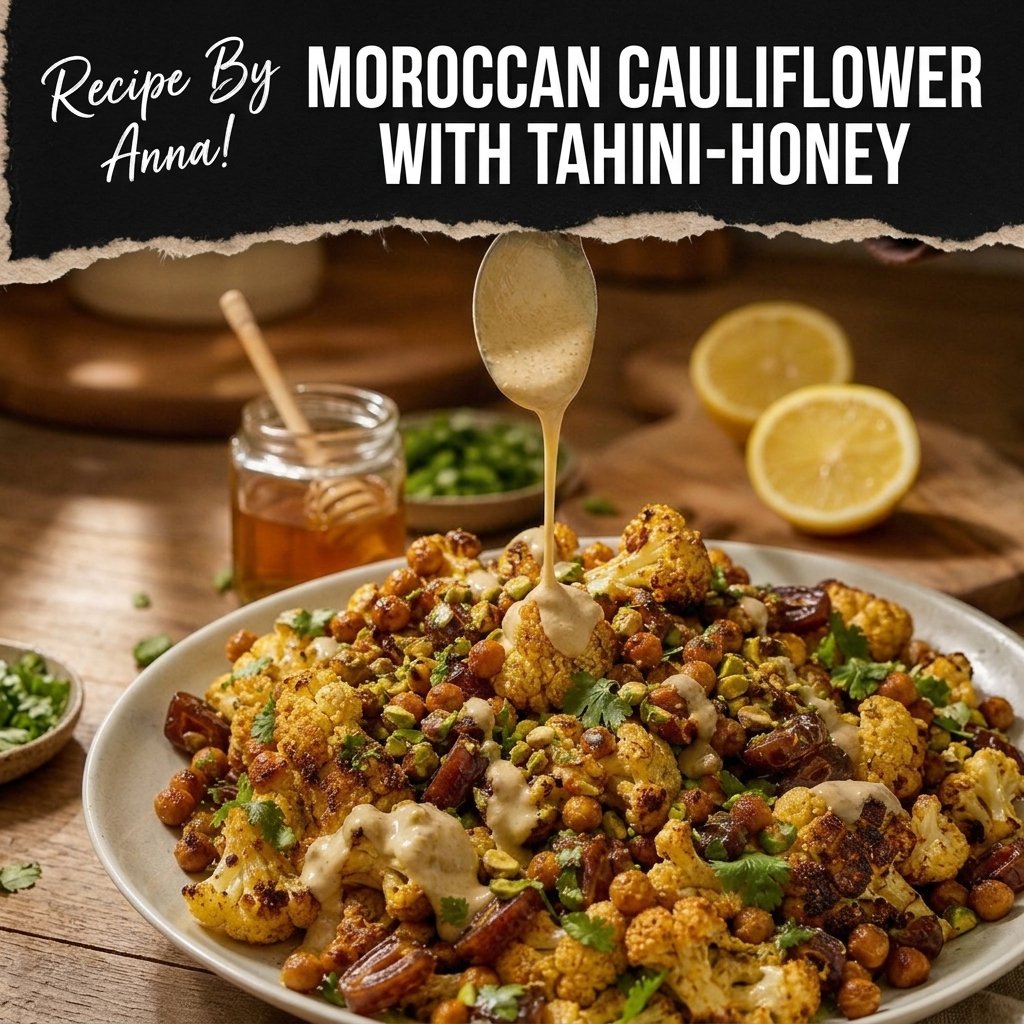
This is the dish I make when I want vegetables to be the loudest thing at the table. A head of cauliflower gets cut into florets with a flat face on each one, tossed in warm oil that’s been bloomed with cumin, coriander, smoked paprika, turmeric, and cinnamon, and roasted at 425 until the flat faces go deeply charred and sweet. A can of chickpeas rides along on the same sheet pan and comes out crisp. Then the whole thing gets drizzled with tahini-honey sauce — the kind that’s silky and pourable and tastes like sesame and lemon and warm honey — and scattered with chopped dates, green pistachios, and herbs. It eats like a warm Moroccan salad, it looks like a treasure chest, and it takes about forty minutes, most of which is the oven’s problem.
The internet’s version of this dish, and there are many, all make the same two mistakes, and fixing them is the whole recipe. The first is pale cauliflower — florets crowded onto a pan, steaming in their own moisture instead of charring, arriving at the table the color of a blank page. Char is not an accident here; it’s the flavor. Cauliflower is mild and slightly sweet on its own, and high heat is what turns that sugar nut-brown and interesting. The second mistake is the sauce. Tahini has a famous dark secret: pour water into it and it seizes — it tightens into a grainy clay that looks absolutely ruined, and this is where people panic, add more water in a flood, and end up with either paste or soup. The truth is that the ugly stage is a stage. Keep whisking, add the water slowly, and the clay suddenly relaxes into a sauce smoother and creamier than anything with no cream in it has a right to be. Tahini-honey sauce that’s gone through its crisis properly will change how you think about tahini.
What makes this version mine is the build. The chickpeas turn the side dish into a legitimate vegetarian main with real protein and crunch. The dates bring a chewy sweetness against the smoke that is very Moroccan — sweet, savory, and warm spice in the same bite is the entire personality of the cuisine. The pistachios add green and crunch, the herbs add a fresh top note, and the lemon zest at the end wakes all of it up. Serve it from the platter as a side, or spoon it over couscous or quinoa and call it dinner, which in my house is what usually happens. Let me walk you through the two techniques — the char and the sauce — and then the assembly is just decoration with good taste.
The Char Case
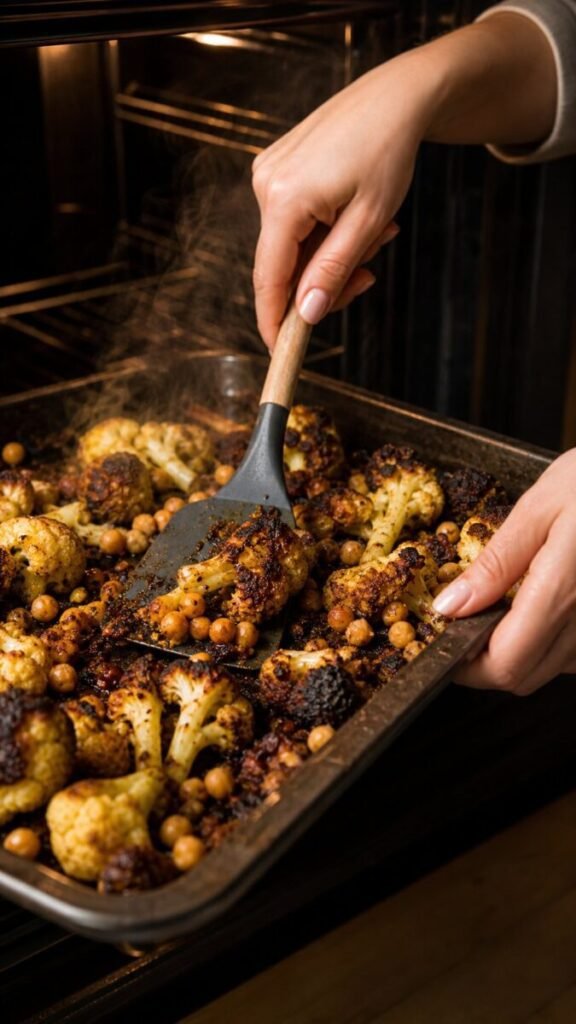
The argument for charred cauliflower is a chemistry argument, and it’s a convincing one. Raw cauliflower tastes faintly cabbage-y because of sulfur compounds it keeps in storage; a gentle steam does nothing about them except make them louder. High, dry heat does two things at once: it drives off the moisture that dilutes flavor, and it kicks off the Maillard reaction — the same browning that makes toast and seared steak taste like themselves — which builds hundreds of new flavor compounds out of the cauliflower’s own sugars and proteins. A pale floret is a raw floret wearing perfume. A charred floret is sweet, nutty, and caramelized at the tips, and it holds its texture instead of going waterlogged. This is why the recipe insists on a hot oven, a single uncrowded layer, and flat-cut florets laid face-down: every one of those rules exists to put a flat face of cauliflower in hard contact with hot metal for a long, unbothered stretch. Crowding breaks the whole system — one pan edge to edge of florets traps steam, and steamed cauliflower can’t char until the water’s gone, by which time you’ve waited forty minutes for beige.
The chickpeas on the same pan follow the same physics with a different ending. A chickpea is a starch-and-protein marble with skin on it; roasted hot and dry, the skin crisps, the interior turns creamy and a little chewy, and the spices on the surface toast into a crust. The two non-negotiables are dryness and space — chickpeas straight from the can are wet, so they get rolled in a towel first (the loose skins that come off in the towel are a small loss and nobody misses them), and they get the emptier half of the pan so their steam has somewhere to go. Wet, crowded chickpeas stay pale and mealy, which is how chickpeas get their unfair reputation. Given the same char treatment as the cauliflower, they become the reason people fight over the pan’s corner pieces.
The spice bloom is the last piece of the flavor argument, and it’s the step most recipes skip. Spices are aromatic oils locked in dry form, and those oils are fat-soluble — a spoonful of cumin stirred cold into oil gives you about half of what it has. Warm the oil first, stir the spices in for forty-five seconds off the heat, and the aromatics bloom out into the fat, which then carries them onto every floret in the toss. You’ll smell the difference the moment it happens: the kitchen suddenly goes from “oil” to “Morocco.” It costs one small saucepan and forty-five seconds, and it is the single highest-return step in the recipe.
⏱️ 40 MINUTES | 🍯 SERVES 6 (4 AS A MAIN) | 🔥 ONE SHEET PAN, 425°F
- Prep Time: 15 minutes — cutting, drying, blooming, tossing
- Roast Time: 25 to 30 minutes, one turn
- Sauce: 5 minutes, whisked while the pan works
- Total Time: about 40 minutes
- Yield: a platter for 6 as a side, dinner for 4 over grains
The Sheet Pan Ruling
The kit is short, and one piece of it matters more than the rest:
- A large, dark sheet pan — the heaviest one you own. Dark metal absorbs heat and gives it back to the florets; flimsy light pans warp and steam. If your best pan is small, use two pans rather than crowding one — the recipe would rather wash an extra dish than serve pale cauliflower.
- Parchment, optional and honest — it makes cleanup easier and costs you a little browning on the flat faces. I use it on weeknights and skip it for company. Direct metal chars better; parchment sticks less. Both are defensible, and now you know the trade.
- Small saucepan — for blooming the spice oil
- Large mixing bowl — the toss happens here, florets and chickpeas together
- Clean kitchen towel or paper towels — the chickpeas’ drying station
- Whisk and a small bowl — the tahini sauce’s entire studio
- Microplane or fine grater — for the garlic and the lemon zest
- A big platter — this dish earns presentation, and a rimmed platter holds the sauce where you want it
One ruling on the cauliflower itself: buy the plain white head. Purple and orange heritage cauliflowers are lovely at the farmers market and they roast the same, but the flavor differences are a rumor, and the sauce looks best against the pale-gold of well-charred white florets. Size matters more — a large head, around two and a quarter pounds, is the right amount against a can of chickpeas. And check the cut end of the core at the store: it should look tight and ivory, not browned or speckled, because a tired core means tired florets no matter how good the spice oil is.
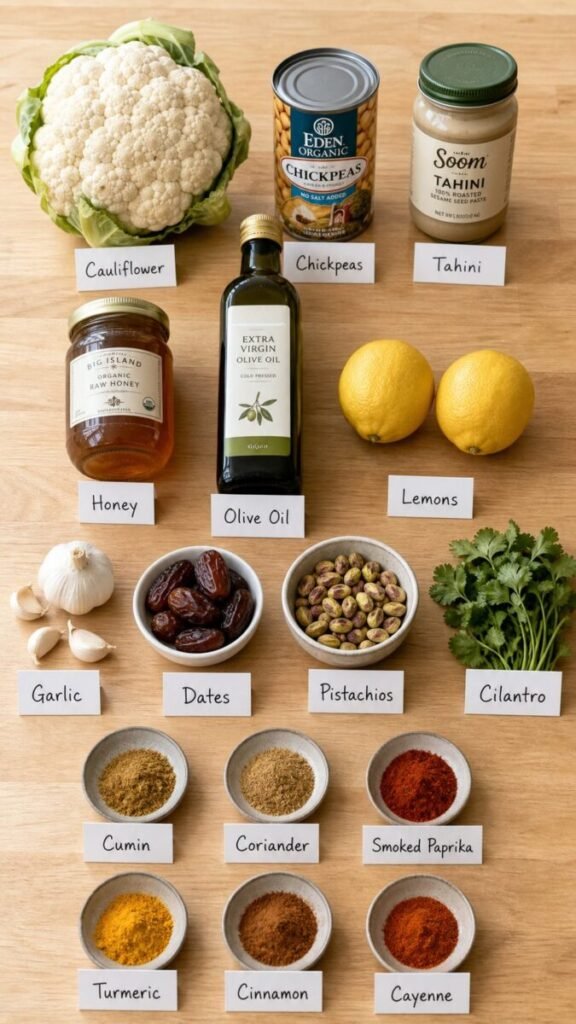
Ingredients (With Labels)
🥦 The Pan
- Cauliflower: 1 large head, about 2¼ lbs
- Chickpeas: 1 can (15 oz), drained, rinsed, and dried
- Olive oil: 3 tablespoons
🌶️ The Moroccan Spice Oil
- Ground cumin: 2 teaspoons
- Ground coriander: 1½ teaspoons
- Smoked paprika: 1½ teaspoons
- Turmeric: ½ teaspoon
- Cinnamon: ½ teaspoon
- Cayenne: ¼ to ½ teaspoon, by courage
- Salt: ¾ teaspoon, plus more for the sauce
🍯 The Tahini-Honey Sauce
- Tahini: ⅓ cup, well stirred
- Honey: 2 tablespoons, plus extra for the finish
- Lemon: 1 large — juice and zest, divided
- Garlic: 1 small clove, grated to a paste
- Warm water: 3 to 5 tablespoons
✨ The Treasure
- Dates: 4 large, pitted and chopped
- Pistachios: ⅓ cup, toasted and coarsely chopped
- Fresh cilantro and parsley: ¼ cup combined, chopped
Step by Step How to Make
- Step 1 — Cut and dry. Heat the oven to 425°F with the rack in the lower-middle position. Core the cauliflower and cut it into florets roughly an inch and a half across — and here’s the flat-face rule: rather than lopping off little trees, split each floret so it has one flat cut side, because a flat face against hot metal is where the char happens, and rounded surfaces touch the pan at a point and char nowhere. Keep the pieces similar in size or the small ones will burn while the big ones sulk. Drain the chickpeas, rinse them, and roll them vigorously in the towel until the towel comes away dry — wet chickpeas steam, and steamed chickpeas never crisp. Everything is now dry, which sounds like a small accomplishment and is actually the whole foundation.
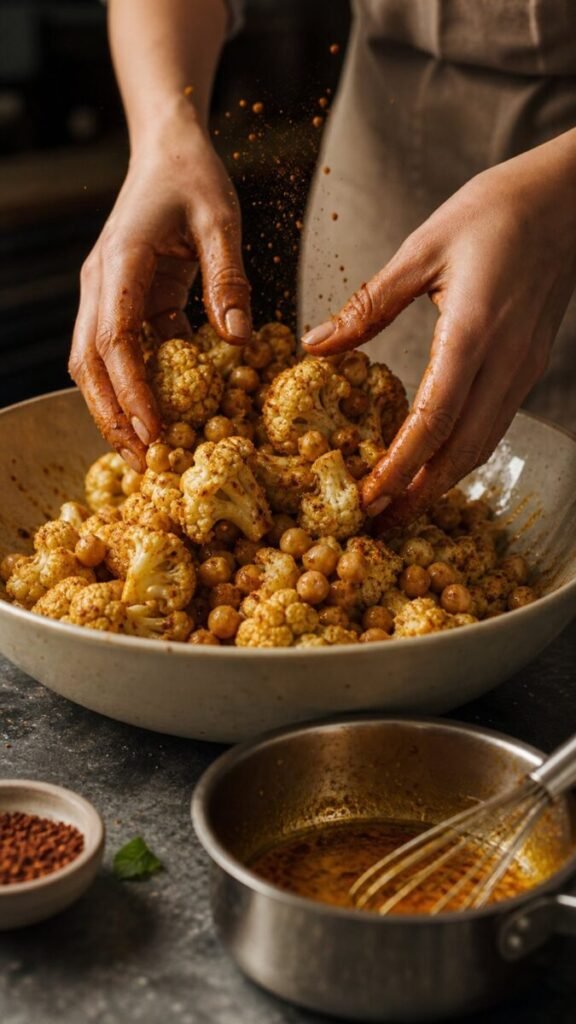
- Step 2 — Bloom and toss. In the small saucepan, warm the olive oil over medium heat until it thins and shimmers — not smoking, just loose. Pull it off the heat, add all the spices and the salt, and stir for forty-five seconds; the mixture will darken slightly and the kitchen will change its mind about what country it’s in. Let it cool a minute, then pour it over the cauliflower and chickpeas in the big bowl and toss with your hands — hands are the right tool, because you’re checking for full coverage on every flat face, and spoons leave bare spots you’ll discover later as pale patches. The florets should look gilded and determined. Onto the pan they go, cut faces down, chickpeas filling the gaps but not burying them, and anything that doesn’t fit in a single layer waits for a second pan or gets eaten raw by the cook as a form of quality control.
- Step 3 — The roast. Roast 15 minutes without opening the door — no peeking, no stirring, because the first long undisturbed stretch is when the flat faces build their crust. Then take the pan out, turn everything with a spatula, scraping up any stuck bits of spice (they’re the best bits), and rotate the pan front to back. Back in for 10 to 15 more minutes, until the florets are deeply browned at the tips and edges — actual char in places, black-flecked, unembarrassed — and the chickpeas have shrunk slightly and rattle a little when the pan shakes. The doneness test is color, not the clock: if it’s pale, it needs more time, and the oven will not be offended by five extra minutes.
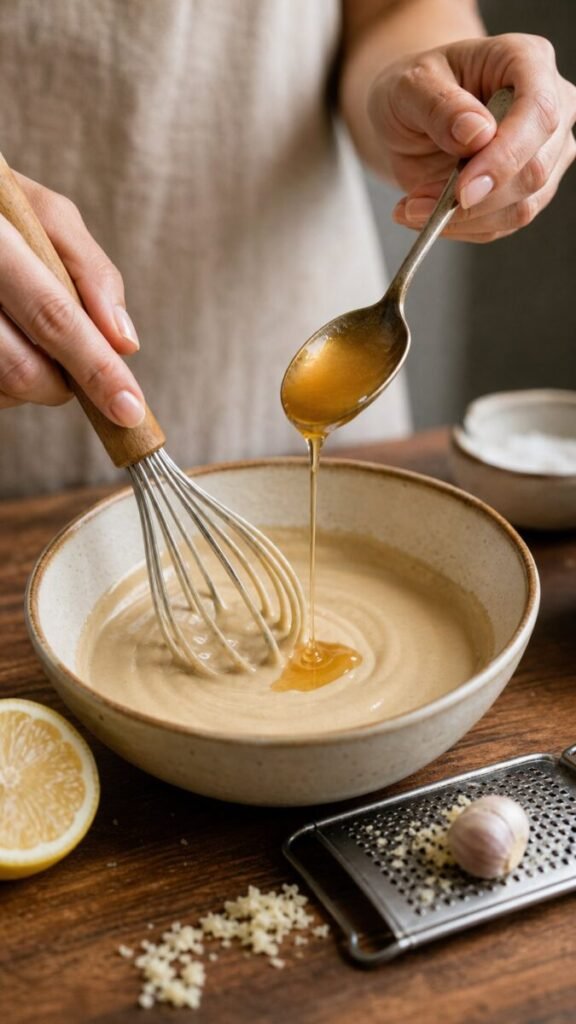
- Step 4 — The sauce. While the pan works, make the tahini sauce and make it without fear. In the bowl, whisk the tahini, honey, the lemon juice, the grated garlic, and ¼ teaspoon of salt — it will come together into a thick paste, and then, when you add the first spoonful of warm water, it will seize into a grainy, clotted clay that looks precisely like a mistake. This is the famous tahini crisis, and the correct response is calm. Keep whisking and add the warm water one tablespoon at a time, and somewhere around the third or fourth, the clay will let go all at once and turn pale, glossy, and pourable, like thin yogurt. That’s the moment you stop. Taste: it should be nutty, tangy, a little sweet, and saltier than seems right, because it’s about to meet a mild vegetable. Squeeze in more lemon if it tastes flat — tahini loves lemon the way peanut butter loves jam.
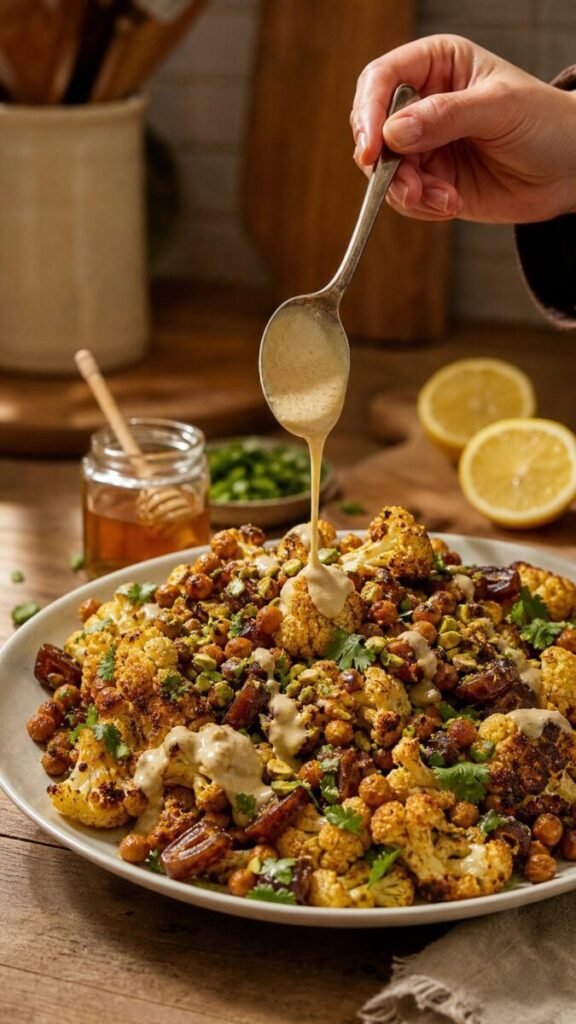
- Step 5 — The platter. Pile the hot cauliflower and chickpeas onto the platter — hot matters, because a hot surface grips the sauce instead of letting it pool. Spoon or drizzle about two-thirds of the tahini sauce over it, letting it fall into the crags, then scatter the chopped dates, pistachios, and herbs over everything with a free hand. Zest the lemon directly over the platter — the zest is the smell of the dish, and it lands last on purpose — then finish with a thin thread of honey back and forth and a pinch of flaky salt. Stand back and admire it, briefly, because it will never look better than right now.
- Step 6 — The build. As a side, serve it warm, with the rest of the sauce on the table for people who want more, and someone always wants more. As a main, spoon couscous or quinoa into bowls, pile the cauliflower over it, and add a spoonful of sauce and an extra scatter of herbs — the grains drink the sauce and the lemon, and dinner is done. The dish is also genuinely good at room temperature, which makes it a potluck dish wearing a side dish’s clothes. However you serve it, the last bite should have char, chew, cream, and a piece of date in it — so build your final forkful accordingly, and consider yourself advised.
Warm spices and a hot oven — the roasted Mediterranean Greek vegetables are this dish’s Greek cousin, the same technique with a different spice map.
Anna’s Kitchen Notes
Stir the tahini jar from the bottom before you measure. Tahini separates in the jar — oil on top, dense sesame paste below — and a scoop from the top of an unstirred jar is mostly oil, which makes a broken, greasy sauce. Take a butter knife and stir the whole jar until it’s one uniform color, then measure. If your jar has gone fully solid at the bottom, ten seconds in the microwave softens it into cooperation. This one minute of jar maintenance is the difference between a sauce that behaves and one that argues.
The water temperature matters. Cold water makes tahini seize harder and longer; warm water loosens it. Not hot — boiling water can cook the sauce and make it grainy in a way no amount of whisking fixes — but comfortably warm, the temperature you’d use for yeast. I warm mine in the kettle for thirty seconds with the switch off. Add it a tablespoon at a time even when you’re confident, because the sauce goes from clay to pourable within the space of one tablespoon too many, and there’s no going back without adding more tahini.
Dates, and what to do without them. Medjool dates are the right ones — soft, caramel-dark, worth the extra dollar. Chop them small, around the size of the pistachio pieces, so no bite gets a whole date’s monopoly on sweetness. No dates? A handful of golden raisins soaked in warm water for five minutes does the same job, or skip the fruit entirely and let the honey drizzle carry the sweetness on its own — the dish loses a little texture drama but none of its argument.
The pistachios toast while you chop. Five minutes in a dry skillet over medium, shaking, until they smell like they mean it — raw pistachios in a finished dish taste like a suggestion, and toasted ones taste like a decision. If your pistachios come pre-roasted and salted, skip the toasting and cut the sauce salt back by a pinch. And if pistachios are a budget stretch, toasted almonds are the traditional swap and nobody at the table files a complaint.
Leftovers are lunch, and that’s a promise. The charred florets keep three days in the fridge and make an excellent cold-ish grain bowl topper — the chickpeas soften a little and the spices mellow, and it works. Store the sauce separately and re-whisk it with a splash of warm water on day two, because tahini sauce tightens in the fridge and needs one minute of whisking to remember what it is. Do not re-roast the leftovers to re-crisp them; they’ll dry out. They’ve already had their moment of glory, and lunch is a humbler, happier job.
The Mezze Table
This dish walks into a meal and starts making friends. The Turkish ezme is the raw, sharp, tomato-chili counterpoint that a warm spiced platter wants next to it — the same map, opposite temperature. And the chickpea feta avocado salad shares the chickpea gene and adds cool and creamy to the plate.
For a fuller spread: the veggie Mediterranean roasted chickpea bowl is this recipe’s weeknight sibling, and the chili lime chickpea cauliflower wraps are the same two ingredients on a completely different vacation — wrap a scoop of this platter in a warm flatbread with the sauce and you’ll see how close the two recipes secretly are. And if dinner is heading somewhere warmer, the sweet potato and chickpea curry takes the same sweet-spiced instincts and simmers them into a pot.
Same Sheet, Other Vegetables
The carrot and chickpea pan. Carrots cut on the bias, same spice oil, same chickpeas — sweeter, prettier, and the char on a carrot edge is a small marvel. The dates are not optional on this version; they belong to the carrots the way they belong to tagines.
The winter squash build. Cubed butternut or delicata squash instead of cauliflower, cinnamon nudged up to a full teaspoon, and the roast runs five minutes longer. The squash caramelizes into something close to dessert while still being a vegetable, and the tahini-honey sauce was, frankly, invented for it.
Brussels sprouts, halved hard. The flat-face rule loves Brussels sprouts — halve them through the core and put the cut side down, and they char into the version that converts sprout skeptics. Same pan time as cauliflower, slightly smokier attitude.
The harissa route. Whisk a teaspoon of harissa paste into the tahini sauce for a smoky, chili-forward version that turns the whole platter North African-hot. Add it with the lemon and taste before adding more — harissa strengths vary wildly from jar to jar, and the sauce should tingle, not shout.
The vegan conversion. Maple syrup for the honey, one-for-one, and everything else in the recipe is already plant-based — the sauce is the only animal product in the building. The maple reads slightly woodier than honey and works beautifully with the tahini, so this is one conversion that costs nothing.
The full dinner plate. Roast the cauliflower alongside chicken thighs on the second pan-rack — the chicken renders fat that the spices love, both pans come out together, and dinner has assembled itself. Lamb chops are the traditional partner; a spiced lamb chop beside this platter is a Moroccan restaurant opening in your kitchen, minus the corkage.
The Fiber Story
| Nutrient | Per Serving (1 of 6) |
|---|---|
| Calories | 310 kcal |
| Protein | 8 g |
| Carbohydrates | 30 g |
| Fats | 18 g |
Estimates as written, sauce, dates, and pistachios included. The quiet headline here is fiber — cauliflower, chickpeas, dates, and pistachios together put roughly a third of a day’s fiber on the plate in a side dish, which is the kind of number usually reserved for cereals that taste like punishment. The protein runs eight grams as a side and doubles when the platter becomes a main over grains with the full sauce, and the fats are the good-company kind: olive oil and sesame, the two oils the Mediterranean diet has been quietly recommending for a few thousand years. Over couscous as a dinner, count on four generous bowls at around 460 calories each — a vegetarian main that fills people up without the heaviness afterward, which is my favorite kind of full.
The Day-Two Plate
Storage is simple because the dish was designed for it. Leftovers keep three days covered in the fridge — florets and chickpeas together is fine, but the sauce lives in its own jar and gets re-whisked with a splash of warm water before it goes anywhere. The dish is excellent the next day at room temperature over grains, or as the filling of a very good flatbread wrap with a smear of the sauce and a few extra herbs — in my house, day-two wraps are half the reason the platter gets made.
The oven is the only reheat worth the name if you want the char back: ten minutes at 425 on a pan brings the edges back to something close to their first-night selves. The microwave softens everything into warm-and-friendly, which is acceptable for lunch and never for guests. As for making the whole thing ahead — the sauce can be made up to three days in advance and stored in the fridge, the spices can be bloomed into the oil a day ahead, but the cauliflower itself belongs to the day it’s served; roasted cauliflower waits for no one, and it shouldn’t have to.
Second careers for the components: leftover tahini sauce is tomorrow’s best sandwich spread, a dip for raw vegetables, or a dressing thinned with one more splash of warm water over any grain bowl. Extra spiced chickpeas are a snack that barely survives the cooling rack. And if there’s a spoonful of sauce left at the bottom of the bowl after all that, it goes on toast with a pinch of salt, which is less a second career than a cook’s privilege, quietly earned.
Where It Goes Wrong
Pale, soggy florets. The pan was crowded, the florets were wet, or the oven was mild-mannered. Char needs dry surfaces, space, and real heat — 425 on a dark pan, single layer, flat faces down, and the patience to leave them alone for the first fifteen minutes. If your oven runs cool or your pan is light-colored, add five minutes and move the rack down. Color is flavor, and in this recipe you can literally see whether you got it.
A seized, grainy sauce that never came back. The water went in too fast, or it was cold. The rescue is patient: keep whisking, add warm water one tablespoon at a time, and the clay will release — usually by the fourth spoonful. If you’ve flooded it past pourable into watery, whisk in another spoonful of tahini to pull it back. The sauce is fixable from both directions, which is why the crisis should never cost anyone their composure.
Burnt spices, bitter pan. The oil was too hot when the spices went in, or the bloom went on too long — spices scorched in oil turn bitter and stay bitter. Warm the oil until it thins, off the heat, then forty-five seconds, no more. If the bloom smells sharp or acrid rather than fragrant, start over with fresh oil; it’s three tablespoons, and the rest of the recipe deserves better.
Soggy chickpeas. They went in wet, or the pan was crowded on their half. Roll them in the towel until it comes away dry, give them the roomier end of the pan, and accept that they finish crispier on night one than they’ll ever be again — a chickpea’s crisp is a young person’s game. They’re still delicious when they settle, just in a softer, chewier register.
A bland platter despite good char. Usually a seasoning-order problem: the salt went into the sauce but not onto the vegetables, or the lemon got skipped. Salt the florets in the spice oil, salt the sauce generously, and don’t skip the zest and the final flaky salt — the platter is built in layers, and the last layer is what the first bite tastes like. Flat despite all that? More lemon juice in the sauce. Acid is the missing note far more often than salt.
The honey disappeared. It was stirred into the sauce and nothing came back at the end — and the drizzle matters, because the warm honey against the smoky char is the specific pleasure this dish is named after. Keep the two tablespoons for the sauce and run a separate thin thread over the finished platter. The sauce provides cream and sesame; the final thread provides the shine and the smell. They’re different jobs, and the dish wants both done.
Spice Rack Questions
Can I use ras el hanout instead of the individual spices?
Absolutely — ras el hanout is the Moroccan house blend, and a rounded tablespoon of it replaces the cumin through cinnamon in one spoonful. Toast it in the warm oil exactly the same way. The flavor will be slightly more mysterious than the measured version, which some people prefer and no one can prove. If your blend already contains salt, hold back a pinch on the florets.
My tahini sauce seized. Is it ruined?
No — it’s right on schedule. Tahini seizes because ground sesame is packed with protein and oil, and the first splash of water makes the proteins clump before the emulsion flips to smooth. Keep whisking and add warm water a tablespoon at a time; between the third and fifth spoonful it turns glossy and pourable all at once. Cold water and floods of water make the stage last longer. The full story, and the fixes from both directions, are in the mistakes section above.
Can I make this with frozen cauliflower?
I’d rather you didn’t. Frozen cauliflower is blanched before freezing, so it carries extra water and a softer structure, and it roasts into something damp and floppy where fresh florets char. If frozen is what exists, thaw it fully, squeeze and pat it bone-dry, and expect roast-flavored cauliflower rather than charred — the sauce and the toppings will still carry the dish, but the star will have understudied.
What do I do if I don’t have tahini?
Sunflower seed butter is the closest stand-in for color and behavior, and natural peanut butter works with a completely different but enjoyable personality — expect the sauce to taste more Southeast Asian than Moroccan, which is not a tragedy. Thinned plain yogurt with a spoonful of sesame oil is the lighter route. In all cases the seize-and-whisk science still applies, more or less loudly.
Is this dish vegan?
Almost — honey is the only animal product in it, and maple syrup swaps in one-for-one to close the gap. Everything else, from the spice oil to the tahini to the chickpeas to the toppings, is already plant-based, which makes this one of the easiest conversions in the rotation. The maple-tahini combination is genuinely its own good idea, not a consolation prize.
How spicy is it?
As written, gently warm — a quarter teaspoon of cayenne reads as background heat that most kids and spice-averse uncles will accept. The half teaspoon makes itself known. And if you’re serving a table with real chili-lovers, the harissa route in the variations puts the heat in the sauce instead of the roast, so people can season their own bowls at the table, which is diplomacy in dinner form.
Can I prep any of it ahead?
Yes, in parts. The sauce keeps three days in the fridge and wants a re-whisk with warm water before serving. The spice oil can be bloomed a day ahead and stored in a jar — warm it for ten seconds before tossing so it pours. The cauliflower can be cut and the chickpeas dried in the morning. But the toss and the roast belong to serving day, because cut cauliflower dulls over days and char does not keep. The assembly is ten minutes; the make-ahead shelf holds everything except the moment.
Moroccan-inspired spices · Sweet dates · Creamy sesame sauce
Moroccan Cauliflower with Tahini-Honey
Deeply browned cauliflower and roasted chickpeas tossed in warm spices, drizzled with lemony tahini-honey sauce, and finished with dates, pistachios, and fresh herbs. Serve as a generous vegetable side or over grains for dinner.
As an Amazon Associate I earn from qualifying purchases.
Ingredients
The roasting pan
- 1 large head cauliflower, about 2¼ lb before trimming
- 1 can (15 oz) chickpeas, drained, rinsed, and thoroughly dried
- 3 tablespoons olive oil
The warm spices
- 2 teaspoons ground cumin
- 1½ teaspoons ground coriander
- 1½ teaspoons smoked paprika
- ½ teaspoon turmeric
- ½ teaspoon ground cinnamon
- ¼–½ teaspoon cayenne pepper, to taste
- ¾ teaspoon fine salt
The tahini-honey sauce
- ⅓ cup tahini, stirred thoroughly before measuring
- 2 tablespoons honey, plus a little extra for finishing if desired
- 1 large lemon, zest reserved and juice added to taste
- 1 small garlic clove, finely grated
- 3–5 tablespoons warm water, or as needed
- Up to ¼ teaspoon fine salt, to taste
The toppings
- 4 large Medjool dates, pitted and chopped small
- ⅓ cup toasted shelled pistachios, coarsely chopped
- ¼ cup chopped fresh cilantro and parsley, combined
- A small pinch flaky salt, optional and only if needed
- Cooked couscous or quinoa, optional, for main-course bowls
Measure the lemon gradually: start the sauce with 2 tablespoons juice, then add more to taste. Tahini brands and lemon sizes vary, so the final amount of water may fall outside the suggested range.
The roasting kit
- Large, heavy rimmed sheet pan, plus a second if needed for space
- Parchment rated for at least 425°F, optional
- Small saucepan, for the spice oil
- Large mixing bowl and small sauce bowl
- Clean kitchen towel or paper towels
- Whisk and spatula
- Cutting board and sharp knife
- Measuring cups and spoons
- Fine grater or zester
- Rimmed serving platter and oven mitts
Space matters more than pan color: sturdy light-colored metal pans also roast well. A large head of cauliflower plus chickpeas may need two pans. Dark pans brown faster, so check early for scorching.
Set realistic crunch expectations: chickpeas roasted alongside moisture-releasing cauliflower may be crisp at the edges and chewy inside rather than crunchy throughout. Sauce softens them further; dress the platter just before serving.
Stir the tahini first: mix the separated oil and dense sesame paste until uniform before measuring. Thickening after lemon juice or water is normal and does not mean the sauce is ruined. Cold water can also work; gradual adjustment matters more than a precise temperature.
How to make it
-
Preheat, cut, and dry
Heat the oven to 425°F. Trim the cauliflower and cut into roughly 1½-inch florets, splitting larger pieces so each has a flat cut side. Dry thoroughly after washing. Drain and rinse the chickpeas, then gently roll them in a clean towel until their surfaces are dry. Remove any loose skins if convenient.
-
Bloom the spices and coat the vegetables
Warm the olive oil in the small saucepan over medium-low heat until warm but not smoking. Remove from the heat and stir in the cumin, coriander, smoked paprika, turmeric, cinnamon, cayenne, and ¾ teaspoon salt for about 30–45 seconds, just until fragrant. If the spices smell burnt, discard the mixture and start again. Let cool slightly, then pour over the cauliflower and chickpeas in the mixing bowl. Toss with a spoon or spatula rather than putting your hands into hot oil.
-
Roast in an uncrowded layer
Spread across one or two rimmed sheet pans, placing cauliflower cut-side down and leaving room around the chickpeas. Roast for 15 minutes, then turn the florets, stir the chickpeas, and rotate the pan. If using two racks, swap the pans between racks. Roast for another 10–15 minutes, or until the cauliflower is fork-tender and deeply golden. Check early on dark pans. Aim for browned edges, not blackened, bitter spices; remove pieces that finish before the rest.
-
Whisk the tahini-honey sauce
While the vegetables roast, zest the lemon and reserve the zest. Whisk the tahini, 2 tablespoons honey, 2 tablespoons lemon juice, grated garlic, and a small pinch of salt in the sauce bowl. Add warm water 1 tablespoon at a time, whisking until smooth and pourable. The mixture may tighten before loosening. Add more water or lemon juice as needed, then taste before adding further salt.
-
Dress and garnish the warm platter
Transfer the roasted cauliflower and chickpeas to a platter. Drizzle with about two-thirds of the sauce, keeping some roasted surfaces exposed. Scatter over the chopped dates, pistachios, cilantro, and parsley. Add the reserved lemon zest to taste and a thin extra drizzle of honey if desired. Taste before adding optional flaky salt.
-
Serve with the remaining sauce
Serve warm as a side, passing the remaining sauce separately. For main-course bowls, divide cooked couscous or quinoa among four bowls and add the roasted mixture and toppings. Prepare grains separately according to their package directions; their cooking time is not included unless done while the vegetables roast.
Hot-pan safety: use parchment only within its stated temperature rating and do not place it under a broiler. Bloom spices gently and stop before they smoke. Deep browning adds flavor; extensive blackening is not required.
Allergens & food safety: contains sesame and pistachios. Honey makes the recipe vegetarian, not vegan; couscous contains wheat, while plain quinoa is naturally gluten-free. Check packaged ingredients for relevant allergens. Refrigerate leftovers and sauce within 2 hours, or 1 hour above 90°F; reheat cooked leftovers to 165°F.