Chinese Sweet Black Sesame Glutinous Rice Cakes Recipe
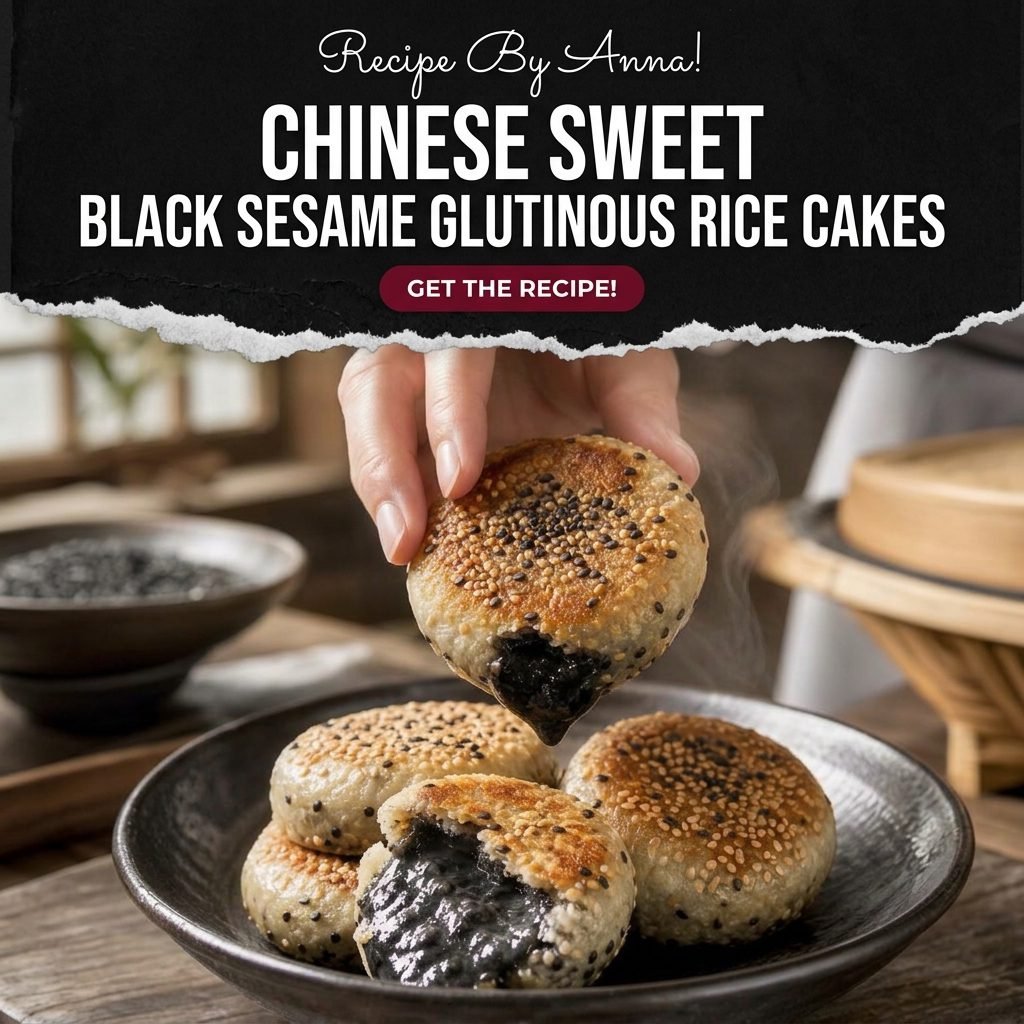
If you’ve never had a warm black sesame glutinous rice cake, prepare to fall hard. Picture a plump little puck with a golden, sesame-crusted exterior and a chewy, bouncy bite — and then, right in the middle, a molten pocket of sweet, toasty, almost nutty black sesame that flows out like lava with excellent manners. They’re crisp on the outside, chewy through the middle, and warm-sweet all the way down. My family calls them “the bite and the bow,” because everyone takes a bite and immediately does a little bow of respect.
Black sesame desserts are a beloved classic in China — the flavor shows up in soups, fillings, ice cream, and these little pan-fried cakes, where it does its very best work. Toasted and ground, black sesame tastes like sesame seeds’ deeper, more mysterious cousin: nutty, faintly bitter in the best way, and rich enough that a small amount of sugar is all it needs. Wrapped in a soft glutinous rice dough and pan-fried until the sesame crust toasts up, it becomes one of the great textural experiences of the dessert world.
And here’s the part that surprises people: they’re genuinely easy. The dough is two ingredients plus water — no yeast, no resting, no rolling pin. The filling is sesame, sugar, and butter blitzed in thirty seconds. Shape, fry, done, in about 45 relaxed minutes. If you can make a playdough pancake, you can make these, and everyone at the table will assume you have a grandmother in Shanghai you’ve never mentioned. Let her be nameless. Let them wonder.
Why These Cakes Hook You
The hook is texture-on-texture. A proper black sesame rice cake delivers three in one bite: the crackly toasted sesame crust, the stretchy-chewy glutinous dough (that bouncy, mochi-like chew that makes your teeth happy), and the molten filling that turns silky the second it hits your tongue. Very few desserts offer a hat trick like that, and almost none this simple.
The science bit, quickly, because it’s genuinely fun: glutinous rice flour is ground from sticky rice, which is almost pure amylopectin — a starch that cooks into that signature stretchy chew instead of the crumbly structure of regular rice. That’s also why the dough behaves like soft playdough instead of like bread dough: no gluten, no rules, just smooth and forgiving. Warm water makes it extra supple, which is why every good recipe (this one included) calls for it. Meanwhile, toasting the sesame seeds first wakes up their oils — untoasted sesame is shy, toasted sesame walks into the room. Grind the warm, toasted seeds with sugar and a little butter, and the mixture turns dark, glossy, and spoon-lickingly fragrant, ready to melt back into lava the moment it hits a hot pan. Simple ingredients, layered technique, tiny cakes, big applause.
⏱️ 45 MIN | 🖤 MOLTEN SESAME FILLING | 🍡 CHEWY & TOASTY
- Prep Time: 30 minutes
- Cook Time: 15 minutes
- Total Time: 45 minutes
- Yield: 12 rice cakes (4 to 6 sweet servings)
🍡 Gear on the Counter for Chinese Sweet Black Sesame Glutinous Rice Cakes
Six basic tools for fragrant sesame paste, soft dough, even filling, and gentle pan-frying.

Cuisinart 8-Cup Food Processor
The food processor turns toasted sesame seeds into a dark, fragrant paste; a spice grinder or mortar works too.

Lodge 8-Inch Cast Iron Pre-Seasoned Skillet
A dry skillet toasts sesame seeds in two to three minutes and concentrates their nutty aroma.

OXO Good Grips 12-Inch Nonstick Frying Pan with Lid
A good nonstick surface protects the sugar-filled cakes from scorching while they pan-fry.

Pyrex 3-Piece Glass Mixing Bowl Set
Separate bowls keep the glutinous dough and sesame filling organized while you shape each cake.

Kyhtok 100% Cotton Kitchen Towels, 6-Pack
A damp cotton towel keeps exposed glutinous dough soft while the rest of the cakes are being formed.

OXO Good Grips Small Stainless Cookie Scoop
A small scoop or two teaspoons portions sesame filling evenly so every cake seals and cooks consistently.
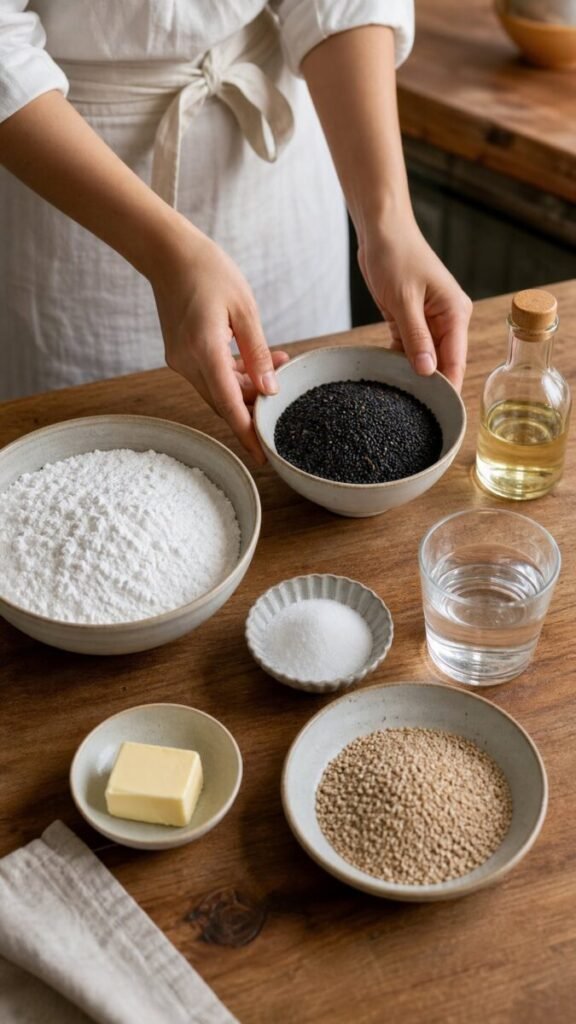
Ingredients (With Labels)
🖤 For the Black Sesame Filling
- Black sesame seeds: 3/4 cup — untoasted is fine (we toast them); pre-toasted saves you three minutes
- Granulated or light brown sugar: 1/4 cup — brown sugar adds a whisper of caramel
- Unsalted butter: 1 tablespoon, softened — the binder that turns crumbs into a rollable paste (coconut oil works too)
🍡 For the Glutinous Rice Dough
- Glutinous rice flour: 1 1/2 cups — also sold as “sweet rice flour”; NOT regular rice flour, see the mistakes section for the sad story of mixing them up
- Granulated sugar: 2 tablespoons
- Warm water: 3/4 cup, plus extra by the teaspoon
✨ For the Coating and Frying
- Sesame seeds: 1/4 cup — white, black, or a mix, for the crust
- Neutral oil: 2 tablespoons — for pan-frying
Step by Step How to Make
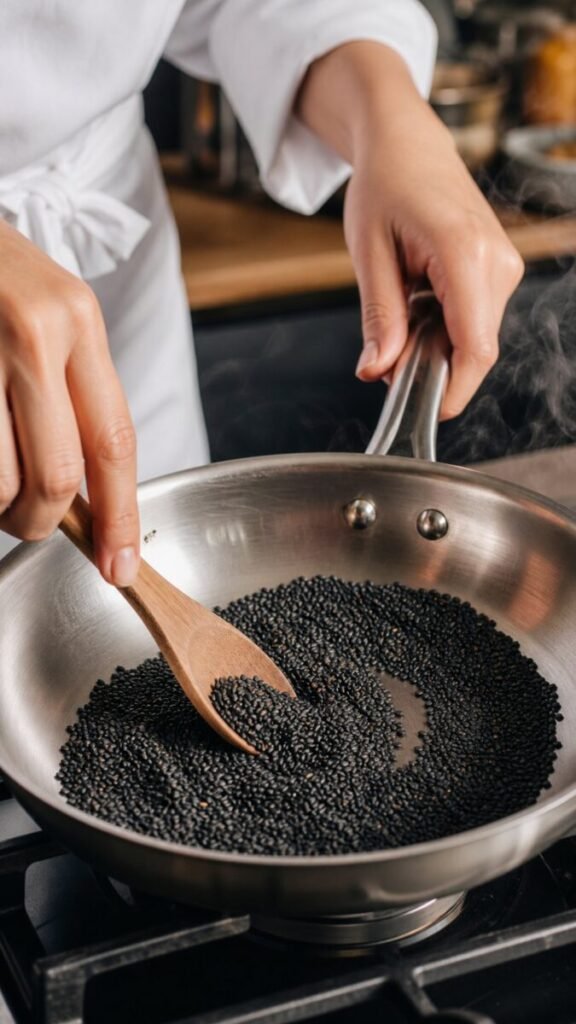
- Step 1 — Toast the sesame seeds. Pour the black sesame seeds into a dry skillet over medium-low heat and stir constantly for 2 to 3 minutes, until they smell toasty, nutty, and slightly like the world’s best bakery. Do not walk away — sesame goes from toasted to burnt in a very short conversation. Immediately transfer to a plate to cool. This one small step is the entire flavor difference between “fine” and “obsessed.”
- Step 2 — Make the filling. Grind the cooled sesame seeds with the sugar in your food processor for 30 to 60 seconds, until dark, fragrant, and the texture of damp sand. Add the softened butter and pulse until the mixture clumps together when pinched. Roll into 12 small balls (about 2 teaspoons each) and pop them in the fridge for 15 minutes — chilled filling is a thousand times easier to wrap and doesn’t sink into the dough.
- Step 3 — Mix the dough. Stir the glutinous rice flour and sugar together in your bowl, then add the warm water gradually, mixing with your hands or a chopstick until a soft, smooth dough forms — think fresh playdough, plump and slightly tacky but not sticky. Knead for a minute right in the bowl. If it cracks at the edges, add warm water a teaspoon at a time; if it sticks to your fingers, dust with a little more flour. Cover with the damp towel.
- Step 4 — Shape the cakes. Divide the dough into 12 equal pieces and keep them under the towel as you work (seriously — the towel is doing real work). Flatten one piece into a 3-inch disc in your palm, lay a chilled sesame ball in the center, and gently pull the dough up and over, pinching the seam closed. Roll it into a smooth ball, then flatten into a chubby little puck about 2 inches wide. Press the top and sides into the sesame seeds so the crust has something to hold onto.
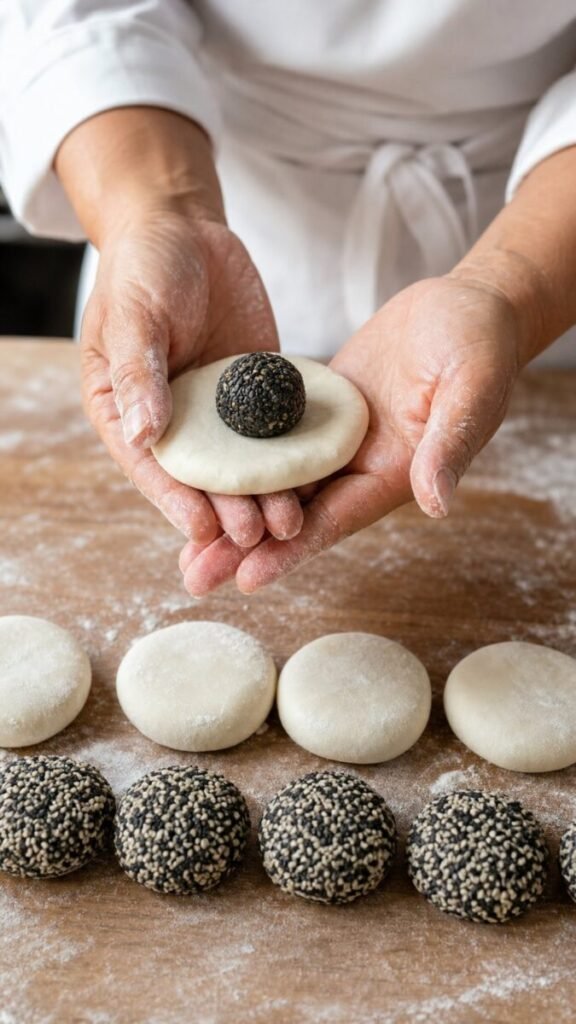
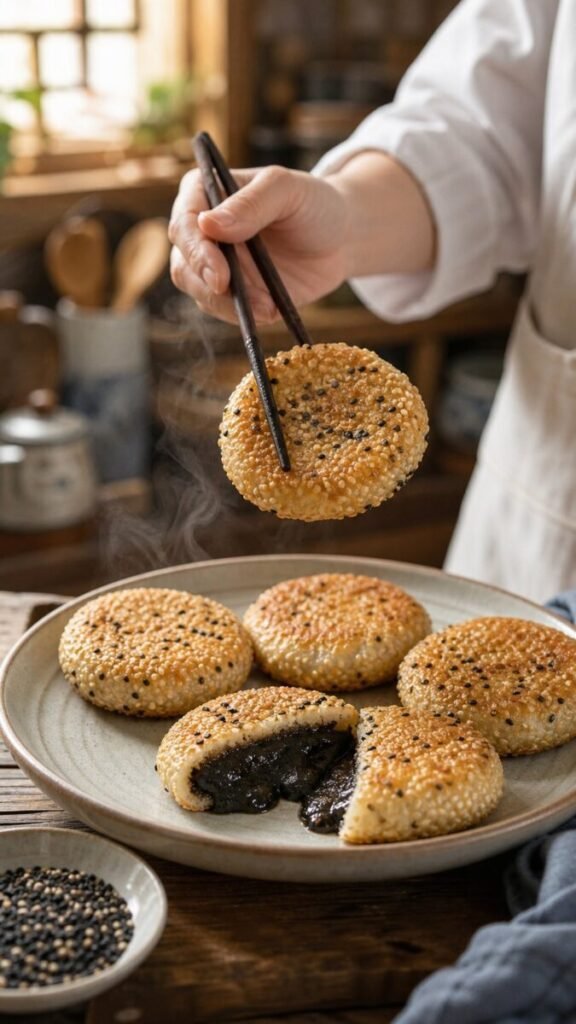
- Step 5 — Pan-fry gently. Heat the oil in your skillet over medium-low heat — the gentlest sizzle you can manage. Add the cakes with room between them and fry 2 to 3 minutes per side, until golden and lightly puffed, covering the pan with a lid for the last 2 minutes so the centers cook through in the steam. Medium-low is the whole trick: the filling’s sugar wants to scorch, and the dough needs time to cook through. Patience here tastes like dessert.
- Step 6 — Rest, then serve warm. Transfer to a plate and rest for 2 to 3 minutes — the filling inside is approximately 900 degrees fresh from the pan, and it needs a moment to become delicious instead of dangerous. Serve warm, as-is, or with a dusting of extra sesame. Then watch the room go quiet, one cake at a time.
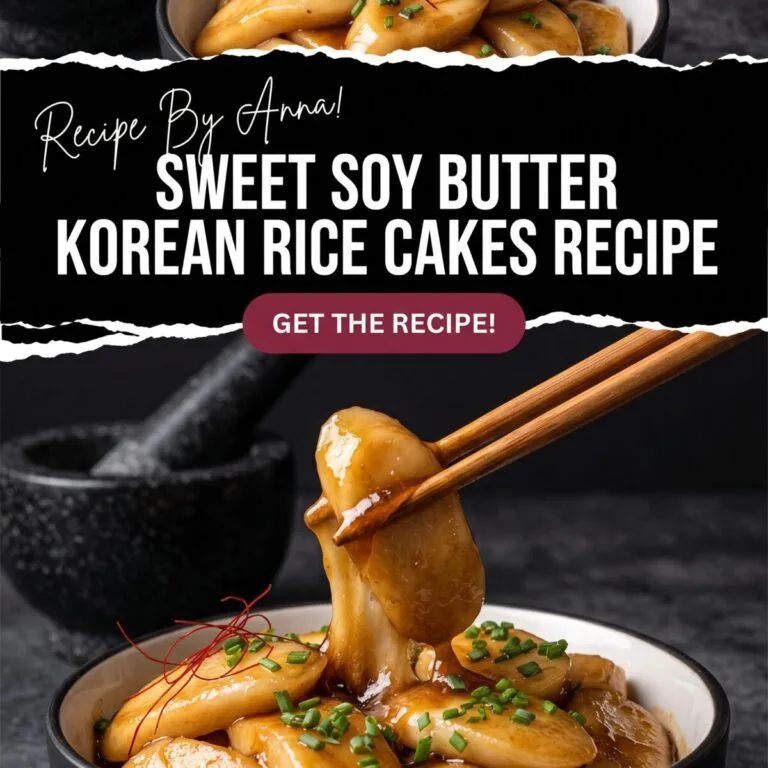
Chewy rice cakes are a whole family of delicious, and our Sweet Soy Butter Korean Rice Cakes are the savory-sweet cousin from the Korean side — glossy, chewy, and ready in minutes. Make those for dinner and these for dessert, and congratulations: your rice cake education is complete.
The Chewy Secrets
Warm water, always. Warm water relaxes the rice starch and gives you a smooth, supple dough. Cold water makes it grainy and grumpy. It’s the easiest upgrade in the whole recipe — the kettle does all the work.
Keep the dough covered. Glutinous dough dries out in minutes in open air, and dry dough cracks when you wrap the filling. A damp towel over the bowl, and only one piece out at a time. This is the difference between smooth little pucks and a cracked-crust crime scene.
Chill the filling before shaping. Warm, soft filling smears into the seam and leaks. Fifteen minutes in the fridge firms the sesame balls into tidy little truffles that wrap like a dream and melt back into lava in the pan. Best of both worlds, zero effort.
Gentle heat or ruin. The sugar in the filling browns faster than the dough cooks, so medium-low with a lid for the finish is the technique: the crust toasts slowly while the steam cooks the center through. High heat gives you black bottoms and raw middles, which is nobody’s favorite dessert.
Press the sesame coating on. A gentle press helps the seeds embed in the soft dough so they stay put through frying instead of scattering into the oil like tiny refugees. Pressed seeds also toast in place, which is where the crackle comes from.
Serve Them With
These little cakes are the perfect sweet ending to a homemade Chinese feast — they’re small, warm, and don’t need a plate of their own. Plan the full night: our Freakin’ Fantastic Fried Rice and the Potsticker Noodle Bowl make the mains, a bowl of Savory Chicken Wonton Soup starts things off, and these cakes close the show while everyone leans back and reconsiders their life choices in the best way. With tea — jasmine or oolong — is the traditional move, and honestly the right one; the tea’s bitterness plays beautifully with the sweet, toasty sesame.
Sweet Riffs
Peanut Sugar Filling — swap the black sesame for an equal amount of toasted, crushed peanuts with the sugar and butter. It’s the other classic Chinese sweet filling, and peanut fans will claim this version is superior. Let them. There are enough cakes for everyone to be right.
Boiled Tangyuan-Style — skip the frying and boil the filled cakes in gently simmering water until they float, then 2 minutes more; serve them in a light ginger syrup (thin slices of ginger simmered in water with a little sugar). This is the beloved winter solstice version, and it turns the recipe into a warm soup-dessert hug.
Coconut Rice Cakes — use coconut milk in place of the water in the dough (warm it first) and roll the finished cakes in toasted coconut instead of sesame. Tropical, chewy, faintly perfumed — a completely different personality from the same technique.
Pumpkin Dough Version — replace the water with 3/4 cup roasted pumpkin or sweet potato puree. The dough turns sunset-orange around the black filling, which is genuinely one of the prettiest things you can make in a skillet, and the flavor gets a warm autumn boost.
Black SesamEverything Platter — for a dessert party, serve these warm alongside a plate of our Perfect Chocolate Chip Cookies and watch the table split into two loyal camps — chewy-sesame people and chocolate people — who will nevertheless clean both plates to the last crumb. Diplomacy through dessert.
The Nitty Gritty
| Nutrient | Per Serving (2 cakes, 1 of 6) |
|---|---|
| Calories | 200 kcal |
| Protein | 3 g |
| Carbohydrates | 28 g |
| Fats | 8 g |
Estimates for two pan-fried cakes as written. Bonus nutrition news: black sesame is unusually rich in calcium, iron, and healthy fats, so these are basically a health food that happens to be dessert. (I said “basically.” I stand by it.)
Keeping Them Chewy
Full honesty: these are at their absolute peak within an hour of frying — crisp crust, stretchy chew, molten center. If you have leftovers (a genuinely impressive situation), store them in a covered container in the fridge for up to 3 days, and know that the crust softens overnight while the chew happily survives.
The revival trick is a dry skillet: medium-low heat, 2 to 3 minutes per side, no oil needed, and the crust re-crisps while the filling re-melts to something close to fresh. The microwave works in a pinch — 15 to 20 seconds — but it softens the crust, so consider it the “it’s 11 p.m. and I’m eating cake over the sink” option. No judgment. Been there.
The make-ahead genius move: freeze the shaped, uncooked cakes on a tray until solid, then bag them airtight for up to 2 months. Cook straight from frozen — medium-low heat, a lid, and 3 to 4 minutes per side — and fresh, molten rice cakes materialize on demand. A secret freezer stash of dessert is the kind of life insurance everyone deserves.
When Things Go Sideways
Using regular rice flour. The number one disaster, and it’s a quiet one: regular rice flour makes a dough that crumbles like sand and fries into little hockey pucks of disappointment. The bag must say “glutinous rice flour” or “sweet rice flour” — that’s the sticky-rice starch that gives the chew. Check the bag twice; your dessert depends on it.
Burnt sesame seeds. Toasting takes 2 to 3 minutes and sesame’s window between “perfectly nutty” and “acrid disappointment” is about 45 seconds wide. Stir constantly, and the moment it smells amazing, it’s done — pull them off the heat and onto a plate immediately, because a hot pan keeps cooking them.
Scorched filling, raw dough. That’s high heat doing exactly what high heat does: browning the sugary filling’s edges before the dough cooks through. Medium-low, lid on for the last two minutes, patience. The cakes will tell you when they’re golden; you just have to let them get there slowly.
Cracked, leaking cakes. Two usual causes: dough that dried out (keep it covered, one piece at a time) or overfilling (2 teaspoons of filling per cake is the sweet spot). A cracked cake still tastes wonderful — it just loses its molten surprise, and the surprise is half the fun.
Dough sticking to everything. Your hands, the counter, the spatula, the cat. Dust your palms with a little glutinous rice flour before shaping, and use a thin spatula for the pan. Slightly tacky dough is normal; dough that leaves half of itself on your palm needs another dusting.
Sesame Questions
What is glutinous rice flour, and where do I buy it?
It’s finely milled sticky rice (also labeled “sweet rice flour”), and it’s the reason for the signature chew. Find it in the Asian aisle of most big grocery stores or any Asian market — Mochiko is the classic American brand. One bag goes a very long way, and it keeps for ages in the pantry.
Wait — “glutinous” means gluten-free?
Confusingly, yes! “Glutinous” refers to glue-like stickiness, not wheat gluten — glutinous rice flour is 100 percent naturally gluten-free. These cakes are a great chewy treat for gluten-free friends and family, no substitutions needed. For another naturally gluten-free chewy bake, our Soft Chewy Gluten-Free Pretzel Bites are the savory counterpart.
Can I use store-bought black sesame paste?
You can — look for Chinese or Korean black sesame paste (the pure kind, not the sweetened Japanese breakfast spread). Stir in sugar to taste and enough butter to make it rollable, then chill well before shaping. It’s a fine shortcut, though toasting and grinding your own tastes noticeably fresher — that’s the version that makes people do the little bow.
Can I bake or air-fry these instead of pan-frying?
The air fryer works nicely: brush the cakes lightly with oil and cook at 350°F (175°C) for 8 to 10 minutes, flipping halfway, until golden and puffed. Oven-baking is possible (375°F, about 15 minutes) but gives a drier crust. Pan-frying remains the classic for a reason — that crisp, oil-toasted sesame crust — but the air fryer is a very respectable understudy.
Why is my dough cracking when I shape it?
The dough has dried out, or it needs a touch more water. Keep the bowl covered with a damp towel, work with one piece at a time, and if the dough feels stiff or crackly, knead in warm water a teaspoon at a time until it’s plump and smooth again. Glutinous dough is forgiving — it takes correction beautifully, which is more than I can say for most things in my kitchen.
Black Sesame Rice Cakes • Glutinous Rice Dessert • Chinese Sweet Snack • Chewy Rice Cakes • Molten Filling Dessert • Easy Chinese Dessert

If you’ve never had a warm black sesame glutinous rice cake, prepare to fall hard. Picture a plump little puck with a golden, sesame-crusted exterior and a chewy, bouncy bite — and then, right in the middle, a molten pocket of sweet, toasty, almost nutty black sesame that flows out like lava with excellent manners. They’re crisp on the outside, chewy through the middle, and warm-sweet all the way down. My family calls them “the bite and the bow,” because everyone takes a bite and immediately does a little bow of respect.
Black sesame desserts are a beloved classic in China — the flavor shows up in soups, fillings, ice cream, and these little pan-fried cakes, where it does its very best work. Toasted and ground, black sesame tastes like sesame seeds’ deeper, more mysterious cousin: nutty, faintly bitter in the best way, and rich enough that a small amount of sugar is all it needs. Wrapped in a soft glutinous rice dough and pan-fried until the sesame crust toasts up, it becomes one of the great textural experiences of the dessert world.
And here’s the part that surprises people: they’re genuinely easy. The dough is two ingredients plus water — no yeast, no resting, no rolling pin. The filling is sesame, sugar, and butter blitzed in thirty seconds. Shape, fry, done, in about 45 relaxed minutes. If you can make a playdough pancake, you can make these, and everyone at the table will assume you have a grandmother in Shanghai you’ve never mentioned. Let her be nameless. Let them wonder.
Why These Cakes Hook You
The hook is texture-on-texture. A proper black sesame rice cake delivers three in one bite: the crackly toasted sesame crust, the stretchy-chewy glutinous dough (that bouncy, mochi-like chew that makes your teeth happy), and the molten filling that turns silky the second it hits your tongue. Very few desserts offer a hat trick like that, and almost none this simple.
The science bit, quickly, because it’s genuinely fun: glutinous rice flour is ground from sticky rice, which is almost pure amylopectin — a starch that cooks into that signature stretchy chew instead of the crumbly structure of regular rice. That’s also why the dough behaves like soft playdough instead of like bread dough: no gluten, no rules, just smooth and forgiving. Warm water makes it extra supple, which is why every good recipe (this one included) calls for it. Meanwhile, toasting the sesame seeds first wakes up their oils — untoasted sesame is shy, toasted sesame walks into the room. Grind the warm, toasted seeds with sugar and a little butter, and the mixture turns dark, glossy, and spoon-lickingly fragrant, ready to melt back into lava the moment it hits a hot pan. Simple ingredients, layered technique, tiny cakes, big applause.
⏱️ 45 MIN | 🖤 MOLTEN SESAME FILLING | 🍡 CHEWY & TOASTY
- Prep Time: 30 minutes
- Cook Time: 15 minutes
- Total Time: 45 minutes
- Yield: 12 rice cakes (4 to 6 sweet servings)
Gear on the Counter
Basic tools — the food processor does the fancy part:
- Food processor or spice grinder — for turning sesame seeds into a fragrant, dark paste; a mortar and pestle works too and doubles as a workout.
- Dry skillet — for toasting the sesame seeds; two to three minutes, full attention.
- Nonstick or well-seasoned skillet — for pan-frying the cakes; the sugar in the filling is a scorch-artist, so a good pan matters.
- Two mixing bowls — one for the dough, one for the filling.
- Damp kitchen towel — to cover the dough while you work; uncovered glutinous dough dries out faster than a New Year’s resolution.
- Small scoop or two teaspoons — for portioning the filling evenly.
Ingredients (With Labels)

🖤 For the Black Sesame Filling
- Black sesame seeds: 3/4 cup — untoasted is fine (we toast them); pre-toasted saves you three minutes
- Granulated or light brown sugar: 1/4 cup — brown sugar adds a whisper of caramel
- Unsalted butter: 1 tablespoon, softened — the binder that turns crumbs into a rollable paste (coconut oil works too)
🍡 For the Glutinous Rice Dough
- Glutinous rice flour: 1 1/2 cups — also sold as “sweet rice flour”; NOT regular rice flour, see the mistakes section for the sad story of mixing them up
- Granulated sugar: 2 tablespoons
- Warm water: 3/4 cup, plus extra by the teaspoon
✨ For the Coating and Frying
- Sesame seeds: 1/4 cup — white, black, or a mix, for the crust
- Neutral oil: 2 tablespoons — for pan-frying
Step by Step How to Make
- Step 1 — Toast the sesame seeds. Pour the black sesame seeds into a dry skillet over medium-low heat and stir constantly for 2 to 3 minutes, until they smell toasty, nutty, and slightly like the world’s best bakery. Do not walk away — sesame goes from toasted to burnt in a very short conversation. Immediately transfer to a plate to cool. This one small step is the entire flavor difference between “fine” and “obsessed.”

- Step 2 — Make the filling. Grind the cooled sesame seeds with the sugar in your food processor for 30 to 60 seconds, until dark, fragrant, and the texture of damp sand. Add the softened butter and pulse until the mixture clumps together when pinched. Roll into 12 small balls (about 2 teaspoons each) and pop them in the fridge for 15 minutes — chilled filling is a thousand times easier to wrap and doesn’t sink into the dough.
- Step 3 — Mix the dough. Stir the glutinous rice flour and sugar together in your bowl, then add the warm water gradually, mixing with your hands or a chopstick until a soft, smooth dough forms — think fresh playdough, plump and slightly tacky but not sticky. Knead for a minute right in the bowl. If it cracks at the edges, add warm water a teaspoon at a time; if it sticks to your fingers, dust with a little more flour. Cover with the damp towel.
- Step 4 — Shape the cakes. Divide the dough into 12 equal pieces and keep them under the towel as you work (seriously — the towel is doing real work). Flatten one piece into a 3-inch disc in your palm, lay a chilled sesame ball in the center, and gently pull the dough up and over, pinching the seam closed. Roll it into a smooth ball, then flatten into a chubby little puck about 2 inches wide. Press the top and sides into the sesame seeds so the crust has something to hold onto.

- Step 5 — Pan-fry gently. Heat the oil in your skillet over medium-low heat — the gentlest sizzle you can manage. Add the cakes with room between them and fry 2 to 3 minutes per side, until golden and lightly puffed, covering the pan with a lid for the last 2 minutes so the centers cook through in the steam. Medium-low is the whole trick: the filling’s sugar wants to scorch, and the dough needs time to cook through. Patience here tastes like dessert.
- Step 6 — Rest, then serve warm. Transfer to a plate and rest for 2 to 3 minutes — the filling inside is approximately 900 degrees fresh from the pan, and it needs a moment to become delicious instead of dangerous. Serve warm, as-is, or with a dusting of extra sesame. Then watch the room go quiet, one cake at a time.

Chewy rice cakes are a whole family of delicious, and our Sweet Soy Butter Korean Rice Cakes are the savory-sweet cousin from the Korean side — glossy, chewy, and ready in minutes. Make those for dinner and these for dessert, and congratulations: your rice cake education is complete.
The Chewy Secrets
Warm water, always. Warm water relaxes the rice starch and gives you a smooth, supple dough. Cold water makes it grainy and grumpy. It’s the easiest upgrade in the whole recipe — the kettle does all the work.
Keep the dough covered. Glutinous dough dries out in minutes in open air, and dry dough cracks when you wrap the filling. A damp towel over the bowl, and only one piece out at a time. This is the difference between smooth little pucks and a cracked-crust crime scene.
Chill the filling before shaping. Warm, soft filling smears into the seam and leaks. Fifteen minutes in the fridge firms the sesame balls into tidy little truffles that wrap like a dream and melt back into lava in the pan. Best of both worlds, zero effort.
Gentle heat or ruin. The sugar in the filling browns faster than the dough cooks, so medium-low with a lid for the finish is the technique: the crust toasts slowly while the steam cooks the center through. High heat gives you black bottoms and raw middles, which is nobody’s favorite dessert.
Press the sesame coating on. A gentle press helps the seeds embed in the soft dough so they stay put through frying instead of scattering into the oil like tiny refugees. Pressed seeds also toast in place, which is where the crackle comes from.
Serve Them With
These little cakes are the perfect sweet ending to a homemade Chinese feast — they’re small, warm, and don’t need a plate of their own. Plan the full night: our Freakin’ Fantastic Fried Rice and the Potsticker Noodle Bowl make the mains, a bowl of Savory Chicken Wonton Soup starts things off, and these cakes close the show while everyone leans back and reconsiders their life choices in the best way. With tea — jasmine or oolong — is the traditional move, and honestly the right one; the tea’s bitterness plays beautifully with the sweet, toasty sesame.
Sweet Riffs
Peanut Sugar Filling — swap the black sesame for an equal amount of toasted, crushed peanuts with the sugar and butter. It’s the other classic Chinese sweet filling, and peanut fans will claim this version is superior. Let them. There are enough cakes for everyone to be right.
Boiled Tangyuan-Style — skip the frying and boil the filled cakes in gently simmering water until they float, then 2 minutes more; serve them in a light ginger syrup (thin slices of ginger simmered in water with a little sugar). This is the beloved winter solstice version, and it turns the recipe into a warm soup-dessert hug.
Coconut Rice Cakes — use coconut milk in place of the water in the dough (warm it first) and roll the finished cakes in toasted coconut instead of sesame. Tropical, chewy, faintly perfumed — a completely different personality from the same technique.
Pumpkin Dough Version — replace the water with 3/4 cup roasted pumpkin or sweet potato puree. The dough turns sunset-orange around the black filling, which is genuinely one of the prettiest things you can make in a skillet, and the flavor gets a warm autumn boost.
Black SesamEverything Platter — for a dessert party, serve these warm alongside a plate of our Perfect Chocolate Chip Cookies and watch the table split into two loyal camps — chewy-sesame people and chocolate people — who will nevertheless clean both plates to the last crumb. Diplomacy through dessert.
The Nitty Gritty
| Nutrient | Per Serving (2 cakes, 1 of 6) |
|---|---|
| Calories | 200 kcal |
| Protein | 3 g |
| Carbohydrates | 28 g |
| Fats | 8 g |
Estimates for two pan-fried cakes as written. Bonus nutrition news: black sesame is unusually rich in calcium, iron, and healthy fats, so these are basically a health food that happens to be dessert. (I said “basically.” I stand by it.)
Keeping Them Chewy
Full honesty: these are at their absolute peak within an hour of frying — crisp crust, stretchy chew, molten center. If you have leftovers (a genuinely impressive situation), store them in a covered container in the fridge for up to 3 days, and know that the crust softens overnight while the chew happily survives.
The revival trick is a dry skillet: medium-low heat, 2 to 3 minutes per side, no oil needed, and the crust re-crisps while the filling re-melts to something close to fresh. The microwave works in a pinch — 15 to 20 seconds — but it softens the crust, so consider it the “it’s 11 p.m. and I’m eating cake over the sink” option. No judgment. Been there.
The make-ahead genius move: freeze the shaped, uncooked cakes on a tray until solid, then bag them airtight for up to 2 months. Cook straight from frozen — medium-low heat, a lid, and 3 to 4 minutes per side — and fresh, molten rice cakes materialize on demand. A secret freezer stash of dessert is the kind of life insurance everyone deserves.
When Things Go Sideways
Using regular rice flour. The number one disaster, and it’s a quiet one: regular rice flour makes a dough that crumbles like sand and fries into little hockey pucks of disappointment. The bag must say “glutinous rice flour” or “sweet rice flour” — that’s the sticky-rice starch that gives the chew. Check the bag twice; your dessert depends on it.
Burnt sesame seeds. Toasting takes 2 to 3 minutes and sesame’s window between “perfectly nutty” and “acrid disappointment” is about 45 seconds wide. Stir constantly, and the moment it smells amazing, it’s done — pull them off the heat and onto a plate immediately, because a hot pan keeps cooking them.
Scorched filling, raw dough. That’s high heat doing exactly what high heat does: browning the sugary filling’s edges before the dough cooks through. Medium-low, lid on for the last two minutes, patience. The cakes will tell you when they’re golden; you just have to let them get there slowly.
Cracked, leaking cakes. Two usual causes: dough that dried out (keep it covered, one piece at a time) or overfilling (2 teaspoons of filling per cake is the sweet spot). A cracked cake still tastes wonderful — it just loses its molten surprise, and the surprise is half the fun.
Dough sticking to everything. Your hands, the counter, the spatula, the cat. Dust your palms with a little glutinous rice flour before shaping, and use a thin spatula for the pan. Slightly tacky dough is normal; dough that leaves half of itself on your palm needs another dusting.
Toasted Sesame · Chewy Rice Dough · Sweet Black Sesame Filling
Chinese Sweet Black Sesame Glutinous Rice Cakes
Pan-fried glutinous rice cakes with a toasted sesame crust, a soft, chewy wrapper and a warm, sweet black sesame center. A small-batch Chinese dessert made with simple pantry ingredients.
Ingredients
As an Amazon Associate, we earn from qualifying purchases. Ingredient and equipment links below are affiliate links.
For the Black Sesame Filling
- Black sesame seeds ¾ cup
- Granulated sugar or light brown sugar ¼ cup
- Unsalted butter, softened, or coconut oil 1 tbsp
For the Glutinous Rice Dough
- Glutinous rice flour (sweet rice flour, not regular rice flour) 1½ cups, plus a little for adjustments
- Granulated sugar 2 tbsp
- Warm water (tap water is fine) ¾ cup, added gradually; extra as needed
For Coating and Frying
- Sesame seeds, white, black or mixed ¼ cup
- Neutral oil 2 tbsp
Equipment
- Food processor or spice grinder for grinding sesame
- Dry skillet for toasting
- Nonstick skillet with lid for pan-frying
- Mixing bowls 2
- Clean kitchen towel, dampened to cover the dough
- Small scoop or teaspoons for portioning
How to Make Them
- Toast the black sesame Place the black sesame seeds in a dry skillet over medium-low heat. Stir constantly for 2–3 minutes, until fragrant. Immediately transfer to a plate to cool. Skip this step if the seeds are already toasted.
- Grind the filling Grind the cooled sesame seeds with the ¼ cup sugar until very fine and beginning to release their oils. Add the softened butter or coconut oil and mix until the filling clumps when pressed. If using a spice grinder, grind the dry ingredients first and mix in the fat separately.
- Portion and chill Portion the filling into 12 small balls and refrigerate for about 15 minutes to firm up. Keep the portions small enough to seal comfortably inside the dough; reserve any excess rather than overfilling.
- Make the dough Mix the glutinous rice flour and 2 tablespoons sugar. Gradually add the warm water, stopping when a soft, smooth, slightly tacky dough forms. Knead for about 1 minute. Add extra water a teaspoon at a time if it cracks, or a little flour if excessively sticky. Cover with a damp towel.
- Wrap and seal Divide the dough into 12 equal pieces, keeping unused portions covered. Flatten one piece into a disc about 3 inches wide. Add a chilled filling ball, bring the dough up around it and pinch the seam closed. Roll gently until smooth.
- Flatten and coat Gently flatten each filled ball into a puck about 2 inches wide without breaking the seal. Press the sesame coating onto the surface. Repeat with the remaining dough and filling.
- Pan-fry over gentle heat Heat the oil in a nonstick skillet over medium-low heat, dividing it between batches if needed. Add the cakes with space between them. Fry for about 2–3 minutes per side, covering for the final 2 minutes. Continue gently as needed until lightly golden and cooked through. Check one cake: the dough should be soft and chewy throughout, with no dry, chalky or raw-flour center. Lower the heat if the sesame coating browns too quickly.
- Rest and serve warm Transfer to a plate and rest for at least 2–3 minutes. Check the filling temperature before eating; the center can remain very hot. Serve warm, taking small bites and chewing thoroughly.
*Timing is approximate and includes chilling the filling while preparing the dough. Extra batches may take longer. Filling consistency depends on how finely the sesame is ground; these quantities may produce a soft paste rather than a freely flowing center. Sticky rice cakes can pose a choking risk, especially for young children and people with swallowing difficulties.
Nutrition
| Nutrient | Per serving (2 cakes, 6 servings) |
|---|---|
| Calories | 200 kcal |
| Protein | 3 g |
| Carbohydrates | 28 g |
| Fat | 8 g |
Estimates supplied with the original recipe, not independently calculated. Actual values vary with flour measurements, filling used, sesame coating and frying oil absorbed.