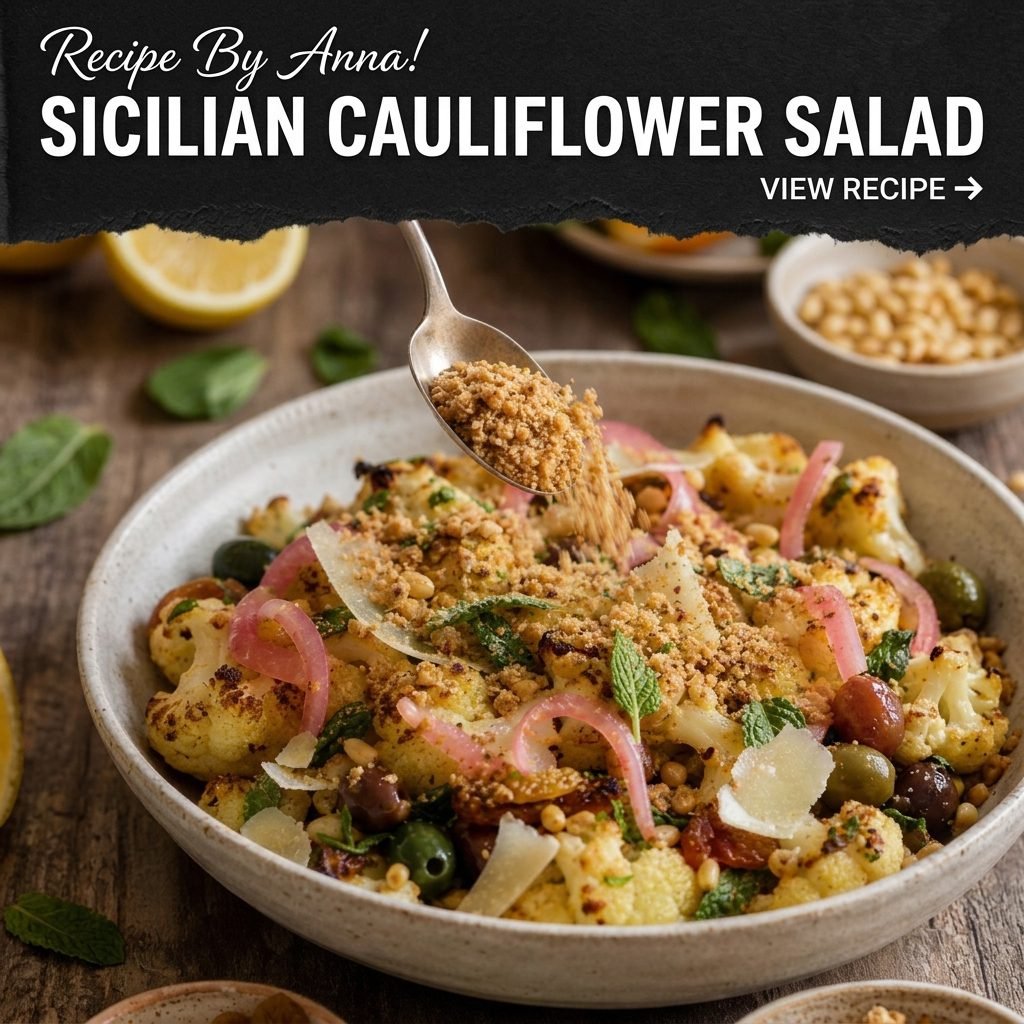
Sicilian Cauliflower Salad
Cauliflower is the best listener in the produce aisle. It has almost no opinion of its own, which is exactly why the cookbooks keep pairing it with loud company — cheese sauces, curry pastes, buffalo heat. Sicily’s answer to a quiet vegetable is the loudest pantry in the Mediterranean: raisins and honey on the sweet side, vinegar and capers and olives on the sour-salty side, orange and lemon running between them, and toasted crumbs over the top of everything. The island has a word for the balance at the middle of it — agrodolce, sour-sweet, in that order — and this salad is that word, written in cauliflower.
The mechanics are the part most recipes skip. This version roasts the florets first — high heat, cut sides down, until the edges go brown and the sugars concentrate — then does something the blanch-and-toss versions never think to: it dresses the cauliflower while the florets are still warm. A warm floret drinks; a cold one refuses. Fifteen minutes of warmth is when the agrodolce soaks in past the surface, and it’s why this salad tastes seasoned all the way through instead of dressed on the outside. Then it goes cold — twenty minutes on the counter or a night in the fridge, where the flavors settle into each other — and it comes out a salad that’s served cold but was never cooked cold. Warm in, cold out, and the two temperatures are doing different jobs.
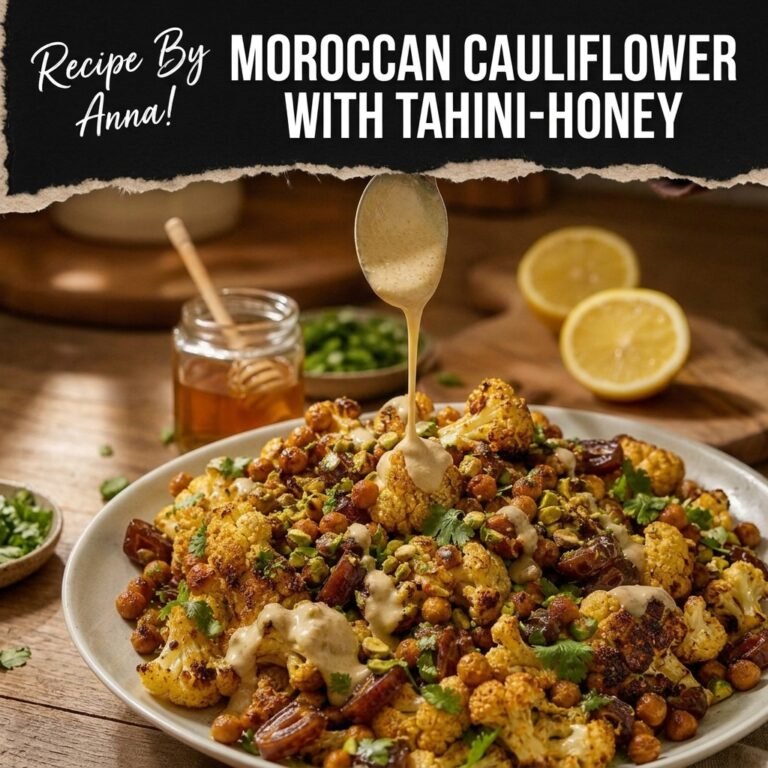
Shelf notes, as this kitchen keeps them: the cauliflower shelf here already runs warm — a blended soup, a Moroccan tahini-and-honey number, a chili-lime wrap — so this is the cold end of the shelf, and the first salad among them. The agrodolce itself is new to these pages: the Greek dressing down the hall is its brighter cousin, but the sour-sweet spine is Sicily’s signature move, and it’s overdue. What follows is an antipasto that eats as a side, scales to a lunch with a can of chickpeas, and improves in the fridge while you do other things.
The Warm-Dress Rule
The rule is one sentence: dress the cauliflower while it’s warm, serve it cold. Everything in the recipe is arranged around those two clauses. The roast happens first because browned florets carry a nuttiness that pale ones don’t, and because heat is the delivery system for the dressing — a floret fresh from the oven is porous and open, and the vinegar and oil go straight into it. Wait until it’s fully cold and the surface closes up; the dressing sits on the outside and the first bite tastes like a vinaigrette and the fifth tastes like cauliflower. One timing decision, and the whole salad’s depth depends on it.
Warm, though, is a range, and the top of the range does damage. Florets that go into the dressing straight from the oven flash off the vinegar’s aroma and wilt the herbs on contact — so the rule includes a cooling lap: five to ten minutes out of the pan, still warm to the touch but no longer steaming, then the pour. Think of the pan-to-bowl gap as a rest, like a steak’s, in miniature. The florets are doing the same thing a resting steak does — relaxing, opening, becoming absorbent — and the dressing is waiting for exactly that window.
Then the balance itself, which is the flavor rule the whole island runs on. Agrodolce means sour-sweet, and the order in the word is the order on the tongue: the sour lands on the beat, the sweet lands on the off-beat, a half-beat behind. Taste the dressing alone before it ever meets a floret — if the sour and the sweet arrive together, it’s too sweet, and a squeeze of lemon separates them; if the sour lands and nothing follows it, add honey until the echo shows up. That half-beat of delay is the difference between a dressing that’s balanced and one that’s just sweet, and it takes ten seconds and a spoon to find.
⏱️ 45 MINUTES + A REST | 🥗 SERVES 8 | 🍊 SWEET, SOUR, SICILIAN
- Prep Time: 15 minutes — the cut, the baths, the whisk
- Roast Time: 25 minutes at 425°F, one toss in the middle
- The Rest: 20 minutes on the counter, or overnight in the fridge — the salad’s second half
- Total Time: about 45 minutes, most of it the oven’s problem
- Yield: 8 side servings, or 4 lunches with chickpeas folded in
The Vinegar Question
The equipment is nothing — a sheet pan, two bowls, a small skillet for the crumbs — but two ingredients need a decision made before the shopping list is written:
- Red wine vinegar — the right vinegar, and the only one for the first attempt. It’s the agrodolce standard: round, winey, sour without the sharp edges of distilled. White wine vinegar works in a pinch; champagne vinegar is lovely and costs accordingly.
- Golden raisins — the traditional choice, and not a decorative one. Golden raisins are moister than dark ones, and their sweetness is delicate enough to stay on the off-beat. Dark raisins bring a heavier, earthier sweetness that lands early — use them if they’re what’s in the cupboard, and know the dressing will need the extra lemon squeeze to restore the order.
What to keep out of the cart: balsamic. It sounds Sicilian-adjacent and behaves like a different country’s accent — too sweet, too dark, too heavy for a salad whose whole personality is the delay between sour and sweet. The vinegar here should be a clean, sharp note, not a melody of its own.
One note on the vinegar’s second job, because it works twice in this recipe: the sliced onion takes its bath in a splash of the vinegar while everything else happens, and the onions leave their harsh edge behind in the bath — then the bath itself, lightly mellowed and faintly pink, becomes the base of the dressing. Nothing goes down the drain; the onion’s departure becomes the dressing’s arrival. A single bottle of red wine vinegar is doing more work in this recipe than any appliance.
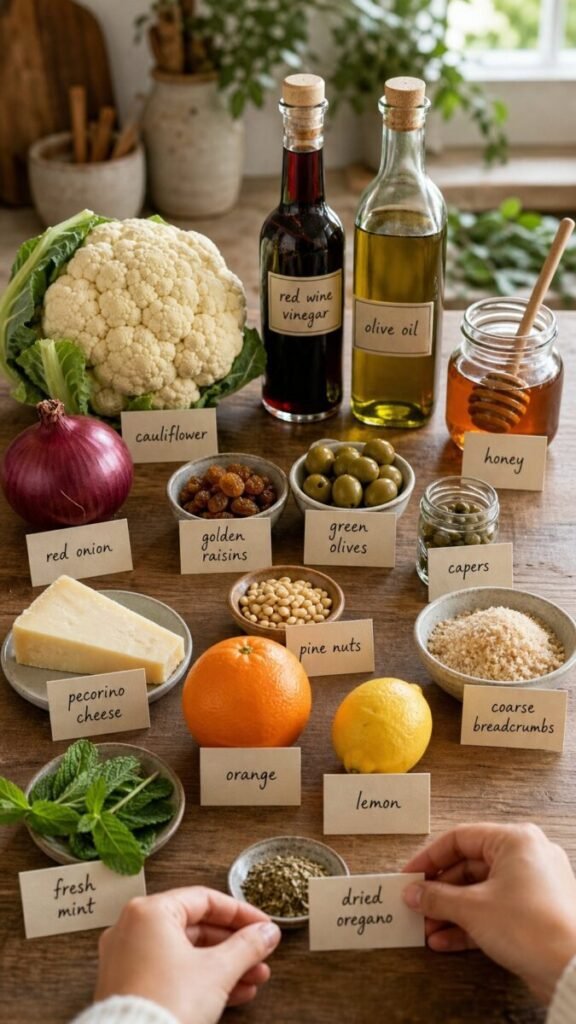
Ingredients (With Labels)
🥦 The Cauliflower
- Cauliflower: 1 large head, about 2 lb — florets thumb-sized with a cut side for the pan, the core sliced thin and included
- Olive oil: 3 tablespoons, for the roast
- Salt: 1 teaspoon, over the florets before the oven
🧅 The Onion
- Red onion: 1 small, sliced thin — into the bath
- Red wine vinegar: ¼ cup — the bath and the dressing share it
- Warm water: ¼ cup, to dilute the bath
🍇 The Sweet
- Golden raisins: ½ cup — ten minutes in warm water first, only if the jar has been open a while
🫒 The Salty
- Green olives: ½ cup, pitted and torn — Castelvetrano if the olive bar has them
- Capers: 2 tablespoons, drained and patted dry
- Pecorino: a wedge, for shaving over at the end — optional, and the salad is complete without it
🍊 The Agrodolce
- Honey: 1½ tablespoons
- Lemon: juice of half
- Orange: juice of half, plus all the zest you can get off it — the Sicilian signature
- Garlic: 1 clove, grated
- Dried oregano: 1 teaspoon, rubbed between your fingers over the bowl
- Red pepper flakes: a small pinch
- Olive oil: 4 tablespoons, the good bottle
- Fresh mint: a small handful, torn — folded in at the end, never cooked
🍞 The Pangrattato
- Coarse breadcrumbs or panko: ½ cup — “the poor man’s parmesan,” as Sicily has called them for centuries
- Olive oil: 2 tablespoons, for toasting
- Pine nuts: ¼ cup, toasted dry alongside
Step by Step How to Make
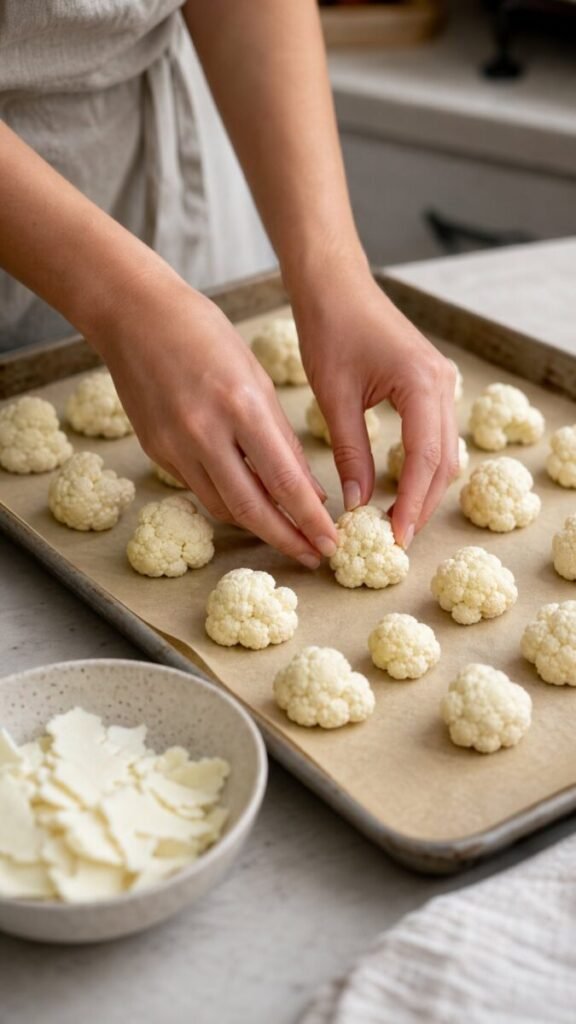
- Step 1 — The cut and the core. Heat the oven to 425°F. Cut the cauliflower into small florets — thumb-sized, and cut so each piece has at least one flat cut side, because flat sides are what touch the pan and touching the pan is what browns. The core is not compost: it’s the sweetest part of the head, and sliced thin it roasts into little caramel coins — slice it, add it to the bowl with the florets, and let it earn its place. Toss everything with the 3 tablespoons of olive oil and the teaspoon of salt in a big bowl before it ever meets the sheet pan — bowl-tossing coats evenly where pan-drizzling always leaves a dry corner.
- Step 2 — The roast. Spread the florets on the sheet pan in a single layer, cut sides down where you can, with air between them — contact browns and crowding steams, and steamed cauliflower is the cafeteria version of itself. Twenty-five minutes, undisturbed for the first fifteen, then one good toss with a spatula for the final ten. Done is deeply browned on the faces and tender at the stem when poked — not soft, not pale. Pull the pan, and start the clock on the cooling lap from the Warm-Dress Rule: five to ten minutes, still warm, no longer steaming. That window is the whole recipe’s timing.
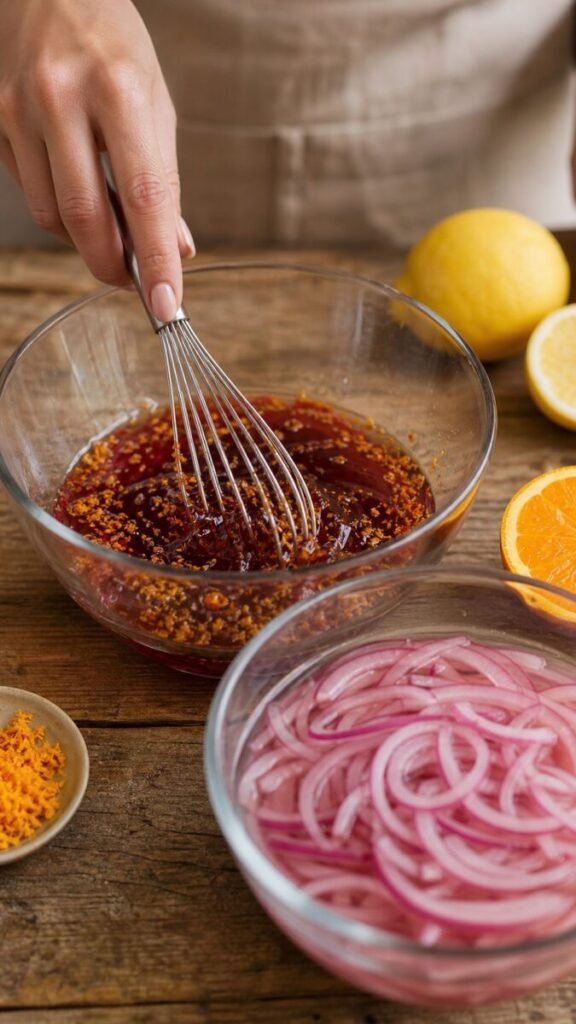
- Step 3 — The onion’s bath and the agrodolce. While the oven runs, slice the onion thin and drop the slices into a small bowl with the ¼ cup of vinegar and the ¼ cup of warm water. Ten minutes and the slices relax and turn candy-pink, their harsh sulfury edge dissolved into the bath. Meanwhile, build the dressing in the bowl you’ll serve from: the honey, the lemon, the orange juice and all of its zest, the grated garlic, the oregano rubbed to powder over the bowl, the red pepper flakes, and the 4 tablespoons of olive oil. When the onion looks relaxed and pink, fish the slices out — reserving every drop of the bath — and whisk the bath itself into the dressing. The onion’s departure becomes the dressing’s base, and the two of them rejoin as different, better versions of themselves later, in Step 6. Now taste, and apply the half-beat rule: the sour first, the sweet a half-beat behind. Lemon separates them if they arrive together; honey fills the gap if the sour stands alone.
- Step 4 — The pangrattato. While the florets cool, toast the crumbs: olive oil in the small skillet over medium heat, the crumbs in, and a stirring every thirty seconds. They go from pale to gold to charcoal in about four minutes total, and the useful window is narrow — pull them at gold, even if gold looks timid, because they keep cooking on the pan’s residual heat after the flame is off. Salt them lightly and tip them onto a paper towel to cool and crisp. The pine nuts take the same pan after, dry, over medium-low — two to three minutes of constant motion until they smell like a bakery, then out immediately; a toasted pine nut and a burnt one are separated by about forty seconds of inattention.
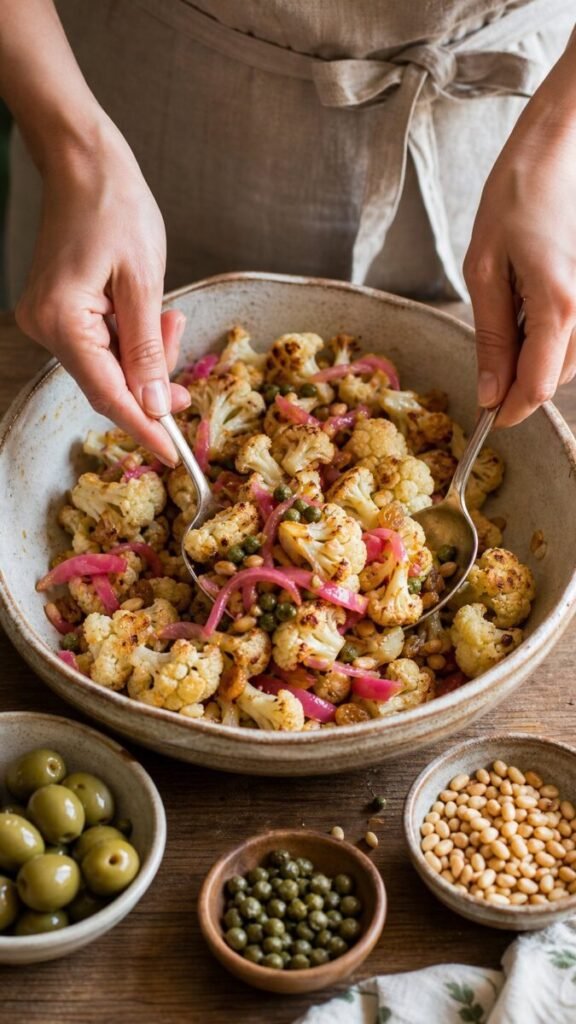
- Step 5 — The warm toss. The florets have had their cooling lap; the pan is still faintly warm to the touch but not steaming. Pour the agrodolce over them — either right on the sheet pan, scraping up anything the roast left behind, or in the big bowl if the pan’s edges have gone crispy and precious to you. Add the drained onion slices and the raisins, and toss it all with your hands or two spoons until every floret is glossed. This is the moment the rule has been driving toward: the warmth pulls the dressing into the florets, the pink onions and dark raisins thread through the gold, and the kitchen smells like a lemon grove with a bakery somewhere behind it. Taste one now — it should be too intense, nearly too sour, aggressive on its own. That’s correct. The rest and the cold are about to round every edge of it.
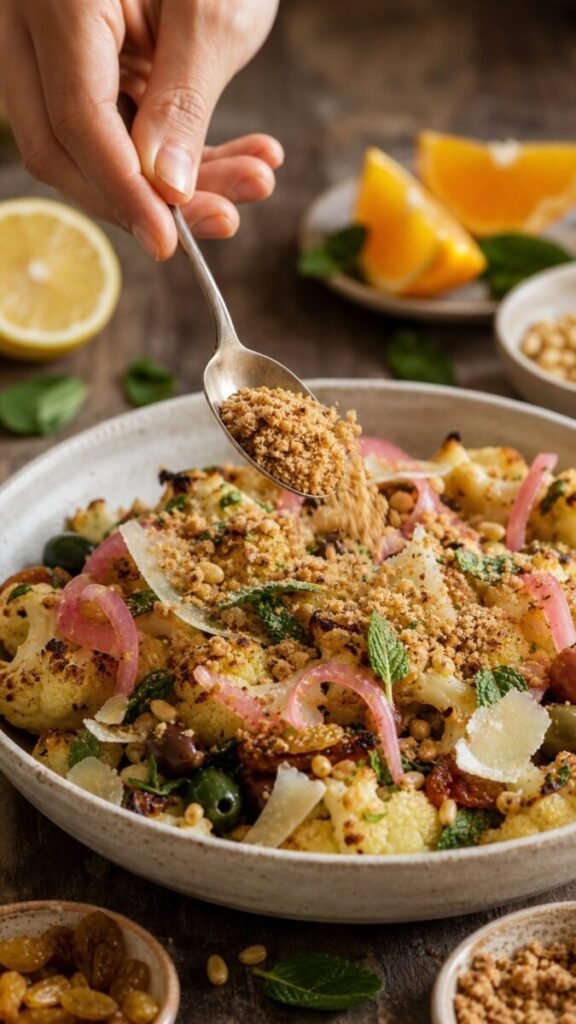
- Step 6 — The rest and the finish. Leave the salad twenty minutes on the counter, or move it to the fridge for two hours or overnight — the fridge doesn’t store this salad so much as finish it. Before serving, fold in what waited: the torn olives, the patted-dry capers, the pine nuts, the torn mint, and the pecorino, shaved over in wide strips with a vegetable peeler. The pangrattato never goes in the bowl — it’s scattered over the top at the table, where it stays crisp for exactly as long as the salad lasts, which is not long. Serve it cold or cool-room-temperature, with the biggest spoon you own, and take the serving with the most pink onion in it. You made the bath. You’ve earned the pink.
The roasted Mediterranean vegetables are this salad’s neighbor from one island over — the same roasting doctrine, the same olive oil, a completely different acid. Serve them warm beside this served cold, and the whole shelf of the oven feeds the whole table.
Anna’s Kitchen Notes
Castelvetrano olives, if you can get them. The bright green, buttery ones from the olive bar are the Sicilian default and worth the trip — their sweetness is gentle enough to sit inside the agrodolce instead of arguing with it. Jarred green olives work fine; kalamatas are the fallback and the boldest of the three, almost a different salad. Whatever lands in the cart, tear them rather than chopping — torn faces are irregular and hold dressing, and the irregular edges read generous on the plate.
The orange is not optional, but its form is flexible. The zest is where the perfume lives, and the juice is where the sweetness rounds — the recipe wants both. A regular navel orange is the year-round answer, and a blood orange, in the months when they appear, changes the salad’s whole accent: darker juice, a raspberry note under the acid, and a bowl that photographs like late January in Sicily. Whichever orange, zest it before you juice it — a juiced half can’t be zested, a lesson this kitchen has now paid for twice.
The pecorino question. It’s traditional in the south of the island and skipped as often as kept — the salad is complete and vegan without it, and the pangrattato was invented to stand in for it. If the wedge is in the fridge, shave it on wide and cold over the finished bowl; if it isn’t, add an extra pinch of salt to the dressing and don’t look back. Both versions have defenders in this house, and the vegan one wins every time there’s hummus or white beans elsewhere in the meal.
Doubling for a crowd. Two sheet pans, rotated top-to-bottom at the toss, and one head becomes two — the salad serves a picnic of sixteen, and the agrodolce simply doubles in the same whisked bowl. Don’t try to save a pan by stacking florets two deep; crowding is the recipe’s only unforgivable sin, and a crowded double batch steams both pans into paleness. The crumbs and pine nuts toast in one skillet in two quick rounds while the florets cool.
Tomorrow, honestly rated. The second day is the better day — the florets have marinated past their surfaces, the onions have gone quiet and sweet, and the whole bowl has settled into itself. Re-up the parts that age: a few fresh mint leaves, a fresh shaving of pecorino, and the last of the pangrattato from its jar. What I most often do with day-two leftovers, though, is fold them into warm couscous or scoop them over soft scrambled eggs, where the warm base meets the cold salad and the temperature trick runs in reverse.
The Antipasto Table
This salad was built for a table where five things are happening at once. It sits happily beside creamy parmesan tomato and cannellini soup — the soup-and-salad weeknight, one ladle warm and one spoon cold, and the agrodolce cuts the cream exactly where cream wants cutting — with focaccia underneath everything, its olive-oil crust understanding the pangrattato conversation across the table. For a protein plate, garlic butter chicken thighs alongside turn the whole spread into dinner with no further negotiation.
The lunch lane is where the salad’s second life happens: fold a handful of chickpeas through and it stops being a side entirely — the chickpea salad that already lives on this site is the template, and the agrodolce version takes the same desk-lunch habits. If the dressing’s sour-sweet spine is what your kitchen liked best, the Greek dressing is its brighter cousin — more lemon, less honey — and the two of them can rotate through a whole week of vegetables without repeating themselves.
Same Agrodolce, Other Vegetables
The broccoli version. Same roast, same bath, same everything — broccoli florets and their peeled, sliced stems in place of the cauliflower. The flavor runs greener and the pangrattato matters more, and the raisins do quiet work balancing broccoli’s brass edge. The one adjustment: pull the roast two minutes earlier, because broccoli crosses from browned to bitter on a shorter fuse.
The squash version. Roasted cubes of butternut or delicata — already sweet, so the honey drops to a single teaspoon and the half-beat rule runs tighter to the sour side. This is the version that converts squash-skeptics, because the capers and vinegar keep every bite from tipping toward dessert. Delicata’s thin skin goes in unpeeled, and the skin’s edges are the best-browned part of the whole pan.
The fennel version. Raw shaved fennel in place of the roasted florets — no oven at all, the bulb run over the mandoline, the bath doubled in time because raw fennel takes longer to relax. The salad becomes a true slaw, licorice-bright and cold, and the orange’s job doubles with the anise running under it. This is the August version, when the oven is off for the whole week on principle.
The carrot version. Roasted carrot batons, the same agrodolce, a teaspoon of ground cumin over the pan before the oven — the salad moves toward a Moroccan accent, which is the direction the island’s kitchen has faced for a thousand years anyway. Raisins become essential here rather than traditional; the carrots bring so much sweetness that the dressing’s sour needs the extra counterweight.
The warm pasta conversion. The Palermo move: reserve a third of the roasted florets, boil short pasta — cavatelli if you can find them, shells if you can’t — and toss the hot pasta with the reserved florets, the agrodolce, a splash of pasta water, and the pangrattato. Same dressing, hot instead of cold, ten extra minutes, and the salad’s entire pantry becomes a main course. This is the recipe’s second life in the same week, and in my kitchen it’s the reason the agrodolce gets mixed in a batch-and-a-half.
The chickpea meal. A can of chickpeas, drained, patted, and folded through the finished salad — lunch for four, desk lunch for a week, no other change. The chickpeas arrive neutral and drink what’s left of the dressing by noon, and the agrodolce turns them into the best thing in the container. Add an extra squeeze of lemon at the desk; the fridge goes quiet on the citrus overnight.
The Picnic Math
| Nutrient | Per Serving (1 of 8) |
|---|---|
| Calories | 190 kcal |
| Protein | 5 g |
| Carbohydrates | 22 g |
| Fats | 11 g |
Estimates as written — the olive oil, the pine nuts, the pecorino, and the honey all counted, the vegan version a shade lighter. Eleven grams of fat sounds like a warning and is mostly the good bottle and the nuts doing their jobs; this is the rare salad where the vegetables are the calorie majority and the dressing is the minority. The money math is picnic arithmetic: one head of cauliflower, an onion, a handful of pantry items, and the only real expense is the pine nuts — call it eleven dollars for eight side servings, and the almond swap in the FAQ cuts a third off the bill. At a dollar and change a serving, it outperforms every antipasto on any menu in town, and it travels: a container of this and a bag of bread is a picnic that needs nothing else.
The Marinated Week
The fridge keeps the dressed salad four days, and the first two of them are the best ones — the florets keep drinking, the onions keep mellowing, and day two’s bowl is rounder than day one’s. Serve it from the fridge, but give it fifteen minutes on the counter first: straight-from-the-fridge cold mutes the sour, and the half-beat needs a little warmth in the room to be audible. The parts that age out — mint, pecorino, anything leafy — get re-upped per serving, a ten-second habit that keeps a Tuesday bowl tasting like a Saturday one.
The crunch never goes in the container. Pangrattato stored in its own jar stays crisp for the week; pangrattato stored on the salad is paste by morning. This is the one storage rule with no flexibility in it, and it’s the difference between leftovers and a lesson: jar for the crumbs, bowl for the salad, table for the meeting of them. The pine nuts can live in the same jar — they hold their toast for days and pair off with the crumbs at serving anyway.
What doesn’t happen at all is the freezer, which is not part of this conversation — roasted cauliflower thaws into something spongy and heartbroken, and the agrodolce doesn’t survive the round trip. The make-ahead runs forward only: today’s roast becomes tomorrow’s lunch becomes Thursday’s frittina fold-in, and the salad leaves this world the way it came in, at room temperature, slightly improved by its wait.
Where It Goes Wrong
The pale floret. Bland, wet-textured, beige — the pan was crowded, the florets steamed where they wanted to brown, or the roast came out early because they “looked done.” Pale cauliflower carries no nuttiness for the dressing to soak into, and the salad tastes like vinegar on a vegetable. Two florets deep on the pan is already too deep; if the whole head doesn’t fit with air between pieces, roast in two pans or two rounds. The five minutes a second pan costs is cheaper than eight servings of beige.
The salad that tastes flat on the fifth bite. The first bite is bright and everything after it fades — the cauliflower was dressed cold and never drank. The dressing is sitting on the outside like a coat, not inside like a marinade, and no amount of resting after the fact fixes it; the florets closed up. The warm-dress window is the recipe’s one unskippable beat, and it’s five minutes of waiting, not five of work. Next time, the cooling lap happens before the pour, always.
The onion that took the mic. Every bite after the first is onion-forward in a way Sicily never intended — the bath got skipped. Raw red onion is a bully in a marinated salad; it sharpens overnight while everything else mellows, and by day two it’s running the whole bowl. The bath takes ten minutes and makes the onion the supporting character it was cast as, plus the pink. There is no version of skipping it that works out.
The candy dressing. Sweet, thick, cloying — the honey went in with a generous wrist, the half-beat test went untested, and the sour is now a rumor in its own dressing. The fix runs in one direction: lemon, a half at a time, whisked and tasted, until the order restores itself — sour first, sweet behind it. Honey is the strongest ingredient in the bowl and behaves accordingly; it’s easier to add than to subtract, so start light and build.
The crunch that went soft overnight. The pangrattato was stirred into the salad before the fridge instead of scattered at the table — and the crumbs spent the night absorbing the dressing they were supposed to be escaping, arriving at lunch as a damp memory of themselves. The jar rule is absolute: crumbs in their own jar, pine nuts beside them, the salad bare until the moment of serving. Crumbs take four minutes to toast; a jar of them takes no minutes at all on a busy night, if they were made on Sunday.
The puddle. A slick of liquid at the bottom of the serving bowl by the end of dinner — wet capers, briny olives straight from the jar, raisins still carrying their soak water, all of it pooling under the best-dressed florets. Every brined and soaked item gets patted or drained before it joins the bowl, and the serving spoon goes to the bottom and folds once before the first plate leaves the kitchen. A puddle isn’t a ruined salad, but it’s a diluted one, and this dressing is too well organized to be diluted by accident.
Cauliflower Salad Questions
Can I make this with raw cauliflower instead of roasted?
The raw school is real and worth knowing: florets shaved thin on a mandoline, the same agrodolce, and a longer marinate — an hour minimum, overnight better — because raw cauliflower drinks slowly. The result reads as a delicate slaw rather than an antipasto, lighter and greener, with no oven involved. It’s the August answer, and it’s the same recipe wearing different clothes; start with the roasted version once, then decide which temperature the household’s summer wants.
Can I steam or boil the cauliflower instead of roasting?
You can — the one-minute blanch is the old-school trattoria method, and it’s gentle and fast. What it gives up is browning, which is where the nutty depth and most of the visual appeal come from; a blanched version is softer and more retiring, and the dressing has less to hold on to. If the oven’s spoken for, blanch, drain extremely well, and dress while the florets are still warm from the water — the Warm-Dress Rule survives the method change, and the half-beat rule carries the flavor regardless.
How far ahead can I make it?
The salad is at its best from hour two through day two: make it in the morning for dinner, or the day before a picnic entirely. The fridge doesn’t store it so much as finish it. What stays separate: the pangrattato in its jar, the mint and pecorino until serving. If the second-day bowl has gone quiet on the acid — the cold does muffle it — a fresh squeeze of lemon at the counter brings the half-beat back, and one extra pinch of salt wakes the whole thing.
Is this vegan?
Nearly, and cheaply made fully so: the pangrattato is already olive-oil vegan, the agrodolce needs only maple syrup in place of the honey, and the pecorino was always optional — Sicily’s crumbs were invented as its stand-in. That version is a Plant-Based tag and a complete salad, not an adaptation. With the pecorino kept, the salad is vegetarian and richer by exactly one shaved wedge.
Pine nuts are expensive. What else works?
Toasted almonds, sliced or chopped, and toasted sunflower seeds both work and cost about a third of the pine-nut route — the almonds are the better of the two, sweeter and closer to the original’s soft richness. What none of the swaps fully copy is the pine nut’s specific creaminess, which is why the recipe keeps them as the default and the price is confined to a quarter-cup. The crunch doctrine is the same with any of them: toast until the bakery smell arrives, cool away from the pan, jar until serving.
What do I serve it with?
The antipasto spread: a soup — the creamy cannellini is the classic pairing — plus focaccia and something warm and protein-forward like garlic butter chicken thighs. For a weeknight, it’s a side that becomes a lunch: the chickpea fold-in turns the leftovers into meals on its own, and a container of this over warm grains is a full desk lunch that requires nothing from the office microwave.
How do I know the agrodolce is balanced?
The half-beat rule, tasted with a spoon before the pour: sour on the beat, sweet a half-beat behind. If they land together, it’s too sweet — lemon. If the sour stands alone with nothing following it, add honey until the echo shows up. The test takes ten seconds, it works on every agrodolce you’ll ever make, and it’s the single habit that separates a Sicilian-tasting salad from a dressed one. Trust the spoon, not the recipe card — your vinegar and your honey are stronger or gentler than mine, and the balance is the recipe.
Sicilian Cauliflower Salad
Ingredients
As an Amazon Associate I earn from qualifying purchases.
Roasted cauliflower
- 1 large head cauliflower, about 2 lb (900 g), cut into small florets; tender core thinly sliced
- 3 tablespoons olive oil
- 1 teaspoon fine salt, or less to taste
Quick-soaked onion
- 1 small red onion, thinly sliced
- ¼ cup red wine vinegar
- ¼ cup warm water
Sweet & salty additions
- ½ cup (about 75 g) golden raisins
- ½ cup pitted green olives, preferably Castelvetrano, drained and torn
- 2 tablespoons capers, drained and patted dry
- 1 oz (28 g) pecorino, shaved, optional
Citrus agrodolce
- 1½ tablespoons honey, or maple syrup for a vegan version
- Juice of ½ lemon, about 1½ tablespoons, plus more to taste
- Finely grated zest and juice of ½ orange, about 3 tablespoons juice
- 1 clove garlic, grated
- 1 teaspoon dried oregano
- A small pinch red pepper flakes
- 4 tablespoons extra-virgin olive oil
- ¼ cup loosely packed fresh mint leaves, torn just before serving
Toasted topping
- ½ cup coarse breadcrumbs or panko
- 2 tablespoons olive oil
- ¼ cup (about 34 g) pine nuts
Kitchen Tools
- Large rimmed baking sheet, or two if needed to avoid crowding
- Large mixing bowl and small bowls for the onion and dressing
- Small skillet, for crumbs and pine nuts
- Chef’s knife and cutting board
- Fine zester and
More Delicious Recipes: