Fast Comforting Sicilian Chicken Soup | Cozy Dinner
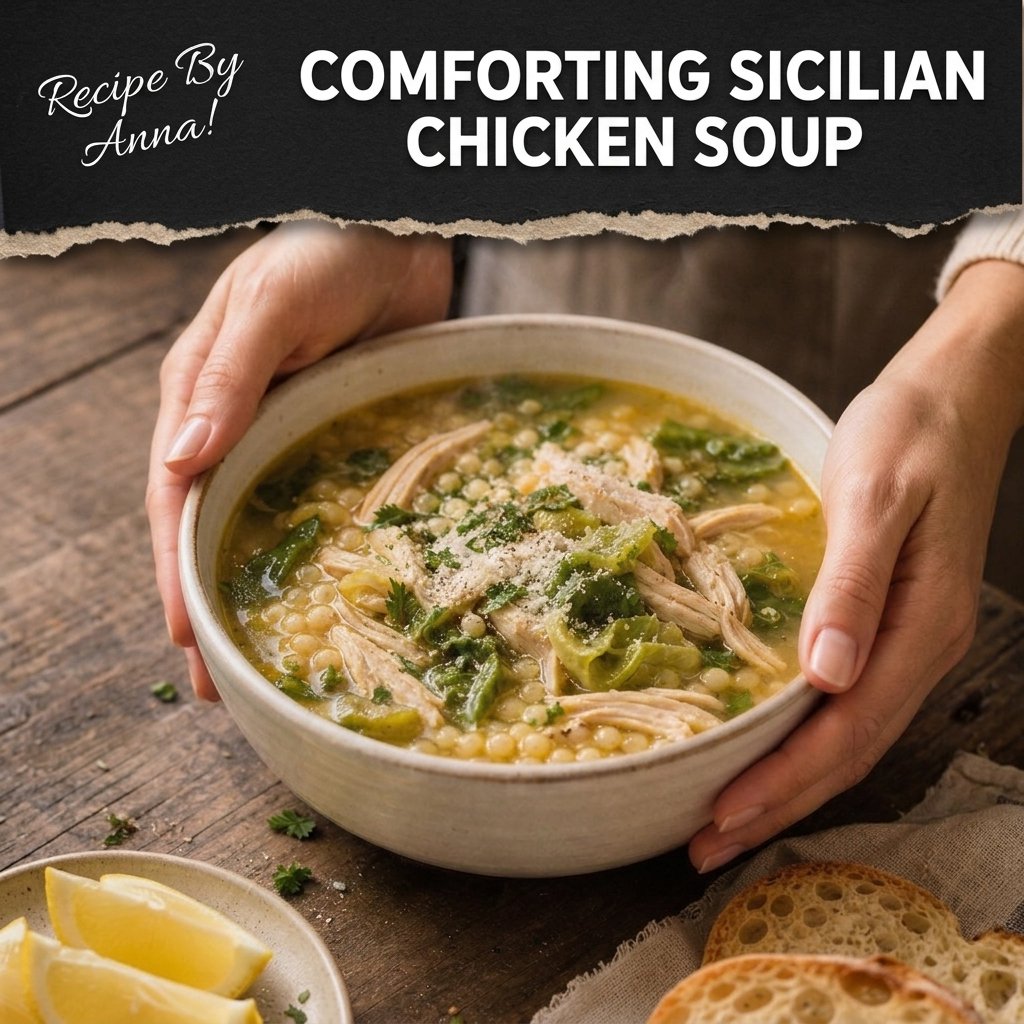
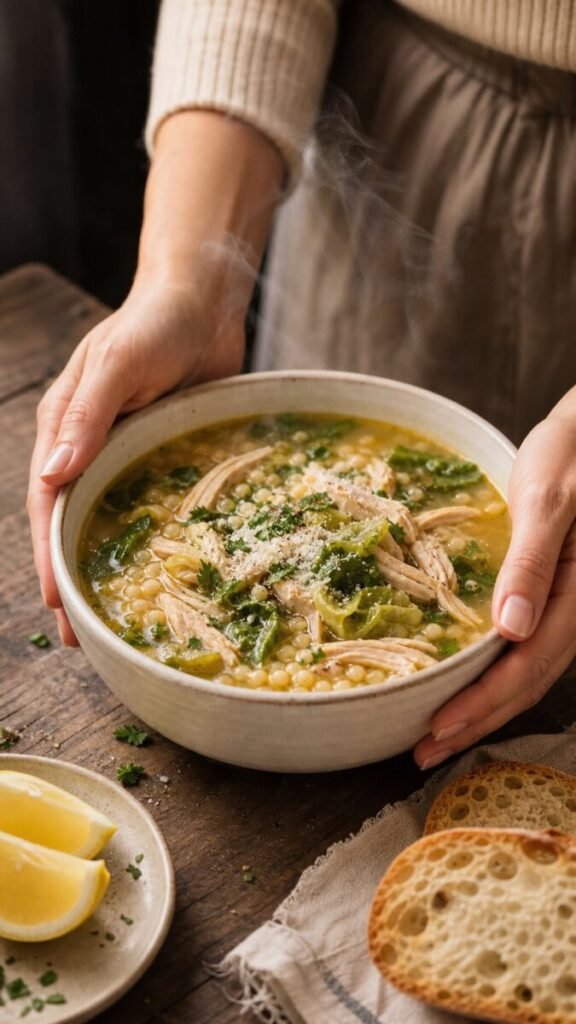
Every chicken soup in the world is somebody’s grandmother, but the Sicilian version has a specific personality: golden broth, tender shreds of chicken, bitter greens, tiny pasta, and — the part that makes it Sicilian — a raw egg beaten with pecorino and lemon, stirred into the pot at the last minute so the whole soup turns satin without a drop of cream. It’s cousin to the Greek avgolemono and the Roman stracciatella, which tells you the egg-in-broth idea works so well that the whole Mediterranean refuses to share credit for it. This is the Sicilian branch of that family tree, and it might be the most comforting of the lot, because the lemon and the cheese give it a brightness that regular chicken soup never finds.
The egg turn is the technique worth learning, and it has a reputation for difficulty that it doesn’t deserve once you know the one rule. Eggs begin to set around 160°F and are fully scrambled by 180 — so if you pour beaten egg into boiling broth, you make egg drop soup’s tragic cousin, with ragged white curds floating in a cloudy liquid. Do it the correct way — pot off the heat, broth no longer bubbling, egg mixture tempered warm first with a ladle of the broth, then streamed in a thin ribbon while you stir — and the eggs set into threads so fine the broth just turns opaque and glossy, thick enough to coat the spoon. The lemon’s acid actually helps here, tightening the texture; it only turns on you if the heat does. One rule, one thermometer-free test I’ll teach you, and the hardest step in the recipe becomes the one you show off.
Everything else in the pot is honest brodo building. Bone-in chicken thighs get browned hard first — not for the crispy skin, which gives itself to the pot, but because the browned bits on the bottom of the pot dissolve into the broth and carry more flavor than any carton can. The bones simmer out collagen, which is the difference between broth that feels like water and broth that feels like it’s doing something for you. A cinnamon stick goes in for twenty minutes and comes back out — the traditional Sicilian whisper of warm spice that guests can never name and always notice. And the escarole wilts in at the end, because a bitter green against a rich broth is a very Sicilian kind of balance. One pot, about an hour, and a soup that eats like a cure for the entire month of February.
The Broth Ruling
The doctrine here is that the soup builds its own broth even while using store-bought broth — the doubling trick. You start with eight cups of good carton broth, then you brown bone-in thighs in the pot and simmer them in that broth for twenty-five minutes, and what you end up with is broth that has been upgraded in place: the Maillard browning on the chicken dissolves into the liquid, the bones and connective tissue contribute collagen, and the carton broth ends up tasting like it simmered all day. Carton broth alone is a fine product that tastes like a fine product; carton broth that has had browned chicken and soffritto simmered in it tastes like Sunday. There’s no extra work in the trick — the chicken had to cook anyway — which is my favorite kind of kitchen physics.
The egg-and-cheese turn deserves its own paragraph of science, because it’s the step that separates this soup from every other chicken soup on the site. Eggs are mostly water and protein, and those proteins are coiled strings that unfold and link up when heated — slowly at first, then all at once. Below about 160°F they unfold lazily and bond loosely, which is a silky custard; above 180°F they seize into a tight curd, which is scrambled eggs. Your entire job in the turn is keeping the mixture on the right side of that line: pot off the heat, a couple of minutes for the furious bubbles to retire, the eggs tempered with a ladle of broth first so there’s no thermal shock, and a thin stream poured into the stirring whirlpool. The pecorino in the bowl helps too — its proteins and fat buffer the eggs — and the lemon juice adds acid, which makes the proteins more eager to bond, which is exactly why you never let it boil after. Respect the temperatures and you get soup with the body of cream and none of the dairy.
Two supporting players make the profile specifically Sicilian rather than generally Italian. Pecorino Romano instead of parmesan — sharper, saltier, sheepier, and the cheese that actually travels in Sicilian kitchens; it seasons the soup as it thickens it, which is why you salt the broth lightly and let the cheese finish the job. And the cinnamon stick, which is not dessert cinnamon — it’s the single traditional warm spice in Sicilian brodo, the thing that makes people say “what IS in this?” and refuse to believe the answer. Twenty minutes of simmer, then out it comes. The soup should taste like it has a secret, not like a bakery.
⏱️ 1 HR, ONE POT | 🍋 SERVES 6 | 🥚 SILKY FROM EGGS, NOT CREAM
- Prep Time: 20 minutes — chopping the soffritto and the escarole
- Cook Time: 40 minutes — 10 browning, 25 simmering, 5 finishing
- Total Time: about 1 hour
- Yield: 6 generous bowls
The Tiny Pasta Decision
The kit is a one-pot recipe wearing a small supporting cast:
- Dutch oven or heavy pot, 6 quarts or bigger — wide enough to brown the thighs in two batches without crowding
- Tongs — for turning and later lifting the hot thighs out
- Small saucepan — the acini di pepe cooks separately, and the reasons are a whole doctrine below
- Heatproof bowl and whisk — the egg-and-cheese turn happens in this bowl before it ever meets the pot
- Ladle — for tempering the eggs and for serving
- Box grater — for the pecorino; the fine dusting side is right for the bowl, and a chunk of rind can go into the simmer if you have one
- Big spoon for skimming — a flat-edged one if you have it, for the golden moments when the broth needs tidying
Now the pasta decision itself, because it’s the recipe’s one genuine choice: acini di pepe — the little peppercorn-shaped pasta that Italian markets sell and that sounds like a spell from a fantasy novel — is the traditional call, and its size is the point. It’s small enough to ride on a spoon with everything else, so every bowlful carries broth, chicken, green, and pasta in one motion. Orzo is the substitute that behaves almost as well; ditalini works if that’s the box in the pantry; pastina is the childhood classic. Whatever you choose, you cook it separately in salted water and ladle it into bowls dry, then pour the soup over — and here’s the reasoning: pasta cooked in the pot drinks your broth and leaches starch all through it, which is fine on night one and gummy by day two. Pasta cooked separately stays a clean, distinct grain, the broth stays clear-gold, and leftovers reheat like the first night. The small saucepan is not extra work; it is the recipe’s insurance policy.
Ingredients (With Labels)
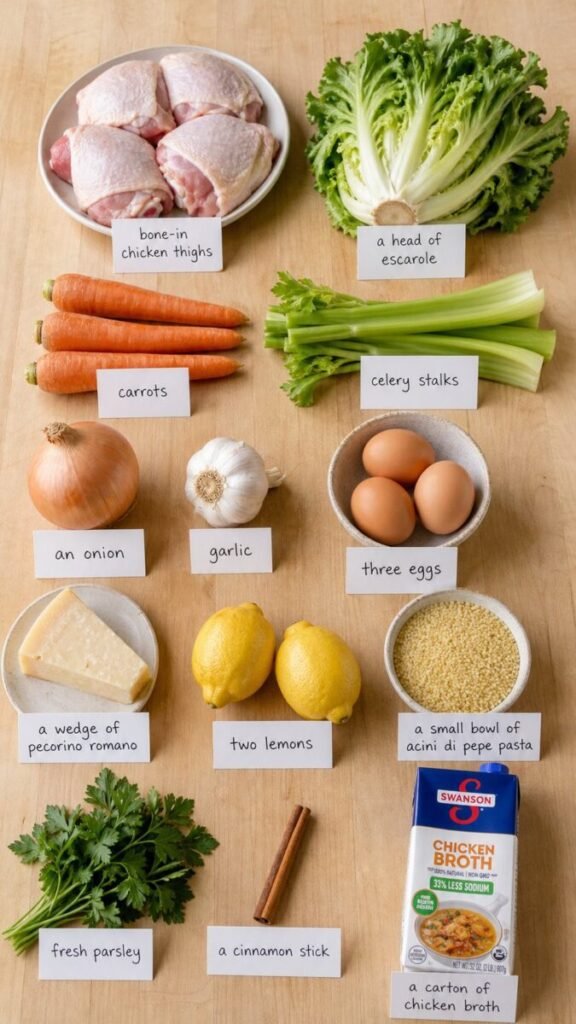
🐔 The Chicken and the Brodo
- Chicken thighs: 2 lbs bone-in, skin-on
- Chicken broth: 8 cups — the good carton, low-sodium if you can find it
- Olive oil: 1 tablespoon
- Cinnamon stick: 1 — the whisper, removed before serving
🥕 The Soffritto
- Onion: 1 medium, diced
- Carrots: 2, diced
- Celery: 2 stalks, diced
- Garlic: 4 cloves, minced
🌿 The Greens and the Pasta
- Escarole: 1 head, chopped into ribbons
- Acini di pepe: ¾ cup — or orzo, or ditalini
🍋 The Turn
- Eggs: 3 large
- Pecorino Romano: ¾ cup, finely grated, plus more for the bowls
- Lemon: 1 large — the zest and about ⅓ cup juice
- Parsley: ¼ cup, chopped
- Salt and black pepper: to taste — go easy, the pecorino salts hard
Step by Step How to Make
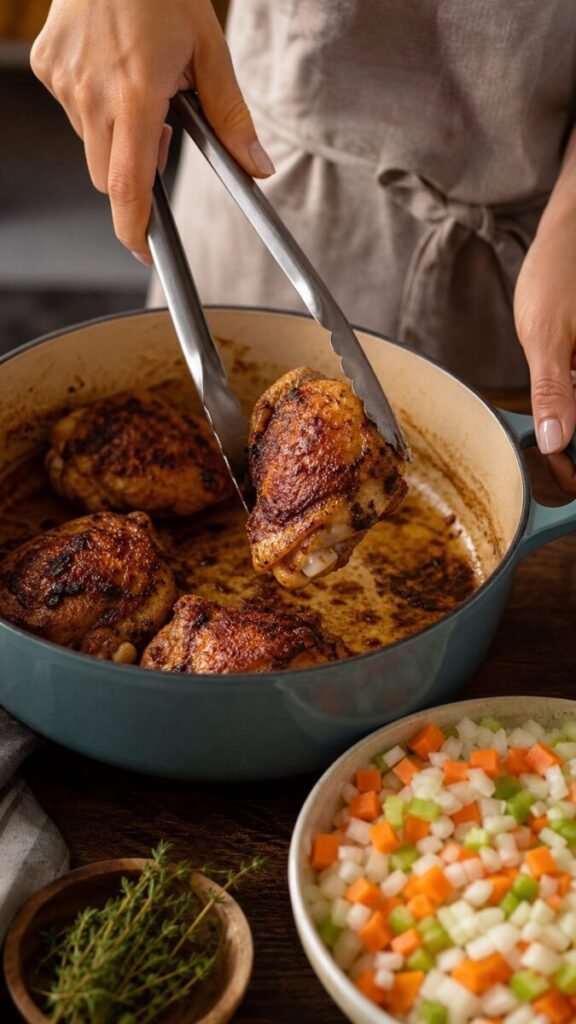
- Step 1 — Brown the thighs. Pat the chicken very dry with paper towels — wet chicken steams, dry chicken browns, and browning is half the broth’s flavor budget. Salt it lightly all over. Heat the olive oil in the Dutch oven over medium-high until it shimmers, then lay the thighs in skin-side down and leave them alone. Four to five minutes undisturbed, until the skin is deep gold and the pot bottom is wearing a brown costume; then turn, brown the other side three minutes more, and lift them out onto a plate. Pour off all but about a tablespoon of the rendered fat — that golden fat is flavor, but more than a spoonful and the broth goes greasy. Those browned bits stuck to the pot? That is not a mess. That is the down payment on dinner.
- Step 2 — Soffritto and simmer. Drop the heat to medium, add the onion, carrots, and celery with a pinch of salt, and cook eight minutes, scraping the browned bits up off the bottom as the vegetables soften — the moisture pulls them loose, and the broth inherits all of it. Add the garlic and cook one minute, until the kitchen smells like the opening credits of an Italian film. Return the chicken to the pot with any juices from the plate, pour in the broth, tuck in the cinnamon stick, and bring it all to a bare simmer — not a boil, a simmer, with bubbles that rise lazily like they’re on vacation. Cover partly, and let it go 25 minutes. Boiling broth goes cloudy and greasy; a simmer stays golden and clean, and the difference is visible in the bowl.
- Step 3 — Shred and skim. Lift the thighs out onto the plate again and let them cool for five minutes — hot chicken shreds badly and burns fingers, and neither of those problems gets better with rushing. Meanwhile, skim any foam or fat beads off the broth’s surface with your spoon. When the chicken is handleable, pull the meat off the bones in big pieces, discard the skin and bones, and tear or chop the meat into spoon-sized shreds. The meat goes back into the pot; the bones have done their collagen work and can rest. Fish out the cinnamon stick now, at the twenty-five minute mark of its career — it has said everything it came to say.
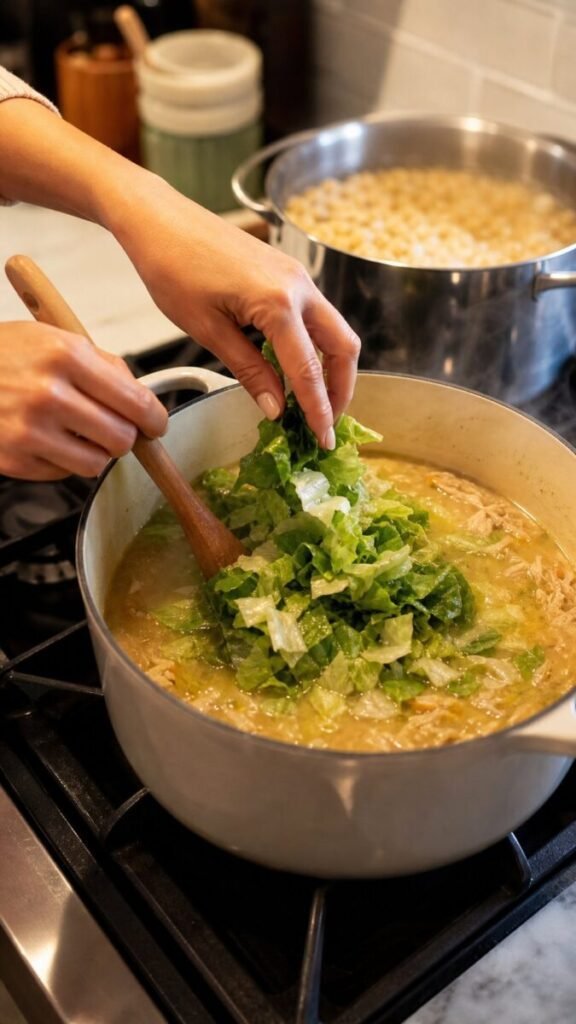
- Step 4 — Greens and pasta. While the chicken cools, start the acini di pepe in the small saucepan of well-salted boiling water — eight minutes to al dente, then drain and hold it. Stir the escarole ribbons into the simmering broth and let them wilt for three minutes, until they go from voluminous and dramatic to dark and agreeable. Taste the broth now and adjust the salt carefully — remember the pecorino coming in Step 5 carries a lot of salt on its own — and add a good grind of black pepper. The soup at this stage should taste like an excellent, old-fashioned chicken soup that is about to become something more interesting.
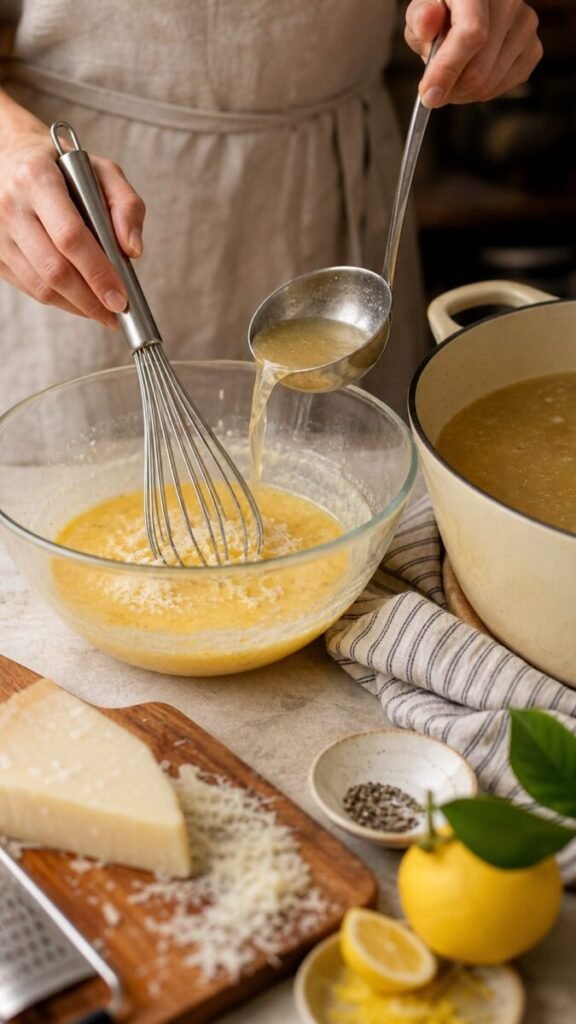
- Step 5 — The turn. This is the moment the whole recipe has been walking toward. In the heatproof bowl, whisk the three eggs until they’re completely smooth and a little foamy, then whisk in the pecorino, the lemon zest, the lemon juice, and the parsley — the mixture will be thick, grainy-yellow, and smell improbably good. Now take the pot completely off the heat and let it sit for a full two minutes, until the surface is still but steaming; if you see any bubbles at all, wait longer. Ladle about a cup of the hot broth into the egg mixture in a thin stream, whisking the entire time — this is tempering, warming the eggs gently so the hot pot won’t shock them. Then pour the tempered mixture back into the pot in a slow thin ribbon, stirring the broth in a steady circle as it goes in. Keep stirring for thirty seconds after. The soup will lighten in color and thicken into something glossy that coats the spoon — and here is the thermometer-free test: if you dip a spoon and drag a finger across the back of it, the line should hold. Hold the line, hold the soup.
- Step 6 — The bowls. Spoon a scoop of the drained acini di pepe into each bowl first — pasta on the bottom, so it never sits in the broth getting softer than you planned — then ladle the soup over it, making sure each bowl gets its share of chicken and greens. Finish with extra pecorino, a strip of lemon zest or a wedge on the rim, and a final grind of pepper. Bread is not optional in my house — something with a crust, for the bowl’s final act — and neither is the second bowl, because this soup has a way of making people renegotiate how hungry they are. Serve immediately. The eggs are at their silkiest in the first twenty minutes, and this is not a soup that improves by sitting on the stove.
Ribbons of egg in golden broth — the chicken wonton soup is this same trick’s Chinese branch, and both branches end with a clean bowl.
Anna’s Kitchen Notes
The two-minute wait is the recipe. The single most common way this soup fails is enthusiasm — pouring the egg mixture into broth that’s still bubbling, and harvesting ribbony scramble. Off the heat, the pot needs a genuine two minutes for the fury to subside; steam should still rise, but the surface should be a lake, not a jacuzzi. If in doubt, wait another minute. The soup loses nothing by waiting and loses everything by boiling. I set a timer now, because my confidence has cost me soup before.
Pecorino, and only a little salt. Pecorino Romano is noticeably saltier than parmesan, and the soup knows it — the cheese seasons the broth as it thickens it, so a broth salted to taste at Step 4 can end up over-salted at Step 6. Salt the broth shy of perfect, let the cheese finish the job, and taste again at the end. And grate it off the wedge yourself if you can: pre-grated pecorino comes coated in anti-caking starch that turns the turn grainy, and this soup deserves the real dust.
Escarole, the green that makes it Sicilian. Escarole looks like a very serious lettuce and cooks down like a green — slightly bitter, sturdy enough to hold up in broth without dissolving, and that bitterness is the flavor reason it’s here: it plays against the rich egg-and-cheese broth the way a squeeze of lemon plays against fried fish. If you can’t find it, Swiss chard ribs and leaves in ribbons is the closest stand-in, and spinach works with the caveat that it’s gentler and disappears a little more into the soup. Buy one head, chop it all, and don’t wash it after chopping — wash before, dry well, because this soup already has enough water in its life.
The cinnamon stick is a whisper, not a statement. Twenty minutes in the simmer, out before serving, and no one will identify it — they’ll just know the soup tastes a little deeper than any chicken soup they’ve had. Leave it in for the full hour and the soup becomes a bakery, and there is no coming back from that. No cinnamon in the house? A single clove does the same job in the same quiet way. What you’re after is the spice the guest can’t name, and both get you there.
Freeze the base, not the soup. The architecture of this recipe is freezer-first: the brodo with chicken and escarole freezes beautifully for three months, but the egg turn does not — thawed egg-thickened soup breaks into sad flakes on reheating. So if you’re making this for a future you, freeze the soup at the end of Step 4 and do the turn fresh on the day, which takes four minutes and makes the future version taste freshly made. The pasta also stays separate in the freezer doctrine — cook it fresh for each reheating, or keep the bagged leftovers in the fridge for up to four days and boil a fresh handful when you serve. The soup keeps its silk, the pasta keeps its bite, and you get credit for a soup you made a month ago.
The Soup Pot Luck
The obvious pairing is bread and more bread, but the site has built you a whole soup table already. The classic chicken noodle soup is this soup’s straightforward American cousin — make one when you want familiar, the other when you want interesting. And the creamy parmesan tomato and cannellini bean soup is the tomato branch of Italian comfort, where this one is the golden branch.
Round out a soup night: the warming Italian broccoli soup is the lighter green side of the same map, and the hearty white bean soup is the meal-in-a-bowl next door. And if the lemon in this soup put you in a citrus mood, the lemon impossible pie is the make-ahead dessert that closes the dinner on the same bright note it opened with.
Same Pot, Other Broths
The avgolemono route. Swap the escarole for baby spinach and the acini di pepe for rice, and cook the rice right in the broth — the soup leans Greek, the lemon comes forward, and the egg turn works exactly the same. Same pot, different passport stamp.
The tomato’d version. A can of crushed tomatoes, a pinch of oregano and red pepper flakes, ditalini instead of acini — this is the other Sicilian family, and it’s a completely different bowl. Skip the egg turn on this branch; the tomatoes want their own stage, and the soup wants pecorino on top instead of inside.
The Thanksgiving carcass build. The week after Thanksgiving, simmer the picked carcass in the carton broth for forty minutes instead of using thighs, shred the leftover dark meat into the pot, and proceed. The soup that comes out of a turkey carcass is the best bowl of the year, and it costs nothing, which is my definition of a holiday tradition.
Sicilian penicillin. The reduced, kid-and-cold version: skip the greens, halve the lemon, double the pasta, and serve it in the biggest mug you own. This is the bowl that gets handed to you on a sick day with no discussion permitted, and it works better than anything sold behind a pharmacy counter — I say that as a cook, not a doctor, but I say it with conviction.
The gluten-free pot. Rice instead of pasta — a half cup of long-grain, cooked right in the broth for the last twenty minutes — and the soup is naturally gluten-free end to end. The egg turn doesn’t care what the starch was; it only cares about the temperature.
The meatball amendment. Roll the chicken’s weight in tiny meatballs — a half pound of ground chicken or pork, an egg, a handful of pecorino and breadcrumbs — and poach them in the simmering broth instead of using shredded chicken. Now it’s halfway to Italian wedding soup, and nobody at the table files a complaint.
The Lemon Ledger
| Nutrient | Per Bowl (1 of 6) |
|---|---|
| Calories | 390 kcal |
| Protein | 33 g |
| Carbohydrates | 19 g |
| Fats | 22 g |
Estimates as written, broth, chicken, escarole, pasta and the full egg-and-pecorino turn included. Thirty-three grams of protein per bowl is the quiet headline — thighs, three eggs, and a hard cheese add up fast, and this soup sits somewhere between dinner and recovery food. The fats run in the satisfying column rather than the gratuitous one: one spoonful of rendered chicken fat, egg yolks, and pecorino, all of them carrying flavor. The carbohydrates are mostly the small pasta scoop, which is why the soup fills you up without flooring you, and why a second bowl remains a physically achievable dream. For the lighter builds, the spinach-and-rice avgolemono route trims the line a little, and the tomato’d version is the one that runs richest.
The Egg-and-Cheese Turn
Storage, in the order the soup wants you to know it. Leftovers keep four days in the fridge, covered — but reheat them gently, below a simmer, because the egg silk is already set and a hard boil will break it into flakes. Warm the pot over medium-low until it steams and a dropped shred of chicken moves in the current, then stop. The microwave does fine at half power. A splash of fresh broth on the reheat thins the leftover thickness, which the pasta never caused, because you cooked it separately — see, the insurance pays out.
The freezer doctrine from the Kitchen Notes bears repeating in one line because it’s the most useful thing in this section: freeze the soup at the end of Step 4, before the turn, and the thawed reheated soup takes a fresh egg turn like it was never frozen at all. The turned soup can technically be frozen — nothing is unsafe about it — but the texture comes back grainy and wrong, and life is too short for soup that apologizes. Three months for the base, four days for the finished soup, and fresh pasta every time.
Second careers: the un-turned base reduced by ten minutes of hard simmer becomes a sauce-thick soup for pouring over toasted bread with pecorino — ribollita’s quick cousin. A ladle of the finished soup over a bowl of the leftover acini with an extra fistful of cheese makes the world’s fastest pasta e brodo. And any extra tempered egg mixture that didn’t make it into the pot (it happens when you pour cautiously) scrambles into the best little side of eggs you’ll have all week, which is less a second career than a bonus track.
Where It Goes Wrong
Ribbons of scrambled egg. The failure has two doors: the broth was still bubbling when the mixture went in, or the mixture went in all at once instead of as a thin stream. Both fix the same way — off the heat, two full minutes of stillness, temper with a cup of broth first, stream slowly into a stirring pot. If it happens anyway, the soup is still delicious; it just looks like stracciatella’s rougher cousin. Call it rustic, serve it with extra bread, and next time wait the two minutes.
A cloudy, greasy broth. Two causes: boiling instead of simmering, which emulsifies the fat into a fog, and leaving all the rendered fat in the pot after browning. The fixes are patience and a spoon — pour the fat off down to a tablespoon after the thighs come out, and keep the simmer lazy enough that you could count the bubbles if you were bored enough. Skim before the egg turn too; a clean surface is what makes the final soup glossy instead of dull.
A bland soup that tastes like carton. The browning got skipped or done gently — those browned bits on the pot bottom are the difference between broth and water with a resume. Pat the chicken dry, get the oil properly hot, and let the thighs sit still until they’re genuinely golden. The other usual suspect is timing the salt wrong: salt the broth shy, let the pecorino finish, and taste at the very end. A soup that still tastes flat after all that wants more lemon, not more salt — acid is almost always the missing note in chicken soup.
Bitter, aggressive greens. That’s the escarole’s dark outer leaves doing what they do. Use the inner, paler leaves for the soup and save the outer ones for a sauté, and if the whole head runs bitter, a one-minute blanch in boiling water before it meets the broth calms it right down. The soup wants the greens to balance the richness, not to win an argument with it.
Soup like paste the next day. The pasta cooked in the pot — it drank the broth all night and swelled into starch. The separate-saucepan doctrine exists precisely for this, and if you’ve already committed the crime, a splash of water or broth plus a gentle reheat walks it halfway back. Going forward: pasta in the bowl, soup over the top, and day two behaves like day one.
A bakery-flavored soup. The cinnamon stayed in too long, or went in doubled by an optimist. One stick, twenty minutes, out — it should read as a mystery, not a flavor. There’s no undoing an over-spiced pot, but there is rescue: dilute with more broth, add a squeeze of lemon, and accept the lesson the way Sicilian grandmothers intended — quietly, and forever.
Sicilian Soup Questions
Can I use chicken breast instead of thighs?
You can, but you’ll trade flavor for leanness — breasts give less collagen and less browned goodness to the broth, and their texture dries out in a simmer that thighs shrug off. If breasts are what’s in the house, use bone-in, skin-on ones and pull them five minutes earlier. Better yet, the Thanksgiving carcass build in the variations shows you how to get all the bone flavor into the broth and use any cooked meat you like.
Why did my eggs scramble?
Heat, speed, or shock — the three doors are covered in the mistakes section, and the one-line version is: pot off the heat until the surface is still, a cup of broth tempered into the egg bowl first, then the mixture streamed back in slowly while you stir. The eggs set lazily into silk below 180°F and seize into curds above it, and the whole technique is just keeping them on the right side of that line. The lemon juice makes the eggs even more heat-eager, which is why this soup never boils after the turn.
Can I make this ahead for a crowd?
Yes, and the soup is structured for it. Make the brodo through Step 4 — chicken, greens, everything — up to two days ahead or three months in the freezer. On the day, reheat the base to steaming, cook the pasta fresh, and do the egg turn at the last minute, four minutes before serving. A soup that turns in front of your guests also happens to be a small piece of theater, and the silk is at its best in the first twenty minutes anyway.
What can I substitute for acini di pepe?
Orzo is the closest stand-in and cooks to the same clock; ditalini is a little bigger and heartier; pastina is the classic childhood shape and the smallest of all. Any small pasta works, and the doctrine stays the same whatever the box says: cook it separately, salt its water like the sea, and put it in the bowl before the soup. Rice also works if you’re keeping the pot gluten-free — a half cup of long-grain simmered right in the broth for the last twenty minutes.
Is this the same as avgolemono?
Cousin, not twin. Avgolemono is the Greek version, built on the same egg-and-lemon thickening, usually with rice and no cheese. This Sicilian branch adds the pecorino to the egg bowl — which changes both the seasoning and the texture — the escarole, the browned-thigh brodo, and the cinnamon whisper. The technique is the shared inheritance; the personality is what differs, and this one talks with its hands.
Can I use store-bought broth?
Yes — that’s exactly what the recipe is built on, upgraded in place. The doubling trick in the brodo section does the work: eight cups of carton broth, browned bone-in thighs simmered in it, and the carton’s quiet flavor gets deepened by the Maillard bits and the bones. Buy the good carton, brown the chicken properly, and nobody at the table will believe the timeline. Low-sodium is the smarter buy, because you’re about to add a salty cheese to the pot.
How do I reheat leftovers without ruining the texture?
Gently, and only to steaming. Medium-low on the stove until the soup moves lazily and steams, then off — no rolling boil, because the set egg silk breaks into flakes at a hard boil and you cannot whisk it back. The microwave at half power in ninety-second stirs works well for single bowls. If the soup has thickened overnight, a splash of broth or water loosens it to its first-night self, and a few drops of fresh lemon at the bowl wake the whole thing up.
Golden chicken broth · Lemon & pecorino · Comfort by the bowl
Comforting Sicilian Chicken Soup
Browned chicken thighs simmered with aromatic vegetables, a subtle cinnamon note, and tender escarole. A tempered egg, lemon, and pecorino finish enriches the broth, while tiny pasta cooked separately keeps each bowl balanced.
As an Amazon Associate I earn from qualifying purchases.
Ingredients
Chicken & broth
- 2 lb bone-in, skin-on chicken thighs, thawed if frozen
- 8 cups low-sodium chicken broth
- 1 tablespoon olive oil
- 1 small cinnamon stick, removed after about 20 minutes of simmering
The aromatic vegetables
Greens & tiny pasta
- 1 head escarole, thoroughly washed, drained, and chopped
- ¾ cup dry acini di pepe, or orzo or ditalini
The egg, lemon & cheese finish
- 3 large eggs, preferably pasteurized
- ¾ cup finely grated Pecorino Romano, plus more for finishing if desired
- 1–2 lemons, for the zest of 1 lemon and up to ⅓ cup fresh juice
- ¼ cup chopped parsley
- Salt and black pepper, to taste
Lemon yield varies: one lemon may not provide ⅓ cup juice. Start with ¼ cup in the egg mixture and reserve the remainder for adjusting the finished soup. Pecorino adds substantial salt, so season the broth lightly.
The soup kit
- 6-quart or larger Dutch oven
- Tongs
- Small saucepan and fine-mesh strainer, for the pasta
- Heatproof mixing bowl and whisk
- Ladle and large spoon, for stirring and skimming
- Fine grater, for cheese and lemon zest
- Cutting board and knife
- Measuring cups and spoons
- Instant-read food thermometer
- Paper towels and a clean plate, for the cooked chicken
The thermometer matters: a still surface, a two-minute wait, or a line drawn across a coated spoon does not establish a safe egg temperature. Tempering controls texture; cooking the finished egg mixture to 160°F provides the safety check.
A light, enriched broth: three eggs in eight cups of broth add body, but the soup may remain relatively light rather than become custard-thick. Do not keep heating it solely to achieve a pronounced spoon-coating texture.
One soup pot, plus pasta: cooking the pasta separately keeps it from absorbing broth as the soup sits. Follow your pasta package’s timing rather than assuming every small shape takes eight minutes.
How to make it
-
Brown the chicken thighs
Pat the chicken dry without rinsing it and season lightly with salt. Heat the olive oil in the Dutch oven over medium-high heat. Brown the thighs skin-side down for about 4–5 minutes, then turn and brown the other side for about 3 minutes. Work in batches if needed. Transfer to a plate; the chicken is not yet fully cooked. Spoon off excess fat, leaving about 1 tablespoon and the browned, not burned, bits in the pot.
-
Soften the vegetables and simmer the broth
Reduce the heat to medium. Add the onion, carrots, and celery and cook for 7–8 minutes, stirring. Add the garlic for 1 minute. Pour in a little broth and scrape up the browned bits, then add the remaining broth, chicken, any collected juices, and cinnamon stick. Bring to a gentle simmer and partially cover. Remove the cinnamon after about 20 minutes. Continue cooking the chicken until it reaches 165°F in the thickest part away from bone, usually about 25–35 minutes of simmering, depending on size.
-
Shred the chicken and cook the pasta
Move the fully cooked thighs to a clean plate—not the unwashed plate that held partially cooked chicken. Let cool briefly until manageable. Remove the skin and bones and shred the meat into spoon-size pieces. Skim excess fat from the broth and return the meat to the pot. Meanwhile, cook the pasta in a separate saucepan of lightly salted boiling water according to its package directions. Drain and keep separate.
-
Tenderize the escarole
Stir the washed, chopped escarole into the simmering broth. Cook for about 3–5 minutes, or longer if the leaves need it, until tender to your liking. Add black pepper and taste for salt, leaving room for the salty pecorino. Confirm that the cinnamon stick has been removed.
-
Temper the egg, lemon, and pecorino mixture
In the heatproof bowl, whisk the eggs thoroughly. Whisk in the finely grated pecorino, lemon zest, and ¼ cup lemon juice. Remove the soup from the heat and let active bubbling stop. While whisking the eggs continuously, slowly drizzle in about 1 cup of hot broth, followed gradually by a second cup. Pour the warmed mixture back into the soup in a thin stream, stirring steadily to disperse it.
-
Gently finish the eggs and serve
Check the soup’s temperature after stirring thoroughly. If it is below 160°F, return the pot to low heat, stirring continuously along the bottom, until the egg-enriched soup reaches 160°F throughout. Avoid boiling and remove from the heat promptly once that temperature is reached. Stir in the parsley and taste, adding the reserved lemon juice a little at a time if desired. Divide the cooked pasta among bowls, ladle the soup over it, and finish with additional pecorino and black pepper if you like. Serve promptly.
Gentle heat does not replace safe temperatures: poultry must reach 165°F, and the freshly added egg mixture should reach 160°F throughout. Egg thickening varies with dilution, acidity, and other ingredients; there is no single visual cue or fixed resting time that guarantees both smoothness and safety.
Leftover safety & allergens: refrigerate soup and pasta promptly in shallow containers within 2 hours, or 1 hour above 90°F. Reheat leftovers to 165°F while stirring gently; “steaming” alone is not a reliable endpoint. Contains egg, milk from the pecorino, and wheat in standard pasta. This soup is cream-free, not dairy-free.