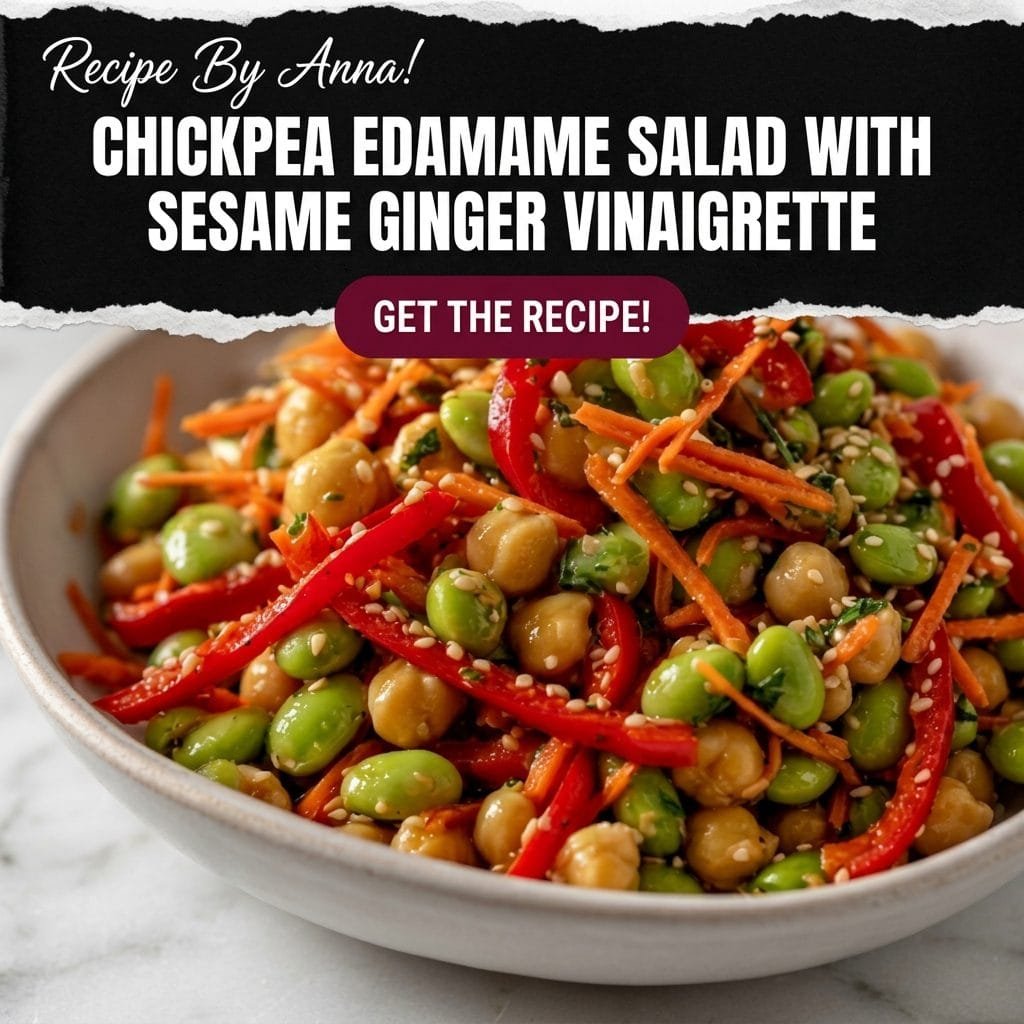
Chickpea Edamame Salad with Sesame Ginger Vinaigrette
This salad is the one you make when you need a lunch that is genuinely filling, genuinely fast, and genuinely interesting enough that you do not spend the afternoon resenting the lunch you chose. It is also — and this matters for meal prep purposes — the salad that holds up in the fridge for three days without going soggy, because none of its components are leafy greens that wilt and the dressing is oil-based rather than creamy.
Chickpeas and edamame together produce a protein combination that is complete in the amino acid sense — the legume proteins in each complement the other’s amino acid profile — and together they make a salad that is genuinely satisfying in the way that protein-rich food is satisfying: you are full until the next meal rather than hungry again by 3pm. The sesame ginger vinaigrette is the element that makes this specifically craveable — bright from the rice wine vinegar, nutty from the toasted sesame oil, warm from the fresh ginger, and just slightly sweet from a touch of honey. It is the dressing that makes you want to eat the vegetables it coats rather than merely tolerating them.
Fifteen minutes from starting to eating. This is the lunch that makes weekday eating feel effortless rather than like a problem to be solved.
Why Edamame Belongs in Every Salad It Is Not Already In
Edamame — immature soybeans, sold frozen in or out of their pods — is one of the most useful ingredients in the protein salad category that most people underuse because they primarily associate it with Japanese restaurant appetisers. Shelled frozen edamame, thawed, requires no cooking and provides approximately 17 grams of protein per cup alongside 8 grams of fibre and a mild, slightly sweet, buttery flavour that works in almost any salad direction. In this recipe, the edamame’s colour (bright green against the golden chickpeas and the purple cabbage), its texture (firm and slightly yielding, different from both the chickpea and the cabbage), and its flavour (subtle and sweet enough not to compete with the sesame ginger vinaigrette) make it specifically the right ingredient for this specific salad.
It is also the ingredient that elevates this from a chickpea salad with Asian-inspired dressing into a high-protein bowl that can genuinely replace a meal rather than just accompany one.
- Prep Time: 15 minutes
- Cook Time: 0 minutes
- Total Time: 15 minutes
- Yield: 3 to 4 servings
What You Need
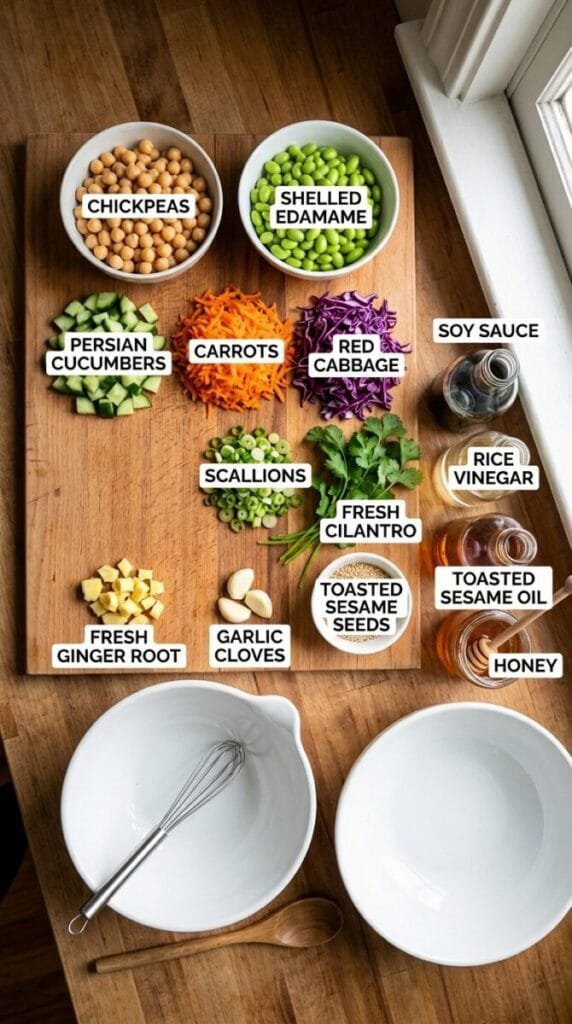
For the salad:
- Canned chickpeas: 1 can (15 oz / 425g), drained, rinsed, and patted dry — dry chickpeas absorb the vinaigrette rather than diluting it with can water
- Frozen edamame, shelled, thawed: 1 1/2 cups (225g) — thaw in the fridge overnight or in a bowl of warm water for 5 minutes; no cooking required
- Purple cabbage, finely shredded: 1 1/2 cups — the most structurally stable salad green in the collection; it holds its crunch and its colour for days in the fridge, unlike any other cabbage or leafy green
- Carrots, julienned or coarsely grated: 2 medium
- English cucumber, diced or thinly sliced: 1/2 large
- Red bell pepper, thinly sliced: 1/2 — adds sweetness and a crisp texture alongside the cabbage
- Green onions, thinly sliced: 3
- Fresh cilantro, roughly chopped: 1/4 cup
- Fresh mint leaves, torn: 2 tablespoons
- Toasted sesame seeds: 2 tablespoons — white or a mix of white and black; black sesame seeds specifically add visual contrast against the pale chickpeas and yellow carrot
For the sesame ginger vinaigrette:
- Toasted sesame oil: 2 tablespoons — the defining flavour of the dressing; toasted sesame oil is deeply nutty and aromatic and is not interchangeable with regular sesame oil (which is raw and largely flavourless) or any other oil
- Rice wine vinegar: 3 tablespoons — lighter and less sharp than other vinegars; the acid that provides brightness without overpowering the sesame and ginger
- Soy sauce or tamari: 2 tablespoons — the salt and umami of the dressing; tamari is gluten-free for anyone who needs it
- Fresh ginger, finely grated: 1 tablespoon — grated on a microplane produces the finest, most evenly distributed ginger without fibrous strands
- Garlic clove, finely grated: 1
- Honey or maple syrup: 1 tablespoon — the sweetness that rounds the vinegar and soy; maple syrup makes this fully vegan
- Lime juice: 1 tablespoon — the bright citrus note that lifts the sesame and ginger combination
- Neutral oil: 1 tablespoon — added to extend the dressing and reduce the intensity of pure sesame oil, which can be overpowering undiluted
- Sriracha or chilli garlic sauce: 1/2 to 1 teaspoon — adjust to heat preference; the heat is background, not foreground
🍽️ Equipment I Need for Chickpea Edamame Salad
Six simple tools for crisp rinsing, quick chopping, a shaken vinaigrette, and two-minute sesame toast.

OXO Good Grips Stainless Steel Colander
Rinses chickpeas and quick-thaws edamame under warm water while the feet keep draining steady.

Pyrex 4.5-Quart Sculpted Glass Mixing Bowl
A generous serving bowl gives cabbage, chickpeas, edamame, pepper, and carrot plenty of room to tumble.

Farberware 9-Piece Knife and Cutting Board Set
A sharp chef knife and stable board handle shredded cabbage, julienned carrot, and diced pepper quickly.

OXO Good Grips 4-Sided Box Grater with Container
The coarse side makes short work of carrot, and the detachable container catches every sweet shred for the salad.

Duimbok Glass Salad Dressing Shaker Containers
Add the vinaigrette ingredients, seal, shake for thirty seconds, and store leftovers in the same jar.

CADIVIZZO 8-Inch Stainless Steel Frying Pan
A small dry skillet toasts sesame seeds quickly without heating up the whole kitchen.
How to Make It
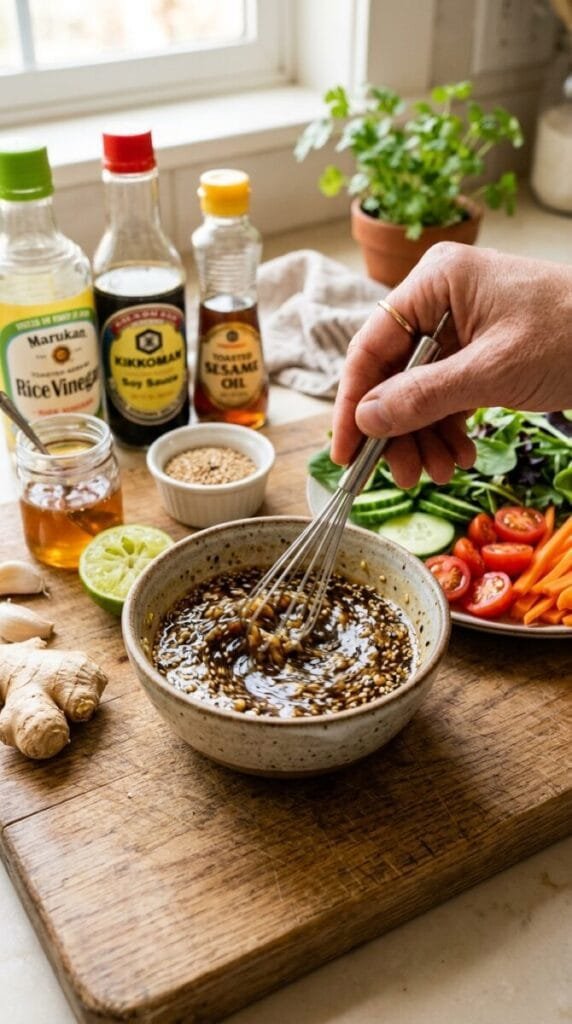
- Make the vinaigrette: whisk all dressing ingredients together in a small bowl or shake vigorously in a jar until emulsified. Taste and adjust — more soy sauce if it needs salt, more rice wine vinegar if it needs brightness, more honey if the vinegar is too sharp, more sriracha if you want more heat. The dressing should taste punchy and well-balanced — slightly sweet, slightly salty, slightly spicy, very sesame. Set aside.
- Thaw the edamame if frozen: place in a bowl of warm water for 5 minutes, then drain and pat dry.
- Drain and rinse the chickpeas. Pat dry with paper towels — this single step produces a salad where every chickpea is coated in dressing rather than having its coating diluted by moisture from the can.
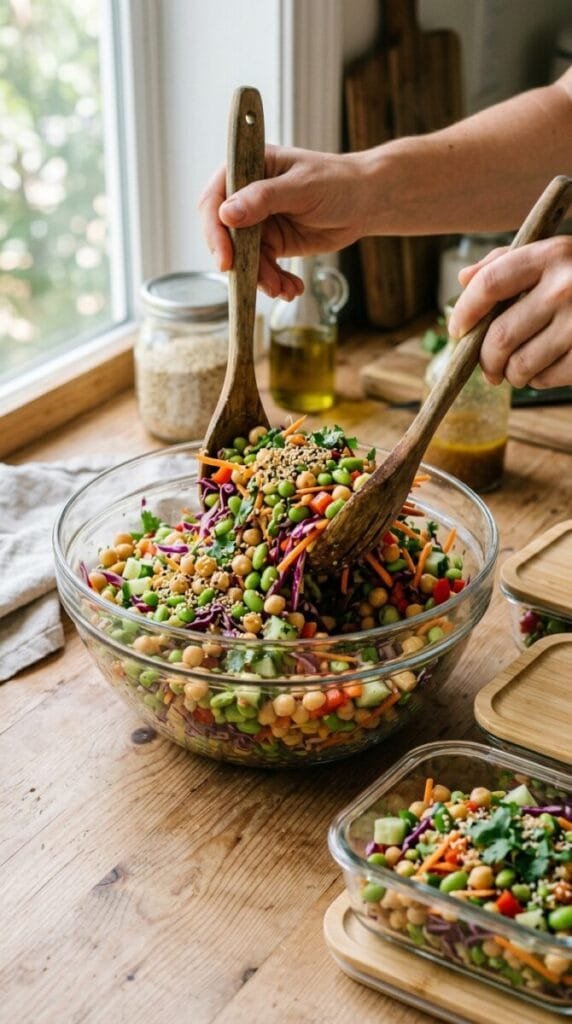
- Combine the chickpeas, edamame, shredded cabbage, julienned carrot, cucumber, red bell pepper, and green onions in a large bowl.
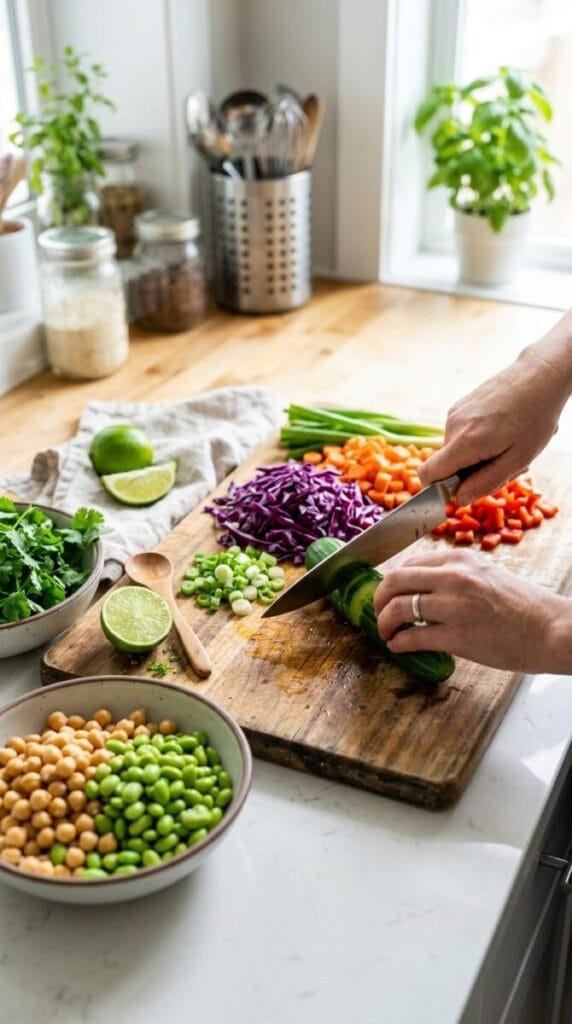
- Pour the vinaigrette over the salad and toss thoroughly to coat every component. The cabbage and chickpeas in particular benefit from a thorough toss — the cabbage needs the dressing worked into the shreds, and the chickpeas need to be coated on all sides.
- Add the cilantro and mint and toss gently with 3 to 4 additional folds.
- Scatter toasted sesame seeds over the top. Taste and adjust — the final seasoning check after the dressing is distributed often reveals a need for more soy sauce or another squeeze of lime. Trust the taste more than the recipe at this point.
- Serve immediately for the most vivid colour and most distinct crunch, or let rest for 10 minutes for the flavours to integrate. This salad does not suffer from a 10-minute rest the way a lettuce-based salad would — the cabbage and chickpeas absorb the vinaigrette and taste better for it.
Chickpea edamame salad with sesame ginger vinaigrette alongside our Tofu Fried Rice is the plant-based dinner that handles the complete Asian-inspired menu without any meat required and without any sense of something missing from the table — the crispy tofu and day-old rice in sesame soy alongside the bright, ginger-dressed salad with edamame and chickpeas covers every protein, every texture, every temperature direction the meal needs. Both are fast. Both are satisfying. Together they are specifically good.
Toasted Sesame Oil, Purple Cabbage for Meal Prep, and the Complete Protein
Toasted sesame oil is the ingredient in this dressing that cannot be substituted — it is made from roasted sesame seeds and has the deep, nutty, slightly smoky flavour that makes Asian-inspired sesame dressings specifically taste of sesame. Regular sesame oil is made from raw sesame seeds and has very little flavour. Olive oil, walnut oil, or any other oil has no sesame flavour at all. The toasted version is available in every supermarket in the oil and vinegar aisle and should be stored in the fridge after opening to prevent the roasted oils from going rancid. If a sesame dressing tastes flat, the most common cause is using regular sesame oil rather than toasted. Check the label: “toasted” or “roasted” is what it should say.
Purple cabbage is the ingredient that makes this the best meal prep salad in the collection. While most salad vegetables wilt, soften, and look tired within 24 hours of being dressed, purple cabbage maintains its crunch, its vivid colour, and its structural integrity for three to four days in the fridge after dressing. The anthocyanins (the purple pigments) actually become more vivid in an acidic dressing over time rather than fading, which means a three-day-old version of this salad can look more brightly coloured than the freshly dressed one. The chickpeas and edamame also hold up without textural degradation. This is the salad that actually gets better with a day of rest.
The chickpea-edamame protein pairing produces a complete protein — meaning all nine essential amino acids are present — from two plant sources that individually have different limiting amino acids. Chickpeas are high in lysine but relatively low in methionine; soybeans (edamame) are higher in methionine and cysteine. Together, they cover the full essential amino acid profile that animal proteins provide. This combination is specifically relevant for anyone eating plant-based or reducing meat, and it is achieved here in a salad that tastes specifically good rather than specifically healthy.
What to Serve This With
As a standalone lunch, this salad is complete — the chickpeas, edamame, and sesame dressing together provide sufficient protein, fat, and flavour to function as a full meal. A small bowl of miso soup alongside is the only addition it benefits from, and only when the occasion calls for something warm.
As a dinner side, this salad pairs naturally with any grilled or pan-seared Asian-inspired protein. Our Brown Sugar Salmon alongside — the sticky, caramelised glaze of the salmon against the bright, sesame-ginger-dressed salad — is one of the most naturally complementary protein-and-salad pairings in the collection. The salmon’s sweet-savoury glaze and the salad’s tangy-sesame vinaigrette share a broadly Asian flavour language without duplicating each other, and together they produce a dinner plate where every element tastes specifically correct alongside the others.
Variations That Go in Different Directions
Add Crispy Tofu: Cube 14 oz of firm tofu and press dry. Toss with 1 tablespoon each of soy sauce, cornstarch, and sesame oil. Pan-fry in a hot skillet with 2 tablespoons of neutral oil until golden on all sides — approximately 3 to 4 minutes per side. Cool slightly and add to the salad. The crispy tofu version becomes a complete protein-dense dinner bowl rather than a lunch salad — approximately 28 grams of protein per serving with the tofu added.
Mango Version: Add 1 cup of diced ripe mango to the salad alongside the cucumber. The mango adds tropical sweetness that works beautifully against the sesame and ginger dressing and the slightly bitter cabbage — the sweet-savoury direction it produces is one of the most popular warm-weather salad combinations. Reduce the honey in the dressing to 1/2 tablespoon to account for the mango’s own sweetness.
Noodle Bowl Version: Cook 6 oz of soba noodles (buckwheat, naturally gluten-free) according to package instructions, rinse with cold water, and drain. Add to the bowl with all the other salad ingredients. Double the vinaigrette to dress both the noodles and the vegetables. The soba noodle version transforms this from a protein salad into a more substantial noodle bowl — the noodles absorb the dressing beautifully and make the dish feel considerably more filling while keeping the same flavour profile.
Winter Version: Replace the cucumber and red bell pepper with 1 cup of roasted butternut squash cubes (cooled to room temperature). Add 1/4 cup of dried cranberries alongside the chickpeas and edamame. Replace the cilantro and mint with fresh basil. The warm-weather vegetables replaced with autumn ones and the cranberry added for tartness produces a winter version of this salad that is equally satisfying and specifically seasonal without abandoning the sesame-ginger dressing that makes the base recipe craveable.
Nutritional Information
| Nutrient | Amount Per Serving (based on 3 main-course servings) |
|---|---|
| Calories | 395 kcal |
| Protein | 21 g |
| Carbohydrates | 45 g |
| Fats | 16 g |
21 grams of protein per serving from a fully plant-based salad — no eggs, no dairy, no meat — is one of the highest protein counts for a plant-based salad in the collection. The chickpeas contribute approximately 7 grams per serving and the edamame contributes approximately 9 grams, with the remaining 5 grams from the sesame seeds and the vegetables. The 16 grams of fat come primarily from the sesame oil and the neutral oil in the dressing. At 395 calories per generous main-course serving, this is a nutritionally complete, filling lunch that covers the protein requirement most people are aiming for at midday without any of the heaviness of a meat-based meal.
Meal Prep and Storing — The 4-Day Promise
This is the meal prep salad that actually delivers on the promise. Make the full batch on Sunday and store in an airtight container in the fridge. On Monday, Tuesday, Wednesday, and even Thursday, the salad is still good — the purple cabbage maintains its crunch, the chickpeas absorb more dressing and become more flavourful, the edamame stays firm, and the sesame ginger vinaigrette distributes more evenly through the components over time. The cilantro and mint will wilt by day three, so add those fresh per serving if you are making this for the full week.
Store the dressing separately if you want maximum crunch preservation — dressed and stored, the cabbage and vegetables are still excellent for four days but are slightly less aggressively crunchy than freshly dressed. Undressed and stored, with dressing added per serving, the vegetables stay at their maximum crunch for the full four days. Either approach works; the choice depends on whether you prefer the more integrated, slightly marinated flavour of pre-dressed or the bright, distinct-component quality of freshly dressed.
The Mistakes Worth Skipping
Using regular sesame oil instead of toasted sesame oil produces a dressing with no sesame flavour — the most common cause of a flat, flavour-absent sesame dressing. Check the label. “Toasted” or “roasted” is the specific modifier that indicates the flavourful version. It is available everywhere and is worth the minute of checking.
Not patting the chickpeas dry produces a salad where the chickpeas dilute the dressing rather than absorbing it — the moisture from the can gets into the surrounding vinaigrette and waters it down, particularly noticeable in the first serving straight from a freshly made bowl. Thirty seconds with a paper towel. The dressing stays punchy and full-flavoured on every chickpea rather than sliding off diluted.
Using a sweet green cabbage instead of purple produces a salad with less colour contrast, less anthocyanin-based stability during storage, and a slightly more neutral, less distinctive flavour than the purple version. Purple cabbage is specifically the choice for meal prep salads because its anthocyanin content makes it the most storage-stable leafy vegetable in the collection. Green cabbage works in terms of crunch but produces a visually less striking bowl and holds up slightly less well over four days. In this particular recipe, the purple cabbage is doing visual, structural, and nutritional work simultaneously.
Honey Cranberry Chicken Bake
Golden bone-in chicken thighs baked under a glossy honey cranberry glaze with balsamic and fresh orange, finished with crumbled feta, rosemary, and thyme — sweet, tart, and savoury in one pan in 50 minutes.
Ingredients
- For the Chicken
- Bone-In, Skin-On Chicken Thighs 4 large (2.5 lb / 1.1kg)
- Fine Sea Salt 1 tsp
- Black Pepper ½ tsp
- Garlic Powder ½ tsp
- Smoked Paprika ¼ tsp
- Olive Oil 1 tbsp
- For the Honey Cranberry Sauce
- Fresh or Frozen Cranberries 2 cups / 200g
- Honey (floral, e.g. orange blossom) ⅓ cup / 110g
- Fresh Orange Juice (about 1 orange) 3 tbsp
- Orange Zest 1 tsp
- Balsamic Vinegar 2 tbsp
- Dijon Mustard 1 tsp
- Garlic Cloves, minced 3 cloves
- Fresh Rosemary Sprig (for the sauce) 1 sprig
- Red Pepper Flakes ¼ tsp
- Fine Sea Salt (for the sauce) ¼ tsp
- For Finishing
- Feta Cheese, crumbled ¾ cup / 100g
- Fresh Rosemary Sprigs, for garnish 2–3 sprigs
- Extra Orange Zest, over the top to taste
- Fresh Thyme Leaves 1 tsp
- Optional Additions & Swaps
- Pecan Halves (toasted in the sauce) ½ cup
- Salmon Fillets (honey cranberry salmon version) 4 fillets
- Boneless Skinless Chicken Breasts (lighter version) 4 breasts, pounded even
As an Amazon Associate, we may earn from qualifying purchases. Click ingredient names to shop on Amazon.
How to Make It
- Preheat the oven to 400°F (200°C) Preheat the oven to 400°F (200°C) so the sear-to-oven transition is immediate.
- Dry the chicken skin completely Pat the chicken thighs completely dry with paper towels. Moisture on the skin produces steam rather than browning — dry skin produces the caramelised crust the glaze needs to adhere to properly.
- Season on all sides Season the chicken on all sides with the salt, pepper, garlic powder, and smoked paprika.
- Sear skin-side down until deeply golden Heat the olive oil in a large oven-safe skillet over medium-high heat. Add the chicken skin-side down and sear without moving for 5 to 6 minutes until the skin is deeply golden and has rendered some fat. Flip and sear 2 minutes on the meat side, then remove from the heat. The chicken finishes cooking in the oven.
- Simmer the cranberry sauce in parallel While the chicken sears, combine the cranberries, honey, orange juice, orange zest, balsamic vinegar, Dijon, garlic, rosemary sprig, red pepper flakes, and salt in a small saucepan over medium heat. Cook 8 to 10 minutes, stirring occasionally, until about half the cranberries have burst and the sauce has thickened slightly. Remove the rosemary sprig. The sauce should be glossy, slightly chunky, and deeply red.
- Pour the sauce over the seared chicken Pour the cranberry sauce over and around the seared chicken thighs in the skillet, tilting the pan so the sauce coats the bottom and reaches every piece.
- Bake until lacquered and 165°F Transfer to the oven and bake at 400°F for 25 to 28 minutes, until the chicken reaches 165°F internally, the skin is deeply golden and lacquered with the reduced cranberry glaze, and the sauce around the chicken is bubbling and slightly caramelised at the edges.
- Add the feta for the final 3 to 4 minutes Remove from the oven and scatter the crumbled feta generously over the chicken and surrounding sauce. Return to the oven for 3 to 4 minutes — just enough for the feta to soften slightly and turn golden at the edges without melting into the sauce. Watch it closely at 400°F.
- Garnish and serve from the skillet Scatter fresh rosemary, thyme leaves, and additional orange zest over the finished dish. Serve directly from the skillet, spooning the pan glaze over rice, mashed potatoes, or polenta.
Nutrition
| Nutrient | Amount Per Serving (1 chicken thigh with sauce and feta) |
|---|---|
| Calories | 485 kcal |
| Protein | 36 g |
| Carbohydrates | 32 g |
| Fat | 24 g |
Values are estimates for the bone-in, skin-on version. The lighter boneless breast variation is approximately 380 kcal per serving.