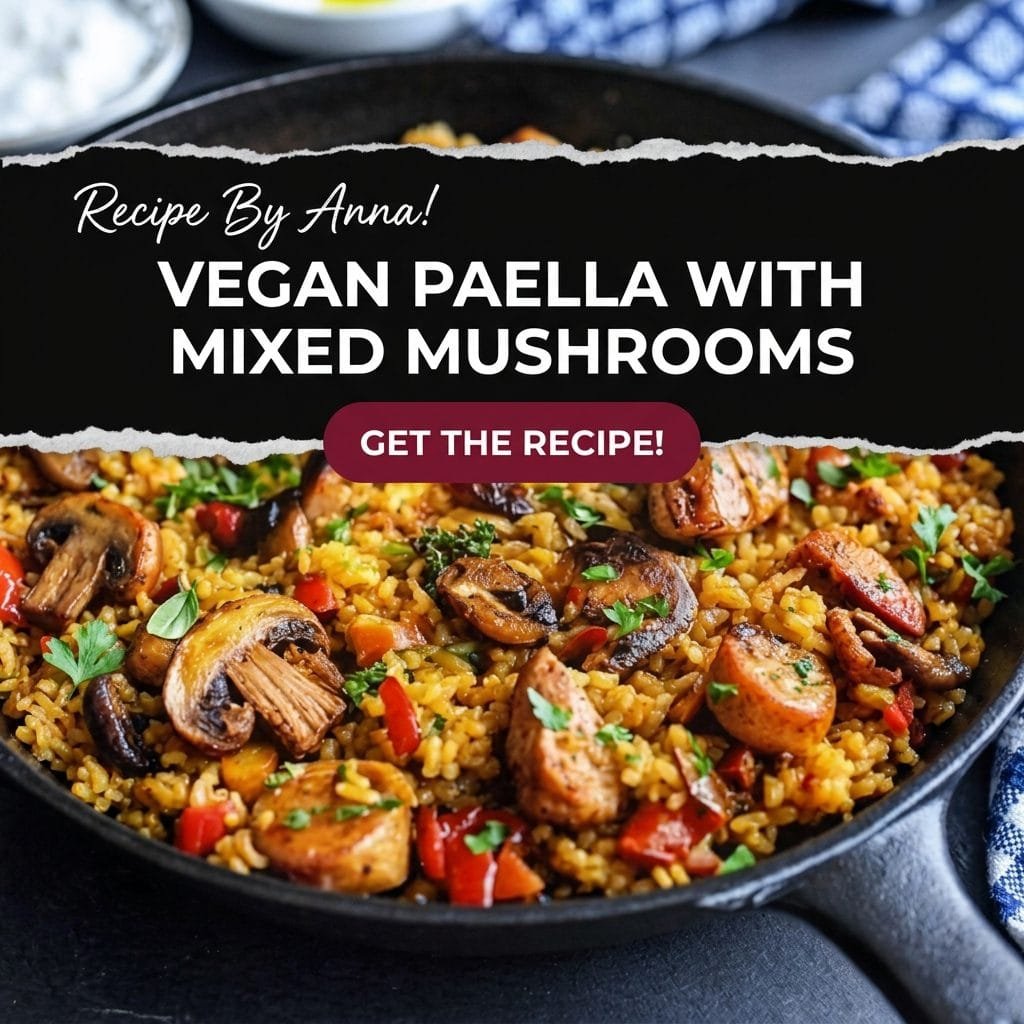
Simple Vegan Paella With Mixed Mushrooms | One-Pan Meal
Paella is the dish that most people assume requires seafood or meat, a special pan, and years of Spanish grandmother supervision to produce correctly. Two of those three things are negotiable. The pan actually helps, though a wide skillet works perfectly well. The Spanish grandmother supervision is, regrettably, unavailable to most of us — but the technique she would have used is fully learnable, and once you understand what you are trying to achieve, you will make paella that is genuinely excellent without anyone’s supervision at all.
This vegan version with mixed mushrooms is not a compromise paella. It is a paella that leans into exactly what mushrooms do best — their umami depth, their meaty texture when properly browned, their ability to absorb the saffron-and-smoked-paprika-scented broth and become deeply, specifically savoury — and produces a pan of rice that is golden from saffron, smoky from paprika, crispy on the bottom where the socarrat has formed, and genuinely as satisfying as any version of this dish you have eaten before.
The socarrat is the goal. Everything else is the path to it.
What Socarrat Is and Why It Is the Entire Point
Socarrat (so-ca-RAT) is the slightly crispy, toasted layer of rice that forms on the bottom of the pan in the final minutes of cooking paella — the culinary equivalent of the crispy rice at the bottom of a Persian tahdig or the scorched rice at the bottom of a Korean dolsot bibimbap bowl. In traditional Spanish paella culture, the socarrat is considered the sign of a well-made paella and the most coveted part of the pan. Guests scrape the bottom of the pan specifically to get it. A paella without socarrat is technically cooked rice. A paella with socarrat is the real thing.
Producing it requires two things: a wide, shallow pan so the rice layer is thin enough to crisp at the bottom without the top drying out, and patience in the final 5 minutes — specifically, the willingness to turn the heat up slightly and leave the pan alone while you listen for the sound of the rice beginning to toast on the pan surface. You can hear the socarrat forming. It sounds like very gentle crackling. When you hear it, you wait 2 more minutes and then you pull the pan.
- Prep Time: 20 minutes
- Cook Time: 40 minutes
- Total Time: 1 hour
- Yield: 4 to 6 servings
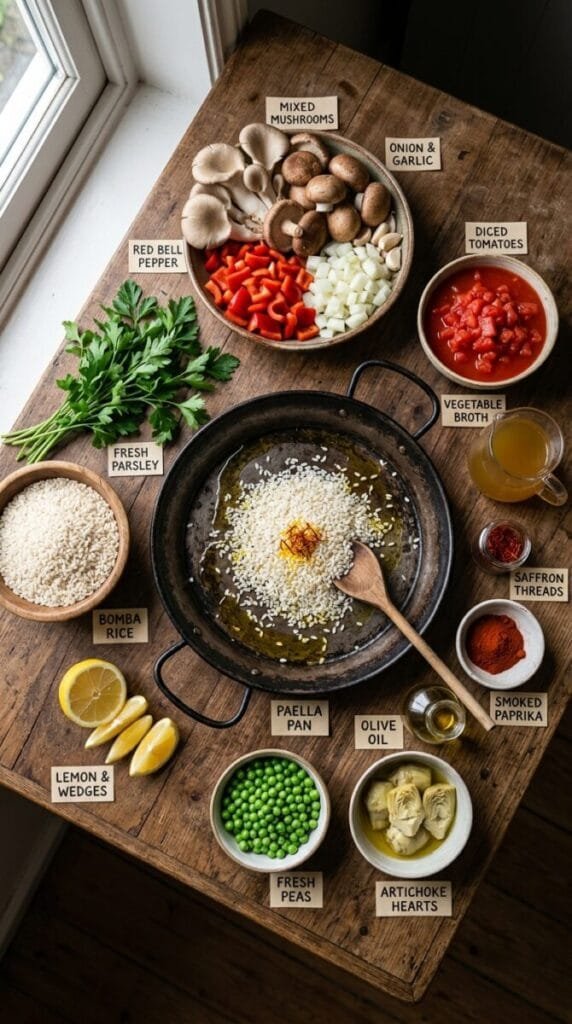
What You Need
For the paella:
- Bomba or Calasparra rice: 2 cups (400g) — traditional paella rice; it absorbs more liquid than regular long-grain rice without becoming mushy and holds its structure through the full cook; Arborio (risotto rice) works as a substitute but produces a creamier, less distinct grain
- Mixed mushrooms — oyster, shiitake, cremini, king oyster: 1.5 lbs (680g) — use at least two varieties; the combination of textures and umami depths produces a more complex flavour than any single variety
- Olive oil: 4 tablespoons, divided
- Yellow onion, finely diced: 1 large
- Red bell pepper, diced: 1
- Garlic cloves, minced: 6
- Canned crushed tomatoes: 1/2 cup (120ml) — the tomato base called sofrito; cooked down with the onion and pepper until thick and concentrated
- Smoked paprika (pimentón de la Vera): 2 teaspoons — Spanish smoked paprika specifically; it is significantly more complex and smoky than regular paprika and worth finding for this recipe
- Sweet paprika: 1 teaspoon
- Saffron threads: 1/4 teaspoon, steeped in 2 tablespoons of warm water for 10 minutes — the spice that gives paella its characteristic golden colour and floral, slightly metallic flavour; it is expensive but a little goes a very long way
- Vegetable broth, warm: 4 cups (960ml)
- Dry white wine: 1/2 cup (120ml)
- Roasted red peppers, sliced: 1/2 cup (jarred is fine)
- Artichoke hearts, halved: 1 can (14 oz / 400g), drained
- Frozen peas: 1 cup — added in the last 5 minutes
- Fine sea salt: 1 1/2 teaspoons
- Black pepper: 1/2 teaspoon
For finishing:
- Fresh flat-leaf parsley, roughly chopped
- Lemon wedges — essential; a squeeze of lemon over the finished paella is the acid that brightens the entire pan
- Extra virgin olive oil drizzle
How to Make It
- Steep the saffron threads in 2 tablespoons of warm water for at least 10 minutes. The water will turn deeply golden-orange and the saffron will begin to smell floral and slightly honeyed. This steeping step extracts the colour and flavour compounds from the saffron far more effectively than adding dry saffron threads directly to the broth.
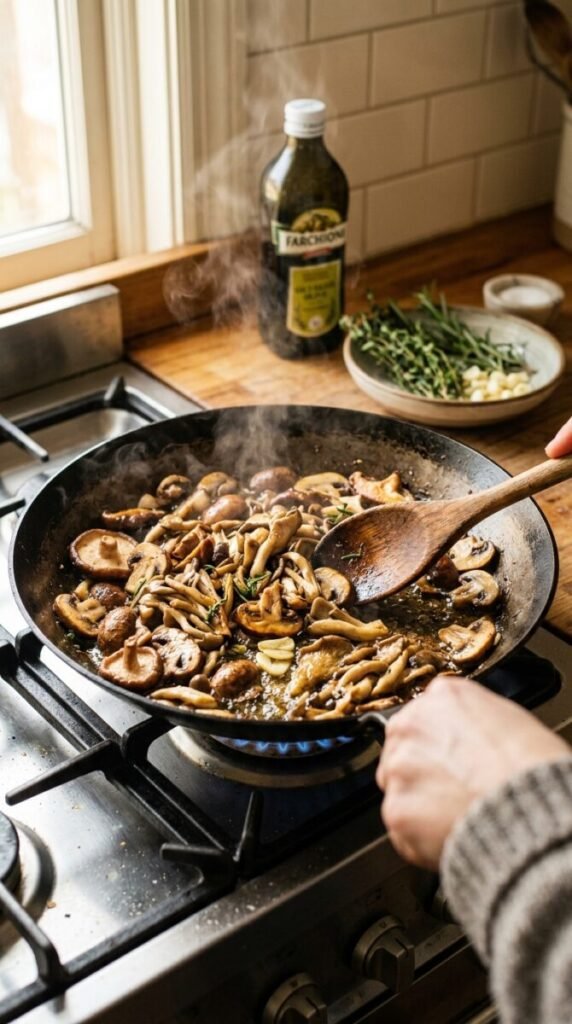
- Brown the mushrooms first, before anything else: heat 2 tablespoons of olive oil in a 15-inch paella pan or the widest skillet you own over high heat. Add the mushrooms in a single layer — in batches if needed. Cook undisturbed for 3 to 4 minutes until deeply golden on one side. Toss and cook for another 2 minutes. Do not salt until after browning. Transfer to a plate. The mushrooms need to be properly browned — not just softened — to contribute the savoury, caramelised depth that makes this paella taste like more than rice and vegetables.
- Reduce the heat to medium. Add the remaining 2 tablespoons of olive oil. Add the onion and red bell pepper and cook for 7 to 8 minutes until the onion is golden and slightly caramelised at the edges.
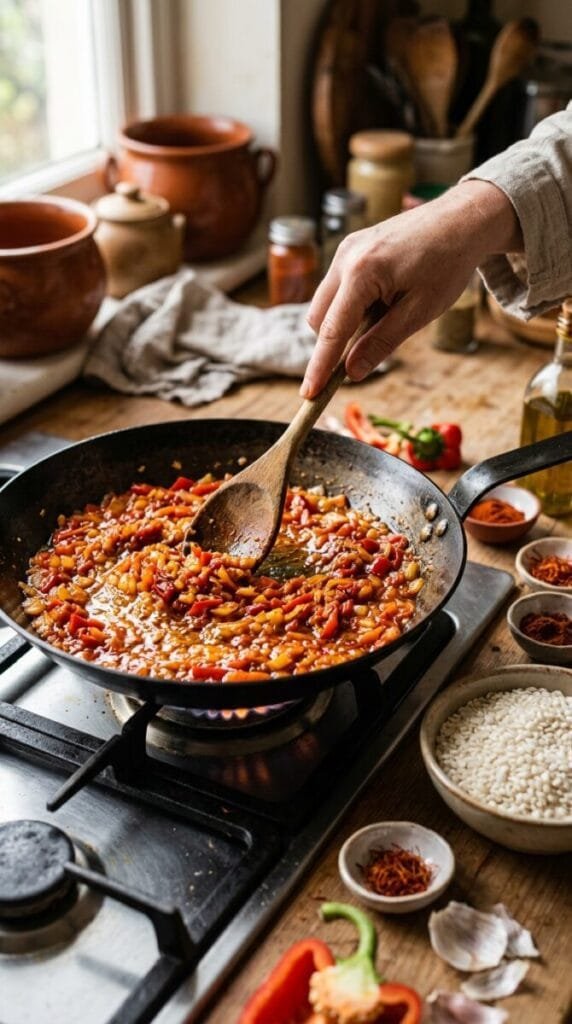
- Add the garlic and cook for 60 seconds. Add the crushed tomatoes, smoked paprika, and sweet paprika. Cook, stirring frequently, for 5 to 6 minutes until the tomato has darkened and concentrated and the oil has separated slightly — this is the sofrito, and it needs to be properly cooked down and caramelised rather than just briefly heated. A properly cooked sofrito is rust-coloured, thick, and fragrant. An undercooked sofrito is wet, bright red, and contributes a raw tomato flavour to the surrounding rice.
- Add the white wine and stir to deglaze, scraping up any browned bits from the bottom of the pan. Cook until the wine has mostly evaporated, about 2 minutes.
- Add the rice and stir to coat every grain in the sofrito — 60 seconds of stirring to ensure every grain is coated in the spiced tomato base. This is the last time you will stir the rice. Once the broth goes in, the rice stays undisturbed until the paella is done.
- Add the warm vegetable broth and the saffron with its steeping liquid. Stir once to distribute everything evenly — this is the final stir. Add the salt and pepper. Arrange the browned mushrooms, roasted red peppers, and artichoke hearts over the top of the rice, pressing them gently into the broth.
- Bring to a vigorous simmer over medium-high heat. Cook uncovered, without stirring, for 15 minutes. The broth will gradually absorb into the rice. After 15 minutes, scatter the frozen peas over the surface.
- After 18 to 20 minutes total, most of the broth should be absorbed and the rice should look nearly cooked. At this point, increase the heat to medium-high and cook for a final 3 to 5 minutes without stirring. You are listening for the sound of gentle crackling from the bottom of the pan — this is the socarrat forming. When you hear it, cook for 2 more minutes, then remove from heat.
- Cover the pan with foil or a clean kitchen towel and allow to rest for 5 minutes. The steam trapped under the foil completes the cooking of the top layer of rice and the socarrat firms up into a proper crust.
- Uncover. Scatter fresh parsley over the top. Bring the pan to the table with lemon wedges and serve directly from the pan — paella is a communal dish and the presentation of the whole pan at the table, with the socarrat scraping being the ceremonial final act, is part of the experience.
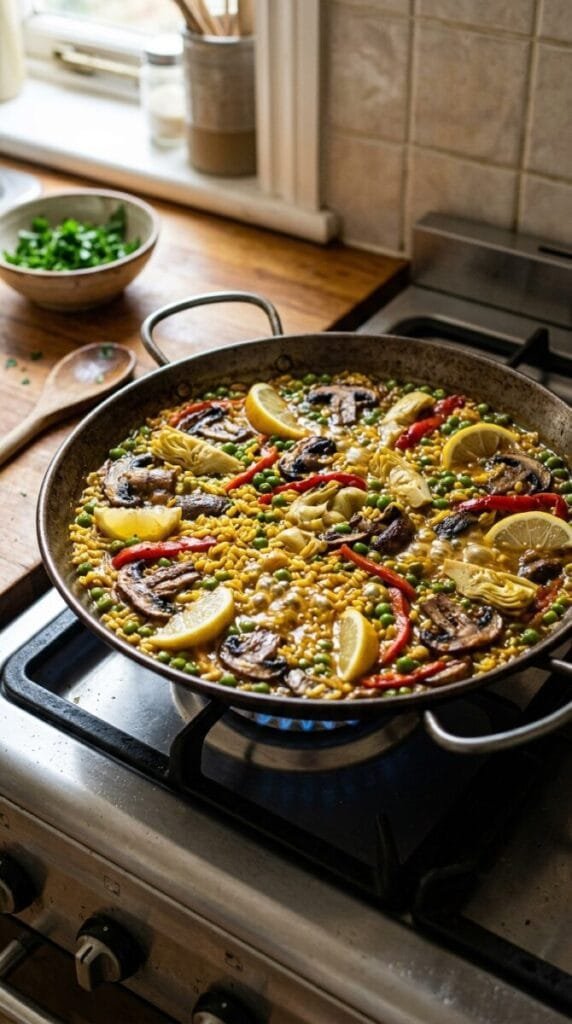
Vegan mushroom paella alongside our Chickpea Beet and Feta Salad with Lemon Garlic Vinaigrette makes the most visually striking dinner combination in the plant-based collection — the golden saffron pan next to the deep ruby-red and green salad covers every colour, every flavour direction, and every texture the table needs. The lemon vinaigrette on the salad doubles as the brightest possible counterpoint to the smoky, saffron-scented paella, and the two dishes together make a dinner that looks considerably more impressive than the work required to produce it.
The Sofrito, the No-Stir Rule, and the Socarrat
The sofrito — the cooked-down tomato, onion, pepper, and spice base — is the flavour foundation of Spanish rice dishes in the same way that the mirepoix is the flavour foundation of French cooking. A properly cooked sofrito (rust-coloured, thick, slightly separated from the oil, fragrant) takes 12 to 15 minutes of total cooking and provides the deep, sweet-savoury, slightly caramelised base that the rice absorbs and that gives paella its specific flavour. An undercooked sofrito (bright red, wet, briefly heated) produces a rice dish that tastes of raw tomato underneath the saffron rather than the developed, caramelised depth that authentic paella has. The extra 5 minutes of sofrito cooking is the single most important technique investment in this recipe.
The no-stir rule from the moment the broth is added is the defining characteristic of paella technique — unlike risotto, which requires constant stirring to develop its creamy consistency, paella rice is never stirred once the liquid is in. Stirring releases starch, creates creaminess, and prevents the individual grain-to-grain separation and the socarrat crust that distinguish paella from other rice dishes. Leave it alone. Trust it. The pan will tell you when it is ready.
The socarrat forms because the bottom layer of rice, once all the liquid above it has been absorbed, makes direct contact with the hot pan surface and begins to toast rather than steam. It requires a brief increase in heat in the final minutes — just enough to encourage the crust without burning — and then patience. You can hear it, which is the most useful piece of paella guidance anyone can give: a gentle crackling means it is working. Silence means the pan is not hot enough. Smoke means the heat is too high. Crackling is the target.
On Saffron: Worth It
Saffron is the most expensive spice by weight in the world. It is also the spice for which there is genuinely no substitute in this recipe — turmeric produces the colour without the flavour; nothing else produces the specific floral, slightly honeyed, faintly metallic flavour that saffron adds to the broth and that gives paella its characteristic and unmistakable quality. A quarter teaspoon of saffron in 4 cups of broth is a small quantity that costs approximately $1 to $2 from a supermarket spice jar and transforms the surrounding rice in a way that is immediately and obviously worth it. Buy it. Use it. You will not regret it.
Steeping the saffron in warm water rather than adding it dry to the broth extracts the colour and flavour compounds far more effectively — the warm water draws out the crocin (colour) and safranal (flavour) from the threads over 10 minutes, and the intensely orange steeping liquid carries both into the broth completely. Dry threads dropped directly into broth extract only partially and leave some of their flavour locked in the undissolved thread.
What to Serve Alongside
Paella is a complete meal in the pan — the rice, mushrooms, artichokes, peas, and peppers together cover every food group and every texture. A simple green salad with lemon vinaigrette provides the fresh, acidic contrast the rich, smoky rice benefits from alongside.
Crusty bread alongside is traditional and practical — the bread for mopping up any remaining saffron-scented oil at the bottom of the pan after the socarrat has been scraped up. Our Focaccia Bread is the bread that suits this role best, herbed and olive-oil-drenched in a way that complements the Mediterranean character of the paella rather than simply providing a neutral vehicle for the sauce.
Variations and Adaptations
Add Chickpeas: Stir 1 can of drained, rinsed chickpeas into the rice alongside the broth. The chickpeas add protein, a slightly nutty flavour, and the kind of hearty bulk that makes the paella more substantial without adding any additional cooking time. The chickpea and mushroom combination is one of the most natural pairings in Spanish vegetarian cooking.
Add Roasted Cherry Tomatoes: Scatter 1 cup of halved cherry tomatoes over the rice with the mushrooms before the broth goes in. They burst and jammy during the 20-minute cook and add pockets of sweet, slightly acidic tomato throughout the rice. The roasted tomato version is particularly good in summer when cherry tomatoes are at their sweetest.
Spicier Version: Add 1/4 teaspoon of cayenne and 1 tablespoon of harissa paste to the sofrito alongside the paprika. The spicy version has a building, smoky heat from the combination of smoked paprika, harissa, and cayenne that makes it specifically more interesting than just adding heat to the base recipe. The harissa in particular adds complexity rather than just temperature.
Stovetop to Oven Method: Complete the sofrito and rice coating steps on the stovetop. Add the broth and toppings and bring to a simmer. Transfer the entire pan to a 375°F oven and bake uncovered for 20 to 22 minutes until the rice has absorbed the broth. Return to the stovetop over medium-high heat for the final 3 to 5 minutes to develop the socarrat. The oven method produces more evenly cooked rice throughout the pan and is particularly useful for wider pans that might have hot spots on a single burner.
Nutritional Information
| Nutrient | Amount Per Serving (based on 5 servings) |
|---|---|
| Calories | 420 kcal |
| Protein | 14 g |
| Carbohydrates | 72 g |
| Fats | 10 g |
The carbohydrate count reflects the nature of a rice-forward dish — paella is a carbohydrate dish and the 72 grams per serving is accurate and expected. The 14 grams of protein comes from the mushrooms, artichoke hearts, peas, and rice together. The chickpea addition increases protein to approximately 20 grams per serving without significantly affecting the calorie count. At 420 calories per generous serving, this is one of the lower-calorie main courses in the collection relative to how filling it is — the fibre from the vegetables and the satiety from the rice volume produce a satisfying dinner at a moderate calorie level.
Storing and Reheating
Store leftover paella covered in the fridge for up to 3 days. The socarrat softens during storage — this is unavoidable and acceptable; the flavour of the toasted rice remains even if the texture has changed. Reheat in a wide skillet over medium heat with 2 to 3 tablespoons of water or broth added, covered for the first 3 minutes to generate steam that rehydrates the rice, then uncovered for the last 2 minutes. A small amount of new socarrat will often form during reheating, which is a happy accident.
Paella does not freeze well — the rice becomes mushy on thawing as the starch structure breaks down during the freeze-thaw cycle. Make and eat within 3 days. Given that leftover paella reheated in a skillet on a weekday morning produces a golden, slightly crispy-bottomed rice dish that is genuinely one of the better breakfasts in the collection, the 3-day window has never proven to be a practical problem.
The Mistakes That Will Not Happen to You
Stirring the rice after the broth is added produces a creamy, starchy, risotto-like rice rather than the separate-grain, crispy-bottomed paella the recipe is designed to produce. Do not stir. Not even once. Not even to check. The no-stir rule is the defining technique of paella and it applies from the moment the broth goes in until the pan comes off the heat.
Undercooking the sofrito — adding the broth before the tomato has properly caramelised and the oil has separated — produces paella with a raw tomato flavour underneath the saffron that never fully integrates during the rice cook. The sofrito needs 12 to 15 minutes total. Rust-coloured and thick, not bright red and wet. The colour is the indicator.
Using the wrong rice — long-grain rice, jasmine rice, or basmati — produces a paella where the rice becomes either mushy (long-grain absorbs too quickly) or stays undercooked (basmati resists absorption). Bomba or Calasparra rice is specified because these Spanish short-grain varieties are specifically bred to absorb large quantities of flavoured broth without becoming mushy — they are the rice that makes paella possible rather than just technically edible. If neither is available, Arborio is the closest substitute; accept a slightly creamier result.
Vegan Paella with Mixed Mushrooms
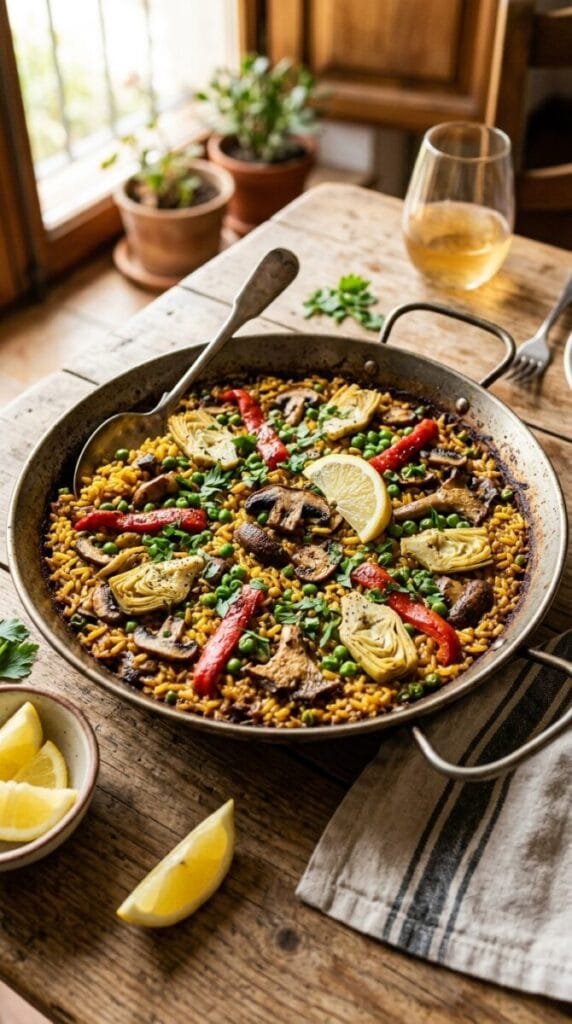
A golden vegan paella with Spanish rice, browned mixed mushrooms, saffron, smoked paprika, roasted peppers, artichoke hearts, peas, and lemon.
Ingredients
How to Make
Steep saffron threads in 2 tablespoons warm water for at least 10 minutes.
Heat 2 tablespoons olive oil in a 15-inch paella pan or very wide skillet over high heat. Add mushrooms in a single layer, working in batches if needed. Cook undisturbed 3 to 4 minutes, toss, and cook 2 minutes more until deeply golden. Transfer to a plate.
Reduce heat to medium. Add remaining 2 tablespoons olive oil. Add onion and red bell pepper. Cook 7 to 8 minutes until golden and softened.
Add garlic and cook 60 seconds. Add crushed tomatoes, smoked paprika, and sweet paprika. Cook 5 to 6 minutes, stirring often, until thick, rust-colored, and fragrant.
Add white wine and scrape up browned bits. Cook about 2 minutes, until the wine has mostly evaporated.
Add rice and stir for 60 seconds to coat every grain in the sofrito. This is the last time you will stir the rice.
Add warm vegetable broth, saffron with its soaking liquid, salt, and pepper. Stir once to distribute. Arrange browned mushrooms, roasted peppers, and artichoke hearts over the top, pressing gently into the broth.
Bring to a vigorous simmer over medium-high heat. Cook uncovered, without stirring, for 15 minutes.
Scatter frozen peas over the surface after 15 minutes.
After 18 to 20 minutes total, when most liquid is absorbed, increase heat to medium-high and cook 3 to 5 minutes without stirring. Listen for gentle crackling on the bottom.
Remove from heat. Cover with foil or a clean kitchen towel and rest 5 minutes.
Scatter with parsley and serve directly from the pan with lemon wedges and an optional drizzle of olive oil.
Nutrition
| Nutrient | Amount Per Serving |
|---|---|
| Calories | 420 kcal |
| Protein | 14 g |
| Carbohydrates | 72 g |
| Fat | 10 g |
Values are estimates based on 5 servings.