


Easy Baked Seafood Casserole For Dinner
A seafood casserole sounds like a dinner for other people — people with a fish market on the corner and a free Saturday. This version is the opposite: frozen-counter cod, shrimp, and scallops, a cream sauce that takes ten minutes in one skillet, and a topping made from buttery crackers straight from the box. It bakes for twenty-five minutes, rests for ten, and lands on the table looking and tasting like a coastal vacation you took without leaving the kitchen. Around here it’s the dinner that makes a plain Tuesday feel inexplicably fancy, and it does it with about fifteen minutes of real work.
The reason most seafood casseroles disappoint is that they cook the seafood twice — seared in a pan first, then baked for half an hour on top of it — and seafood punishes double-cooking with rubber. This recipe is built the other way around: the sauce is fully finished on the stove, thick and seasoned and richer than it should look, so the oven has exactly one job left, which is cooking the seafood through. Raw fish chunks, raw shrimp, raw scallops go into the sauce, and twenty-five gentle minutes later they’re done — once, not twice. The bonus of that design is the water. Seafood releases juice as it bakes, and in this casserole that juice has somewhere to go: into a sauce that was deliberately built thick, loosening it to exactly right by the time the topping browns. Nothing watery, nothing rubbery, nothing pre-cooked. One bake, done right.
A few honest notes before you start. The seafood comes from the freezer aisle with pride — most “fresh” shrimp at the counter was frozen at sea and thawed in the store anyway, so buy the frozen bag and thaw it yourself (notes below on doing it right). The sherry is two tablespoons, and it’s the clam-shack note that makes the sauce taste like New England — dry white wine substitutes cleanly, and broth with a squeeze of lemon works if you’d rather skip alcohol entirely. And the topping is a sleeve of buttery round crackers, crushed and mixed with more melted butter and a fistful of parmesan, which bakes into a golden, crumbly lid that everyone fights over. You can serve this over rice or egg noodles, but our house rule is a hunk of crusty bread and a spoon, applied in that order.
Why Casseroles Go Watery
Let’s do the unromantic math first, because it explains every choice in this recipe. Seafood is 75 to 80 percent water, and a casserole is a closed, covered-ish environment where that water has nowhere to escape — it weeps straight into the sauce. A pound and a half of seafood releases easily half a cup of liquid during a bake. Most recipes ignore this and build a perfectly dinner-ready sauce, which the oven then dilutes into soup. This recipe builds the sauce deliberately too thick — a whiskable but sturdy cream, tighter than anything you’d serve — precisely so the seafood’s juice loosens it to perfect by serving time. When you taste the sauce in the pot and think “this is too thick,” you’ve done it right. The oven is counting on it.
The second half of the plan is the short, hot-enough bake. Because the sauce is already cooked and the seafood goes in raw, the casserole needs only 20 to 25 minutes at 375°F — exactly long enough for the fish to turn opaque and flake, the shrimp to curl pink, and the scallops to turn opaque and tender, with no margin of overcooking on the far side. A covered, hour-long bake — the standard casserole treatment — would turn every one of those proteins to pencil erasers. Twenty-five minutes is not a shortcut here; it’s the entire engineering. And it’s why nothing gets seared or sauteed beforehand: pre-cooked seafood plus a full bake equals the double-cooked rubber that gave cafeteria fish a bad name.
Then the lid, because a seafood casserole lives or dies by its topping. Crushed buttery crackers are the New England move, and they beat breadcrumbs for a reason: the cracker already contains butter, so it toasts rich and golden instead of dry, and it drinks just enough sauce from below to soften its bottom edge while the top stays crisp. A handful of parmesan mixed in adds structure and salt; lemon zest and parsley keep it from tasting like a snack cracker; and the lid goes on dry, never mixed into the sauce, so the crispness is protected from the start. In thirty years of church suppers and clam shack kitchens, no one has improved on this topping, and I’m not about to try.
⏱️ 1 HR | 🦐 NOTHING PRE-COOKED | 🧀 THE CRACKER LID
- Prep Time: 15 minutes
- Sauce Time: 10 minutes on the stove
- Bake Time: 20 to 25 minutes
- Rest Time: 10 minutes
- Total Time: 1 hour
- Yield: 6 servings in a 9 by 13 dish
The Casserole Kit
One skillet, one dish, no gadgets:
- 9 by 13 baking dish — ceramic or glass; shallow enough that the seafood sits in one generous layer.
- Medium skillet — for the sauce, which is fully built before anything goes in the oven.
- Whisk — for the roux and the cream; a wooden spoon works, but a whisk makes a smoother sauce.
- Paper towels — for patting the thawed seafood genuinely dry, a step with real consequences.
- Zip-top bag and rolling pin — the classic cracker-crushing method; a few seconds of extremely satisfying noise.
- Fish spatula or big spoon — for serving through the cracker lid without demolishing it.
- Crusty bread — equipment, functionally. The sauce will explain.
Ingredients (With Labels)

🦐 The Seafood
- Cod or haddock: 1¼ lb, cut into 1½-inch chunks
- Large shrimp: ¾ lb, peeled and deveined, tails off, patted dry
- Bay scallops: ½ lb, patted dry — or 4 large sea scallops, quartered
🧅 The Cream Sauce
- Butter: 2 tablespoons
- Shallot: 1 large, finely diced
- Garlic: 3 cloves, minced
- All-purpose flour: 3 tablespoons
- Seafood or chicken broth: ¾ cup
- Half-and-half: ¾ cup
- Dry sherry: 2 tablespoons
- Old Bay seasoning: 2 teaspoons
- Dijon mustard: 1 teaspoon
- Salt and pepper: ¼ teaspoon salt, ¼ teaspoon pepper
🍋 The Brightness
- Lemon: 1 — zest in the topping, juice in the sauce
- Parsley: ¼ cup chopped, divided between sauce and topping
🧀 The Cracker Lid
- Buttery round crackers: 1 sleeve, about 30 crackers, crushed
- Melted butter: 3 tablespoons
- Parmesan: ¼ cup grated
Step by Step How to Make
- Step 1 — Thawed, patted, chunked. The seafood should be fully thawed and bone-dry on the surface: thaw overnight in the fridge, or in a bowl of cold water for 30 minutes if tonight’s the night, then spread it on paper towels and pat firmly — every drop you remove here is a drop the sauce doesn’t have to absorb later. Cut the cod into 1½-inch chunks, check that the shrimp are peeled with tails off, and leave bay scallops whole (quarter big sea scallops). Big pieces matter: they hold together through the fold and the bake where small ones dissolve.
- Step 2 — Build the sauce, thick on purpose. Heat the oven to 375°F. In the skillet over medium, melt the 2 tablespoons of butter and soften the shallot 3 minutes, until translucent but not browned. Add the garlic for 30 seconds, then sprinkle in the flour and stir for a full minute — a paste that smells toasty, not raw. Pour in the broth slowly while whisking, then the half-and-half, the sherry, the Old Bay, the Dijon, the salt, and the pepper. Simmer gently 3 to 4 minutes, whisking, until the sauce thickly coats the back of a spoon — thicker than you’d ever serve a sauce. This is the whole plan: the seafood will loosen it in the oven. Stir in the lemon juice and half the parsley, then take it off the heat.
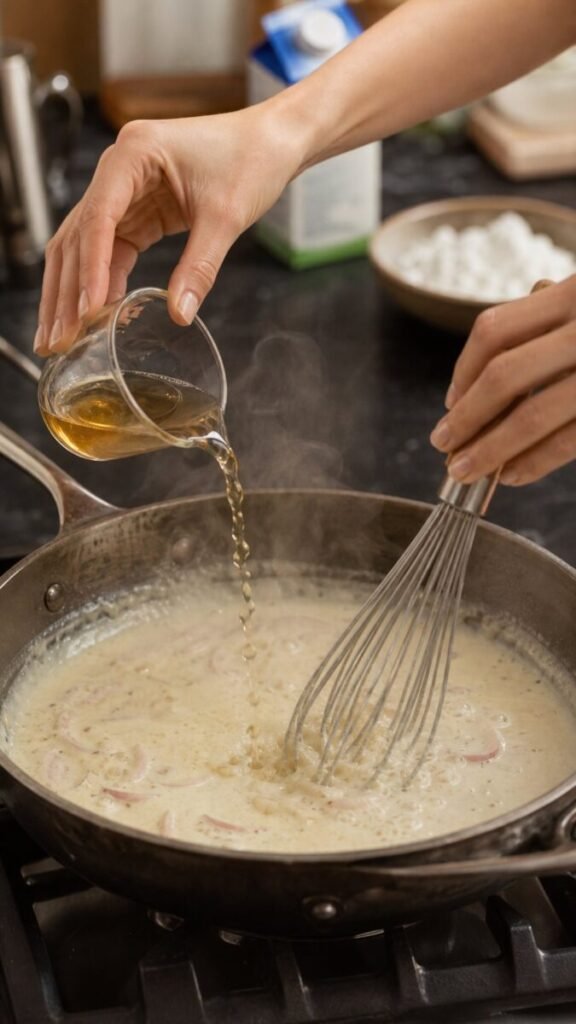
- Step 3 — Fold, don’t stir. Combine the sauce and the raw seafood directly in the baking dish: pour the sauce in first, add the cod, shrimp, and scallops, and fold gently with the spatula just until everything is distributed and coated. Two or three gentle turns — cod chunks will break if you treat them like stew meat, and broken fish makes the casserole pasty. The mixture will look thick and almost gloppy coming together. That’s correct. Trust the plan and the oven.
- Step 4 — The cracker lid. Crush the crackers in the bag with the rolling pin — coarse crumbs, not dust; you want rubble, not sand. Toss the crumbs with the melted butter, the parmesan, the lemon zest, and the rest of the parsley, then scatter the mixture evenly over the seafood, edge to edge. Press nothing down: the lid should sit loosely on top, dry and buttery, so it toasts instead of steams. Whatever you do, no foil on top — this casserole bakes naked, or the lid never crisps.
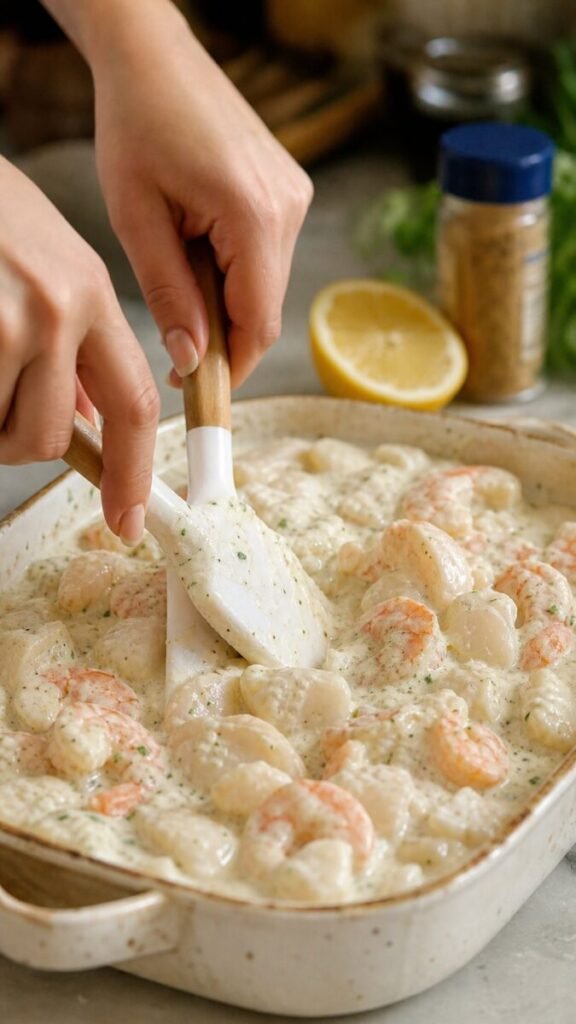
- Step 5 — The short bake. Bake uncovered for 20 to 25 minutes, until the sauce bubbles at the edges, a few cracks appear in the crumb lid, and — the honest test — a chunk of fish pulled from the corner is opaque and flakes easily. The shrimp should be pink and curled into loose C shapes. If the topping is pale at 25 minutes but the seafood is done, one minute under the broiler, watched the whole time, paints it golden. Do not add bake time to darken the lid — five extra minutes turns perfect shrimp into erasers, and no golden cracker is worth that.
- Step 6 — Rest, then serve with the plan. Ten minutes of rest on the counter — the sauce settles from a boil to a velvety pour, the seafood finishes its last degrees gently, and the lid crisps as it cools. Serve in wide, shallow bowls: a good spoonful with cracker lid attached, a squeeze of lemon over, and crusty bread within reach, because the sauce at the bottom of this casserole is the part people end up sopping up with their bread and then, when the bread runs out, eyeing with a spoon. There are no leftovers of the sauce. There never have been.
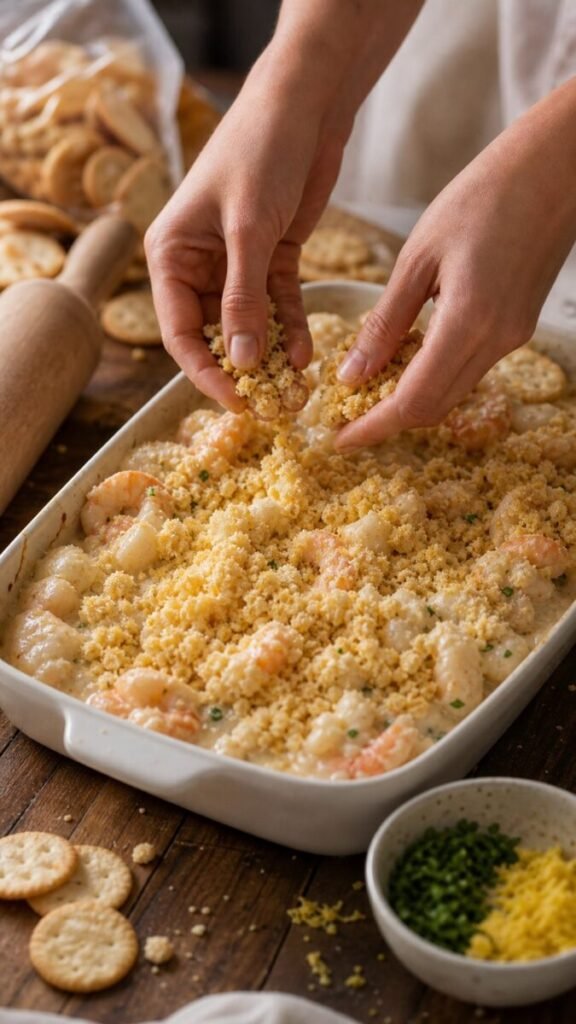
Buttery round crackers already proved themselves around here — the ranch Ritz crackers are the snack version, and this casserole lid is their highest calling.
Anna’s Kitchen Notes
Frozen seafood is the honest buy. Nearly every shrimp at a fish counter was frozen at sea and thawed in the store — sometimes that morning, sometimes not. The bag in the freezer aisle is the same shrimp, still sealed at peak freshness, waiting for you instead of a display case. Thaw it overnight in the fridge or in a cold-water bath for half an hour, pat it thoroughly dry, and it will cook up sweeter than the “fresh” option on a Tuesday. This is the rare case where the cheaper ingredient is also the better one, and I make the most of it.
The C-shape test for shrimp. A perfectly cooked shrimp curls into a loose C. An overcooked one curls into a tight O — the difference between tender and rubbery, visible from across the kitchen. When you check the casserole at minute twenty, look at the shrimp before anything else: loose Cs mean you’re on time, tight Os mean the oven door should have opened five minutes ago. Scallops tell the same story more quietly — opaque and glossy is done, tight and firm-textured is over.
Old Bay is doing more than you think. It’s not just “seafood spice” — it’s celery salt, paprika, and a whisper of mustard and ginger, and it’s the background flavor of every clam shack casserole you’ve ever loved. Two teaspoons season the whole pot gently; if you’ve never cooked with it, start there and taste. No jar in the house? A teaspoon of paprika, half a teaspoon of celery salt, and a pinch of cayenne gets you a reasonable stand-in for tonight.
Bay scallops or quartered sea scallops — never whole sea scallops. A whole sea scallop is four bites of seafood in one place, and it overcooks at its edges before its center is done. Quarter them, or buy the tiny bay scallops that were made for dishes exactly like this one. Either way, they should be patted as dry as everything else — a wet scallop steams instead of baking tender, and it waters the sauce you built thick on purpose.
Assemble now, bake within four hours. The casserole can sit assembled in the fridge for an afternoon — the sauce holds, the lid waits on the counter in its own bowl — but not overnight: salt and time pull moisture out of raw seafood, and a casserole assembled at 8 p.m. for tomorrow’s oven bakes noticeably wetter. Sauce ahead with pleasure (it keeps three days), crush the crackers ahead if you like, but the fold and the lid go on the day it bakes.
Beside the Bake
The casserole brings the rich and the creamy, so the table around it wants crunch and green. A simple sharply-dressed salad is the fastest counterweight, and a hunk of crusty bread is non-negotiable — our crispy olive-oil focaccia is the house loaf for exactly this kind of sauce-sopping duty.
On seafood weeks, this bake trades shifts with the rest of the ocean division: the creamy shrimp and crab garlic toast for a lighter night, the crab and shrimp queso rolls when the crowd wants party food, and the homemade tempura for fry night with a dipping-sauce heart. For the cocktail hour before the bake comes out, the cold shrimp dip buys you twenty calm minutes — shrimp twice in one night, which in this house is a compliment.
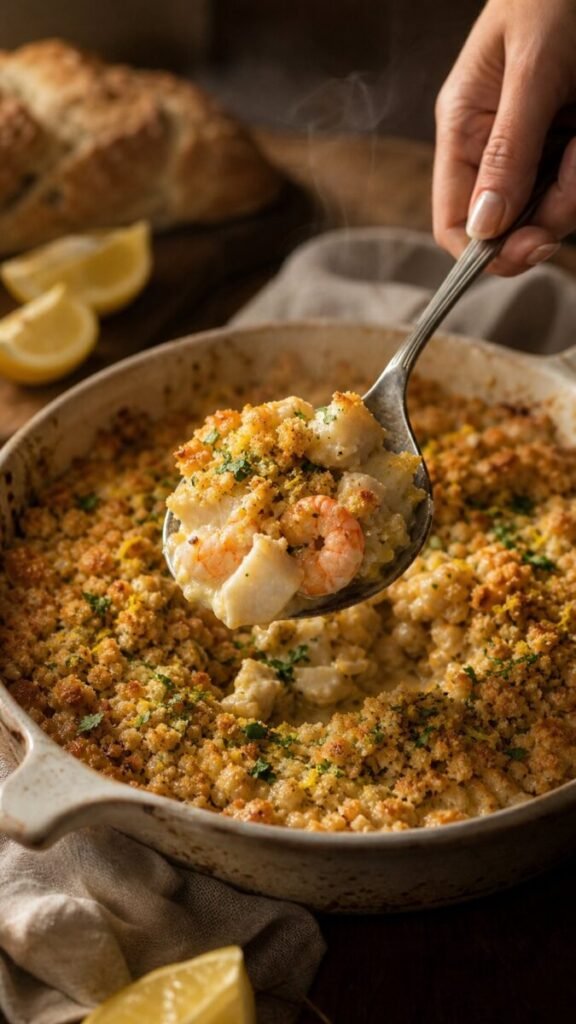
Same Dish, Different Tides
The all-shrimp version. Two pounds of shrimp and nothing else — the weeknight simplification, and the one kids vote for most often. Same sauce, same lid, same twenty-five minutes. It also happens to be the cheapest way to make this dish, and nobody at the table has ever sounded disappointed about it.
The lobster upgrade. Fold in a cup of chopped cooked lobster meat at the very end of the bake — added raw lobster would overcook before the cod finished, so it joins for the last five minutes just to warm through. This is the anniversary version, the birthday version, and the version I make when someone else is doing the dishes.
The New England classic. Swap half the seafood for drained canned crabmeat, use all shrimp for the rest, and add a pinch of nutmeg to the sauce — that’s the church-supper formula my grandmother’s friends made, and it eats like a memory. The cracker lid, of course, stays exactly as it is. Some things were finished centuries ago.
The rice bed. Spoon the finished casserole over cooked white rice instead of serving it with bread — the sauce becomes a sauce for the rice, and the dish stretches to feed eight. What I’d skip is baking the rice into the casserole: it drinks the sauce dry and goes gummy, and the beautiful loose finish you engineered gets lost in the starch.
The paprika-cream detour. Replace the Old Bay with a teaspoon of smoked paprika and a half-teaspoon of sweet paprika, and stir a roasted red pepper (diced) into the sauce — the casserole drifts toward the Mediterranean and comes back telling better stories. Same bake, same lid, different ocean entirely.
The Tide Table
| Nutrient | Per Serving (1 of 6) |
|---|---|
| Calories | 410 kcal |
| Protein | 34 g |
| Carbohydrates | 18 g |
| Fats | 22 g |
Estimates for the casserole as written, cracker lid fully accounted for — that lid is doing a fair share of the arithmetic and worth every gram. Thirty-four grams of protein per serving is steakhouse territory, delivered by a dish that costs like a Tuesday: cod, shrimp, and scallops are three of the leanest proteins in the case, and the fat is mostly the butter, the half-and-half, and the crackers, which is to say the delicious part. As always, estimates — and the bread you sop with is between you and your own conscience, which in my experience folds quickly.
Tomorrow’s Catch
Leftovers keep two days covered in the fridge, which is shorter than most casseroles and more honest — cooked seafood simply doesn’t age the way beef and pasta do, and day three is not a flavor you want to meet. Reheat gently, in a 325°F oven covered loosely with foil for about 12 minutes or a single portion in the microwave at half power, and accept that the cracker lid softens: the flavor comes back well, the crunch mostly doesn’t, and a scatter of fresh crushed crackers on the reheated plate restores a surprising amount of the original glory.
The smart prep split is all front-loaded: the sauce can be made up to three days ahead and refrigerated, the crackers can be crushed days in advance, and the seafood thaws overnight in the fridge — so the actual day-of work is pat-dry, fold, lid, bake, about ten minutes. For company, that means the casserole goes in the oven as everyone sits down with the shrimp dip, and it lands on the table fifty minutes later with no further effort from you. Hosting math doesn’t get friendlier than that.
Freezing, honestly, I’d skip: the sauce holds, but the seafood comes back mushy and the milk-based sauce can separate, and a dish whose whole personality is “tender, once-cooked, exactly on time” deserves better than a thaw. Make the sauce ahead and freeze that if you like — but the seafood should meet the oven fresh, the way it did the first time you made this.
Where It Goes Wrong
A lake of liquid under a floating lid. The seafood went in wet — skipped the pat-dry — or the sauce was built dinner-ready instead of thick, or frozen seafood went in still partly frozen, bringing ice with it. All three mistakes dilute the sauce exactly where the plan was counting on tightening it. Pat everything dry, build the sauce thick enough to raise an eyebrow, and thaw fully before the fold.
Rubber shrimp and bouncy scallops. Double cooking — the seafood was pre-seared and then baked the full time — or the bake ran long while the lid chased golden. This recipe cooks the seafood exactly once, for twenty-five minutes, and pulls the moment the shrimp are loose Cs. If the topping needs more color, it’s the broiler’s job for one minute, never five more minutes of bake time for the seafood.
A pale, soggy, steamed topping. The casserole was covered in foil, the lid was pressed into the sauce, or the crumbs were crushed to dust instead of rubble. Foil traps steam and steams the lid soft; the lid needs to sit loose and dry above the sauce line to toast. Crush to coarse rubble — pea-sized pieces with some powder in attendance — and let the oven’s dry heat do the browning with nothing in its way.
A bland casserole despite good seafood. Under-seasoned sauce — the most common failure, because mild white fish and sweet shellfish need more salt and seasoning than instinct suggests, and the cream buffers everything you add. The sauce gets tasted in the skillet, where fixing it takes a pinch; after baking, it’s archaeology. Season, taste, adjust, then fold. If it tastes merely pleasant in the pot, it’ll taste quiet at the table.
Fish that dissolved into flakes and paste. The cod was cut too small, or the fold was a vigorous stir instead of a gentle turn, or a spoon went through the dish before the rest. Cut the fish into 1½-inch chunks — bigger than looks right — fold two or three times only, and let the rest happen in the oven’s stillness. The casserole is not a stir dish; it’s a bake dish wearing a lid.
A sauce that broke into greasy curds. It boiled hard after the dairy went in. Half-and-half is sturdy, but a rolling boil scrambles it — keep the sauce at a gentle bubble while it thickens, and take it off the heat the moment it coats the spoon. If it breaks anyway, off the heat and whisking hard brings most of it back together; better yet, don’t let it boil in the first place.
Seafood Questions
Can I use a frozen seafood mix instead?
The bags with shrimp, scallops, and fish pieces work — check that the pieces are large and pat everything thoroughly dry — but skip the ones with mussels and calamari in the blend: mussels release a lot of liquid and calamari turns to rubber rings at exactly the moment the cod finishes. A shrimp-and-scallop blend with your own added cod chunks is the mix I’d choose, and it shaves ten minutes off the prep.
Can I make this with just one kind of seafood?
Absolutely — all shrimp is the weeknight standard at my house, and all cod (closer to two pounds) is the budget version that still tastes like a restaurant. Adjust nothing else; the sauce and the bake time were built for any mix of these three. The only rule is total weight: about two and a half pounds of seafood feeds six under this much sauce and lid.
What can I use instead of sherry?>Dry white wine is the direct swap — same two tablespoons, same job. No alcohol in the house? Use extra broth plus a teaspoon of lemon juice added with the rest of the lemon at the end, and the sauce lands a whisper different and equally good. The sherry isn’t about the wine; it’s about the faint savory-sweet depth it leaves behind, and there’s more than one road there.
Can I assemble it in the morning and bake at night?
Same day, yes — four hours in the fridge is fine, and it’s the hosting schedule I use myself. Overnight, no: salt sitting against raw seafood pulls moisture out hour by hour, and the casserole bakes wetter for it. The sauce alone happily waits three days in the fridge, so make that ahead and keep the five-minute fold for the day itself.
How do I know when it’s perfectly done?
Three signs, checked together: the sauce bubbles at the edges, the cracker lid is golden with a few cracks, and a piece of fish pulled from the corner flakes under gentle pressure while the shrimp sit in loose C curls. Any instant-read thermometer can confirm — seafood is done in the 130 to 140°F range — but the corner test has served casseroles for generations and requires no batteries.
Can I use panko or breadcrumbs instead of crackers?
You can, and the casserole will still be good — but you’ll be making a different, slightly drier lid, because buttery crackers carry their own fat and toast richer than any plain breadcrumb. With panko, add an extra tablespoon of melted butter and a pinch of salt to compensate. The cracker lid is the one piece of this recipe I’d defend to the end; it’s the difference between a good bake and one people ask about by name.
Is there a dairy-free version?
A workable one: build the sauce with olive oil and the same flour, then a canned full-fat coconut milk plus a tablespoon of nutritional yeast for the savory note the dairy was carrying — the flavor leans slightly tropical, and the Old Bay and lemon pull it back toward New England. The lid needs no changes; buttery crackers contain butter, so use a dairy-free buttery round or panko with olive oil instead.
Coastal comfort · Creamy sauce · Golden cracker topping
Easy Baked Seafood Casserole for Dinner
Cod, shrimp, and scallops baked in a thick sherry cream sauce with lemon, parsley, and Old Bay. A loose layer of buttery cracker crumbs and Parmesan turns golden while the raw seafood cooks in the oven.
As an Amazon Associate I earn from qualifying purchases.
Ingredients
The seafood
- 1¼ lb raw cod or haddock, skinless and boneless, cut into 1½-inch chunks
- ¾ lb raw large shrimp, peeled, deveined, and tails removed
- ½ lb raw bay scallops, or the same weight of sea scallops cut into similar-size pieces
The cream sauce
- 2 tablespoons butter
- 1 large shallot, finely diced
- 3 cloves garlic, minced
- 3 tablespoons all-purpose flour
- ¾ cup seafood broth or chicken broth
- ¾ cup half-and-half
- 2 tablespoons dry sherry
- 2 teaspoons Old Bay seasoning
- 1 teaspoon Dijon mustard
- Up to ¼ teaspoon salt, to taste
- ¼ teaspoon black pepper
The bright finish
- 1 lemon — zest for the topping and juice to taste for the sauce; reserve a wedge if desired
- ¼ cup chopped parsley, divided
The cracker topping
- About 30 buttery round crackers, coarsely crushed; sleeve sizes vary
- 3 tablespoons butter, melted
- ¼ cup grated Parmesan
Optional accompaniment
- Crusty bread, for serving
The casserole kit
- 9 × 13-inch baking dish, oven-safe to 375°F
- Medium deep skillet, for the sauce
- Whisk
- Paper towels, for drying seafood
- Zip-top bag and rolling pin, for crushing crackers
- Mixing bowl, for the topping
- Fish spatula or large serving spoon
- Instant-read food thermometer
- Oven mitts and a dry, heat-resistant trivet
Thaw safely: thaw seafood in the refrigerator. For faster thawing, use a leakproof bag in cold water, changing the water every 30 minutes, then cook immediately. Follow package directions for vacuum-packed fish; remove it from reduced-oxygen packaging before refrigerator thawing when directed.
Check the center, not just the corners: bubbling sauce, pink shrimp, and curled tails are not reliable temperature tests. Check several of the thickest seafood pieces near the center of the dish; they should reach 145°F before removal from the oven.
Alcohol-free option: replace the sherry with 2 tablespoons of the listed broth and adjust the lemon to taste. Cooking with sherry does not guarantee that all alcohol is removed.
How to make it
-
Prepare the seafood and preheat
Heat the oven to 375°F. Fully thaw the seafood if frozen, drain thoroughly, and pat dry with paper towels. Remove any fish bones and cut the cod or haddock into 1½-inch chunks. Peel and devein the shrimp, removing tails. Leave bay scallops whole; cut larger sea scallops into smaller, even pieces. Keep the seafood refrigerated while preparing the sauce. Zest the lemon before juicing it.
-
Build a thick cream sauce
Melt 2 tablespoons butter in the skillet over medium heat. Cook the shallot for about 3 minutes, until softened. Add the garlic and stir for 30 seconds. Stir in the flour and cook for 1 minute. Gradually whisk in the broth, followed by the half-and-half, sherry, Old Bay, Dijon, and pepper. Simmer gently for 3–4 minutes, whisking, until thick and smooth. Remove from the heat. Gradually stir in lemon juice to taste and half the parsley. Taste before adding the measured salt, since the seasoning, broth, and topping already contribute salt.
-
Gently coat the raw seafood
Set out a room-temperature baking dish and follow its manufacturer’s guidance on adding hot ingredients. Spoon in the finished sauce, add the raw fish, shrimp, and scallops, and gently fold until coated. Spread evenly in a shallow layer without crushing the fish. Do not taste the mixture after raw seafood has been added, and proceed directly to topping and baking.
-
Scatter over the buttery cracker topping
Crush the crackers into coarse crumbs rather than fine dust. In a bowl, combine them with 3 tablespoons melted butter, the Parmesan, lemon zest, and remaining parsley. Scatter loosely and evenly over the seafood without pressing the crumbs into the sauce.
-
Bake until the seafood is cooked through
Bake uncovered and begin checking after 20 minutes. The casserole may need 20–25 minutes or longer depending on the seafood’s starting temperature, piece size, and baking dish. Use a thermometer to check several thick seafood pieces near the center; cook to 145°F. The fish should also be opaque and flake easily, and the shrimp and scallops should be opaque. If the topping browns before the seafood is ready, shield it loosely with foil and continue cooking. Do not rely on the resting period to finish undercooked seafood.
-
Rest briefly and serve
Remove the casserole as soon as the seafood is cooked through; do not extend the bake simply to darken the crumbs. Set the dish on a dry, heat-resistant trivet and rest for about 10 minutes so the sauce settles. Spoon into shallow bowls with some cracker topping on each portion. Serve with optional crusty bread and any reserved lemon.
Broiler and allergen caution: do not put glass bakeware under a broiler. Any optional broiling requires a dish explicitly approved by its manufacturer for that use and continuous supervision. This recipe contains fish, crustacean shellfish, mollusks, wheat, dairy, and mustard; check packaged ingredients for additional allergens.


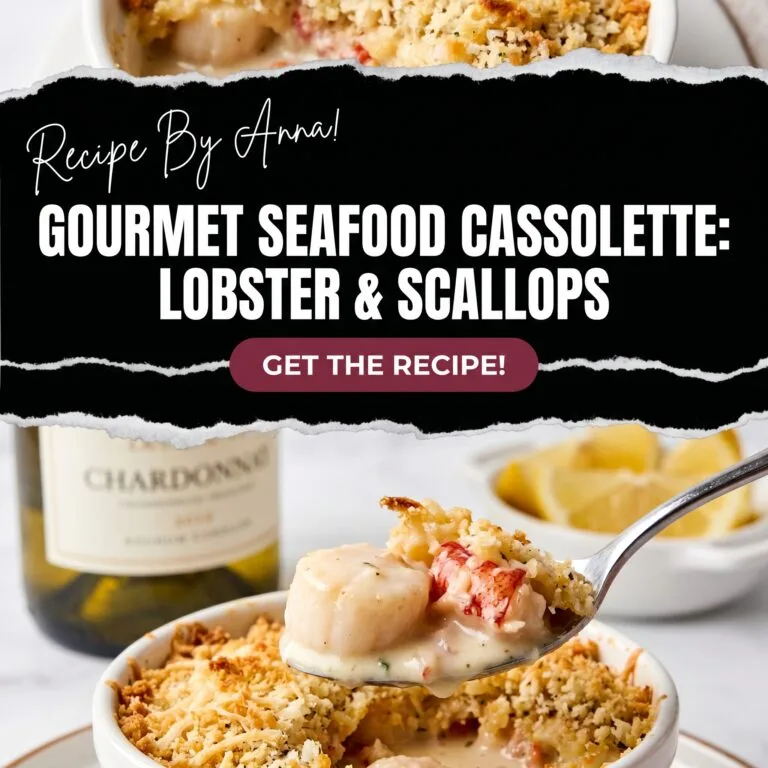


This seafood casserole looks delicious. I am a beginner cook and I depend on the amount of ingredients in a recipe. Unfortunately your recipe doesn’t give the quantity of each item. I would hate to buy too much or too little of the items and have a taste bad. Just thought you would want to know that there’s no list of ingredients with the amounts for each.
Hi Gerald!Thank you so much for bringing that to our attention! We totally understand how important exact measurements are, especially when getting started in the kitchen.We just updated the post and added the full recipe card with exact ingredient quantities and step-by-step instructions so you can shop with confidence. We hope you give it a try and enjoy your seafood casserole! Let us know how it turns out! 😊