Lobster & Crab Butter Bombs
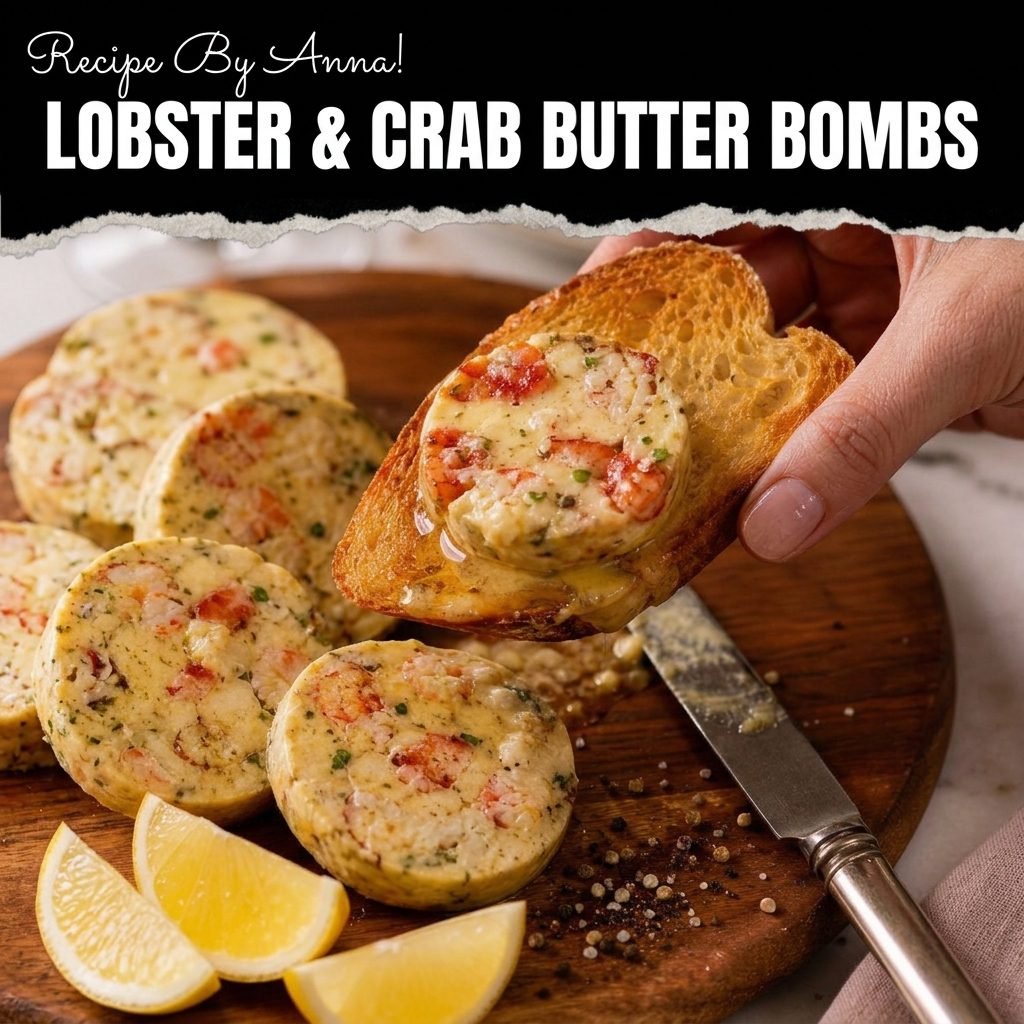
Every once in a while a recipe comes along that costs fifteen minutes of work and pays out like a catering staff, and this is the current champion: lobster and crab butter bombs. Sweet chunks of cooked lobster and lump crab are whipped into lemon-garlic butter with Old Bay and fresh herbs, rolled into a log, chilled until firm, and sliced into thick golden coins — each one studded with visible pieces of seafood. Served on warm toast, a coin slowly collapses into a glossy, savory puddle that soaks into the bread while the meat stays in sweet, tender pieces. Dropped on a hot steak, it becomes an instant pan sauce. This is the appetizer you make when you want people to assume you did something elaborate, and the only elaborate thing about it is watching butter behave beautifully.
The technique underneath the party name is one restaurants have used forever: compound butter — flavorings whipped into butter, chilled, and deployed in slices. Steakhouses keep a dozen of them in the walk-in; a pat of Roquefort butter on a ribeye is the same move in a tuxedo. What makes this version a “bomb” is the payload: where most compound butters carry herbs or garlic, this one carries a full pound of lobster and crab suspended in the butter itself, so every slice is roughly half seafood by sight. The butter stops being a condiment and becomes the whole delivery system — and the name earns itself the moment a cold coin hits a hot piece of toast and detonates into sauce.
Honest notes before we start, because a splurge deserves honesty. This is not a Tuesday snack — it’s a celebration appetizer built on real lobster and real crab, and the cost follows. There are two sanctioned shortcuts below (langostino standing in for lobster, which I use and defend, and a smarter shopping note for crab), and both keep the final plate firmly in fancy territory. The two-hour chill is not optional and cannot be rushed warm — the log has to set to slice. And the serving physics matter more than the mixing: these bombs want a warm landing pad. Cold toast gets you a hockey puck; warm toast gets you the whole show. Now that we know what we’re protecting, let’s talk about how butter actually works, because it’s about to do you several favors at once.
The Butter Block
Butter is the engine here, so let’s open the hood. Butter is about eighty percent fat and fifteen to eighteen percent water, and it’s technically a water-in-fat emulsion — tiny droplets of water and milk solids suspended in a continuous matrix of fat. Two properties of that fat run this entire recipe. First, it’s solvent: the aromatic compounds in garlic, lemon zest, celery salt, paprika, and cayenne are fat-soluble, meaning they dissolve into the butter and ride it evenly onto every surface it touches — water-based flavorings would just bead up and pool. When you whip the seasonings into softened butter, you’re not mixing so much as loading a vehicle. Second, it’s temperature-programmed: butter melts between roughly 90 and 95°F, just below body temperature, which is why a firm, chilled coin turns liquid within seconds of landing on warm toast and melts to a sauce on a resting steak. No other common fat does its job at exactly the temperature of the food you wish it would melt on. That’s the entire magic trick, and it’s a good one.
The ratio is the calibration the internet’s versions fumble — you’ll find butter bombs ranging from one part seafood to two parts butter (a spread with seafood rumors) to two parts seafood to one part butter (a salad trying to be sliceable). This recipe sits at one pound of meat to one cup of butter — two sticks — and that’s a deliberate line: enough butter to bind, whip, and slice cleanly, enough meat that every coin shows pink lobster and white crab when you cut it. Lean meatier and the log crumbles at the knife; lean butterier and you’re serving garlic butter with a seafood garnish. Whip the butter first, alone, until it’s pale and light — the air you beat in is what makes the finished bombs spread and melt evenly instead of sitting dense — and then fold the meat in gently, the way you’d fold berries into muffin batter. The chunks are the luxury. Protect them.
Two small pieces of craft the genre skips entirely. Dry the seafood before it meets the butter: lobster and crab hold surface water, and water in the log makes bombs that weep and slices that smear instead of cutting clean — pat the meat dry with paper towels, seriously, both kinds. And use the zest, not just the juice. The genre juices the lemon and throws the skin away, which is the aromatic equivalent of keeping the receipt and discarding the present: lemon juice brings acid, but nearly all of the perfume lives in the oils of the zest, and in a butter this rich, perfume is what keeps each bite from finishing heavy. Juice for brightness in the mix, zest for the smell that hits people before they’ve sat down. Both, always.
⏱️ 15 MIN + A 2-HR CHILL | 🧈 ONE LOG, 12 BOMBS | 🦞 MELTS ON CONTACT
- Prep Time: 15 minutes, most of it folding gently
- Chill Time: 2 hours, non-negotiable
- Total Time: 2 hours 15 minutes, of which 15 are yours
- Yield: one 2-inch log — 12 thick bombs
The Bomb Factory
No machines, no heat — the factory is colder and simpler than you’d guess:
- Mixing bowl and spatula — the whole build happens in one bowl. Wooden spoon works; the spatula’s edge is kinder to the meat.
- Parchment paper — the log’s first wrap. Nothing sticks, and you can roll against it without smearing.
- Plastic wrap — the second wrap, airtight, because butter is a sponge for fridge odors and the fridge has opinions.
- Sharp knife — for slicing the set log. Run it under hot water and wipe it dry between cuts for pharmacy-clean coins.
- Small sheet pan or plate — carries the log flat into the fridge without a rolling disaster.
- Paper towels — for drying the seafood, and there are more uses than you’d think.
- Toaster or oven, running — the warm platforms are half the recipe. Have the toast ready before the log comes out.
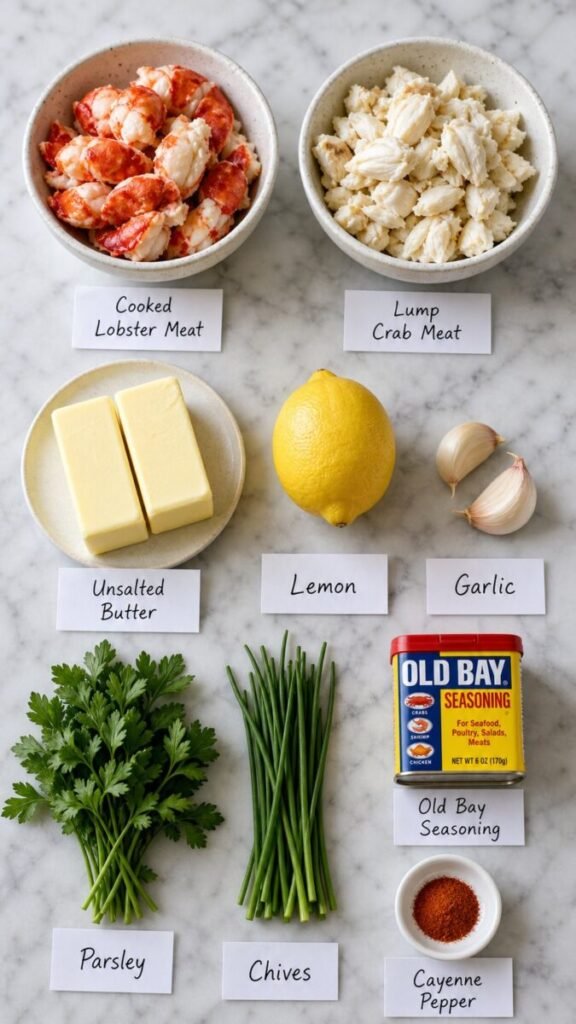
Ingredients (With Labels)
🦞 The Seafood
- Lobster meat: 8 oz cooked — fresh, thawed frozen, or langostino (see notes)
- Crab meat: 8 oz lump, drained and picked over for shell
🧈 The Base
- Unsalted butter: 1 cup — 2 sticks, softened to pliable but not melted
- Old Bay seasoning: 1 teaspoon, plus more for finishing
- Cayenne pepper: 1 small pinch
🍋 The Aromatics
- Lemon: 1 — 1 tablespoon juice plus ½ teaspoon zest
- Garlic: 1 small clove, minced to a paste with a pinch of salt
- Parsley: 1 tablespoon, finely chopped
- Chives: 1 tablespoon, snipped small
Step by Step How to Make
- Step 1 — Dry and pick. Spread the lobster and crab on paper towels and pat firmly dry, then let them sit a minute and pat again — the second pat is the one that matters. Pick through the crab for any bits of shell; nothing ruins a luxurious bite faster than surprise crunch of the wrong kind. Rough-chop the lobster into pieces about the size of the crab lumps so the fold is even. The meat should be cool and dry to the touch, not wet and glossy — wet meat makes weeping bombs, and weeping bombs make sad toast.
- Step 2 — Whip the base. In the bowl, beat the softened butter alone with the spatula for a full minute — smear it against the side of the bowl and fold it over on itself until it’s visibly paler, lighter, and the texture of frosting. This is the step people skip by stirring straight through it, and it’s the difference between bombs that melt in an even, silky wave and bombs that sit dense and greasy. Beat in the Old Bay, cayenne, lemon juice and zest, the garlic paste, parsley, chives, and a modest pinch of salt. Taste on a spoon — it should taste a shade over-seasoned, because cold mutes flavor and the seafood will dilute it.
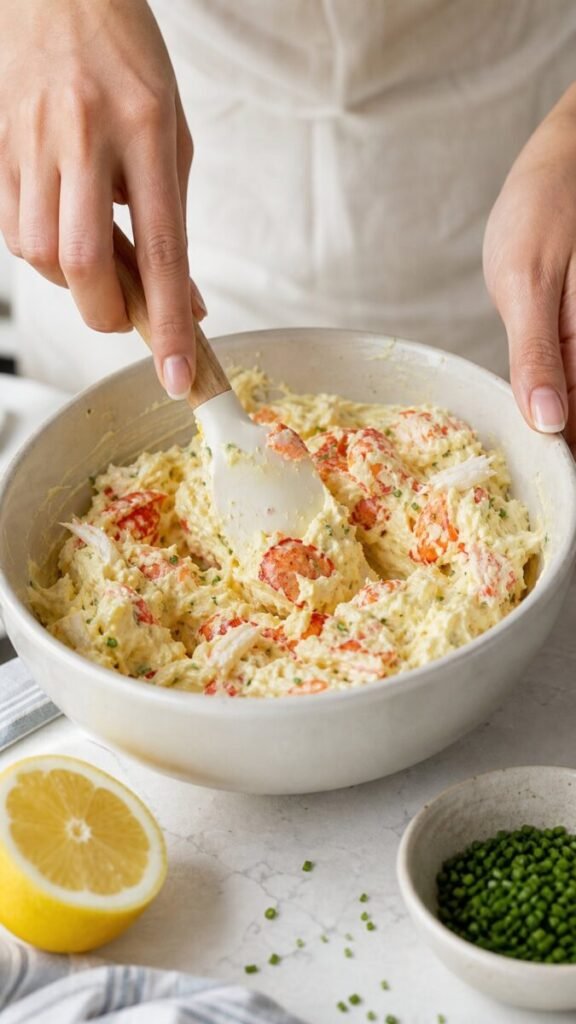
- Step 3 — The gentle fold. Add the lobster and crab to the bowl and fold with the spatula — slow turns from the bottom, cutting through the middle, no stirring in circles — until the meat is evenly distributed and every piece wears a coat of butter. Stop the moment it looks evenly studded. Every extra stroke breaks lumps into shreds, and the whole visual promise of a butter bomb is the cross-section: pink and white pieces suspended clean in gold. That cross-section is made or lost right here.
- Step 4 — Roll the log. Scrape everything onto a wide sheet of parchment laid flat on the counter. Using the parchment itself — hands on the outside, never inside — push and roll the mixture into a rough cylinder, then tighten: fold the near edge over the log, tuck, and roll forward while you twist both ends like a candy wrapper, packing the log firmly as you go. Aim for two inches across and about eight inches long. Air pockets inside the log become crumbly spots in the slices, so squeeze it snugger than feels polite. Wrap the parchment log in plastic wrap, fully airtight.
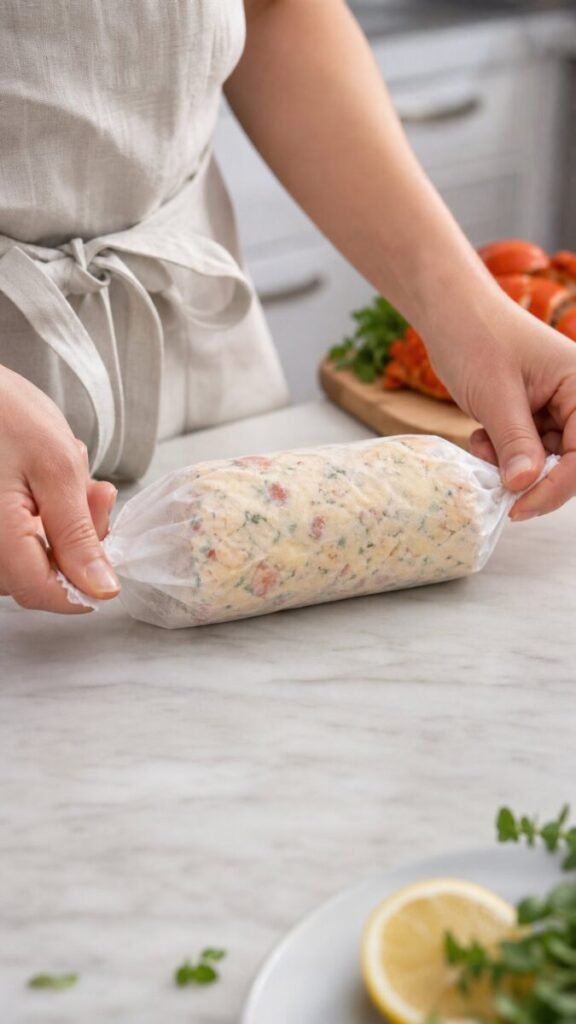
- Step 5 — The set. Lay the log flat in the fridge and give it a full 2 hours — or the freezer for 45 minutes if the schedule is tight, which sets it almost as cleanly. This is pure physics, no craft required: the butter matrix has to solidify around the seafood so the log slices instead of smears. While it chills, the flavors are also marrying — garlic and Old Bay diffuse through the fat, the lemon lifts everything, and the log that comes out is rounder in flavor than the bowl you tasted. Use the wait to toast the baguette, cut lemon wedges, and chill a bottle of something dry and cold.
- Step 6 — Slice and deploy. Unwrap the set log and cut it into twelve thick coins — about two-thirds of an inch each — with the hot-water knife trick: run the blade under hot water, wipe it dry, cut one clean coin, repeat. Thick matters here; a thin shaving melts away to nothing on contact, while a fat coin delivers a slow, luxurious collapse. Plate the coins on chilled slate for the platter crowd, or go straight to the main event: warm toast, the coin on top, a pinch of flaky salt, a scrape more of Old Bay, and the wait — eight, maybe ten seconds — while the butter goes from solid to sauce. That pause is the recipe’s whole reason for existing.
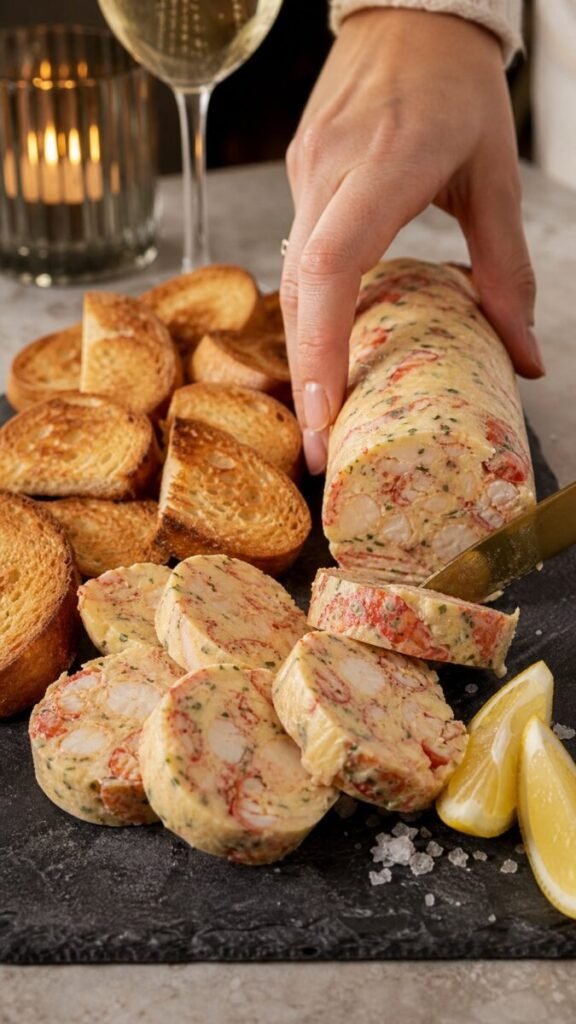
Same sweet seafood, same buttery delivery — these bombs and the creamy shrimp and crab garlic toast are two formats of one very good idea.
Anna’s Kitchen Notes
The langostino ledger. Langostino — those sweet little pieces sold frozen as “lobster meat” at a fraction of the price — is my standing substitution here, and I’ll defend it at any party. It’s a different animal technically (a squat lobster, more shrimp-sized), but the flavor is sweet and lobster-adjacent, the pieces are exactly bomb-sized, and the savings are real. Purists: buy the lobster. Everyone else: thaw a bag of langostino, pat it dry, and let the butter do the talking. Nobody at my table has ever asked for the seafood’s papers.
Shopping for crab without heartbreak. Lump crab is the platoon you want — whole pieces of leg and body meat — and the honest move is the refrigerated 8-oz tubs or cans marked “lump” or “backfin,” drained well. Claw meat is cheaper, darker, and more flavorful, and it makes a handsome, rustier bomb. What I’d skip is the shelf-stable “special” grade for this one — it’s mostly shredded bits, and the cross-section is the whole point. And check the label for phosphates if you can; the shorter the ingredient list, the sweeter the crab tastes.
Softened is a range, and it matters. The butter wants to be pliable enough to whip — you can bend a stick and it dents like cold clay left out, but it hasn’t started to gloss or weep. Melted butter is the failure mode nobody warns you about: it breaks the emulsion, the solids sink, the log sets greasy and dense instead of light, and no amount of chilling fully walks it back. If your butter went too far, let it re-firm in the fridge to softened-clay stage and start the whip again. Thirty minutes on the counter from fridge-cold is usually exactly right.
Salt like it’s butter, because it is. Old Bay is salty, crab is briny, and the butter is unsalted on purpose — so the recipe seasons in layers and tastes at the bowl, before the seafood goes in. Cold flattens salt perception, which is why the mix should taste a touch over-seasoned at room temperature for it to land right on a chilled coin. If a finished bomb tastes faint, the fix for next time is a quarter teaspoon more Old Bay, not table salt — you get seasoning and the celery-paprika warmth in the same move.
Make two logs while the counter’s dirty. The recipe doubles without a single change — two sticks, two pounds, two logs — and the second log lives in the freezer as insurance for the next occasion. Slice-and-refreeze works too: cut coins from a frozen log as needed with the hot knife, take what the evening demands, and return the rest. A freezer with lobster butter in it is a different quality of life, and I stand by that.
The Party Reef
A seafood appetizer this rich wants the table built around cool and crunchy things. The crispy rice paper crab rangoons are the other end of the crab spectrum — hot, crunchy, creamy — and the crab and shrimp queso rolls bring the melted-cheese energy that butter politely declines to provide. Two hot, one cold: the reef has range.
For the cooler end: the cold shrimp dip is the creamy-cool counterpart five minutes away, the classic party shrimp dip is the retro version people orbit all night, and the puff pastry twists give the butter something warm and flaky to be spread on when the toast runs out — which it will, because you cannot make too much toast for this.
Same Butter, Other Seas
The shrimp-and-scallop build. Equal parts chopped shrimp and chopped sea scallops in place of the lobster and crab — the budget-conscious cousin with the same method, and the scallops make it noticeably sweet. Pat everything twice as dry; scallops hold more water than any seafood in the case.
The steakhouse build. Skip the seafood; fold in horseradish, blue cheese, and chives instead. This is the prime-rib butter steakhouses charge extra for, and a coin of it on a resting ribeye is one of the great food moments available to a home cook. The recipe’s physics don’t change a bit.
Chili-crisp heat. A spoonful of chili crisp stirred into the base instead of the cayenne — the oil disperses through the butter in red flecks, and the sweet seafood under slow burn is a combination people talk about the next day. Start with one spoon; the crisp intensifies as the log sits.
The dill-and-aquavit Scandinavian. Lemon-dill butter with cold-water shrimp or smoked trout, a spoon of whole-grain mustard, and a pinch of sugar — the same technique pointing north. Serve the coins on dark rye with a cold shot beside, and the party has officially gone international.
Corn-and-crawfish summer. Crawfish tails and a handful of charred corn kernels in a Cajun-seasoned butter — the boil-and-butter flavors of a Louisiana crawfish table in sliceable form. This is the one to make in summer, when the crawfish are cheap and the porch is willing.
The baked version, honestly rated. There’s a school that mixes cream cheese with the butter, balls the mixture, rolls it in panko, and bakes it at 350°F — hot, crisp, and closer to a seafood croquette. It works, and it loses the thing that makes the cold version special: the melt, the cross-section, the entire butter-bomb premise. About eighty percent of the experience in a completely different shape. Fine for a winter party; the cold coin is still the point.
The Bomb Count
| Nutrient | Per Bomb (1 of 12) |
|---|---|
| Calories | 160 kcal |
| Protein | 7 g |
| Carbohydrates | 1 g |
| Fats | 14 g |
Estimates as written, seafood, butter, and seasonings included. Let’s be adults about it: this is butter with seafood in it, and the fat number is the recipe’s whole personality — fourteen grams a bomb, most of it the dairy kind, carrying seven grams of protein and essentially no carbohydrate along for the ride. The serving frame matters more than the number: one bomb on a piece of toast is a contained, elegant 160-calorie bite, and the platter format is self-limiting in a way that hot appetizers never are, because richness this concentrated enforces its own portion control. Two bombs and a glass of something dry is a complete appetizer course. In my experience the room averages three, and then someone scrapes the slate.
The Cold Chain
Storage is this recipe’s secret superpower, because the format is already a preservation technique — butter fat seals the seafood, and the whole log is designed to live in the cold. The fridge keeps a wrapped log five days, and I’d swear the day-three slices taste better than day-one: the garlic mellows, the Old Bay integrates, the lemon lifts. Freeze a double-wrapped log up to three months — plastic wrap tight against the butter, then foil or a freezer bag over it, because butter absorbs freezer odors the way bread absorbs fridge odors, and nobody wants a smoked-salmon-scented surprise that was never smoked salmon.
The smarter freezer program is slice-first: cut the whole set log into coins, freeze them flat on a parchment-lined tray for an hour, then bag the frozen coins individually quick-frozen — a weapons cache you raid one bomb at a time. A coin straight from the freezer onto hot toast behaves nearly identically to a fresh-cut one (the melt takes fifteen seconds longer, and the show is arguably better), and a coin dropped on a resting steak is the fastest pan sauce in the house. This is the rare appetizer that gets more convenient every day it sits in your freezer, planning its own deployment.
Second careers, because every component here is a sauce in waiting: a coin melted over scrambled eggs is the best breakfast upgrade in the repertoire; one stirred into hot pasta with a splash of pasta water is a thirty-second seafood sauce; one over a baked potato or stirred into rice at the end of cooking turns sides into events; and one melted over grilled corn in August is the summer the corn deserved. The log is not just an appetizer — it’s twelve small dinners in disguise, and the freezer is holding them for you.
Where It Goes Wrong
Weeping, wet bombs. The seafood went in damp — surface water never integrates into the butter, and it exits as beads on the cut face and a damp ring on the plate. The fix is the double pat-dry in step one, both kinds of meat, no shortcuts. If a finished log weeps anyway, wipe each coin with a paper towel just before serving and blame the crab’s mood — then dry twice next time.
Dense, greasy slices that never melt gracefully. The butter was melted instead of softened, or the whip was skipped. Melted butter loses its whipped structure and sets into a brick that separates instead of collapsing into sauce; unwhipped butter never gains the air that makes the melt silky. Softened-to-pliable, whipped a full minute, then folded — the texture of the finished bomb is decided entirely in those two moves, and both of them are free.
Crumbly coins that fall apart at the knife. The log was sliced ice-cold, packed loosely, or the ratio drifted meatward. A log straight from the freezer shatters; give it ten minutes at room temperature first. Air pockets from a loose roll become fault lines — twist the wrapper ends tighter than feels necessary and squeeze the log snug as you roll. And if you went past a pound of seafood per cup of butter, the binding is outnumbered; pull back to the ratio and the slices come back clean.
A bland bomb with premium ingredients. The classic heartbreak, and it’s almost always under-salt plus missing zest: cold flattens flavor, the seafood dilutes the base, and a log seasoned to taste “just right” at the bowl reads quiet when chilled. Season in layers (Old Bay, the garlic paste’s pinch of salt, and another pinch into the butter), taste before the fold, and use the zest — the perfume does more for perceived flavor than another quarter teaspoon of anything. A finished-too-quiet batch is rescued at serving with flaky salt and a dusting more Old Bay on each coin.
Fishy, off-tasting butter. The seafood was past its best days, and butter is an amplifier, not a disguise — it carries and magnifies whatever the meat brings, sweet or otherwise. Buy from a busy fish counter or a trusted frozen brand, smell everything before it goes in the bowl (seafood should smell like a clean tidepool, not a low tide), and when in doubt, freeze the log and use it within the month rather than pushing the fridge window. The nose knows. Trust it before the butter repeats it.
A cold puck on cold toast. The one failure that isn’t the recipe’s fault: the platform. The entire premise is the temperature gap — firm cold coin, warm surface, melt — and a slice of fridge-cold baguette or a room-temperature cracker delivers no gap and no show. Toast the bread properly warm, warm the plates if you’re feeling fancy, and put the toast in the oven, not the basket, until the bombs are sliced. The butter has done everything right; give it something warm to land on.
Bomb Questions
Can I use langostino instead of lobster?
Yes, and I do it regularly — langostino is sweeter, cheaper, and exactly bite-sized, and in a butter this seasoned, the difference is smaller than the price gap. The purist’s build with true lobster meat has a firmer, sweeter chew, and if it’s a milestone occasion, buy the lobster. For every other Tuesday-that-needs-a-lift, the frozen langostino bag is the answer, and nobody has ever guessed. Thaw, pat dry twice, proceed.
What about imitation crab?
Honest answer: it works, and it changes the dish. Imitation crab (surimi) is sweeter, softer, and pre-seasoned, so the bombs read sweeter and the cross-section is paler — closer to a nostalgic crab-butter than a lobster-house one. It’s also the budget that makes this an everyday recipe instead of an occasion, and I won’t gatekeep that. If you use it, chop it small, halve the added salt, and expect the flavor to lean snack-food-festive rather than coastal-fancy.
Can I use salted butter?
You can — skip the added salt entirely and expect the seasoning to land slightly sharper, since salted butter varies wildly by brand. The reason the recipe defaults to unsalted is control: you’re already seasoning with Old Bay and briny crab, and unsalted butter lets you calibrate all of it from zero. Salted butter plus Old Bay plus crab has three salty voices, and one of them is always louder than you meant it to be.
Is there a substitute for Old Bay?
Make your own in thirty seconds: half paprika, a quarter celery salt, and a pinch each of cayenne, dry mustard, and black pepper. It’s not identical — Old Bay has a proprietary warm spice undertow — but it lands in the same zip code and nobody at a party has ever run a lab comparison. In a pinch, plain celery salt plus paprika carries most of the flavor, and the lemon and garlic cover the rest of the distance.
How far ahead can I make the log?
Five days in the fridge, three months in the freezer, both double-wrapped. The day-two and day-three slices genuinely taste better than day-one — the garlic rounds off and the seasoning integrates — so the make-ahead version is the better version, a rare and welcome trait in an appetizer. Slice what you’ll serve, keep the rest of the log wrapped, and re-slice as needed; cut coins keep their faces best when they’re cut fresh.
What do I serve the bombs on?
The rule is warm and sturdy: toasted baguette slices, warm brioche toast points, griddled sourdough, or crackers with backbone (the dense Scandinavian kind, not the lace-thin shatter ones). Cool cucumber rounds work for a lighter, no-melt service — more like a seafood butter canapé — but understand you’re trading the melt, which is the show. For the full demonstration, toast plus bomb plus flaky salt plus ten seconds of patience is the format the recipe was born for.
Can I cook with it, or is it just a spread?
Cook with it — that’s half its range. A coin on a resting steak becomes an instant sauce; one stirred into hot pasta with a splash of pasta water is a thirty-second seafood pasta; one melted over scrambled eggs, baked potatoes, hot rice, or grilled corn turns each of them into the fancier version of itself. The only rule is gentle heat at the end: drop the butter into the food, not the pan, so the butter melts on the food’s residual warmth and the seafood never overcooks. It was already cooked once. Once is enough.
Sweet lobster & crab · Lemon-herb butter · Make ahead
Lobster & Crab Butter Bombs
Tender pieces of cooked lobster and lump crab folded into lemon-garlic butter with Old Bay, parsley, and chives. Chill into a sliceable log, then serve generous seafood-studded portions with freshly toasted bread.
As an Amazon Associate I earn from qualifying purchases.
Ingredients
The seafood
- 8 oz fully cooked lobster meat, chilled and patted dry
- 8 oz fully cooked lump crab meat, drained and checked for shell
The butter base
- 1 cup (2 sticks / 227 g) unsalted butter, softened but not melted
- 1 teaspoon Old Bay seasoning, plus a little more for finishing if desired
- 1 small pinch cayenne pepper
Lemon, garlic & herbs
- 1 lemon, for 1 tablespoon juice and ½ teaspoon finely grated zest
- 1 small garlic clove, finely minced or mashed to a paste
- 1 tablespoon finely chopped fresh parsley
- 1 tablespoon finely snipped fresh chives
- 1 small pinch fine salt, only if needed
For the toast
- 12 sturdy slices baguette, freshly toasted, optional
- Flaky salt, a light sprinkle for finishing, optional
*Start with prepared ingredients: the timing assumes softened butter and fully cooked, chilled seafood. Thaw frozen seafood in the refrigerator beforehand. This recipe has no seafood-cooking step; raw lobster or crab must not be folded into the butter.
The butter-making kit
- Mixing bowl and silicone spatula
- Parchment paper and food-safe plastic wrap
- Sharp knife and cutting board
- Fine zester
- Measuring cups and spoons
- Paper towels
- Small sheet pan, to support the wrapped log
- Toaster oven or an oven, for the optional toast
- Food-safe serving platter
A generous seafood ratio: this mixture has twice as much seafood as butter by weight. Pack it gently but firmly, and expect a chunky, potentially delicate slice rather than a perfectly smooth butter coin.
Let the mixture determine the log length: form a cylinder about 2 inches across without forcing everything into an 8-inch log. Divide the finished log into 12 equal portions; thickness will vary.
How to make it
-
Dry and check the cooked seafood
Keep the seafood chilled until you are ready to mix. Drain thoroughly, check the crab and lobster for shell fragments, and gently blot with clean paper towels. Chop the lobster into small bite-size pieces while leaving some recognizable crab lumps intact. Do not crush the seafood while drying it.
-
Beat and season the softened butter
Beat the pliable butter with a spatula for 1–2 minutes until smooth and slightly lighter. Mix in the Old Bay, cayenne, lemon zest, garlic, parsley, and chives. Beat in the lemon juice a little at a time; it may not incorporate as easily if added all at once. Taste before adding the optional pinch of salt, remembering that the seafood also contributes salt.
-
Fold in the lobster and crab
Add the dried seafood and fold gently from the bottom of the bowl until evenly coated and distributed. Stop once combined to preserve the lumps. If the butter becomes very soft or oily, refrigerate the mixture briefly until it is moldable again.
-
Shape and wrap the log
Spoon the mixture onto a large sheet of parchment. Use the paper to shape a cylinder about 2 inches in diameter, pressing gently to close large air pockets without crushing the seafood. Roll snugly and twist or fold the ends closed. Wrap in food-safe plastic wrap and place flat on a small tray. Two shorter logs are easier to handle if preferred.
-
Refrigerate until firm
Refrigerate at 40°F or below for at least 2 hours, or longer if needed for the center to become firm enough to slice. Chill time depends on the log’s thickness and the starting temperature of the mixture. Prepare the toast just before serving, not at the beginning of the chilling period.
-
Slice and pair with fresh toast
Unwrap and cut into 12 equal portions with a sharp knife, warming the blade under hot water and wiping it dry between cuts if helpful. Support each slice with the blade as you move it. Place on freshly toasted bread, adding a little Old Bay or flaky salt only if desired. Let the butter soften, then gently spread it across the toast. Thick chilled portions may soften gradually rather than melt completely; a hot slice of bread cannot reliably melt a large seafood-filled coin in a few seconds.
Keep the cold chain: butter does not preserve cooked seafood or make garlic safe at room temperature. Keep the log refrigerated at 40°F or below and use within 3–4 days of the seafood’s original cooking or opening, or sooner if its label requires. Mixing does not restart that clock. Discard questionable seafood; freezing cannot make spoiled food safe.
For the appetizer table: bring out small portions and keep the remainder chilled. Limit total time out of refrigeration, including preparation and service, to 2 hours, or 1 hour above 90°F. Thaw frozen portions in the refrigerator rather than expecting warm toast to thaw them. Contains crustacean shellfish and milk; bread contains wheat unless a suitable gluten-free option is used.