

Honey Mustard Baked Salmon Recipe
This Honey Mustard Baked Salmon is the salmon recipe that converts people who think they do not like salmon — the glaze is sticky, sweet, tangy, and deeply savoury all at once, the fish bakes to tender and flaky rather than dry and chalky, and the whole thing is on the table in 25 minutes from a pan you line with foil so cleanup doesn’t extend the effort beyond what the cooking itself required.
Honey and mustard together do something for salmon that neither ingredient manages alone — the honey’s sweetness caramelises against the salmon’s natural fat during baking and creates a sticky, lacquered surface, while the Dijon’s sharpness and acidity cuts through the richness of the fish and prevents the glaze from being cloying. Together with garlic, a little soy sauce for depth, and lemon zest for brightness, they produce a glaze that tastes more complex than a five-ingredient combination has any right to.
It works for a Tuesday dinner and works equally well when you need a salmon dish that looks impressive on a plate without requiring impressive technique to produce it.
Why This Glaze Works So Well on Salmon
Salmon is a fatty, richly flavoured fish that benefits from a glaze with acid and sharpness to balance it rather than a sweet-only or butter-heavy approach that can make each bite feel progressively heavier. The Dijon mustard provides both — its vinegar base adds acid and its mustard compounds add a pungency that makes the sweet honey seem brighter by contrast rather than just sweet.
The fat in salmon also acts as a vehicle for the glaze’s flavour — as it bakes, the rendered fat carries the honey mustard compounds through the flesh so the glaze flavour penetrates rather than just sitting on the surface.
- Prep Time: 5 minutes
- Cook Time: 12 to 15 minutes
- Total Time: 20 minutes
- Yield: 4 servings
What You Need
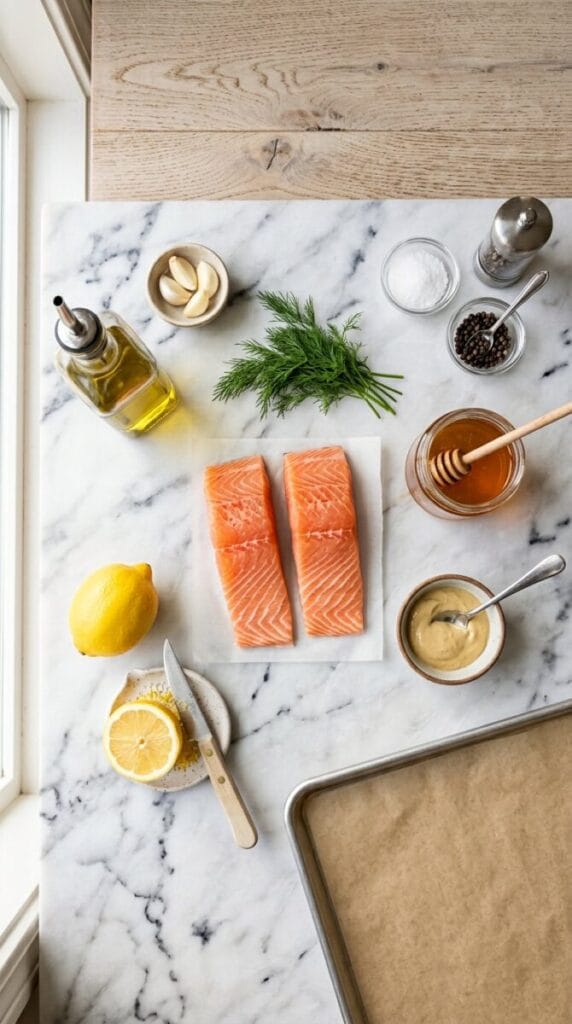
For the honey mustard glaze:
- Dijon mustard: 3 tablespoons
- Whole grain mustard: 1 tablespoon — adds texture and a slightly more complex mustard flavour than Dijon alone
- Honey: 3 tablespoons
- Low-sodium soy sauce: 1 tablespoon
- Garlic cloves, minced or grated: 2
- Lemon zest: 1/2 teaspoon
- Fresh lemon juice: 1 teaspoon
- Olive oil: 1 tablespoon
- Black pepper: 1/4 teaspoon
- Fresh thyme leaves or dried thyme: 1/2 teaspoon
For the salmon:
- Skin-on salmon fillets, about 6 oz each: 4
- Fine sea salt: 1/2 teaspoon
- Black pepper: 1/4 teaspoon
- Lemon slices: for serving
- Fresh parsley or thyme: for garnish
How to Make It
- Preheat the oven to 400°F (200°C) and line a baking sheet with foil. Lightly brush or spray the foil with olive oil to prevent the glaze from sticking during baking.
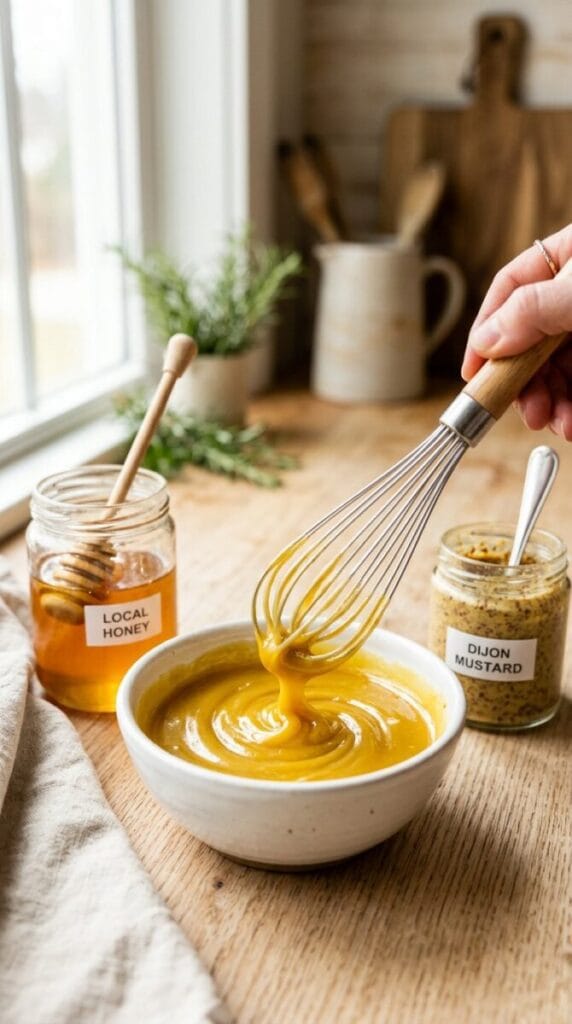
- Whisk all the glaze ingredients together in a small bowl until smooth and combined. Taste it — it should be balanced between sweet and sharp with a clear mustard presence. Adjust with a little more honey if it tastes too sharp, more lemon if it tastes too sweet.
- Pat the salmon fillets completely dry with paper towels — moisture on the surface dilutes the glaze before it can adhere and reduces caramelisation during baking.
- Season the salmon lightly with salt and pepper on both sides and place skin-side down on the prepared baking sheet.
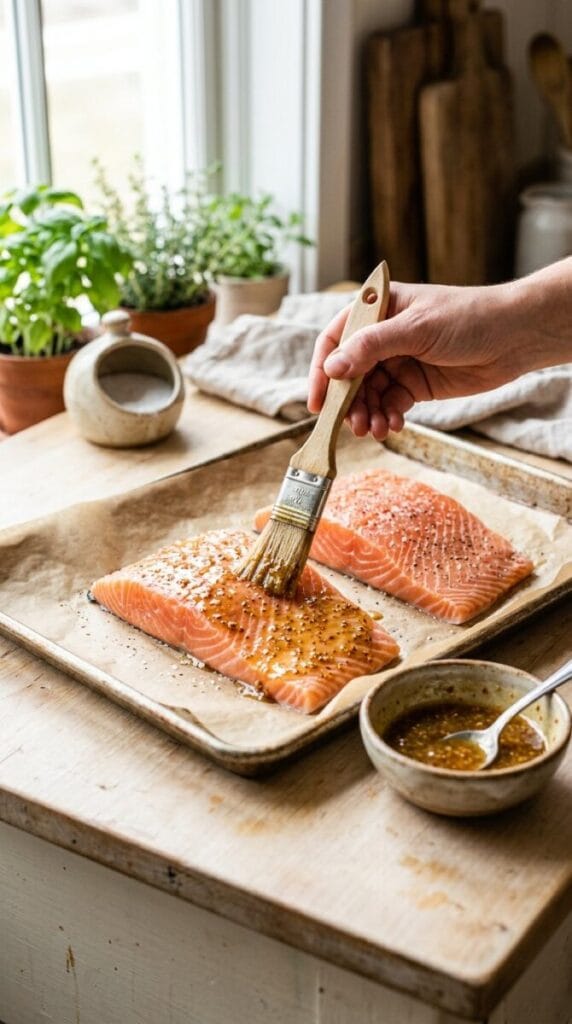
- Spoon or brush the honey mustard glaze generously over the top and sides of each fillet, reserving about 2 tablespoons of glaze for a second coat and for serving.
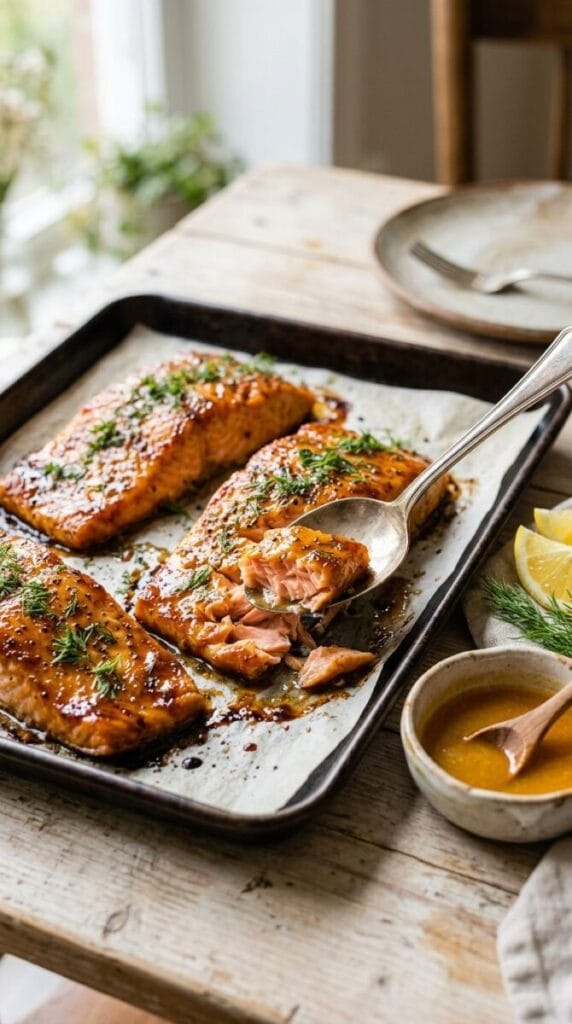
- Bake at 400°F for 10 to 12 minutes depending on the thickness of the fillets — a 1-inch fillet is done at 10 minutes, a 1.5-inch fillet at 12 to 13 minutes. The salmon is done when it flakes easily at the thickest point but still looks slightly translucent in the very center — this is the point of maximum moisture, not undercooking.
- Switch the oven to broil (high) for the final 2 minutes to caramelise the glaze — watch closely, as the honey in the glaze can go from perfectly caramelised to burnt in under 60 seconds under direct broiler heat.
- Brush the reserved glaze over the hot salmon immediately after it comes out from under the broiler and the glaze will melt slightly and coat the surface in a thin, glossy finish.
- Serve with lemon slices, fresh herbs, and the additional glaze drizzled over.
Honey mustard salmon alongside our Spring Roll Salad with Peanut Dressing makes a complete dinner with two genuinely different flavour profiles that complement rather than compete — the peanut dressing’s richness and the honey mustard salmon’s tangy sweetness side by side is one of the most satisfying combinations in the Asian-inspired dinner rotation.
The Technique Details Behind the Glaze and the Cook
Two types of mustard rather than one Dijon alone is the glaze detail worth paying attention to — Dijon mustard is smooth, sharp, and emulsified, which makes it the structural base of the glaze. Whole grain mustard adds mustard seeds that pop slightly in the mouth and contribute a coarser texture and a slightly more bitter, complex mustard note that makes the glaze more interesting bite to bite than a smooth Dijon-only version.
The soy sauce in a honey mustard glaze sounds unexpected and produces a result that most people cannot identify specifically but notice as a deeper, more savoury dimension than the same glaze without it — the soy contributes glutamates that heighten every other flavour in the mixture and add a background savouriness that prevents the glaze from tasting only sweet and sharp. It is the same role soy sauce plays in a teriyaki marinade, and the effect is the same here.
Pulling the salmon slightly before it looks fully done is the most important technique instruction in any salmon recipe — salmon continues cooking for 2 to 3 minutes after it comes out of the oven from its residual internal heat, and a fillet that looks perfectly opaque and flaky in the oven will be dry and chalky on the plate two minutes later. The correct point to pull it is when the flesh still looks slightly translucent in the very center and gives to gentle pressure with a finger but doesn’t spring back — that residual cooking finishes it to moist and flaky perfection. According to Serious Eats, salmon’s ideal internal temperature for a moist, flaky result is 125°F at the thickest point — significantly lower than the FDA’s recommended 145°F, which corresponds to a cooked-through, drier texture that most people associate with overcooked fish.
What to Serve Alongside
Steamed or roasted asparagus, green beans, or broccolini are the vegetables that share the most natural affinity with honey mustard flavours and can be prepared in the same oven window — toss with olive oil and salt and roast on a second sheet pan at 400°F for the same 12 minutes the salmon bakes.
For a complete dinner with more substance, our Lemon Cream Sauce Pasta is the pasta side that matches the salmon’s lemon-forward profile — the lemon running through both dishes ties the plate together, and the cream sauce pasta provides the carbohydrate richness that makes salmon feel like a substantial dinner rather than a light protein.
Our Chickpea Beet and Feta Salad with Lemon Garlic Vinaigrette alongside this salmon is the full dinner combination for anyone who wants a substantial, nutritious meal that still feels light — the bright, acidic salad with earthy beets and creamy feta complements the sweet, tangy salmon glaze across every flavour dimension on the plate.
Recommended Kitchen Tools for the Best Honey Mustard Baked Salmon
6 essential tools for tender salmon, a flavorful honey mustard glaze, and a beautifully caramelized top.This easy baked salmon is all about tender fish, a flavorful honey mustard glaze, and a beautifully caramelized top. These 6 essential tools make preparation simple and help you get consistent results every time.

Rimmed Baking Sheet
A sturdy rimmed baking sheet gives the salmon plenty of room to bake evenly while keeping the honey mustard glaze contained.

Parchment Paper
Lining the baking sheet helps prevent the sticky honey mustard glaze from sticking and makes cleanup much easier.

Small Mixing Bowl
A small bowl is perfect for whisking together the honey, mustard, seasonings, and other glaze ingredients before coating the salmon.

Silicone Basting Brush
A silicone brush makes it easy to spread the honey mustard glaze evenly over the salmon and add an extra layer before baking.

Instant-Read Thermometer
Salmon cooks quickly, so an instant-read thermometer helps you check the thickest part of the fillet and avoid overcooking it.

Fish Spatula
A thin, flexible fish spatula makes it easier to lift the baked salmon from the sheet pan without breaking the tender fillet or losing the delicious glaze.
As an Amazon Associate we earn from qualifying purchases.
Variations That Keep the Simplicity
Add 1 teaspoon of sriracha or a 1/4 teaspoon of cayenne to the glaze for a honey mustard sriracha salmon with a building heat that makes the sweet-and-sharp combination more complex and more interesting for anyone who wants something with more edge than the classic version.
Replace the Dijon with miso paste — use 2 tablespoons of white miso and 2 tablespoons of Dijon for a miso honey mustard version that adds a fermented, deeply savoury umami layer to the glaze that pairs particularly well with salmon’s natural richness. The miso and honey combination is borrowed from Japanese-influenced cooking and the result is genuinely excellent.
Make it into a sheet pan dinner by adding a second pan of vegetables alongside the salmon — asparagus, sliced zucchini, halved cherry tomatoes, and snap peas all roast at 400°F in the same 12-minute window. Drizzle any remaining glaze over the vegetables at the end for a complete one-pan meal.
Nutritional Information
| Nutrient | Amount Per Serving (one 6 oz fillet with full glaze) |
|---|---|
| Calories | 360 kcal |
| Protein | 36 g |
| Carbohydrates | 14 g |
| Fats | 16 g |
These values are estimates for a 6 oz skin-on salmon fillet with the full glaze divided by 4 servings. Salmon’s fat content is primarily from omega-3 fatty acids — one of the most nutritionally valuable fat sources available, with significant evidence for cardiovascular and anti-inflammatory benefits. The carbohydrate count comes from the honey in the glaze.
Storing and Reheating
Store leftover salmon covered in the fridge for up to 2 days — salmon deteriorates faster than most proteins and is genuinely best eaten within 48 hours of cooking. The honey mustard glaze firms and darkens on cold salmon but softens again immediately on gentle reheating.
Reheat in a 275°F oven on a foil-lined pan for 10 to 12 minutes — the low heat warms the salmon through without drying it out the way a higher temperature would. Brush a small amount of fresh glaze over the fillet before reheating to restore the surface shine and fresh glaze flavour.
Cold leftover honey mustard salmon flaked over a bowl of mixed greens, cucumber, avocado, and cherry tomatoes with the reserved glaze thinned with a splash of lemon juice as the dressing is one of the best possible uses of day-two salmon — the glaze doubles as a salad dressing in a way that makes the next-day lunch feel intentional rather than leftover.
Mistakes That Dry Out the Salmon or Burn the Glaze
Baking at too low a temperature without the broiler finish produces salmon that cooks through evenly but never develops the caramelised, slightly darkened glaze surface that makes this recipe look and taste distinctly different from plain baked salmon — 400°F plus a 2-minute broiler finish is the combination that produces both perfectly cooked flesh and a properly caramelised glaze simultaneously.
Not watching the broiler phase allows the honey in the glaze to cross from caramelised to burnt — honey has a lower burning threshold than most sugars and the broiler produces the temperature differential needed to caramelise it quickly, which also means it can burn quickly. Stand at the oven for the full 2 minutes with the door ajar and pull it the moment the glaze has darkened to a deep golden with a few slightly darker spots.
Skipping the paper towel dry before glazing produces a surface that the glaze slides off of rather than adhering to — the moisture barrier between wet fish and the oil-based glaze prevents the glaze from sticking evenly and reduces caramelisation during baking. Thirty seconds of patting the fillets dry before the glaze goes on produces a noticeably better adherence and a more evenly caramelised result.
Easy Honey Mustard
Baked Salmon
Tender salmon fillets finished with a sticky, caramelized honey mustard glaze with Dijon, garlic, lemon, soy sauce, and thyme—ready in just 20 minutes.
Ingredients
Instructions
Preheat oven to 400°F (200°C). Line a baking sheet with foil and lightly brush or spray it with olive oil to prevent sticking.
Whisk Dijon, whole grain mustard, honey, soy sauce, garlic, lemon zest, lemon juice, olive oil, pepper, and thyme until smooth and combined.
Pat salmon completely dry with paper towels. Season both sides lightly with salt and pepper, then arrange fillets skin-side down on the baking sheet.
Brush or spoon glaze generously over the top and sides of each fillet. Reserve about 2 tablespoons of glaze for a final coat after baking.
Bake for 10–12 minutes, depending on thickness. A 1-inch fillet usually takes 10 minutes; thicker 1½-inch fillets may take 12–13 minutes.
Switch the oven to high broil for the final 2 minutes. Watch constantly—the honey glaze can burn quickly under direct heat.
Kitchen Notes
Dry fillets help the glaze adhere evenly and caramelize properly rather than sliding off into a watery layer.
Salmon continues cooking after leaving the oven. Remove it when the center is still slightly translucent for the moistest result.
The honey gives this recipe its glossy caramelized finish, but it can go from golden to burnt in under a minute.
Dijon gives smooth sharpness, while whole grain mustard brings texture and a deeper, more complex flavor to the glaze.
Easy Variations
Add 1 teaspoon sriracha or ¼ teaspoon cayenne pepper to the glaze for a sweet-and-sharp finish with gentle heat.
Use 2 tablespoons white miso and 2 tablespoons Dijon for a deeply savory, Japanese-inspired variation.
Roast asparagus, zucchini, tomatoes, snap peas, or green beans on a second pan at the same 400°F oven temperature.
Flake cold leftover salmon over greens, avocado, cucumber, and tomatoes, then thin reserved glaze with lemon juice for dressing.
Store leftovers covered in the refrigerator for up to 2 days. Salmon is best enjoyed as soon as possible after cooking.
Reheat on a foil-lined pan at 275°F for 10–12 minutes. Brush with a little fresh glaze first to restore shine and flavor.
Cold salmon is excellent flaked over a salad, rice bowl, or grain bowl with the honey mustard glaze used as a dressing.