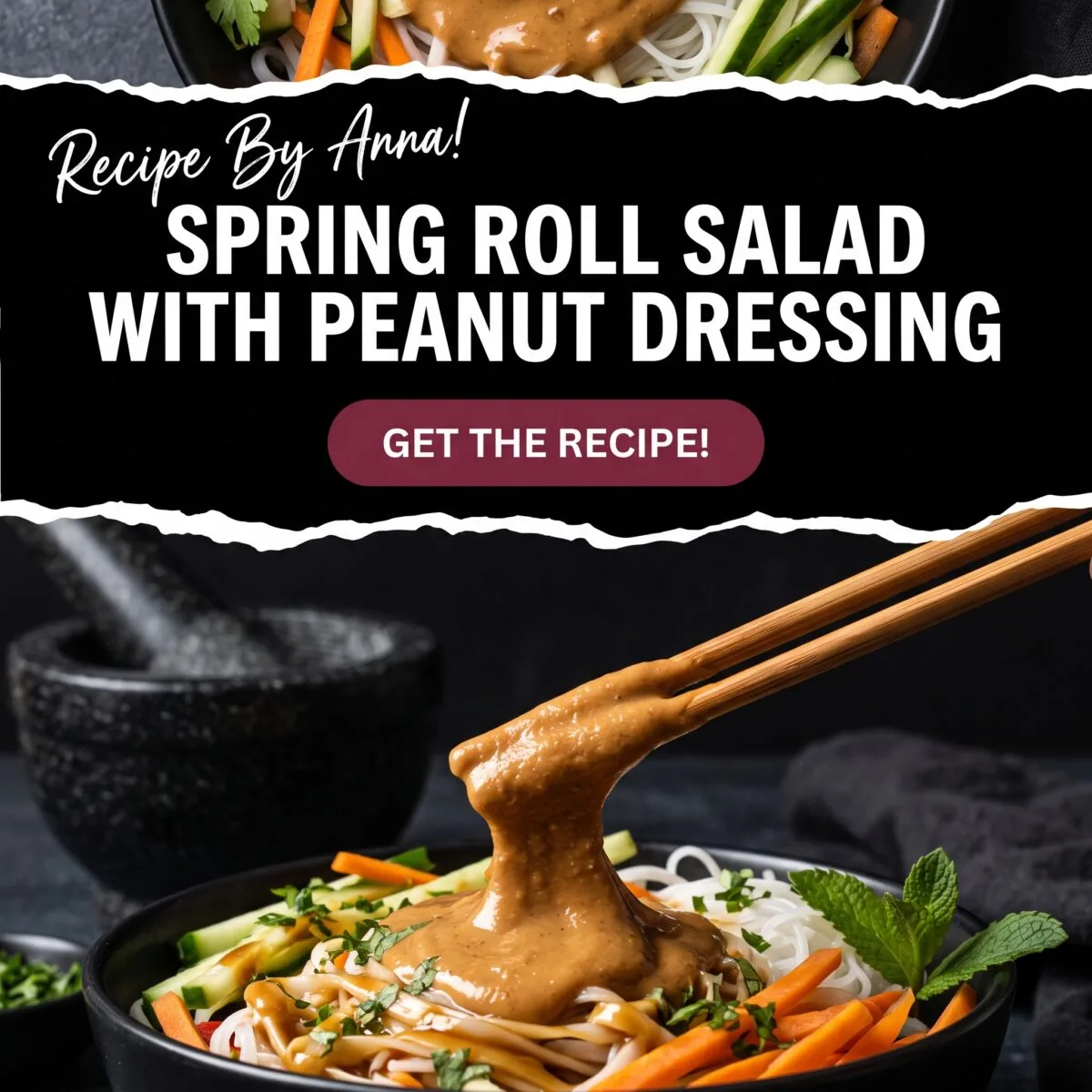
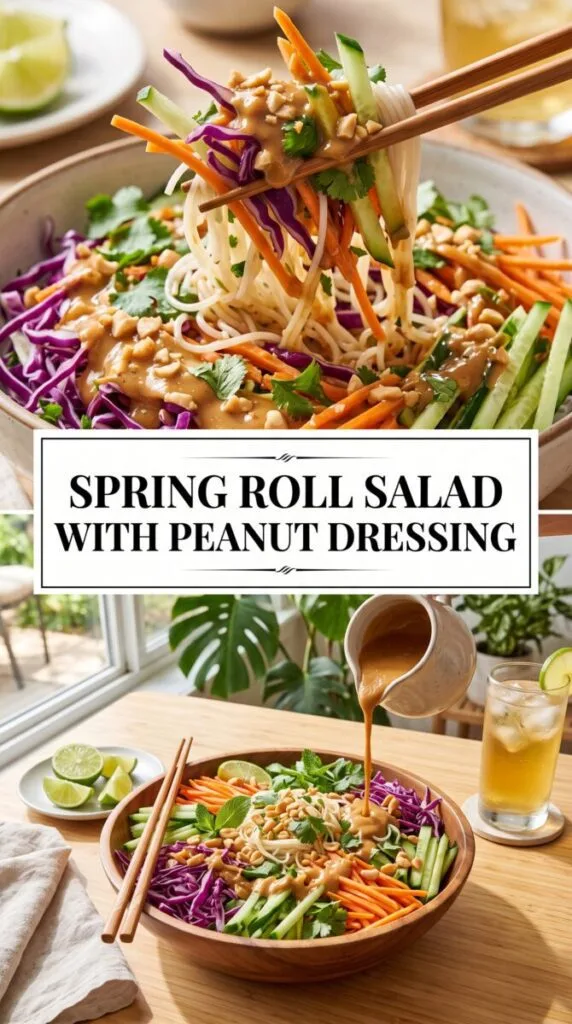
Spring Roll Salad with Peanut Dressing
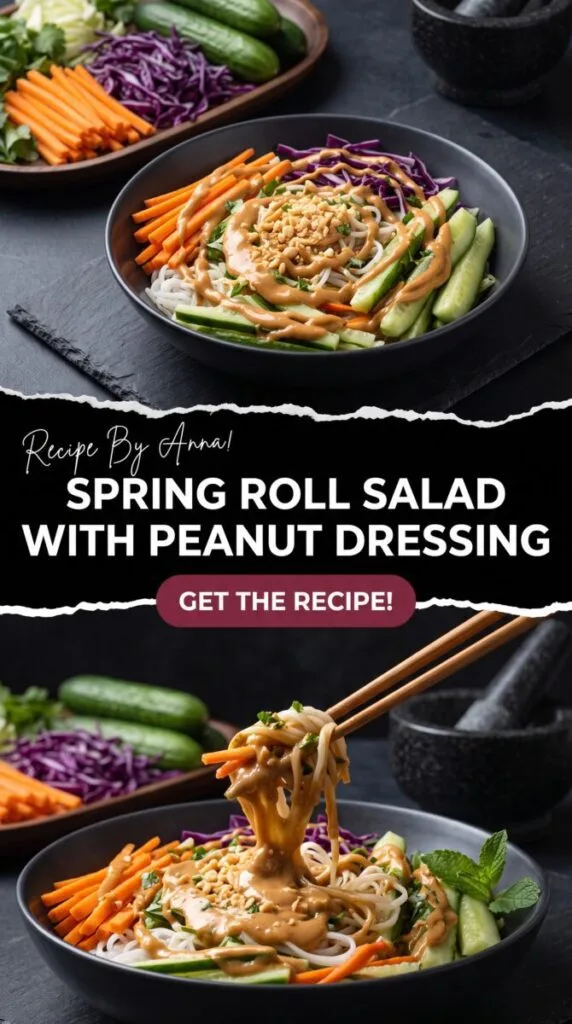
This Spring Roll Salad with Peanut Dressing takes everything that makes a fresh spring roll worth eating — the crunchy vegetables, the cool rice noodles, the fresh herbs, the creamy peanut sauce — and turns it into a salad that serves a crowd, holds up for meal prep, and doesn’t require the fiddly rolling process that makes actual spring rolls a project rather than a weeknight dinner.
The peanut dressing is the component that makes or breaks this dish, and this version gets it right — it’s thick enough to coat every strand of noodle and every shred of vegetable without pooling at the bottom of the bowl, bright with lime and rice vinegar, warm with ginger and garlic, and just spicy enough from sriracha to keep each bite interesting without overwhelming the fresh vegetable flavours underneath it.
It works as a light main dish, a shareable side at a gathering, or the best meal-prep lunch you’ve put in the fridge in months — the components actually improve after a few hours as the noodles absorb a little of the dressing and the flavours meld together.
Why This Salad Solves the Spring Roll Problem
Fresh spring rolls are genuinely delicious but genuinely time-consuming to make for more than two people — the soaking, the rolling, the rice paper tearing, the assembly line. This salad delivers the identical flavour experience from a bowl rather than a roll, and it scales to any number of people with no extra work beyond making more dressing.
It’s also significantly more forgiving as a meal-prep item — assembled spring rolls become rubbery and the rice paper gets tough after a few hours in the fridge, while the deconstructed salad format stays fresh, flavourful, and texturally intact for up to three days when the dressing is stored separately.
- Prep Time: 20 minutes
- Cook Time: 5 minutes (noodles)
- Total Time: 25 minutes
- Yield: 4 servings as a main, 6 as a side
The Full Ingredient List
For the salad base:
- Rice vermicelli noodles, dry: 4 oz (113g)
- Purple cabbage, very thinly shredded: 2 cups
- Green cabbage, very thinly shredded: 1 cup
- Large carrots, julienned or grated: 2
- English cucumber, halved lengthwise and thinly sliced: 1
- Red bell pepper, thinly sliced: 1
- Edamame, shelled and thawed: 1/2 cup
- Fresh mint leaves: 1/2 cup, loosely packed
- Fresh cilantro leaves: 1/2 cup, loosely packed
- Fresh Thai basil or regular basil leaves: 1/4 cup
- Green onions, thinly sliced: 3
- Roasted salted peanuts, roughly chopped: 1/3 cup
- Toasted sesame seeds: 1 tablespoon
For the peanut dressing:
- Natural peanut butter, smooth: 1/3 cup (85g)
- Fresh lime juice: 3 tablespoons (about 2 limes)
- Soy sauce or tamari: 2 tablespoons
- Rice wine vinegar: 1 tablespoon
- Honey or maple syrup: 1 tablespoon
- Fresh ginger, grated: 1 teaspoon
- Garlic clove, minced: 1
- Sriracha or chilli garlic sauce: 1 to 2 teaspoons, to taste
- Sesame oil: 1 teaspoon
- Warm water: 3 to 5 tablespoons, to thin
How to Build the Salad
Making the peanut dressing:
- Whisk the peanut butter, lime juice, soy sauce, rice vinegar, honey, grated ginger, garlic, sriracha, and sesame oil together in a bowl until combined — the mixture will look thick and broken at first, which is normal.
- Add warm water one tablespoon at a time, whisking after each addition, until the dressing reaches a smooth, pourable consistency that coats a spoon but still flows freely — about 3 to 5 tablespoons depending on the thickness of your peanut butter.
- Taste and adjust — more lime for brightness, more soy for saltiness and depth, more sriracha for heat, more honey if it tastes sharp. The dressing should taste bold and slightly over-seasoned on its own since the unseasoned vegetables and noodles will dilute it once dressed.
- Set aside at room temperature while you prepare the salad — the dressing will thicken as it sits, so thin with a splash of warm water right before serving if needed.
Preparing the noodles and assembling:
- Cook the rice vermicelli noodles according to package instructions — most require only 3 to 5 minutes in boiling water or a 5 to 10 minute soak in very hot water. Drain, rinse immediately under cold running water to stop cooking and remove excess starch, then toss with a few drops of sesame oil to prevent clumping.
- Combine the shredded purple and green cabbage, julienned carrots, cucumber, red bell pepper, and edamame in a large bowl.
- Add the cooled noodles to the vegetable mixture and toss to distribute evenly.
- Add the fresh mint, cilantro, basil, and sliced green onions and toss gently.
- Pour about two-thirds of the dressing over the salad and toss until everything is lightly and evenly coated — add more dressing to taste.
- Transfer to a serving bowl or platter, scatter the chopped peanuts and toasted sesame seeds over the top, and drizzle the remaining dressing over the surface in a thin stream for presentation.
- Garnish with a few extra herb sprigs, lime wedges, and extra sriracha on the side for guests who want more heat.
If you love Asian-inspired salads with bold dressings, our California Roll Cucumber Salad is the fastest companion recipe to add to the same week — the cool, sesame-soy cucumber salad is a lighter version of the same fresh-vegetable-with-bold-dressing concept and pairs beautifully on the same lunch spread as this one.
What Makes the Peanut Dressing Work Every Time
Natural peanut butter — the kind where the only ingredients are peanuts and salt — produces a dressing with cleaner, more genuine peanut flavour than commercial peanut butter, which contains added sugar and hydrogenated oils that make the dressing sweeter and less complex. Natural peanut butter also emulsifies more readily with the acidic lime and vinegar components since it doesn’t have the stabilisers that prevent commercial peanut butter from separating.
Warm water rather than cold for thinning is a small but important detail — warm water blends into the peanut butter more smoothly than cold, which can cause the fats in the peanut butter to firm up slightly and resist incorporation. Add it one tablespoon at a time and whisk thoroughly each time to avoid over-thinning, since it’s much easier to thin a thick dressing than to rescue one that’s been made too runny.
Grating the ginger rather than mincing produces a more evenly distributed, less fibrous ginger presence throughout the dressing — a microplane or the fine side of a box grater releases the juice and aromatics into the dressing more completely than chopped or minced ginger, which can leave identifiable chunks that some people find unpleasant in a cold dressing. According to Serious Eats, grating ginger on a microplane releases significantly more flavour compounds than mincing because the cell structure is broken down more completely, making grated ginger roughly twice as flavourful by volume in a cold application where heat can’t do the work of extracting those compounds.
What to Serve Alongside It
This salad is complete as a main dish for vegetarian guests or anyone eating plant-based, but it also works as a side alongside grilled proteins that carry Asian-inspired seasoning.
Our Jerk Chicken Bowl with Pineapple Salsa is a surprisingly natural pairing despite its Caribbean flavour profile — the bold, spiced chicken and the sweet pineapple salsa both have enough citrus and heat to feel coherent alongside the peanut-lime dressing in this salad without clashing.
For a fully plant-based dinner that uses this salad as the centrepiece, our Tuscan Butter Beans with Spinach and Sun-Dried Tomato offers a warm, protein-rich companion that balances the cold, crunchy freshness of the spring roll salad with substance and warmth — a complete dinner from two recipes that take approximately the same amount of time to make.
Variations That Change the Character of the Bowl
Add cooked and cooled shrimp, thin-sliced grilled chicken, or pan-seared tofu to the salad for a protein-forward version that works as a complete main without anything alongside it — toss the protein directly into the salad with the vegetables or arrange it on top for a more composed presentation.
Replace the rice vermicelli with zucchini noodles for a lower-carb version that maintains the noodle-salad format without the carbohydrates of rice noodles — zucchini noodles hold up less well over time than rice noodles, so this variation is best served immediately rather than prepped ahead.
Add thinly sliced mango for a sweeter, more tropical direction that softens the peanut dressing’s savouriness with juicy fruit sweetness — particularly good in spring and summer when fresh mango is at peak ripeness and the salad’s fresh herb character aligns naturally with the season.
For a meal that pushes the same Southeast Asian pantry in a completely different warm direction, our Crock Pot Thai Ginger Chicken Soup uses the same ginger, lime, and fresh herb building blocks in a deeply savoury slow-cooker soup that makes a compelling dinner on cooler days when a cold salad isn’t what the moment calls for.
Nutritional Information
| Nutrient | Amount Per Serving (as a main, 4 servings) |
|---|---|
| Calories | 420 kcal |
| Protein | 14 g |
| Carbohydrates | 52 g |
| Fats | 19 g |
These values are estimates based on the full salad with all the dressing used, divided by 4 main-dish servings. Adding 4 oz of cooked shrimp or chicken per serving increases the protein to approximately 30 grams per serving. The fat content comes primarily from the peanut butter and sesame oil in the dressing rather than any added cooking fat.
Meal Prepping and Storing Without Losing the Texture
Store the dressing separately from the salad components for meal prep — the dressing keeps in a sealed jar in the fridge for up to a week and the vegetable and noodle base keeps in an airtight container for up to 3 days. Dress each portion as needed rather than all at once, since dressed noodles and dressed vegetables both soften significantly faster than undressed ones.
The fresh herbs are the most time-sensitive component — they wilt faster than any other ingredient in the salad. If you’re prepping for the week, keep the herbs in a separate small container with a slightly damp paper towel and add them fresh to each bowl at serving time. The vegetables, noodles, and dressing all hold well, but the herbs are worth the extra 30 seconds of daily assembly.
If you’ve already dressed the full salad and have leftovers, add a handful of fresh cabbage and herbs when you serve the second day’s portion — the fresh crunch revives the salad more effectively than trying to restore the texture of vegetables that have softened in the dressing overnight.
Mistakes That Flatten the Whole Bowl
Not rinsing the rice noodles under cold water immediately after draining allows the surface starch to set and the noodles to clump into a solid mass that won’t separate back into individual strands without tearing. Rinse immediately, rinse thoroughly, and toss with a drop of sesame oil right after — this is a 30-second step that determines whether the noodle component of the salad is delicate and separated or clumped and unpleasant to eat.
Making the dressing too thin by adding water too fast produces a sauce that pools at the bottom of the bowl rather than coating the vegetables and noodles — add water slowly, one tablespoon at a time, and check the consistency after each addition. The right consistency coats a spoon and drips off in a slow, thick stream rather than running off immediately.
Skipping or reducing the fresh herbs is the mistake that turns this from a spring roll salad into a generic Asian noodle salad — the mint, cilantro, and basil together are what create the unmistakably fresh, bright character that makes this dish taste like a deconstructed spring roll rather than just a dressed noodle bowl. Use the full quantities and don’t substitute dried herbs, which contribute none of the aromatic freshness the recipe depends on.
Asian-Inspired
Peanut Noodle Salad
Crunchy cabbages, vibrant fresh herbs, and tender rice noodles tossed in an incredibly rich, savory-sweet peanut and ginger dressing.
Ingredients
Instructions
In a medium bowl, whisk together the peanut butter, lime juice, soy sauce, rice vinegar, honey, ginger, garlic, sriracha, and sesame oil.
Gradually whisk in the warm water, one tablespoon at a time, until the dressing is smooth and pourable. Taste and adjust the seasoning if needed.
Cook the rice vermicelli according to the package directions (usually boiling for about 3–5 minutes).
Drain the noodles and immediately rinse under cold water. Toss with a few drops of sesame oil to prevent them from sticking together.
In a large serving bowl, combine the shredded purple cabbage, green cabbage, grated carrots, sliced cucumber, bell pepper, and edamame.
Add the cooled rice noodles to the vegetable mix and toss gently to combine.
Gently fold in the fresh mint, cilantro, Thai basil, and thinly sliced green onions.
Pour about two-thirds of the peanut dressing over the salad and toss until every noodle and vegetable is evenly coated.
Drizzle with the remaining dressing. Sprinkle with the chopped peanuts and toasted sesame seeds. Garnish with extra herbs and lime wedges, and serve immediately.
Pro Tips
Use natural peanut butter (where the only ingredients are peanuts and salt) for the smoothest, richest dressing without extra additives.
Add the warm water gradually. Different peanut butters have different thicknesses, so you want to ensure the dressing doesn’t become too runny.
Rinsing the rice vermicelli well under cold water stops the cooking process and washes away excess starch, stopping them from turning into a sticky clump.
Toss the salad with the dressing just before serving. This keeps the cabbage and fresh herbs crisp and vibrant.
Turn this side into a heavy-hitting main course by adding grilled chicken slices, garlic butter shrimp, or crispy pan-fried tofu.
Nutrition Per Serving
Meal Prep & Storage
Store the chopped vegetables and noodles in one container, and the peanut dressing in a separate small jar. Toss them together right when you are ready to eat.
Once dressed, the salad will keep in the fridge for about 2 days, though the herbs will wilt slightly. The flavor will actually deepen!