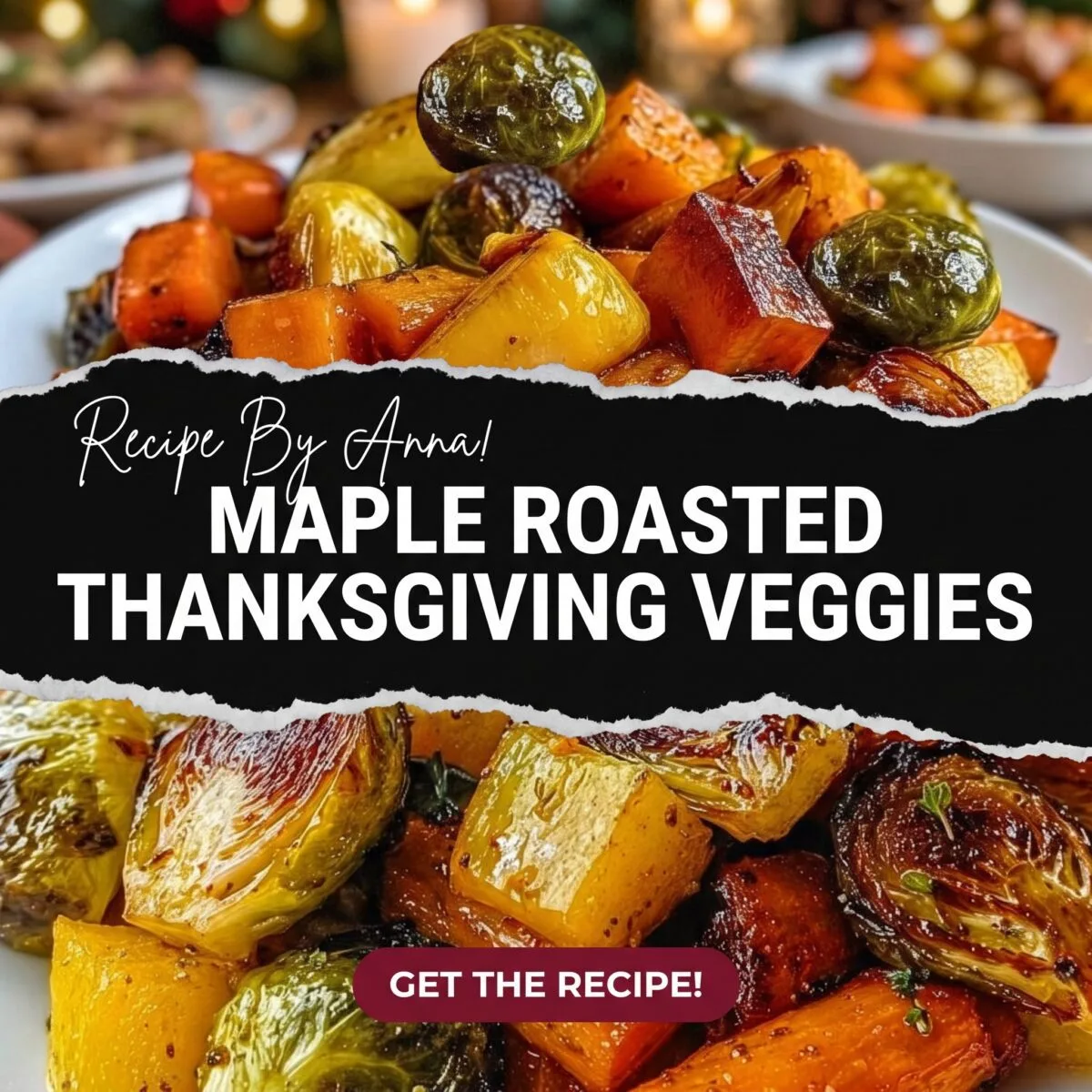
Maple Roasted Thanksgiving Veggies
Somewhere between the turkey and the pie, there is the vegetable situation to deal with — and for years, the vegetable situation at most Thanksgiving tables has been undercooked, underseasoned, and significantly under-appreciated compared to everything else on the table. This recipe fixes that. Permanently.
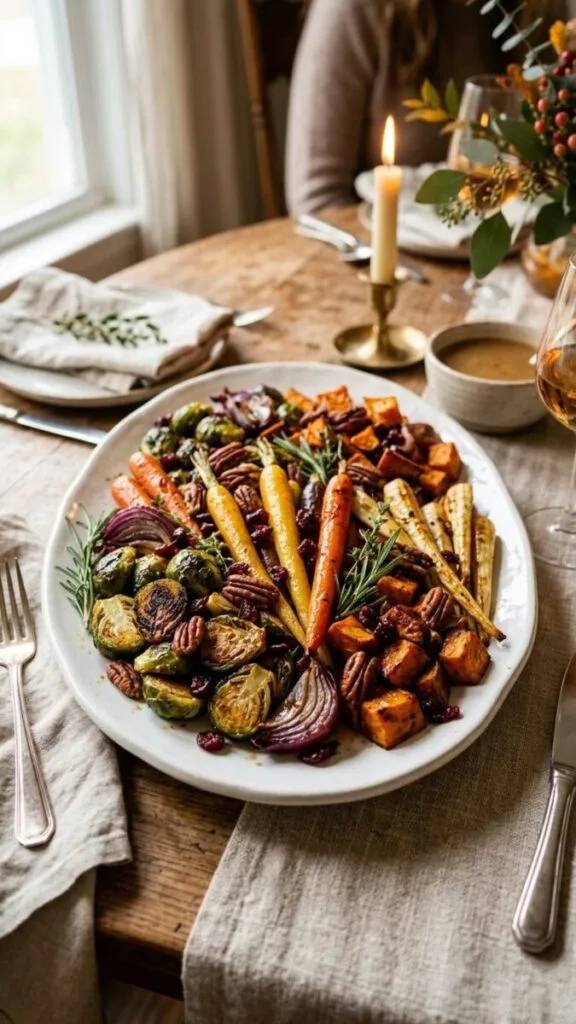
Maple Roasted Thanksgiving Veggies are the side dish that becomes the thing people talk about — a medley of sweet potatoes, butternut squash, Brussels sprouts, parsnips, red onion, and cranberries, tossed in a maple-Dijon-thyme glaze and roasted at high heat until the edges are deeply caramelised, the cranberries have burst into jewel-red jammy pockets, and the whole pan smells like autumn decided to give everything it had.
It also happens to be vegan, gluten-free, make-ahead friendly, and takes about 15 minutes of hands-on time. Which means it is genuinely the easiest thing on the Thanksgiving table — and somehow one of the most impressive looking.
Why This Works So Well as a Thanksgiving Side
Roasted vegetables are forgiving in a way that most Thanksgiving dishes are not. The turkey has a narrow window. The gravy can break. The mashed potatoes get cold. These vegetables can come out of the oven 20 minutes before everything else, sit on the pan at room temperature, and actually taste better than they did piping hot — the caramelisation deepens as they cool slightly and the maple glaze sets into a glossy coat that makes them look more beautiful at room temperature than they did fresh from the oven.
The maple and Dijon glaze is also the element that makes these specifically worth making rather than just “roasted vegetables.” Maple syrup’s natural sugars caramelise at high heat and produce the glossy, amber coating that makes every vegetable on the pan look like it was professionally glazed. The Dijon cuts through the sweetness and adds a subtle sharpness that prevents the glaze from tasting cloying. The thyme ties everything to autumn. The cranberries burst and provide little pockets of tartness that balance the sweetness of the maple and sweet potato.
- Prep Time: 15 minutes
- Cook Time: 35 to 40 minutes
- Total Time: 50 to 55 minutes
- Yield: 8 to 10 servings as a Thanksgiving side
What You Need
For the vegetables:
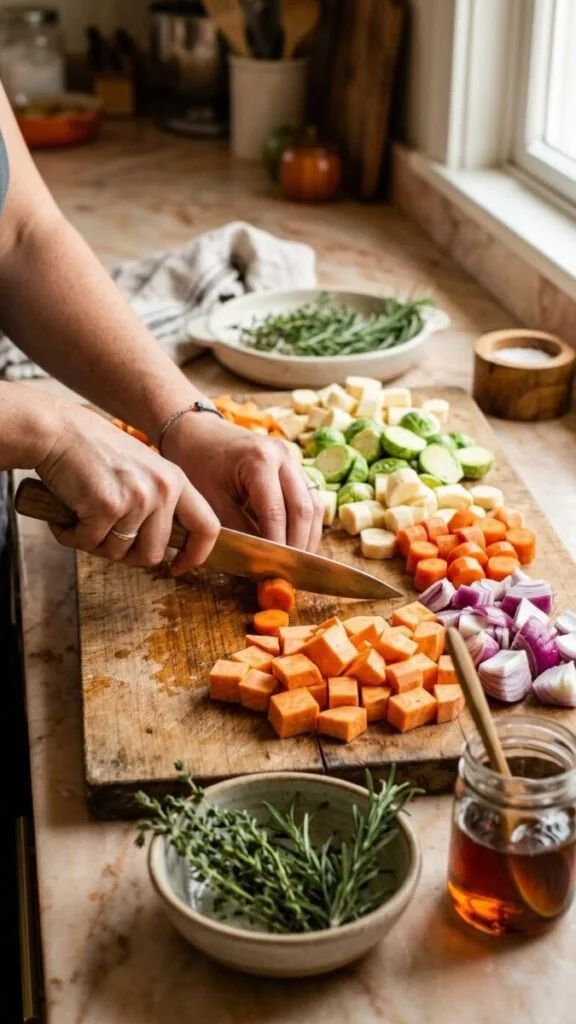
- Sweet potatoes, peeled and cut into 1-inch cubes: 2 large (approximately 3 cups)
- Butternut squash, peeled, seeded, and cut into 1-inch cubes: 1 small to medium (approximately 3 cups) — or use pre-cut butternut squash from the produce section to save 10 minutes
- Brussels sprouts, halved: 1 lb (450g) — halved so the flat cut side makes contact with the hot pan and caramelises
- Parsnips, peeled and cut into 1/2-inch rounds: 3 medium (parsnips are the secret weapon vegetable of the Thanksgiving table — sweet, slightly nutty, and they absorb the maple glaze beautifully)
- Red onion, cut into 1-inch wedges: 1 large — the red onion turns sweet and jammy in the oven and adds colour throughout the pan
- Fresh cranberries: 1 cup — frozen work too; they burst during roasting and create little pools of tart cranberry sauce on the pan that coat nearby vegetables
For the maple glaze:
- Pure maple syrup: 3 tablespoons — real maple syrup only; pancake syrup will burn before the vegetables are roasted and produces a sticky, artificial sweetness rather than the deep, caramel complexity of real maple
- Dijon mustard: 1 tablespoon
- Olive oil: 3 tablespoons
- Apple cider vinegar: 1 tablespoon — adds acidity that keeps the glaze from being one-dimensionally sweet
- Fresh thyme leaves: 1 tablespoon (or 1 teaspoon dried)
- Garlic powder: 1/2 teaspoon
- Fine sea salt: 1 1/2 teaspoons
- Black pepper: 3/4 teaspoon
- Cinnamon: 1/4 teaspoon — a small amount, enough to add warm spice without making the vegetables taste like dessert
For finishing:
- Toasted pecans, roughly chopped: 1/2 cup — added in the last 5 minutes of roasting so they toast without burning
- Pomegranate arils: 1/4 cup (optional but beautiful — the jewel-red seeds against the golden vegetables make this the most visually striking pan on the Thanksgiving table)
- Fresh thyme sprigs: a few, for garnish
- Flaky sea salt: for finishing
How to Make It
- Preheat the oven to 425°F (220°C). Line two large rimmed baking sheets with parchment paper — one pan is not enough for this quantity of vegetables. Overcrowded vegetables steam rather than roast, and steamed vegetables do not caramelise. Two pans, one oven rack above and one below, rotating halfway through.
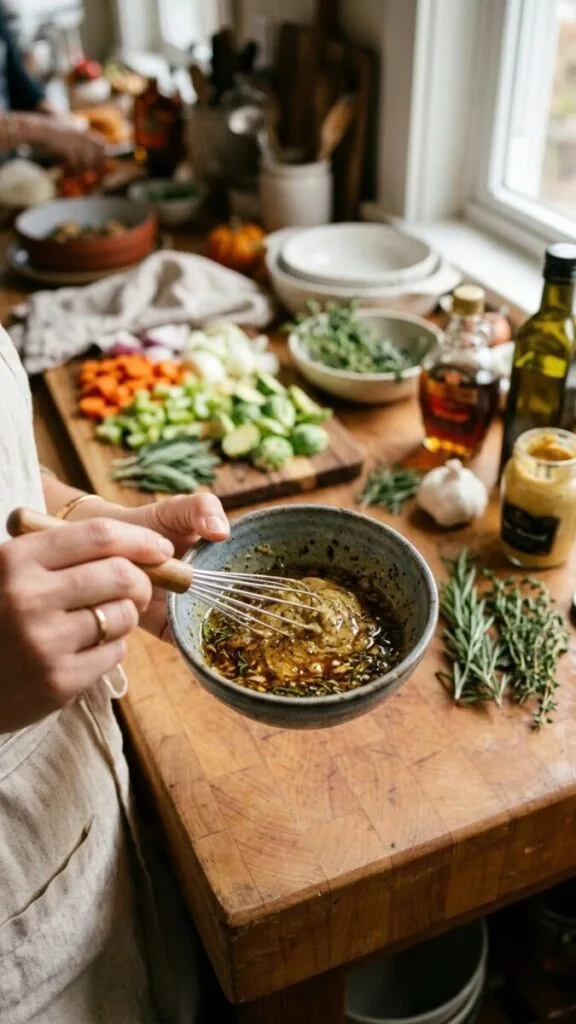
- Whisk the maple syrup, Dijon, olive oil, apple cider vinegar, thyme, garlic powder, salt, pepper, and cinnamon together in a large bowl until emulsified.
- Add all the vegetables — sweet potatoes, squash, Brussels sprouts, parsnips, red onion, and cranberries — to the bowl and toss to coat everything thoroughly in the maple glaze. Every piece should look glossy and coated.
- Divide the vegetables between the two prepared baking sheets, spreading them in a single layer with space between each piece. Brussels sprouts go cut-side down. If pieces are touching or overlapping, they will steam rather than roast.
- Roast at 425°F for 20 minutes. Rotate the pans (top to bottom, bottom to top) and toss the vegetables gently on each pan. This is the moment to check on the Brussels sprouts specifically — they should have some colour on the cut side by now. If anything looks like it is burning at the edges, reduce the heat slightly.
- Roast for another 12 to 15 minutes until the sweet potatoes and squash are fork-tender and caramelised at the edges, the Brussels sprouts are deeply golden on the cut side, and the cranberries have burst and are jammy.
- In the last 5 minutes of roasting, scatter the pecans over the pans so they toast in the oven heat without burning.
- Transfer everything to a serving platter or leave on the pan for a more casual presentation. Scatter pomegranate arils over the top, add a few fresh thyme sprigs, and finish with a pinch of flaky sea salt. The flaky salt at the end is what makes the whole dish pop — the contrast between the sweet maple glaze and the salt crystals is exactly the finishing touch these vegetables need.
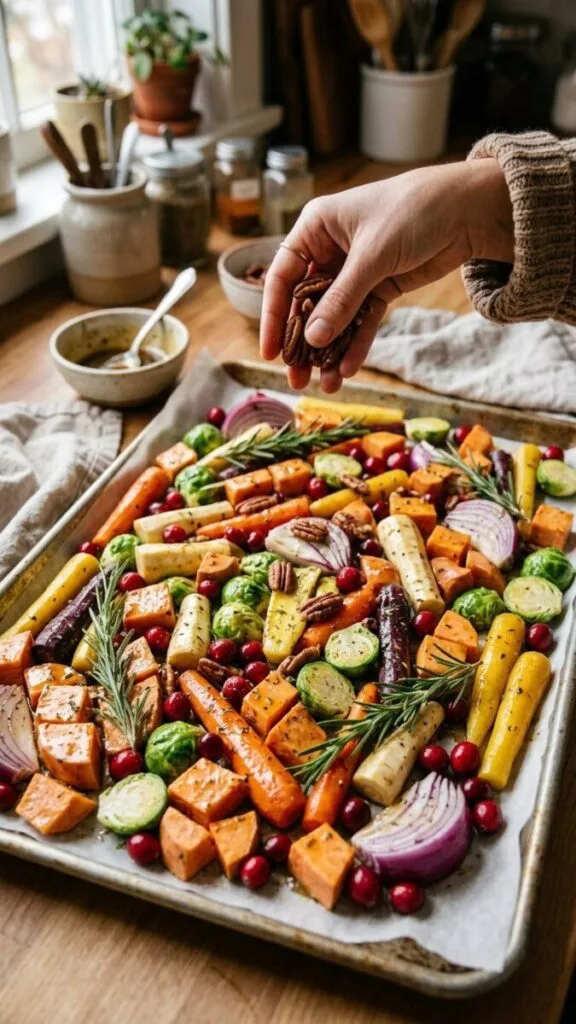
Maple roasted Thanksgiving veggies alongside our Peach Crisp might seem like an unusual pairing, but both belong to the same autumn celebration table. The peach crisp is the dessert that makes people question whether anything could follow the turkey and then immediately answer yes. The maple veggies are the side that makes everyone wonder why the vegetable dish is disappearing faster than the stuffing.
The Two-Pan Rule and Why High Heat Matters
The two-pan rule exists because of physics: a crowded pan of vegetables releases moisture into the surrounding oven air, and that moisture creates a humid environment around the vegetables that prevents the surface temperature from reaching the 280°F minimum required for Maillard browning and the higher temperatures that produce caramelisation. Vegetables in a crowded pan steam. Vegetables in a single layer on a hot pan at 425°F roast, caramelise, and develop the golden, slightly crispy edges that make roasted vegetables taste better than boiled or steamed ones.
If you only have one large sheet pan (or only one oven rack), roast in two batches and hold the first batch in a warm oven (200°F) while the second batch cooks. The quality difference between two-pan roasting and one-pan crowding is visible and significant.
425°F is the specific high heat that produces caramelisation of the maple glaze while cooking the vegetables through — lower temperatures roast the vegetables but do not caramelise the sugars in the maple syrup and the natural vegetable sugars fast enough to produce the deeply golden, slightly sticky edges that define this dish. Higher temperatures risk burning the maple before the dense vegetables like sweet potato are cooked through.
Make-Ahead Instructions for Thanksgiving
This is the side dish to make ahead — specifically because it frees up oven space on the day and because it genuinely holds well at room temperature for up to 2 hours after roasting. The caramelisation sets as the vegetables cool and they taste excellent slightly warm rather than piping hot.
Roast completely up to 2 hours before serving and leave on the sheet pans at room temperature. Do not reheat — the reheat risks burning the maple glaze and softening the Brussels sprouts past their ideal texture. If the kitchen is warm, they will hold beautifully. If it is cold, 5 minutes in a 300°F oven is sufficient to take the chill off without compromising the texture.
The vegetables can also be prepped the day before — cut everything, toss in the maple glaze, and store in a sealed bag or container in the fridge overnight. The vegetables absorb the glaze during overnight refrigeration and roast up more deeply flavoured than freshly glazed vegetables. Pull from the fridge 20 minutes before roasting.
What to Serve This Alongside
This is a Thanksgiving side, which means it shares the table with turkey, stuffing, mashed potatoes, cranberry sauce, and a dozen other dishes. It fits into that context without competing — the maple glaze connects to the cranberry sauce’s sweetness, the thyme connects to the stuffing’s herbs, and the colours on the pan are more visually striking than most of the other dishes on the table.
Outside of Thanksgiving, these vegetables are an excellent side for any roasted protein — served alongside our Honey Mustard Baked Salmon in a weeknight dinner where both the salmon and the vegetables share the same 425°F oven simultaneously, starting the vegetables 15 minutes before the salmon so both finish at the same time.
Variations for Different Tastes and Dietary Needs
Add Balsamic: Replace the apple cider vinegar with an equal amount of balsamic vinegar for a deeper, more complex sweetness in the glaze. The balsamic version produces a slightly stickier, more deeply coloured glaze — excellent if the table includes people who prefer less sweetness from the maple alone.
Make It Spicy: Add 1/4 teaspoon of cayenne and 1/4 teaspoon of chipotle powder to the glaze for a sweet-spicy version. The heat builds slowly against the maple sweetness and makes the vegetables noticeably more interesting for any table that appreciates a kick. Keep the cinnamon — it works beautifully with chipotle.
Add Apples: Toss 2 firm apples (Honeycrisp or Fuji), cored and cut into wedges, into the pan alongside the other vegetables. The apples caramelise beautifully at high heat and burst with sweetness against the more savoury vegetables — the apple-squash-maple combination is one of the most naturally harmonious autumn flavour combinations.
Swap the Pecans for Pumpkin Seeds: For a nut-free version, use pepitas (pumpkin seeds) in place of pecans in the last 5 minutes of roasting. The pumpkin seeds toast to a slightly chewy, savoury crunch that works equally well against the sweet maple glaze, and the green colour against the orange and red vegetables is visually striking.
Make It a Full Meal: Add a can of drained, rinsed chickpeas to the vegetables before roasting for a protein-forward version that works as a vegetarian main rather than just a side. The chickpeas crisp in the oven and absorb the maple glaze, becoming the most addictive element in the pan — the kind of thing that disappears first.
Nutritional Information
| Nutrient | Amount Per Serving (based on 10 servings as a side dish) |
|---|---|
| Calories | 195 kcal |
| Protein | 4 g |
| Carbohydrates | 32 g |
| Fats | 8 g |
195 calories per Thanksgiving side serving is on the lighter end of the table — the carbohydrates come from the naturally sweet vegetables and the maple syrup, the fat from the olive oil and pecans. Vegan, gluten-free, and dairy-free as written. The chickpea variation adds approximately 45 calories and 4 grams of protein per serving, turning this into a much more protein-complete side dish or a standalone vegetarian main.
Storing Leftovers
Store leftover roasted vegetables in an airtight container in the fridge for up to 4 days. They are excellent cold, straight from the container, as a salad topping over mixed greens with a drizzle of balsamic and some crumbled goat cheese. Room temperature the next day in a grain bowl over farro or quinoa with a tahini dressing. Reheated at 375°F for 10 minutes on a sheet pan if you want something closer to the original.
The leftover vegetables also make an excellent hash for the day-after-Thanksgiving breakfast — chop the cold roasted vegetables roughly, fry in a hot skillet with a little butter until the edges are recrisped, and top with a couple of fried eggs. The maple glaze caramelises again in the pan and the result is genuinely the best possible use of Thanksgiving leftovers that does not involve a turkey sandwich.
Mistakes Worth Knowing About
Crowding the pan is the number one reason roasted vegetables disappoint — and on Thanksgiving when you might be tempted to fit everything onto one pan to save space, the result will be steamed, soft, slightly pale vegetables rather than the caramelised, golden, crispy-edged ones the recipe is designed to produce. Use two pans. Borrow one if you have to.
Adding the pecans at the beginning of roasting rather than the last 5 minutes produces burned pecans by the time the vegetables are done — pecans need only 5 to 7 minutes at 425°F to toast perfectly, and the full 35 to 40 minutes that the vegetables need will turn them from toasted to bitter and black. Last 5 minutes only.
Using pancake syrup instead of real maple syrup in the glaze produces a sweet coating that burns faster, colours less beautifully, and tastes of artificial maple flavouring rather than the genuine caramel complexity of real maple. This is the one ingredient in the recipe worth spending more on — a good maple syrup costs more than pancake syrup but the difference in this specific preparation is significant and visible.
Maple Roasted Thanksgiving Veggies
A colorful Thanksgiving vegetable side with sweet potatoes, butternut squash, Brussels sprouts, parsnips, red onion, cranberries, maple-Dijon glaze, thyme, pecans, and pomegranate.
Ingredients
How to Make
Preheat oven to 425°F / 220°C. Line two large rimmed baking sheets with parchment paper.
In a large bowl, whisk maple syrup, Dijon mustard, olive oil, apple cider vinegar, thyme, garlic powder, salt, pepper, and cinnamon until combined.
Add sweet potatoes, butternut squash, Brussels sprouts, parsnips, red onion, and cranberries to the bowl. Toss until everything is glossy and coated.
Divide vegetables between the two baking sheets in a single layer. Place Brussels sprouts cut-side down. Avoid overlapping.
Roast for 20 minutes.
Rotate pans top to bottom and bottom to top. Toss vegetables gently on each pan.
Roast another 12 to 15 minutes, until sweet potatoes and squash are tender, Brussels sprouts are golden, and cranberries have burst.
Scatter pecans over the vegetables during the last 5 minutes of roasting so they toast without burning.
Transfer to a serving platter or serve from the pans. Scatter with pomegranate arils, fresh thyme sprigs, and flaky sea salt.
Nutrition
| Nutrient | Amount Per Serving |
|---|---|
| Calories | 195 kcal |
| Protein | 4 g |
| Carbohydrates | 32 g |
| Fat | 8 g |
Values are estimates based on 10 Thanksgiving side-dish servings. Vegan, gluten-free, and dairy-free as written.