Easy Fall Sangria Recipe | Fast Autumn Party Drink
Sangria has a summer reputation that autumn has been quietly dismantling for years. The cold-weather version — red wine and apple cider in place of white wine and orange juice, cinnamon and star anise in place of mint and cucumber, sliced apples and pears in place of peaches and strawberries — is not a lesser sangria made do with what the season provides. It is a specifically better sangria for what autumn requires: something that tastes like the season, looks like the season, and is the kind of drink that makes people hold their glass a little longer than they intended.
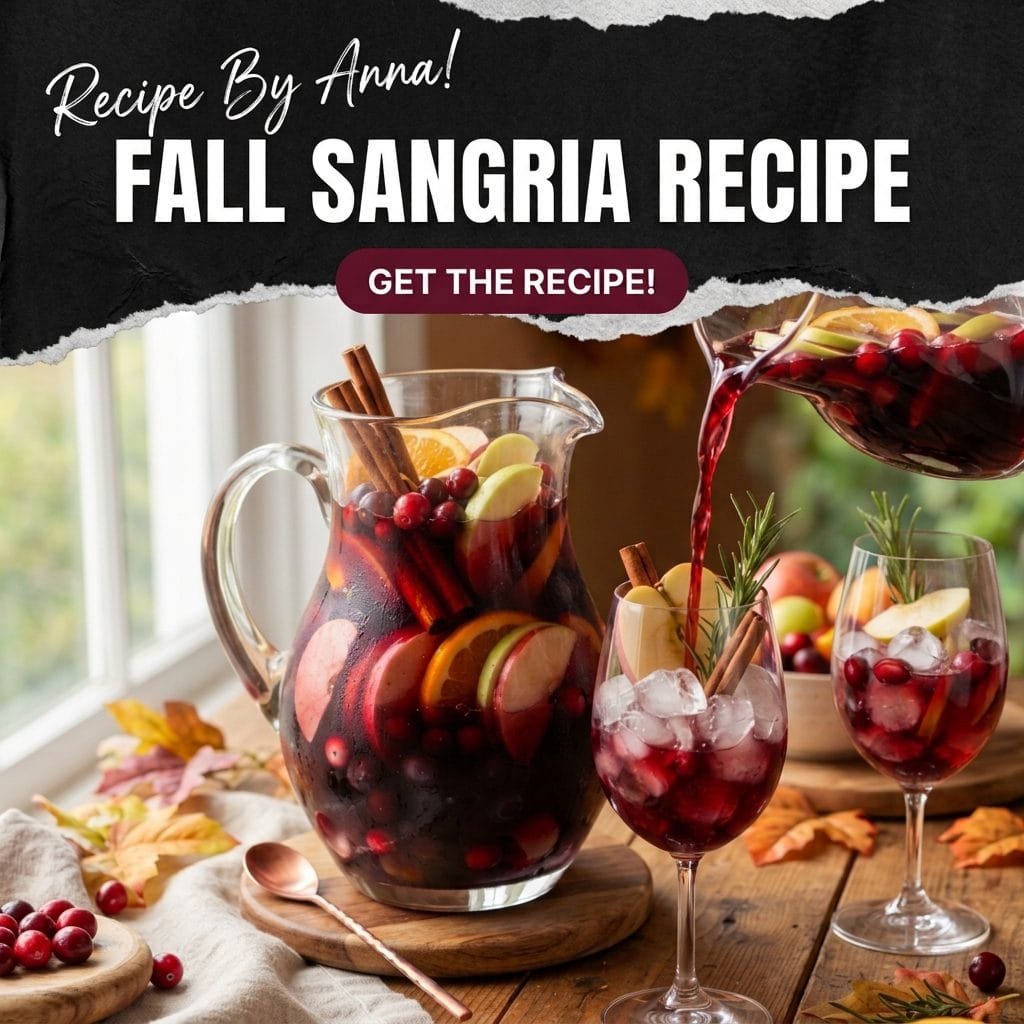
This fall sangria uses a robust red wine as its base, adds apple cider for depth and sweetness, includes a brief infusion with whole spices (cinnamon, star anise, cloves), and finishes with brandy, orange liqueur, and a generous amount of sliced autumn fruit that steeps in the wine and becomes something worth fishing out and eating alongside the drink. It is make-ahead by design — the sangria genuinely improves with at least 4 hours of chilling and is best made the night before the gathering it is intended for — which makes it the easiest large-batch drink in the collection for any occasion where more than four people will be present.
One pitcher. Eight glasses. The gathering feels like it was planned well.
Why Red Wine and Apple Cider Work Together
Red wine and apple cider share tannins, acidity, and fruity depth in a way that white wine and apple cider do not — the structure and earthiness of a medium-bodied red wine (Merlot, Garnacha, or Tempranillo) connects naturally with the apple’s natural acidity and the cider’s slight sweetness in a way that produces a more coherent, more complex base than either ingredient alone. The wine provides body and tannin; the cider provides sweetness and apple character; together they produce something that tastes specifically of autumn in the way that neither wine alone nor cider alone achieves.
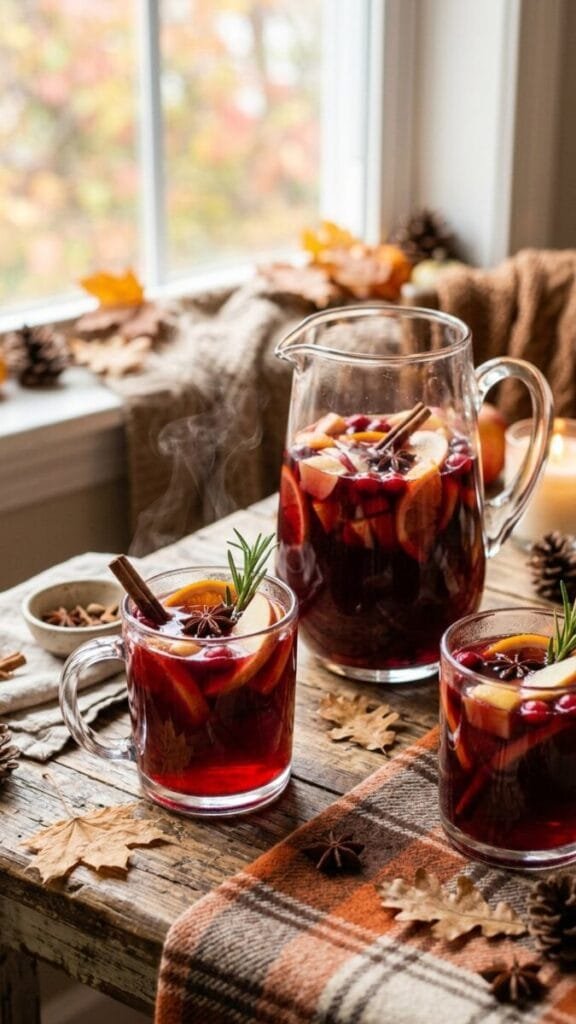
The whole spices steeped briefly in warm apple cider before being combined with the wine extract their aromatic compounds into the liquid more efficiently than cold infusion would — warming the cider with the cinnamon, star anise, and cloves for 10 minutes produces a spice-infused cider that distributes the warm spice flavours through the entire pitcher without requiring the sangria to sit for days to develop the same depth of flavour.
- Prep Time: 15 minutes
- Chill Time: 4 hours minimum (overnight preferred)
- Total Time: 4 hours 15 minutes (mostly chilling)
- Yield: 8 servings
What You Need
For the sangria:
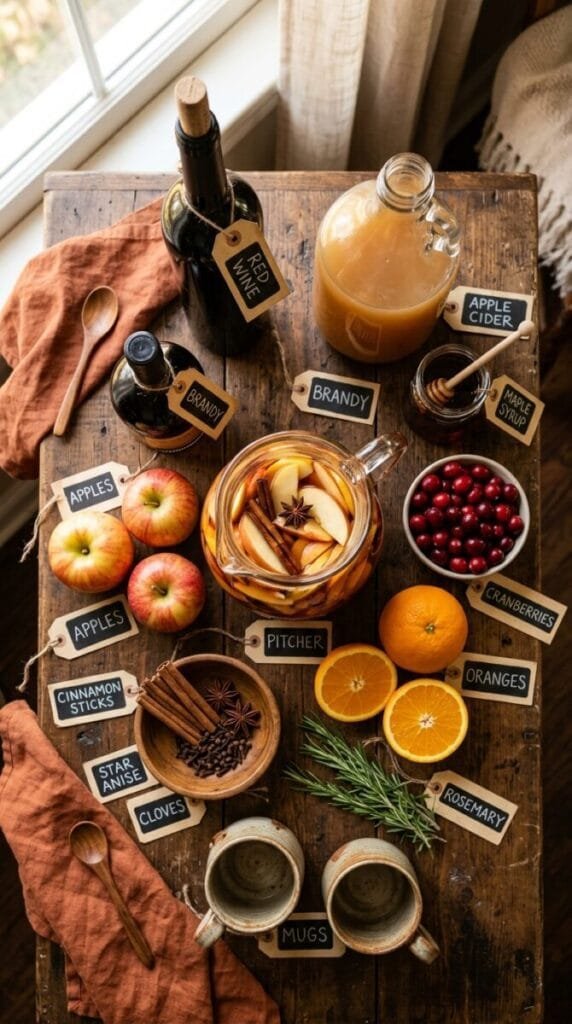
- Dry red wine — Merlot, Garnacha, or Tempranillo: 1 bottle (750ml) — medium-bodied, fruity, and not too tannic; avoid heavily oaked reds like Cabernet Sauvignon, which become astringent when mixed with fruit and liqueur; this is not the sangria to use expensive wine in — the mixing and infusion that follows makes a $12 to $15 bottle the ideal choice
- Fresh apple cider (unfiltered preferred): 2 cups (480ml)
- Brandy: 1/3 cup (80ml) — adds alcohol depth and a warm, slightly oaky note that connects the wine and the spiced cider
- Orange liqueur (Cointreau, Grand Marnier, or triple sec): 3 tablespoons — the citrus note that lifts the warm, heavy spice-and-wine combination and keeps the sangria tasting fresh rather than just mulled
- Light brown sugar or maple syrup: 2 tablespoons — adjust to taste depending on the sweetness of the cider
For the spice infusion:
- Cinnamon sticks: 2
- Star anise: 2 whole
- Whole cloves: 4
- Cardamom pods, lightly crushed: 3 — optional but adds a floral, slightly citrus warmth that makes the spice blend more complex
- Orange peel strip: from half an orange — the essential oil in the peel adds bitter orange aromatics that connect the spice blend to the orange liqueur in the sangria
For the fruit:
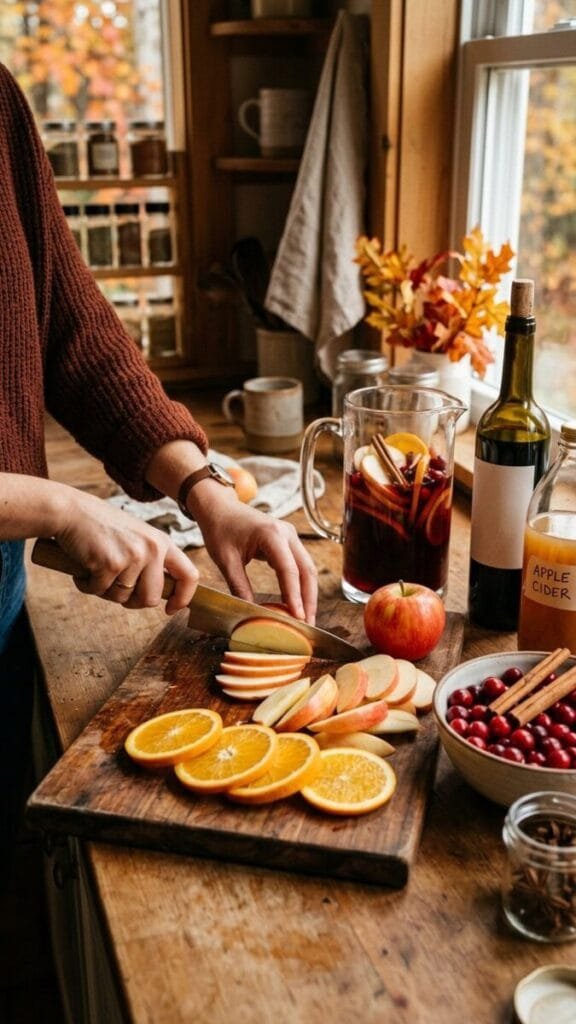
- Crisp apples (Honeycrisp or Pink Lady), thinly sliced: 2 — the apple absorbs the wine and becomes deeply flavoured, slightly tannin-soaked apple that is one of the most appealing things to fish out of a fall sangria glass
- Ripe pear, thinly sliced: 1 — softer and sweeter than the apple; it softens further in the wine overnight and becomes jammy and delicious
- Orange, sliced into rounds: 1
- Fresh pomegranate arils: 1/4 cup — added just before serving; their jewel-red colour against the deep burgundy wine is one of the most visually striking additions to a fall drink
- Fresh rosemary sprigs: 2 to 3 — added as a garnish; the piney, herbal note of rosemary against the spiced wine is unexpected and specifically excellent
For serving:
- Ice
- Sparkling water or ginger beer (1/2 cup per 8-cup pitcher) — added at serving for lightness and effervescence; optional but recommended
- Cinnamon sticks for individual glasses
🍽️ Equipment I Need for Fall Sangria
Six simple tools for mulling the wine, coaxing out the fruit, and serving every warm mug with a little soaked fruit.

Cooks Standard Classic 6-Quart Stainless Steel Dutch Oven
Large enough for the whole batch, with nonreactive stainless steel that keeps the wine tasting clean.

Mr.Art Wood 17-Inch Handmade Wooden Cooking Spoon
Long enough for a deep pot and sturdy enough to press apple and orange against the side for extra juice.

Farberware 9-Piece Knife and Cutting Board Set
A stable board and sharp chef or paring knife make clean apple rounds and orange slices in minutes.

Vollrath 6 oz Stainless Steel Ladle
The deep bowl scoops warm wine and a spoonful of soaked fruit into every mug without drips.

OXO Good Grips 3-Inch Mini Strainer
A fine mesh strainer catches cinnamon, cloves, and star anise when you want smooth leftovers.

LUXU Glass Coffee Mugs Set of 4
Heat-resistant mugs make the two-hands-around-the-drink moment comfortable while showing off the jewel-toned sangria.
How to Make It
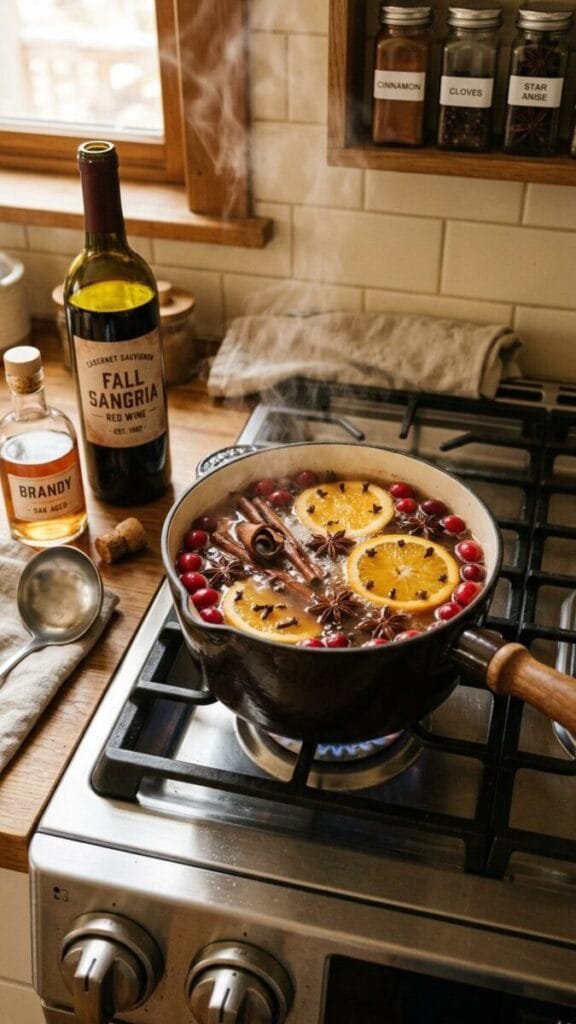
- Make the spiced cider infusion: Combine the apple cider, cinnamon sticks, star anise, cloves, cardamom pods, and orange peel strip in a small saucepan. Warm over medium-low heat until the cider reaches a gentle simmer — do not boil. Simmer for 10 minutes. Remove from heat and allow to cool to room temperature. Strain out the spices and reserve the spiced cider. This spiced cider becomes the aromatic backbone of the sangria.
- In a large pitcher, combine the red wine, cooled spiced cider, brandy, orange liqueur, and brown sugar or maple syrup. Stir until the sugar has dissolved.
- Add the sliced apples, pear, and orange rounds to the pitcher. Stir gently to submerge the fruit in the wine mixture.
- Cover the pitcher with plastic wrap or a lid and refrigerate for at least 4 hours — overnight is better and the next morning before a noon gathering is ideal. The fruit steeps in the wine and the flavours integrate and mellow during the rest. A sangria served immediately after mixing is a drink. A sangria served after an overnight rest is an experience.
- Just before serving, stir the sangria and taste — add more brown sugar if it needs sweetness, more brandy if it needs depth, more cider if it needs more apple character. Add the sparkling water or ginger beer if using and stir gently to incorporate.
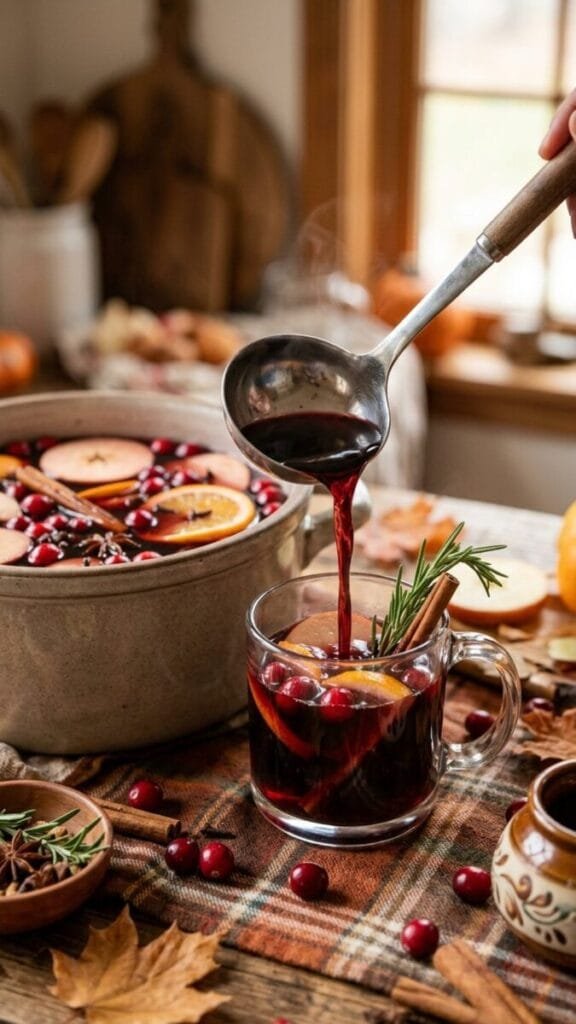
- Serve over ice in wine glasses. Add pomegranate arils to the pitcher and to individual glasses. Garnish each glass with a fresh rosemary sprig and a cinnamon stick. The cinnamon stick doubles as a stirrer and continues to release its aromatics into the individual glass as the drink is enjoyed.
Fall sangria alongside our Apple Cider Caramel Bars is the autumn entertaining pairing that covers both the drink and the dessert direction with the same apple-and-warm-spice flavour language — the sangria already spiced and cider-infused, the bars already apple-caramel and flaky-salted, and together they make a table that tastes specifically of the season rather than generally of good food. Both are make-ahead. Both improve overnight. Both disappear first.
The Overnight Rest and Why the Spice Infusion Matters
Sangria improves with time because the fruit steeping in the wine over hours extracts its natural juice and aromatics into the surrounding liquid, which simultaneously infuses the fruit with the wine’s tannins and the spices’ warmth. At 4 hours, the integration is present but still somewhat separate — the wine tastes of wine with fruit added; the fruit tastes of slightly wine-soaked fruit. At 12 to 16 hours (overnight), the integration is complete: the wine tastes of wine and fruit and spice together, and the fruit tastes so thoroughly of wine that eating a piece of the steeped apple is a small secondary experience alongside the drink itself.
The warm spice infusion — heating the apple cider with whole spices for 10 minutes rather than adding the spices directly to the cold sangria — produces a spice-forward base that distributes evenly through the entire pitcher from the first pour rather than requiring the spices to leach slowly into cold liquid over a day or more. Cold-infusing whole cinnamon and star anise in wine produces barely detectable spice after 24 hours; warm-infusing them in cider for 10 minutes produces a deeply spiced cider that makes the sangria taste spiced from the moment it is made rather than requiring days to develop.
What to Serve This With
As a gathering drink, fall sangria works alongside almost any autumn appetiser or dessert. Our Caprese Bites alongside — the fresh mozzarella, tomato, and basil skewers with balsamic glaze — provide a light, fresh counterpoint to the rich, spiced wine and allow guests to eat without the sangria being entirely the focus of the table. The combination of a simple fresh appetiser and a complex spiced drink is the hosting formula that requires the least active cooking and produces the most satisfied guests.
For a full dessert table, the sangria alongside a platter of our Tiramisu Balls is the after-dinner combination that makes a gathering feel specifically celebratory — the rich, coffee-and-mascarpone truffle alongside the spiced, fruit-infused wine is a European dessert-and-drink pairing that works as well in autumn as anything the season produces.
Variations for Different Occasions
Non-Alcoholic Fall Sangria (Mocktail Version): Replace the red wine with 2 cups of unsweetened grape juice and 1 cup of pomegranate juice. Replace the brandy with 1/4 cup of additional apple cider and 1 tablespoon of apple cider vinegar (the vinegar provides the tartness that the wine’s tannins would have contributed). Replace the orange liqueur with fresh orange juice and a tablespoon of honey. Use the same spiced cider infusion. The non-alcoholic version is genuinely excellent — the grape and pomegranate juice combination produces a deep, ruby-red drink with enough body and complexity that it does not feel like a compromise version.
White Fall Sangria: Use Pinot Grigio or Sauvignon Blanc instead of red wine, and replace the apple cider with pear nectar or white grape juice. Use pears, green apples, and white grapes as the fruit. Add 1/4 cup of elderflower liqueur instead of orange liqueur. The white version is lighter, more delicate, and more specifically floral — the elderflower against the pear and light white wine is one of the most elegant autumn drink combinations, particularly good for an afternoon gathering rather than an evening one.
Warm Mulled Sangria: Combine all the sangria ingredients in a large saucepan and warm gently over low heat for 20 minutes — do not boil. Serve warm in mugs rather than over ice in wine glasses. Add a cinnamon stick and an orange slice to each mug. The warm version is essentially mulled wine with brandy and fruit — more specifically autumn than the cold version and the choice for a cold evening gathering where a warm drink is the specific requirement. Skip the sparkling water for this version.
Sparkling Fall Sangria: Reduce the apple cider to 1 cup and add 1 cup of sparkling apple cider or prosecco at serving rather than still cider. The sparkling version is lighter, more celebratory, and specifically good for occasions where the sangria is a toast drink rather than a sipping drink — the bubbles make it feel more specifically festive and less like a slow-drinking infusion drink.
Make-Ahead for a Crowd
Double the recipe for 16 servings using a very large pitcher or dividing between two standard pitchers. The doubled recipe can be made up to 24 hours in advance — beyond 24 hours the fruit begins to break down and the pear in particular becomes very soft and loses its visual appeal, though it remains delicious. Make the spiced cider infusion in advance and store separately in the fridge until ready to combine with the wine and fruit.
For a gathering where the sangria will be served over several hours, keep the pitcher covered and refrigerated and bring out to the table in batches rather than all at once — a sangria that sits at room temperature for more than an hour loses its chill and the fruit begins to warm and soften visibly. Better to keep most of it cold and replenish the table pitcher from the fridge version as needed.
Nutritional Information
| Nutrient | Amount Per Serving (approximately 8 oz / 240ml, based on 8 servings) |
|---|---|
| Calories | 195 kcal |
| Protein | 0 g |
| Carbohydrates | 22 g |
| Fats | 0 g |
195 calories per glass reflects the wine, the cider, the brandy, the orange liqueur, and the natural sugar from the fruit together — a reasonable calorie count for a cocktail that serves as both the drink and the fruit at the same time. The carbohydrates come from the cider’s natural fruit sugars and the brown sugar added to the pitcher. The non-alcoholic version is approximately 120 calories per glass, primarily from the grape and pomegranate juice. Neither version contributes meaningful protein or fat — this is fruit, wine, and spice, which is exactly what it should be.
Storing What Is Left
Store leftover sangria covered in the pitcher or transferred to a sealed jar in the fridge for up to 2 days. Remove the fruit after 24 hours if you want to prevent it from becoming too soft — the steeped fruit is best within the first 18 to 24 hours and degrades noticeably in appearance (though not much in flavour) after that. The wine-and-cider base keeps perfectly for 2 days and can be served over fresh fruit if the original pieces have been removed.
The steeped fruit — the wine-soaked apple and pear slices in particular — is worth eating separately rather than discarding. The wine-steeped apple is one of the better things in any fall sangria pitcher: deeply burgundy-stained, slightly tannin-bitter, and completely delicious over a scoop of vanilla ice cream or alongside a sharp cheese on a board. Do not throw it away. It is a separate small pleasure the sangria provides.
Mistakes That Can Spoil the Pot
Letting it boil. The cardinal sin of mulled anything. A rolling boil scorches the subtle flavors, extracts harsh bitterness from the tannins and cloves, and evaporates the very aroma you are trying to capture. Steam at the edges is the ceiling — anything more and you are cooking it, not mulling it.
Using ground spices. A teaspoon of ground cinnamon can hijack an entire pot, and it never fully dissolves — every sip ends up gritty and dusty. Whole spices steep gently, look beautiful in the pot, and lift out clean. No substitutes on this one.
Mulling too long. Twenty to thirty minutes is the sweet spot. Leave the spices in for hours and the cloves and anise slowly take over until the drink tastes like potpourri. Set a timer, then strain or serve.
Choosing the wrong wine. A harsh, tannic bargain red stays harsh and tannic — heat amplifies what is already there. But an expensive bottle hides behind the spice. A smooth, fruity mid-range red is the Goldilocks zone, every time.
Sweetening before tasting. Dump the full maple syrup in up front and a naturally sweet cider can push the whole pot toward cloying. Start light, warm, taste, then sweeten — two minutes of patience for a perfectly balanced mug.
Fall Sangria
A cozy, fruit-infused autumn sangria with medium-bodied red wine, warm-spiced apple cider, brandy, orange liqueur, fresh sliced apples, pears, and pomegranate arils.
Ingredients
How to Make
In a small saucepan, combine apple cider, cinnamon sticks, star anise, cloves, optional cardamom pods, and orange peel strip. Simmer gently over medium-low heat for 10 minutes. Cool to room temperature, then strain into a bowl.
In a large pitcher, combine red wine, cooled spiced cider, brandy, orange liqueur, and brown sugar or maple syrup. Stir until the sugar is fully dissolved.
Add sliced apples, pear, and orange rounds to the pitcher. Stir gently to submerge the fruit in the wine mixture.
Cover and refrigerate for at least 4 hours, preferably overnight, allowing the flavors to meld and the fruit to infuse.
Just before serving, stir and taste. Adjust with a bit more brown sugar, cider, or brandy if desired. Gently stir in sparkling water or ginger beer if using.
Pour over ice into wine glasses. Top each glass with pomegranate arils, a fresh rosemary sprig, and a cinnamon stick.
Nutrition
| Nutrient | Amount Per Serving |
|---|---|
| Calories | 195 kcal |
| Protein | 0 g |
| Carbohydrates | 22 g |
| Fat | 0 g |
Values are estimates based on 8 servings (approx. 8 oz / 240ml each), without sparkling water or extra fruit consumed.