Blueberry Brie Jalapeño Poppers
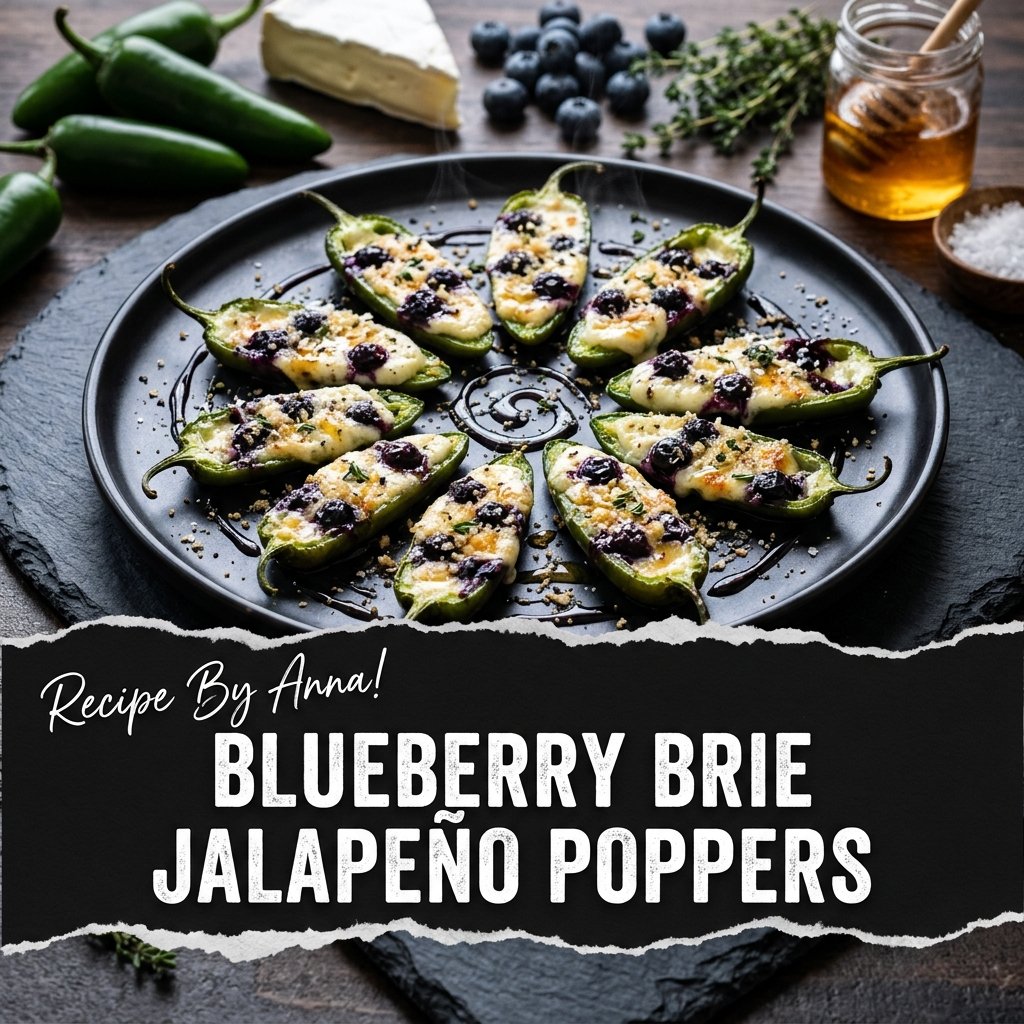
Every December party table has the same cast — the cheese ball, the shrimp ring, the crostini that went soft an hour ago — and then there’s the plate that’s empty by the time you take your coat off. These poppers are that plate. Halved jalapeños become little green boats, each one filled with a log of brie that bakes into something between molten and poured, crowned with a warm rosemary-blueberry compote and a scatter of toasted pistachios. Sweet, hot, creamy, and crunchy in a single two-bite package, and the colors do all the decorating on their own: green hulls, ivory middles, purple tops. Nobody has ever asked me what they are. They ask what’s in them, and then they ask if there are more.
Before we get to the recipe, the fair warning and the honest pitch, because this is one of those ideas that sounds like a stunt until the first bite. The sweet-hot combination isn’t a gimmick — it’s the oldest pairing on the pepper planet, the same math as pepper jelly over cream cheese, and the brie is what upgrades it from tailgate to holiday. The heat in a jalapeño is capsaicin, and capsaicin dissolves in fat, not water — which means the double-cream brie in these poppers is not just the filling, it’s the built-in fire management. The cheese literally absorbs the burn while it bakes. Add a compote that’s sweet enough to round off whatever warmth survives, and what lands on the tongue is a flash of heat that mellows into cream and then fruit. That’s the whole architecture, and it’s why people who “don’t like spicy” eat four of these and ask for the recipe.
This site’s party shelf is deep in exactly this territory: the jalapeño cream cheese dip is the spreadable branch of the same family tree, and the goat cheese fig jam stuffed dates are the sweet-fruit-and-cheese cousins that share a cheese board with these every December. If you know the blueberry french toast casserole, you already know this site’s standing blueberry opinion — the berries belong with rich dairy — and this is that opinion in its formal holiday wear.
The Heat Treaty
Every element of this recipe is aimed at the same negotiation, so let’s lay out the terms. Capsaicin, the compound that makes a jalapeño hot, is fat-soluble — it dissolves in fat and ignores water completely, which is why drinking water after a hot pepper does nothing and drinking milk does everything. A popper built on brie exploits this on purpose: as the cheese melts in the oven, its fat finds the pepper’s heat and carries it, thinning it out bite by bite. This is a treaty, not a surrender — the heat is still in the room, it’s just been given a job and a schedule.
The compote handles whatever heat is left standing. Sugar doesn’t remove capsaicin, but it rounds the perception of it — a sweet edge next to a warm one reads as balance, the same reason honey belongs next to hot sauce and jam belongs on a pepper-jelly appetizer. And the treaty has a third signatory: the pistachios, whose crunch gives the tongue something completely neutral to do between the sweet and the warm. Soft cheese, hot pepper, sweet fruit, hard nut — four textures, four temperatures of flavor, and not one of them fighting for the same inch of your attention.
One more term of the treaty, and it’s the cook’s lever: the white ribs inside the pepper hold most of the heat, not the seeds themselves — the seeds just lean against the ribs and take the blame. Scrape the ribs out completely and a popper is gently warm; leave one rib in and it has a voice; leave them all and the brie and compote have to work double shifts. My batch is built scraped-clean, with heat dialed back in on purpose through the compote, because a party appetizer should surprise people once, kindly, not repeatedly.
⏱️ 15 MINUTES HANDS-ON, ONE PAN | 🫐 MAKES 24 POPPERS | 🎄 THE PLATE THAT EMPTIES FIRST
- Compote Time: 12 minutes — and it can happen up to 5 days early
- Prep Time: 15 minutes — boats, brie logs, one baking sheet
- Bake Time: 15-18 minutes at 400°F
- Total Time: about 45 minutes from scratch, or 30 if the compote’s already made
- Yield: 24 poppers — 8 party servings at 3 apiece, in theory
The Boat Yard
Short equipment list, and two items doing more than they admit:
- Sharp paring knife and a small spoon — the entire boat-building industry; the spoon’s edge scrapes seeds and ribs in one pass
- Disposable gloves — optional but wise; jalapeño oil on bare fingers stays lively for hours and always finds your eye eventually
- Rimmed baking sheet and parchment — parchment, not foil: the compote’s sugar caramelizes where it lands, and caramel lets go of parchment and marries foil
- Small saucepan — the compote’s whole world
- Cutting board — one you can wash immediately; pepper residue on a wooden board has outlived many a next-morning breakfast
- A wide serving board or platter — the wreath arrangement in Step 6 wants room to circle
Now the boat-building decisions. First, choose uniform jalapeños — same length, same waistline — because a mixed fleet bakes unevenly and the fat ones stay crisp while the thin ones collapse. Medium peppers, smooth and firm, are the target; the wrinkled ones have been sitting in the bin composing their memoirs. Second, halve them lengthwise stem to tip and leave the stems on: a stem is a built-in handle, it looks festive, and it keeps the boat’s bow from drying out. Third, the scraping — run the spoon’s edge from stem end to tip and let the ribs come away with the seeds in one confident stroke. A clean boat is a mild boat, and this recipe wants its heat in the compote, where it can be measured.
And the brie logs, which get their own paragraph because of the rind question. The rind stays on. It’s completely edible, it tastes like the mushroomy edge of the cheese itself, and — the practical part — a rind-on log holds its shape as the inside melts, acting as a little retaining wall that keeps the brie in the boat instead of on the parchment. Cut the logs to fit the boats lengthwise, about half an ounce each, and press them in snug, rind-side down. The cheese will dome and soften and go molten at the center while the rind quietly does the engineering.
Ingredients (With Labels)
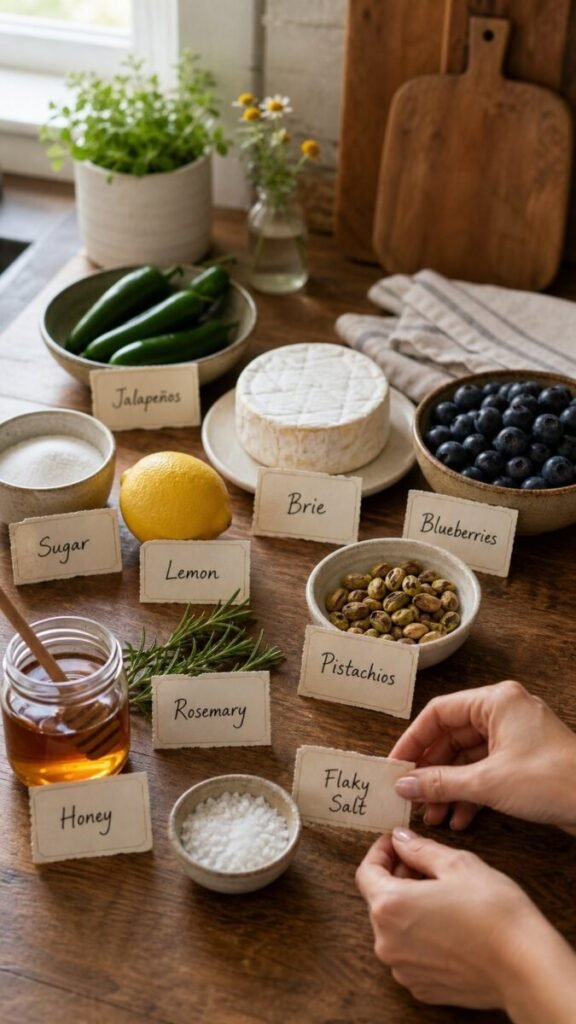
🫑 The Boats
- Jalapeños: 12 medium, uniform, smooth and firm
🧀 The Filling
- Brie: 8 oz, young and double-cream, cut into 24 logs — rind on
🫐 The Compote
- Blueberries: 2 cups — frozen is fully fine, fresh if it’s July
- Sugar: 3 tablespoons
- Lemon juice: 1 teaspoon, from the lemon you’ll never miss
- Rosemary: 1 small sprig — in for the simmer, out before the jar
- Salt: one small pinch
🌰 The Crown
- Pistachios: ⅓ cup, toasted and roughly chopped
- Honey: about a tablespoon, for a thin thread over the finished board
- Flaky salt: optional, and correct
Step by Step How to Make
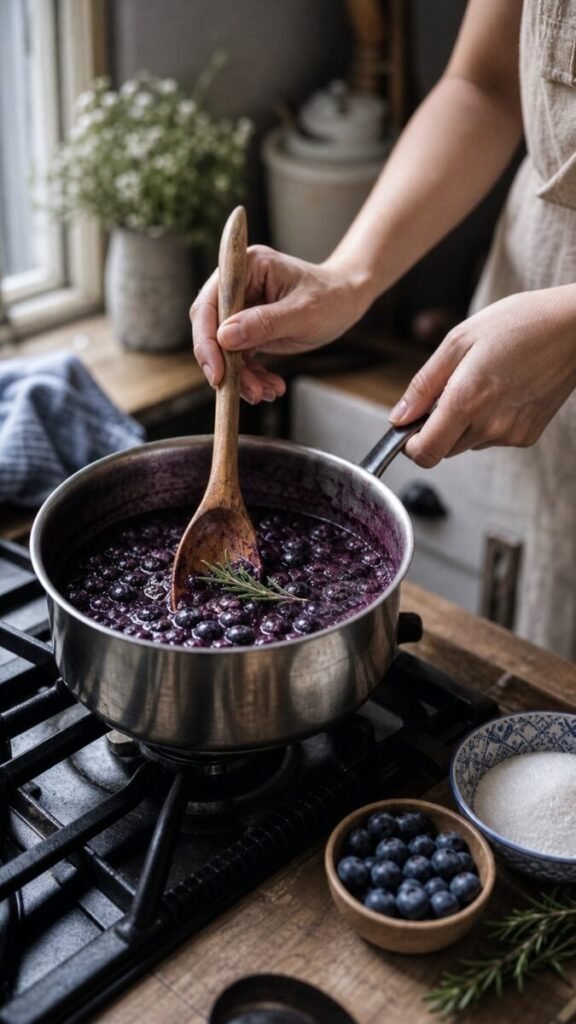
- Step 1 — The compote. Combine the blueberries, sugar, lemon juice, and salt in the small saucepan with the rosemary sprig, and set it over medium heat. It will look dry for three minutes and then release its juice all at once — that’s the berries breaking, and it’s right on schedule. Simmer 10 to 12 minutes, stirring occasionally and pressing a few berries against the pan with the spoon, until it thickens to a spoon-coating compote: a track drawn through it on the spoon should stay for a second before closing. Pull the rosemary out, pour the compote into a jar, and let it cool — it thickens further as it cools, so stop the cooking while it still looks slightly loose. Make it up to five days ahead; it improves with the sitting, like most things in December.
- Step 2 — Build the boats. Heat the oven to 400°F and line the baking sheet with parchment. Halve the jalapeños lengthwise, stems on, and scrape each boat clean with the edge of the spoon — seeds and ribs out for the gentle version, one rib left in any boat you’d like to speak up. Pat the boats dry inside and out; a wet boat steams instead of roasting, and steamed pepper skin is a texture nobody invited. Lay them on the parchment in a single layer, cut-side up, with a little daylight between them.
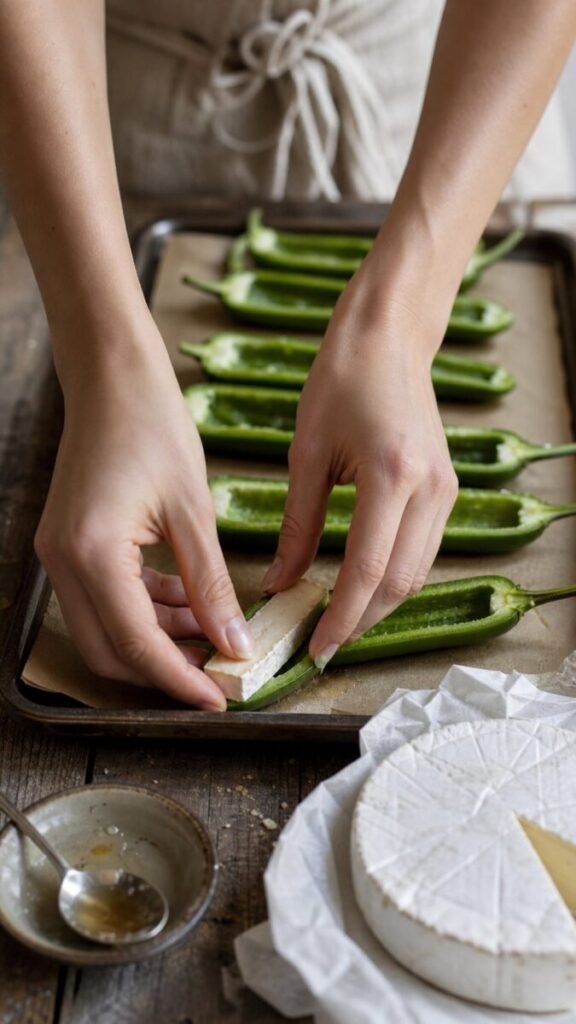
- Step 3 — Load the brie. Cut the brie into 24 logs sized to the boats — measure the first against a boat, then cut the rest to match, which takes ninety seconds and saves the evening. Press one log into each boat, rind-side down, snug enough that the cheese sits level with the rim. Don’t heap them proud of the edge: brie melts outward before it melts down, and an overloaded boat sends its cargo over the gunwales. Level and snug is the whole instruction.
- Step 4 — The bake. Bake 15 to 18 minutes, until the brie has gone molten and domed and the boats yield easily to a fork tine pressed against one’s side. There’s a real window here and it’s worth watching: pull them too early and the brie is merely soft; too late and the cheese crosses from molten to oily. The target moment is when each boat looks like it’s holding a small hot pond. The stems will char a touch at their tips, which reads as rustic, and the peppers will blister softly at the edges, which reads as done.
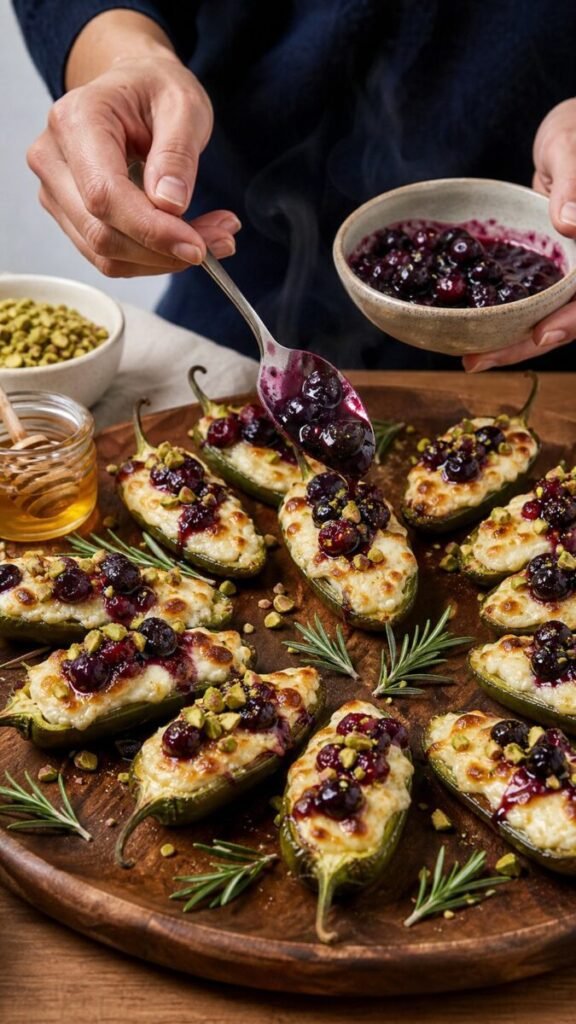
- Step 5 — The crown. Straight from the oven, while the brie is still lava: a small spoon of compote onto the center of each popper, where it will settle and sink slightly into the molten pool — this is why the compote goes on after the bake, so it rides the brie instead of sliding off a set cheese. Follow with a pinch of pistachios pressed gently into the compote, so they stick instead of rolling off at the first handshake. A thin thread of honey across the whole board and a touch of flaky salt finish the job. The poppers are now fully dressed and on a fifteen-minute clock — molten brie forgives, but not for long.
- Step 6 — The wreath. Arrange the poppers in a ring on the wide board, stems facing out like petals, and tuck a few small rosemary sprigs into the gaps between them — the ring reads as a wreath, the rosemary reads as intentional, and the whole board now looks like it was styled by someone who charges by the hour. Set out a small dish of toothpicks, stand where you can see the plate, and start counting: my record for a full wreath of these surviving is eleven minutes at a party of twelve. Serve warm, refill from a second batch held in a low oven, and accept the compliments with a wave of the hand that says it was nothing, because in fifteen-minute terms, it nearly was.
The goat cheese fig jam stuffed dates are this recipe’s cozier cousin — the same sweet-fruit-and-soft-cheese treaty, no oven required. I make both for December parties and the plates come back empty in the same order every year.
Anna’s Kitchen Notes
Buy the young brie, and don’t buy much else about it. A young, double-cream brie is the target — it melts smoothly and tastes milky-gentle, which is exactly what the compote wants underneath it. An aged, oozy, mushroom-forward brie is glorious on a cheese board and slightly wasted here; its personality fights the blueberry instead of yielding to it. And the pre-cut wedges at the cheese counter are fine — you’re cutting the brie into logs anyway, so this is one recipe where the bargain wedge outperforms its price tag without apology.
Frozen blueberries are the December doctrine. They were frozen at their summer peak, and the fresh ones at the store in December have logged more travel than anyone on your guest list. For a compote, where the berries break down anyway, frozen loses nothing and costs less; save the fresh-berry rule for recipes where a whole berry has to hold its shape. The one adjustment: frozen berries release their juice faster, so the simmer runs a minute shorter. Watch the spoon test, not the clock.
Make the compote on Monday for the Saturday party. Five days in the fridge, and the rosemary keeps whispering into the fruit the whole time — day-three compote tastes rounder than day-one, and day-five is what I’d serve the in-laws. It also makes the party-day recipe a fifteen-minute affair: boats, brie, oven, crown. A jar of this compote in the fridge is also excellent over a plain block of cream cheese with crackers, which is the emergency appetizer this site’s thumbprint bites taught me to keep in my back pocket.
The pistachios are doing structural work. A boat of brie and compote is soft on soft on tender, and the first bite needs one voice of crunch or the whole thing reads as mush with a story. Toasted pistachios are the crown for a reason: they’re already festive, they stay crisp under the compote for the serving window, and their flavor sits comfortably between the cheese and the fruit. Pecans are the stand-in if pistachios don’t make the list — toast them the same way, and they’ll do the job with a slightly southern accent.
Double the batch, split the oven time. A double batch is 24 poppers’ more of everything and two sheet pans side by side — swap the pans’ racks at the ten-minute mark so both batches brown the same. The compote doubles into the same saucepan with two extra minutes of simmer, and one wreath board refills the other if you stage it in a 200°F oven. Feeding a real crowd is the whole point of December, and this recipe doubles more gracefully than any appetizer I own.
The Party Wreath
These poppers carry a whole appetizer table’s worth of contrast on one board, but a December party wants a spread, and the neighbors should be chosen for the same reason the poppers work — something hot, something cold, something creamy, something crisp. The hot slot: Texas trash dip, straight from the oven with its own kind of melted-cheese ambition. The cold and creamy slot: caprese bites, which reset the palate between poppers. The heat-adjacent slot: the jalapeño cream cheese dip from the intro, for the guests who want the warmth without the fruit.
And if you’re building the whole table from scratch and want the math done for you, the bite-sized appetizer lineup scales to any party on the calendar — swap its summer pieces for this wreath and a pot of mulled cider, and the December version of the table builds itself.
Same Boats, Other Fillings
The cranberry swap, for maximum December. Same compote method, cranberries for blueberries, a little more sugar to take the cranberry’s edge off — the poppers come out red-and-green without a single decorative gesture, and the board looks like it was assembled by the season itself. This is the version that goes to the Christmas Eve table every year.
Blackberry and thyme. The closest cousin to the original build: same quantities, blackberries, thyme instead of rosemary. Darker, slightly tarter, very handsome on the board — make it when blackberries look better than blueberries at the store, which is a real moment in early fall.
The bacon amendment. Wrap half the fleet in half-slices of thin bacon before baking, add six to eight minutes, and serve the two versions on the same board labeled by stem direction — bacon out, vegetarian in. The smoke is a good citizen next to the compote, and the split board answers the mixed table before it asks.
Hot honey and goat cheese. Skip the compote, fill the boats with logs of goat cheese, and crown them with hot honey and the pistachios after the bake — three ingredients shorter, a little brighter, and dangerously close to a restaurant’s bar menu.
The breakfast popper, honestly rated. An egg-and-brie boat for brunch sounds like a Pinterest triumph and mostly eats like a smaller omelet that made a mess of the pepper. I tested it so you don’t have to; the compote version for breakfast, cold, standing at the counter with coffee, is the actual December morning move, and I make no apologies for it.
The Party Ledger
| Nutrient | Per Serving (3 poppers, 1 of 8) |
|---|---|
| Calories | 170 kcal |
| Protein | 6 g |
| Carbohydrates | 7 g |
| Fats | 8 g |
Estimates as written, full brie ration, compote, pistachios, and the honey thread all counted — the flaky salt is free and I stand by it. This is honest party math: three poppers is a serving the way one pig in a blanket is a serving, which is to say the number is real and the guests are not. Six grams of protein per serving is quietly good for something that eats like a treat, the brie doing what brie does, and the grocery bill stays under ten dollars even in December — the peppers and frozen berries are cheap, the brie wedge is the only line item with opinions. Against the caterer’s tray of stuffed mushrooms at thirty-two dollars, the math argues for staying home, and the math is right.
The Make-Ahead Calendar
December cooking is scheduling, so here’s the whole calendar. The compote: up to five days ahead in the fridge, and it improves. The boats: scrape and dry them the morning of, hold them cut-side down on paper towels in the fridge — they tighten slightly, which helps. The brie logs: cut them with the boats, keep them cold; cold brie is firmer and loads more politely. The assembly: boats plus brie can sit loaded on the sheet pan in the fridge for a full afternoon, covered loosely. The bake: fifteen minutes before the first guest arrives, so the board lands warm as the coats come off. The crown: compote warmed for thirty seconds in the microwave so it spoons glossy, pistachios and honey at the end. That’s the whole timeline, and none of it happens during the party.
Leftover baked poppers keep a day in the fridge and reheat in a 300°F oven for five minutes, which restores most of the molten and none of the snap of the pistachios — acceptable, not remarkable, and never a problem I’ve actually had. Leftover compote is the real storage story: it keeps a week refrigerated and three months frozen, and it will quietly improve toast, a baked brie round, a pork chop, and a bowl of morning oatmeal before it’s gone. The recipe makes twice the compote you’ll crown the poppers with on purpose. You’ll thank yourself by Thursday.
Where It Goes Wrong
The brie escaped the boats. The logs were overfilled or cut too proud of the rim — brie melts outward before it settles, so anything above the gunwales finds the parchment. Level and snug is the rule, and the rind-on wall helps from below. If a batch does run, the parchment earns its keep: the escaped cheese lifts off in crisp little sheets that the cook eats standing up, which is called quality control.
Watery or leathery compote. Watery means it stopped too soon — the spoon track should stay open for a second. Leathery means it cooked too long past that point, and there’s no undoing it; thin it with a teaspoon of water and accept a firmer set. The window between the two is a full minute wide, which is generous as candy-making goes, and the five-day fridge life means you can make it on a calm day instead of a party one.
Scorched bottoms. The compote’s sugar caramelizes fast on a hot pan, and the boats that leak a little juice burn first. Parchment, a middle rack, and a baking sheet with some heft to it are the three preventions — thin dark pans run hot at their edges and will pattern-match a campfire. If the oven runs enthusiastic, 375°F for nineteen minutes lands almost exactly where 400°F for sixteen does.
Too hot, or suspiciously mild. Both are membrane questions. All the ribs scraped and it’s a ghost; all the ribs left and the treaty collapses. The recipe’s default is scraped clean with the heat living in the compote, but the dial is physical and instant: next batch, leave one rib in every fourth boat and mark the fleet with the stems turned a different way. The guests who find them feel chosen, because they were.
The poppers went cold and the brie went firm. The serving window is real — fifteen minutes of molten, then the cheese begins its slow return to room temperature and its personality changes with it. This is why the wreath gets built next to the oven and why the second batch waits in a 200°F one, and it’s why the recipe insists on baking them as the guests arrive rather than before. A cold popper is still a good bite, the way a cold slice of pizza is; it’s just not the bite the recipe promised, and the promise is most of the fun.
Sad, soft, sliding boats. Wet peppers, straight from the wash, are the culprit — water in the boat steams the pepper skin to a flabby finish and lubricates the cheese’s escape. Pat the boats dry inside and out after scraping, every time. It’s the least glamorous ten seconds in the recipe and it quietly decides whether the fleet sails.
Brie Questions
How spicy are these, really?
As written — ribs scraped, compote carrying the warmth — they land as a one-beat flash that fades to sweet, and self-described spice-avoiders eat them without incident. The heat also reads hotter the longer the compote sits, so a day-three batch whispers louder than a day-one batch. If your crowd fears warmth entirely, use jarred sweet compote with no added heat and treat the pepper as a flavor, not a feeling.
Can I use store-bought blueberry jam instead of the compote?
Yes, warmed until spoonable — and the poppers will be good, roughly eighty percent of the way there. What you lose is the rosemary’s quiet pine note and the loose, saucy texture: jarred jam is set firmer, so it sits on the brie more than it sinks into it. A one-minute fix that closes most of the gap: warm the jam with a teaspoon of lemon juice and a small sprig of rosemary, then pull the sprig. It’s a shortcut wearing a bow tie.
Can I make these ahead of the party?
Every part but the bake. Compote five days ahead, boats scraped and brie loaded the morning of, the whole sheet pan held in the fridge until the first doorbell, then fifteen minutes in the oven while coats find chairs. The crown takes ninety seconds. What doesn’t work is baking them in the afternoon for an evening party — the molten window is the recipe’s whole promise, and it cannot be refrigerated back into existence.
Fresh or frozen blueberries?
Frozen, from November through spring, without a flicker of doubt — they were frozen at peak and the compote breaks them down anyway. Fresh only matters in high summer, when the berries are better than the frozen ones and the poppers turn into a July appetizer worth planning a porch around. Either way, don’t thaw frozen berries first; they release their juice in the pan exactly when the recipe needs them to.
Why pistachios instead of pecans or walnuts?
Structure and geography. Pistachios stay crunchiest under a wet crown for the full serving window, and their flavor sits naturally between the brie and the blueberry without leaning sweet or tannic. Pecans are the honorable substitute — toast them and they’re excellent, just a shade softer by minute ten. Walnuts work and taste slightly bitter next to the compote, which some tables love and mine negotiates with.
How many do I make per person?
Count three per person as one appetizer among four or five on a table, and the three-per math holds. If the wreath is the whole show with drinks, call it four to five per person and double the batch — the peppers are the only part you can’t shortcut, and two sheet pans bake in the same fifteen minutes as one. However many you make, the over-under on the first plate emptying is twelve minutes, and the house always wins.
Can I do this without the oven, or in an air fryer?
The air fryer, yes: 375°F for 8 to 10 minutes in a single uncrowded layer, with the crown added after — check at eight, because air fryers run assertive and the brie’s window arrives early. Truly no oven, no: these are a baked appetizer at heart, and the melted-brie moment is not negotiable. The no-cook seat at this table belongs to the stuffed dates in the blockquote, which is exactly why I keep both recipes in the same December file.
Blueberry Brie Jalapeño Poppers
Ingredients
As an Amazon Associate I earn from qualifying purchases.
Jalapeño boats & brie
- 12 medium jalapeños, similar in size, halved lengthwise
- 8 oz (227 g) double-cream brie, chilled and cut into 24 small pieces, edible rind left on
Rosemary-blueberry compote
- 2 cups (about 280–300 g) blueberries, fresh or frozen; no need to thaw
- 3 tablespoons granulated sugar
- 1 teaspoon fresh lemon juice
- 1 small sprig rosemary
- 1 small pinch fine salt
Finishing toppings
- ⅓ cup shelled toasted pistachios, roughly chopped
- About 1 tablespoon honey, for drizzling
- Flaky salt, optional, to taste
- A few extra washed rosemary sprigs, optional, for decorating the platter
Kitchen Tools
- Sharp paring knife and cutting board
- Small spoon, for scraping out seeds and membranes
- Food-safe disposable gloves, recommended for handling peppers
- Rimmed baking sheet
- Baking parchment, rated for at least 400°F; not wax paper
- Small saucepan and heat-resistant spatula
- Measuring cups and spoons
- Kitchen scale, optional, for dividing the brie evenly
- Oven mitts and heat-resistant trivet
- Wide serving platter and appetizer picks
Directions
- Simmer the blueberry compote. Combine the blueberries, sugar, lemon juice, rosemary sprig, and pinch of salt in a small saucepan. Heat gently, stirring until the berries release their juices, then simmer for about 10–12 minutes, or until thickened enough to sit on a spoon without running off. Crush a few berries as you stir. Frozen berries may take longer; judge the consistency rather than the clock. Remove the rosemary sprig and any loose woody pieces. Let the compote cool slightly; it thickens as it cools. This makes more than you may need for topping the poppers.
- Prepare the jalapeño boats. Preheat the oven to 400°F and line the baking sheet with parchment rated for that temperature. Wearing gloves, halve the washed jalapeños lengthwise, leaving stems attached where possible. Scrape out the seeds and white membranes, then pat the peppers dry. Arrange cut-side up with space between them. Removing the membranes reduces heat but does not guarantee mild peppers; the brie does not eliminate capsaicin. The blueberry compote contains no added chile. Wash hands and preparation surfaces after handling the peppers.
- Divide and add the brie. Cut the chilled brie into 24 pieces, about ⅓ ounce or 9–10 g each. Fit one piece into each pepper half, leaving the edible rind on. Keep the cheese within the cavity rather than piling it above the rim. Adjust the shape of the pieces to fit; rind may help contain the cheese, but some melting onto the parchment is normal.
- Bake until tender and melted. Bake on the middle rack for about 15–18 minutes, checking near the end. The peppers should be tender enough to pierce with a fork and the brie melted. Timing varies with pepper size and cheese ripeness; avoid continuing until the cheese becomes excessively oily or runs out. Do not broil the parchment. Set the hot baking sheet on a heat-resistant trivet.
- Add the blueberry and pistachio topping. Spoon about 1 teaspoon of warm or room-temperature compote onto each popper, using less for smaller peppers. Scatter the chopped toasted pistachios over the tops and press very lightly so they adhere. Drizzle the tablespoon of honey across the batch and add optional flaky salt sparingly. Reserve unused compote separately rather than overloading the peppers.
- Arrange and serve warm. Let the poppers stand for a few minutes so the molten cheese is not scalding. Arrange in a ring on a wide platter, stems facing outward, and decorate between them with optional rosemary sprigs. Stems and woody rosemary sprigs are not intended to be eaten. Serve warm with appetizer picks. Allow about 40–50 minutes from scratch, or 30–35 minutes with prepared compote. For a party, replenish with freshly baked batches; if holding hot, keep the food at 140°F or above. Otherwise, refrigerate within 2 hours, or 1 hour above 90°F. Refrigerate compote and leftovers at 40°F or below and use within 3–4 days; poppers have their best texture the next day. Reheat leftover poppers to 165°F.
Nutrition
| Nutrient | Approximate amount per serving |
|---|---|
| Serving size | 3 poppers; ⅛ batch |
| Calories | 165 kcal |
| Protein | 7 g |
| Carbohydrates | 11 g |
| Total fat | 11 g |
Estimates assume 227 g brie, about 40 g shelled pistachios, 12 medium jalapeños, the full tablespoon of finishing honey, and approximately half the compote batch used across the 24 poppers. Extra compote increases calories and carbohydrates. Actual values vary with cheese, pepper size, compote reduction, and topping portions. Contains milk and pistachios. For a vegetarian version, choose brie made with vegetarian enzymes. For gluten-free needs, verify packaged ingredients and avoid cross-contact.