Chinese Rice Recipe – Freakin’ Fantastic Fried Rice
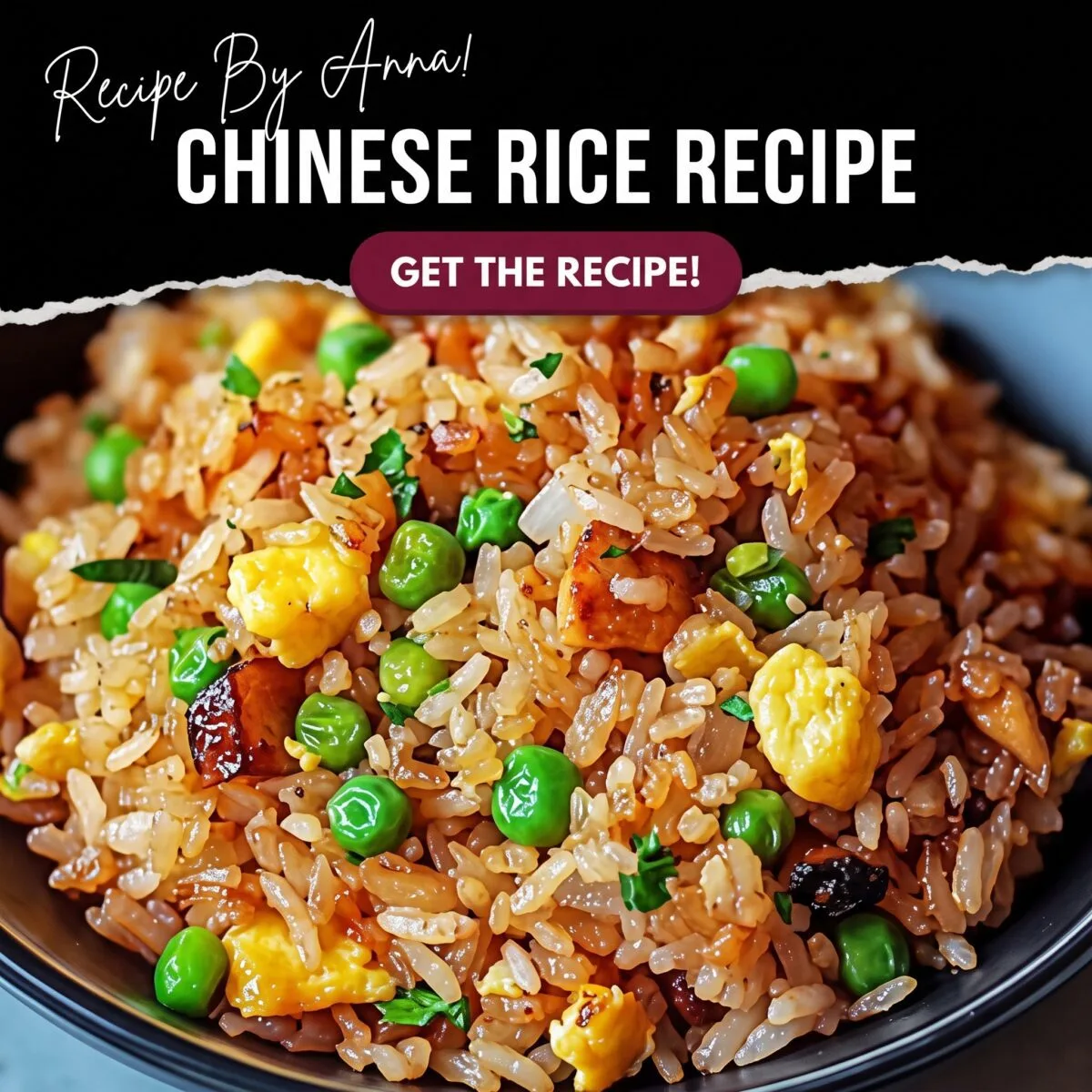
Every family needs one recipe that turns leftover rice into an event, and in my kitchen, this is the one. Cold rice from last night’s dinner hits a hot wok, gets tossed with fluffy eggs, scallions, and sweet little peas, and turns into glossy, separate grains that taste like the best fried rice you’ve ever had from a restaurant — because this one borrows every trick the restaurants use. Twenty-five minutes from fridge to table, and not a greasy takeout carton in sight.
The magic of great fried rice is that it’s 90% preparation and 10% fast, fiery cooking. Day-old rice is the star, because dry grains fry and toast instead of steaming into mush. Butter is the secret weapon — yes, butter — and it’s the reason behind that famous, irresistible richness you taste in teppan-style fried rice. And the sauce, a careful balance of soy, oyster sauce, a pinch of sugar, and a final whisper of sesame oil, coats every grain without ever drowning it.
I also love that this recipe is endlessly forgiving. Got leftover roast chicken? In it goes. A bag of frozen vegetables begging to be used? Perfect. It’s the kind of clean-out-the-fridge dinner that tastes completely intentional, meal-preps beautifully, and wins over both the picky eaters and the seconds-seekers at the table. Once you make it once, I have a feeling “freakin’ fantastic” will become the official name in your house too.
Why Day-Old Rice Is the Whole Secret
If you take just one thing from this recipe, make it this: the best fried rice starts with rice that was cooked yesterday. Freshly steamed rice is moist and its starches are sticky, so the moment it meets the wok it clumps together and turns soft. Rice that’s spent the night in the fridge is a different ingredient entirely — the grains dry out and firm up on the surface, so they separate cleanly, each one gets coated in oil, and each one toasts individually. That’s the difference between the mushy, steamed version and the distinct, slightly chewy grains you get at a restaurant.
The flavor trio here is what earns the name. Garlic sizzled in butter brings the deep, savory backbone. Soy and oyster sauce add the salty, umami-rich body you expect from takeout. And white pepper — please don’t skip it — provides that subtle, earthy fragrance that your brain instantly recognizes as “Chinese food.” None of it is hard to find, and together they make a bowl of rice taste like an occasion.
- Prep Time: 10 minutes
- Cook Time: 15 minutes
- Total Time: 25 minutes
- Yield: 4 servings
🍽️ Equipment I Need
Fried rice is a fast-moving recipe, so the gear list is less about fancy tools and more about being set up for speed:
- Wok or 12-Inch Skillet — a carbon-steel wok is the classic choice because its curved shape makes tossing easy, but a wide, heavy skillet does a beautiful job too. What matters most is surface area: the more room the rice has, the better it fries instead of steams. The SUMEIGUAN 13.5-Inch Pre-Seasoned Carbon Steel Wok comes ready to cook out of the box and includes a glass lid plus a 15-inch stainless spatula. If you’d rather not add a wok to your kitchen, the Cuisinart Chef’s Classic Nonstick Hard-Anodized 12-inch skillet gives you nearly the same surface area.
- Rice Cooker or Medium Pot — for cooking the rice a day ahead. A rice cooker makes this effortless, but any pot with a tight lid works fine. The Aroma 8-Cup Digital Rice Cooker and Food Steamer handles the rice on autopilot with dedicated white and brown rice settings and an automatic keep-warm, so you can set it and forget it. Already have a pot? The Cuisinart MultiClad Pro Stainless 3-quart saucepan has the tight-fitting cover you need.
- Small Prep Bowls — stir-frying happens in about ten minutes, which means there’s no time to measure once the heat is on. Everything goes into little bowls before the wok gets hot. The OXO Good Grips 8-Piece Glass Prep Bowl Set gives you eight 10-ounce bowls with lids — enough to hold your scallions, garlic, egg, and sauce separately at once — and they nest for easy storage.
- Wok Spatula or Wooden Spoon — for pressing the rice against the hot surface and tossing it back over itself without mashing the grains. The Zulay Kitchen Stainless Steel Wok Spatula is 14.8 inches long, which keeps your hand well back from the heat and oil splatter while you press and toss. (If you go with the wok above, it already includes one.)
- Chef’s Knife & Cutting Board — for mincing garlic and slicing the scallions, keeping the whites and greens in separate little piles. The Victorinox Fibrox Pro 8-Inch Chef’s Knife makes clean work of both, and this extra-large 17.6-inch bamboo cutting board gives you room to keep those two scallion piles from drifting into each other.
- Measuring Spoons — the sauce is a small, balanced thing, and measuring it once into a bowl ahead of time keeps the final minute completely calm. The OXO Good Grips Stainless Steel Measuring Spoons have etched markings that won’t wear off, and the magnetic handles snap the whole set together so nothing goes missing in the drawer.
What You Need
- Cooked jasmine rice, chilled overnight: 4 cups (about 700g) — that’s roughly 2 cups of dry rice; the grains must be cold and dry, and any clumps should be broken apart before they hit the wok
- Large eggs: 3 — lightly beaten; they puff into soft ribbons that contrast with the chewy rice
- Neutral oil: 2 tablespoons, divided — peanut, canola, or vegetable oil; you want something that handles high heat without smoking up the kitchen
- Unsalted butter: 2 tablespoons — the richness trick that sets this fried rice apart; unsalted keeps the seasoning in your control
- Garlic cloves, minced: 3
- Scallions: 4, thinly sliced with the whites and greens kept separate — the whites cook into the base, the greens finish the dish
- Frozen peas and carrots: 1 cup, thawed and patted dry — the classic takeout mix, ready in seconds
- Soy sauce: 2 tablespoons — regular or light soy, not dark, which would overpower and over-color the rice
- Oyster sauce: 1 tablespoon — optional, but it adds the deep restaurant-style savoriness that people can’t quite name
- Sugar: 1/2 teaspoon — just enough to round out the saltiness, not to sweeten
- Toasted sesame oil: 1 teaspoon — stirred in off the heat so its fragrance stays bright
- White pepper: 1/4 teaspoon — the signature takeout aroma; black pepper works in a pinch but the flavor is different
- Fine salt: to taste, at the end
Great add-ins if you like:
- Diced cooked chicken, shrimp, or char siu pork — about 1 cup
- Chili crisp — 1 to 2 tablespoons, for heat
- Extra soy sauce on the table, for passing around
How to Make It
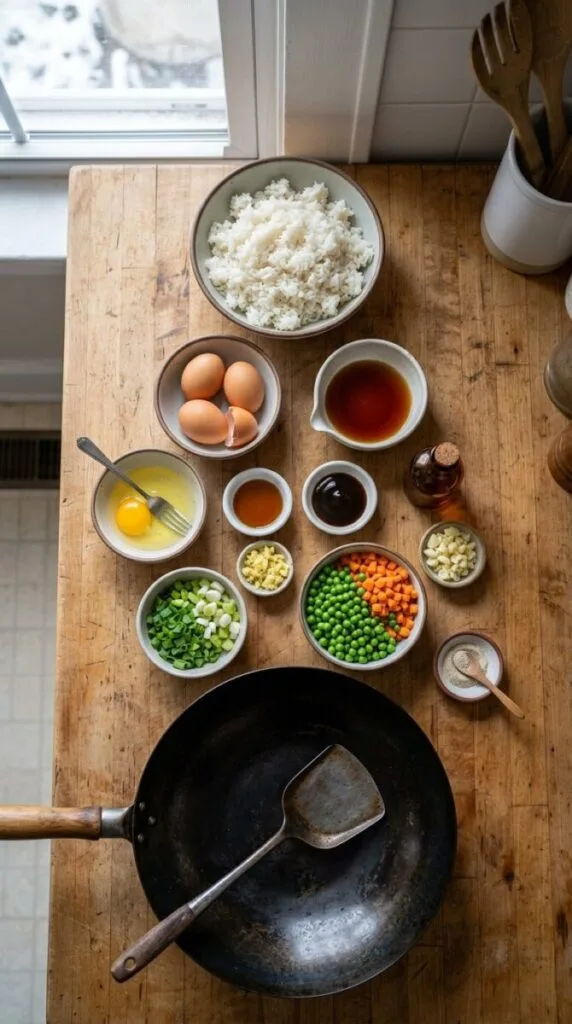
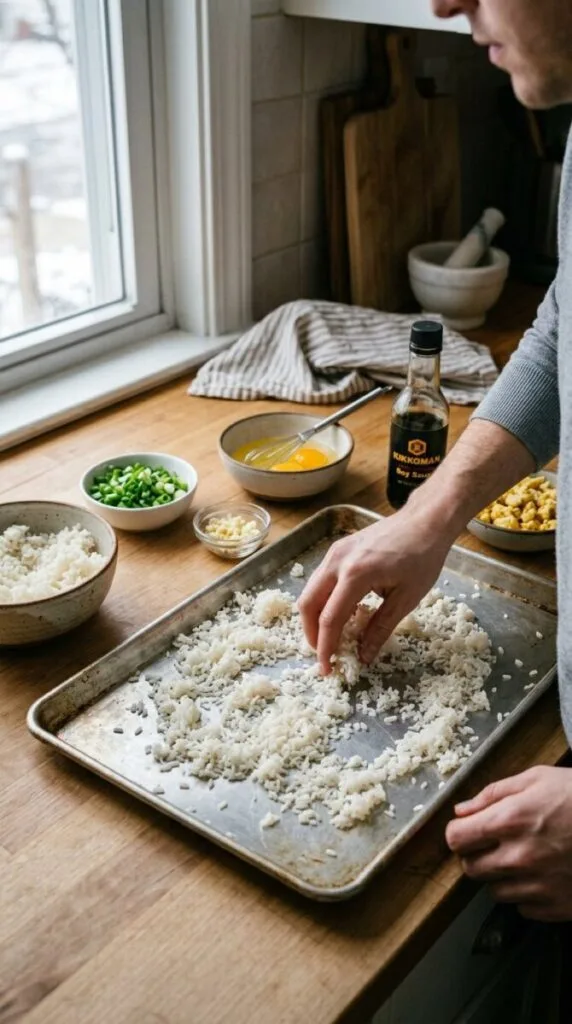
- Set everything up first. This is the single most important habit of wok cooking: measure the soy, oyster sauce, and sugar into one small bowl; beat the eggs in another; line up the garlic, scallion whites, peas and carrots, and butter within arm’s reach. Break the cold rice apart with damp fingertips so no clumps remain. Once the heat is on, you’ll have your hands full — this setup is what keeps the whole thing calm.
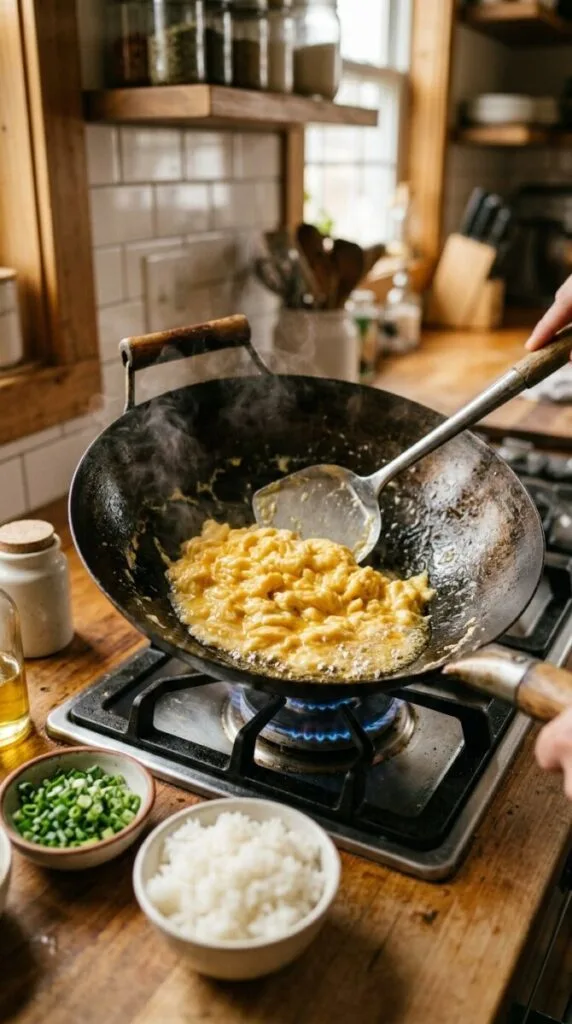
- Scramble the eggs softly. Heat the wok over medium-high heat until it’s good and hot, then add 1 tablespoon of the oil and swirl it around. Pour in the eggs and scramble them just until they barely set, about 30 to 45 seconds — they should still look slightly underdone. Slide them onto a plate; they’ll finish cooking later when they meet the hot rice.
- Sizzle the aromatics. Add the remaining tablespoon of oil to the wok. Toss in the scallion whites and garlic and stir constantly for about 30 seconds, just until the kitchen starts smelling incredible. Garlic burns fast, so keep everything moving.
- Fry the rice hard. Turn the heat up to high and add the rice. Press it flat against the bottom of the wok and let it sit for 30 to 45 seconds so it toasts, then toss and press again. Repeat this press-and-toss rhythm for 3 to 4 minutes, until the grains are separate, glossy, and some of them are barely golden and dancing on the surface.
- Add the vegetables and protein. Stir in the peas and carrots (and any cooked chicken, shrimp, or pork if you’re using it) and toss for 1 to 2 minutes, until everything is heated through.
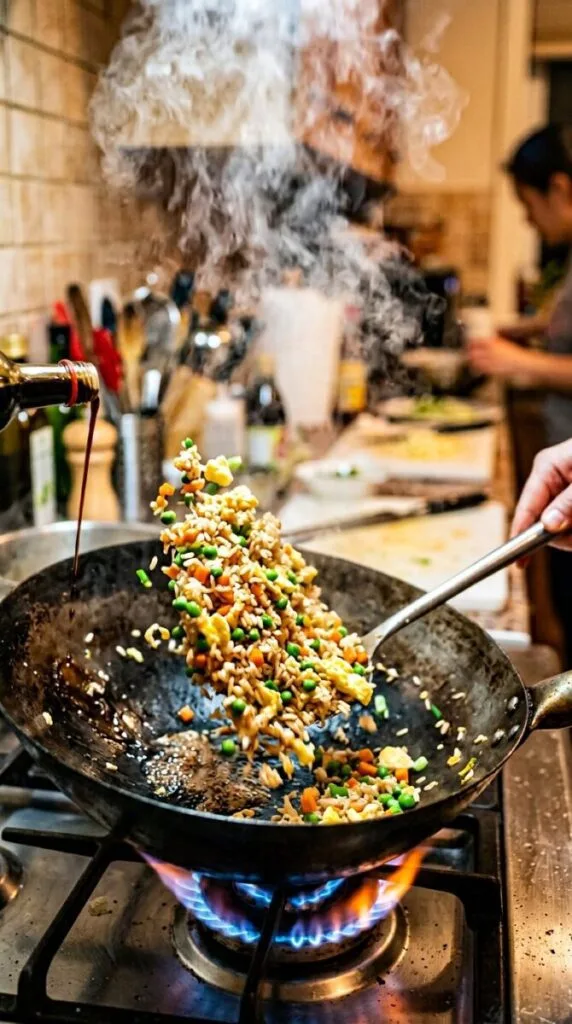
- Bring in the butter and sauce. Push the rice to the edges of the wok and add the butter to the center, letting it melt and foam for a few seconds. Then pour the soy–oyster–sugar mixture around the edge of the wok rather than straight onto the rice — it should sizzle and bubble the moment it touches the hot metal. Toss everything together until every grain looks glossy and evenly coated.
- Fold the eggs back in. Return the scrambled eggs, breaking them into bite-size pieces with your spatula as you toss. Sprinkle the white pepper over the top and mix once more.
- Finish and serve immediately. Take the wok off the heat, drizzle the sesame oil over the rice, and scatter the scallion greens across the top. Taste one spoonful and add a pinch of salt or an extra splash of soy if it wants it — then serve right away, while the grains are still hot and fragrant.
This Freakin’ Fantastic Fried Rice and our Veggie Rice Bake cover the same comfort-food territory from two completely different directions — one is a fast, glossy wok toss for busy nights, the other is a cozy one-dish bake for slower evenings. Make both in the same week and you’ll never wonder again what to do with leftover rice.
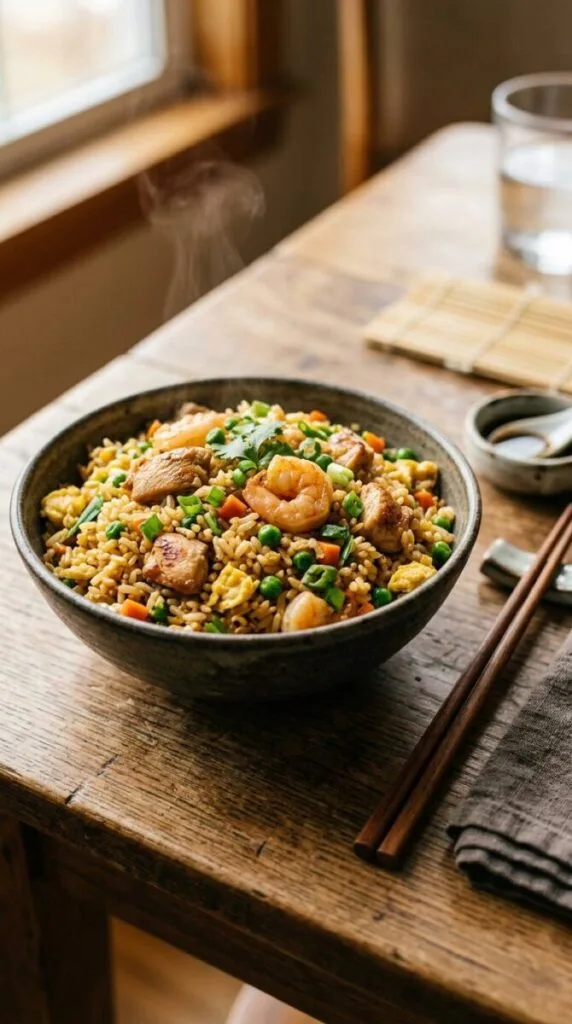
The Little Details That Make It Freakin’ Fantastic
Break the rice apart before it touches the heat. Cold rice loves to clump, and clumps that go into the wok stay clumps — steamed and soft on the inside. Two minutes of breaking the grains apart with damp fingertips before cooking is the tiny step that gives you individual, restaurant-style grains later.
The wok should be almost smoking before anything goes in. Restaurant fried rice tastes like it does because of extreme heat. Home stoves can’t match a wok burner’s flames, but a pan preheated until it shimmers — plus cooking in a single, uncrowded layer — gets you most of the way there. If the rice sits there quietly instead of sizzling the moment it lands, the pan isn’t ready.
Pour sauce around the edge, not over the top. When soy sauce hits the blazing-hot side of the wok, it sizzles and caramelizes in seconds, transforming from sharp and salty into something deeper and rounder before it even reaches the rice. Dumped straight onto the rice, it just soaks in and can make things wet. Those few extra seconds of sizzle are worth it.
Butter belongs near the end. Added too early, butter’s milk solids burn under the high heat and turn bitter. Melted in once the rice is already toasted, it coats every grain with glossy richness and carries the garlic flavor through the whole dish — that unmistakable teppan-style taste, right at home.
Take the eggs out soft, put them back last. Eggs that stay in the wok from start to finish turn dry and rubbery. Scrambled soft, set aside, and folded back in at the end, they finish cooking gently in the residual heat and stay tender — soft golden ribbons against the chewy rice.
What to Serve Alongside
Honestly, this fried rice is a complete dinner all by itself, and on most nights it stands proudly alone. But if you’re building a spread, it pairs beautifully with quick, fresh companions: a smashed cucumber salad with rice vinegar and sesame, steamed broccoli drizzled with soy, or a simple egg-drop soup that takes five minutes while the rice chills. Store-bought dumplings or spring rolls make excellent accomplices when you’re serving a crowd. For dessert after all that savory goodness, our Norwegian Cream is the perfect cool, light finish — three ingredients, no effort, and just sweet enough to round out the evening.
Fun Variations to Try
Chicken Fried Rice — the weeknight classic: fold in 1 cup of diced cooked chicken (rotisserie works beautifully) when you add the vegetables. The chicken soaks up the butter-soy glaze as it warms through, and dinner becomes heartier without a single extra step.
Shrimp Fried Rice — pat dry 8 oz of small shrimp, sear them in the wok for 2 minutes first, and set them aside, then return them with the eggs at the end. They stay plump and sweet instead of overcooking, and the whole dish tastes like a seaside takeout order.
Vegetable-Packed Fried Rice — for a lighter, greener version: add diced mushrooms, bell pepper, and broccoli florets along with the peas, and finish with a handful of spinach wilted through at the very end. Same technique, more color, more vitamins sneaking in.
Spicy Chili-Crisp Fried Rice — for the heat lovers at the table: toss in 1 to 2 tablespoons of chili crisp with the sauce, and top each bowl with a crispy-edged fried egg. The runny yolk becomes part of the sauce, and it’s dangerous in the best way.
Cauliflower Rice Version — the low-carb adaptation: use 4 cups of cauliflower rice, skip the pressing-and-toasting step, and stir-fry it briskly for just 3 to 4 minutes before adding everything else. It won’t toast quite like real rice, but it soaks up the butter-soy flavor wonderfully.
Nutritional Information
| Nutrient | Amount Per Serving (based on 4 servings) |
|---|---|
| Calories | 390 kcal |
| Protein | 12 g |
| Carbohydrates | 52 g |
| Fats | 15 g |
These values are estimates for the recipe as written, without add-ins. With the chicken or shrimp variation, each serving climbs to roughly 25 to 28 grams of protein — a balanced, satisfying dinner from a single pan and yesterday’s rice.
Storing and Reheating
Leftover fried rice is genuinely a gift, because the grains firm up again overnight and re-fry beautifully. Cool it promptly, store it covered in the fridge, and it keeps well for up to 4 days — many fans of this recipe will tell you day two is when it’s at its best.
The skillet is the best way to reheat: warm a teaspoon of oil over medium-high heat, spread the rice in an even layer, and let it sit for a minute before tossing, adding a splash of water or broth if it seems dry. Three to four minutes brings back the toasty, just-cooked texture. The microwave works too — cover the bowl with a damp paper towel and heat in 60-second bursts, fluffing between each one.
You can also freeze fried rice in single-serve containers for up to 2 months, which makes it a wonderful meal-prep staple. Reheat from frozen in the microwave or straight into a hot skillet with a splash of water. If the flavors taste a little flat after storage, a small splash of fresh soy sauce or a drop of sesame oil wakes everything right back up.
Mistakes That Lead to Mushy Fried Rice
Starting with fresh, hot rice. It’s the most common heartbreak of homemade fried rice: steamy new grains dissolve into a sticky, mushy pan the moment they’re stirred. If you forgot to plan ahead, spread freshly cooked rice on a tray and pop it in the freezer for 20 to 30 minutes — it’s not perfect, but it rescues the situation.
A pan that isn’t hot enough. If the rice lands in the wok with a whisper instead of a sizzle, it steams instead of frying, and steamed rice in a sauce turns soft and gummy. Wait for real heat, cook in one uncrowded layer, and resist the urge to stir constantly — those little rests on the hot surface are where the toasting happens.
Adding the sauce too early. Sauce poured in before the rice has toasted simply soaks into the grains and weighs them down. The rice should be glossy, hot, and slightly crisp-edged before any liquid arrives.
Chopping while you cook. Fried rice moves too fast for mid-recipe prep work. If you’re mincing garlic while the wok is live, something will burn — usually the garlic. Ten minutes of calm setup saves the whole dish.
Overcooking the eggs. Eggs scrambled until dry at the start stay dry forever. Pull them while they’re soft and glossy, and let the rice finish the job at the end.
Chinese Rice Recipe — Freakin’ Fantastic Fried Rice
Glossy restaurant-style fried rice made with cold jasmine rice, soft scrambled eggs, scallions, peas and carrots, garlic butter, soy sauce, oyster sauce, white pepper, and sesame oil.
Ingredients
How to Make
Mix soy sauce, oyster sauce, and sugar in a small bowl. Beat the eggs in another bowl. Slice scallions, keeping whites and greens separate. Break the cold rice apart with damp fingertips.
Heat a wok or large skillet over medium-high heat. Add 1 tablespoon oil, then pour in the eggs. Scramble for 30 to 45 seconds, just until barely set, then transfer to a plate.
Add the remaining 1 tablespoon oil to the wok. Add garlic and scallion whites. Stir constantly for about 30 seconds, just until fragrant.
Turn heat to high. Add the cold rice, press it flat against the pan, and let it toast for 30 to 45 seconds. Toss and repeat for 3 to 4 minutes, until the grains are separate, glossy, and lightly toasted.
Stir in peas and carrots, plus chicken, shrimp, or pork if using. Toss for 1 to 2 minutes, until everything is hot.
Push rice to the edges of the wok. Add butter to the center and let it melt. Pour the sauce around the hot edge of the wok, then toss until every grain is glossy and coated.
Add the scrambled eggs back to the wok, breaking them into bite-size pieces as you toss. Sprinkle in white pepper and mix once more.
Remove from heat. Drizzle with toasted sesame oil and scatter scallion greens over the rice. Taste and add salt or extra soy sauce if needed. Serve immediately.
Nutrition
| Nutrient | Amount Per Serving |
|---|---|
| Calories | 390 kcal |
| Protein | 12 g |
| Carbohydrates | 52 g |
| Fat | 15 g |
Values are estimates for 4 servings without added chicken, shrimp, pork, or chili crisp. Chicken or shrimp variations increase protein to about 25–28g per serving.