
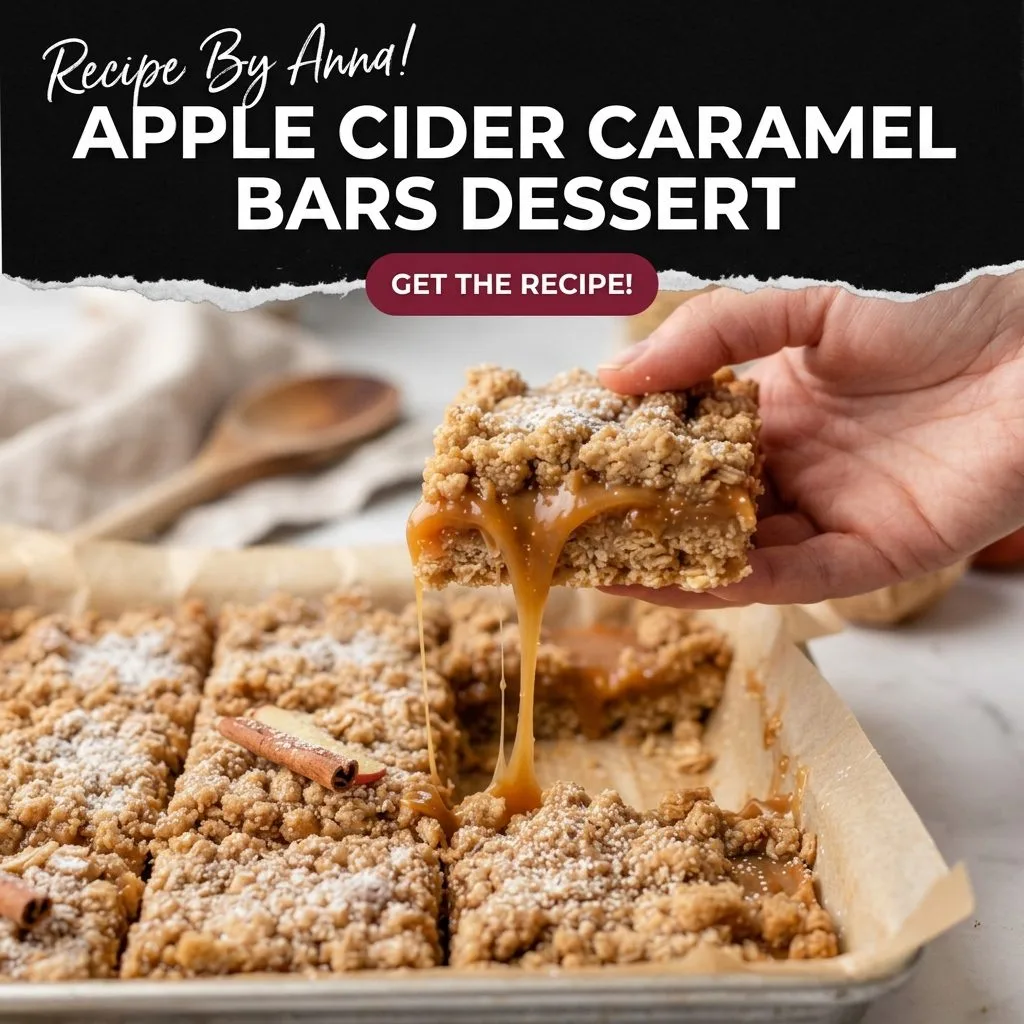
Apple Cider Caramel Bars — The Autumn Dessert You
Apple cider caramel is one of those things that sounds like a minor variation on regular caramel until you make it and realise it is actually its own distinct thing — the cider reduces into the caramel and adds a fruity tartness and apple depth that makes the finished caramel taste specifically of autumn in a way that plain caramel, however good, simply does not. It is the kind of flavour that makes people stop mid-bite and say “what is this?”
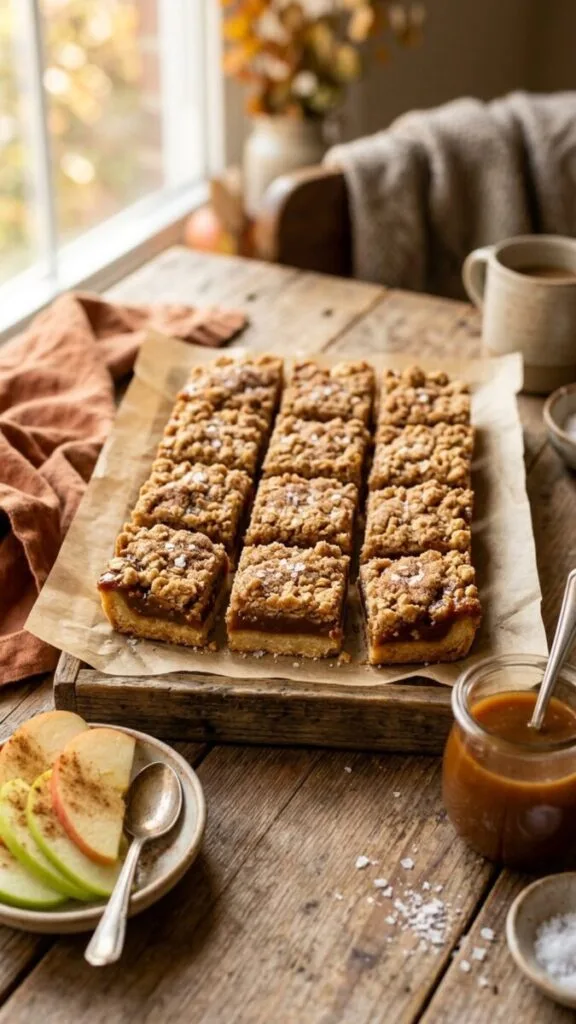
These Apple Cider Caramel Bars have three components: a brown butter shortbread base that is crispy, slightly nutty, and sturdy enough to hold the caramel layer without crumbling; the apple cider caramel itself, poured over while warm and left to set; and a finish of flaky sea salt and cinnamon that makes the whole thing taste more complex than three layers of baked goods has any right to. They are the autumn dessert bar that looks like you spent the afternoon on it and actually takes about an hour of mostly waiting.
They are also the dessert that travels well, cuts cleanly after overnight chilling, and disappears from any dessert table faster than anything else on it. Fair warning.
Why Apple Cider in Caramel Works
Caramel is cooked sugar with fat (butter) and dairy (cream). When you reduce apple cider first — cooking it from 2 cups down to 1/2 cup — you concentrate its natural sugars, malic acid, and apple flavour compounds into a thick, intensely flavoured syrup. When that syrup becomes the liquid component of a caramel, the resulting sauce tastes simultaneously of caramel and of apple, with a gentle tartness from the cider acid that keeps the caramel from being one-dimensional sweet.
The reduction step is not optional. Unreduced cider added to caramel produces a thin, watery caramel with a vague apple note. Properly reduced cider produces a thick, glossy caramel with a genuine, assertive apple character. Twenty minutes of simmering transforms two cups of cider into something genuinely worth building a dessert bar around.
- Prep Time: 20 minutes
- Cook Time: 45 minutes (including cider reduction)
- Cool and Set Time: 2 hours minimum
- Total Time: approximately 3 hours (mostly hands-off)
- Yield: 16 bars (8×8 pan)
The 5 Essential Tools for Perfect Apple Cider Caramel Bars
From reducing raw spiced cider into liquid gold caramel to releasing thick, chewy squares with zero sticking, these 5 tested tools guarantee bakery-quality results every single bake.

Cuisinart 2-Quart Chef’s Classic Stainless Steel Saucepan
Fresh apple cider is roughly 90% water. Pouring raw cider directly into blondie batter leaves bars soggy and flat. A heavy-bottomed 2-quart saucepan boils 1.5 cups of spiced cider down to 1/3 cup of intensely concentrated, syrupy cider essence. Its aluminum-encapsulated core prevents hot spots so delicate fruit sugars and butter caramelize smoothly without scorching.

USA Pan Bakeware 9×9-Inch Square Cake Pan
Chewy blondies require straight vertical walls and rapid heat transfer. The USA Pan 9×9 Square Pan features commercial-grade aluminized steel and corrugated fluting that circulates air underneath for even baking. Unlike sloped or glass pans that over-bake edges before centers set, this pan yields uniform, thick bars with clean, square bakery edges.

Reynolds Kitchens Pop-Up Parchment Paper Sheets (10.7 x 13.6 in)
Apple cider caramel is delightfully decadent but notoriously sticky. Trying to cut bars inside the pan tears the crust and damages your pan. Pre-cut pop-up parchment sheets lay completely flat without curling edges. By lining your 9×9 pan with a 2-inch overhang sling, you can lift the entire chilled block out in one effortless motion onto your cutting board.

Pyrex 3-Piece Glass Mixing Bowl Set & OXO Good Grips 11-Inch Whisk
Achieving that shiny, crinkly top crust on blondies requires vigorously whisking warm browned butter, brown sugar, eggs, and cider reduction for 60 to 90 seconds. Tempered Pyrex glass safely handles hot melted butter without leaching chemicals or retaining odors, while the balanced OXO balloon whisk whips maximum air into the eggs to dissolve sugar crystals thoroughly.

Pyrex Original 10-Ounce Clear Glass Custard Cups (4-Pack)
Dicing crisp Honeycrisp or Granny Smith apples and tossing them with cinnamon, nutmeg, and brown sugar before adding them to the batter is essential. These non-porous 10-ounce Pyrex glass bowls won’t react with the tart fruit acid, allowing spices to evenly coat every apple dice and letting you drain off excess extracted water so your bars bake fudgy rather than watery.
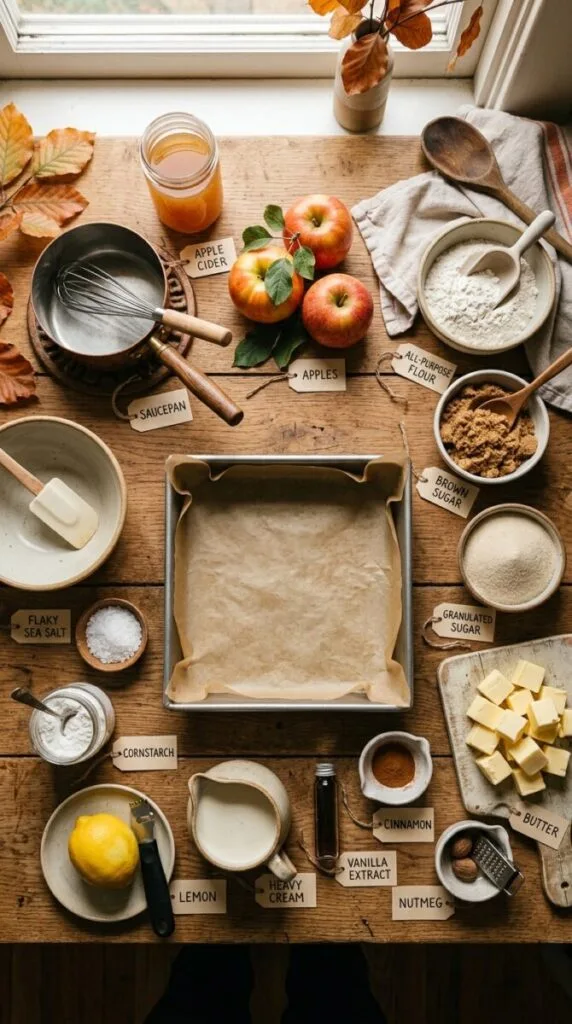
What You Need
For the brown butter shortbread base:
- Unsalted butter: 3/4 cup (170g) — browned first, which is 10 minutes of effort that adds a nuttiness to the base that plain melted butter cannot replicate
- Light brown sugar, packed: 1/3 cup (65g)
- Pure vanilla extract: 1 teaspoon
- Fine sea salt: 1/4 teaspoon
- All-purpose flour: 1 3/4 cups (220g)
- Ground cinnamon: 1/2 teaspoon — in the shortbread base, tying it to the spiced theme of the bars
For the apple cider caramel:
- Fresh apple cider (or unfiltered apple juice): 2 cups (480ml) — reduced to approximately 1/2 cup
- Granulated sugar: 1 cup (200g)
- Heavy cream: 1/2 cup (120ml), warmed
- Unsalted butter: 2 tablespoons
- Fine sea salt: 1/2 teaspoon
- Ground cinnamon: 1/4 teaspoon
- Ground nutmeg: 1/8 teaspoon
For finishing:
- Flaky sea salt (Maldon or fleur de sel)
- A small pinch of cinnamon
How to Make Them
Reduce the cider (first — do this while you prepare everything else):
- Pour the 2 cups of apple cider into a small saucepan and bring to a boil over medium-high heat. Reduce to a simmer and cook, uncovered, for 18 to 22 minutes until reduced to approximately 1/2 cup — it should look dark amber, thickened, and syrupy. A tablespoon swirled across the base of the pan should leave a trail rather than spreading immediately. Set aside to cool slightly.
Make and bake the shortbread base:
- Preheat the oven to 350°F (175°C). Line an 8×8 inch baking pan with parchment paper with overhang on two sides.
- Brown the butter: melt the butter in a light-coloured saucepan or skillet over medium heat, stirring occasionally. After 5 to 6 minutes the butter will foam, then the foam will subside, and then small golden-brown specks will appear on the bottom of the pan. The butter will smell nutty and toasted. Remove from heat immediately — brown butter goes from perfect to burned in under a minute. Pour into a large bowl and allow to cool for 5 minutes.
- Whisk the brown sugar, vanilla, and salt into the browned butter. Add the flour and cinnamon and stir until a dough forms — it will look crumbly and slightly dry. This is correct. Press it firmly and evenly into the bottom of the prepared pan — really press it down with the palm of your hand or the bottom of a glass to compact it into a solid, even layer.
- Bake at 350°F for 18 to 20 minutes until the shortbread is lightly golden at the edges and set in the centre. It will look very pale — this is the correct colour for a shortbread that still needs to support a caramel layer and return to the oven. If it browns too much at this stage it will be overcooked in the next step. Allow to cool for 10 minutes.
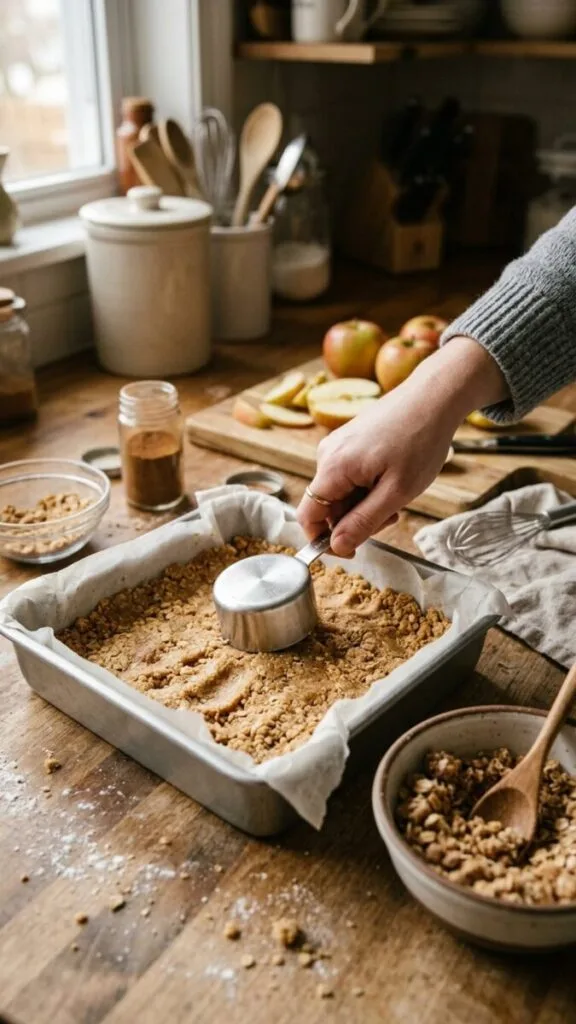
Make the apple cider caramel:
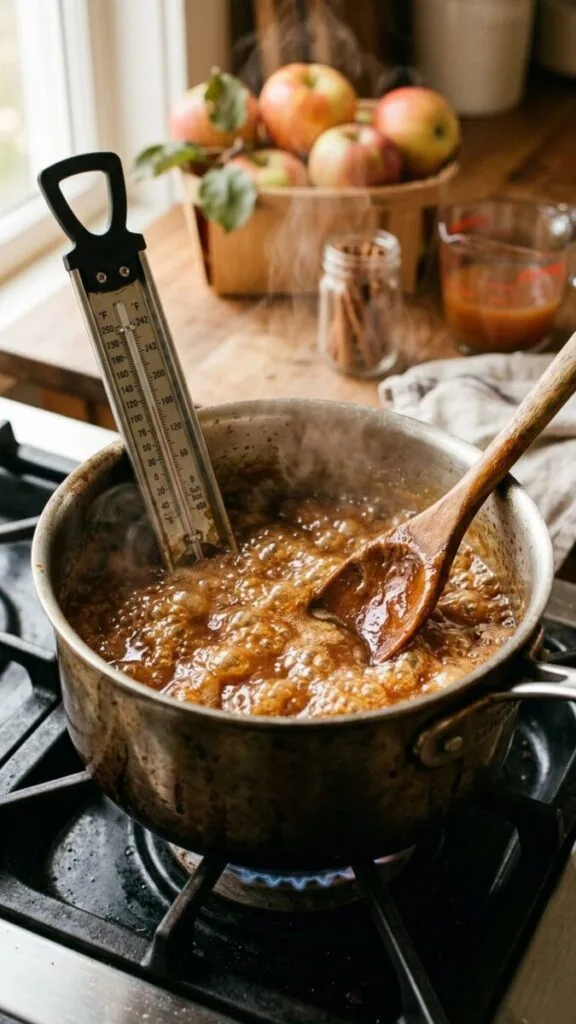
- Place the granulated sugar in a wide, heavy-bottomed saucepan over medium heat. Do not stir — let it melt from the edges inward, and only swirl the pan gently if the sugar is melting unevenly. Stirring causes the sugar to crystallise and seize.
- Cook until the sugar is fully melted and has turned a deep amber colour — the colour of old copper or dark honey. If you have a thermometer, this is 350 to 355°F. If you are going by colour alone, it should look distinctly darker than golden — amber, almost mahogany at the edges.
- Add the reduced apple cider carefully and in a steady stream — the caramel will bubble up violently when the liquid hits the hot sugar. Stir until the bubbling subsides and the caramel is smooth.
- Remove from heat. Add the warmed heavy cream in a steady stream, stirring constantly. Add the butter, salt, cinnamon, and nutmeg. Return to low heat for 1 to 2 minutes, stirring, until the butter has fully melted and the caramel is smooth, glossy, and uniform.
- Allow the caramel to cool for 5 minutes — it should still be pourable but not boiling hot.
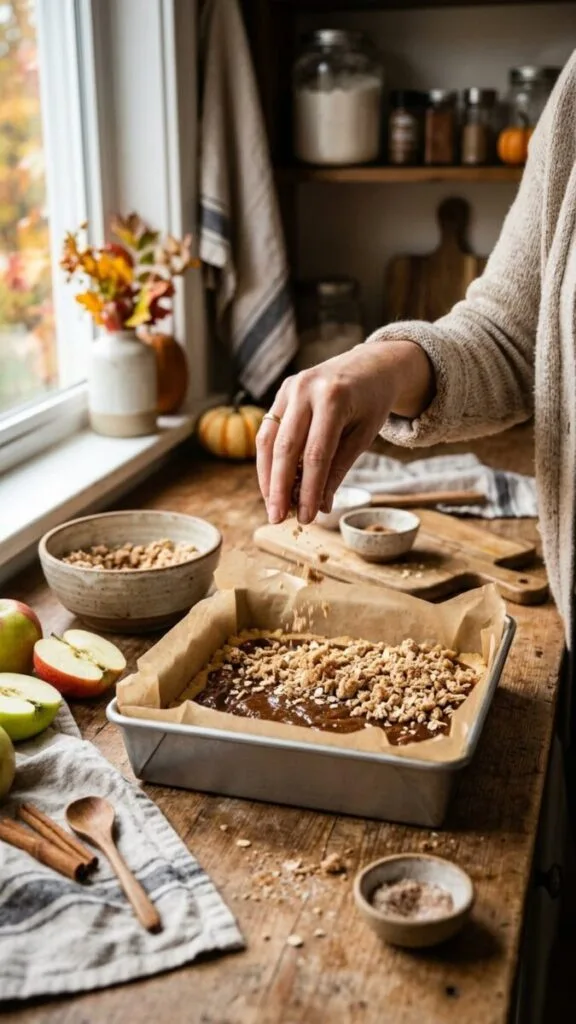
Assembling the bars:
- Pour the warm caramel over the cooled shortbread layer, spreading it to the edges. The caramel should be thick enough to sit in a generous layer — approximately 1/4 inch — rather than a thin glaze.
- Scatter a generous pinch of flaky sea salt and a small pinch of cinnamon over the warm caramel. The salt goes on while the caramel is warm so it adheres; it becomes slightly embedded in the surface as the caramel cools.
- Cool at room temperature for 30 minutes, then refrigerate for at least 1.5 hours until the caramel is fully set and firm. The bars should feel completely firm when pressed before cutting.
- Lift the bars out using the parchment overhang and transfer to a cutting board. Use a sharp knife warmed under hot water and wiped dry between cuts for the cleanest, sharpest-edged bars. Cut into 16 squares.
Apple cider caramel bars and our Warm Apple Cider Recipe are the autumn combination that makes any gathering feel specifically seasonal — the bars on the dessert plate, the warm spiced cider in a mug, and suddenly October is not just the month before the holiday season but a destination in its own right. Make both on the same afternoon. The cider simmers while the bars chill.
The Brown Butter and the Caramel Temperature Details
Browning the butter for the shortbread base before adding the sugar and flour produces a base with a nuttier, more complex flavour than the same recipe with plain melted butter — the Maillard reaction that occurs in the milk solids as the butter heats produces hundreds of new flavour compounds (pyrazines, diacetyl, furanones) that give browned butter its characteristic toasted, almost caramel-like quality. In a shortbread that already has caramel on top, the browned butter in the base adds a second caramel note from below that makes the whole bar taste more coherently caramel-forward.
The colour indicator for the caramel — deep amber to the colour of old copper, 350 to 355°F — is where the sugar’s flavour is most complex. Lighter amber (lower temperature) produces a sweeter, less complex caramel; darker amber produces bitterness. The deep amber is the narrow window where the caramel flavour has fully developed without crossing into bitterness. This window lasts about 30 to 45 seconds at the correct temperature before the sugar continues to darken, which is why watching the colour rather than walking away is essential at this stage.
What to Serve These With
These bars are rich enough to be a dessert on their own — the shortbread, caramel, and salt together produce a complete dessert experience that needs no accompaniment. For a more composed dessert plate, serve two bars alongside a scoop of vanilla ice cream or our Greek Yogurt Ice Cream — the cold, slightly tangy yogurt ice cream against the sweet-salty caramel bars is the temperature and flavour contrast that makes a simple bar feel like a plated dessert.
On an autumn dessert table alongside our Pumpkin Bars with Cream Cheese Frosting, these apple cider caramel bars cover the apple direction while the pumpkin bars cover the pumpkin direction — together they are the autumn dessert spread that makes a November gathering feel specifically seasonal without requiring any dishes that are not bars.
Variations Worth Making
Apple Cider Caramel Bars with Apples: Press a layer of thinly sliced, cinnamon-tossed apples over the shortbread before pouring the caramel over. Use a firm apple (Honeycrisp or Fuji) sliced paper-thin on a mandoline. The apple slices soften in the warm caramel and produce a bar with a jammy apple layer between the shortbread and the caramel — closer in character to an apple tart tatin than a plain caramel bar. This is the version most worth making in peak apple season.
Chocolate Apple Cider Caramel Bars: After the caramel has set and the bars are fully chilled, melt 4 oz of dark chocolate (70%) with 1 teaspoon of coconut oil. Drizzle over the set caramel surface and allow the chocolate to set at room temperature or in the fridge. The dark chocolate over the apple cider caramel produces the most sophisticated version of these bars — slightly bitter chocolate against the sweet-tart-salty caramel is one of the genuinely great autumn flavour combinations.
Spiced Cider Caramel Bars: Add 1 cinnamon stick, 2 whole cloves, and 2 cardamom pods to the apple cider while it reduces — the whole spices infuse the reduction with their aromatics before being strained out. The spiced reduction produces an apple cider caramel with more spice depth than the basic version, closer in flavour profile to the mulled cider spice tradition.
Salted Caramel Bars (without the cider): Skip the cider reduction entirely and proceed directly to making the caramel with 1/2 cup of cream and the remaining ingredients. The plain salted caramel version is the most straightforward and fastest of all the variations — and it is genuinely excellent on its own terms, even if it lacks the specific apple-autumn character that makes the cider version distinctive.
Nutritional Information
| Nutrient | Amount Per Bar (based on 16 bars) |
|---|---|
| Calories | 275 kcal |
| Protein | 2 g |
| Carbohydrates | 38 g |
| Fats | 14 g |
These are not low-calorie bars. The 14 grams of fat per bar comes from the brown butter shortbread and the butter in the caramel; the 38 grams of carbohydrate from the shortbread flour and the caramel sugar. At 275 calories per square, one bar is a genuinely satisfying dessert portion — rich enough that two is plenty and one is completely reasonable. The chocolate version adds approximately 30 calories per bar from the dark chocolate drizzle.
Storing These (Important Notes)
Store the bars in a single layer in an airtight container — stacking caramel bars is a recipe for them fusing together and becoming a single caramel-bar mass, which is delicious but inconvenient. If you need to stack, place parchment paper between each layer.
At room temperature, these bars keep for up to 3 days — the caramel is stable at room temperature and the shortbread stays crisp. In a warm kitchen (above 75°F), refrigerate to prevent the caramel from becoming too soft and sticky.
In the fridge, the caramel firms significantly and becomes almost toffee-like in texture — less soft and yielding than at room temperature, but deeply satisfying in a different way. Let refrigerated bars sit at room temperature for 10 minutes before eating for the ideal caramel texture.
Freeze cut bars individually wrapped in plastic wrap and stored in a bag for up to 2 months. The caramel and shortbread both freeze well without textural degradation. Thaw at room temperature for 30 minutes. These are genuinely one of the best baked goods in the collection to freeze — they come out of the freezer essentially identical to the day they were made.
The Mistakes That Are Worth Knowing About
Stirring the sugar as it melts causes crystallisation — a chain reaction where one sugar crystal encourages its neighbours to also crystallise, producing a grainy, white, solid mass that cannot be recovered without starting again. Swirl the pan gently if the sugar is melting unevenly at the edges; never stir with a spoon until the cream is added and the caramel has come off the direct heat.
Adding cold cream to hot caramel causes extreme splattering — the temperature difference is dramatic enough to produce an eruption of boiling caramel that is genuinely dangerous. Warm the cream in a microwave for 45 seconds or in a small saucepan until it is just warm to the touch before adding it to the caramel. The warm cream is absorbed smoothly; cold cream becomes a caramel geyser.
Cutting the bars before the caramel has fully set produces bars that ooze caramel from the cut edge and lose their clean, layered cross-section — the caramel must be genuinely firm, not just set on the surface, before cutting. Two hours in the fridge is the minimum; overnight is better and produces the cleanest possible cut. The warm knife trick (dipped in hot water, wiped dry between cuts) is specifically for properly set caramel — it will not fix incompletely set caramel.
Apple Cider Caramel Bars
Autumn dessert bars with a brown butter shortbread base, thick apple cider caramel, flaky sea salt, and a touch of cinnamon.
Ingredients
How to Make
Pour apple cider into a small saucepan. Bring to a boil, then reduce to a simmer. Cook uncovered for 18 to 22 minutes, until reduced to about ½ cup and syrupy. Set aside to cool slightly.
Preheat oven to 350°F / 175°C. Line an 8×8 inch pan with parchment, leaving overhang on two sides.
Melt butter in a light-colored saucepan over medium heat. Cook 5 to 6 minutes, stirring occasionally, until golden brown specks appear and the butter smells nutty. Pour into a large bowl and cool 5 minutes.
Whisk brown sugar, vanilla, and salt into the browned butter. Add flour and cinnamon and stir until a crumbly dough forms.
Press dough firmly and evenly into the prepared pan. Bake 18 to 20 minutes, until lightly golden at the edges and set in the center. Cool 10 minutes.
Place granulated sugar in a wide, heavy saucepan over medium heat. Let it melt from the edges inward, swirling the pan gently if needed. Do not stir. Cook until deep amber.
Carefully add the reduced apple cider in a steady stream. The caramel will bubble up. Stir until smooth.
Remove from heat. Slowly stir in warmed cream, then add butter, salt, cinnamon, and nutmeg. Return to low heat for 1 to 2 minutes, stirring until glossy.
Let caramel cool 5 minutes, then pour over the shortbread base. Spread to the edges in an even layer.
Sprinkle warm caramel with flaky sea salt and a pinch of cinnamon. Cool at room temperature for 30 minutes, then refrigerate at least 1½ hours until firm.
Lift bars out with parchment. Cut into 16 squares using a sharp knife warmed under hot water and wiped dry between cuts.
Nutrition
| Nutrient | Amount Per Bar |
|---|---|
| Calories | 275 kcal |
| Protein | 2 g |
| Carbohydrates | 38 g |
| Fat | 14 g |
Values are estimates based on 16 bars. Chocolate drizzle or added apple layers will change nutrition.