Creamy Broccoli Pasta Recipe | 20-Minute Dinner
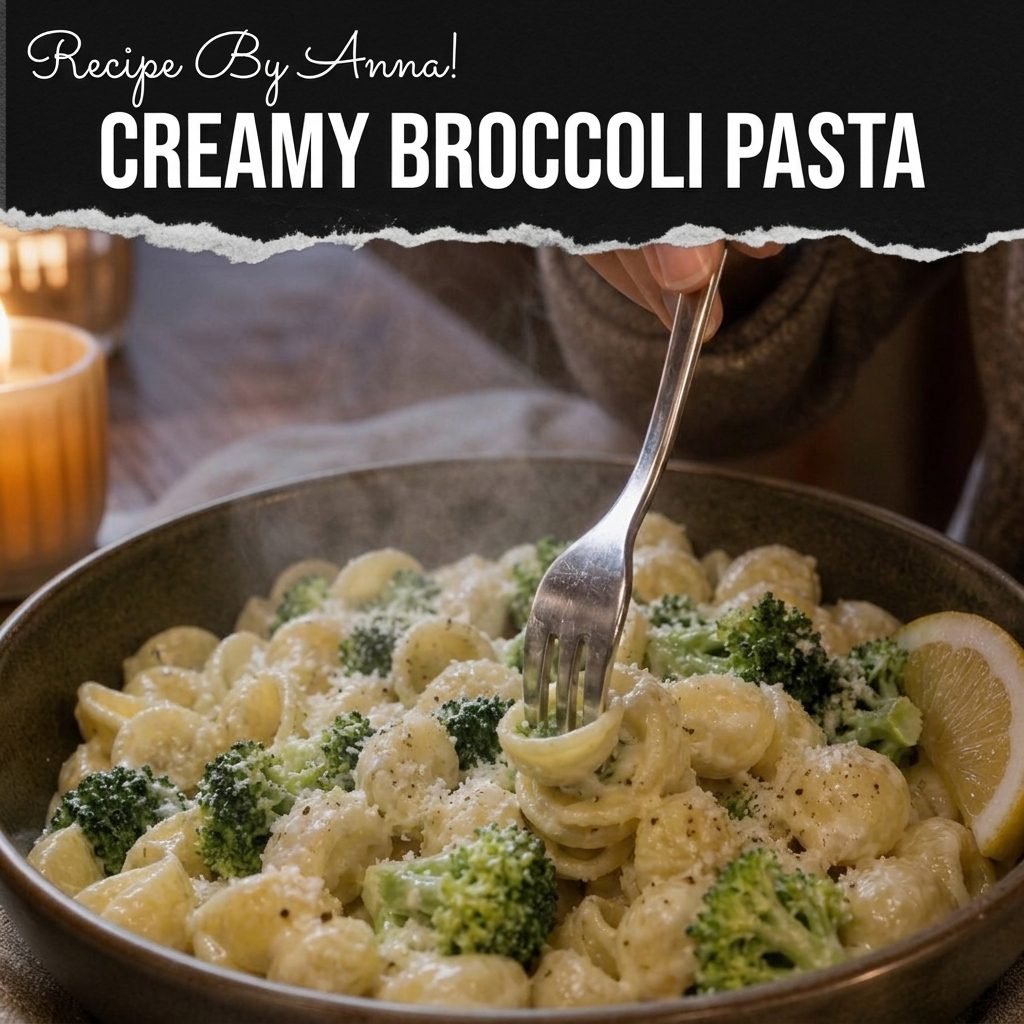
This is the dinner I make when the week gets loud and I still want a bowl that behaves like I tried. Small shells scooping up a garlic cream sauce, broccoli florets so green they look edited, parmesan in honest quantity, and a flick of lemon at the end so the cream doesn’t get too comfortable. One pot does nearly all the work — the broccoli actually cooks in the pasta water — and the sauce comes together from scratch in less time than a jar of the shelf-stable stuff takes to warm through. The jar has a smell I’ve never fully trusted anyway. This sauce smells like a kitchen.
The whole dish runs on one piece of kitchen physics: cream and cheese don’t naturally hold together, and the cloudy starch in pasta cooking water is the matchmaker. Save a mug of that water before you drain, and in the last sixty seconds of cooking, cream, parmesan, and starch get tossed together into one glossy sauce that wraps every piece of pasta instead of pooling underneath it. Miss the mug and you have a nice bowl of pasta with a topping. Save the mug and you have a dish — the difference is that small and that large at the same time.
Full disclosure on the neighborhood, because this site keeps its shelves straight: the broccoli department here is already well staffed — there’s a broccoli cheddar butter beans recipe that handles the bean nights — and the creamy pasta slot has a sitting member in the one-pot creamy salmon pasta. This one is the vegetarian weeknight entry: faster than both, green as anything, and built from the same mug of pasta water that every good cream sauce secretly depends on.
The Two-Clock Pot
One pot of water, two schedules running in it. The pasta needs ten or eleven minutes to turn tender; the broccoli needs exactly two and a half to three, and not one minute more. So the florets go into the same boiling water for the final stretch — they blanch while the pasta finishes, they come out bright and just-bendable, and the colander handles everything in one pour. This is the entire efficiency of the recipe: no second pot, no steamer basket, no broccoli timing to track separately, and the florets drink the same salted water the pasta did, so they arrive pre-seasoned instead of tasting like an afterthought with good posture.
The green window deserves respect, because broccoli punishes drift. In the window, a floret is bright green and yields to a fork with a little resistance — the color of something that still has some fight in it. Past the window, the color goes dull and the flavor heads somewhere sulfurous, and no amount of cream can hide it. Two and a half minutes is the number for bite-size florets; set a timer, because the difference between vibrant and defeated is about ninety seconds, and the pasta pot is a distracting place.
Then the mug rule, which is the recipe’s one non-negotiable. Before anything touches the colander, dip a coffee mug into the pot and fill it with the cloudy, starchy cooking water and set it on the counter. That mug is the sauce’s future. The starch in it is what binds cream and parmesan into something that coats instead of separates — fat and water refuse each other until starch introduces them, and then they get along famously. Every cook I know who makes great pasta keeps a mug habit. Every cook I know with watery, patchy sauce has a sink with a story in it.
⏱️ 25 MINUTES, ONE POT | 🥦 FEEDS 4 | 🧀 A FROM-SCRATCH CREAM SAUCE
- Prep Time: 10 minutes — florets, garlic, parmesan
- Cook Time: 15 minutes, pot and skillet overlapping
- Total Time: about 25 minutes, start to steam
- Yield: 4 generous bowls
The Shape Decision
Two pieces of equipment matter, and one decision: what shape of pasta rides under the sauce.
- Large pot — generously salted water, at least four quarts, so the pasta moves freely and the starch concentrates instead of the pasta gumming together
- Wide skillet — the sauce’s home and the tossing arena; wide beats deep, because sauce forms in motion, not in depth
- A coffee mug — the pasta-water savings plan, filled before draining
- Box grater or microplane — for the parmesan, grated today, from the wedge
- Tongs — the best tool for the final toss; they grip and turn in a way a spoon only dreams about
The shape itself is a real decision, and here’s the rule: the sauce needs something to hold onto. Shells, orecchiette, fusilli, cavatappi — anything with ridges, curls, or cups catches cream in every fold, and a spoonful of shells arrives at your mouth fully dressed. Smooth shapes like spaghetti or linguine shed cream the way a rain jacket sheds weather — beautiful pasta, wrong assignment. If the household insists on spaghetti, break my heart quietly and add an extra splash of pasta water, because smooth noodles need the extra starch grip. But this recipe is at its best with small shells, which is what I’ve written it for: each one becomes a tiny bowl of its own soup.
Ingredients (With Labels)
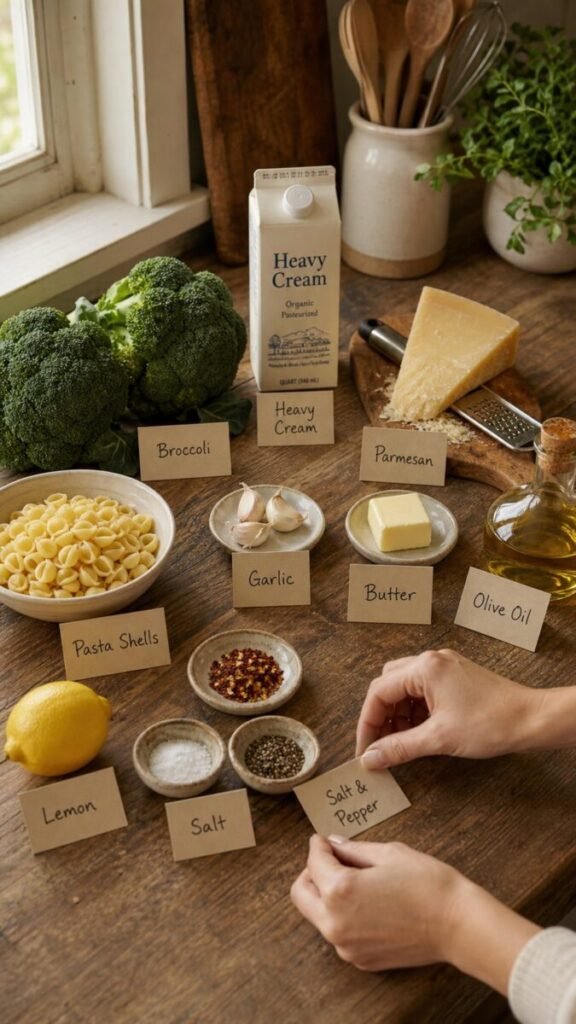
🥦 The Greens
- Broccoli: 1 lb — two small crowns, florets cut bite-size, stems peeled and thinly sliced
- Lemon: 1 — the zest for the finish, half the juice
🧄 The Base
- Butter: 3 tablespoons
- Olive oil: 1 tablespoon — keeps the butter from browning too fast
- Garlic: 4 cloves, thinly sliced
- Red pepper flakes: ½ teaspoon
🥛 The Sauce
- Heavy cream: 1 cup
- Parmesan: 1½ cups, freshly grated from the wedge
- Salt: 1 tablespoon for the pasta water, plus more to taste
- Black pepper: ½ teaspoon, coarsely ground
🌶️ The Finish
- More parmesan: for the bowls
- More red pepper flakes: for the bowls, for the people who like a visible warning
Step by Step How to Make
- Step 1 — The water. Bring at least four quarts of water to a rolling boil and salt it with the full tablespoon — it should taste like a well-seasoned soup, because this is the only chance the pasta gets to be seasoned all the way through, and no sauce can fix a bland middle later. Drop in the shells, stir once so they don’t settle, and set a coffee mug on the counter where you can see it. The mug is not for coffee this time. It has a job in about ten minutes.
- Step 2 — The green window. When the pasta has about three minutes left, slide the sliced stems in — they’re denser and want a head start — and at two and a half minutes, the florets. Watch the color turn vivid in the first minute; that’s the window opening. The moment a floret bends to a fork without collapsing, fill the mug from the pot, then pour pasta and broccoli together into the colander. Don’t rinse anything. The faintly sticky film on those shells is starch, and starch is the whole second half of this recipe.
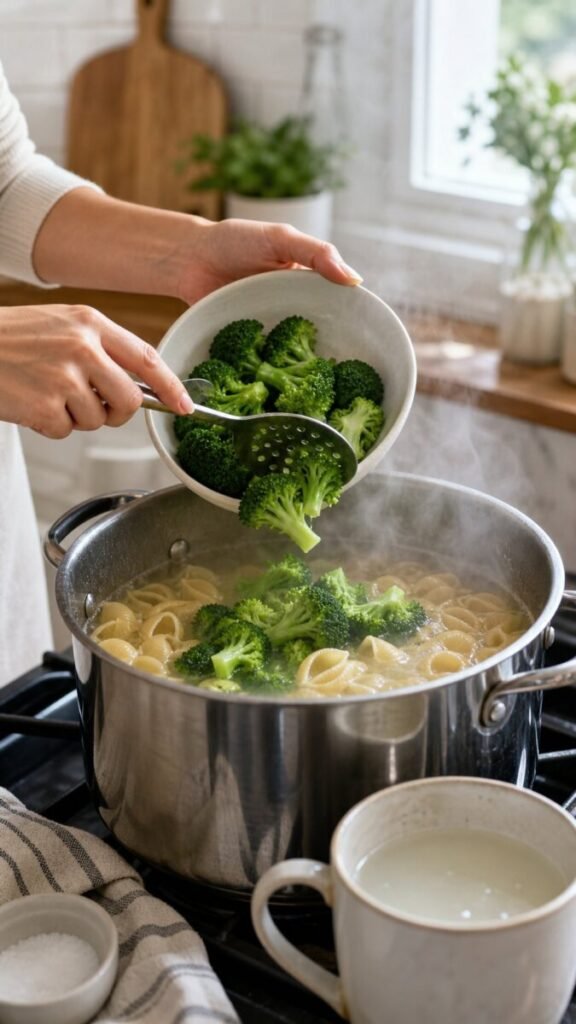
- Step 3 — The base. While the pot was doing its two clocks, the skillet should have been starting the sauce. Melt the butter with the olive oil over medium-low heat, add the sliced garlic and the pepper flakes, and cook gently for two minutes — fragrant and pale gold, never browned, because burnt garlic turns the whole sauce bitter and stays bitter. Low and slow is the speed here; garlic rewards patience and punishes hurrying like few other ingredients.
- Step 4 — The cream. Pour the cream into the garlic butter and let it come to a bare simmer, then hold it there for two minutes, stirring, until it thickens just enough to leave a thin coat on the spoon. It shouldn’t be thick — it’s about to get help from the parmesan and the mug — it just needs to be hot all the way through and slightly tightened. Pull the skillet off the heat entirely. This is the setup for the next step, and the next step has strict rules about heat.
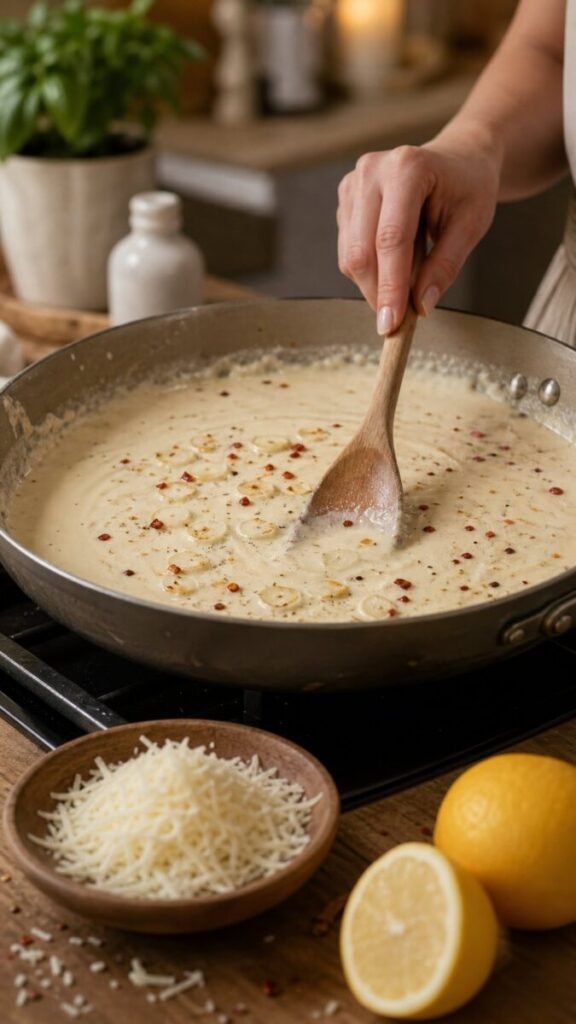
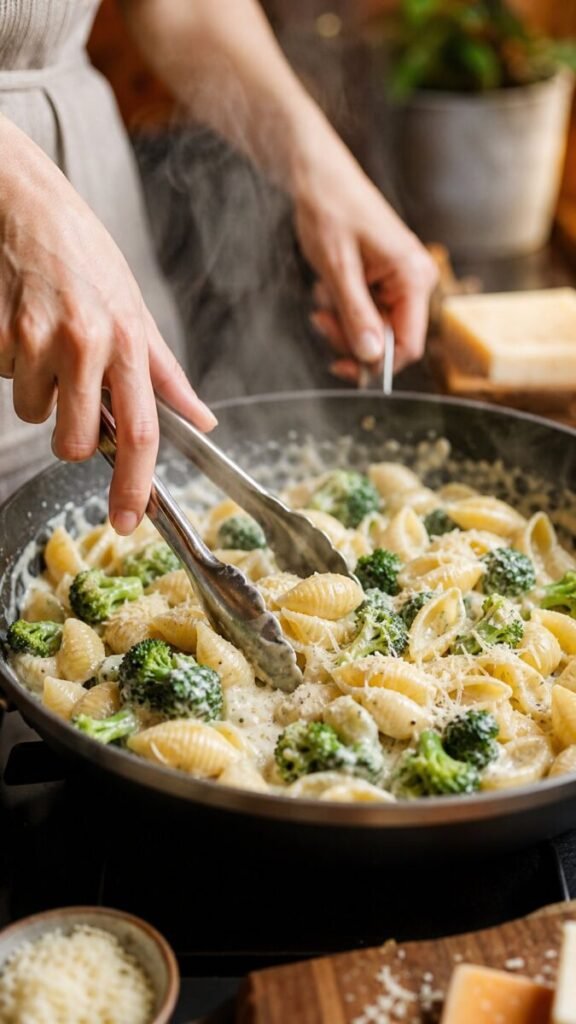
- Step 5 — The melt and the marriage. With the skillet off the heat, scatter in half the parmesan and stir until it disappears, then the second half — off the heat is the rule, because boiling parmesan seizes into strings and grains instead of melting into silk, and the sauce you want has no strings in it. Now add the drained pasta and broccoli, and toss hard with the tongs while splashing in pasta water, a tablespoon or two at a time. Something visibly changes as you toss: the sauce loosens, turns glossy, and starts to climb the noodle instead of sitting under it. That’s the starch doing its matchmaker work, and it happens in motion — the sauce is a suspension, not a soup, and it’s finished by tossing, not by boiling.
- Step 6 — The bowls. When every shell wears the sauce and the skillet itself looks glossy, kill the heat, add the lemon zest, the juice of half the lemon, and the black pepper, toss twice more, and bowl it immediately, with extra parmesan and pepper flakes over each. Then eat it now, while it’s still glossy and loose: a cream sauce like this has a closing time, and it’s roughly ten minutes after the skillet. This is not a dish that improves with waiting, and it was never trying to be.
The broccoli cheese soup already proved this vegetable and cheddar are a lasting partnership — this pasta is the same friendship on a Tuesday timeline: twenty-five minutes instead of forty, a skillet instead of a soup pot.
Anna’s Kitchen Notes
Salt the water like you mean it. The tablespoon looks like a lot going in, and it’s the single most common gap between people’s homemade pasta and the pasta they remember from restaurants. The shells absorb seasoned water as they cook; they can only absorb it then. Afterward, everything you add sits on the surface — delicious surface, bland middle. If your water doesn’t taste like something you’d sip from a ladle, add another pinch and taste again.
Keep the mug in sight from the start. The classic failure isn’t refusing to save pasta water; it’s forgetting until the colander is already shaking. Put the mug on the counter before the pot boils so it becomes furniture — a small visual contract with your future sauce. I’ve taped a note to mine during distracted weeks, and I’m not embarrassed by either the note or the result.
Smash a few florets on purpose. During the final toss, press three or four florets against the side of the skillet with the back of the spoon and stir the broken pieces through. They dissolve into the sauce and tint it faintly green while thickening it — a double shift from one vegetable, and the reason the sauce in the photos looks like it knows something about broccoli even before you bite into a whole piece.
Grate the parmesan today, from the wedge. Pre-grated cheese wears an anti-caking coat that keeps it from clumping in the bag and, inconveniently, from melting smoothly in your skillet — a self-defeating talent. Thirty seconds with a wedge and a grater, and the parmesan behaves like it has somewhere to be. Grate it finely, too: fine shreds melt in the residual heat of an off-heat skillet; thick shards just sit there being delicious in the wrong way.
Double it carefully or not at all. The recipe doubles cleanly up to two pounds of pasta, but the pot has to grow with it — crowding the water drops its temperature, the pasta gums, and the starch concentration thins out when you need it most. Two pounds wants six quarts and the widest skillet you own, or do the toss in the empty pasta pot, which is suddenly the biggest bowl in the kitchen. Feeding eight is worth it. Feeding eight out of an overcrowded pot is a different, sadder dinner.
The Pasta Night Table
This bowl wants one crisp thing beside it and one bready thing under it. The bready thing is solved by focaccia, whose olive-oil crust was practically engineered for sauce-mopping duty — I consider the last swipe around the bowl a course of its own. The crisp thing: a sharp Greek salad with the house dressing, whose vinegar bite resets the palate between creamy bites. On a lighter weeknight, the warming Italian broccoli soup is this recipe’s broth-and-bread sibling — same vegetable, no cream, entirely different mood.
For the rotation around it: the one-pot creamy salmon pasta is the fish-night version of this same idea, and the garlic bok choy stir-fry is the green-vegetable weeknight when pasta is off the calendar. My honest advice is to keep all three in the same two-week loop — they share a shopping list of garlic, greens, and good olive oil, and nothing on that list ever goes to waste in a kitchen that cooks like this.
Same Pasta, Other Greens
The cauliflower-and-cheddar version. Swap the broccoli for cauliflower and the parmesan for sharp cheddar — the sauce goes milder and the whole dish drifts toward mac-and-cheese’s elegant cousin. Add a pinch of dry mustard to the cream; it makes cheddar taste more like itself, an old trick this kitchen stands behind.
The spring peas-and-mint version. Frozen peas straight into the pot for the final ninety seconds, torn mint at the finish, extra lemon. It’s the lightest member of the family and the one that tastes most like April — same mug rule, completely different season.
The roasted-broccoli version. Roast the florets at 425°F for 15 minutes while the pasta boils, then fold them in at the toss. You lose the one-pot promise and gain char and depth — the florets take on browned edges and a nuttier flavor that stands up to the cream differently. This is the Sunday version of a Tuesday dish.
The lighter hand. Half-and-half instead of heavy cream, with a teaspoon of flour whisked into the garlic butter before the dairy goes in. The sauce comes out thinner but genuinely creamy, and nobody at the table has ever raised the subject. Whole milk, I’ll be honest, pushes its luck — the sauce thins out and starts eyeing the exits.
The vegan lane. Soaked cashews blended with water until smooth, nutritional yeast for the parmesan’s salt-and-umami, and olive oil standing in for butter. Honestly rated: good, not identical — the cream’s roundness is the one thing cashews can’t fully impersonate. The mug rule survives the conversion untouched, which tells you how much of this recipe was never about the dairy at all.
The protein add-ons. Sliced Italian sausage browned in the skillet before the garlic; shredded rotisserie chicken folded in at the toss; or a can of white beans, rinsed and warmed through, for the no-cooking-further option. Any of the three turns the bowl from a side-flirting-with-main into an actual main, and none of them changes the sauce’s schedule.
The Pasta Math
| Nutrient | Per Serving (1 bowl of 4) |
|---|---|
| Calories | 540 kcal |
| Protein | 16 g |
| Carbohydrates | 62 g |
| Fats | 25 g |
Estimates as written — real cream, real parmesan, a full pound of broccoli doing quiet vegetable work under all of it. Sixteen grams of protein is honest for a meatless bowl; the white-bean variation pushes it past twenty without changing anything else about the recipe. The money column is friendlier still: a pound of broccoli, a cup of cream, a third of a parmesan wedge, and a bag of shells lands around eight dollars for four bowls — two dollars each, from scratch, in the time a delivery app spends deciding who drives to you. The jar of shelf-stable sauce costs more than that and tastes, on its best day, like a rumor of cheese.
The Second Fork
Storage, in the order the leftovers actually go. The fridge keeps this pasta three days in a covered container, and it reheats better than most cream pastas because the sauce was built on starch — set it in a skillet over medium-low with a splash of milk or water and toss until it turns glossy again, about three minutes. The microwave takes a minute and a half and asks you to stir halfway through; it works, with a small apology to the texture.
What the sauce will do in the fridge is tighten — that’s the starch continuing its work in the cold, and it’s reversible, not fatal. Treat the leftover pasta as sauce concentrate: every reheat gets its splash, and the bowl comes back to nearly the gloss it had on day one. What tightening is not, is a sign to add more cream; water or milk does the job without weighing it down.
The freezer is the one place this dish and I disagree. Cream sauces thaw grainy and the pasta goes soft, and the bowl you were saving for a hard Thursday comes back as a cautionary tale. Eat it fresh, eat the leftovers within three days, and if there’s a fourth day portion hiding in the back of the fridge, the kindest thing to do is let it go quietly.
Where It Goes Wrong
The puddle. Sauce sitting in the bottom of the bowl while naked pasta floats on top means the emulsion never formed: no pasta water saved, or the pasta was dressed in a cold skillet, or everything was stirred gently instead of tossed hard. The fix is always the same and always works — back into a warm skillet, splash from the mug, toss with intent. The sauce forms in motion or it doesn’t form.
Army-jacket broccoli. Dull, olive-toned florets with a sulfurous edge mean the green window got missed — the broccoli went in too early or stayed too long. There’s no rescue for the color once it turns; there’s only the next time, with a timer set for two and a half minutes and a fork standing by to test. Bright green is a doneness signal you can see from across the kitchen, which is exactly why the window is so forgiving if you watch it.
Strings and grains in the sauce. The parmesan went into a boiling skillet, or it came pre-grated from a bag. Boiled parmesan seizes; coated parmesan resists. Both failures look the same — a sauce that’s part silk, part grit, with the occasional stubborn string — and both are prevented the same way: wedge cheese, grated fine, melted off the heat in two handfuls.
Spackle. The cream boiled hard and reduced past its prime, or the pasta water went in all at once and then cooked down too far. The sauce turns thick, heavy, and paste-like, and it clings in a way that stops being a compliment. Loosen it: off the heat, a splash of water, a few more tosses. A sauce that’s too thick is a sauce that’s one splash from right.
Bland in the middle. The water was under-salted, and the pasta is seasoned only where the sauce touches it. No amount of parmesan on top reaches the interior of a shell — that’s the pasta-water gap showing up at the table. Salt the pot properly next time and the problem never starts; at the table tonight, extra pepper flakes and honest acceptance are the menu.
Rinsed pasta. A quick rinse under the tap feels tidy and washes the surface starch straight into the drain — the exact starch the sauce was counting on. Rinsed pasta is slick, the cream slides off it, and the bowl comes out soupy at the edges. Drain, don’t rinse, and if the pasta sits a few minutes before the toss, a drizzle of oil and a stir keeps it from sticking without costing you the grip.
Broccoli Pasta Questions
Why do I need to save the pasta water?
Because the sauce is an emulsion, and emulsions need a go-between. Cream is mostly fat, cheese is fat plus protein, and plain water-based liquids want nothing to do with either — the starch dissolved in pasta cooking water binds them into one smooth, glossy sauce that clings. It also carries salt, which seasons the sauce as it loosens. A mug costs nothing to fill and is the difference between dressed pasta and sauced pasta.
Can I use milk or half-and-half instead of cream?
Half-and-half, yes — whisk a teaspoon of flour into the garlic butter before it goes in, and the sauce holds together, just a touch lighter. Whole milk is where I stop making promises: there isn’t enough fat for the parmesan to melt into gracefully, and the sauce comes out thin no matter how carefully you toss. Heavy cream exists for nights like this one.
Can I use frozen broccoli?
Yes, and quite well — frozen florets go straight from the bag into the pot for the last three to four minutes, no thawing. They run slightly softer than fresh, so pull them at the first fork-yield, and expect a marginally more rustic bowl. Frozen stems, though, have given up before they arrive; use the florets and don’t look back.
Is this gluten-free?
The sauce is, naturally — cream, cheese, garlic, lemon, nothing wheat anywhere in it. Swap in your favorite gluten-free pasta and keep the method identical, including the mug. Two honest notes: GF pasta releases its starch differently, so the sauce may need one extra splash, and it’s worth tasting a minute early, since GF pasta moves from done to overdone on its own schedule.
Can I make it ahead?
Not really, and that’s a feature of the recipe, not a flaw — it takes twenty-five minutes start to steam, which is less time than most make-ahead logistics. What you can do ahead: cut the florets and slice the garlic in the morning, grate the parmesan, measure the cream. Then dinner is twelve minutes of pot-watching and one dramatic minute of tossing. Cream sauces like this one are at their best for about ten minutes after the skillet, and no container negotiates with that.
What if I can’t find small shells?
Any ridged or cupped shape steps in beautifully — orecchiette, fusilli, cavatappi, rotini. The rule is texture: ridges catch cream, curls hold it, cups scoop it. Smooth shapes like spaghetti or angel hair shed the sauce and belong to different recipes entirely. The shape decision is the whole reason the sauce arrives at your fork dressed.
How do I make it a full meal?
Three reliable routes, in order of effort: Italian sausage, browned in the skillet before the garlic gets there; shredded rotisserie chicken, folded in at the toss; a can of white beans, rinsed and warmed through, which quietly raises the protein and keeps the whole bowl meatless. All three leave the sauce untouched — the mug rule and the off-heat melt don’t care what’s riding along.
Creamy Broccoli Pasta
Ingredients
As an Amazon Associate I earn from qualifying purchases.
Pasta & broccoli
- 1 lb (454 g) dried small pasta shells
- 1 lb (454 g) broccoli, cut into bite-size florets, with tender stems peeled and thinly sliced
- About 1 tablespoon salt, for approximately 4 quarts cooking water, plus more only if needed
- Reserve 1–1½ cups of the starchy pasta cooking water before draining; use as needed
Garlic cream sauce
- 3 tablespoons unsalted butter
- 1 tablespoon olive oil
- 4 cloves garlic, thinly sliced
- ½ teaspoon red pepper flakes, or less to taste
- 1 cup heavy cream
- 1½ cups (about 120 g) finely grated Parmesan-style hard cheese made with vegetarian enzymes, preferably grated from a wedge
- ½ teaspoon coarsely ground black pepper
Lemon & finishing toppings
- 1 lemon, finely zested, with juice from half added to taste
- Extra grated vegetarian Parmesan-style cheese, optional, for serving
- Extra red pepper flakes, optional, for serving
Kitchen Tools
- Large pasta pot, with room for the pasta and broccoli
- Wide, deep skillet, large enough for the finished pasta
- Colander
- Heatproof measuring jug and ladle, for safely reserving pasta water
- Fine cheese grater and lemon zester
- Chef’s knife and cutting board
- Measuring cups and spoons
- Silicone spatula or pasta spoon, for folding and tossing
Directions
- Start the pasta and prepare the ingredients. Bring approximately 4 quarts of water to a boil in a large pot and add the tablespoon of salt. Add the shells, stir, and cook according to the package’s al dente timing. Set a heatproof jug and ladle beside the stove as a reminder to reserve cooking water. Have the broccoli, garlic, grated cheese, and lemon ready before starting the sauce.
- Make the garlic cream while the pasta cooks. Melt the butter with the olive oil in the skillet over medium-low heat. Add the garlic and red pepper flakes and cook gently for about 1–2 minutes, until fragrant without browning. The oil does not prevent butter or garlic from burning, so keep the heat gentle. Add the heavy cream and bring to a bare simmer for about 2 minutes, stirring. Remove the skillet from the heat while finishing the pasta.
- Cook the broccoli and reserve the water. Add the peeled, thinly sliced broccoli stems when the pasta has about 3–4 minutes left. Add the bite-size florets for the final 2½–3 minutes. Check both pasta and broccoli: the shells should be al dente and the broccoli tender-crisp. Timing varies with floret size and how quickly the water returns to a simmer. Carefully ladle 1–1½ cups cooking water into the heatproof jug, keeping hands clear of steam. Drain the pasta and broccoli without rinsing.
- Melt in the cheese off the heat. With the cream still hot but no longer bubbling, stir in about ¼ cup reserved pasta water. Add the finely grated cheese gradually in several handfuls, stirring until incorporated after each addition. If the sauce has cooled too much to melt the cheese, warm it briefly over very low heat while stirring, then remove again. Avoid boiling the sauce once the cheese has been added.
- Toss until glossy and finish with lemon. Add the drained pasta and broccoli to the skillet. Fold and toss until coated, adding reserved water 1–2 tablespoons at a time until the sauce is glossy and slightly looser than you want at the table. You may not need all the water. For a greener sauce, gently mash a few florets into it. Off the heat, add the lemon zest, black pepper, and a little lemon juice. Taste and add more juice from the half lemon as desired. Check seasoning before adding extra salt, since the cheese and pasta water are already salty.
- Serve immediately. Divide among four bowls and finish with optional extra cheese and pepper flakes. Serve promptly; the sauce thickens as it stands. Allow about 25–35 minutes overall, depending on water-heating and pasta cooking times. This method uses one boiling pot plus a sauce skillet. Refrigerate leftovers within 2 hours, or within 1 hour above 90°F, and use within 3–4 days. Reheat gently with a splash of water, stirring frequently, until the center reaches 165°F.
Nutrition
| Nutrient | Approximate amount per serving |
|---|---|
| Serving size | ¼ of the finished pasta |
| Calories | 930 kcal |
| Protein | 30 g |
| Carbohydrates | 96 g |
| Total fat | 47 g |
| Fiber | 6 g |
The source ingredient list omitted the pasta quantity; this card uses 1 lb dried pasta, consistent with its instruction that a doubled batch uses 2 lb. Estimates include 454 g pasta, 454 g broccoli, 120 g grated cheese, 1 cup heavy cream, and all listed butter and oil. Excludes extra serving cheese and side dishes. Cheese cup weights and brands vary substantially. Contains wheat and milk. Traditional Parmigiano-Reggiano uses animal rennet; choose a hard cheese labeled suitable for vegetarians to keep the dish vegetarian.