

Easy Garlic Bok Choy Stir-Fry: A Quick and Delicious 15-Minute Meal
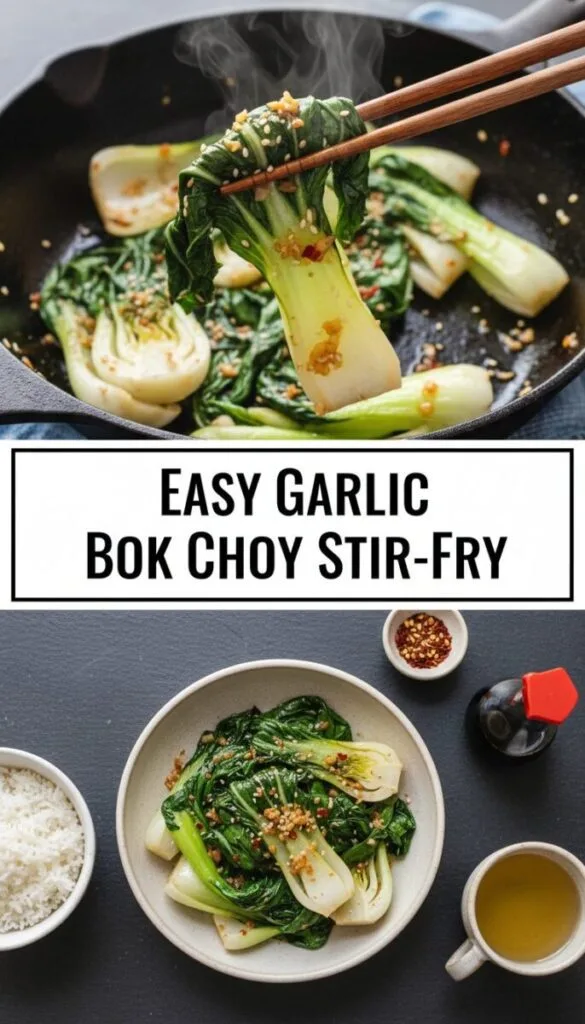
This Easy Garlic Bok Choy Stir-Fry is the kind of weeknight side dish that goes from cutting board to table in 15 minutes flat and tastes like it came from a restaurant kitchen — tender-crisp bok choy, fragrant golden garlic, and a simple savory sauce that coats every leaf without drowning it.
The secret that separates good stir-fry from great stir-fry is heat, genuinely high heat that sears the vegetables fast instead of steaming them slowly, and this recipe is built entirely around that one principle.
It works as a side dish next to almost any protein, as a base under a fried egg, or as a light vegetarian main over a bowl of steamed rice.
Jump to RecipeWhat Puts This in the Regular Rotation
Fifteen minutes from start to finish with one pan, minimal prep, and almost no cleanup — it’s the vegetable side dish that actually gets made on weeknights instead of skipped.
It’s also one of those dishes where the quality of the result is almost entirely about technique rather than ingredients, which means once you get the method right once, you’ll nail it every time after.
- Prep Time: 5 minutes
- Cook Time: 8 to 10 minutes
- Total Time: 15 minutes
- Yield: 4 servings as a side dish
The Short, Focused Ingredient List
- Baby bok choy, halved lengthwise: 6 to 8 heads (about 1.5 lbs / 680g)
- Garlic cloves, thinly sliced: 5 large cloves
- Neutral oil (avocado or vegetable): 2 tablespoons
- Low-sodium soy sauce: 2 tablespoons
- Oyster sauce: 1 tablespoon
- Sesame oil: 1 teaspoon
- Rice vinegar: 1 teaspoon
- Granulated sugar: 1/2 teaspoon
- Cornstarch: 1 teaspoon
- Water: 3 tablespoons
- Red pepper flakes: 1/4 teaspoon (optional)
- Toasted sesame seeds: for garnish
- Green onions, thinly sliced: for garnish
How to Cook It in 15 Minutes
- Whisk the soy sauce, oyster sauce, sesame oil, rice vinegar, sugar, cornstarch, and water together in a small bowl until the cornstarch is fully dissolved and set the sauce aside.
- Rinse the bok choy halves and dry them thoroughly — water left on the leaves will cause the oil to spatter violently and drop the pan temperature the moment they go in.
- Heat the neutral oil in a wok or large heavy skillet over the highest heat your stovetop can produce and let it get properly hot, about 2 minutes, until the oil shimmers and just starts to smoke.
- Add the sliced garlic to the hot oil and stir constantly for 30 to 45 seconds until it turns golden and fragrant but not brown.
- Add the bok choy cut-side down in a single layer and press gently to maximize contact with the pan.
- Let it sear undisturbed for 90 seconds until the cut side develops a light char and some golden color.
- Toss the bok choy with tongs and cook for another 60 to 90 seconds on the leafy side.
- Pour the prepared sauce over the bok choy and toss everything quickly to coat.
- Cook for another 60 seconds, stirring constantly, until the sauce thickens slightly and coats the bok choy in a glossy layer.
- Transfer immediately to a serving plate and garnish with toasted sesame seeds and sliced green onions.
Serving this over rice? Our Easy Rice Pilaf takes the base from plain steamed rice to something genuinely flavorful and pairs beautifully under this stir-fry sauce.
The Heat Rule and Why It Changes Everything
The single most important factor in stir-fry is pan temperature, and most home kitchens underestimate how hot that needs to be. You want the pan to be hot enough that the bok choy sears and takes on color in 90 seconds rather than slowly sweating out its moisture. A cast iron skillet or carbon steel wok holds high heat far better than a standard non-stick pan, which is worth knowing before you start.
Don’t overcrowd the pan — if all your bok choy won’t fit in a single layer with some space between pieces, cook it in two batches. Crowding drops the temperature immediately and turns the sear into a steam, which is how you end up with soft, waterlogged bok choy instead of the tender-crisp texture you’re going for. Serious Eats covers the science of wok hei and high-heat cooking in detail if you want to understand exactly why heat management matters more than any ingredient in a stir-fry.
Have the sauce mixed and every ingredient measured before the pan goes on the heat — this dish moves too fast to be measuring and stirring at the same time.
What to Eat It With
This stir-fry was built to sit alongside Asian-inspired mains, and our Sticky Chicken Rice Bowls are the most natural pairing — the saucy glazed chicken and the garlicky bok choy together over rice make a complete, satisfying dinner with almost no extra effort.
It also works well as a side next to a simple piece of grilled salmon, pan-seared tofu, or as a base layer in a noodle bowl with a soft-boiled egg on top.
For a full Asian-inspired weeknight spread, our Crock Pot Thai Ginger Chicken Soup is an easy main that can simmer all day while this stir-fry comes together in the last 15 minutes before serving.
Variations and Easy Swaps
No oyster sauce? Hoisin sauce is a slightly sweeter substitute that works in the same quantity. For a fully vegan version, use vegan oyster sauce or replace it with an extra tablespoon of soy sauce and a small pinch of five-spice powder.
Regular full-sized bok choy works just as well as baby bok choy — just slice the heads into quarters lengthwise instead of halves and increase the total cook time by about 2 minutes to account for the thicker stems.
Add thinly sliced shiitake mushrooms to the pan with the garlic for a heartier version with a deeper umami layer that turns this from a light side into something more substantial.
A teaspoon of freshly grated ginger added with the garlic moves the whole flavor profile toward something brighter and more complex without adding any prep time.
Nutritional Information
| Nutrient | Amount Per Serving |
|---|---|
| Calories | 95 kcal |
| Protein | 3 g |
| Carbohydrates | 7 g |
| Fats | 7 g |
These values are estimates for the stir-fry alone, not including rice or other accompaniments, based on standard ingredient data divided by 4 servings.

Storing and Reheating Leftovers
Store leftovers in an airtight container in the fridge for up to 2 days. The bok choy will soften further as it sits, which is a natural result of the sauce and residual heat, so it won’t be as crisp the next day but still tastes good.
Reheat in a hot skillet for 2 to 3 minutes rather than the microwave — the skillet revives some of the texture and keeps the sauce from becoming watery. A splash of water in the pan helps loosen the sauce if it’s thickened too much in the fridge.
This dish doesn’t freeze well since the bok choy turns very soft and releases a lot of liquid when thawed, so make only what you’ll eat within a couple of days.
Mistakes That Kill the Texture
Starting with a pan that isn’t hot enough is the most common issue and the hardest to recover from mid-cook — once the bok choy starts releasing water, you can’t build it back to the seared texture you wanted. Take the extra two minutes to really preheat the pan before anything goes in.
Adding the sauce too early before the bok choy has developed any color means you’re braising the vegetable in liquid rather than stir-frying it — the timing in the steps matters, sear first, sauce at the end.
Skipping the cornstarch in the sauce leaves you with a watery liquid that pools at the bottom of the bowl instead of a glossy coating that clings to every leaf. It’s one teaspoon and it makes a visible difference in the final result.
Easy Garlic Bok Choy Stir-Fry: A Quick and Delicious 15-Minute Meal
Course: DinnerCuisine: ChineseDifficulty: Easy4
servings5
minutes10
minutes95
kcalIngredients
6–8 baby bok choy heads, halved lengthwise (about 1.5 lbs / 680g)
5 large garlic cloves, thinly sliced
2 tablespoons neutral oil (avocado or vegetable oil)
For the Sauce:
2 tablespoons low-sodium soy sauce
1 tablespoon oyster sauce
1 teaspoon sesame oil
1 teaspoon rice vinegar
1/2 teaspoon granulated sugar
1 teaspoon cornstarch
3 tablespoons water
1/4 teaspoon red pepper flakes (optional)
For Garnish:
Toasted sesame seeds
Sliced green onions
Directions
- In a small bowl, whisk together the soy sauce, oyster sauce, sesame oil, rice vinegar, sugar, cornstarch, water, and red pepper flakes until smooth. Set aside.
- Rinse the bok choy thoroughly and pat completely dry with paper towels.
- Heat the oil in a wok or large skillet over high heat until shimmering.
- Add the sliced garlic and cook for 30 to 45 seconds, stirring constantly, until fragrant and lightly golden.
- Place the bok choy cut-side down in the pan in a single layer.
- Cook undisturbed for about 90 seconds until lightly charred and golden.
- Flip and cook for another 1 to 2 minutes until the leaves begin to wilt but the stems remain crisp-tender.
- Pour the prepared sauce over the bok choy and toss to coat evenly.
- Cook for 1 minute, stirring constantly, until the sauce thickens slightly and becomes glossy.
- Transfer to a serving platter and garnish with sesame seeds and sliced green onions before serving.
Notes
- Dry the bok choy thoroughly to prevent splattering and ensure proper searing.
Use the highest heat your stovetop allows for the best stir-fry texture.
Avoid overcrowding the pan; cook in batches if necessary.
Prepare all ingredients before heating the pan since stir-frying moves quickly.
Add fresh grated ginger with the garlic for extra flavor.