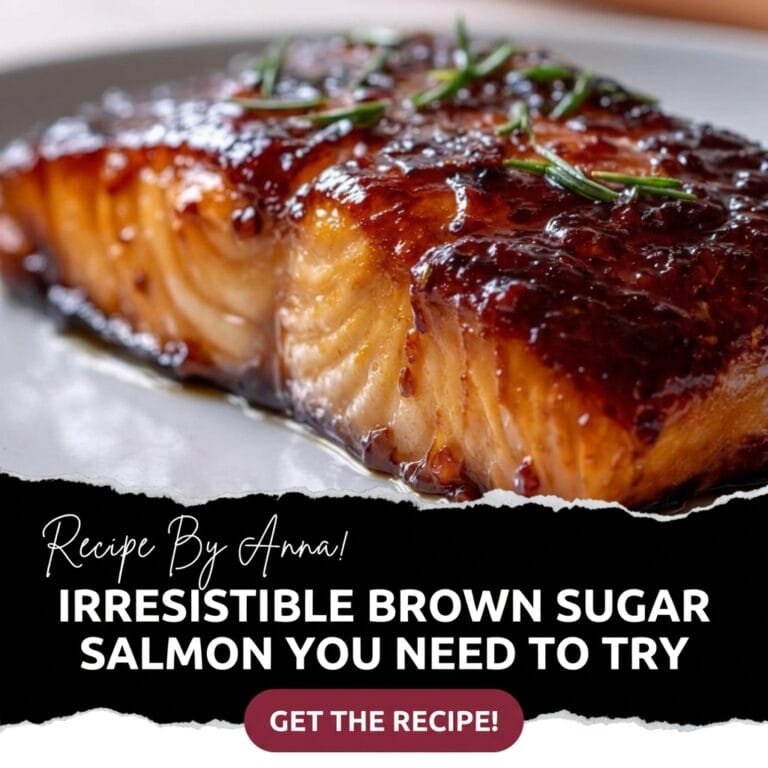
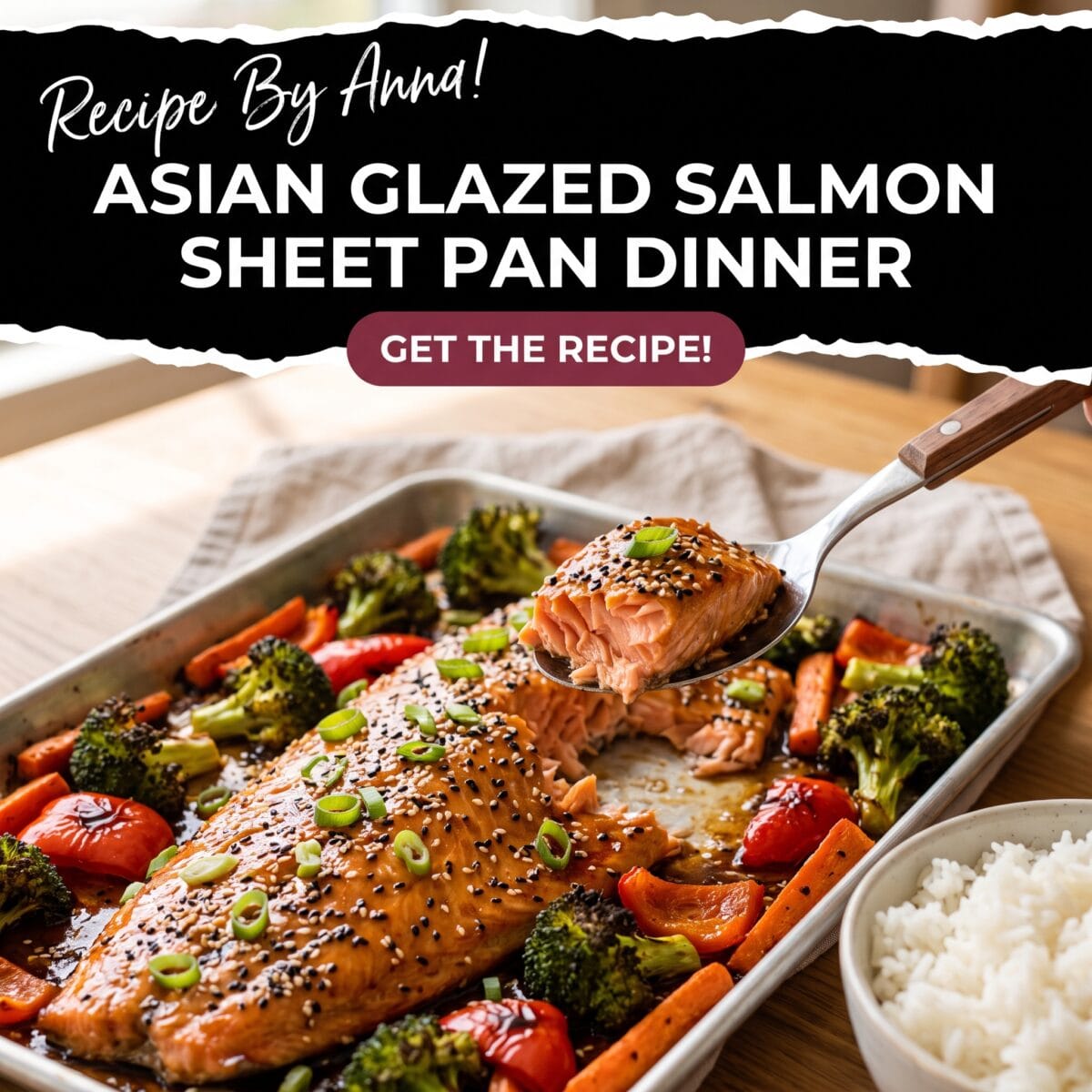
Asian Glazed Salmon Sheet Pan Dinner — Easy Teriyaki Recipe
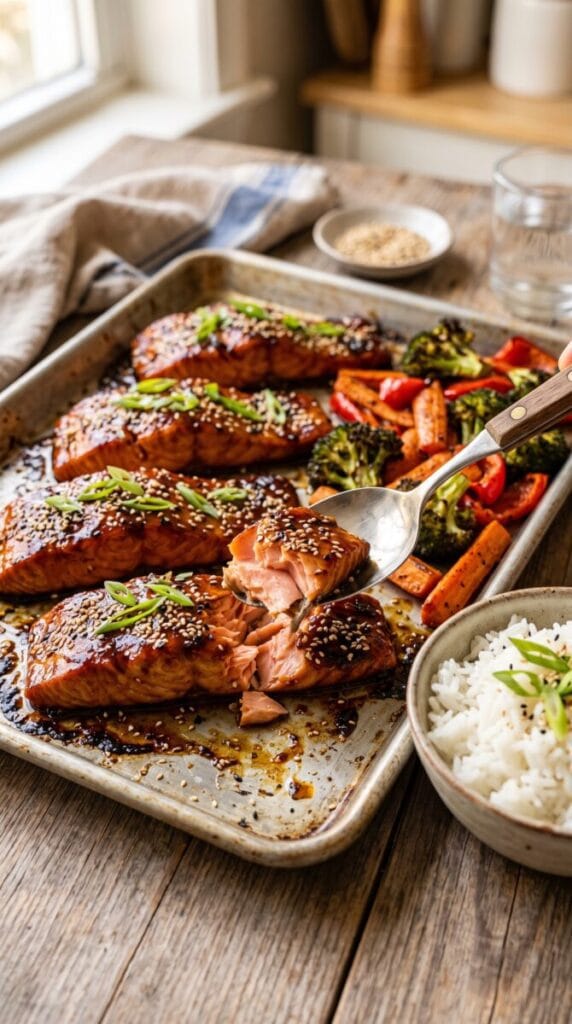
This Asian Glazed Salmon Sheet Pan Dinner is the weeknight recipe that delivers a restaurant-quality teriyaki salmon with perfectly cooked vegetables from a single pan in 25 minutes — salmon fillets lacquered in a quick homemade teriyaki glaze that caramelises under the broiler into something sticky, slightly charred at the edges, and deeply savoury, alongside broccolini, bell peppers, and snap peas that roast in the same oven at the same time.
The homemade teriyaki glaze is the detail that separates this from a basic baked salmon recipe — soy sauce, mirin, sake or rice wine, brown sugar, garlic, and ginger cooked down into a concentrated, glossy sauce that coats the salmon in a way that bottled teriyaki cannot replicate. It takes five minutes on the stovetop and produces a finish on the salmon that caramelises under the broiler into something that looks genuinely impressive from a process that is genuinely simple.
Everything on the pan finishes at the same time, nothing needs separate attention, and the cleanup is one pan and one saucepan — which is the real reason sheet pan dinners earn their devoted following in any household trying to get a complete dinner on the table on a Tuesday.
Why Sheet Pan Salmon Works Better Than Stovetop for a Weeknight
Searing salmon on the stovetop produces excellent results but requires more active attention — adjusting heat, managing spatters, flipping carefully. The sheet pan method produces equally good results with none of that attention, and the broiler finish in the last 3 to 4 minutes creates the caramelised, lacquered surface on the teriyaki glaze that direct oven heat alone can’t achieve.
The vegetables also cook better in a hot oven than alongside salmon in a skillet — the dry, high heat of the oven caramelises the edges of the broccoli and peppers in a way that a pan full of spattering salmon prevents.
- Prep Time: 10 minutes
- Cook Time: 18 to 20 minutes
- Total Time: 30 minutes
- Yield: 4 servings
What You Need
For the teriyaki glaze:
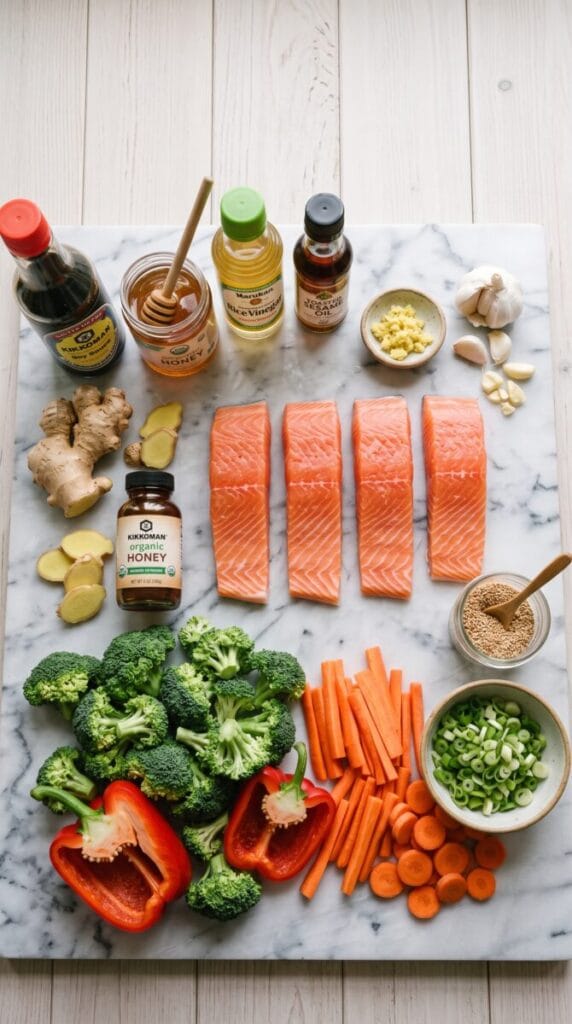
- Low-sodium soy sauce: 1/4 cup (60ml)
- Mirin: 2 tablespoons
- Sake or dry sherry: 2 tablespoons
- Brown sugar, packed: 2 tablespoons
- Garlic cloves, minced: 2
- Fresh ginger, grated: 1 teaspoon
- Sesame oil: 1 teaspoon
- Cornstarch: 1 teaspoon dissolved in 1 tablespoon cold water
For the salmon:
- Skin-on salmon fillets, about 6 oz each: 4
- Fine sea salt: 1/2 teaspoon
- Black pepper: 1/4 teaspoon
For the sheet pan vegetables:
- Broccolini or broccoli florets: 2 cups
- Red bell pepper, thinly sliced: 1
- Snap peas or green beans: 1 cup
- Olive oil or sesame oil: 2 tablespoons
- Soy sauce: 1 tablespoon
- Garlic powder: 1/4 teaspoon
- Fine sea salt and black pepper: to taste
For serving and garnish:
- Steamed jasmine or sushi rice: for serving
- Toasted sesame seeds: 1 tablespoon
- Green onions, thinly sliced: 3
- Fresh lime wedges: for serving
How to Make It
Making the teriyaki glaze:
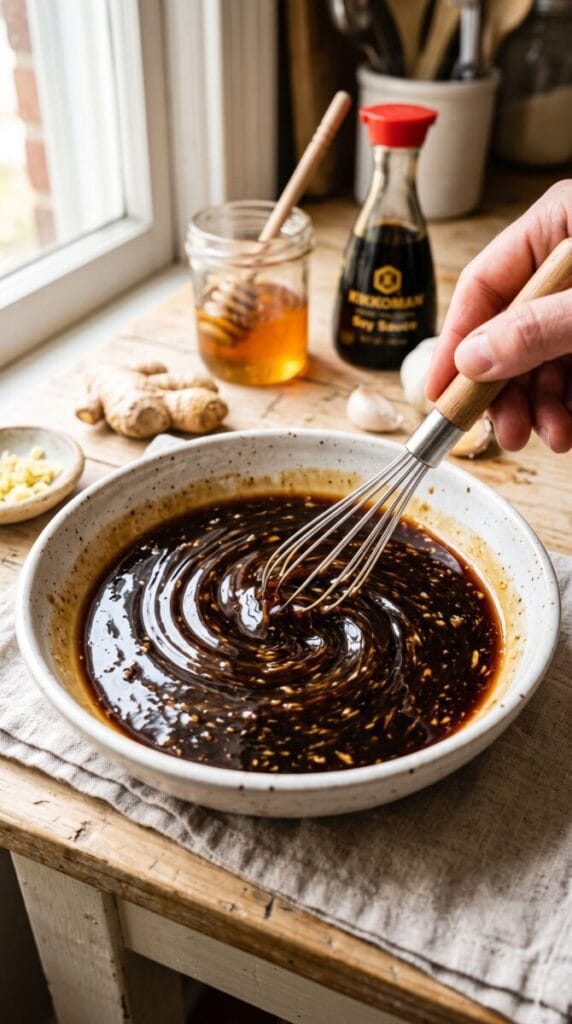
- Combine the soy sauce, mirin, sake, brown sugar, garlic, and ginger in a small saucepan over medium heat and bring to a gentle simmer, stirring until the sugar dissolves.
- Stir in the cornstarch slurry and cook for 1 to 2 minutes, stirring constantly, until the sauce thickens to a coating consistency — it should coat a spoon and drip off slowly. Remove from heat and stir in the sesame oil.
- Set aside — the glaze can be made up to a week ahead and stored in the fridge. It thickens further when cold; thin with a splash of soy sauce or water before using if needed.
Preparing and cooking the sheet pan dinner:
- Preheat the oven to 425°F (220°C) and line a large baking sheet with foil — foil rather than parchment because the broiler finish at the end produces temperatures that can darken parchment.
- Toss the broccolini, bell pepper strips, and snap peas with the olive oil, soy sauce, garlic powder, salt, and pepper until evenly coated. Spread across the baking sheet in a single layer, leaving a space in the center for the salmon.
- Pat the salmon fillets completely dry with paper towels — dry salmon creates a better glaze adhesion surface and prevents steaming rather than caramelising under the broiler.
- Season the salmon lightly with salt and pepper, then place skin-side down in the center of the baking sheet among the vegetables.
- Spoon or brush a generous layer of the teriyaki glaze over each salmon fillet — reserve about a third of the glaze for a second application and for serving.
- Roast at 425°F for 12 to 14 minutes, depending on the thickness of the fillets — a 1-inch fillet is perfectly cooked at 12 minutes, a 1.5-inch fillet needs 14.
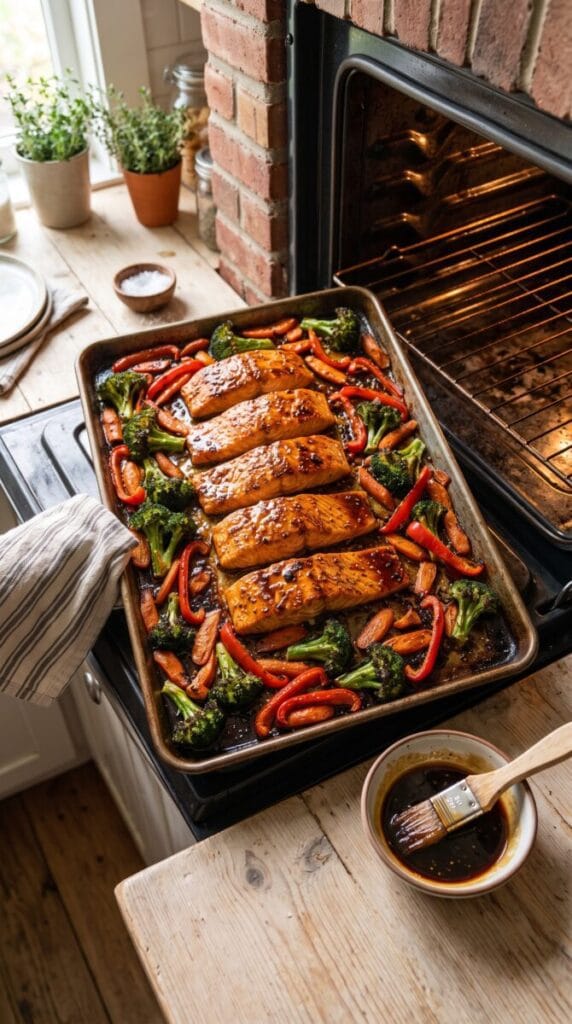
- Remove the pan from the oven and brush the salmon with another layer of teriyaki glaze, then switch the oven to broil (high) and return the pan to the top rack for 2 to 3 minutes until the glaze caramelises and the salmon has a few darkened, lacquered spots.
- Watch the broiler closely — the glaze goes from perfectly caramelised to burnt in under a minute. Stand at the oven during the broiler phase.
- Serve immediately over steamed rice, drizzle the remaining glaze over everything, and garnish with sesame seeds, sliced green onions, and lime wedges.
Love teriyaki-glazed salmon and want a cold version of the same flavour profile? Our Shrimp Avocado Mango Bowls use the same sweet-soy-sesame direction in a fresh, no-cook bowl format — a great companion recipe to rotate through the same Asian-inspired dinner rotation on nights when you want something cold and light instead of warm and glazed.
The Glaze, Broiler, and Timing Details That Make the Difference
Applying the glaze in two stages — once before roasting and once right before the broiler — produces a thicker, more lacquered finish than applying it all at once. The first layer bakes into the salmon surface and provides the flavour foundation; the second layer caramelises under the broiler heat and produces the glossy, sticky exterior that makes this look like a restaurant dish.
Drying the salmon before glazing is the prep step most people skip and the one that most affects how well the glaze adheres — moisture on the salmon surface dilutes the glaze before it can set and prevents the caramelisation the broiler is supposed to create. Thirty seconds with paper towels before the glaze goes on produces a visibly better result.
The broiler phase is short and requires full attention — the sugar in the teriyaki glaze means the difference between a beautifully caramelised surface and a burnt one is about 90 seconds. Position the rack in the upper third of the oven rather than directly under the element, and keep the oven door cracked so you can monitor without heat loss. According to Serious Eats, the Maillard reaction and caramelisation that produce the lacquered teriyaki finish both accelerate dramatically under broiler heat compared to standard roasting temperature — the same glaze that barely colours at 425°F in 15 minutes will caramelise in under 3 minutes under a direct broiler, which is why the transition from oven to broil is the technique that produces the glossy finish rather than a pale, baked one.
What to Serve Alongside
Steamed jasmine or sushi rice is the most natural base that absorbs the teriyaki glaze beautifully when the extra sauce is drizzled over the bowl at serving — it is the bed that makes this a genuinely complete meal from a single pan.
For another quick Asian-inspired side that cooks in the same oven window as the salmon, our Easy Garlic Bok Choy Stir-Fry can be made in a second skillet on the stovetop while the sheet pan is in the oven — the garlic-sesame flavour profile connects naturally to the teriyaki glaze and adds a warm green vegetable that the sheet pan vegetables don’t fully cover.
Our Spring Roll Salad with Peanut Dressing works as a cold, fresh companion on the same table — the peanut dressing’s brightness cuts through the richness of the teriyaki glaze and provides a textural contrast that makes the whole meal feel more composed than a single protein and vegetables.
Variations That Stay in the Asian Glazed Direction
Swap the salmon for thick-cut chicken thighs — bone-in skin-on thighs work beautifully with the same teriyaki glaze but need 35 to 38 minutes at 425°F before the broiler finish. Check internal temperature to 165°F rather than using timing alone.
Use the same glaze over tofu — press firm tofu for 30 minutes, cut into thick slabs, roast on the sheet pan at 425°F for 20 minutes flipping once, then glaze and broil for the same 2 to 3 minutes. The teriyaki glaze caramelises on tofu in exactly the same way as on salmon and produces a genuinely impressive plant-based sheet pan dinner.
Add a layer of sliced zucchini, asparagus spears, or baby bok choy to the vegetable mix for variety — any vegetable that can handle 15 minutes at 425°F without disintegrating works on this pan, and changing the vegetables keeps the recipe feeling fresh week to week with the same glaze.
Recommended Kitchen Tools for the Best Asian Glazed Salmon Sheet Pan Dinner
6 essential tools for perfectly glazed salmon, tender vegetables, and caramelized edges with minimal cleanup.This easy sheet pan dinner needs just a few reliable tools to make prep simple and cleanup quick. These 6 essential tools help you get tender salmon, flavorful vegetables, and a glossy caramelized glaze every time.

Rimmed Sheet Pan
A sturdy rimmed baking sheet gives the salmon and vegetables enough space to roast evenly while keeping the flavorful glaze contained.

Parchment Paper
Lining the sheet pan prevents the sticky Asian glaze from baking directly onto the pan, making cleanup much easier.

Small Mixing Bowl
Perfect for combining the soy sauce, honey, garlic, ginger, sesame oil, and other glaze ingredients into a smooth mixture.

Silicone Basting Brush
A silicone brush makes it easy to coat the salmon evenly with the glaze and add another layer while it cooks for extra flavor.

Instant-Read Thermometer
Salmon cooks quickly, so an instant-read thermometer helps you check the thickest part and avoid accidentally overcooking the fish.

Fish Spatula
The thin, flexible edge slides easily underneath delicate salmon fillets, making them much easier to transfer from the sheet pan without breaking.
As an Amazon Associate we earn from qualifying purchases.
Nutritional Information
| Nutrient | Amount Per Serving (salmon and vegetables, without rice) |
|---|---|
| Calories | 380 kcal |
| Protein | 37 g |
| Carbohydrates | 18 g |
| Fats | 16 g |
These values are estimates based on a 6 oz skin-on salmon fillet with the full glaze and the sheet pan vegetables, without rice. Salmon is one of the most nutritionally dense proteins available — high in omega-3 fatty acids, B vitamins, and potassium. Adding a cup of steamed jasmine rice per serving adds approximately 200 calories and 45 grams of carbohydrate.
Storing and Reheating
Store leftover salmon and vegetables in an airtight container in the fridge for up to 2 days — salmon deteriorates faster than most proteins and is genuinely best eaten within 48 hours of cooking. The teriyaki glaze stiffens on cold salmon but softens again immediately on reheating.
Reheat in a 300°F oven for 8 to 10 minutes rather than the microwave — the low, gentle oven heat warms the salmon through without drying out the flesh the way microwave heat does to fish. Brush a small amount of the reserved glaze over the reheated salmon before serving to restore the surface appearance.
Cold leftover teriyaki salmon flaked into a rice bowl with cucumber, avocado, edamame, and a drizzle of the remaining glaze is one of the best next-day lunches possible — genuinely better than most hot meals that required more effort to make.
Mistakes That Dry Out the Salmon or Prevent the Glaze from Caramelising
Overcooking the salmon before the broiler phase leaves no margin for the 2 to 3 minutes of broiling that caramelises the glaze — if the salmon is fully cooked at the end of the roasting phase, the broiler will overcook it by the time the glaze caramelises. Pull the salmon at 90 percent done during the roasting phase (it should still look slightly translucent in the very center) and let the broiler finish both the cooking and the glaze simultaneously.
Not watching the broiler phase directly is the single most common mistake in any glazed-protein recipe — a teriyaki glaze contains enough sugar that it goes from perfectly caramelised to visibly burnt in under 90 seconds under direct broiler heat. Put down whatever else you’re doing for the 2 to 3 minutes the pan is under the broiler and keep the oven door ajar so you can monitor without losing heat.
Crowding the vegetables on the baking sheet prevents them from roasting and causes them to steam instead — a sheet pan full of overlapping vegetables produces soft, slightly wet vegetables rather than the caramelised-edged roasted ones that make this dinner genuinely satisfying. Use the largest sheet pan you have and leave space between pieces; roast in two batches if the pan is too small to spread everything in a single layer.
Asian Glazed Salmon
Sheet Pan Dinner
Tender salmon lacquered in homemade teriyaki glaze and roasted alongside broccolini, bell peppers, and snap peas—all finished under the broiler for a glossy, caramelized surface.
Ingredients
Instructions
Add the soy sauce, mirin, sake, brown sugar, garlic, and ginger to a small saucepan over medium heat. Bring to a gentle simmer, stirring until the sugar dissolves.
Stir together the cornstarch and cold water. Pour the slurry into the simmering sauce and cook for 1–2 minutes, stirring constantly, until the glaze coats a spoon and drips slowly.
Remove the saucepan from the heat and stir in the sesame oil. Set aside while preparing the sheet pan.
Preheat the oven to 425°F (220°C). Line a large rimmed baking sheet with foil to safely handle the broiler finish.
Toss the broccolini, bell pepper, and snap peas with the oil, soy sauce, garlic powder, salt, and pepper. Spread them in a single layer, leaving space in the center for the salmon.
Pat the salmon fillets completely dry with paper towels. Season lightly with salt and pepper, then place skin-side down in the center of the baking sheet.
Brush or spoon a generous layer of teriyaki glaze over each fillet. Reserve about one-third of the glaze for the broiler stage and serving.
Roast for 12–14 minutes, depending on the thickness of the salmon. A 1-inch fillet generally needs about 12 minutes; a thicker fillet may need closer to 14.
Remove the pan from the oven and brush the salmon with another layer of glaze. Switch the oven to high broil.
Return the pan to the upper third of the oven and broil for 2–3 minutes, until the glaze is glossy and caramelized with a few darkened spots. Watch continuously to prevent burning.
Kitchen Notes
Surface moisture dilutes the glaze and prevents it from adhering and caramelizing properly.
The first layer bakes into the fish; the second creates the glossy, lacquered finish under the broiler.
The sugary glaze can go from caramelized to burned in under a minute. Stay at the oven throughout this stage.
Overlapping vegetables trap steam. Spread everything into one layer so the edges can caramelize.
Pull the salmon from roasting when it is about 90% cooked. The broiler will finish cooking the center.
Refrigerate the glaze for up to one week. Thin cold glaze with a splash of water or soy sauce before using.
Variations
Use thick chicken thighs and roast at 425°F for approximately 35–38 minutes before glazing and broiling. Cook poultry to 165°F (74°C).
Press firm tofu, cut it into thick slabs, and roast for 20 minutes, flipping once. Glaze and broil for 2–3 minutes.
Add asparagus, sliced zucchini, baby bok choy, or green beans. Choose vegetables that can handle 15 minutes at high heat.
Stir sriracha, chili garlic sauce, or red pepper flakes into the glaze for a spicy-sweet finish.
Nutrition & Storage
Estimates include salmon, glaze, and vegetables, but not rice. One cup of cooked jasmine rice adds about 200 calories.
Store salmon and vegetables in an airtight container for up to 2 days.
Warm in a 300°F oven for 8–10 minutes. Brush with a little reserved glaze before serving to restore the glossy surface.
Flake cold salmon into a rice bowl with cucumber, avocado, edamame, green onions, and extra teriyaki glaze.
Serving Ideas
- Steamed jasmine or sushi rice
- Garlic bok choy
- Cold spring roll salad
- Asian cucumber salad
- Edamame with sesame salt
- Large rimmed sheet pan
- Aluminum foil
- Small saucepan
- Pastry or silicone brush
- Instant-read thermometer, optional