
Gluten-Free Cornbread Bites with Jalapeño Honey Butter
Cornbread’s best part has always been the edge — that crisp, butter-fried border where the batter meets the hot pan — and a regular pan of cornbread only gives you one ring of it around a big soft middle. These bites fix the math. The same cornbread batter goes into a mini muffin tin instead, and suddenly every single bite is its own pan: golden fried edge, tender honey-sweet middle, and thirty of them from one bowl. They were built for chili night, but I’ve watched a tray of them disappear before the chili made it off the stove, eaten like popcorn by people who kept saying they weren’t hungry.
The gluten-free part is the quiet surprise of this recipe, because here’s the truth nobody puts on the box: cornbread is the easiest gluten-free bake in the entire oven. Real Southern cornbread was cornmeal, buttermilk, egg, and fat for most of its history — the flour was a later addition, a softening agent that northern kitchens voted in. Take the flour out and you’re not deconstructing anything; you’re walking the recipe back toward where it started. One cup of gluten-free flour blend keeps the crumb tender, two eggs do the binding that a quarter-cup of wheat used to pretend to do, and not one person at a gluten-free table will taste a compromise. There’s no xanthan gum in my ingredient list, because there’s nothing here that ever needed holding together that badly.
And the butter, which deserves its own paragraph because it’s half the title. Jalapeño honey butter is a compound butter — softened butter whipped with honey and a minced jalapeño — and it takes four minutes and a fork. You make it an hour ahead, or a week ahead, and it sits in the fridge getting slowly more interesting while the cornbread hasn’t even been mixed. On a hot bite, it melts into the ridges; the honey lands first, the heat arrives a half-second later riding the fat, and the whole thing eats like cornbread that went on a nice vacation. The bites are sweet and golden and gentle. The butter is where the recipe keeps its opinions.
One family note before the flour flies: this site’s gluten-free shelf is small — the soft gluten-free pretzel bites were holding it down alone — and these are its Southern annex. Same bites-format energy, completely different bread, and both of them prove the same point: gluten-free baking only gets difficult when you ask it to be something it isn’t.
The Corn Question
Start with the ratio, because it’s the recipe’s whole character: one and a half cups of cornmeal to one cup of gluten-free flour. Cornmeal-first is the Southern order of operations — the wheat-inclined version of this recipe flips those numbers, and the difference is exactly what you’d guess. A cornmeal-heavy bite tastes of corn, toasts harder at the edge, and carries the slightly sandy, honest texture that makes cornbread taste like cornbread instead of like yellow cake doing a job. The flour blend is the junior partner here, softening the crumb and rounding the bite, and it earns its cup. But the corn comes first, and the recipe reads differently with the numbers that way.
Now the gluten-free mechanics, which are simpler than the baking aisle would like you to believe. Gluten is wheat’s elastic protein, and its job in most bread is to trap gas and hold structure. Cornbread never asked much of it — the batter is loose, the rise comes from baking powder and baking soda meeting buttermilk, and the structure comes as much from the eggs setting as from anything stretching. So the conversion is almost insultingly direct: swap the wheat flour for a blend, add one extra egg to cover the binding, and carry on. The one thing I’ll insist on is a rice-based all-purpose gluten-free blend — the kind that says it substitutes one-for-one — because this recipe doesn’t have enough liquid to hydrate almond flour or coconut flour, and both of those will make a completely different, sadder bite.
Then the ten-minute rest, which is the step that separates tender cornbread from gritty cornbread, gluten or no gluten. Cornmeal is dry and hard and it hydrates slowly — pour batter straight into the oven and the meal stays in little pebbles that read as sand between your teeth. Let the batter sit ten minutes before it bakes, and the cornmeal drinks the buttermilk, softens, and bakes into something smooth. It’s the difference between a bite that tastes ground and a bite that tastes poured, and it costs you the time it takes to butter the tin and answer a text.
⏱️ 15 MINUTES HANDS-ON | 🌽 ABOUT 30 BITES FROM ONE BOWL | 🧈 THE BUTTER MAKES ITSELF AHEAD
- Prep Time: 15 minutes, plus a 10-minute batter rest
- Bake Time: 10-12 minutes at 400°F
- Butter Time: 4 minutes, an hour or a week ahead
- Total Time: 35 minutes butter to board, first bite to last
- Yield: about 30 bites — the crowd side for one pot of chili
The Tin Argument
The equipment is one tin and one bowl, and the tin is the strategy:
- Mini muffin tin — 24 cups is standard; a second tin speeds things up but two rounds of baking is a perfectly honorable life
- Butter for the tin — real soft butter, a swipe in every cup with a fingertip or the back of a spoon; this is not the nonstick-spray moment, because the butter is a flavor
- Two bowls and a whisk — one dry, one wet
- A fork — the entire apparatus for the honey butter
- Small offset spatula or butter knife — for freeing the bites
- Cooling rack — three minutes of rest, then out
Here’s the tin argument itself, and it’s the reason this recipe exists in bite form at all. The edge of a cornbread — the crust, the fried gold — is the part every cook fights over, and a full pan of cornbread mints exactly one ring of it around a soft interior that’s honestly just fuel for butter. A mini muffin tin turns the geometry inside out: each cup is its own small pan, so every bite gets its own ring of edge, and the ratio of crust to middle goes from one-strip-per-pan to most-of-every-bite. Multiply that by thirty cups and one bowl of batter becomes thirty arguments settled in advance. If you own a cast-iron cornstick pan, it plays the same game in a more dramatic accent — use it with pride and call the result dinosaur bread for anyone under ten.
The other tin decision is the butter in the cups, and it is not a convenience. Batter going into a buttered cup bakes; batter going into a cup with a little pool of hot melted butter fries. The distinction sounds precious and tastes enormous — the edges of these bites come out with a lace-crisp, almost fritter-like shell that no spray ever produced. So smear the cups generously, and if the butter pools, let it. The bites will tell on themselves when you pull them out.
Ingredients (With Labels)
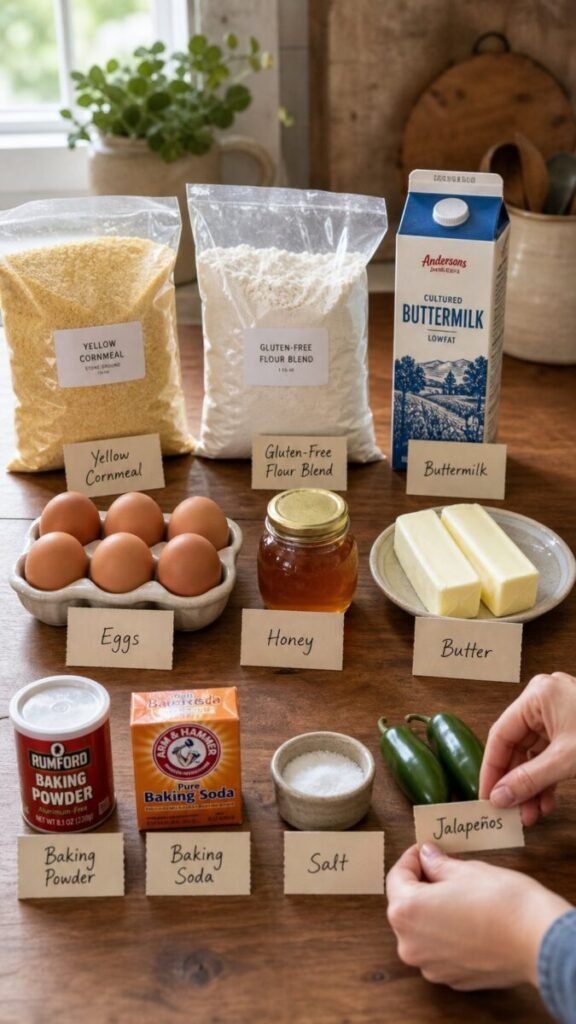
🌽 The Dry Side
- Yellow cornmeal: 1½ cups — medium or fine grind, not coarse
- Gluten-free flour blend: 1 cup — rice-based, one-for-one style
- Baking powder: 2 teaspoons
- Baking soda: ½ teaspoon
- Salt: 1 teaspoon
🥛 The Wet Side
- Buttermilk: 1¼ cups
- Eggs: 2 — the second one is the gluten’s replacement
- Honey: ⅓ cup, plus a little more for the tops if you’re feeling it
- Butter, melted: ½ cup (1 stick), plus soft butter for the tin
🌶️ The Jalapeño Honey Butter
- Butter, softened: ½ cup (1 stick), salted
- Honey: 2 tablespoons
- Jalapeño: 1, minced very fine — seeds and ribs in for honest heat, out for a murmur
- Salt: one small pinch
Step by Step How to Make
- Step 1 — Butter first, always. Make the jalapeño honey butter before anything else, because it wants an hour to sit and get interesting. Mince the jalapeño as fine as your patience allows — the smaller the pieces, the more the heat spreads through the butter instead of ambushing someone at bite nine. Mash it into the softened butter with the fork, along with the honey and the pinch of salt, until the mixture is one pale, flecked, whipped-looking mass. Taste it. It should be sweet first, warm second. Cover it and leave it on the counter for an hour, or in the fridge for up to a week — the heat builds slowly in the cold, which is a fact I use to my advantage on party days.
- Step 2 — The two bowls. Heat the oven to 400°F. In one bowl, whisk the cornmeal, flour blend, baking powder, baking soda, and salt until they’re one even color — GF blends settle in the bag, so this whisk is doing real mixing work. In the other, whisk the buttermilk, both eggs, the honey, and the melted butter until smooth and glossy. The honey wants to sit on the bottom of the bowl; give it thirty honest seconds of whisking so it doesn’t.
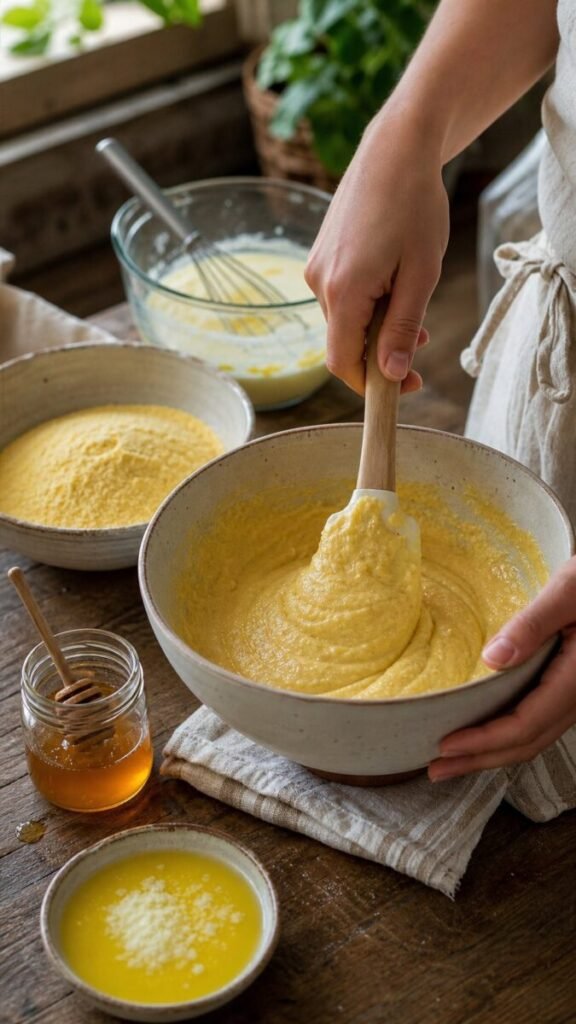
- Step 3 — Combine and rest. Pour the wet into the dry and stir with the spatula just until the dry streaks disappear — a lumpy batter is a correct batter here, and the goal is mixed, not smooth. Then stop, cover the bowl, and walk away for ten minutes while the cornmeal drinks the buttermilk. This is the anti-grit rest, and it is the most important idle ten minutes in the recipe: skip it and the bites bake sandy, keep it and they bake tender. Butter the mini muffin cups generously while you wait, and let the oven finish heating.
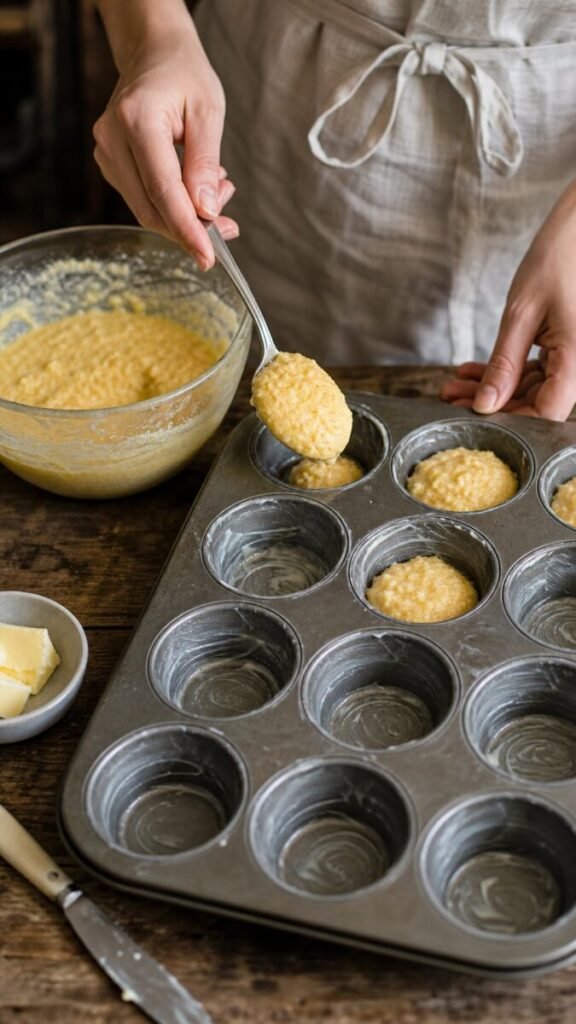
- Step 4 — Fill the cups. Drop a rounded tablespoon of the rested batter into each buttered cup — about three-quarters full, which leaves the bite a dome’s worth of ambition without an overflow’s worth of cleanup. A second mini tin takes the rest of the bowl; a single tin takes two rounds, with the second round benefiting from a fresh swipe of butter in the warm cups. Any leftover batter after the second round gets baked as a lucky twenty-ninth and thirtieth bite, and the cook decides who those are for.
- Step 5 — The bake. Bake 10 to 12 minutes, until the bites are domed, deep gold at the edges, and a toothpick in the center of the tallest one comes out clean. The window is shorter than full-size cornbread — minis cross from golden to dry in about two minutes, so start checking at ten and trust the color more than the clock. Pull the tin, and let the bites rest three minutes right where they are: they finish setting, they steam-free themselves from the butter, and the tin cools enough to handle.
- Step 6 — Out and to the table. Run the thin spatula or butter knife around each bite and lift them out — they should release with a gentle resistance that says the butter did its frying. Pile them on a board or in a basket, set the honey butter beside them at room temperature, soft enough to sink a bite into, and put the whole arrangement in the middle of the table with no ceremony at all. The correct first move is a hot bite dragged through cold-sweet-warm butter, eaten standing up, followed by the quiet decision to have a second before sitting down. Serve these with chili and you’ll make them again on schedule; serve them to guests alone and watch the chili become the side dish.

The gluten-free pretzel bites are this recipe’s other half — one shelf, two breads, and a snack table where nobody has to ask what’s safe to eat.
Anna’s Kitchen Notes
The blend matters more than the brand. Any rice-based, one-for-one gluten-free flour works here, gum or no gum — the gum is harmless in a recipe this moist and unnecessary in a recipe that never leaned on gluten. What doesn’t work is swapping in a single-flour alternative: almond flour makes a dense, oily bite, coconut flour drinks the entire bowl of buttermilk and still wants more, and oat flour lands somewhere soft and apologetic. Buy the blend, measure the single cup, and move on with your life.
Buttermilk is doing two jobs. It brings the tang that makes cornbread taste like it comes from somewhere, and it wakes up the baking soda — that half-teaspoon fizzes into lift the moment they meet, which is why the batter goes into a hot oven without a long delay after mixing. No buttermilk? A cup and a quarter of milk with a tablespoon of lemon juice, rested ten minutes, gets you the same tang and the same fizz. The rest period and the milk trick even use the same ten minutes, which the organized will notice and exploit.
Make the butter a day early when you can. An hour on the counter is the minimum for the flavors to marry, but overnight in the fridge is the real magic: the jalapeño’s heat keeps infusing into the fat, and day-two butter is noticeably warmer and rounder than day-one. This is the only recipe I know where the condiment improves while it waits, which makes it the world’s easiest head start on a party.
These reheat like they remember being born. Day-old bites go back into a 300°F oven for five minutes and come out with the edges re-crisped and the middles re-steamed, close enough to fresh that I’ve stopped apologizing for them. The microwave makes them soft and steamy — edible, popular with kids, and wrong — so the oven is the reheat of record. Cold from the basket, straight to the butter, is the third legitimate temperature, mostly at breakfast.
Double for the potluck. Everything about this batch doubles cleanly except the tin count: two bowls of batter, four tins’ worth of baking in two rounds, and one doubled log of butter that keeps a week regardless. A double batch is what I bring to the chili potluck every winter, transported in the tin and re-warmed in the host’s oven for five minutes while the butter softens on the counter — arriving, in effect, as a hot bread course I spent twenty minutes on.
The Side Board
Cornbread’s first job is chili, and the vegetarian chili mac is the pot these bites were born to stand beside — the honey butter melting into the chili’s top layer is a two-recipe system that’s greater than its parts. The same goes for soup nights: the slow cooker corn chowder makes a corn-on-corn dinner my kids specifically request, and the hearty white bean soup is the classic bean-and-cornbread pairing that needs no introduction from me.
For the summer version of the same board, the Frito corn salad shares the corn gene and travels to every cookout in one bowl, and the buttermilk biscuits are the other half of the bread basket when the table wants both. The jalapeño cream cheese dip is the heat-loving cousin of the butter — make them the same week and the jalapeños you buy do double duty.
Same Batter, Other Bites
Jalapeño-cheddar bites. Fold a minced jalapeño and half a cup of sharp cheddar right into the batter, and the bites arrive pre-argued — heat and cheese inside, honey butter on top for anyone who wants the full conversation. This is the loaded version the boxed-mix crowd grew up on, and it earns its keep at a tailgate.
Bacon and honey. Three slices cooked crisp and crumbled into the batter, with the honey butter plain — smoke, sweet, and corn in one bite, which is roughly the flavor map of the entire American South.
The skillet concession. Pour the whole batter into a hot, well-buttered 8-inch cast-iron skillet and bake 20 to 25 minutes at 400°F, and you have classic pan cornbread with a fried crust all the way around — one edge instead of thirty, but a deep one, and the skillet version is what I make when the table is small and the evening is long. Cut it in wedges; serve the butter in a ramekin; change nothing else.
Cornstick pans and dinosaur bread. The batter takes to cast-iron cornstick pans beautifully — preheat the pan with the butter in it so the batter sizzles on contact, and knock eight minutes off the bake. In my house these are called dinosaur bread, the spikes get fought over, and I’ve stopped pretending I don’t shape the argument by which pan I reach for.
The butter, elsewhere. The jalapeño honey butter outlives the bites and improves everything it lands on: biscuits, corn on the cob, a baked sweet potato, scrambled eggs, the cut side of a piece of toast standing in for cornbread on a weekday. A log of it in the freezer is the fastest way I know to make a plain dinner feel deliberate.
The sweet route. Skip the jalapeño for plain honey butter and add a half-cup of corn kernels to the batter — the pops of sweetness against the honey make a dessert-adjacent bite that lands somewhere near spoonbread, and nobody at the children’s table has ever once complained about the direction.
The Batch Math
| Nutrient | Per Serving (4 bites + a teaspoon of butter) |
|---|---|
| Calories | 300 kcal |
| Protein | 4 g |
| Carbohydrates | 38 g |
| Fats | 13 g |
Estimates as written, the buttered tin counted and the honey brushed on tops left to your own druthers. This is honest bread math, not diet math — four bites and a schmear is a side, not a meal, and the numbers say so gently. The grocery math is the friendlier ledger: cornmeal costs almost nothing, buttermilk and eggs are cheap pantry staples, and the single cup of gluten-free blend is the only line item carrying the GF tax. One cup per batch, thirty bites — the flour bill comes to about a dollar, which makes this the cheapest gluten-free bread on the entire site by a distance you could measure from the porch.
The Honey Butter Hour
Storage, in the order a real kitchen needs it. The butter keeps a week in the fridge, well-wrapped, and three months in the freezer — I roll the extra into a log in parchment so I can cut coins off it straight onto hot bread, a trick that makes weeknight leftovers feel catered. Bring it to room temperature before serving, and if you’ve forgotten, thirty seconds of attention in a stand mixer or a vigorous fork-whipping restores the whipped texture; the microwave melts it instead of softening it, and melted is a different condiment.
The bites themselves keep two days at room temperature in a container that closes — and this is one of those breads that prefers the counter to the fridge, because cold stales cornbread fast and there’s nothing in a plain cornbread bite that needs refrigerating. Day two wants the 300°F oven reheat, five minutes, and the butter coin on top while they’re hot. The freezer takes the baked bites for two months, airtight, straight from frozen into a 350°F oven for eight minutes when a chili emergency presents itself.
And the make-ahead plan for a party, in full: butter made Tuesday, batter mixed Saturday afternoon, bites baked Saturday at four, cooled, and re-warmed at 300°F for six minutes as the doorbell starts doing its work. The bites come out hot and golden as if you’d been baking all day, the butter sits soft on the board, and the only person who knows the timeline is you — and me, and I’ve never told.
Where It Goes Wrong
Sandy, gritty bites. The batter skipped its ten-minute rest, or the cornmeal was coarse-ground when the recipe asked for medium. The rest is the fix that costs nothing: cornmeal hydrates slowly, and an unhydrated grain is a pebble. If your bag says coarse, it’ll still work — give the batter fifteen minutes instead of ten and accept a slightly more rustic bite.
Crumbly bites that fall apart. The binding went missing — one egg instead of two, or an almond-flour substitution where the rice blend should be. In a wheat cornbread, the gluten quietly held things together; here, that job belongs entirely to the eggs, so both of them go in, every time. A bite that halves cleanly when broken is right; a bite that shatters into gravel is telling you about the eggs.
Dry, chalky middles. Overbaked, by two minutes or by a hot oven — minis move fast at 400°F, and the window between golden and gone is shorter than full-size cornbread’s. Pull at deep gold with a clean toothpick, and remember they keep cooking in the hot tin during the three-minute rest. The second batch is always better calibrated than the first; the first batch’s job is to teach the oven to you.
Stuck in the tin. The cups went in dry, or the bites sat in the tin past the rest and the honey in the batter welded itself to the metal. Butter every cup like the butter is the point — because it is — and turn the bites out after three minutes, not twenty. A thin blade run around the edge rescues even the stubborn ones, gently.
Pale, soft edges. The tin wasn’t buttered enough to fry, or the oven didn’t reach a full 400°F before the batter went in. The edges of these bites are the recipe’s whole argument, and they come from fat and heat meeting on contact — give the cups a generous smear, and let the oven preheat the whole way. An oven thermometer is the cheapest honesty a kitchen can buy.
The butter broke or weeps. The butter was too warm when whipped — melted-adjacent butter takes on a greasy, separated look instead of a whipped one. It hasn’t failed; it has just lost its structure. Re-chill it for fifteen minutes and re-whip with the fork, and it comes back fluffy and apologetic, ready for the board. Cold butter, on the other hand, simply refuses — set it out for an hour before whipping and both problems stay hypothetical.
Cornbread Questions
Can I make these with regular flour instead?
Yes, and the recipe’s ancestry thanks you — one cup of all-purpose flour for the blend, everything else unchanged, and you’ve made classic wheat cornbread bites. The second egg can stay for a rich, sturdy bite or drop out for a more delicate one; I’d keep it, because a bite that gets handled wants the structure. The recipe was always a both-ways recipe; gluten-free is just the direction with fewer people at the table who have to ask.
Do I need xanthan gum in the gluten-free version?
No. If your blend already contains gum, nothing bad happens — but this batter never depended on gluten’s elasticity, so there’s nothing for the gum to do. The eggs and the moisture do the structural work, the cornmeal provides the texture, and the gum sits there like a life jacket on a man in a kiddie pool. Save your concern for recipes that need it.
How spicy is the jalapeño honey butter?
As written — one jalapeño, seeds and ribs in, minced fine — it’s a slow, building warmth that most tables read as friendly by the second bite. The heat also strengthens as the butter sits, so day-two butter bites back harder than day-one. For a murmur, seed the pepper; for a headline, add the second jalapeño and warn your guests like a civilized person.
Can I make the batter ahead and bake later?
Partly. The batter’s ten-minute rest can stretch to thirty with no harm, but much past that the baking soda loses its fizz and the bites bake a little dense and flat. The better make-ahead is the butter, which genuinely improves overnight, and the baked bites themselves, which reheat to near-fresh. Batter is the one part of this recipe that insists on being same-day.
What if I only have a regular muffin tin?
Use it, and accept bigger bites: fill the cups half full, bake 14 to 16 minutes instead of 10 to 12, and you’ll get about a dozen slider-sized cornbread muffins with the same butter-fried edges. The crust-to-middle ratio drops — that’s the geometry, not you — but a halved muffin with butter inside it is a respectable snack, and I’ve made worse decisions on hungrier evenings.
Is there a dairy-free option?
For the bites, yes — plant milk with a teaspoon of lemon juice stands in for the buttermilk, and a good plant butter melts into the batter fine; the texture lands a shade more delicate and nobody at the potluck has ever flagged it. The honey butter is the harder half, since butter is its whole identity, and a whipped plant butter version works but tastes like its own recipe. I’d make the bites dairy-free and let the butter stay honest for the tables that can have it.
Can I put the jalapeño in the bites instead of the butter?
Absolutely — that’s the jalapeño-cheddar variation in the next section over, and it’s the version the boxed-mix crowd knows by heart. My reasoning for keeping the first recipe’s heat in the butter is control: heat in the butter can be dialed per person, per bite, and skipped entirely by the smallest eater at the table, while heat in the batter is a commitment everyone shares. But some nights you want the commitment, and those nights are also correct.
Gluten-Free Cornbread Bites with Jalapeño Honey Butter
Ingredients
As an Amazon Associate I earn from qualifying purchases.
Dry ingredients
- 1½ cups gluten-free yellow cornmeal, fine or medium grind, not coarse
- 1 cup rice-based gluten-free 1-to-1 baking flour blend, spooned into the cup and leveled; use the blend’s stated cup weight if weighing
- 2 teaspoons gluten-free double-acting baking powder
- ½ teaspoon baking soda
- 1 teaspoon fine salt
Wet ingredients & pan preparation
- 1¼ cups buttermilk
- 2 large eggs
- ⅓ cup honey, plus a little extra for finishing, optional
- ½ cup (1 stick / 113 g) unsalted butter, melted and cooled until warm, not hot
- About 1–2 tablespoons softened unsalted butter, for greasing the muffin cups
Jalapeño honey butter
- ½ cup (1 stick / 113 g) salted butter, softened but not melted
- 2 tablespoons honey
- 1 jalapeño, washed, dried, and very finely minced; remove the seeds and inner ribs for less heat
- 1 small pinch fine salt, only if needed after tasting
Kitchen Tools
- 24-cup metal mini muffin tin; a second tin allows the batch to bake together
- Two mixing bowls
- Whisk and silicone spatula
- Small bowl and fork, for the honey butter
- Measuring cups and spoons
- Small portion scoop or tablespoon measure
- Knife and cutting board
- Small pan-safe spatula, for loosening the bites
- Toothpicks, for checking doneness
- Oven mitts and wire cooling rack
Directions
- Make the jalapeño honey butter. Mash the softened salted butter with the 2 tablespoons honey and finely minced jalapeño until evenly combined. Taste and add the optional pinch of salt only if needed. Jalapeño heat varies, so start with part of the pepper if you prefer a mild butter. Cover and refrigerate while making the bites, or for about an hour if preparing ahead. An hour of resting is optional, not required. Wash hands thoroughly after handling the pepper and avoid touching your eyes.
- Preheat and mix the dry and wet ingredients. Preheat the oven to 400°F. In one bowl, whisk together the cornmeal, gluten-free flour blend, baking powder, baking soda, and salt. In the second bowl, whisk the buttermilk, eggs, ⅓ cup honey, and melted, slightly cooled butter until evenly combined. Use a rice-based baking blend rather than substituting almond or coconut flour. Do not add extra xanthan gum if the blend already contains it; results can vary between blends.
- Combine and rest for 10 minutes. Pour the wet mixture into the dry ingredients and stir until no dry flour remains. Small lumps are fine. Let the batter rest for 10 minutes to begin hydrating the cornmeal; medium-grind meal will still have more texture than fine-ground. Meanwhile, generously butter the mini muffin cups, including their upper edges. Do not taste the batter because it contains raw eggs and flour.
- Fill the mini muffin cups. Portion batter into the prepared cups, filling each about three-quarters full. Use the cup’s fill level rather than a fixed spoonful: mini muffin pans vary in capacity. Expect approximately 30–40 bites, depending on the pan and portion size. Use a second tin if available. If baking in batches, cover and refrigerate the remaining batter during the first bake, then bake it promptly. Do not add more baking powder or baking soda to the waiting batter.
- Bake until golden and set. Bake for about 10–12 minutes, beginning to check at 10 minutes and allowing longer if your cups are larger. The edges should be golden, the tops set, and a toothpick inserted into a center bite should come out clean or with a few moist crumbs, not wet batter. If baking two pans, rotate their positions as needed for even browning. Rest the finished bites in the tin for about 3 minutes. Use oven mitts: the pan remains hot. Before reusing a single tin, let it cool enough to handle safely, then grease it again.
- Release and serve with the butter. Gently loosen each bite with a pan-safe spatula and transfer to a rack or serving basket. Serve warm with the jalapeño honey butter, softened just enough to spread, and optional extra honey. Allow about 35–45 minutes with enough pans for one oven round, or roughly 50–65 minutes with a single 24-cup tin. Keep the fresh-jalapeño butter refrigerated at 40°F or below and use within 3–4 days, or freeze for up to 3 months for best quality. Limit its total room-temperature time to 2 hours, or 1 hour above 90°F. Cool plain bites completely before storing airtight for up to 2 days at cool room temperature, or freeze for up to 2 months.
Nutrition
| Nutrient | Approximate amount per serving |
|---|---|
| Serving size | 4 bites plus 1 teaspoon prepared honey butter, assuming 36 bites |
| Calories | 340 kcal |
| Protein | 5 g |
| Carbohydrates | 44 g |
| Total fat | 16 g |
Estimates assume approximately 210 g cornmeal, 140 g gluten-free flour blend, the listed batter ingredients, and 2 tablespoons butter for the pans, divided into 36 bites. Includes 1 teaspoon of the prepared jalapeño honey butter per four-bite serving, not the entire butter batch. Excludes optional extra honey. Yield, flour blend, and butter portions affect the values. Contains egg and milk. For gluten-free needs, use labeled gluten-free cornmeal and flour, verify the other packaged ingredients, and prevent cross-contact on tools and pans.