Irresistible Brown Sugar Salmon | Fast Weeknight Bake
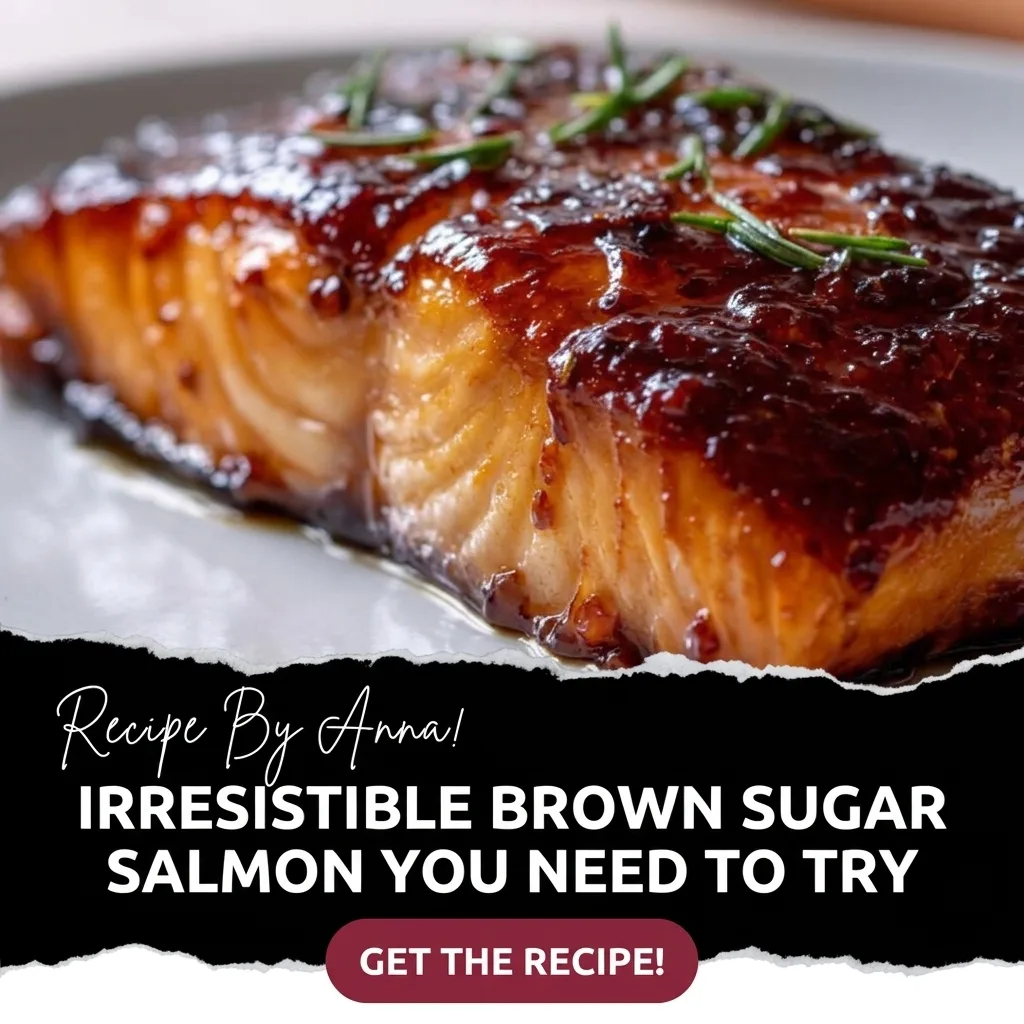
Brown sugar salmon is one of those recipes that sounds like it should be complicated — a sticky, deeply caramelised, sweet-savoury glaze over perfectly cooked salmon that looks like it came from a restaurant — and is actually one of the fastest, most reliable dinners in the collection. Twenty minutes from refrigerator to table. One pan. A glaze made from five ingredients that are almost certainly already in the pantry. The kind of dinner that makes people ask for the recipe with complete sincerity and then look slightly stunned when you tell them how few steps were involved.
The brown sugar in the glaze caramelises against the salmon’s natural fats during cooking and produces a sticky, amber coating that is simultaneously sweet and savoury, with the soy sauce and garlic underneath providing the depth that keeps the sugar from being cloying. The salmon underneath the glaze stays flaky and just-cooked — moist inside, caramelised outside, with the contrast between the sticky sweet crust and the tender fish that makes this one of the most satisfying weeknight proteins in the rotation.
Make it on a Tuesday. Watch it disappear.
Why Brown Sugar Works Specifically Well on Salmon
Salmon has a naturally high fat content — typically 10 to 13 grams of fat per 100 grams, significantly higher than most white fish — and that fat plays two roles in this recipe. First, it bastes the fish from the inside during cooking, keeping the flesh moist and tender even when the surface is getting hot enough to caramelise the sugar. Second, the fat at the surface of the salmon creates the medium in which the brown sugar glaze caramelises and adheres — the sugar and the fat emulsify slightly as they cook, producing a coating that sticks to the salmon rather than sliding off.
Brown sugar specifically rather than white produces a more complex caramelised flavour from the molasses compounds in the brown sugar — the molasses adds a slight bitter, almost bitter-chocolate undertone that makes the glaze taste more sophisticated than the same amount of white sugar would. This is the same reason brown sugar features in savoury applications across barbecue and Asian cooking: the molasses depth adds a dimension that white sugar does not have.
- Prep Time: 5 minutes
- Cook Time: 12 to 14 minutes
- Total Time: 20 minutes
- Yield: 4 servings
🍽️ Equipment I Need for Brown Sugar Salmon
One sheet pan and a small bowl — dinner is that simple! Creating restaurant-grade caramelized salmon comes down to high-conductivity aluminum, a leak-proof rim, nonstick parchment cleanup, an emulsified lump-free glaze, and a razor-thin fish spatula to keep that glorious crust intact.

Nordic Ware Natural Aluminum Commercial Baker’s Half Sheet
Pure aluminum conducts heat rapidly and evenly across the entire surface, ensuring salmon fillets cook to moist, flaky perfection without dry edges. The reinforced 1-inch raised steel rim is non-negotiable: as brown sugar, Dijon, and salmon juices render in a 400°F oven, the glaze bubbles furiously. The sturdy rim prevents sticky caramelized drippings from overflowing onto your oven floor.

Reynolds Kitchens Pre-Cut Parchment Paper Baking Sheets
Caramelized brown sugar is culinary cement if baked directly onto bare metal, turning pan scrubbing into a dreaded chore. Reynolds Kitchens Pre-Cut Parchment Sheets lay completely flat without curling corners. They create a nonstick silicone barrier that locks in juices, preserves the salmon skin, and makes cleanup as simple as crumpling the paper and tossing it into the trash.

OXO Good Grips 9-Inch Better Wire Whisk
Brown sugar naturally clumps due to moisture and molasses. Stirring with a spoon leaves gritty sugar boulders that melt unevenly. The flexible wire loops of the OXO Good Grips 9-Inch Wire Whisk easily break apart brown sugar pebbles, emulsifying it with Dijon mustard, soy sauce, garlic, and oil into a thick, glossy glaze that clings tightly to fish fillets.

OXO Good Grips Silicone Basting & Pastry Brush
Spoon-pouring glaze tends to wash sauce down the sides, leaving puddles on the sheet pan instead of coating the meat. The OXO Silicone Basting Brush features patented interior bristles that create a liquid reservoir, holding generous sauce and painting an even, protective blanket of sweet savory glaze across the top, sides, and crevice folds of every fillet.

OXO Good Grips Stainless Steel Slotted Fish Spatula / Turner
Thick plastic spatulas bulldoze against tender cooked salmon, shattering flaky flesh and ripping away crispy skin. The razor-thin, beveled stainless steel blade of the OXO Slotted Fish Turner slides effortlessly between the parchment paper and salmon skin, supporting the entire length of the fillet so it transfers to dinner plates in pristine, picture-perfect condition.
What You Need
For the salmon:
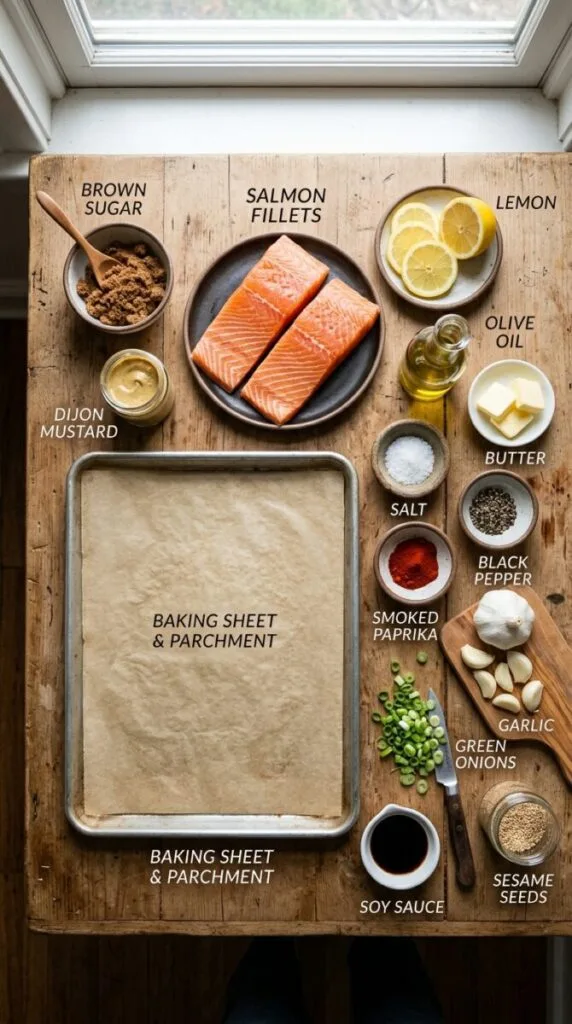
- Salmon fillets, skin-on: 4 (approximately 6 oz / 170g each) — skin-on is important; the skin acts as a natural barrier between the pan and the delicate flesh and prevents sticking; it also crisps during cooking into something genuinely delicious
- Fine sea salt: 1/2 teaspoon
- Black pepper: 1/4 teaspoon
- Olive oil: 1 tablespoon
For the brown sugar glaze:
- Light brown sugar, packed: 3 tablespoons
- Soy sauce or tamari: 2 tablespoons
- Dijon mustard: 1 tablespoon — the emulsifier that holds the glaze together and keeps it from running off the fish; also adds a sharp, pungent note that balances the sweetness
- Garlic cloves, finely grated: 3
- Fresh ginger, finely grated: 1 teaspoon — optional but excellent; adds warmth and a slightly spicy note that works beautifully against the sweet glaze
- Smoked paprika: 1/4 teaspoon — a small amount that adds colour and a gentle smokiness
- Red pepper flakes: 1/4 teaspoon
- Lime or lemon juice: 1 teaspoon — the acid that keeps the glaze from being one-dimensionally sweet
For finishing:
- Sliced green onions
- Sesame seeds
- Lime or lemon wedges
- Extra drizzle of soy sauce if desired
How to Make It — Stovetop Method
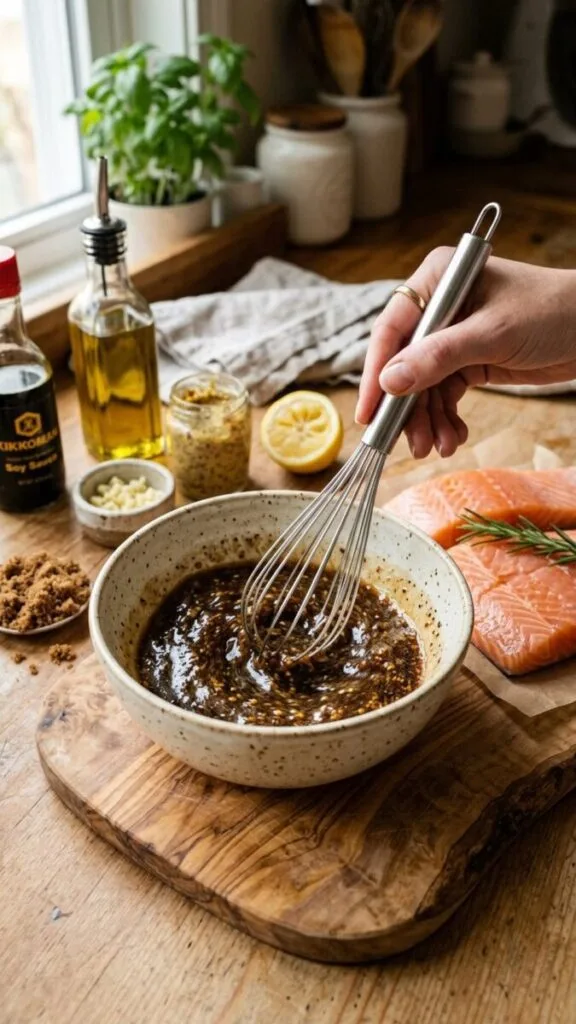
- Mix all the glaze ingredients together in a small bowl until the brown sugar has dissolved and everything is smooth. Set aside.
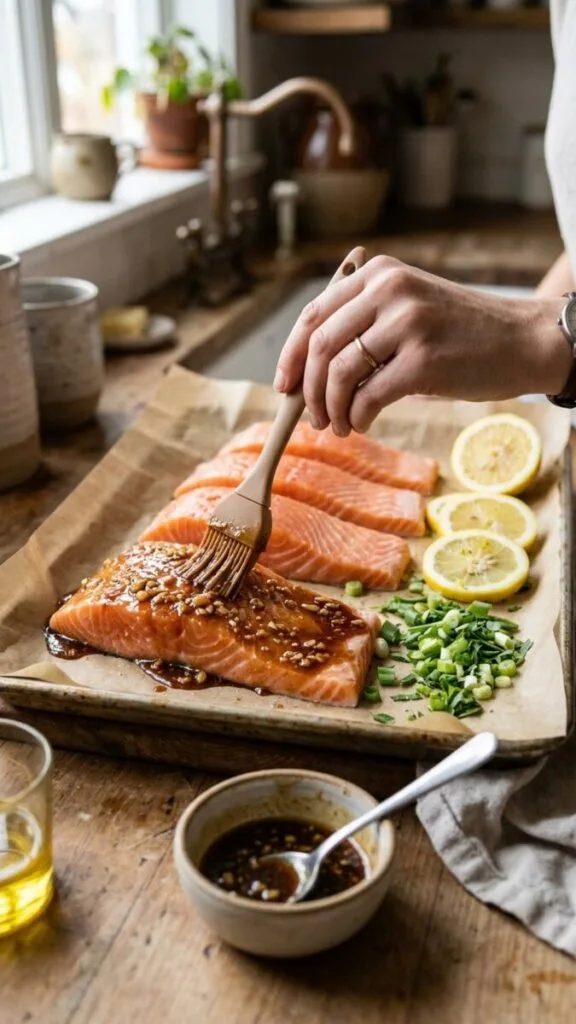
- Pat the salmon fillets completely dry with paper towels — the same dry-surface principle as the Garlic Butter Chicken Thighs: moisture on the surface prevents browning and produces steam rather than the caramelised crust you want. Season lightly with salt and pepper.
- Heat the olive oil in a large skillet (cast iron preferred) over medium-high heat until shimmering. Add the salmon fillets skin-side up and cook undisturbed for 4 minutes. The flesh side should develop a golden crust — do not move the fish during these 4 minutes.
- Flip the salmon to skin-side down. Pour the brown sugar glaze over the top of each fillet. The glaze will begin to bubble and caramelise immediately in the hot pan.
- Cook for 4 to 5 minutes, spooning the pooling glaze from the pan up over the salmon repeatedly — the same basting technique as the Garlic Butter Chicken Thighs arroser method. The glaze will thicken as it cooks, becoming stickier and more concentrated on the fish.
- In the last 2 minutes, reduce the heat to medium-low and watch the glaze carefully — caramelised sugar burns quickly and at high heat the difference between a perfect dark amber glaze and a bitter, blackened one is about 60 seconds. The glaze should look dark, glossy, and sticky — not black or smoking.
- Remove from heat. Scatter green onions and sesame seeds over the top. Serve immediately with lime wedges and the caramelised glaze spooned from the pan over the top of each fillet.
How to Make It — Oven Method
Preheat the oven to 400°F (200°C). Line a baking sheet with foil (the caramelised sugar will bond to unlined pans permanently). Place the salmon skin-side down on the foil, season lightly, and spread the glaze over the top of each fillet. Bake for 12 to 14 minutes until the glaze is caramelised and the salmon is cooked through but still slightly translucent in the very center — which is the correct internal appearance for moist, just-cooked salmon rather than dry overcooked salmon. The oven method is more hands-off than the stovetop and produces a more evenly glazed fish; the stovetop method produces better caramelisation at the edges and a slightly crisper crust. Both are genuinely excellent.
Brown sugar salmon over steamed jasmine rice alongside our Spring Roll Salad with Peanut Dressing is the weeknight dinner that tastes like a restaurant produced it — the sticky, sweet-savoury glazed salmon over rice, the cool, crunchy peanut-dressed salad alongside, and the flavour profiles of both dishes moving in the same broadly Asian-inspired direction. One plate covers every texture and temperature requirement of a complete dinner and takes 25 minutes to assemble.
The Little Details That Make It Irresistible
Pat the salmon bone dry. Moisture on the surface of the fish dilutes the glaze and steams instead of caramelizes. Thirty seconds with paper towels is the difference between a glossy crust and a watery puddle.
Glaze in two stages. Half the glaze goes on before roasting so it bakes into the fish; the rest is brushed on after, giving you that fresh, glossy, just-lacquered finish with layered flavor. One-and-done glazing never tastes as bright.
Broil low-commitment, high-attention. The broiler is what turns sweet glaze into caramelized crust, but sugar goes from amber to burnt in under a minute. Stay at the oven, door cracked if you can, and pull the pan the moment the edges look sticky and dark golden.
Pull it before you think it’s done. Salmon carries over — the internal temperature keeps climbing several degrees off the heat. Fillets that look a touch underdone in the oven turn perfectly moist and flaky after a few minutes of rest. Fully opaque in the oven means overcooked at the table.
Even thickness matters. Ask for center-cut fillets, or fold thin tail ends under themselves. When one end is paper-thin and the other is thick, you get dry edges by the time the center is done. A little shaping now saves a lot of dry fish later.
What to Serve This With
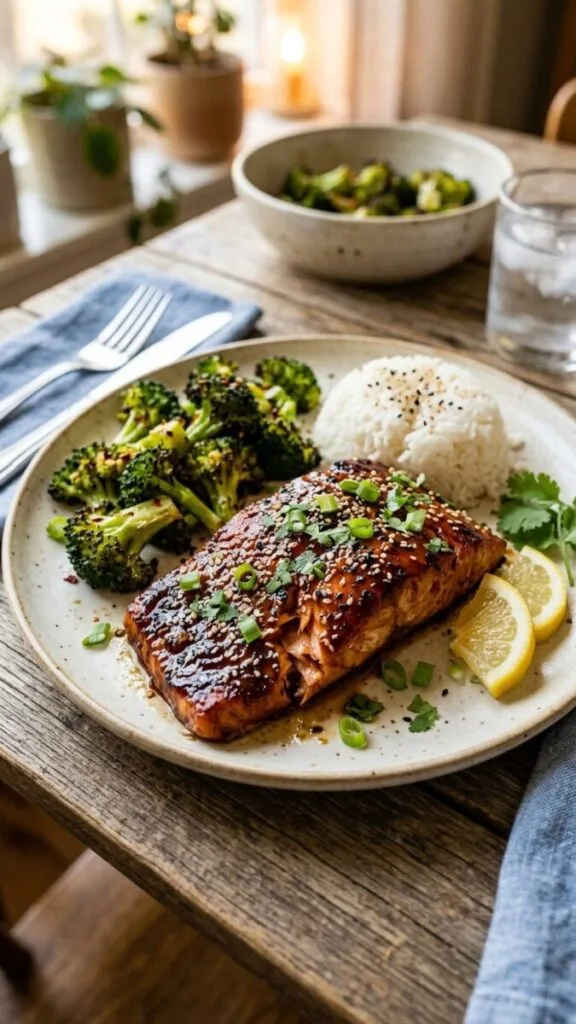
Steamed jasmine or basmati rice is the natural base — the rice absorbs the excess glaze that runs off the salmon and makes the best bites of the entire plate a combination of glazed salmon flakes and glaze-soaked rice. Spoon any remaining glaze from the pan over the rice before serving.
Roasted broccoli or bok choy alongside covers the vegetable requirement without requiring a separate preparation — toss with sesame oil, soy sauce, and garlic and roast at 400°F while the salmon cooks. Both finish at approximately the same time, the flavour profiles align completely, and the oven is already at temperature from the salmon.
For a complete meal, our Tofu Fried Rice served as the base beneath the brown sugar salmon is the combination that makes this recipe feel like the full takeaway experience without the takeaway — the day-old-rice fried rice underneath, the caramelised glazed salmon on top, sesame seeds and green onion over everything. One dinner that satisfies every takeaway craving simultaneously.
Variations That Are Straightforward and All Delicious
Honey Garlic Salmon: Replace the brown sugar with 3 tablespoons of honey and increase the garlic to 4 cloves. Add 1 tablespoon of unsalted butter to the glaze. Honey caramelises differently from brown sugar — slightly more floral, slightly stickier, and more golden in colour than the darker amber of the brown sugar version. The honey garlic direction is lighter and sweeter than the original and is the variation most likely to appeal to people who find the molasses-depth of the brown sugar glaze slightly too intense.
Teriyaki Salmon: Replace the brown sugar with 2 tablespoons of honey and add 1 tablespoon of mirin and 1 tablespoon of rice wine vinegar to the glaze. Increase the soy sauce to 3 tablespoons. The teriyaki version is the most specifically Japanese-inflected variation — the mirin adds a characteristic sweetness and the rice wine vinegar adds a gentle acidity that gives the glaze the specific teriyaki flavour profile. Serve with steamed rice, pickled ginger, and a sprinkle of furikake.
Maple Mustard Salmon: Replace the brown sugar with 2 tablespoons of pure maple syrup and increase the Dijon to 2 tablespoons. Add 1 teaspoon of whole grain mustard alongside the Dijon. The maple mustard version is slightly more French bistro in character than the soy-and-sugar original — the whole grain mustard seeds provide textural interest against the smooth glaze and the maple adds autumn depth rather than the molasses depth of brown sugar. Particularly good in autumn alongside roasted root vegetables.
Spicy Brown Sugar Salmon: Add 1 to 2 teaspoons of sriracha to the glaze and double the red pepper flakes. The spicy version produces a sweet-hot glaze that builds heat as you eat — the sugar hits first, the sriracha heat arrives a moment later, and the combination is one of the most compulsively eating-more-of-it glazes in the collection. Serve with cooling cucumber slices and plain rice.
Nutritional Information
| Nutrient | Amount Per Serving (1 fillet with glaze) |
|---|---|
| Calories | 375 kcal |
| Protein | 38 g |
| Carbohydrates | 14 g |
| Fats | 18 g |
38 grams of protein per serving makes this one of the highest-protein main courses in the entire collection — salmon is a nutritional standout at approximately 25 grams of protein per 100 grams, and a 170-gram fillet produces a protein count that rivals the chicken-based dishes at a similar calorie level. The 18 grams of fat are primarily from the salmon itself — the omega-3 fatty acids (EPA and DHA) that make salmon one of the most nutritionally complete protein sources available. The 14 grams of carbohydrate come entirely from the brown sugar glaze.
Selecting and Storing Salmon
Wild-caught salmon — sockeye, coho, or king — produces a more intensely flavoured, more deeply coloured fillet than farmed Atlantic salmon and holds up better to the high-heat caramelisation of this recipe without becoming dry. The higher protein and lower fat content of wild salmon (relative to farmed) means it cooks slightly faster — check at 10 to 11 minutes in the oven rather than 12 to 14. Farmed Atlantic salmon works well and is more widely available; the higher fat content provides additional moisture insurance during the high-heat cook.
Cook salmon within 2 days of purchase for the best flavour and texture. Fresh salmon should smell of the ocean — clean and briny — not fishy. A fishy smell indicates the fish is past its best. Frozen salmon fillets, thawed overnight in the fridge, work perfectly in this recipe and are often of comparable quality to fresh supermarket salmon.
Storing Leftovers
Store leftover salmon in an airtight container in the fridge for up to 2 days. The glaze sets firmer during refrigeration — reheat in a skillet over medium-low heat for 3 to 4 minutes until warmed through and the glaze has softened and become glossy again, or microwave at 50 percent power for 90 seconds. Do not reheat at full microwave power — the differential heating dries the outer layers of the salmon while the inside is still cold.
Cold leftover brown sugar salmon flaked over a grain bowl — rice or farro — with cucumber, avocado, a drizzle of soy sauce, and sesame seeds is the best possible use of leftover salmon and requires no reheating at all. The cold glazed salmon against the grain bowl ingredients is genuinely excellent and faster than any reheating method.
The Mistakes That Are Easy to Make Once
Not drying the salmon before cooking produces a fish that steams rather than browns — the moisture on the surface becomes steam in the hot pan and prevents the Maillard browning that creates the golden, slightly crispy flesh crust under the glaze. Paper towel, 30 seconds, done.
Adding the glaze before flipping the salmon — glazing flesh-side down rather than skin-side down — causes the glaze to burn on the flesh surface before the salmon is cooked through, because the glaze goes on the side facing the hot pan. The glaze goes on after the flip, skin-side down, so it caramelises on top while the skin protects the bottom from the direct pan heat.
Walking away from the pan in the last 2 minutes produces burned caramel with a bitter flavour that cannot be recovered. The entire glaze can go from perfect to ruined in one inattentive minute at high heat. Stand at the stove for the last 2 minutes. Reduce heat when the glaze looks very dark. Pull the pan when it looks exactly right. This is the only moment in a 20-minute recipe that requires complete attention, and it lasts 120 seconds.
Brown Sugar Salmon
Sticky, caramelized salmon with a sweet-savory brown sugar glaze made with soy sauce, Dijon mustard, garlic, ginger, smoked paprika, red pepper flakes, and citrus.
Ingredients
How to Make — Stovetop Method
Mix brown sugar, soy sauce or tamari, Dijon mustard, grated garlic, ginger if using, smoked paprika, red pepper flakes, and citrus juice until smooth.
Pat salmon fillets completely dry with paper towels. Season lightly with salt and black pepper.
Heat olive oil in a large skillet over medium-high heat until shimmering. Add salmon skin-side up and cook undisturbed for 4 minutes.
Flip salmon skin-side down. Pour glaze over the fillets.
Cook 4 to 5 minutes, spooning the bubbling glaze over the salmon repeatedly as it thickens and caramelizes.
In the last 2 minutes, reduce heat to medium-low and watch closely. The glaze should be dark, glossy, and sticky, not black or smoking.
Remove from heat. Top with green onions and sesame seeds. Serve immediately with citrus wedges and pan glaze spooned over the fish.
How to Make — Oven Method
Preheat oven to 400°F / 200°C. Line a baking sheet with foil.
Place salmon skin-side down on the foil, season lightly, and spread glaze over the top. Bake 12 to 14 minutes, until glazed, caramelized, and cooked through but still moist.
Nutrition
| Nutrient | Amount Per Serving |
|---|---|
| Calories | 375 kcal |
| Protein | 38 g |
| Carbohydrates | 14 g |
| Fat | 18 g |
Values are estimates for 1 salmon fillet with glaze.