

Cheddar Bacon Dutch Baby — The Dramatic Breakfast
A Dutch baby is the breakfast that makes people think you did something impressive when what you actually did was put five ingredients in a blender, pour them into a hot pan, and slide it into the oven for 20 minutes. What comes out is a dramatically puffed, crispy-edged, custardy-centered pancake that is visually spectacular in a way that is almost disproportionate to the effort involved — the kind of thing that makes everyone at the table lean in to look at it before it deflates (which it will, about 90 seconds after it leaves the oven, and that is completely normal and not a failure).
The savory version with cheddar and bacon is the Dutch baby that converts people who thought Dutch babies were a sweet breakfast thing. Sharp cheddar melted into the eggy, slightly custardy batter, crispy bacon scattered on top, green onions for sharpness, and a drizzle of hot honey over everything at the end — because sweet-savory-spicy on a single dramatic cast iron pancake is the breakfast combination that makes weekends feel worth having.
One bowl. One pan. 25 minutes. Enough to feed four people who will immediately ask when you are making it again.
What a Dutch Baby Actually Is
A Dutch baby — also called a German pancake or a Bismarck — is a popover-style pancake made from a thin egg, milk, and flour batter that is poured into a very hot, well-buttered cast iron skillet and baked at high heat. The eggs in the batter produce steam rapidly in the hot oven, which causes the edges to puff dramatically upward along the sides of the pan while the center remains slightly softer and more custardy. The result is somewhere between a crepe, a popover, and a Yorkshire pudding — crispy and browned at the rim, tender and slightly eggy in the middle, with a satisfying structural contrast between the two zones in every cut.
It is, in the category of impressive-looking breakfasts that require very little skill, one of the absolute best.
- Prep Time: 5 minutes
- Cook Time: 20 to 22 minutes
- Total Time: 27 minutes
- Yield: 4 servings (one 10 or 12-inch Dutch baby)

What You Need
For the Dutch baby batter:
- Large eggs: 4 — room temperature; cold eggs produce less steam in the oven and less dramatic puffing
- Whole milk: 1 cup (240ml) — room temperature, same reason
- All-purpose flour: 3/4 cup (95g)
- Sharp cheddar, freshly grated: 1/2 cup (50g), plus more for the top — pre-shredded cheese is coated in anti-caking starch that prevents clean melting; grate it yourself
- Dijon mustard: 1 teaspoon — the background sharp note that makes the savoury version taste specifically savoury rather than just salty
- Garlic powder: 1/4 teaspoon
- Fine sea salt: 1/2 teaspoon
- Black pepper: 1/4 teaspoon
- Unsalted butter: 3 tablespoons — for the pan; the butter needs to be hot enough to sizzle the moment the batter hits it
For the toppings:
- Bacon strips, cooked until very crispy and roughly crumbled: 6 to 8 — very crispy bacon matters here because it holds its texture against the eggy batter; under-cooked bacon goes soft and chewy rather than staying satisfyingly crunchy
- Sharp cheddar, shredded: 1/4 cup — scattered over the top in the last 3 minutes of baking so it melts without burning
- Green onions, thinly sliced: 3
- Hot honey: 2 tablespoons — for drizzling over the finished Dutch baby; this is the finishing element that ties the salty-savoury pancake together with sweet and heat and makes it taste like someone thought carefully about what would make this extraordinary rather than just good
- Flaky sea salt: a pinch over the top
- Optional: sour cream or crème fraîche alongside
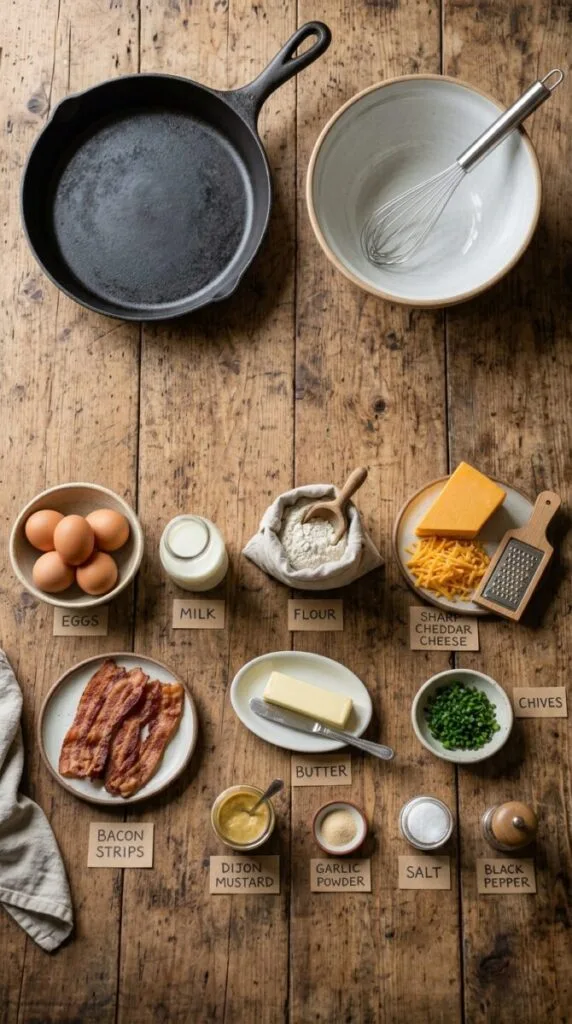
🍽️ Equipment I Need for Cheddar Bacon Dutch Baby
Simple tools, one showpiece pan! Creating a dramatic, towering savory Dutch baby packed with melted sharp cheddar and crispy bacon comes down to extreme cast iron heat retention, 30-second blender aeration, exact ratios, and confident two-handed oven safety.

Lodge Pre-Seasoned Cast Iron Skillet (10.25-Inch)
A Dutch baby’s theatrical puff demands extreme thermal shock—cold egg batter meeting a screaming-hot, buttered skillet. The legendary Lodge 10.25-Inch Cast Iron Skillet retains massive heat in a 425°F oven, instantly vaporizing moisture into steam that climbs the flared iron walls into billowy, crispy-edged golden peaks. (A 12-inch skillet also works wonderfully for a wider, slightly thinner baby.)

Ninja BL610 Professional 72 Oz Countertop Blender
Hand whisking often leaves stubborn flour pockets that weigh down delicate egg proteins. The Ninja Professional Blender blends flour, whole eggs, milk, and melted butter into a silky, completely lump-free batter in 30 seconds flat. The vortex blades whip in tiny micro-air bubbles that expand vigorously when hitting the hot skillet, propelling the batter upwards.

Laxinis World 18/8 Stainless Steel Measuring Set (10-Piece)
A Dutch baby relies entirely on trapped steam—there is zero baking powder or yeast! The egg-to-milk-to-flour ratio is the whole recipe. Scooping flour directly with a measuring cup packs down extra starch, turning your puff into a dense, rubbery pancake. The heavy-duty Laxinis World 18/8 Stainless Steel Measuring Set guarantees exact, level proportions every bake.

Victorinox Fibrox Pro 8-Inch Chef’s Knife
Raw, fatty bacon can slip dangerously under a dull knife. The razor-sharp Victorinox Fibrox Pro 8-Inch Chef’s Knife slices effortlessly through chilled bacon strips into neat 1/4-inch lardons that render into crispy, savory jewels. Its fine edge also cleanly shears delicate fresh chives without bruising or mashing their flavorful aromatic oils.

OXO Good Grips Silicone Oven Mitts (Pack of 2)
A 425°F cast iron skillet holding sizzling butter, molten sharp cheddar, and a massive puffed pancake requires absolute control. The OXO Good Grips Silicone Oven Mitts (Pack of 2) provide heat resistance up to 450°F+ with textured diamond silicone treads that won’t slip. Their 13-inch length protects your wrists and forearms from exposed oven racks.
How to Make It
- Preheat the oven to 425°F (220°C) with a 10 or 12-inch cast iron skillet inside — the skillet heats with the oven and must be very hot when the batter goes in. This is the most important step and the one most often skipped in a hurry. A cold pan produces a Dutch baby that spreads flat rather than puffing dramatically. The whole magic of a Dutch baby is the contrast between the boiling-hot pan and the room-temperature batter — that contrast is what creates the immediate steam that drives the dramatic puff. Give the skillet at least 10 minutes in the oven before the batter goes in.
- While the pan heats, make the batter: blend the eggs, milk, flour, 1/2 cup of cheddar, Dijon, garlic powder, salt, and pepper in a blender for 30 to 45 seconds until completely smooth and slightly frothy. Alternatively, whisk vigorously in a bowl for 2 minutes — the goal is a smooth, lump-free batter with some air incorporated. A blender is faster and produces a slightly more consistently puffed Dutch baby from the better air incorporation.
- Let the batter rest for 5 minutes while the pan continues heating — this allows the flour to fully hydrate and reduces the risk of a tough, dense center.
- When the oven and pan are ready: carefully remove the hot skillet from the oven (oven mitt, both hands, the handle is extremely hot). Add the butter to the skillet and swirl quickly — it should foam and sizzle immediately. If it does not sizzle on contact, the pan is not hot enough. Return to the oven for another 3 minutes.
- Pour the batter immediately into the hot buttered pan — quickly, in one motion. Return to the oven immediately. Do not pause, do not adjust anything in the pan, just get it back in the oven fast. The first 60 seconds after the batter hits the hot pan are when the steam forms and the puff begins, and the oven door needs to be closed for that to happen properly.
- Bake at 425°F for 17 minutes without opening the oven door. Opening the door lets heat escape and can cause the Dutch baby to deflate mid-bake. After 17 minutes, the edges should be puffed dramatically and deeply golden brown.
- Scatter the remaining shredded cheddar over the top of the Dutch baby and bake for a further 3 to 4 minutes until the cheese is melted and slightly browned at the edges.
- Remove from the oven. Immediately scatter the crispy bacon and green onions over the top. Drizzle the hot honey generously over everything. Finish with a pinch of flaky sea salt.
- Bring the skillet directly to the table and serve immediately — the Dutch baby will begin to deflate within 90 seconds of leaving the oven, which is completely normal and expected. The deflation does not affect the flavour or texture; it only affects the drama, and the drama window is the first 90 seconds. Use them well.
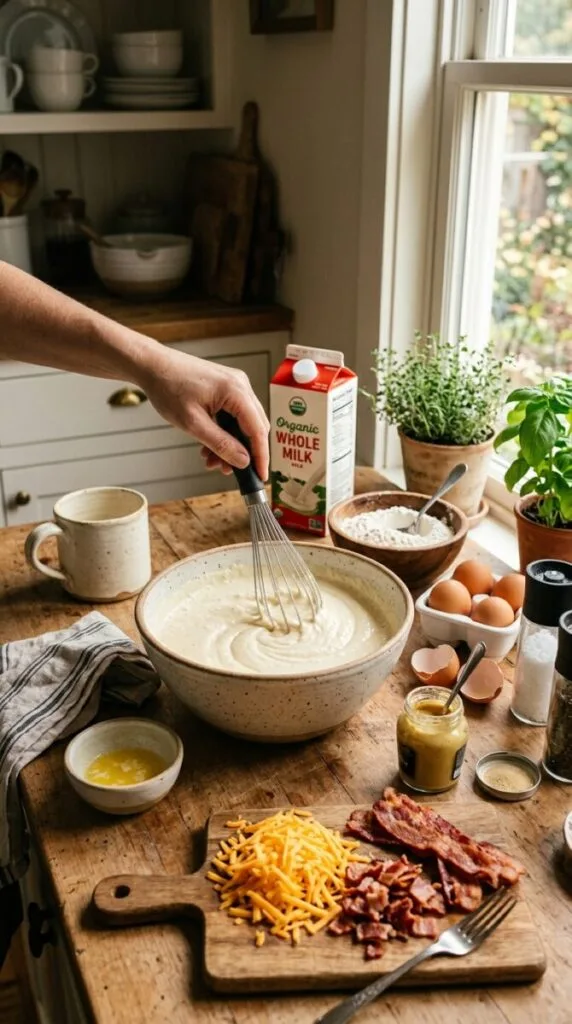
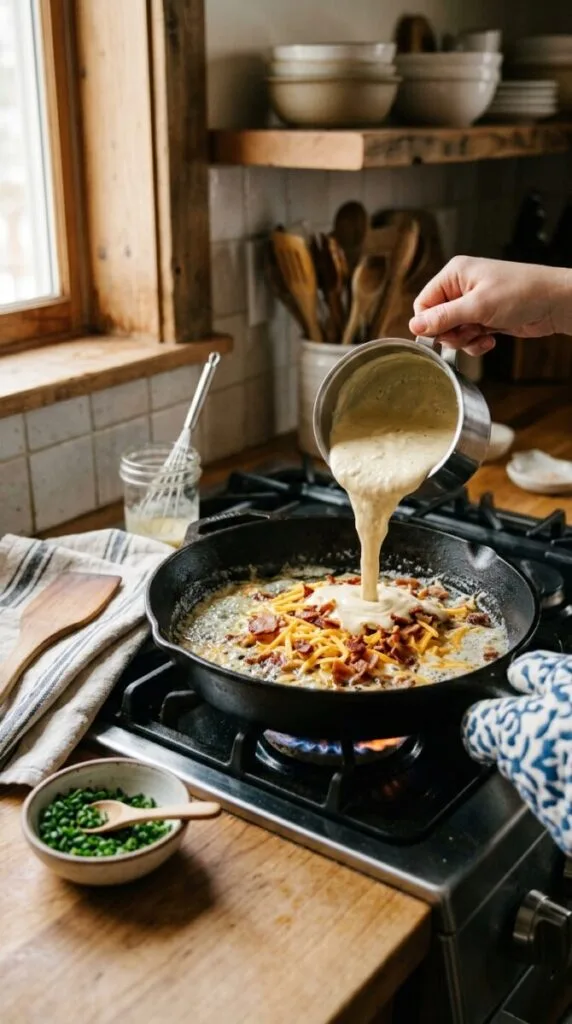
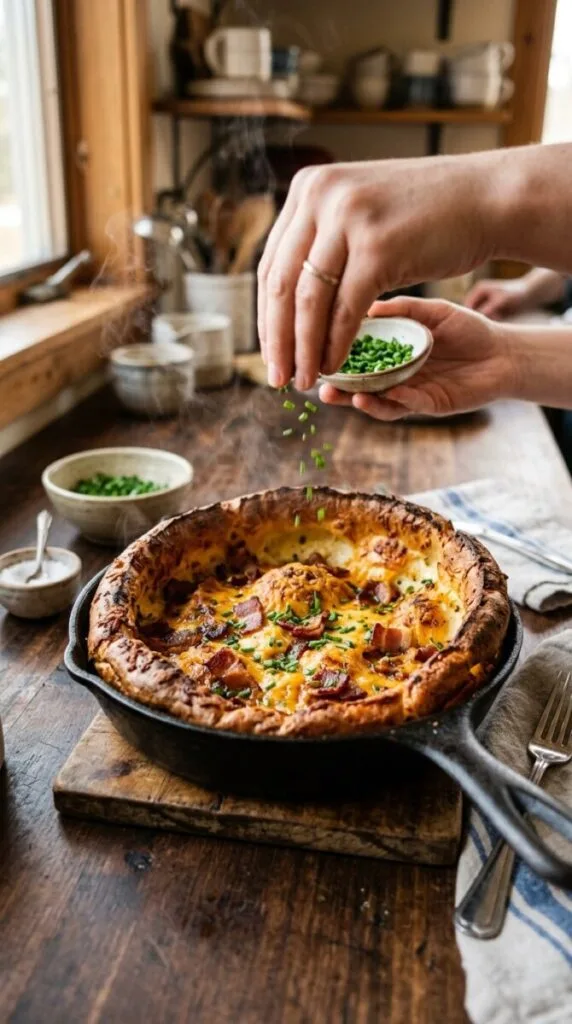
Cheddar bacon Dutch baby alongside our Cottage Cheese Pancakes is the weekend breakfast spread that covers both the dramatic-showpiece format and the reliable-everyday format on the same table — one skillet puffed and golden from the oven, one stack of fluffy, high-protein pancakes alongside. Every weekend breakfast preference is represented and no one leaves the table anything other than entirely satisfied.
The Hot Pan Rule and the Room Temperature Batter Rule
The Dutch baby’s dramatic puff is produced by steam — specifically, the rapid conversion of moisture in the batter into steam when it contacts the very hot pan surface. The hotter the pan, the more immediate and dramatic the initial steam formation, and the more dramatically the edges puff upward along the sides of the skillet. A pan heated for 10 minutes in a 425°F oven reaches approximately 400°F at the cooking surface — a temperature that produces immediate, vigorous sizzling when the batter hits it and the steam formation that drives the puff.
Room temperature eggs and milk rather than cold ones matters for the same reason in reverse — cold batter hits the hot pan and the temperature differential is so dramatic that the bottom of the Dutch baby sets before the steam can fully form throughout the batter. Room temperature batter heated evenly and quickly produces a more consistent, more dramatic puff than cold batter that sets unevenly from the bottom up.
The 17-minute no-open-door rule exists because Dutch baby batter is essentially a steam-driven structure — the puffed edges are held up by the steam pressure inside the batter. Opening the oven door releases heat, reduces the steam pressure, and can cause a partial collapse mid-bake that the Dutch baby cannot recover from. Seventeen minutes of undisturbed high heat. Then check.
What to Serve Alongside
The Dutch baby is a complete breakfast on its own — the eggs and bacon and cheese together provide protein, the batter provides carbohydrate, and the hot honey provides the sweet element that most people want from a breakfast. A simple green salad dressed with lemon and olive oil alongside makes it a brunch rather than just a breakfast, particularly for a gathering where the Dutch baby is one of several dishes on the table.
A glass of fresh orange juice is the most natural companion — the citrus brightness against the salty, smoky, sweet-spicy Dutch baby is exactly the contrast the dish benefits from as a drink pairing, and fresh OJ alongside a dramatically puffed skillet is the brunch table combination that makes Saturday morning feel worth waking up for.
For a full brunch spread, this Dutch baby alongside our McGriddle Casserole covers both the single-skillet showpiece format and the crowd-feeding casserole format on the same table — one dramatic, one practical, both in the sweet-savoury breakfast direction that works best when the two flavour registers are in play simultaneously.
Variations Worth Exploring
Classic Sweet Dutch Baby: Remove the cheddar, Dijon, garlic powder, and black pepper from the batter. Increase the milk to 1 cup and add 1 tablespoon of sugar and 1 teaspoon of vanilla extract. Top the finished Dutch baby with powdered sugar, fresh lemon juice, and fresh berries — or with sliced caramelized apples and a drizzle of maple syrup. The sweet version is the classic preparation and equally dramatic. The savoury version is the one that makes people rethink what a pancake can be; the sweet version is the one that makes them nostalgic for something they never knew they were missing.
Mushroom and Gruyère Dutch Baby: Replace the bacon with 1 cup of cremini mushrooms, sautéed until golden and seasoned (the same browning technique as the White Bean Mushroom Skillet and the Garlic Mushroom Rice Casserole — hot pan, single layer, do not move them). Replace the cheddar with Gruyère. Top with fresh thyme instead of green onions. The mushroom version is more French bistro in character than the bacon-and-cheddar original — elegant enough for a brunch where impressive is the goal.
Jalapeño Popper Dutch Baby: Add 1 finely diced pickled jalapeño and 1 tablespoon of jalapeño brine to the batter. Top with cream cheese dollops (cold, straight from the block, in small spoonfuls) scattered over the last 3 minutes of baking alongside the cheddar. The cream cheese melts partially into jammy, slightly browned pools. Top with hot sauce instead of hot honey. This is the most unexpected variation in the collection and will be requested specifically by name at every subsequent gathering.
Spinach and Feta Dutch Baby: Add 1/4 cup of crumbled feta to the batter and replace the cheddar topping with additional feta and 1 cup of baby spinach scattered over the Dutch baby in the last 3 minutes of baking. Top with sliced Kalamata olives, diced cherry tomatoes, and a drizzle of olive oil rather than hot honey. The Greek-flavoured version is lighter and more Mediterranean in character — the one to make when the summer ingredients are at their best and the oven is not a burden to turn on.
Nutritional Information
| Nutrient | Amount Per Serving (based on 4 servings, with bacon and cheese toppings) |
|---|---|
| Calories | 420 kcal |
| Protein | 22 g |
| Carbohydrates | 26 g |
| Fats | 26 g |
22 grams of protein per serving for a breakfast makes this one of the most protein-substantial breakfast options in the collection — the four eggs, the bacon, and the cheddar together produce a protein count that rivals the cottage cheese pancakes and the Greek yogurt-based breakfast recipes. The 26 grams of fat reflect the butter, bacon fat, and cheddar, which are also the flavour elements that make this a genuinely satisfying breakfast rather than one that produces hunger again by 10am.
Storing and the Leftover Situation
A Dutch baby is a dish that is essentially perfect for exactly the 15 minutes after it comes out of the oven and declines gracefully from there. It stores in the fridge for up to 2 days covered, and it reheats — at 350°F for 8 to 10 minutes or in a dry skillet over medium heat — but it never returns to the puffed glory of the fresh version. It becomes, in leftover form, a pleasantly eggy, slightly crispy savory pancake that is good for a quick reheated lunch but is not the showpiece it was at the table on Saturday morning.
This is not a criticism. It is just a fact about Dutch babies that is worth knowing: they are at their best in the moment, and the moment is brief. Make it when you can eat it immediately. Make it when there are people to impress. Make it when the cast iron is already out. The effort is always worth it and the window is always short.
Mistakes That Are Easy to Make Once and Never Again
Using a cold pan is the mistake that produces a flat, pale, spread-out Dutch baby with no dramatic puff and a slightly doughy center — essentially a thick crepe rather than the puffed, crispy-edged skillet pancake the recipe should produce. Heat the pan in the oven for a full 10 minutes at 425°F. Touch the butter to the pan to test before adding the batter — if it does not foam and sizzle immediately, the pan is not ready.
Using pre-shredded cheese is the mistake that produces a Dutch baby with slightly grainy, unevenly melted cheese throughout — the anti-caking agents coating commercial shredded cheese prevent clean melting and produce a different texture than freshly grated. Grate the cheddar yourself. It takes two minutes and the difference in texture is visible and worth it.
Opening the oven door before 17 minutes is the mistake that collapses a Dutch baby that was puffing beautifully — the pressure release causes a partial deflation that the oven cannot correct before the bake is complete. Set a timer. Walk away. Do not look. Trust the process and the hot oven.
Cheddar Bacon Dutch Baby
A dramatic savory Dutch baby pancake with cheddar in the batter, crispy bacon, green onions, melted cheese, hot honey, and flaky sea salt.
Ingredients
How to Make
Preheat oven to 425°F / 220°C with a 10 or 12-inch cast iron skillet inside. Let the skillet heat for at least 10 minutes.
Blend eggs, milk, flour, ½ cup cheddar, Dijon, garlic powder, salt, and pepper for 30 to 45 seconds, until smooth and slightly frothy.
Let the batter rest for 5 minutes while the skillet continues heating.
Carefully remove the hot skillet from the oven. Add butter and swirl quickly. It should foam and sizzle immediately.
Pour the batter into the hot buttered skillet in one quick motion. Return the skillet to the oven immediately.
Bake at 425°F for 17 minutes without opening the oven door. The edges should be dramatically puffed and deep golden.
Scatter the remaining ¼ cup cheddar over the Dutch baby. Bake 3 to 4 minutes more, until melted and slightly browned.
Remove from oven. Immediately top with crispy bacon, green onions, hot honey, and flaky sea salt.
Bring the skillet to the table and serve immediately. Add sour cream or crème fraîche on the side if desired.
Nutrition
| Nutrient | Amount Per Serving |
|---|---|
| Calories | 420 kcal |
| Protein | 22 g |
| Carbohydrates | 26 g |
| Fat | 26 g |
Values are estimates based on 4 servings with bacon, cheddar, butter, and hot honey.