Classic French Butter Cake Recipe
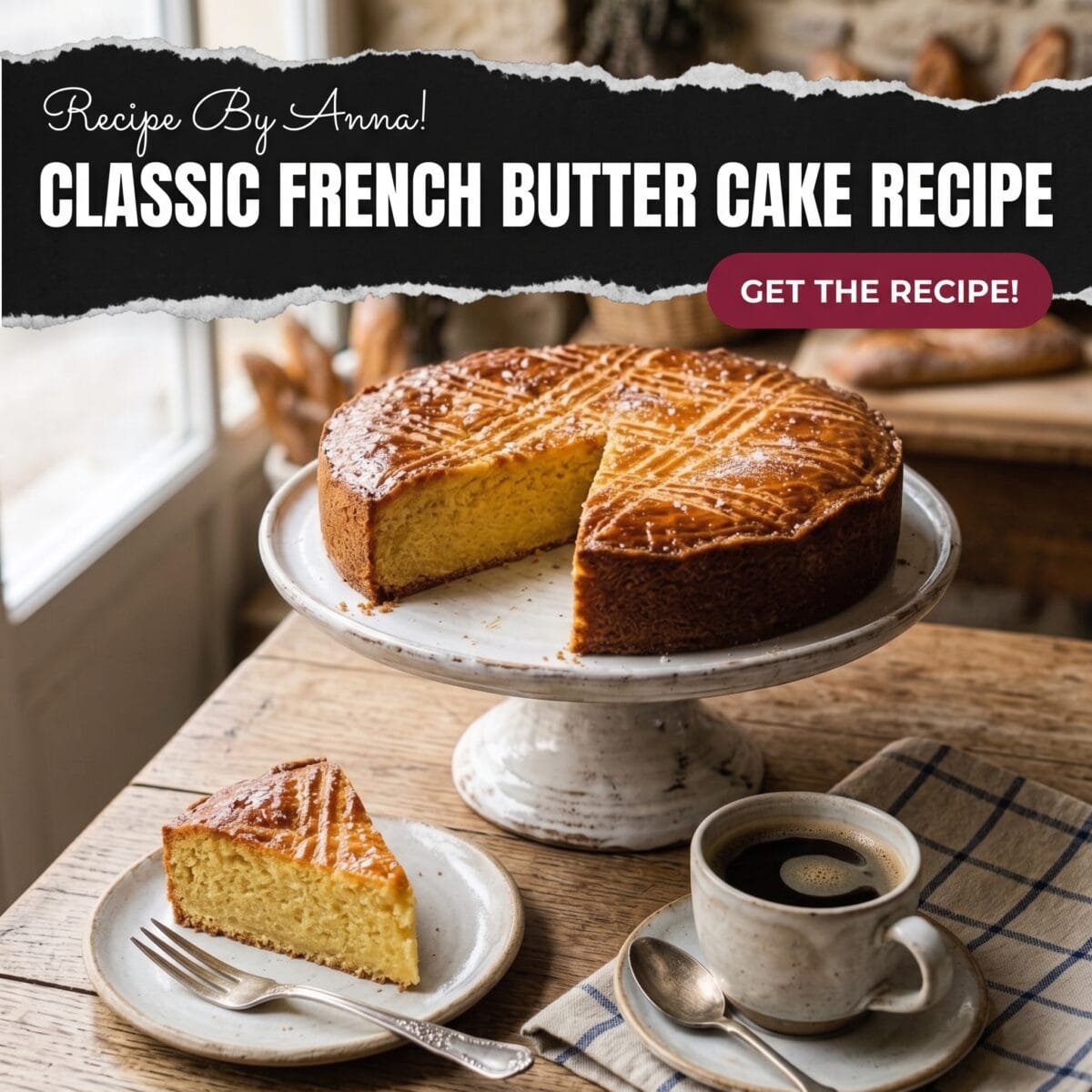
If you have ever wanted to make something that looks like it came from a French patisserie but requires almost no skill, here is your recipe. The Classic French Butter Cake — known as Gâteau Breton in its native Brittany — is a thick, dense, impossibly buttery cake that is somewhere between a shortbread, a pound cake, and a cookie in the best possible way. It has six ingredients, takes about 15 minutes to prepare, and produces a cake with a golden, almost lacquered exterior and a rich, fudgy interior that earns the word “outrageously” in the title without apology.
The thing about Gâteau Breton that surprises people the first time is just how much it tastes like butter. Not “this cake has butter in it” but “this is what butter would be if it decided to become a cake.” That is the entire point. Brittany is famous for its salted butter — the region produces some of the finest cultured butter in the world — and this cake exists specifically to celebrate that ingredient without hiding it under flavourings, fillings, or elaborate decorations.
It is also the cake that lasts. A well-made Gâteau Breton stays moist and delicious for four to five days at room temperature, wrapped in a towel, the way the French keep their bread. It actually improves after the first day. It is the cake that is better on Wednesday than it was on Sunday, which is a rare and extremely useful quality.
Six Ingredients, One Rule
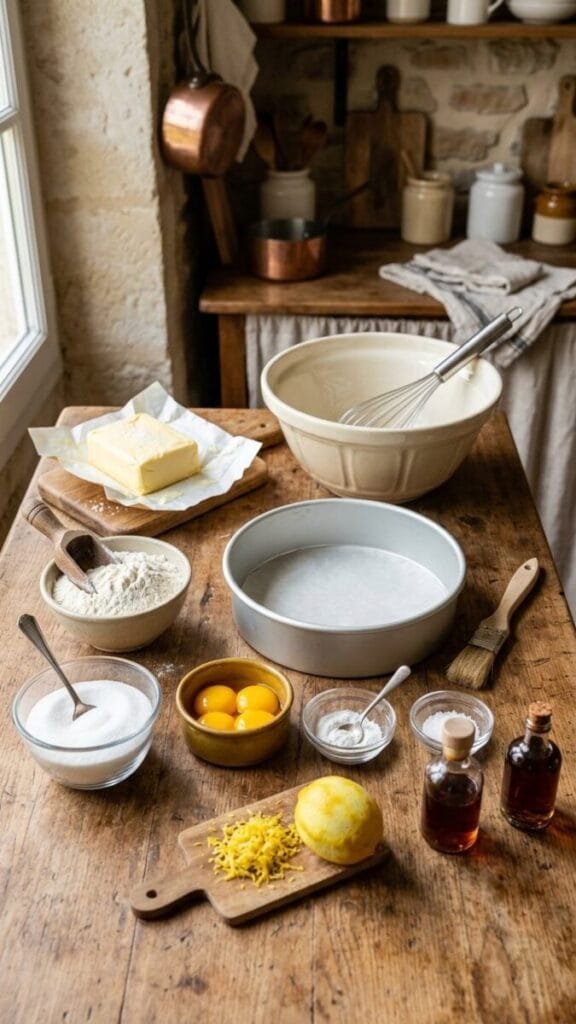
The recipe has six ingredients: flour, butter, sugar, egg yolks, salt, and a splash of vanilla or rum. That is the complete list. The only thing that matters — the single rule that determines whether the cake is spectacular or merely good — is the quality of the butter. This is not the recipe to use the generic store-brand. This is the recipe to use the best butter you can find. A good cultured butter or a high-fat European-style butter (Kerry Gold, Plugrá, or similar) produces a visibly richer colour and a more complex flavour than standard supermarket butter. The difference is not subtle.
- Prep Time: 15 minutes (plus 30 minutes resting)
- Cook Time: 35 to 40 minutes
- Total Time: approximately 1 hour 25 minutes
- Yield: one 9-inch cake, serves 8 to 10
What You Need
- Unsalted butter, room temperature: 2 sticks (225g / 1 cup) — the best butter you own; this is where the entire cake lives
- Granulated sugar: 1 cup (200g)
- Egg yolks: 5 large — yolks only, no whites; the yolks produce the rich, golden, fudgy interior that makes this cake distinctive; whites would make it lighter and less characterful
- All-purpose flour: 2 cups (250g)
- Fine sea salt or fleur de sel: 3/4 teaspoon — salted butter is traditional in Brittany and produces a slightly different flavour; if using salted butter, reduce the added salt to 1/4 teaspoon
- Pure vanilla extract or dark rum: 1 teaspoon — the rum is more traditional; the vanilla is more familiar; both work
For the egg wash:
- 1 egg yolk beaten with 1 teaspoon of water — this produces the deeply golden, lacquered exterior and the traditional cross-hatch pattern pressed into the surface before baking
How to Make It
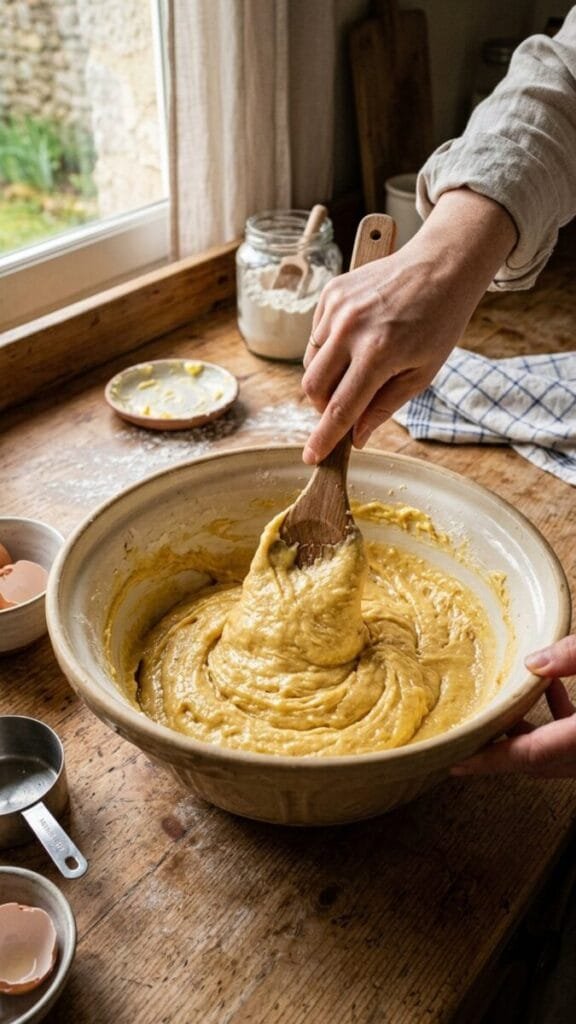
- Beat the room-temperature butter and sugar together in a stand mixer or with a hand mixer on medium speed for 3 to 4 minutes until pale, light, and fluffy. The butter cream stage matters here — properly creamed butter and sugar produces a lighter, more even crumb than under-creamed butter that has not incorporated enough air.
- Add 4 of the egg yolks one at a time, beating for 30 seconds after each addition. Reserve the 5th yolk for the egg wash.
- Add the vanilla or rum and salt and mix briefly to combine.
- Add the flour all at once and mix on low until a cohesive dough forms — it will be thick, slightly sticky, and look more like cookie dough than cake batter. Do not overmix once the flour is incorporated; stop as soon as the flour is absorbed and the dough looks uniform.
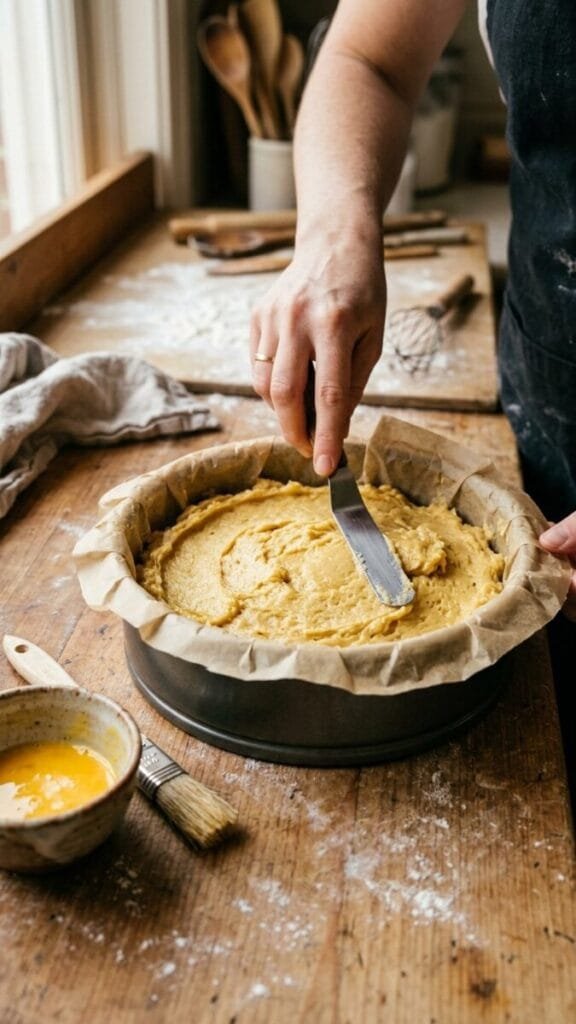
- Press the dough into a 9-inch round cake tin or springform pan that has been buttered and lightly floured. The dough is too thick to pour — it needs to be pressed in with slightly dampened fingers, pushing it evenly to the edges and smoothing the top as flat as possible. Aim for an even 3/4 to 1-inch thickness across the entire surface.
- Refrigerate the shaped dough in the tin for 30 minutes. This rest firms the butter back to cold after handling and produces a cleaner, more defined edge and the cross-hatch pattern in the next step holds its shape more crisply in a cold dough than a warm one.
- Preheat the oven to 350°F (175°C).
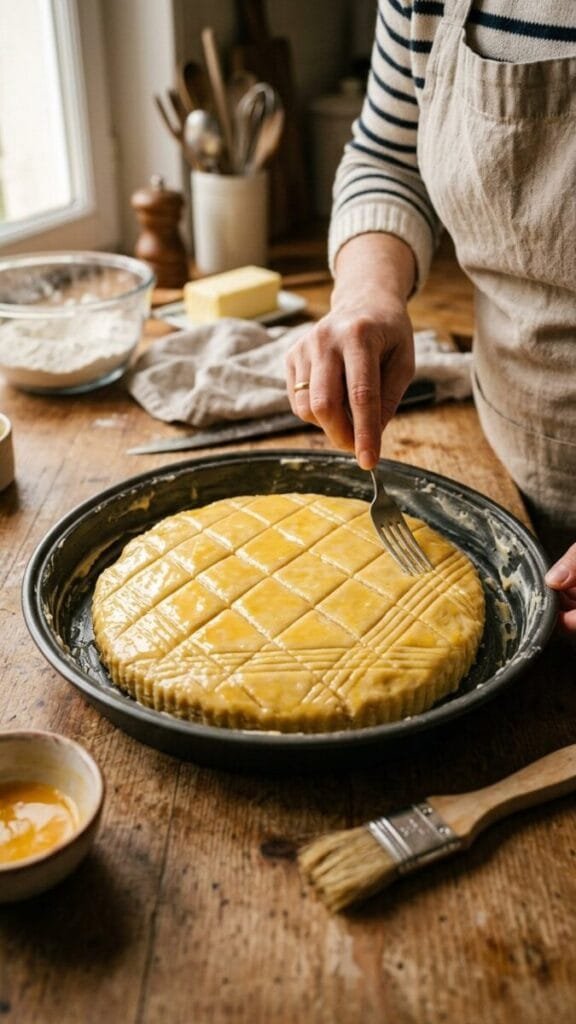
- Beat the reserved egg yolk with the water to make the egg wash. Brush a generous, even layer over the entire surface of the chilled cake.
- Use the tines of a fork to draw a cross-hatch pattern across the egg-washed surface — diagonal lines in one direction, then diagonal lines crossing them. Press firmly enough that the pattern is visible but not so deep that you cut through to the tin. This is the traditional Gâteau Breton decoration and it bakes into the slightly raised, patterned golden surface that makes the cake visually recognisable.
- Bake at 350°F for 35 to 40 minutes until the top is a deep, even amber-gold and the edges are pulling slightly from the sides of the tin. A toothpick inserted in the center should come out with a few moist crumbs — the center of the cake is meant to be slightly denser and more fudgy than the edges, so a clean pull at the center means it is probably slightly overbaked.
- Cool in the tin for 15 minutes, then turn out onto a wire rack and cool completely. Resist cutting it warm — the interior sets fully as it cools and the slices are cleaner and the texture more characteristic at room temperature than warm from the oven.
A slice of French butter cake and a cup of espresso or strong black tea is the simplest, most elegant afternoon break in French home cooking — no decoration, no accompaniment, no occasion required. Served alongside our Homemade Strawberry Jam on the side, it becomes something close to the ideal afternoon treat: buttery, golden, slightly salty cake with a bright, sweet jam to cut the richness. Very French. Very good.
Why Yolks Only, Why Cold Butter in the Tin, and Why This Improves Over Time
Egg yolks rather than whole eggs are the defining technique of Gâteau Breton — yolks contain the fat (lecithin) that produces the dense, rich, almost fudgy interior that makes this cake distinctive. Egg whites contribute structure and moisture but also lightness; a cake made with whole eggs would be taller, more airy, and less characterfully dense. The all-yolk formula produces a cake that is almost dense enough to be called a tart, with a richness per bite that is significantly higher than a standard pound cake.
The 30-minute refrigerator rest before baking firms the butter that was softened during mixing and handling. When the cold dough goes into a hot oven, the butter inside it is solid enough to melt slowly and evenly rather than immediately, which produces a more even rise and a more uniform crumb. The cross-hatch pattern also holds its definition in cold dough; warm dough puffs back and loses the crisp diagonal lines before the egg wash sets.
The improvement over time is a genuine quality of Gâteau Breton and not a polite suggestion — the butter continues to redistribute through the crumb in the hours and days after baking, and the cake becomes moister, richer, and more cohesive on the second and third day than it was on the first. It is one of the few cakes in this collection that is genuinely better made two days ahead of serving.
What to Serve Alongside
A pot of good-quality strawberry jam alongside a sliced butter cake is the French afternoon tradition this recipe belongs to. Crème fraîche whipped with a small spoonful of honey is the more indulgent accompaniment — the cool, slightly tangy cream against the rich, buttery cake is a combination that feels luxurious without being complicated.
For a dessert plate, a slice of butter cake alongside fresh fruit — strawberries, raspberries, or sliced peaches in season — and a small spoonful of whipped cream is a dessert that requires no baking skill beyond making the cake itself and still looks elegant enough for a dinner party. Our No-Bake Tiramisu alongside at a dinner party dessert spread gives guests two completely different but equally elegant options — the coffee-forward Italian tiramisu next to the buttery French cake covers both directions without either one being redundant.
Variations on the Classic
Gooey Butter Cake (St Louis Style): The American gooey butter cake is a related — though separately evolved — cake that shares the “outrageously buttery” brief. For the St Louis version, make a simple yeast cake base (1 cup flour, 1/4 cup warm milk, 1/4 teaspoon yeast, 1 tablespoon sugar, 3 tablespoons butter, 1 egg) and press it into a 9×13 pan. Beat 1 stick of butter with 1.5 cups of powdered sugar until fluffy, beat in 1 egg and 1/3 cup of corn syrup, then stir in 1 cup of flour. Spread over the yeast base and bake at 350°F for 30 to 35 minutes until set but still very slightly wobbly in the center. It should look underdone — it is meant to. The result is gooey, intensely sweet, and the specific American butter cake that draws its own enormous Pinterest following.
Lemon French Butter Cake: Add the zest of 2 lemons to the butter and sugar during creaming, and replace the vanilla or rum with 1 tablespoon of fresh lemon juice. The lemon version is the most refreshing direction and suits a spring or summer serving better than the classic — the butter’s richness stays but the lemon lifts and brightens the whole thing into something that tastes specifically seasonal.
Rum Prune Gâteau Breton: The most traditional stuffed variation — place a layer of rum-soaked prunes (about 20 prunes soaked in dark rum for at least an hour) in the center of the cake. Press half the dough into the tin, arrange the drained prunes in a single layer, then press the remaining dough over the top and proceed as directed. The prunes become jammy and intensely flavoured inside the buttery dough, and the rum soaking liquid can be reduced and drizzled over the finished cake. This is the version that appears at French family celebrations and the one that makes the most dramatic sliced cross-section.
Almond Butter Cake: Replace 1/4 cup of the all-purpose flour with finely ground almond flour and add 1/4 teaspoon of almond extract alongside the vanilla. The almond version has a slightly nuttier, more complex flavour and a slightly denser, more chewy texture that suits anyone who finds the plain butter cake just slightly one-dimensional. Top with a scattering of sliced almonds before baking for additional texture and visual interest.
Easy 4-Ingredient Butter Cake: For the simplest possible version: 1 cup butter, 1 cup sugar, 2 cups flour, 3 egg yolks. Mix, press into a tin, egg wash, cross-hatch, bake. No salt, no vanilla, no refrigerator rest (though it still helps). The four-ingredient version is the weeknight cake — less complex in flavour than the full recipe but still fundamentally a buttery, golden, satisfying French butter cake with minimal commitment.
Nutritional Information
| Nutrient | Amount Per Slice (based on 10 slices) |
|---|---|
| Calories | 365 kcal |
| Protein | 4 g |
| Carbohydrates | 38 g |
| Fats | 22 g |
These are estimates for the full recipe with 5 egg yolks and 2 sticks of butter, divided by 10 slices. The 22 grams of fat per slice is the entirely expected result of a cake whose entire personality is butter. The lemon version has an identical nutritional profile; the rum prune version adds approximately 40 calories per slice from the prunes. This is not a recipe in the collection for anyone counting calories with great seriousness — it is a recipe for everyone who understands that sometimes a thing is worth doing completely.
Storing This Cake Properly
Wrap the cooled cake in a clean kitchen towel and store at room temperature for up to 5 days — do not refrigerate, as cold air dries the cake significantly and the texture on day two from the fridge is noticeably inferior to the same cake kept at room temperature. The butter content acts as its own preservative and the cake stays moist at room temperature through the full five-day window.
To freeze: wrap the whole cake or individual slices tightly in plastic wrap and then foil, and freeze for up to 2 months. Thaw at room temperature for 2 hours before serving — do not microwave to thaw, as the butter will separate from the surrounding dough and produce an oily, compromised slice rather than the clean, dense texture the cake should have.
If the cake develops a slightly dry edge by day four or five, a 5-minute warm in a 300°F oven restores the moist interior and produces a slightly warm, almost fresh-from-the-oven quality that is genuinely worth the 5 minutes of effort.
The Mistakes That Are Easy to Make Once and Never Again
Using cold butter produces a dough that does not cream properly — the butter needs to be genuinely room temperature, soft enough to leave an indent when pressed, before the sugar goes in. Properly creamed butter and sugar should look pale yellow and almost fluffy after 3 to 4 minutes; under-creamed butter and sugar looks dull, slightly yellow, and grainy. The difference in the finished cake is visible in the crumb.
Skipping the refrigerator rest and baking immediately produces a cake with a less defined cross-hatch pattern and slightly less distinct edges — the warm dough puffs and spreads before the egg wash sets in the oven, producing a slightly more domed, less flat-topped result than the chilled version. Not disastrous, but not the classic shape either.
Cutting the cake warm produces crumbling, soft slices that fall apart and reveal an undercooked-looking interior even when the cake is fully baked — this is the cake’s most misleading quality. It looks underdone when warm and set when cool, and cutting it warm will convince you something went wrong when nothing did. Let it cool. Fully. All the way. The patience produces cleaner slices and a better sense of the cake’s actual finished texture.
Classic French Butter Cake
A simple, rich French butter cake made with butter, sugar, egg yolks, flour, salt, and vanilla or rum, finished with a golden cross-hatched egg wash.
Ingredients
How to Make
Beat room-temperature butter and sugar with a hand mixer or stand mixer on medium speed for 3 to 4 minutes, until pale, light, and fluffy.
Add 4 egg yolks one at a time, beating for about 30 seconds after each addition. Reserve the 5th yolk for the egg wash.
Mix in the vanilla extract or dark rum and the salt until just combined.
Add flour all at once and mix on low speed until a thick, cohesive dough forms. Stop as soon as the flour is absorbed.
Butter and lightly flour a 9-inch round cake tin or springform pan. Press the dough evenly into the pan with slightly damp fingers, smoothing the top.
Refrigerate the shaped dough in the pan for 30 minutes.
Preheat oven to 350°F / 175°C.
Beat the reserved egg yolk with 1 teaspoon water. Brush the mixture evenly over the chilled cake surface.
Use a fork to draw diagonal lines across the surface in one direction, then repeat in the opposite direction to create a cross-hatch pattern.
Bake for 35 to 40 minutes, until the top is deep amber-gold and the edges pull slightly from the pan. A toothpick should come out with a few moist crumbs.
Cool in the pan for 15 minutes, then turn out onto a wire rack. Cool completely before slicing for the cleanest texture.
Nutrition
| Nutrient | Amount Per Slice |
|---|---|
| Calories | 365 kcal |
| Protein | 4 g |
| Carbohydrates | 38 g |
| Fat | 22 g |
Values are estimates based on 10 slices from one 9-inch French butter cake.