
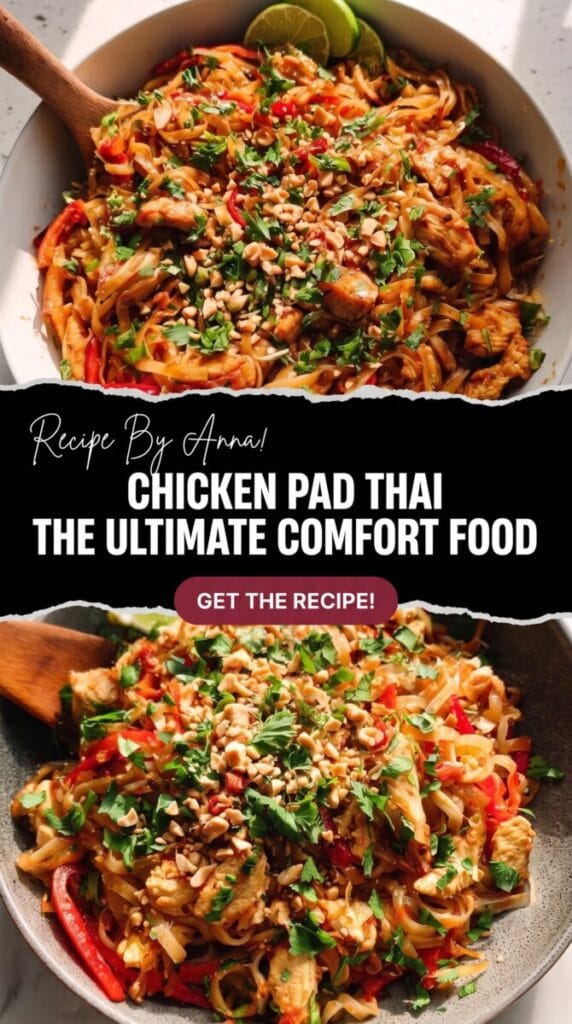
Chicken Pad Thai: The Ultimate Comfort Food Delight You Can Make at Home
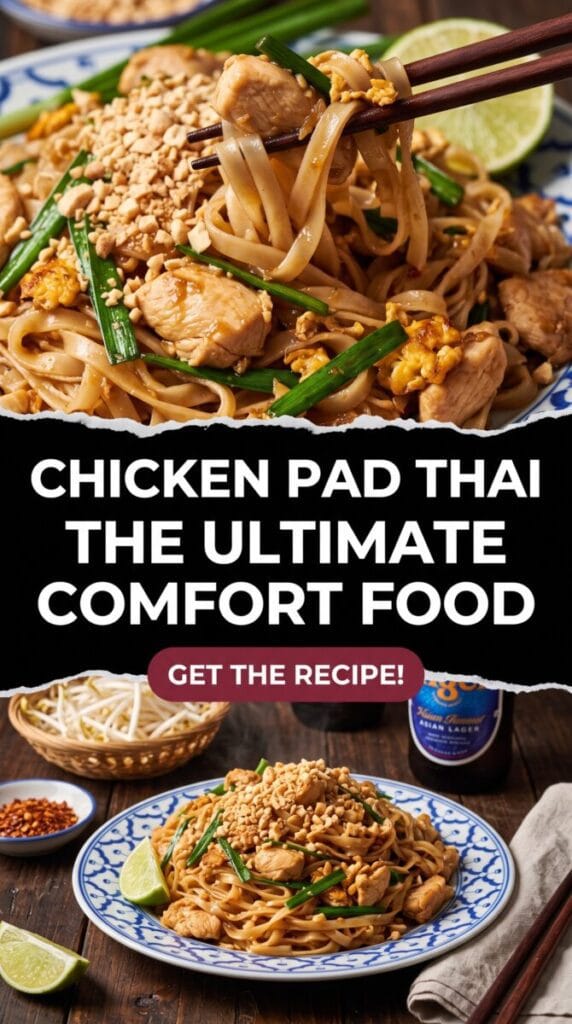
This Chicken Pad Thai is the recipe that finally closes the gap between the version you make at home and the one you order at a Thai restaurant — chewy rice noodles tossed in a complex, sweet-sour-salty tamarind sauce with tender chicken, scrambled egg, crunchy bean sprouts, and a pile of garnishes that make every bite feel customised, all cooked in a single wok over high heat in under 30 minutes.
Pad Thai is Thailand’s most internationally recognised dish for good reason — it balances the four fundamental flavour categories of Thai cooking (sweet, sour, salty, and umami) in a single pan with a technique that is genuinely learnable at home once you understand the two things that most home versions get wrong: using the right noodle with the right soak time, and cooking in smaller batches over the highest heat your stove can produce.
The tamarind-based sauce is what makes pad Thai taste like pad Thai rather than stir-fried noodles with similar ingredients — fish sauce and tamarind together create an irreplaceable combination of salt, umami, and sour that cannot be replicated by substituting soy sauce and lime juice, though both of those are available as a backup for anyone who can’t find tamarind paste.
Why This Recipe Belongs in the Weekly Rotation
Once you have the sauce made and the noodles soaked, the cooking itself takes under ten minutes — high heat, fast movement, everything added in the right sequence. It is a genuinely fast weeknight dinner that tastes like a restaurant meal because the technique is the same rather than a simplified approximation of it.
It also invites customisation at the table with its garnish format — everyone adds their own balance of lime, peanuts, chilli flakes, and fish sauce, which means two people with different palates can eat the same pad Thai and have genuinely different experiences from the same pan.
- Prep Time: 20 minutes (including noodle soaking)
- Cook Time: 10 minutes per batch
- Total Time: 30 minutes
- Yield: 2 to 3 servings — cook in two batches for 4 to 6, since the wok needs space to work
Every Ingredient You Need
For the pad Thai sauce:
- Tamarind paste or concentrate: 3 tablespoons
- Fish sauce: 3 tablespoons
- Palm sugar or light brown sugar: 2 tablespoons
- Oyster sauce: 1 tablespoon
- Warm water: 2 tablespoons (to thin the sauce to the right consistency)
For the stir-fry:
- Dried rice stick noodles (3mm width, often labelled “Pad Thai noodles”): 6 oz (170g)
- Boneless skinless chicken breast or thigh, thinly sliced: 8 oz (225g)
- Neutral oil with high smoke point (avocado, peanut, or vegetable): 3 tablespoons, divided
- Garlic cloves, minced: 3
- Shallot, thinly sliced: 1
- Large eggs: 2
- Bean sprouts, fresh: 1 1/2 cups
- Green onions, cut into 1-inch pieces: 3
- Firm tofu, pressed and cubed (optional): 4 oz (113g)
For the garnish table:
- Dry-roasted peanuts, roughly chopped: 1/3 cup
- Fresh lime wedges: 2 per serving
- Dried chilli flakes or chilli powder: for the table
- Extra fish sauce: for the table
- Extra sugar: for the table
- Fresh bean sprouts: extra for garnish
- Fresh cilantro: optional
How to Cook Pad Thai the Right Way
Preparing the noodles and sauce (do both 20 minutes before cooking):
- Soak the dried rice stick noodles in room-temperature water for 20 to 30 minutes until they are pliable and bend without snapping but are not fully soft — they should still have significant firmness since they will finish cooking in the wok. Do not use boiling water, which over-softens them before the wok cooking begins and produces mushy, clumped noodles.
- Drain the soaked noodles, shake off excess water, and set aside on a plate or in a bowl — they will dry slightly during the 20 minutes of prep, which is fine.
- Whisk the tamarind paste, fish sauce, sugar, oyster sauce, and warm water together in a small bowl until the sugar dissolves and the sauce is smooth. Taste — it should be intensely salty, sour, and sweet simultaneously. Set aside.
Cooking the pad Thai (per batch — do not double the quantities in one wok):
- Heat a wok or large heavy skillet over the highest heat your stove produces until it is visibly smoking — this level of heat is not optional, it is the technique that produces the characteristic slightly charred, wok-flavoured noodle rather than a steamed-noodle result.
- Add 1 tablespoon of the oil and swirl to coat the wok surface.
- Add the chicken in a single layer and sear undisturbed for 90 seconds until golden on one side, then stir-fry for another 60 seconds until just cooked through. Push to the side of the wok.
- Add another tablespoon of oil to the center of the wok, then add the garlic and shallot and stir-fry for 30 seconds until fragrant.
- Add the drained noodles and pour the sauce over them — toss everything together with tongs or chopsticks for 1 to 2 minutes until the noodles absorb the sauce and begin to colour slightly from the high heat.
- Push the noodle mixture to the side of the wok, add the remaining oil to the center, then crack the eggs directly into the hot wok.
- Scramble the eggs briefly — about 20 seconds — until they are just barely set but still wet, then immediately toss the egg into the noodles so it coats them rather than forming a separate scrambled egg component.
- Add the bean sprouts and green onions and toss for 30 seconds — just enough to warm them through without cooking out their crunch.
- Taste a noodle and adjust the sauce balance if needed — add a splash of fish sauce if it needs salt, a squeeze of lime if it needs brightness, a pinch of sugar if it tastes too sour.
- Plate immediately and serve with the garnish components alongside so each person can adjust their own bowl.
Love Asian-inspired noodle dishes that come together this quickly? Our Sweet Soy Butter Korean Rice Cakes use the same high-heat, quick-cooking method with a completely different rice-based noodle and a butter-soy glaze rather than tamarind — a great companion recipe for rotating through different Asian noodle formats in the same weeknight dinner rotation.
The Two Techniques That Make Home Pad Thai Actually Good
The first is heat — genuinely, as-hot-as-your-stove-will-go heat. Pad Thai in a restaurant is cooked in a wok over a jet-burner that produces four to five times more BTUs than a typical home gas burner, which is why the noodles develop that characteristic slight char and smoke flavour known as wok hei that is impossible to fully replicate at home. The closest home equivalent is preheating your wok until it’s visibly smoking before anything goes in, cooking in small batches so the temperature doesn’t drop, and working fast so nothing sits in the pan long enough to steam.
The second is the noodle soak — cold water rather than boiling, and to a specific texture rather than a time. The noodles should be flexible and pliable but still firm when they go into the wok — they will finish cooking in the sauce and the residual heat of the wok, and noodles that are already fully soft will turn mushy and clumped from additional cooking. Under-soaked is always recoverable (more time in the wok), over-soaked is not. According to Serious Eats, the cold-water soak method for rice noodles produces a starchier, more cohesive noodle surface that clings to sauces more effectively than noodles boiled in hot water, which removes more of the surface starch that helps sauces adhere.
Cook in batches of two to three servings maximum. Adding a full four to six servings’ worth of noodles and protein to a single wok drops the temperature dramatically, and the wok cannot recover quickly enough to produce anything other than steamed noodles in a pool of sauce rather than properly stir-fried pad Thai. Two batches are genuinely superior to one large crowded batch, every time.
What to Serve Alongside It
Pad Thai is a complete meal on its own — protein, carbohydrates, and the garnishes together make a nutritionally whole plate. A simple side of steamed or stir-fried greens is the most common accompaniment in Thailand and makes practical sense for anyone who wants more vegetables in the meal.
Our Easy Garlic Bok Choy Stir-Fry cooks in the same time window as the pad Thai and uses the same high-heat wok method — if you have two burners going simultaneously, the bok choy and the pad Thai can finish at the same time, giving you a restaurant-style plated meal from a home kitchen in under 15 minutes of active cooking.
For an Asian-inspired soup to start the meal, our Crock Pot Thai Ginger Chicken Soup provides a light, warming first course that prepares the palate for the bold tamarind and fish sauce flavours in the pad Thai without competing with them.
Variations That Change the Direction of the Dish
Replace the chicken with peeled, deveined shrimp for a shrimp pad Thai that cooks even faster — shrimp are done in 60 to 90 seconds of total cooking time, so add them after the garlic and shallot and watch them closely to avoid overcooking into rubber.
Make it vegetarian by replacing the chicken with firm pressed tofu, substituting soy sauce for the fish sauce (use slightly less since soy is saltier), and adding a tablespoon of lime juice to compensate for the sourness that fish sauce provides alongside its salt.
Add 1 tablespoon of dried shrimp (found at Asian grocery stores) along with the garlic and shallot for a depth of umami that even many restaurant versions skip — dried shrimp is one of the traditional pad Thai ingredients that contributes a background savouriness that is difficult to identify but immediately noticeable by its absence.
If you love stir-fry noodle dishes across different Asian cuisines, our Spring Roll Salad with Peanut Dressing uses the same rice noodles in a completely different no-cook format — the deconstructed spring roll salad is the cold companion to pad Thai’s hot, high-heat intensity and works on the same weekly noodle rotation without any technique overlap.
Nutritional Information
| Nutrient | Amount Per Serving (based on 3 servings) |
|---|---|
| Calories | 520 kcal |
| Protein | 34 g |
| Carbohydrates | 58 g |
| Fats | 14 g |
These values are estimates based on chicken breast, 2 eggs, and the full sauce recipe divided by 3 servings, without garnishes included in the count. Adding 2 tablespoons of chopped peanuts per serving (recommended) adds approximately 100 calories and 9 grams of fat per serving.
Storing and Reheating
Store leftovers in an airtight container in the fridge for up to 2 days. Rice noodles absorb sauce and become softer as they sit, and the noodles in leftover pad Thai will be noticeably different in texture from freshly made — they become stickier, denser, and lose the slight chewiness of freshly cooked noodles. This is unavoidable with rice noodles and is why pad Thai is genuinely best eaten immediately.
Reheat in a hot wok or skillet with a splash of water — 1 to 2 tablespoons per serving — which creates a brief steam that re-loosens the noodles and prevents them from drying into a clump in the pan. A drizzle of extra fish sauce and a squeeze of lime freshens the flavour at the reheating stage. The microwave works but produces uneven heating and tends to make some noodles rubbery and others still cold.
Where Home Versions Go Wrong
Using spaghetti or another wheat noodle instead of rice stick noodles produces a dish that might taste pleasant but is not pad Thai — the specific texture of soaked, wok-cooked rice noodles is the textural experience the dish is built around, and dried rice stick noodles are available at most grocery stores in the international food aisle or any Asian grocery store within a few blocks of any mid-size city.
Skipping the tamarind and using lime juice alone produces a flat, one-dimensional sourness that misses the earthy, complex, slightly funky depth that makes pad Thai taste the way it does — tamarind concentrate is worth finding, and a jar lasts for months in the fridge.
Cooking a full four to six servings in a single wok is the most reliable way to produce soggy, steamed noodles rather than stir-fried ones — the wok cannot maintain high enough temperature when overloaded, and two quick batches always produce a better result than one large crowded one, even accounting for the extra five minutes.
Chicken Pad Thai
Tender chicken, chewy rice noodles, and crunchy bean sprouts tossed in a rich, homemade tamarind sauce. Restaurant-quality flavor in just one wok!
Ingredients
Instructions
Place the dried rice noodles in a large bowl and cover with room-temperature water. Soak for 20–30 minutes until flexible but still slightly firm. Drain well.
In a small bowl, whisk together the tamarind paste, fish sauce, palm sugar, oyster sauce, and warm water until completely smooth.
Heat a wok or large skillet over high heat until it is very hot.
Add 1 tablespoon of oil. Add the sliced chicken and cook until golden and fully cooked through. Push the chicken to one side of the wok.
Add another tablespoon of oil to the empty side, then toss in the minced garlic, sliced shallot, and optional tofu. Stir-fry for about 30 seconds until fragrant.
Add the soaked, drained noodles and pour in the prepared Pad Thai sauce. Toss continuously until the noodles absorb the sauce and become tender.
Push everything to one side of the pan. Add the remaining 1 tablespoon of oil to the empty side, crack in the eggs, and scramble briefly. Once mostly set, mix them thoroughly into the noodles.
Toss in the bean sprouts and green onions. Cook for just another 30 seconds to retain their crunch.
Taste the noodles. Adjust the seasoning with a splash of fish sauce (for salt), a pinch of sugar (for sweetness), or lime juice (for tang) if desired.
Serve immediately, topped with chopped roasted peanuts, extra bean sprouts, fresh cilantro, chili flakes, and lime wedges on the side.
Kitchen Notes
Always soak rice noodles in cold or room-temperature water instead of boiling them. Boiling makes them mushy before they even hit the pan.
Cook over the highest heat possible. This creates the authentic, slightly smoky “wok hei” (breath of the wok) flavor found in restaurants.
If you double the recipe, cook it in two separate batches. Overcrowding the wok drops the temperature and steams the noodles instead of frying them.
Fresh tamarind paste provides the signature sweet-and-sour Pad Thai flavor. Lime juice alone cannot replace its unique depth!
Have every single ingredient chopped, measured, and placed next to the stove before you turn on the heat. The stir-fry happens very quickly.
Refrigerate leftovers in an airtight container for up to 2 days.
Reheat in a hot skillet with 1–2 tablespoons of water to loosen the noodles. Add a fresh squeeze of lime and a splash of fish sauce to revive the flavors.
Freezing is not recommended. Rice noodles lose their chewy texture and become mushy after thawing.