


Creamy Langostino Lobster Bisque Recipe
Lobster bisque is the kind of soup you order in a dining room with cloth napkins, and that’s exactly why I wanted a home version. This creamy langostino lobster bisque is it: a velvety, coral-colored broth built on butter, aromatics, tomato, and sherry, with plump langostino tails folded in at the end. It tastes like a restaurant pulled off the impossible, and it takes forty-five minutes in one pot with ingredients from the freezer section. Four bowls, one loaf of bread, and a Thursday that suddenly has standards.
Let’s clear up the langostino question first, because it deserves an honest answer. Langostino — technically squat lobster, a small crustacean more closely related to crab than to lobster — is the seafood world’s worst-kept secret: sweet, tender, lobster-adjacent meat sold frozen and pre-cooked for a fraction of lobster’s price. In a creamy bisque, where the meat rides in a rich broth rather than starring solo on a plate, the difference is somewhere between subtle and irrelevant, and the savings are not. This recipe exists because of that math.
A few honest notes before you start. Traditional bisque gets its depth from roasted lobster shells, simmered and strained — a weekend project I fully respect and rarely have time for. This version builds the same depth from a sacrifice handful of langostino blended straight into the base (more on that trick below), good seafood stock, and tomato paste. The tails go in whole at the very end, just to warm through, because they’re already cooked and overcooked langostino turns to rubber with real enthusiasm. And plan the bread before you plan anything else — a bisque without something to drag through it is only half a meal.
Why This Bisque Works Without Shells
A classic bisque is a shell story: roast the shells, simmer them into stock, thicken, strain, finish with cream. The shells are where the flavor lives, and skipping them usually produces a soup that tastes like cream with ambition. This recipe’s answer is the sacrifice handful: about a third of the langostino tails go into the pot before blending, where they’re pureed into the base along with the vegetables. That blended meat does roughly what the shells would have done — it puts actual shellfish flavor into the liquid itself, so every spoonful tastes of langostino rather than merely sitting near it. It’s the difference between a bisque and a cream soup with seafood garnish, and it costs you a handful of tails you were already buying.
The rest of the depth comes from layering. Butter-sweated onion, celery, and carrot build the base; tomato paste, bloomed in the hot butter until it darkens, brings the color and the gentle acidity that keeps cream from tasting flat; smoked paprika and a pinch of cayenne add the warmth real shell stock would have contributed; and a splash of sherry deglazes the pot and leaves a faint nutty sweetness behind. Simmer it all in seafood stock for fifteen minutes, then blend until it’s silk. The blender is doing the straining job of the classic version — every bit of vegetable and that sacrifice handful becomes the body of the soup.
The whole tails are treated with the gentleness pre-cooked seafood demands. They go in off the boil, in the final minutes, just long enough to warm through — three minutes, tops. Cream follows at low heat, because boiling cream soup can grain and curdle, and bisque is not the place for texture surprises. The last touches happen in the bowl: a few reserved tails on top, snipped chives, and for the full bistro effect, a tiny drizzle of sherry over the surface, which perfumes the whole bowl as you lean in. Small moves, in a specific order, for a result that eats far above its grocery receipt.
⏱️ 45 MIN | 🦞 LOBSTER TASTE, NO LOBSTER PRICE | 🥣 ONE POT, 4 BOWLS
- Prep Time: 10 minutes
- Cook Time: 35 minutes
- Total Time: 45 minutes
- Yield: 4 generous bowls
The Bisque Pot and Pals
One pot, one blender, done:
- Dutch oven or heavy soup pot — it goes from sauté to simmer to blending station without leaving the stove.
- Immersion blender — the hero. A regular blender works in batches; mind the steam and fill it low.
- Wooden spoon — for the butter, the vegetables, and the tomato paste moment.
- Chef’s knife and cutting board — a small pile of dice, nothing fancy.
- Ladle — bisque is served, not scooped with aggression. Four gentle ladles.
- Fine strainer (optional) — for the truly smooth finish; see the notes before you commit.
Ingredients (With Labels)
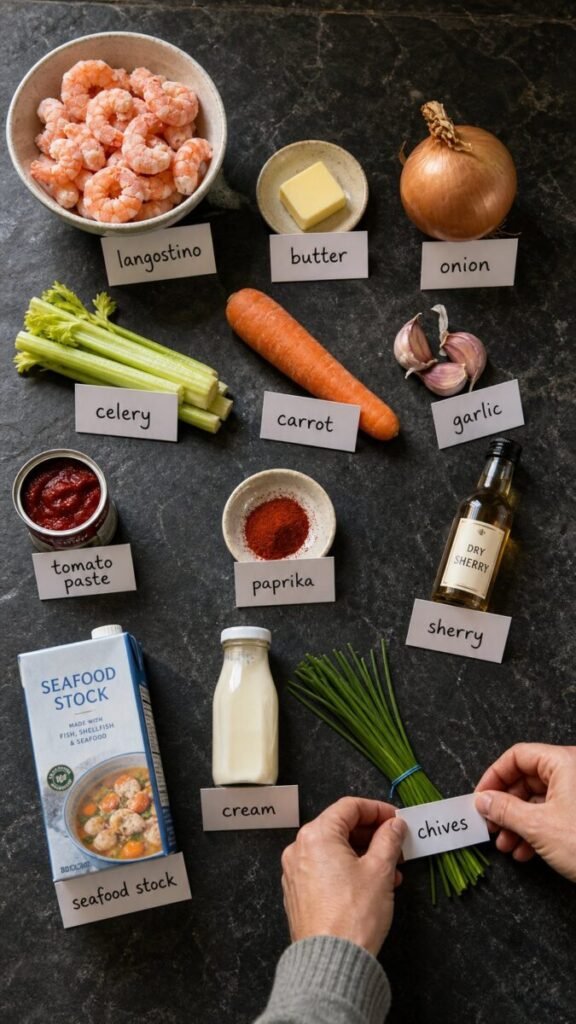
🧅 The Aromatic Base
- Butter: 4 tablespoons, unsalted
- Onion: 1 small, diced
- Celery: 1 rib, diced
- Carrot: 1 small, diced
- Garlic: 3 cloves, minced
🍅 The Depth Builders
- Tomato paste: 2 tablespoons
- Smoked paprika: 1 teaspoon
- Cayenne: a small pinch
- Dry sherry: ¼ cup — or dry white wine; the sherry is the classic bisque note
- Seafood stock: 3 cups — or 2 cups chicken broth plus 1 cup bottled clam juice
- Dried thyme: ½ teaspoon, plus 1 bay leaf
🦞 The Langostino and the Cream
- Langostino tails: 12 oz frozen, cooked, thawed and patted dry — one standard bag
- Heavy cream: ¾ cup
- Salt and black pepper: ½ teaspoon salt to start, pepper to taste
- Lemon: 1 teaspoon of juice, at the end
🌿 At the Bowl
- Chives: snipped, for the top
- Reserved langostino tails: 4 or 5 pretty ones held back for garnish
- Sherry: a tiny drizzle per bowl, optional and worth it
Step by Step How to Make
- Step 1 — Sweat the base. Melt the butter in the pot over medium heat until it foams. Add the onion, celery, and carrot and cook 8 minutes, stirring now and then, until soft and translucent without browning — a sweat, not a fry. This patient start is where the sweetness comes from, and rushing it is the most common way bisque ends up tasting thin.
- Step 2 — Bloom the paste and paprika. Add the garlic, tomato paste, smoked paprika, and cayenne, and stir for 1 to 2 minutes, until the paste darkens from bright red toward brick and the pot smells faintly of a barbecue that found a nicer job. Blooming tomato paste in fat is a ten-second masterclass — it goes from raw and tinny to sweet and deep, and it colors the entire bisque.
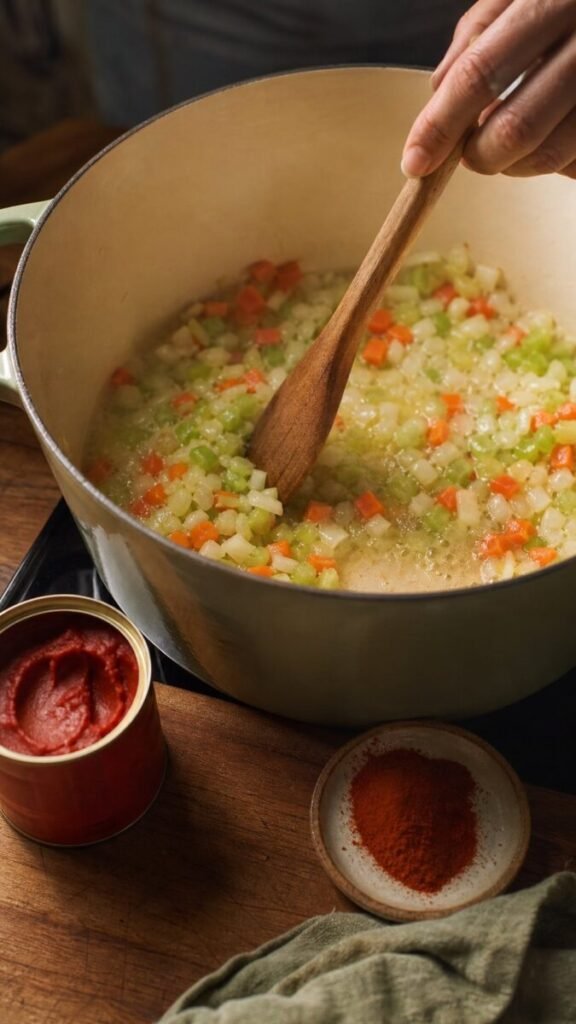
- Step 3 — Sherry, stock, and the sacrifice handful. Pour in the sherry and scrape the bottom of the pot clean as it bubbles — everything stuck down there is flavor. Add the stock, thyme, and bay leaf. Now take about a third of the langostino tails, roughly 4 oz, and drop them into the pot. These are the sacrifice: they’ll be blended into the base to give the broth real shellfish depth. Bring to a boil, drop to a simmer, and cook 15 minutes, uncovered.
- Step 4 — Blend to silk. Fish out the bay leaf. Take the pot off the heat and blend with the immersion blender until completely smooth — a full 2 to 3 minutes, moving the head around, longer than feels necessary. The bisque should be velvety with no visible flecks. This is the step that replaces the classic straining, and it deserves your full attention and your best circular motions.
- Step 5 — Cream in, tails in, gently. Return the pot to low heat. Stir in the cream and warm the bisque until it steams — do not let it boil, because cream soups that boil can grain, and the bisque will hold that against you. Add the remaining langostino tails and let them sit in the hot soup for 2 to 3 minutes, just until warmed through. They’re already cooked; this is a spa visit, not a cooking process. Season with salt, pepper, and the teaspoon of lemon juice, then taste. It should taste rich, sweet, and faintly smoky, with the sherry humming underneath.
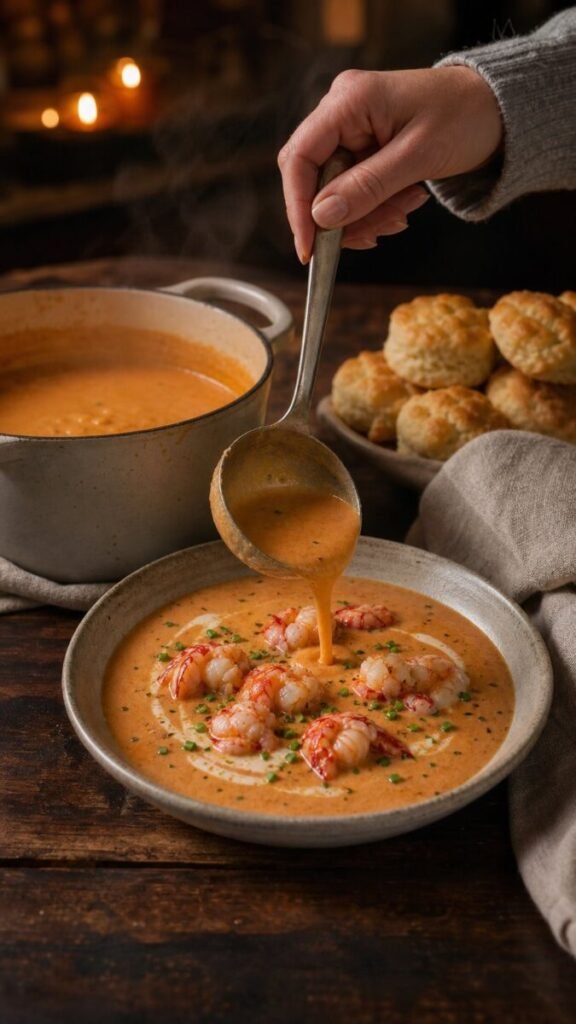
- Step 6 — Bowl, top, drizzle. Ladle into four shallow bowls. Perch the reserved tails in the center of each, scatter chives, and add the optional but strongly encouraged tiny drizzle of sherry over the surface — the aroma rises as you eat, which is the entire reason restaurants do it. Serve with warm bread and a spoon small enough to suggest you’re not in a hurry.
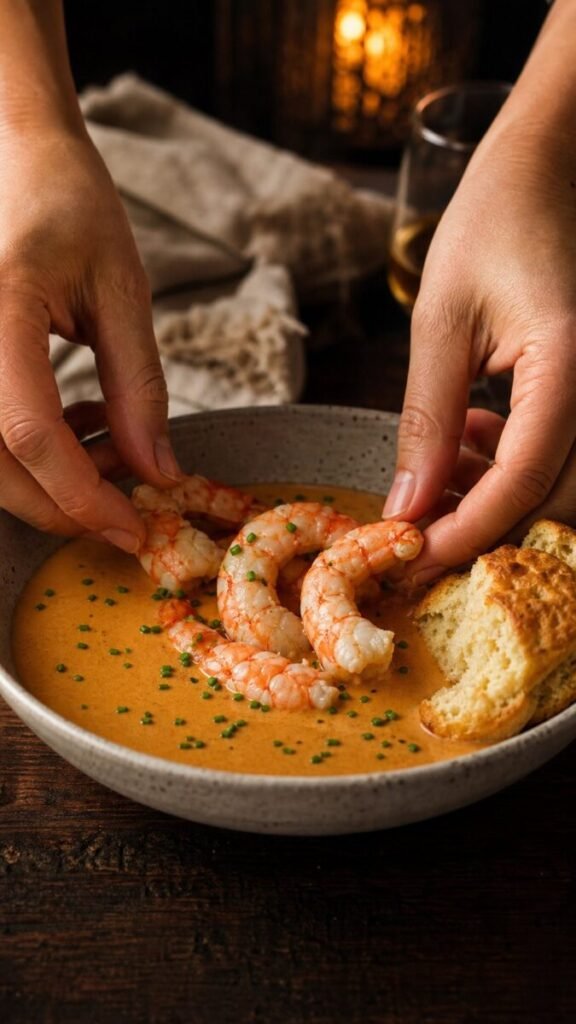
Bisque demands bread with structure, and the house answer is our Buttermilk Biscuits — split warm, dragged through the orange broth, and officially counted as a serving vessel in my kitchen.
Anna’s Kitchen Notes
Where to find langostino. The freezer case, usually next to the shrimp — a 12-oz bag of cooked, peeled tails, often under a store brand. If your store doesn’t carry it, frozen salad shrimp does the same job with slightly smaller, sweeter results, and this recipe becomes shrimp bisque without changing a single step. Real lobster meat works too, of course; it just changes the grocery bill from “Tuesday” to “anniversary.”
Thaw it right, dry it well. Overnight in the fridge, or sealed in a bag in cold water for twenty minutes. Then pat the tails dry before they meet the soup — icy, waterlogged tails bleed melt-water into your carefully built bisque and dilute the finish. Thirty seconds with a paper towel is the last quality control step of the whole recipe.
The strainer question, answered honestly. For a perfectly smooth, restaurant-glass finish, pour the blended base through a fine mesh strainer before adding the cream — it catches the last fibrous bits of celery and tail. I do it for company and skip it for family, and the family has never once filed a complaint. The immersion blender alone gets you 95 percent of the way there; the strainer is the last 5 percent, priced in two minutes of stirring with a ladle.
Sherry is the bistro button. A modest bottle of dry sherry lives in my cupboard for exactly two uses: bisque and soup deglazing. If sherry isn’t happening, dry white wine steps in nicely. If alcohol isn’t happening at all, skip it and add a teaspoon more lemon at the end — the bisque stays good, it just loses a little of its mystique.
The make-ahead curve. The blended base — everything through Step 4 — keeps three days in the fridge and genuinely improves overnight, which makes it the ideal make-ahead dinner party opener. Reheat it gently, then finish with cream and tails at the last minute. What you should not do ahead: add the tails and cream first and reheat twice, because that’s the road to rubber tails and a tired, grainy pot. Base ahead, finish fresh — that’s the whole schedule.
The Bread Basket Rules
Bread is non-negotiable equipment for bisque — it’s a dunking soup wearing a tuxedo. Biscuits are the house standard (see above), but a torn piece of our Crispy Olive Oil Focaccia does magnificent work too, its salted crust catching the creamy broth in every dimple. Serve one or the other warm, and put more in the oven than seems reasonable.
Turning a bowl into a date-night menu: start with the Cold Shrimp Dip with crackers while the bisque simmers, then the bisque with bread as the main event, and keep the whole evening’s pace slow on purpose. On soup-swap nights, it rotates with the Best Broccoli Cheese Soup and Creamy Parmesan Tomato and Cannellini Bean Soup — the three creamy soups that run my winter calendar.
Other Nights, Other Bisques
Shrimp bisque. The most available swap: a 12-oz bag of frozen cooked salad shrimp, same treatment, sacrifice handful and all. It’s slightly sweeter and no worse for it — honestly, this might be the weekday default for most kitchens.
Crab bisque. A tub of lump crabmeat folded in at the end (skip the sacrifice handful — crab costs real money, and every piece should survive whole). A pinch of Old Bay in the base tips it Chesapeake. Same bowl, different accent.
The roasted-tomato detour. Add a halved, roasted red pepper or a cup of roasted tomatoes to the base before blending — the bisque goes deeper orange and a touch sweeter, closer to a chowder’s outgoing cousin. Good in October, when everything wants to be roasted.
Spicy version. Double the cayenne and add a diced jalapeño with the vegetables, then finish each bowl with the sherry drizzle. This is my husband’s bowl of choice, and he calls it “bisque with a pulse,” which I’ve stopped correcting.
Lighter weeknight build. Half cream, half whole milk, and a spoonful less butter — the bisque stays smooth and loses a little of its fur-lined luxury. The blended vegetables and sacrifice handful carry plenty of body on their own, which is the quiet advantage of building a bisque this way.
The Spoonful Count
| Nutrient | Per Bowl (1 of 4) |
|---|---|
| Calories | 340 kcal |
| Protein | 16 g |
| Carbohydrates | 11 g |
| Fats | 25 g |
Estimates for the bisque as written, garnishes and bread on their own recognizance. Langostino is a lean protein doing most of the lifting here, and eleven grams of carbohydrates per bowl makes this one of the lower-carb bowls on the site — the body comes from vegetables and cream, not flour or starch. The fats are mostly butter and cream, which is to say: this is a bisque, and I refuse to apologize for it in its own post. Balance it with a green salad if that helps, and know that the lemon at the end is doing its best.
The Second Pot
The base keeps three days in the fridge and improves on day two, once the tomato and sherry have had a night to think things over. Reheat gently on the stove — steaming, never boiling — and add the cream and fresh-warmed tails only when you’re ready to serve, which is why the smart move is storing the base and the tails in separate containers. One pot of base, portioned, is two easy dinners for two people.
Freezing works for the base alone: cool it completely and freeze up to three months, then thaw overnight and finish with cream and tails fresh. The finished soup with cream and tails can be frozen in a pinch, but the texture comes back slightly grainy and the tails slightly firmer — edible, not elegant, and bisque is nothing if not elegant. Protect the concept: freeze the base, finish fresh.
One reheating law above all others: low and slow on the stove, stirring now and then. The microwave at full power is where creamy soups go to curdle, and a curdled bisque is a genuinely sad thing to witness. Treat the leftovers with the same gentleness you’d give the first pot, and they’ll reward you with a lunch that makes coworkers suspicious of your evening.
Where It Goes Wrong
Rubbery, bouncy tails. They boiled, or they went in too early, or they reheated twice. Langostino is pre-cooked — the whole job is warming it gently for the last two to three minutes. The tails are the most expensive part of the pot; they deserve the gentlest treatment in it.
Thin, flat bisque. The sacrifice handful got skipped, the paste wasn’t bloomed, or the simmer ran short. Each of those steps is a flavor deposit, and skipping the deposits leaves the pot overdrawn. If it’s already served and tastes shy, a pinch of salt and a few extra drops of sherry at the bowl can paper over the gap — next pot, make the deposits.
Grainy, curdled texture. The cream boiled, or the reheat was too aggressive. Keep it below a simmer once cream enters, both tonight and on leftover night. If it’s already grainy, low heat and patient whisking brings back most of the smooth — some of it, at least, enough to serve with confidence and a dimmer switch.
Pale, washed-out color. The tomato paste skipped its bloom, or the stock was weak. The paste needs its minute or two in hot butter to turn brick-red — that color is the bisque’s whole complexion. A splash of paprika bloomed in a little butter stirred in at the end can rescue a pale pot in ninety seconds.
Flecks and fibers in every spoonful. The blend ran short, or the strainer got skipped on a night that needed it. Two to three full minutes with the immersion blender is the target; the fine strainer is the backup plan. Bisque is one of the few soups where texture is the recipe, and texture lives or dies at this step.
Tastes like nothing much, somehow. Almost always under-salt plus missing acid. Cream masks salt and demands more of it than you expect, and the lemon at the end is what makes all the richness readable. Season in small steps, taste between them, and when it’s close but not there: salt first, lemon second, sherry third. That order fixes nine out of ten shy bisques.
Bisque Questions
What exactly is langostino, and is it really lobster?
Honest answer: it’s not lobster. Langostino are squat lobsters — small crustaceans more closely related to crab than to true lobsters — with sweet, tender meat that reads as lobster-adjacent, especially in a creamy, tomato-spiked broth. The name gets used loosely on packaging (“langostino lobster”), and the trade is fairness itself: a fraction of the price for a very close flavor experience in recipes like this one. On a plate with drawn butter, real lobster still wins. In a bisque, nobody at the table has ever asked for a refund.
Can I use real lobster instead?
Absolutely — about ¾ lb of cooked lobster meat, same treatment, and the sacrifice handful becomes a real sacrifice that still works beautifully for flavor. You can also simmer the empty shells in the stock for ten minutes before straining them out, which is the classic technique and worth the detour when lobster is already on the menu. The recipe scales up in elegance exactly as far as your budget wants to take it.
Can I make it without alcohol?
Yes. Skip the sherry, and add an extra teaspoon of lemon at the end plus a splash more seafood stock to deglaze the pot in Step 3. You’ll lose a little of the bistro perfume, and the bisque will still be genuinely good. The sherry drizzle at the bowl becomes extra chives, and nobody stages a protest.
Is there a dairy-free version?
A solid one, actually. Use olive oil or vegan butter for the sauté, and finish with full-fat coconut milk or an oat-based cream — the bisque turns a touch sweeter with coconut, which suits the shellfish, and the blended vegetables keep the body. The color and the tails carry the presentation, and the whole thing stays convincing enough that I’ve served it without pre-announcing anything.
Can I use chicken broth instead of seafood stock?
You can, and the clam-juice blend in the ingredients is the better middle route — straight chicken broth works but leans the bisque toward “cream of vegetable with seafood.” The seafood flavor in the liquid is doing quiet, constant work, and clam juice is the cheapest way to get it. If chicken broth is truly the only option, add an extra handful to the sacrifice pile and let the blender compensate.
Why blend some of the tails instead of leaving them all whole?
Because flavor lives in the meat, and the broth needs some of it. Whole tails only warm in the finished soup — they never flavor the liquid. Blending a handful into the base puts langostino flavor into every spoonful, which is the entire trick this recipe runs on. Without it, you have cream soup with tails in it; with it, you have bisque. One handful is the difference, and the recipe counts on it.
Can I make it ahead for a dinner party?
That’s its best use. The base through Step 4 is your make-ahead: refrigerate up to three days, then reheat gently and finish with cream and tails as guests sit down. The final ten minutes happen while everyone admires the smell from the kitchen, and you get to serve a first course that tastes like you spent the day on it. This is the January dinner-party move in my house, and it has never once let me down.
Silky coral broth · Sweet langostino · Dry sherry
Creamy Langostino Lobster Bisque
A velvety, lobster-style bisque made with cooked langostino tails, butter-softened vegetables, tomato paste, seafood stock, and cream. A portion of the seafood is blended into the base for rich flavor without simmering shells.
As an Amazon Associate I earn from qualifying purchases. Ingredient and equipment links below are affiliate links.
Equipment
Ingredients
The aromatic base
- 4 tablespoons unsalted butter
- 1 small onion, finely diced
- 1 rib celery, finely diced
- 1 small carrot, finely diced
- 3 cloves garlic, minced
The broth & seasonings
- 2 tablespoons tomato paste
- 1 teaspoon smoked paprika
- 1 small pinch cayenne pepper
- ¼ cup dry sherry or dry white wine
- 3 cups seafood stock, or 2 cups chicken broth plus 1 cup bottled clam juice
- ½ teaspoon dried thyme
- 1 bay leaf
The langostino & cream
- 12 oz (340 g) frozen cooked, peeled langostino tails, thawed and patted dry; divided into 4 oz for blending and 8 oz for finishing
- ¾ cup heavy cream
- Up to ½ teaspoon salt initially, then more only to taste
- Black pepper, to taste
- 1 teaspoon fresh lemon juice
The finishing touches
- Snipped fresh chives, for garnish
- 4–5 attractive langostino tails, taken from the 8 oz finishing portion, warmed with the soup
- A few drops dry sherry per bowl (optional)
What’s in the name: Langostino are not true lobsters. This is a lobster-style bisque made with langostino, not a claim that it contains lobster meat. It contains shellfish and dairy; stock ingredients may add other allergens.
Alcohol note: Cooking with sherry does not guarantee all alcohol is removed, and a finishing drizzle is uncooked. For an alcohol-free version, replace the ¼ cup sherry with extra stock, omit the garnish drizzle, and adjust the lemon juice to taste.
Instructions
-
Soften the aromatic vegetables
Melt the butter in a heavy soup pot over medium heat. Add the onion, celery, and carrot. Cook for about 8 minutes, stirring occasionally, until softened without significant browning. Reduce the heat if the vegetables begin to catch.
-
Cook the tomato paste and spices
Add the garlic, tomato paste, smoked paprika, and cayenne. Stir for 1–2 minutes until fragrant and the tomato paste deepens slightly in color. Avoid scorching the garlic or paprika.
-
Deglaze and simmer the base
Briefly move the pot away from the heat before adding the measured sherry; do not pour directly from the bottle near a flame. Return to the heat and stir, scraping up any browned bits. Add the stock, thyme, bay leaf, and 4 oz of the cooked langostino. Bring to a simmer and cook uncovered for about 15 minutes, until the vegetables are tender.
-
Remove the bay leaf and blend
Remove the pot from the heat and discard the bay leaf. Let active bubbling subside. Blend with an immersion blender until as smooth as possible, keeping its head submerged to prevent hot splashes. Follow the appliance’s operating limits rather than running it continuously beyond its recommended time. For an extra-smooth finish, pass the base through a fine-mesh strainer.
-
Add the cream and remaining tails
Return the soup to low heat and stir in the heavy cream. Add the remaining 8 oz langostino, including the tails intended for garnish. Heat gently until thoroughly hot, following the seafood package’s reheating directions. If a reheating temperature is specified, check it with a thermometer; do not rely on a fixed 2–3 minutes alone. Avoid a prolonged boil. Remove from the heat and season with salt, black pepper, and lemon juice to taste.
-
Ladle and garnish
Lift out a few warmed tails for garnish, then divide the bisque among 4 bowls. Arrange the reserved tails on top, scatter with chives, and add a few drops of dry sherry only if desired and appropriate for your guests. Let the hot soup cool slightly before eating.
Hot-blender safety: If using a countertop blender, use only one approved for hot liquids. Let the soup cool somewhat, blend in small batches below the manufacturer’s hot-fill limit, and vent the lid as directed. Start on low speed. Never blend hot soup in a sealed personal blender.
Seafood and timing: The 45-minute estimate assumes fully thawed, already-cooked langostino. Thaw in the refrigerator according to the package instructions; do not thaw on the counter. Keep the finishing portion refrigerated while the base cooks. If reheating a previously cooked and chilled batch of soup, bring it to 165°F (74°C).





I’ve been scrolling for 15 minutes looking for the recipe?? Did you forget to attach it?
Hi Kris!
We just updated the post and added the recipe card so you can see all the ingredients and steps right away.