Fast 5-Ingredient Football Dip | Game Day Snack
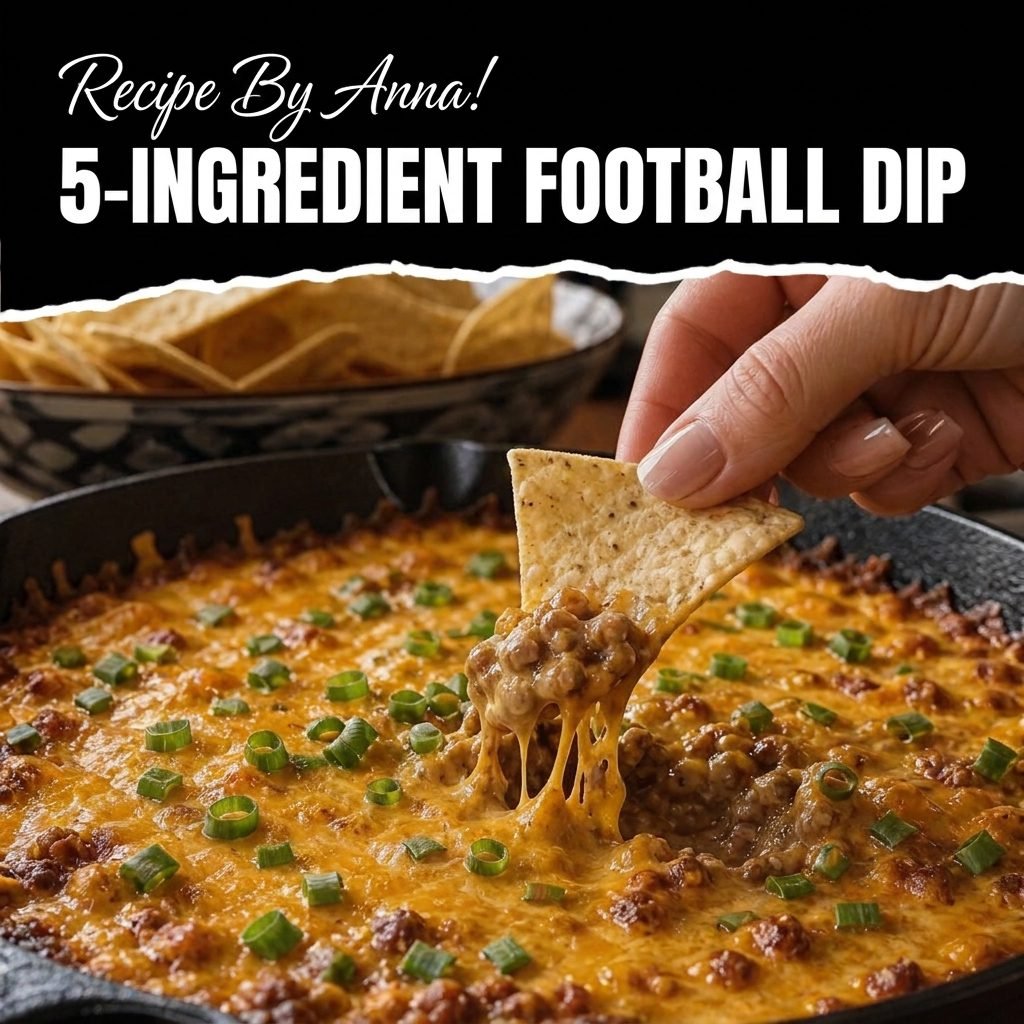
Every game day table needs one hot, cheesy, spoon-dragging dip that people crowd around while the game does whatever it’s going to do, and this is mine: five ingredients, one oven-safe skillet, about thirty-five minutes, and a bubbling cheddar lid that gets its own round of applause. The starting five are ground beef, taco seasoning, cream cheese, salsa, and shredded cheddar — browned, bloomed, married into one glossy base, and baked until the top goes golden. It’s taco night and queso and chips-and-dip collapsed into a single skillet, which is exactly the kind of consolidation a game day menu needs. You will not need a second hot appetizer. You will need a second bag of chips.
What makes this version worth its own recipe, when the internet is full of five-ingredient dips? Two coaching decisions, mostly. The first: the dip is built as one thing, not layers — the cream cheese and salsa get stirred into the hot, seasoned beef off the heat until they become a single smooth, scoopable sauce, instead of sitting under it as a cold block that bakes into clumps. The second: the taco seasoning gets thirty seconds of direct contact with the hot beef fat before anything liquid joins the party, because those spices are oil-soluble and mostly flavorless in water — the same reason every good chili starts by toasting its spices. Neither decision adds a single ingredient or more than two minutes. Together they’re the gap between “fine, it’s a dip” and the dip people text you about the following week.
Honest notes before kickoff. This is not health food, and I refuse to pretend otherwise — it’s once-a-weekend party food, and it earns its slot. The five ingredients are the five ingredients: the green onions, olives, and jalapeños that finish it are the bench squad, optional and uncounted, like every good bench. Timing is forgiving — the dip can be assembled hours ahead and baked at halftime, or held warm through a long overtime — and the full make-ahead playbook is below. Serve it in the skillet it was born in, set it on a trivet with a stack of napkins, and warn nobody. The first scoop tells them everything.
The Starting Five
Since we’re calling it a football dip, let’s run the roster like one, because the positions genuinely explain the recipe. The ground beef is the offensive line — it does the heavy lifting, it’s the reason this reads as a meal and not a cheese spread, and it carries everything else forward. Brown it properly and drain the excess fat, and it plays above its weight class. The taco seasoning is the coaching staff: it doesn’t touch the field much — two tablespoons of powder for a whole pound of beef — but it calls the plays for every other ingredient, and skipping its thirty-second toast is like skipping practice and expecting the playbook to run itself.
The cream cheese is the quarterback, and I mean that as the highest compliment: it distributes. Melted into the hot base, it turns seasoned beef and salsa into something cohesive, scoopable, and stable for an hour on the table — the binding structure that keeps the dip from being a pile of ingredients with opinions. The salsa is the wide receiver — the flash and the acidity, the tomatoes and the brightness that keep a rich dip from flatlining into heaviness, the one starter you can sub freely (mild to hot, chunky to smooth) without changing the system. And the cheddar plays both ways: half of it melts into the base for depth, half of it goes on top and takes the oven’s heat directly, browning into the lid that makes the whole skillet look like a victory. Five starters, one formation, no weak side.
Now the two techniques that make the roster play together, because they’re short and they matter. Blooming the seasoning: cumin, chili powder, and their teammates are fat-soluble aromatics that need heat and fat to unlock, and thirty seconds of stirring the powder into the hot, drained beef does more for the final flavor than doubling the amount would. It’s the difference between a dip that tastes like seasoned beef and a dip that tastes faintly like a packet was nearby. And the marriage: cream cheese added cold in one lump to a hot pan seizes into clumps that never fully dissolve, but cream cheese cut into cubes and stirred into beef that’s off the heat melts gradually, evenly, and completely — one sauce, zero clumps, and the dip’s entire texture depends on it. Both moves are in the steps. Both take less than a minute each. Neither is optional, and the roster knows it.
⏱️ 35 MIN | 🏈 FIVE STARTERS | 🥣 ONE SKILLET, START TO FINISH
- Prep Time: 5 minutes — cubing the cream cheese is the hardest part
- Cook Time: 10 minutes on the stove, 10 to 12 in the oven
- Total Time: about 35 minutes, halftime-friendly
- Yield: one 10-inch skillet — 8 solid servings, or 6 during a close game
The Prep Locker
The equipment list is one skillet and a few supporting players:
- 10- or 12-inch oven-safe skillet — cast iron is the MVP: it browns, it bakes, it holds heat on the table for a solid half hour. Any stove-to-oven skillet works.
- Wooden spoon or sturdy spatula — for breaking up the beef and the big stir.
- Hot pad or trivet — the skillet goes from oven to table, and the table would like to survive.
- Cutting board and knife — for cubing the cream cheese and slicing the bench toppings.
- Foil — for the hold-warm play and the make-ahead bake.
- Big bowl for chips — the serving vehicle. Sturdy chips, not the delicate kind; this dip has a linebacker’s body.
Ingredients (With Labels)
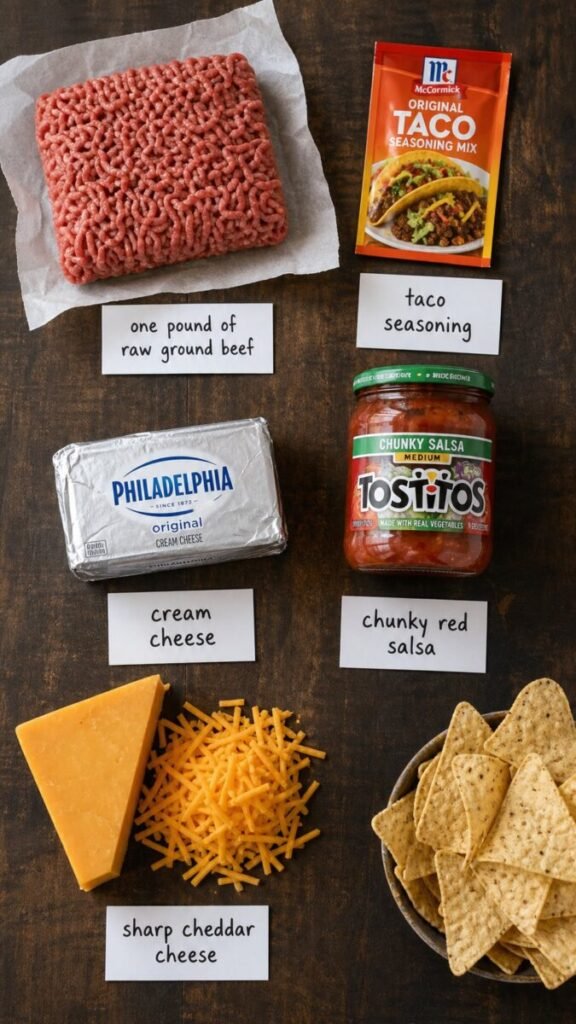
🥩 The Meat and the Playbook
- Ground beef: 1 lb lean (85/15) — enough fat for flavor, not enough to drain a lake
- Taco seasoning: 2 tablespoons — one packet, or your favorite jar
🧀 The Dairy
- Cream cheese: 8 oz block, cubed — the full block, no negotiating
- Sharp cheddar: 2 cups shredded — half in the base, half as the lid
🍅 The Flash
- Salsa: 1 cup, as thick as you can find — the body of the sauce
🏈 The Bench (optional, uncounted)
- Tortilla chips: two big bags — trust me on the number
- Green onions, black olives, pickled jalapeños: for the finish, sliced
Step by Step How to Make
- Step 1 — Brown and drain. Break the beef up in the dry skillet over medium-high heat and let it brown properly — real browning, with crusty bits and color, not the gray steam-through that comes from fussing with it every ten seconds. Four to five minutes, stirring once or twice. Then the verdict: tilt the pan and spoon off all but about a tablespoon of the rendered fat. That tablespoon is flavor and it stays; the rest is a grease slick on top of your finished dip, and it has no position on this team.
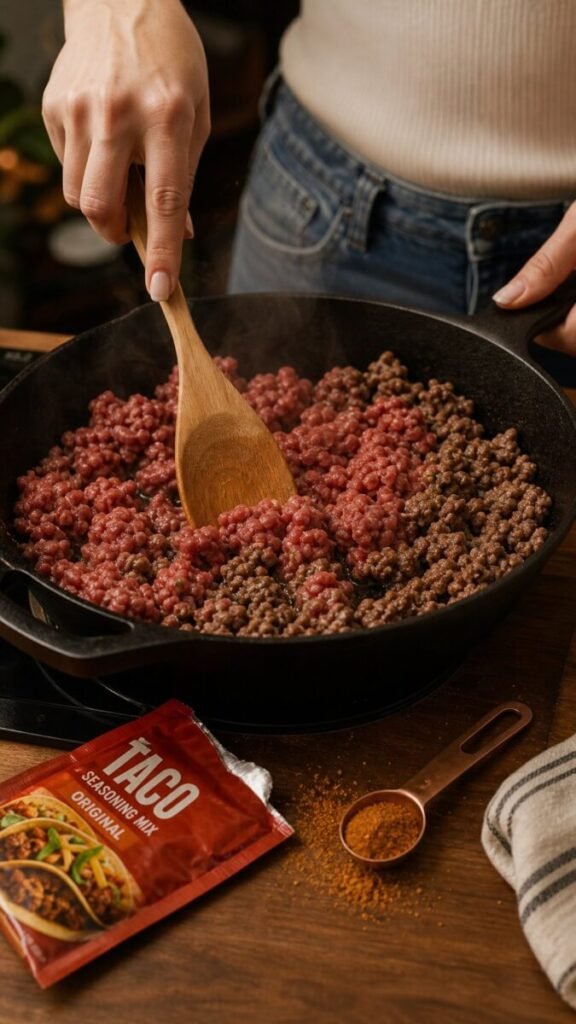
- Step 2 — Bloom the playbook. Heat down to medium-low. Sprinkle the taco seasoning over the beef and stir it through for a full 30 seconds — it should smell suddenly, dramatically like tacos, the moment the spices hit the hot fat and open up. This is the step people skip and then blame the recipe. The seasonings are oil-soluble; thirty seconds in warm fat extracts more flavor than twice the powder stirred into cold salsa ever could. Count to thirty. It’s the cheapest upgrade in the sport.
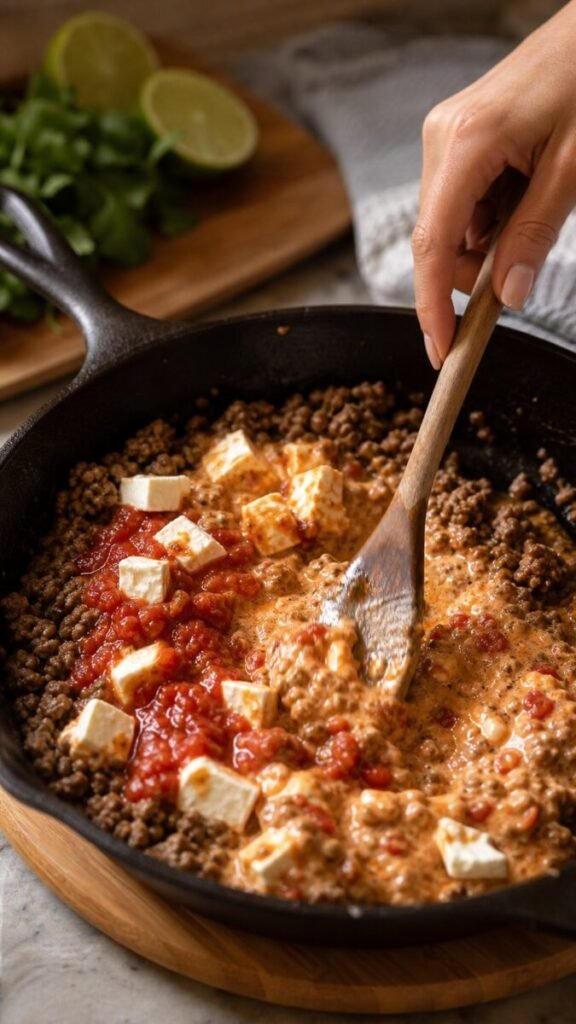
- Step 3 — The marriage. Take the skillet off the heat entirely. Add the salsa and the cubed cream cheese, and stir — patiently at first, then with confidence — as the residual heat melts the cubes into the beef and everything becomes one glossy, unified, orange-cream sauce with the beef suspended through it. Back over the lowest heat for a minute if it needs help, but off-heat is the move: gentle melting makes one sauce, and a hard boil makes a broken one. Stir in half the cheddar. Taste. It should be boldly seasoned and just slightly salty — the oven mellows it a shade.
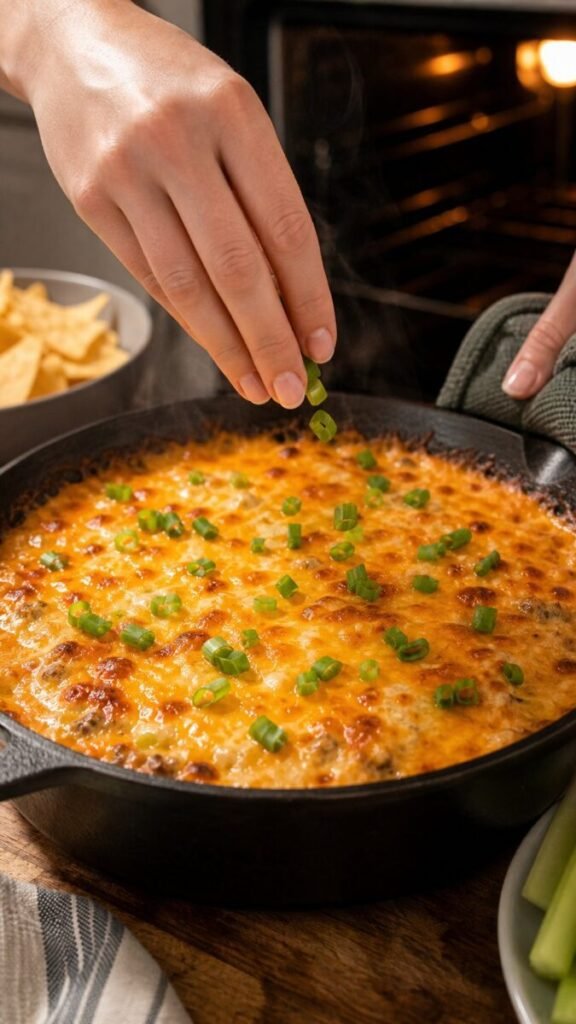
- Step 4 — The lid and the bake. Heat the oven to 400°F. Smooth the dip level in the skillet and scatter the remaining cheddar across the top, edge to edge — this is the lid, and it wants full coverage. Bake 10 to 12 minutes, until the dip bubbles at the edges and the lid has gone from melted to genuinely golden in spots. If you want the full stadium lights, give it 90 seconds under the broiler first — watched constantly, because the gap between browned and burnt is one commercial break. Straight from oven to trivet, no detours.
- Step 5 — Send in the bench. While the dip bakes, slice the green onions, drain the olives, and set out the jalapeños. The moment the skillet lands, scatter them over the molten lid — green, black, and red over the gold, which is a color scheme the sport thought of first. Put the chip bowl beside it with a spoon for the cautious and a warning for the ambitious: the center of that skillet is roughly the temperature of the sun’s surface, and the edge is where smart scouts start.
- Step 6 — The hold and the refill. The dip is at its best for the first half hour and honest for the hour after, especially in cast iron, which holds heat like a grudge. For a longer game, the hold plays: a 200°F oven with a foil tent keeps it bubbling gently indefinitely, and a slow cooker on low is the away-game version — the full playbook is in the halftime section below. When the surface finally scuffs down to bare dip, that’s not the end; it’s the layer with the most cream cheese and the most seasoning, and the informed fans know it. The skillet is officially empty when a chip comes back clean and someone looks personally wronged.
Between this skillet and the easy Texas trash dip, the hot-dip position on your party table now has genuine depth. Start both, and the chip is always in play.
Anna’s Kitchen Notes
The drain is a verdict, not a suggestion. A pound of 85/15 beef gives up several tablespoons of fat, and every one of them left in the pan rises to the top of your finished dip as a glossy orange slick — great for a pie crust, wrong for everything here. Spoon off all but a tablespoon. The tablespoon that stays carries the spice bloom and the beef flavor; the rest is just weather.
Thick salsa or no salsa. The salsa is doing structural work — its tomato body is what makes the cream cheese into a sauce instead of a spread — and a watery jarred salsa pours that water straight into the dip, where it never fully integrates. Shop for the thickest, chunkiest jar in the aisle (the kind that clings to a chip), or drain yours through a strainer for a minute before it joins. This is the one ingredient where the brand genuinely matters, and it takes one glance at the jar to get right.
Block cheddar, site doctrine. You know this one by now, and it matters double here because the lid is the visual: pre-shredded cheese is coated in anti-caking starch that makes it melt grainy and brown patchy, and the lid deserves better. Thirty seconds with a grater against a block of sharp cheddar, and the top of your dip looks like the top of a good pizza. The bagged stuff still tastes fine in the base, but the lid is the recipe’s face.
Cubes melt, lumps don’t. The single most common texture failure in cream cheese dips is a block going into a hot pan and seizing into clumps. Cut the cold block into eight or nine cubes before the skillet work starts, and stir them in off the heat — the gentle, even melt is what makes the marriage take. If you forget and find clumps anyway, low heat and patient stirring fixes most of it, but the cubes are the difference between a two-minute stir and a ten-minute apology.
Double it into the slow cooker. The double batch is the party move: brown and bloom a doubled quantity of beef on the stove, then transfer everything to a slow cooker and let it go on low for an hour to marry and melt, lid of cheddar and all. It holds at serving temperature for the entire game, the lid insert carries to the table, and you’ve bought yourself an afternoon. Every big-party play I run ends in this exact appliance.
The Tailgate Table
A hot dip anchors the table, and the rest of the spread should cover the other bases. The pigs in a blanket are the classic warm hand-food beside it — different shape, same energy — and the keto Rotel sausage balls are the dip’s own flavor family in scoopable, low-carb ball form, for the guests who skipped the chips.
To round out the table: the Frito corn salad is the crunchy, sweet-salty side that resets a palate between hot bites, the jalapeño cream cheese dip gives the heat-seekers their own cold bowl to circle, and the puff pastry twists are the flaky, elegant touch that makes a spread of dips look like a considered menu instead of a raid. One skillet, five satellites, and a table that feeds from kickoff to the final whistle.
Same Dip, Other Sundays
The Rotel swap. Trade the salsa for a drained can of Rotel with green chiles — more heat, more tomato clarity, and the dip sharpens into something closer to a taco skillet queso. Same five-count, same method. This is the sub I make most often, and the one my spice-forward friends request by name.
The buffalo chicken conversion. Rotisserie chicken instead of beef, buffalo sauce instead of salsa, ranch seasoning instead of taco — the formation holds with three new starters, and the result is a buffalo chicken dip that still tastes like five honest ingredients. Cream cheese and cheddar stay. Some systems are too sound to change.
The sausage play. Bulk breakfast sausage instead of beef, and the dip goes smoky-sweet with no other changes. Skip the draining — sausage leanness varies, so spoon off only if there’s a visible pool — and bloom the taco seasoning the same way. This is the tailgate version, the potluck version, and arguably the breakfast-for-a-crowd version, and it has never once been the wrong call.
The vegetarian roster. A can of drained black beans and a drained can of corn standing in for the beef — no browning, just warmed through with the bloomed seasoning and a splash of oil. It’s not the same dip, and it’s not trying to be; it’s the plant-based slot on the same team, and it holds its own at the table longer than you’d expect.
The nacho pour. Skip the bake, spread a bag of chips across a sheet pan, and pour the finished stovetop dip over the whole thing with the lid cheese on top and a two-minute broil. Same recipe, nacho format — the faster, messier, equally beloved road win.
The microwave version, honestly rated. Fully cooked dip reheated, or a small single-serving batch melted in a bowl in two-minute bursts, stirring between. It works, it’s hot, and the texture holds at about eighty percent — fine for a Tuesday night solo game, not for a party with witnesses. The skillet version is the one people remember; the microwave is the one that knows its role.
The Scoop Count
| Nutrient | Per Serving (1 of 8) |
|---|---|
| Calories | 320 kcal |
| Protein | 19 g |
| Carbohydrates | 3 g |
| Fats | 25 g |
Estimates as written, lid and bench toppings included, chips cheerfully excluded. The honest read: this is party food, and the numbers wear that badge — a full quarter of the calories come from fat, most of it dairy, which is the entire point of a hot cheese dip. The quieter news is the protein: nineteen grams a serving with only three of carbohydrate makes this one of the most keto-friendly things on any game day table, and a scoop or two over celery instead of chips turns it into a genuinely low-carb plate. I’m not claiming it’s a health food. I’m claiming it works harder than it looks, and the nutrition label agrees.
The Halftime Plan
Make-ahead runs in three tiers. The night before: brown, bloom, and marry the dip on the stove, cool it, lid it, and refrigerate the whole skillet — then bake at halftime with five extra minutes from cold, straight from the fridge, foil off. The morning-of version is the same schedule with less urgency. Fully baked leftovers keep three days in the fridge and reheat covered in a 350°F oven for about fifteen minutes, or in the microwave in bursts for a solo serving — the texture comes back more honestly than most cheese dips manage, which the cream cheese deserves credit for.
The freezer works too: cooled, unbaked dip in a freezer container keeps two months, thawed overnight in the fridge and baked as usual with the cheddar lid added from frozen. Expect a slightly grainier first few minutes of reheating — the cream cheese and the beef fat re-emulsify as they come fully up to heat, so stir once at the edges and give it a minute. The slow cooker is the long-game hold: already-cooked dip on low, covered, for up to two hours of gentle bubbling, which covers any overtime situation the schedule throws at you.
Leftover careers, because a double batch always outlives the game: the cold remainder is a legitimate burger spread and an even better burrito filler, warmed scoops belong over rice with lettuce and sour cream — instant taco bowls — and a thin leftover layer under eggs the next morning is the breakfast nobody planned and everybody finishes. There are worse fates for a dip than becoming three more meals, and this one retires with honors.
Where It Goes Wrong
A grease slick on top. The beef fat wasn’t drained. Everything else can be perfect and the dip still opens with an oily film that coats chips and palates alike. The fix is the tilt-and-spoon in step one — all but a tablespoon, every time — and if you’re staring at a finished slicked dip right now, lay a paper towel against the surface for ten seconds and let it lift what it can. Prevention is easier; the spoon is right there.
A bland dip with all the right ingredients. The bloom got skipped. Taco seasoning stirred into cold salsa or sprinkled over the finished dip tastes like dust with ambition; the same two tablespoons toasted into hot beef fat for thirty seconds tastes like the reason people asked for the recipe. If the dip is already assembled and tastes flat, it wants salt first and heat second — and next time, the thirty seconds.
Clumps of cream cheese that never melted. The block went in whole, or the pan was boiling hard when it did. Cream cheese melts smoothly with gentle, gradual heat and seizes with sudden heat — off-heat cubing is the cure, and patient stirring is the backup. A whisk and two minutes over the lowest flame rescues most batches; the ones that won’t come back usually had too much liquid added at once, so pour the salsa in gradually if your jar runs thin.
A watery, weeping dip. Thin salsa, or a dip that boiled instead of simmering through its bake. Water in this dip never fully integrates — it pools at the bottom and releases on the scoop — so buy the thickest jar you can, drain anything suspicious, and pull the skillet when the edges bubble rather than letting it roll at a full boil. A watery finished dip can be saved on the stove: ten minutes of gentle simmering evaporates most of the excess, and the texture re-tightens as it cools.
A pale, rubbery lid. Pre-shredded cheese, or an oven that never got hot. The lid is the recipe’s face, and it needs real heat and real cheese to brown: block cheddar, a fully preheated 400°F, and the broiler for the final ninety seconds if the oven’s browning is polite. A rubbery lid also means the bake ran long — the dip only needs the bubble-and-golden signal, not a scheduled twenty minutes, and cheese that’s overcooked firms into something no chip deserves.
A cold center with hot edges. A fridge-cold skillet went into the oven without the extra minutes, or the dip was served straight from the refrigerator without reheating. Cast iron holds cold as stubbornly as it holds heat, so baked-from-cold wants five extra minutes and a stir-check at the halfway mark. And any reheated dip should be hot through at the center before it hits the table — a warm edge and a cold middle reads as unfinished, and this dip finishes things. That’s the whole brand.
Sideline Questions
Can I make this dip ahead of time?
Yes, and it’s arguably better for it — the night-before version gives the seasonings all night to settle into the beef and the cream cheese. Brown, bloom, and marry the dip, cool it in the skillet, refrigerate covered, and bake at party time with about five extra minutes since it’s starting cold. The cheddar lid goes on right before it bakes. There’s no texture penalty for the make-ahead route; the only rule is that the lid waits for the oven.
Can I keep it warm in a slow cooker?
That’s the away-game play, and it works twice. The assembly version: brown and bloom the beef on the stove, then finish the marriage in the slow cooker on low for an hour before serving. The holding version: transfer the baked dip to the cooker on low, covered, for up to two hours of gentle bubbling. Either way, the lid of cheddar goes on when the dip is hot and stays under the cooker’s own lid until serving. The dip’s texture holds because the heat is low and the cream cheese is patient.
What can I use instead of ground beef?
Ground turkey or chicken work with one adjustment: they’re leaner, so add a tablespoon of oil to the pan for the spice bloom, and don’t expect a drain. Bulk breakfast sausage is the smoky-sweet sub that needs no changes at all. Shredded rotisserie chicken works as a no-brown version — stir it in warm with the seasoning and a splash of oil. And the black bean and corn build in the variations is the standing plant-based option. The formation is bigger than any one starter.
How do I make it spicier?
Three dials, in order of impact: hot salsa instead of mild, a can of drained Rotel with green chiles instead of the salsa entirely, and a minced fresh jalapeño or a pinch of cayenne stirred in with the seasoning. The bench contributes too — pickled jalapeños on top add a sharp, vinegary heat that the creamy base plays off beautifully. Heat is the easiest thing to add and the hardest to remove, so build up in one step, taste, and repeat.
What should I serve with it besides chips?
Sturdy tortilla chips are the classic and the correct default — get the restaurant-style ones, because this dip breaks delicate chips. Beyond that: celery and carrot sticks for the low-carb table, bell pepper scoops, pretzel bites for the sweet-salty crowd, and toasted baguette rounds when you want the dip to read a shade more elegant. The nacho pour in the variations is the full-commitment option, and it has never once been the wrong decision at my house.
Can I freeze it?
Yes — cooled, unbaked, in a freezer container for up to two months, with the cheddar lid added after thawing. Thaw overnight in the fridge and bake as written with a few extra minutes. The honest note: cheese dips can reheat slightly grainier after freezing, and this one mostly recovers as it comes fully up to temperature — give the edges a stir once it’s bubbling. Fresh is best, frozen is very good, and the freezer has saved more than one canceled-then-uncanceled party.
Is this dip gluten-free?
The dip itself, usually yes — ground beef, cream cheese, salsa, and cheddar are all naturally clear, and most taco seasoning packets are gluten-free, but the packet is the one label worth reading because a few brands use wheat as a filler. Verify the seasoning and serve with corn tortilla chips, and the whole board is gluten-free with zero effort. That’s the quiet advantage of a five-ingredient recipe: there are only five labels to check.
Five starters · One skillet · Ready for kickoff
5-Ingredient Football Dip: The Best Easy Dip for Your Game Day Party
Browned ground beef, taco seasoning, cream cheese, thick salsa, and sharp cheddar stirred into one creamy skillet dip. A bubbling cheese topping and sturdy tortilla chips make it an easy centerpiece for the game-day table.
As an Amazon Associate I earn from qualifying purchases.
Ingredients
The starting five
- 1 lb ground beef, preferably 85% lean
- 2 tablespoons taco seasoning — measure it; packet sizes vary
- 8 oz block cream cheese, cut into small cubes
- 1 cup thick salsa, mild, medium, or hot
- 2 cups shredded sharp cheddar, divided
Optional dippers & toppings
- Sturdy tortilla chips, for serving
- Sliced green onions, optional
- Sliced black olives, drained, optional
- Sliced pickled jalapeños, drained, optional
Five ingredients means the dip itself: chips and optional garnishes are extras. The salsa, seasoning, and cheeses already contain salt, so taste the cooked mixture before considering any additional seasoning.
The game-day kit
- Deep 10-inch oven-safe skillet, or a 12-inch skillet, rated for 400°F
- Wooden spoon or sturdy heatproof spatula
- Cutting board and knife
- Box grater
- Measuring cups and spoons
- Instant-read food thermometer
- Oven mitts and a heat-resistant trivet
- Chip bowl and serving spoon
Thick salsa helps: if yours has a large amount of watery liquid, drain it briefly before measuring the cup. Aim for a scoopable dip, not a dry paste.
Check the skillet: the pan, handle, and any attachments must be oven-safe. Optional broiling requires explicit broiler approval—not just an oven-safe label.
How to make it
-
Preheat, brown the beef, and drain
Heat the oven to 400°F. Cook the ground beef in the skillet over medium-high heat, breaking it into small crumbles. Allow some contact time with the pan for browning, then stir as needed. Cook for about 6–8 minutes, or until fully cooked to 160°F. Spoon off excess rendered fat, leaving approximately 1 tablespoon or a light coating in the pan.
-
Briefly bloom the taco seasoning
Reduce the heat to medium-low. Sprinkle the taco seasoning over the beef and stir for about 30 seconds, just until fragrant. Do not let the spices scorch; if the pan is very hot, lift it off the burner briefly before continuing.
-
Stir in the creamy base
Remove the skillet from the heat. Add the salsa and cubed cream cheese, stirring until the cheese softens into the beef mixture. Return to low heat as needed and stir patiently until smooth and evenly combined. Avoid a hard boil. Stir in 1 cup of the cheddar until melted, then taste the fully cooked mixture.
-
Top with cheddar and bake
Smooth the dip evenly in the skillet and scatter the remaining 1 cup cheddar across the surface. Bake for about 10–12 minutes, or until the cheese is melted and the dip is bubbling and hot throughout. Check that the center reaches 165°F. A deeper skillet or cooler starting mixture may need longer; edge bubbling alone does not confirm the center is hot.
-
Brown briefly if desired, then rest
For additional color, broil after baking only if the skillet is approved for broiler use. Watch continuously for about 30–90 seconds and remove as soon as the cheese develops golden spots. Follow your oven’s instructions for rack distance and door position. Using oven mitts, place the skillet on a heat-resistant trivet and let the dip settle for 3–5 minutes.
-
Add the optional toppings and serve
Scatter with sliced green onions, drained olives, and pickled jalapeños if using. Serve with sturdy tortilla chips and a spoon for portioning. Warn guests that both the dip and the skillet handle are hot, and position the handle away from the edge of the table. For extended service, transfer the hot dip to a preheated warmer that maintains the food at 140°F or above.
Safe game-day holding: a warm skillet, a 200°F oven setting, or a slow cooker marked “low” does not by itself verify safe food temperature. Check that the dip stays at least 140°F. Without temperature-controlled hot holding, refrigerate within 2 hours, or 1 hour above 90°F. Reheat refrigerated dip to 165°F before transferring to a warmer; do not use a slow cooker to slowly reheat a cold batch.
Allergen check: this dip contains dairy. For gluten-free needs, verify the taco seasoning, salsa, cheeses, and tortilla chips, including cross-contact labeling.