

Healthy Potato Spinach Curry | Flavorful One-Pot Meal
Potato and spinach curry — called aloo palak or saag aloo in Indian cooking depending on the spice base and the spinach preparation — is one of the most satisfying vegetarian dinners in existence, and also one of the most unfairly overlooked. People who would never consider making Indian food at home assume it requires specialty spices, exotic ingredients, and technique they do not have. None of those things are true for this recipe.
What this curry requires is a pantry with cumin, coriander, turmeric, and garam masala — all of which are available in any supermarket — potatoes, spinach, a can of tomatoes, and about 40 minutes of mostly hands-off simmering. What it produces is a rich, golden, deeply fragrant curry with tender potato pieces and silky wilted spinach in a tomato-based sauce that is complex enough to make you question why you were ever ordering takeaway when this is achievable on a Tuesday.
It is also completely vegan as written, high in fibre, and the kind of dinner that genuinely improves on day two as the spices settle into the surrounding sauce. Make extra. You will want the leftovers.
The Bhuna Method — Why This Curry Tastes Like a Restaurant Made It
The technique that distinguishes a deeply flavoured curry from a flat one is called bhuna — cooking the spices, aromatics, and tomato base down until the oil separates and rises to the surface before adding any liquid. This separation of oil (called “bhunao” in Hindi, meaning to stir-fry) signals that the raw flour taste has cooked out of the spices, the tomato has fully caramelised, and the base is fully developed. Adding water or stock before this point produces a watery, thin curry that tastes of raw spice. Waiting for the oil separation produces a deeply flavoured, thick, restaurant-quality sauce base that the potato and spinach cook into rather than just sitting in.
It takes an extra 5 minutes. It makes an enormous difference.
- Prep Time: 15 minutes
- Cook Time: 30 minutes
- Total Time: 45 minutes
- Yield: 4 servings
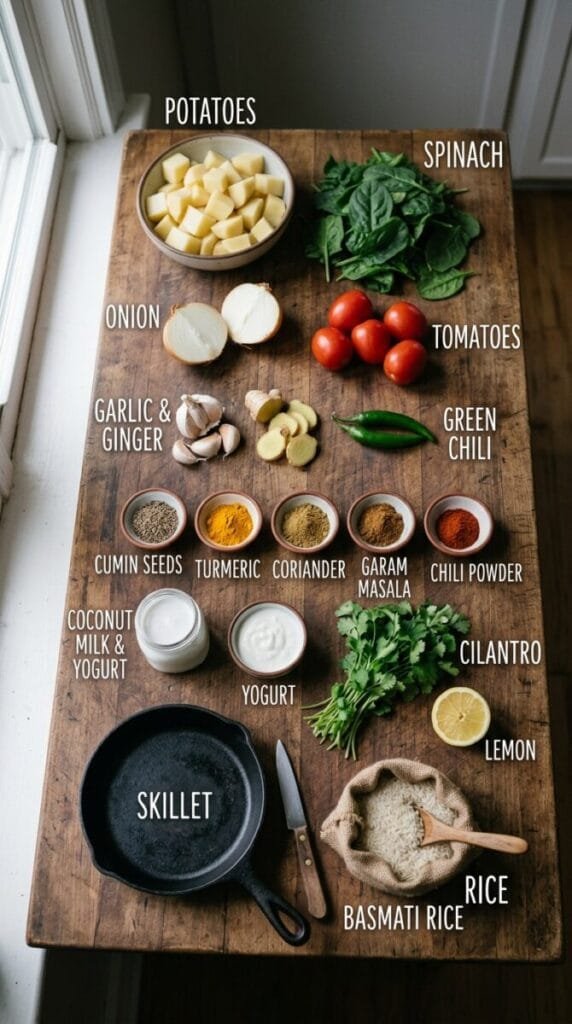
What You Need
For the curry base:
- Neutral oil or ghee: 3 tablespoons — ghee produces a more authentically Indian, slightly nuttier flavour; neutral oil is perfectly good
- Yellow onion, finely diced: 1 large
- Garlic cloves, minced or grated: 5
- Fresh ginger, grated: 1 tablespoon (approximately a 1-inch piece) — fresh ginger is significantly different from ground ginger in a curry; it is worth having fresh
- Green chilli (serrano or jalapeño), finely diced: 1 — seeds in for heat, seeds out for mild; omit entirely for a family-friendly mild curry
- Canned diced or crushed tomatoes: 1 can (14.5 oz / 411g)
For the spice blend:
- Ground cumin: 1 1/2 teaspoons
- Ground coriander: 1 1/2 teaspoons
- Ground turmeric: 1 teaspoon — this is the spice that produces the beautiful golden colour; it also stains everything it touches, so stir carefully
- Kashmiri chilli powder or mild chilli powder: 1 teaspoon — Kashmiri gives the characteristic deep red colour without too much heat; regular chilli powder works but produces a different colour
- Garam masala: 1 teaspoon — added at the end of cooking rather than the beginning; garam masala is a finishing spice and its aromatic compounds benefit from going in off the heat
- Ground cumin seeds (whole, for tempering): 1 teaspoon — optional but excellent; bloom the whole cumin seeds in the hot oil before the onions go in for a nuttier, more complex cumin flavour
- Fine sea salt: 1 1/2 teaspoons
For the main ingredients:
- Yukon gold or waxy potatoes, peeled and cut into 1-inch cubes: 1.5 lbs (680g) — waxy potatoes hold their shape better than floury ones during the simmer; Yukon Gold is the best of both worlds
- Baby spinach, fresh: 6 oz (170g, approximately 6 packed cups) — this will look like too much and will wilt to less than 2 cups; this is correct
- Vegetable broth or water: 1 cup (240ml)
- Full-fat coconut milk: 1/2 cup (120ml) — adds richness and a slight sweetness that balances the spice; optional but recommended
- Fresh lime juice: 1 tablespoon
- Fresh cilantro: 1/4 cup, roughly chopped
For serving:
- Warm naan or basmati rice
- Plain yogurt or coconut yogurt
- Extra lime wedges
- Sliced fresh chilli
How to Make It
- If using whole cumin seeds: heat the oil or ghee in a large, wide skillet or Dutch oven over medium-high heat. Add the whole cumin seeds and let them sizzle for 30 to 45 seconds until they are fragrant and slightly darker — this is the tempering step and it blooms the cumin’s essential oils into the surrounding fat before anything else enters the pan.
- Add the onion and cook over medium-high heat for 7 to 8 minutes, stirring occasionally, until the onion is deep golden and caramelised at the edges — not just softened, but properly golden. This is the foundation of the curry flavour and it is worth the time. Under-cooked onion produces a curry that tastes raw and slightly harsh; caramelised onion produces sweetness and depth.
- Add the garlic, ginger, and green chilli and cook for 2 minutes, stirring frequently.
- Add the ground cumin, coriander, turmeric, and chilli powder. Stir constantly for 60 seconds — the spices will smell intensely fragrant and should not brown or burn. If the pan seems too dry, add a tablespoon of water.
- Add the canned tomatoes with their liquid. Stir well and increase the heat to medium-high. Cook, stirring frequently, for 8 to 10 minutes until the tomatoes have broken down completely and the oil has separated and is visible around the edges of the mixture — this is the bhunao stage. The mixture will look thick, paste-like, and deeply coloured. When you can see oil pooling around the edges, the base is ready.
- Add the potato cubes and stir to coat them thoroughly in the spice base. Add the vegetable broth and the coconut milk. Season with salt and stir.
- Bring to a simmer, then cover and cook over medium-low heat for 18 to 20 minutes until the potatoes are completely tender when pierced with a fork. Stir every 5 minutes and check that there is sufficient liquid — add a splash of water if it looks dry.
- Stir in the fresh spinach in large handfuls — it will look like there is far too much. Stir and cook over medium heat for 3 to 4 minutes until the spinach has wilted completely into the curry. The volume will reduce dramatically.
- Add the garam masala and stir through. Remove from heat. Stir in the lime juice and cilantro. Taste and adjust — more salt if it needs seasoning, more lime if it needs brightness, a pinch of sugar if the tomatoes were particularly tart.
- Serve over basmati rice or with warm naan, with yogurt and extra lime alongside.



Potato spinach curry alongside our Vegan Lentil Dumplings with Curry Sauce makes the most legitimate Indian-inspired dinner spread in this collection — two completely different preparations, the same general flavour language, and together they make a table that is more interesting than either dish alone. The curry over rice, the dumplings alongside, and a bowl of yogurt in the center of it all.
The Bhunao, the Garam Masala Timing, and the Spinach Volume
The bhunao stage — cooking the tomato and spice base until the oil visibly separates — is the technique that most distinguishes home-cooked Indian food from restaurant Indian food at the level of most home cooking attempts. Most home cooks add the tomatoes, cook briefly, add the liquid immediately, and move on. Professional Indian cooking waits for the separation. The separation signals that all the free water has cooked out of the tomatoes, the Maillard reaction has caramelised the tomato sugars, and the spices have fully bloomed in the oil rather than sitting partially raw in the surrounding liquid. The visual cue — oil pooling and separating at the edges — is reliable and learnable in a single batch.
Garam masala added at the end rather than with the other spices is the Indian cooking principle that the finishing spice blend’s delicate aromatics (cloves, cardamom, nutmeg) evaporate quickly at heat and are best preserved when added off the heat or in the last 30 seconds of cooking. The cumin, coriander, and turmeric can and should cook in hot fat to bloom their fat-soluble compounds; garam masala benefits from late addition to preserve the volatile, delicate aromatics that make it smell specifically of Indian cooking.
The spinach will look like far too much when you add it. It is not. Six cups of fresh baby spinach wilt to less than 1.5 cups in 3 to 4 minutes of cooking — the cell walls break down, the water releases, and the volume reduces to approximately 25 percent of what went in. Add it all. Stir gently. Watch the volume disappear.

What to Serve Alongside
Basmati rice is the most natural base — the long, aromatic grains are the traditional pairing for this style of curry and absorb the sauce beautifully. Warm naan bread for scooping is the alternative that makes the meal more interactive and more satisfying for anyone who loves bread as a vehicle.
Plain yogurt or coconut yogurt alongside provides the cooling contrast the spiced curry benefits from — the cool, creamy yogurt spooned over a hot serving of curry is the temperature and flavour contrast that makes Indian restaurant meals feel complete. A cucumber raita (yogurt + grated cucumber + cumin + salt + mint) takes the yogurt component one step further and is genuinely worth the 5-minute preparation if you have the ingredients.
For a more substantial dinner spread, our Black Bean and Lentil Soup served alongside the curry (both over the same pot of rice) produces a double-legume, completely plant-based dinner that is enormously satisfying and nutritionally comprehensive — high protein, high fibre, multiple spice profiles, and zero meat required at any point.
Variations That Take This in Different Directions
Creamy Saag Aloo: After the spinach has wilted and the curry is cooked, use an immersion blender to partially blend the spinach portion of the curry — blend 5 to 6 pulses so the spinach is broken down but the potato pieces remain whole. The partially blended version produces a thicker, creamier, more restaurant-style saag (spinach) sauce in which the potato floats. Add 2 tablespoons of cream or full coconut cream and stir through. This is the version closest to the saag aloo served in Indian restaurants.
Chickpea and Potato Spinach Curry: Add 1 can of drained, rinsed chickpeas alongside the potatoes. The chickpeas add protein, texture, and their own mild earthy flavour to the curry — the combination of potato and chickpea in a spinach-tomato curry is classic in Pakistani cooking (chana saag) and produces a more protein-complete meal than the potato-only version.
Sweet Potato Version: Replace the waxy potatoes with an equal weight of sweet potato cubes. Sweet potato cooks slightly faster than regular potato (check at 15 minutes rather than 18 to 20) and adds natural sweetness that balances the spice in a slightly different way — the sweet potato version is milder, slightly sweeter, and particularly good for a family table where some members prefer less heat.
Add Paneer: Cube 200g of paneer and fry briefly in oil until golden on the outside (2 to 3 minutes per side). Add alongside the potatoes in step 6. Paneer provides protein and a mild, slightly milky flavour that complements the spinach and spice beautifully — this turns the vegan version into a vegetarian one and adds approximately 8 grams of protein per serving.
Nutritional Information
| Nutrient | Amount Per Serving (based on 4 servings, without rice or naan) |
|---|---|
| Calories | 295 kcal |
| Protein | 7 g |
| Carbohydrates | 42 g |
| Fats | 12 g |
295 calories per serving makes this one of the lighter main-course dishes in the collection at this level of satisfaction. The carbohydrates come primarily from the potatoes; the fat from the coconut milk and cooking oil. Adding basmati rice adds approximately 200 calories and 4 grams of protein per cup of cooked rice. The chickpea variation increases protein to approximately 14 grams per serving. The paneer addition adds approximately 130 calories and 8 grams of protein per serving.
Storing and Freezing
Store covered in the fridge for up to 5 days — this curry improves significantly during storage, which is unusual enough to be worth stating clearly. The spices deepen, the potato absorbs more of the surrounding sauce, and the spinach integrates into the curry in a way that makes the day-three version taste more cohesive and more developed than the freshly made one. Plan for leftovers.
Reheat on the stovetop over medium heat with a splash of water added to loosen the sauce, which thickens considerably during refrigeration as the potato starch continues absorbing the surrounding liquid. Alternatively, microwave at 70 percent power in 90-second intervals, stirring between each. Add a squeeze of fresh lime after reheating — it restores the brightness that fades during storage and makes reheated curry taste almost freshly made.
This curry freezes well for up to 3 months — the spinach and potato hold up without textural degradation after thawing, which makes this one of the best plant-based freezer meals in the collection. Freeze in portioned containers and thaw overnight in the fridge. Reheat as above and add fresh lime and cilantro after reheating.
Mistakes Worth Knowing About
Not caramelising the onions fully — pulling them off the heat when they are just softened rather than properly golden — produces a curry with a slightly raw, sharp onion flavour underneath everything else. The 7 to 8 minutes of onion cooking over medium-high heat is not a suggestion. The onion is the sweetness and depth foundation of the curry; it needs to be golden before anything else goes in.
Not cooking through the bhunao stage and adding the liquid before the oil separates produces a watery, thin curry with a slightly raw spice flavour — the signature sign of a curry made without waiting for the separation. Look for the oil pooling at the edges. Wait for it. The two extra minutes it takes are worth every second.
Using frozen spinach rather than fresh produces a noticeably different result — frozen spinach releases significantly more water during cooking and makes the curry thinner and more liquid than the fresh spinach version. If using frozen spinach, squeeze it thoroughly dry before adding and reduce the vegetable broth by half to account for the extra water the spinach will contribute. Fresh is preferred and produces the cleaner, brighter green colour that makes this curry look as good as it tastes.
Potato Spinach Curry
A cozy vegan potato spinach curry with tender Yukon Gold potatoes, fresh spinach, tomato, coconut milk, garlic, ginger, and warm Indian spices.
Ingredients
How to Make
Heat oil or ghee in a large wide skillet or Dutch oven over medium-high heat. If using whole cumin seeds, add them and let sizzle 30 to 45 seconds until fragrant.
Add onion and cook 7 to 8 minutes, stirring occasionally, until deep golden and caramelized at the edges.
Add garlic, ginger, and green chili. Cook for 2 minutes, stirring often.
Add ground cumin, coriander, turmeric, and chili powder. Stir constantly for 60 seconds. Add a tablespoon of water if the pan looks dry.
Add canned tomatoes with their liquid. Cook 8 to 10 minutes, stirring frequently, until thick, deeply colored, and oil begins to separate around the edges.
Add potato cubes and stir to coat them thoroughly in the spice base.
Add vegetable broth or water, coconut milk, and salt. Stir and bring to a simmer.
Cover and cook over medium-low heat for 18 to 20 minutes, stirring every 5 minutes, until potatoes are fork-tender.
Stir in spinach in large handfuls. Cook 3 to 4 minutes, until wilted completely into the curry.
Stir in garam masala, then remove from heat. Add lime juice and cilantro. Taste and adjust salt, lime, or spice as needed.
Serve hot over basmati rice or with warm naan, plus yogurt and extra lime if desired.
Nutrition
| Nutrient | Amount Per Serving |
|---|---|
| Calories | 295 kcal |
| Protein | 7 g |
| Carbohydrates | 42 g |
| Fat | 12 g |
Values are estimates based on 4 servings, without rice, naan, or yogurt.