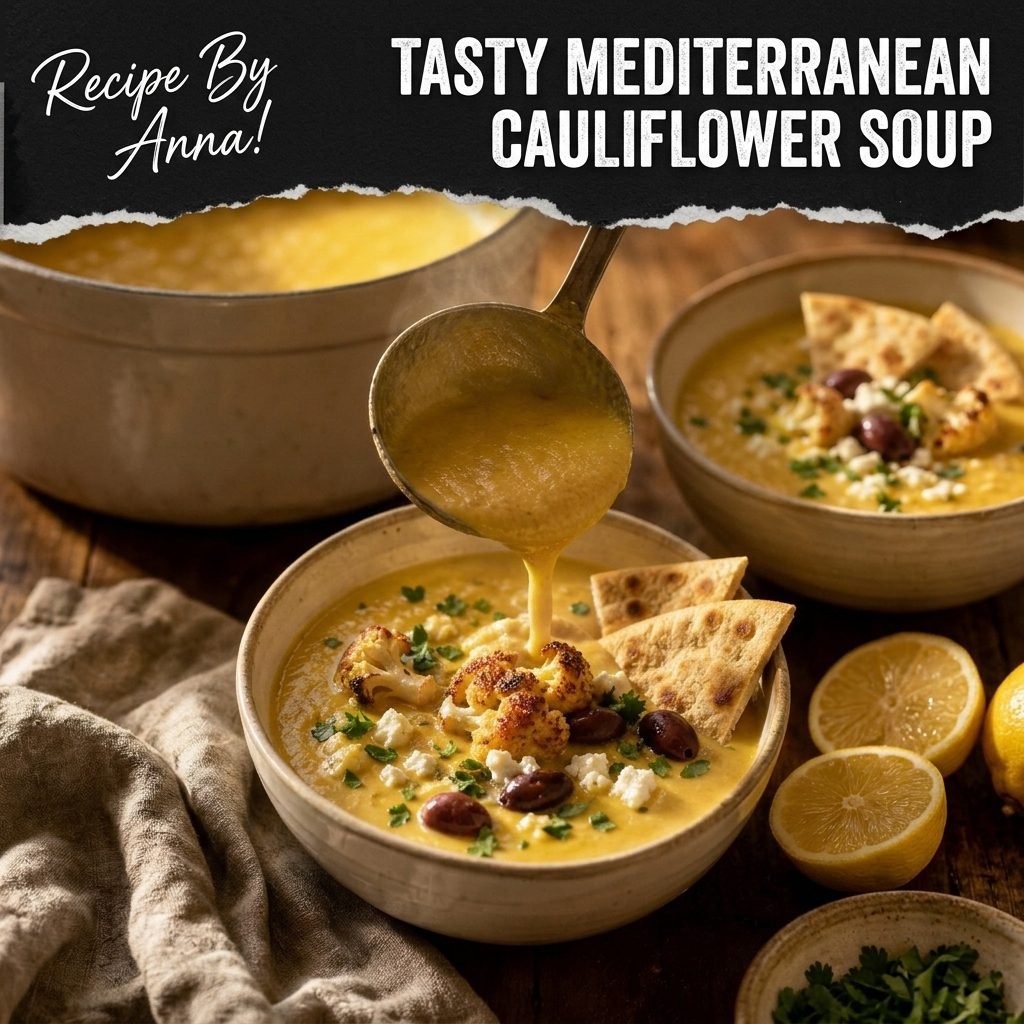
Vegetarian Tasty Mediterranean Cauliflower Soup
Cauliflower soup has an image problem, and the image is beige. This vegetarian Mediterranean version fixes it at the source: the florets go into a hot oven and stay there until they’re deep golden brown — past blonde, into the territory where cauliflower turns nutty and sweet — and that color and flavor become the whole pot’s foundation. The roasted florets simmer with cumin, turmeric, and oregano, get blended with white beans and tahini into something genuinely silky without a drop of cream, and finish with lemon squeezed in off the heat. Bowls get the mezze treatment: feta, kalamata olives, parsley, a few of the darkest roasted florets held back on purpose, and crisp pita for scooping. Fifty minutes, one pot, four big bowls.
The trick I want you to take from this post is the creamless cream. Canned cannellini beans give the soup body and a soft, starchy thickness, and tahini — sesame paste, the Mediterranean pantry’s quiet overachiever — gives it a gloss and silk that reads unmistakably as cream. People will ask if there’s cream in it. You get to say no and look mysterious. Better still, it reheats without breaking, which dairy soups do not always manage, so this is a soup that becomes lunch without negotiation.
A few honest notes before you start. The roast is the recipe — if the florets come out pale, the soup will taste like a good idea that didn’t commit, and no amount of blending fixes that. The lemon goes in at the very end, off the heat, because lemon cooked into soup for twenty minutes turns flat and one-note. And the toppings are not decoration: the soup is satin-smooth and the bowl needs the crunch and the salt against it. This is a vegetarian soup that a vegan table can join by leaving off the feta, and a weeknight soup that company thinks took all day. Both of those are useful reputations for one pot to carry.
The Roast Is the Recipe
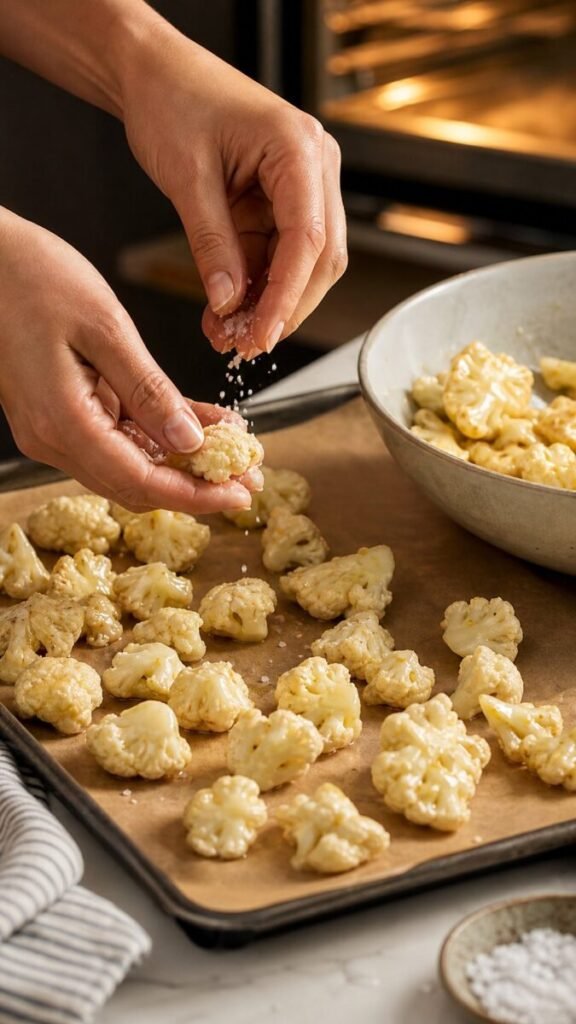
Everything in this soup flows from one decision made in the first half hour: how dark do the florets get. Cauliflower contains plenty of natural sugars, and a 425°F oven with oil and salt converts them, through browning, into the nutty, almost popcorn-like flavor that raw or steamed cauliflower simply doesn’t have. Pale-gold florets make polite soup. Deep-golden florets — edges dark, tips bronzed — make soup people ask about. The oven is where the flavor budget for the entire pot is earned, and the blender can’t fix what the oven didn’t do. I roast the whole head and hold back a handful of the darkest, most caramelized florets: they go on the bowls at the end, so the same roast that flavors the pot also garnishes it.
The creamless cream works as a team. White beans, simmered in the broth and blended in, release starch that thickens the soup and protein that gives it a soft, rounded body — the mechanical job cream usually does. Tahini does the cosmetic and aromatic job: it emulsifies into the soup and coats it with a gloss that looks exactly like cream, while tasting like sesame and lemon’s best friend. Together they make a soup that’s creamy the way the Mediterranean means it — from seeds, beans, and olive oil rather than dairy. And unlike a cream soup, this one can boil, reheat, and sit on the stove without splitting, which is a quiet luxury on soup day.
The lemon rule comes last because it goes in last. Lemon juice is mostly volatile aromatics, the kind that flash off with heat — simmer it for twenty minutes and you’re left with sourness without the bright, fresh top note that made you want lemon in the first place. So the juice and zest go in after the burner is off, when the soup is hot but not cooking, and they lift the whole pot: the turmeric reads warmer, the tahini reads cleaner, the feta on top makes sudden sense. One lemon, added at the correct minute, does the work of several added at the wrong one.
⏱️ 50 MIN | 🥣 SILKY WITHOUT CREAM | 🍋 LEMON GOES IN LAST
- Prep Time: 10 minutes
- Roast Time: 25 to 30 minutes
- Simmer and Blend: 15 minutes
- Total Time: 50 minutes
- Yield: 4 generous bowls
The Soup Pot Crew
Basic equipment, doing honest work:
- Rimmed sheet pan and parchment — the florets roast in a single layer or they steam, and steamed cauliflower is the beige we’re here to eliminate.
- Dutch oven or heavy pot — wide enough for the blend, heavy enough for a gentle simmer.
- Immersion blender — the easiest route to silk, right in the pot. A stand blender works in batches (see the FAQ).
- Ladle — for the pour at the table, which this soup has earned.
- Fine grater and citrus juicer — the lemon’s zest before its juice, thirty seconds total.
- Tongs — for pulling the darkest florets off the sheet pan as they come out of the oven.
- Small whisk or fork — for loosening the tahini before it meets the soup, the one step people skip and regret.
Ingredients (With Labels)
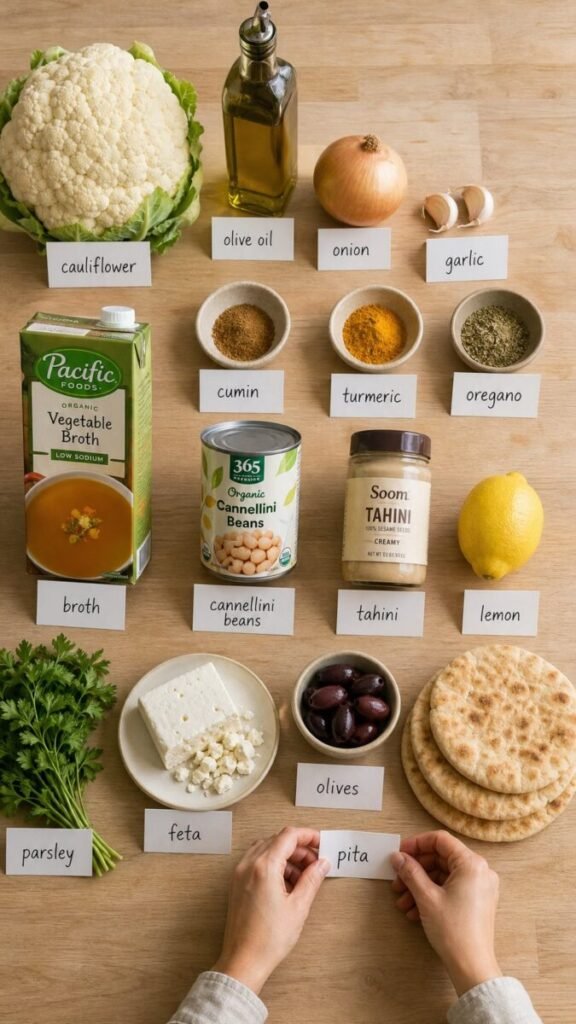
🥦 The Head and the Heat
- Cauliflower: 1 large head, 2 to 2½ lb, cut into florets
- Olive oil: 3 tablespoons — 2 for roasting, 1 for the pot
- Salt: 1 teaspoon for roasting, plus more to taste
- Black pepper: ½ teaspoon
🧅 The Pot Base
- Onion: 1 medium, diced
- Garlic: 3 cloves, minced
- Ground cumin: 1 teaspoon
- Turmeric: ½ teaspoon — for the golden color, mostly
- Dried oregano: ½ teaspoon
- Red pepper flakes: 1 pinch, optional
🍲 The Broth and the Body
- Vegetable broth: 4 cups
- Cannellini beans: 1 can (15 oz), drained and rinsed
- Tahini: 3 tablespoons
🍋 The Mediterranean Finish
- Lemon: 1 large — zest and juice
- Parsley: ¼ cup chopped
- Feta: ⅓ cup crumbled
- Kalamata olives: ⅓ cup, whole or halved
- Pita bread: 2 rounds, for crisps
- Olive oil: a good bottle, for drizzling at the end
Step by Step How to Make
- Step 1 — Roast to deep golden. Heat the oven to 425°F. Toss the florets with 2 tablespoons of olive oil, the salt, and the pepper, and spread them on the sheet pan in a single layer — two pans if they crowd, because crowding steams. Roast 25 to 30 minutes, flipping once, until the florets are browned at the edges and bronzed at the tips. If they look merely golden-blond at 25 minutes, give them five more. The soup’s flavor is being decided right here, in the oven, and it prefers the darker photo.
- Step 2 — Build the pot base. While the florets roast, warm the last tablespoon of oil in the Dutch oven over medium and cook the onion 5 minutes, until it’s soft and translucent. Add the garlic, cumin, turmeric, oregano, and pepper flakes and stir for 60 seconds — the spices should go fragrant and the turmeric should turn the oil a deep, promising gold. Pour in the broth, scraping the bottom of the pot, and bring it to a simmer.
- Step 3 — Simmer, then blend to silk. Add the roasted florets to the simmering broth — every one except the darkest handful, which gets set aside for the bowls — along with the cannellini beans. Simmer 10 minutes, then pull the pot off the heat. Now blend: with the immersion blender, run it around the pot for a full 90 seconds, longer than feels necessary, until the soup is completely smooth and the surface turns glossy. In a stand blender, work in batches with the lid cracked and a towel over it, because hot soup expands when it’s angry.
- Step 4 — Tahini, then lemon, both off the heat. In a small cup, stir the tahini with a spoonful of the soup until it’s a smooth, loose paste — this tiny step is the difference between silk and grainy streaks, because tahini seizes when it meets hot liquid unprepared. Stir the loosened tahini into the soup until it disappears and the whole pot goes satin. Then the zest and juice of the lemon, straight in, with the burner still off. Taste for salt — lemon changes the math — and adjust until the soup tastes bright but not sour.

- Step 5 — Pita crisps from the hot oven. The moment the florets come out, slide the pita wedges — torn or cut, brushed with olive oil and pinched with salt — onto the still-hot pan and toast them 6 to 8 minutes, until they’re crisp and freckled brown. Two birds, one sheet pan, and the oven has already done its most important job anyway.
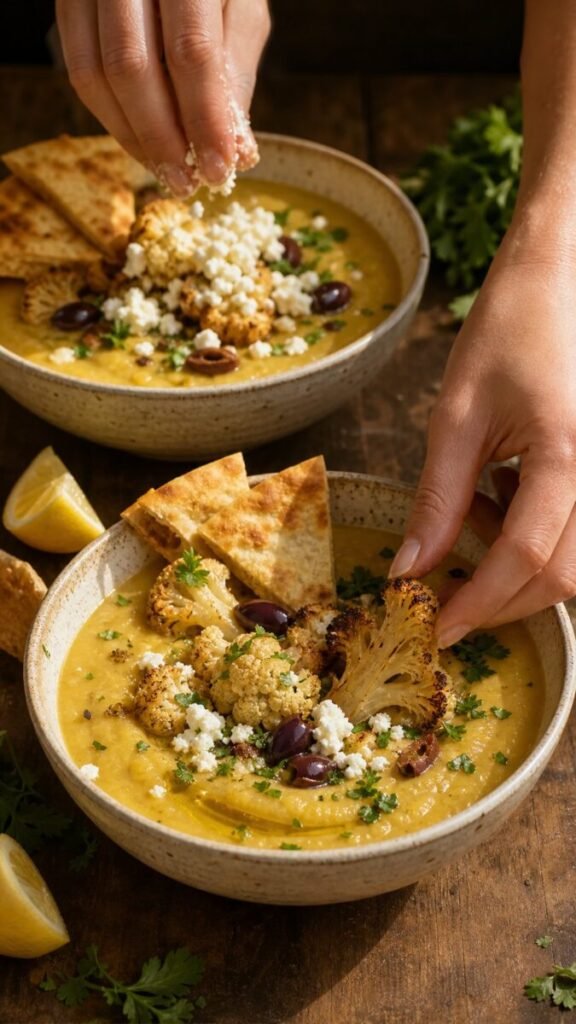
- Step 6 — Build the bowls. Ladle the soup into wide bowls and go down the finish line on each one: a few of the reserved dark florets pressed into the surface, feta crumbled over, olives dropped here and there, parsley scattered, pita crisps standing upright in the soup like sails, and a thread of your best olive oil across the top. Carry the bowls to the table while the pita still crackles. The soup is satin, the toppings are the opposite of satin, and the contrast is the entire point — every spoonful should have to work through a little crunch to reach the smooth.
Every soup rotation needs a white soup and a red one — this is the golden middle, the sibling of our Creamy Parmesan Tomato and Cannellini Bean Soup, which hides the same beans in a tomato coat. Between the two pots, the week’s soup question is answered.
Anna’s Kitchen Notes
Blonde or golden — the oven decides. Cauliflower browns in stages, and the stage matters more than anything else in this recipe. Blonde florets (pale gold, 15 minutes, impatient) taste like steamed cauliflower with optimism. Deep golden florets (bronzed edges, 25 to 30 minutes, committed) taste nutty and faintly sweet, and that flavor becomes the soup. When you think they’re done, ask if you’d photograph them — if the answer is “they look a little dark,” they’re correct.
The tahini has trust issues. Spoon tahini straight into hot soup and it can seize — tightening into grainy little streaks that never fully blend in, no matter how long you run the blender. The fix is thirty seconds of respect: stir the tahini with a spoonful of soup in a cup first, until it’s a smooth, pourable paste, and then let it into the pot. Sesame paste, like certain guests, just needs to be introduced properly before it joins the party.
Turmeric is here for the paint job. Cauliflower soup, left to its own devices, is the color of a February afternoon. Half a teaspoon of turmeric turns the whole pot warm gold — the color people expect from a “golden” soup — and at this dose it contributes color without taking over the flavor. If you use fresh turmeric, grate in a small knob with the garlic instead. Either way, the feta and the olives look twice as good against a golden pot as they do against a gray one, and soup is allowed to care about that.
Blend longer than you want to. The gap between “mostly smooth” and “actually silky” is about forty-five seconds of blending, and almost everyone stops in the gap. The beans and the florets need a full 90 seconds of blending to give up their structure completely. When the soup’s surface goes glossy and the whirlpool turns slow and heavy, you’re there. Stop early and the soup is still good; go the distance and it’s velvet, and velvet was the plan.
Hold back the florets — the soup’s crunchy ambassadors. It’s tempting to blend every last floret into the pot, but the reserved handful does something on the bowls that no amount of blending can do inside them: it proves the roast. Each dark, caramelized floret on top is a flavor argument the smooth soup then wins. Plus the texture — crisp-edged against satin — is the contrast that makes each spoonful interesting. The ambassadors stay home for a reason.

Bread and Bowls
The pita crisps already cover the bread question, so the sides just need to be fresh and green. Our Easy Chickpea Feta Avocado Salad shares the soup’s lemon-and-feta DNA and takes ten unhurried minutes — it’s the house pairing and has never once let me down.
To make it a full Mediterranean table, add a small bowl of Garlic Butter Orzo with Mushrooms and Spinach — the bowl beside the bowl — or go the other direction and keep it light with the Mediterranean Quinoa Bowl‘s same-coast flavors in a different format. For soup weeks, this pot trades shifts with the Broccoli Cheese Soup — the cruciferous cousin at the cheesy end of the family — and the Caramelized Onion Red Lentil Soup, which does the same “sweetness earned in the pan” trick with onions instead of cauliflower.
Other Cauliflower Nights
The vegan table. The soup itself is already vegan — it’s only the feta on top that isn’t. Leave it off and add a spoonful of extra tahini thinned with lemon, plus a scatter of toasted sesame seeds, and the bowl loses nothing worth keeping. This is quietly one of the best vegan soups in the rotation, and the vegans I feed have confirmed it with their eyebrows.
The red-pepper detour. Char two red bell peppers under the broiler while the florets roast, peel them, and blend them in — the soup goes sunset-orange with a sweeter, smokier bottom. It’s a five-minute change that tastes like a whole different recipe, and it makes the pot feel brand new on week three of cauliflower season.
The green version. Two big handfuls of spinach, stirred in for the last minute before blending — the soup goes mossy green and tastes like spring regardless of the actual season. Parsley on top doubles down. Children are suspicious of it, which I’ve learned to treat as a feature rather than a bug.
Curried, briefly. Swap the cumin-and-oregano for a tablespoon of curry powder and finish with coconut milk instead of feta — the soup drifts east and comes back telling better stories. Same roast, same beans, same technique; a different passport. This is the version for the week after you’ve made the original twice.
The topped supper. To turn the bowls into dinner with no extra cooking, roast a can of drained chickpeas alongside the florets — same pan, same oil, same salt — and pile them on top with everything else. The chickpeas crunch, the feta salutes, and suddenly the soup is a meal, with leftovers for lunch that nobody remembers are supposed to be humble.
The Ladle Ledger
| Nutrient | Per Bowl (1 of 4) |
|---|---|
| Calories | 350 kcal |
| Protein | 12 g |
| Carbohydrates | 32 g |
| Fats | 19 g |
Estimates for the soup with its toppings as written, pita crisps included and second helpings not. Twelve grams of protein per meatless bowl comes from the beans, the tahini, and the feta working together, and the fiber sits near ten grams thanks to cauliflower, beans, and that same sesame paste — a trio that keeps the bowl honest long after dinner. The fats are mostly olive oil, tahini, and a modest feta ration, which is the Mediterranean arrangement of things. As always, estimates: your olive-oil drizzle at the end is a matter of conscience between you and the bowl.
Monday’s Lunch
This soup keeps four days covered in the fridge, and like most bean soups it’s better on day two, after the flavors have spent a night getting acquainted. It thickens as it sits — the beans keep drinking — so reheat it gently with a splash of broth or water and stir until it loosens back to satin. One fresh squeeze of lemon at reheating restores the brightness that time quietly takes away; thirty seconds, and lunch tastes like the day it was made.
The freezer takes the fully cooled soup for up to two months. The tahini can tighten slightly in the cold — a cosmetic complaint, not a structural one — and a vigorous stir with a splash of broth while it reheats brings the gloss right back. Portion it flat in freezer bags for stacking, or in jars with headroom if jars are your way of life.
The make-ahead split: roast the florets up to a day ahead and keep them covered in the fridge — the oven work is the only long step, and done in advance, the soup itself becomes a twenty-five-minute project on a weeknight. The pita crisps, however, are a same-day pleasure; they lose their crackle overnight and refuse to negotiate. Make them fresh, eat them fast, and let tomorrow’s lunch take care of itself.
Where It Goes Wrong
Beige and bland, despite everything. The florets came out pale. Under-roasted cauliflower is a flavor that never fully commits, and no spice, broth, or blending technique can retrofit the nuttiness the oven skipped. Go past blonde — bronzed edges, dark tips — and the soup’s flavor takes care of itself. This is the mistake the whole recipe exists to prevent.
Grainy little streaks that never blend out. The tahini went straight from jar to hot pot and seized. Loosen it first with a spoonful of soup in a cup, until it’s a smooth paste, and it melts in like it was always invited. If it’s already seized, the blender will minimize it but not erase it — a reminder that the thirty-second courtesy step exists for a reason.
Thin and watery. The beans got skipped, the simmer got shortened, or the blend stopped at “mostly smooth.” The beans are the body of this soup — they’re not optional garnish, they’re architecture — and the full 90-second blend is what releases their thickening power. If it still runs thin, blend two minutes more before reaching for anything else. Usually, that’s the entire fix.
Flat, one-note, vaguely sad. The lemon went in early and cooked away, or never went in at all. Lemon added off the heat at the end is the soup’s top note — without it, the tahini sits heavy and the turmeric goes quiet. One lemon, zest and juice, at the correct minute. If you’ve already served it and something feels missing, a wedge at the table performs the rescue in front of witnesses.
A bitter edge underneath. The garlic burned in the pot, or the florets went from dark golden to genuinely black. Garlic needs 60 seconds in warm oil, not ten; florets need bronzing, not charring. Burnt is a flavor too, but it’s not one this soup invited, and it spreads through the whole pot with enthusiasm.
A smooth bowl that bores you. The toppings got skipped because the soup smelled done. The soup is satin, and satin against more satin is a texture that puts people to sleep — the dark florets, the feta, the olives, the pita are the contrast that keeps every spoonful awake. The toppings take ninety seconds. The difference they make is not describable in the same number of seconds.
Cauliflower Questions
Can I use frozen cauliflower?
Yes — roast it straight from frozen, no thawing, and give it 35 minutes instead of 25, pouring off any water that pools on the pan halfway through. It browns less than fresh (frozen cauliflower carries more surface moisture), so expect a slightly gentler roast flavor. The beans and tahini carry the soup the rest of the way, and weeknight-you is allowed the shortcut.
What if I don’t have an immersion blender?
A stand blender does the job in batches — fill it only halfway, crack the lid slightly, and drape a towel over the top, because hot soup expands when the blades hit it. Blend each batch a full minute before moving to the next, and pour everything back into the pot to stir together. The texture comes out identical; only the dish count suffers.
Can I make this soup vegan?
It already is — right up until the feta. Skip it and the pot underneath is fully plant-based: beans, tahini, olive oil, broth, vegetables. For the salty finish the feta provides, add a few more olives, a spoonful of capers, or extra salt and a heavier hand with the lemon. Nobody at the table has ever announced they missed the cheese, which in my house counts as a verdict.
Can I substitute the cannellini beans?
Great Northern and butter beans are direct swaps — same creaminess, same starch. Chickpeas work too, with two notes: the soup comes out faintly nuttier and a shade less silky, and you should reserve a few for the bowls, because toasted chickpeas on top are a genuinely good idea that arrived by accident.
Why does my soup look gray instead of golden?
Either the turmeric got skipped, the cauliflower boiled the whole time instead of roasting first, or the florets were pale going into the pot. The fix is upstream in all three cases: the half-teaspoon of turmeric, and a roast deep enough to tint the florets themselves. Gray cauliflower soup tastes fine and photographs like a rainy day — this recipe’s whole aesthetic campaign is against it.
Can I use chicken broth instead of vegetable?>You can, and the soup will be a little rounder and deeper — but it stops being vegetarian, which is half the recipe’s name and most of its charm on meatless Mondays. If the crowd is flexible, use whichever carton is closest. The soup doesn’t hold grudges, and neither do I.
How thick should the finished soup be?
It should coat a spoon and fall from it slowly, in a lazy ribbon — thicker than broth, looser than a purée. Too thick means a splash of broth; too thin means another minute of blending before you consider anything else. And remember it thickens as it stands, so judge it hot, in the pot, at the moment of serving — Monday’s bowl has its own rules and its own splash of water.
Golden roast · Silky beans · Fresh lemon
Vegetarian Tasty Mediterranean Cauliflower Soup
Deeply roasted cauliflower blended with cannellini beans and tahini for a silky soup without cream. Finished with fresh lemon, then topped with feta, Kalamata olives, parsley, roasted florets, and crisp pita.
As an Amazon Associate I earn from qualifying purchases.
Ingredients
The golden roast
- 1 large head cauliflower, 2–2½ lb before trimming, cut into evenly sized florets
- 3 tablespoons olive oil, divided, plus extra for pita and finishing
- 1 teaspoon salt for roasting, plus more to taste and for pita
- ½ teaspoon black pepper
The aromatic base
- 1 medium onion, diced
- 3 cloves garlic, minced
- 1 teaspoon ground cumin
- ½ teaspoon ground turmeric
- ½ teaspoon dried oregano
- 1 pinch red pepper flakes, optional
The creamless body
- 4 cups vegetable broth, plus extra if needed to thin
- 1 can (15 oz) cannellini beans, drained and rinsed
- 3 tablespoons tahini, stirred well before measuring
Lemon & toppings
- 1 large lemon, zest and juice, added to taste
- ¼ cup chopped parsley
- ⅓ cup crumbled feta, made with vegetarian or microbial enzymes
- ⅓ cup pitted Kalamata olives, whole or halved
- 2 rounds pita bread, cut into wedges
The soup pot crew
- Large rimmed sheet pan, or two if needed to avoid crowding
- Parchment paper, rated for at least 425°F
- Dutch oven or heavy soup pot
- Immersion blender, or a stand blender approved for hot liquids
- Ladle
- Fine grater and citrus juicer
- Tongs
- Small whisk and a small bowl
- Knife and cutting board
Golden, not burned: roast until the florets are tender with deeply browned edges. Blackened pieces can make the soup bitter. Give the florets space and allow extra roasting time if necessary.
Dietary details: the soup base contains sesame but no cream. Feta adds dairy, and ordinary pita contains wheat. For a vegan bowl, omit feta and check the broth and pita labels.
How to make it
-
Roast the cauliflower until deeply golden
Heat the oven to 425°F. Line a large rimmed sheet pan with parchment rated for that temperature, or use an unlined pan. Toss the florets with 2 tablespoons olive oil, 1 teaspoon salt, and the black pepper. Spread in a single layer, using two pans if crowded. Roast for 25–30 minutes, turning halfway through, until tender and deeply golden at the edges. Allow longer if needed, avoiding blackened tips. Reserve a handful of browned florets for topping.
-
Build the fragrant soup base
While the cauliflower roasts, warm the remaining tablespoon of olive oil in a Dutch oven over medium heat. Cook the onion for about 5 minutes, until softened. Add the garlic, cumin, turmeric, oregano, and optional red pepper flakes. Stir for 30–60 seconds, just until fragrant, without letting the garlic burn. Add the vegetable broth, scraping up any browned bits, and bring to a gentle simmer.
-
Simmer the soup and toast the pita
Add the roasted cauliflower, except the reserved garnish, and the drained cannellini beans to the pot. Simmer gently for 10 minutes, until everything is very tender. Meanwhile, carefully place the pita wedges on the emptied sheet pan, removing any burned crumbs first. Lightly brush with extra olive oil and sprinkle with a little salt. Toast at 425°F for approximately 6–8 minutes, checking early because thin pita browns quickly. Remove when crisp and lightly golden.
-
Blend until silky
Remove the pot from the heat. Blend with an immersion blender until very smooth, about 90 seconds or as needed, keeping the blade head submerged to prevent hot splashes and following the appliance’s operating limits. For a stand blender, let the soup cool slightly and follow its hot-liquid instructions. Work in small batches, no more than half full or the manufacturer’s lower limit, using the lid’s designated steam vent. Never use a sealed personal blender for hot soup. Return the blended soup to the pot.
-
Whisk in tahini, then brighten with lemon
Put the well-stirred tahini in a small bowl. Gradually whisk in several spoonfuls of warm soup until smooth and pourable. It may thicken at first; keep whisking and adding a little more liquid until it loosens. Stir into the soup off the heat. Add the lemon zest and then the juice gradually, tasting for your preferred brightness. Adjust the salt. If the soup is too thick, stir in a little extra broth until it coats a spoon but pours easily.
-
Finish the bowls
Ladle into four bowls. Divide the reserved roasted florets, feta, pitted Kalamata olives, and parsley over the top. Finish with a light drizzle of olive oil and add the pita crisps just before eating, or serve them alongside to keep them crunchy.