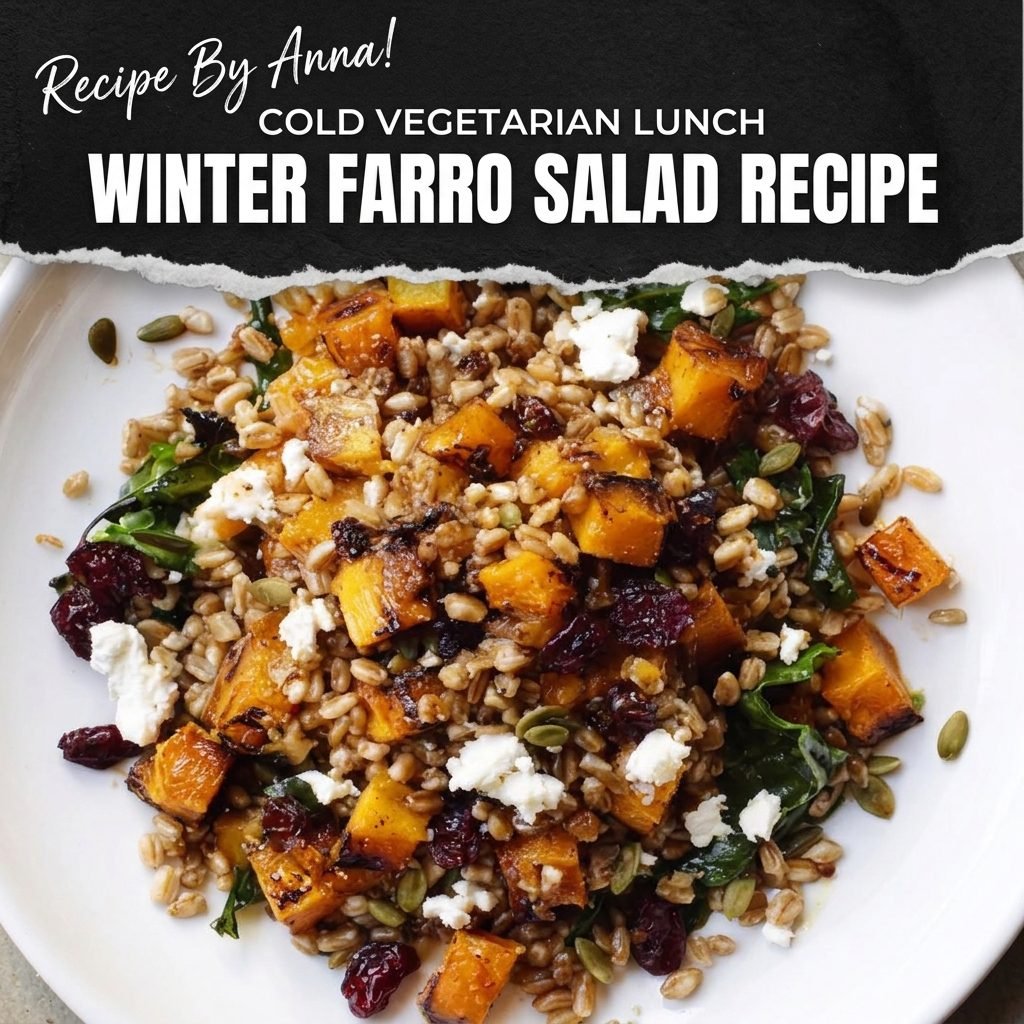
Cold Vegetarian Lunch – Winter Farro Salad Recipe
Cold lunch is a hard genre. Most leftovers wilt by noon, most salads give up by eleven, and the whole category drifts sadly toward soggy sandwiches. This winter farro salad is my standing argument against all of that: plump grains of farro, delicata squash roasted until its skin turns candy-caramel and eaten peel and all, dark kale massaged until it behaves, crisp pear, ruby pomegranate, salty feta, and toasted walnuts — tossed in a honey-lemon dressing and built specifically to be eaten cold, from a jar, at a desk, in February, with genuine enthusiasm. Forty-five minutes on Sunday buys four lunches that get better as the week goes on.
The whole recipe hangs on one idea most farro salads miss: grains are dressed warm, or not at all. A warm grain is an open door — it soaks up vinaigrette deep into the kernel, where the flavor stays even after the fridge does its worst. A cold grain is a closed door, and no amount of dressing poured on top changes what’s inside. So the farro meets half the dressing while it’s still steaming, drinks it, and carries that flavor into the jar. That’s why this salad tastes seasoned all the way through instead of seasoned on the surface, and it’s the difference between a grain bowl people actually want and one they merely tolerate because it’s January and they said they would.
A few honest notes before you start. The farro is boiled like pasta — a big pot of salted water, no measuring, no ratio to get wrong — because farro is the most forgiving grain in the pantry and there’s no sense treating it like rice. The delicata is the winter squash that doesn’t need peeling: the skin is thin and roasts into the best part, which saves ten minutes and a small wrist injury. And the pear gets a rub of lemon the moment it’s cut, because a brown pear in a lunch jar is a small heartbreak that takes thirty seconds to prevent. This is a vegetarian recipe that happens to be substantial, not a substantial recipe that happens to be vegetarian — the farro, the feta, and the walnuts split the protein work, and nobody at the table has ever asked where the chicken went.
The Grain That Forgives
Let’s start with why farro, of all grains, earns the lunch-jar job. Rice needs an exact liquid ratio and turns to porridge in the fridge by day two. Quinoa goes cold and dusty. Couscous is gone in a bite. Farro — an ancient wheat variety with a chewy interior and a starchy surface — is built for exactly this treatment: it holds a firm, bouncy bite for days, it absorbs dressing like a sponge that went to finishing school, and it cooks by the pasta method, which means there is no ratio, no anxiety, and no burnt bottom. You boil it in well-salted water until it’s plump and tender with the slightest chew left in the center, then drain it. That’s the entire method. It’s the grain I trust beginners with and the grain I make on weeks when I can’t be trusted with anything.
Then the dressed-warm rule, which is the recipe’s engine. Starches absorb liquid most readily between hot and warm — below that, the grain’s surface tightens and shuts. So the drained farro gets half the vinaigrette stirred in while it’s still steaming, and you can almost hear it drink. Every kernel takes on lemon, honey, garlic, and mustard from the inside. When the salad is assembled and chilled, that internal seasoning is what keeps the bowls tasting intentional on Wednesday instead of like grain wearing a costume.
The rest of the bowl is architecture around that grain. Roasted delicata brings caramel and color, and because it’s roasted with oil and salt, its edges stay pleasant even cold — roasted squash is one of the few vegetables that improves in a cold salad, since its sugars concentrate and its texture firms. Massaged kale is the green that refuses to wilt: a minute of rubbing with lemon and salt breaks down its tough fibers, so instead of fighting the jar it softens like it was cooked, only brighter. Pear and pomegranate carry the freshness, feta the salt, walnuts the crunch, and the red onion — briefly soaked in lemon — brings the little sharp notes that keep cold food awake. Cold dishes need louder seasoning than warm ones; the fridge mutes flavor the way it firms butter. This bowl is seasoned for the temperature it will actually be eaten at, which is the entire secret.
⏱️ 45 MIN | 🫙 BUILT FOR THE JAR | 🍐 DRESSED WARM, EATEN COLD
- Prep Time: 10 minutes
- Roast and Boil: 30 minutes, side by side
- Assembly: 5 minutes
- Total Time: 45 minutes
- Yield: 4 lunch jars or bowls
The Lunch Kit
Ordinary tools, none of them fussy:
- Big pot for the farro — pasta-pot sized, because the grain boils like pasta and wants room to tumble.
- Sheet pan and parchment — for the delicata rings and the walnuts, which share the pan and the ride.
- Small jar with a lid — shake the dressing in it; it doubles as storage for the extra.
- Big mixing bowl and clean hands — for massaging the kale, which is a job for fingers, not tools.
- Colander — for draining the farro.
- Sharp chef’s knife — halving the squash, slicing the rings, chopping the kale.
- Four pint or quart jars — the whole point. Bowls work if you’re eating at home today.
Ingredients (With Labels)
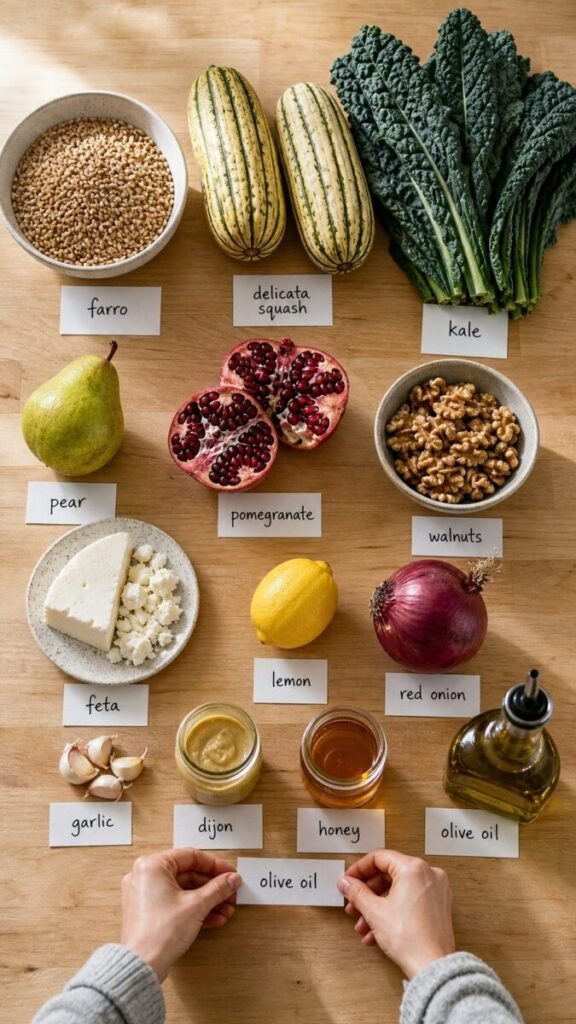
🌾 The Grain
- Farro: 1 cup, pearled or semi-pearled
- Salt: for the boiling water — treat it like pasta water, generously
🎃 The Oven’s Work
- Delicata squash: 2 small, halved, seeded, sliced into ½-inch half-moons
- Olive oil: 1 tablespoon, for the rings
- Salt and pepper: ½ teaspoon salt, a few grinds of pepper
- Walnut halves: ½ cup, for toasting on the same pan
🥬 The Cold Crew
- Lacinato kale: 1 bunch, stemmed and thinly sliced (about 4 cups)
- Pear: 1 firm, crisp pear — Anjou holds up best
- Red onion: ¼ small, thinly sliced
- Pomegranate seeds: ⅓ cup
- Feta: ⅓ cup crumbled
🍋 The Dressing Jar
- Lemon: 1 large, juiced — plus a second lemon for the pear, the kale, and the revival splash
- Dijon mustard: 1 teaspoon
- Honey: 1 teaspoon
- Garlic: 1 small clove, grated
- Olive oil: ⅓ cup
- Salt and pepper: ½ teaspoon salt, ¼ teaspoon pepper
Step by Step How to Make
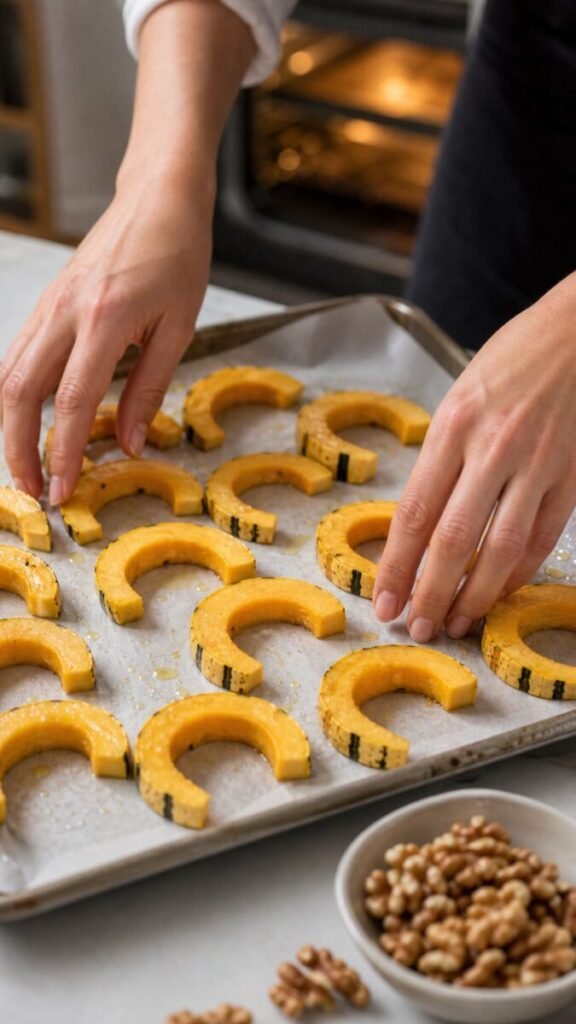
- Step 1 — Roast the rings, toast the nuts. Heat the oven to 425°F. Halve the delicata lengthways, scoop the seeds with a spoon, and slice it into half-moons — no peeling, ever, the skin is the treat. Toss the rings with the tablespoon of oil, the salt, and the pepper, and spread them on the sheet pan. Roast 20 minutes, flip, then scatter the walnut halves onto the empty end of the pan and roast 5 more minutes, until the rings are caramelized at the edges and the nuts smell like a bakery. One pan, two jobs, and the walnuts toast in the squash’s warmth instead of in a pan you’d have to wash.
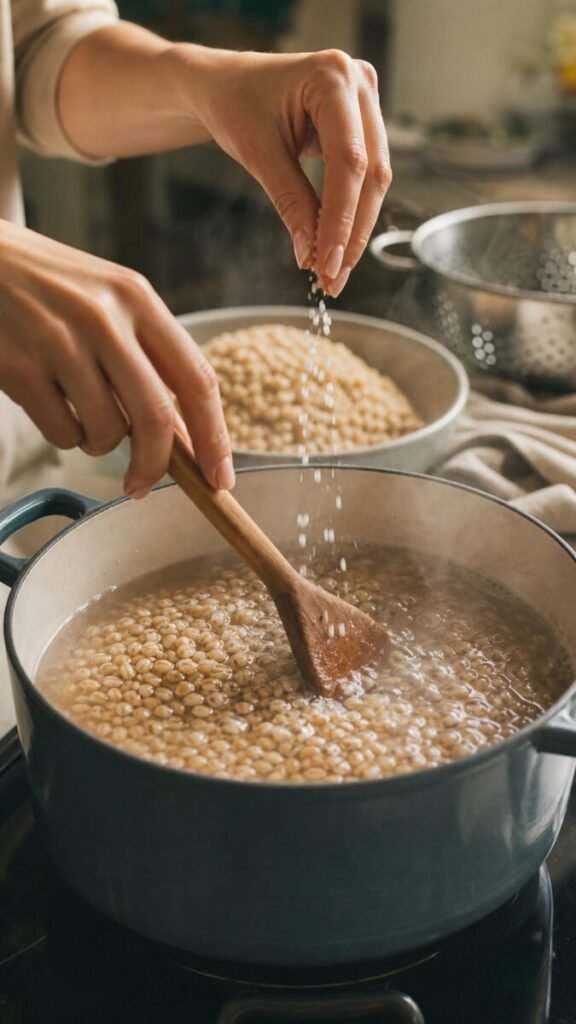
- Step 2 — Boil the farro like pasta. While the oven works, bring a big pot of well-salted water to a boil — it should taste like soup stock when you dip a spoon in. Pour in the farro and boil it uncovered, 25 to 30 minutes, until the grains are plump and tender with just a whisper of chew left. Drain in the colander. There is no ratio here, no measuring of liquid, no lid, no faith required; this is the pasta method, and it is impossible to argue with.
- Step 3 — Shake the dressing. In the small jar, combine the lemon juice, Dijon, honey, grated garlic, salt, and pepper. Add the olive oil, screw the lid on, and shake hard for 15 seconds, until it turns from separated to cloudy and thick. Taste it on a piece of kale — it should be sharper than you want, because the farro and the squash will spend the week mellowing it, and a dressing that starts polite ends invisible.
- Step 4 — Dress the farro while it’s warm. This is the step the whole recipe stands on. Put the drained farro — still warm, still steaming slightly — into the big bowl and pour half the dressing over it. Stir for a full minute, watching the grains drink. Let it sit and cool to room temperature right there in the bowl; every minute of warmth is another minute of flavor soaking inward. A cold grain is a closed door. This one is wide open.
- Step 5 — Massage the kale. Put the sliced kale in a separate bowl with a squeeze of lemon, a pinch of salt, and a spoonful of the remaining dressing. Now rub it between your fingers for a full minute, squeezing and turning, until the leaves darken, soften, and shrink by about a third. You are breaking down the fibers that make kale famously stubborn, and the result is a green that’s tender like it was cooked but bright like it wasn’t. Soak the sliced red onion in the same lemon squeeze while you work — ten minutes of acid turns its bite from sharp to sweet-sharp.
- Step 6 — Assemble and pack. Cube the pear, rub it with lemon so it stays bright, and add it to the cooled farro with the kale, the onion, the pomegranate seeds, and most of the feta. Toss with the rest of the dressing, taste, and fix the salt — cold food always needs one more pinch than you expect. Pack into jars with a few walnut halves and a pinch of feta on top, or bowl it up if it’s being eaten today. Either way, pack a lemon wedge alongside: a squeeze and a drizzle of olive oil right before eating — the revival splash — brings the whole jar back to life after the fridge has had its way with it. That splash is not optional. It’s the difference between a good lunch and a great one, and it costs eleven seconds.
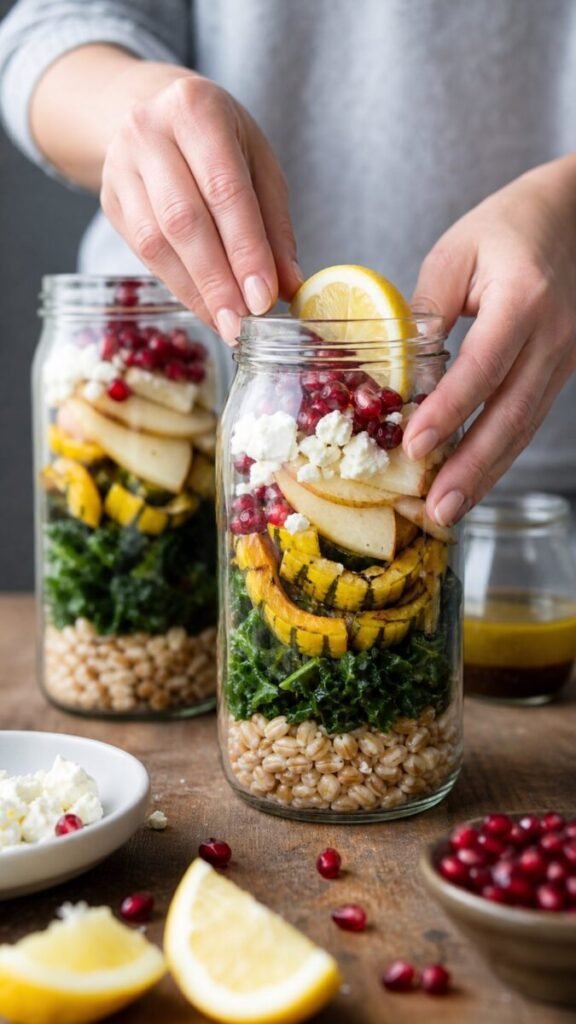
The cold-lunch shelf is getting crowded in the best way — this jar is the winter resident, and the Mediterranean Quinoa Bowl is the summer one. Between them, the packed-lunch question has been retired.
Anna’s Kitchen Notes
Buy pearled or semi-pearled farro, and read the bag. Whole farro keeps its bran, which is admirable of it, but it takes 60 to 90 minutes to cook and fights the lunch jar all week. Pearled and semi-pearled cook in the 25-to-30-minute range written here and stay tender-chewy for days. The bag will tell you which it is, usually in small print near the cooking instructions, which is also where bags keep their secrets.
Delicata is the squash that respects your time. No peeling — the skin is thin and roasts up sweet and faintly chewy, like the crust of something that worked harder than it did. If delicata has gone missing from the store, butternut cubes roast in the same time, but you’ll have to peel them, and you’ll lose the pretty rings. The rings matter in a jar: they stack, they stay distinct, and they make the lunch look arranged instead of scooped.
The drinking rule has a cutoff. Warm farro drinks; hot farro sweats the dressing back out, and cold farro ignores it completely. The sweet spot is the ten minutes after draining, when the grains are steamy but no longer scorching — that’s your window to stir in the half-dressing. I’ve tried reviving a forgotten, fully cooled pot of farro with dressing, and it works about as well as knocking on a locked door — the grain simply won’t let the flavor in
Pomegranate, seeded underwater. Cut the fruit in half, submerge it in a bowl of water, and break it apart with your fingers. The seeds sink, the pith floats, and you pour the foam off the top instead of picking bits of bitter white off the counter for the rest of the afternoon. It’s a thirty-second trick that feels like cheating, and it’s the only way I’ll seed a pomegranate for the rest of my life.
Two lemons, always. One goes in the dressing. The second gets spent in bits — a squeeze for the kale, a rub for the pear, a wedge packed per jar. A salad this hearty needs acid at every stage, and running out of lemon halfway through is the kind of small tragedy that spoils an otherwise organized Sunday. Buy the second lemon. Consider it insurance with a peel on it.
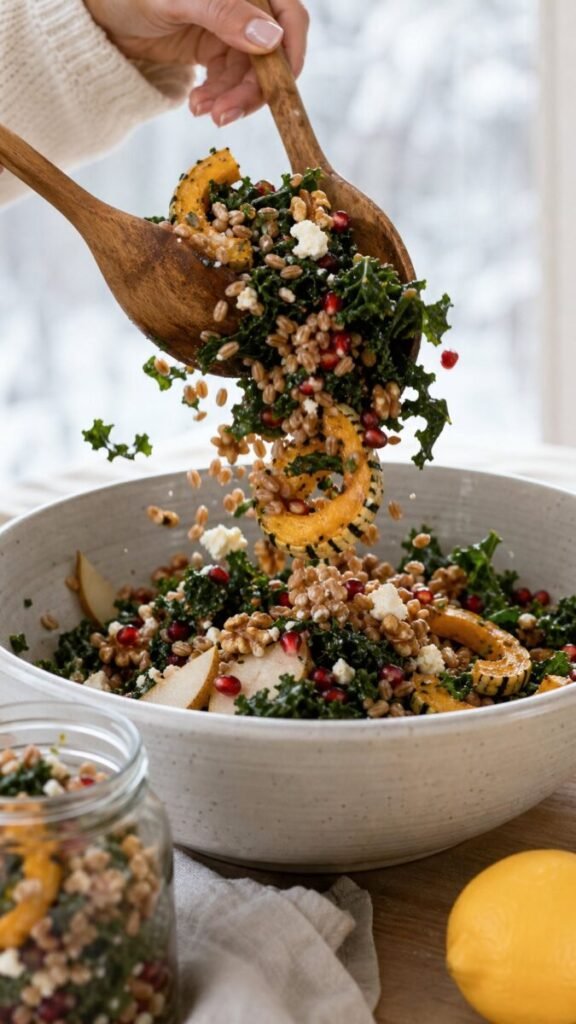
The Midday Table
As a lunch, the jar is complete — but on the days it stays home and becomes dinner, it wants company with a little warmth. A thermos of soup turns it into a full cold-weather lunch set, and the salad’s lemony kale plays beautifully against a creamy pot like our Roast Pumpkin & Lentil Salad — the warm sibling of this exact idea, same roasted-squash instincts, different temperature and grain.
For a desk-lunch rotation that doesn’t repeat on itself, this jar trades weeks with the Chickpea Beet Feta Salad — which shares the feta-and-pomegranate-adjacent DNA in a no-cook format — and the Fresh Veggie Wrap with Creamy Herb Dressing, for the days a fork feels like too much equipment.
Other Jars, Other Weeks
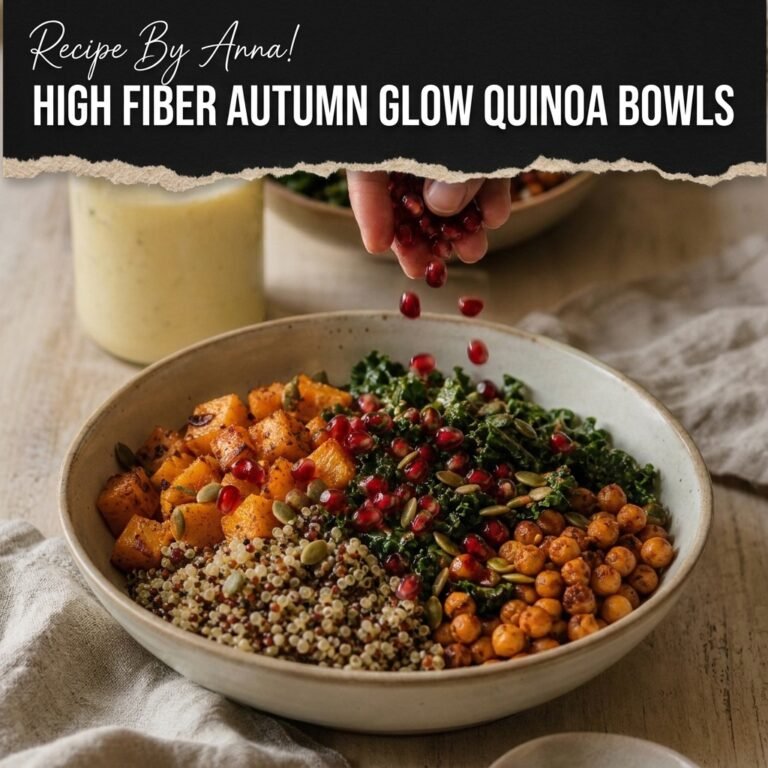
The grain swap. Pearled barley is the closest stand-in — same chew, same pasta-method cooking, slightly glossier. Wheat berries work with a longer boil, and freekeh turns the whole jar smoky. Quinoa works too, and if you go that way, the High Fiber Autumn Glow Quinoa Bowls are the house precedent for it — the same winter-roasted-vegetable thinking in a smaller grain.
The squash swap. Butternut cubes, roasted the same way (peeled, alas), or wedges of roasted carrots when even the squash bin is empty. The rule is only that the roasted thing stays firm-edged — anything that collapses warm will disintegrate cold, and a jar of collapsed squash is a jar of pureed regret.
Apple weeks and citrus weeks. A tart apple steps in for the pear with no other changes. Come deep winter, swap the pear entirely for segments of orange or blood orange — the jar goes jewel-toned and the salad tastes like it escaped to somewhere sunnier, which in February is the whole point of eating.
The vegan jar. Skip the feta and the honey (maple syrup dresses the dressing just as well) — everything else is already plants. A spoonful of roasted chickpeas on top brings back the salt and the protein in one move, and honestly, the crunch upgrade is not a compromise.
The protein add. A scoop of white beans, a jammy soft-boiled egg packed on top, or leftover roasted chickpeas — this bowl absorbs extras without complaint, because farro has the personality of a good host: sturdy, warm, and impossible to rattle.
The Jar Count
| Nutrient | Per Jar (1 of 4) |
|---|---|
| Calories | 420 kcal |
| Protein | 13 g |
| Carbohydrates | 48 g |
| Fats | 21 g |
Estimates for the salad as written, dressing and walnuts included, the revival splash counted in spirit. Thirteen grams of protein per jar comes from farro, feta, and walnuts doing a group project, and the fiber is the quiet headline — farro alone brings double digits per cup cooked, which is why this lunch holds you all the way to dinner without a single vending-machine incident. The fats are mostly olive oil, walnuts, and a modest feta ration, which is the arrangement the Mediterranean side of the family would approve of. As always, estimates: your pomegranate-seeding enthusiasm is the one variable no table can predict.
Cold Lunch, All Week
The jars keep four days in the fridge, and here is the part that still surprises people: days two and three are the best ones. The farro keeps settling into the dressing, the kale stays tender where a lettuce would have given up entirely, and the flavors finish getting acquainted. The pear, thanks to its lemon rub, stays bright through day four, though it softens — day one’s pear is crisp, day four’s pear is mellow, and both have their fans in this house.
The walnuts are the one ingredient with a shelf-life opinion: by day three they’ve gone from crunchy to chewy as the jar’s moisture finds them. If crispness is a priority, pack the walnuts in a small container or the jar lid’s dome and add them at lunch. It’s a small fuss for a big difference in texture, and texture is most of what a cold lunch has to offer — guard it.
And the revival splash, one more time, because it is the entire storage strategy: a wedge of lemon and a drizzle of olive oil, stirred in right before eating. The fridge is a moisture thief and a flavor mute; the splash reverses both in seconds. Don’t freeze this one — cooked farro survives the cold fine, but the delicata and the kale come back sullen and saggy, and a jar this good deserves better than a thawed apology.
Where It Goes Wrong
Chalky, flavorless grains at the bottom of the jar. The farro got dressed cold. Once it closes, it stays closed — dressing poured over cold farro sits on the surface and slides off at the first bite. The window is real and it’s written in Step 4: drained, still warm, half the dressing, stirred for a full minute. Miss the window and the jar tastes like it was seasoned by rumor.
Gluey, burst farro. It boiled too long, or the pot was too small and the grains knocked each other to starch. You want plump with a whisper of chew, not split and swollen. Pearled farro signals doneness at 25 to 30 minutes — taste at 25, and remember it keeps softening slightly as it drains. There’s a wide margin here, which is exactly why the pasta method exists, but the margin is not infinite.
A salad that’s boring by Tuesday. The dressing started too mild. Cold mutes flavor — the fridge is basically a flavor dampener with shelves — so the dressing in the jar should taste almost too sharp on Sunday, and the vinaigrette needs to be assertive enough to survive Wednesday. Taste it on a kale leaf before committing, and if it reads polite, add more lemon and salt until it doesn’t.
Tough, rubbery kale. The massage got skipped on the theory that it’s optional. It isn’t. Sixty seconds of lemon-and-salt rubbing is the difference between kale that yields and kale that argues with every forkful. If your fingers are tired, that’s how you know it worked — the leaves should look darker and feel like they gave up a grudge.
Everything browning by noon. The pear skipped its lemon rub, or the walnuts were stirred into the jar instead of sitting on top. Acid protects the pear, and the top of the jar is the driest real estate — the ingredients that need to stay crisp ride high, the sturdy ones live below. A layered jar isn’t fussy; it’s zoning.
A wet, pooling jar. The delicata went in oily from the pan, or the farro wasn’t drained well, or the squash was underdone and wept in the fridge. Drain the farro properly, roast the rings until their edges caramelize — that browning is moisture leaving on good terms — and let everything cool fully before packing. Sealing warm food into a cold jar makes condensation, and condensation is the enemy of the entire enterprise.
Farro Questions
Can I use instant or quick-cooking farro?
Yes — check the bag, because some par-cooked farros are done in 10 or 15 minutes and taste nearly identical in a cold salad, where the bar is chew rather than fresh-from-the-pot perfection. Cook it to the same finish line: plump, tender, a whisper of bite left. The pasta method still applies, just with a clock that runs faster.
What if I can’t find delicata squash?
Butternut is the direct swap — peel it, cut cubes instead of rings, same oil, same oven, same timing. Delicata’s advantages are the no-peel convenience and the pretty rings, but flavor-wise the jar doesn’t fall apart without it. Acorn squash works too, halved and sliced; its skin is also edible, and it’s slightly sweeter.
Can this be served warm instead?
Beautifully — skip the jar and serve it as a warm grain bowl the day it’s made: everything through Step 5, tossed while the farro is still warm, squash folded in straight from the oven, pomegranate and feta on top. Warm, it’s a dinner. Cold, it’s a lunch plan. Same recipe, two jobs, and I’ve been known to make a double batch purely to have both.
Is farro gluten-free?
It is not — farro is an ancient form of wheat, and it carries wheat’s gluten with ancient pride. For a gluten-free jar, sorghum or brown rice come closest in chew, and both handle the dressed-warm rule well. The rest of the recipe is naturally gluten-free, so the swap is contained to one pot.
How do I keep the pear from browning?
Lemon, immediately — the acid slows the oxidation that turns cut pears brown, and a rubbed pear in a sealed jar stays presentable for days. Cut it last, rub it right away, and pack it under the pomegranate rather than pressed against the glass if appearances matter. In a jar that gets shaken before eating, this is a technicality; in a jar that gets photographed at a desk, it’s a strategy.
Can I make the dressing without Dijon?
Yes — a quarter teaspoon of dry mustard powder or even a smooth whole-grain mustard works, and in a true emergency, the dressing holds together with just lemon, honey, garlic, oil, and an enthusiastic shake, though it will separate faster and need a second shake at lunch. The Dijon is doing emulsion work, not just flavor work: it’s the reason the dressing clings instead of pooling.
How long does the salad actually keep?
Four days is the honest ceiling for texture — the kale stays good-natured throughout, the farro improves, and only the walnuts show their age. The flavor stays safe beyond that, but cold salads live and die by texture, so plan the batch around four jars and eat them in order of enthusiasm. If a fifth day happens, the revival splash plus a fresh handful of pomegranate will carry it, but a fresh jar is the better cure.
Winter grains · Roasted squash · Bright lemon
Cold Vegetarian Lunch – Winter Farro Salad Recipe
Tender-chewy farro, roasted delicata squash, massaged kale, crisp pear, pomegranate, feta, and toasted walnuts in a honey-lemon dressing. Dress the grains while warm, then chill for a colorful, satisfying cold lunch.
As an Amazon Associate I earn from qualifying purchases.
Ingredients
The grain
- 1 cup uncooked pearled or semi-pearled farro
- Salt, for the cooking water
Roasted squash & walnuts
- 2 small delicata squash, scrubbed, halved lengthwise, seeded, and sliced into ½-inch half-moons
- 1 tablespoon olive oil, for roasting
- ½ teaspoon salt, for the squash
- A few grinds of black pepper, for the squash
- ½ cup walnut halves
The fresh ingredients
- 1 bunch lacinato kale, stemmed and thinly sliced, about 4 cups
- 1 firm, crisp pear, such as Anjou
- ¼ small red onion, thinly sliced
- ⅓ cup pomegranate arils
- ⅓ cup crumbled feta, made with vegetarian or microbial enzymes
The honey-lemon dressing
- 2 large lemons — juice of 1 for dressing; the second for kale, onion, pear, and finishing wedges
- 1 teaspoon Dijon mustard
- 1 teaspoon honey
- 1 small clove garlic, grated
- ⅓ cup olive oil, plus an optional drizzle to finish
- ½ teaspoon salt, or to taste, plus a small pinch for the kale
- ¼ teaspoon black pepper
The lunch kit
- Large pot, for boiling farro
- Rimmed sheet pan, or two if the squash is crowded
- Parchment paper, rated for at least 425°F
- Small jar with a tight-fitting lid, for dressing
- Mixing bowls
- Colander
- Chef’s knife and cutting board
- Measuring cups and spoons
- 4 wide-mouth quart jars or roomy lunch containers
Read the farro package: cooking times vary substantially. Quick-cooking farro may take 10–15 minutes; pearled or semi-pearled varieties may need 25–30 minutes or longer. Taste for tender-chewy grains rather than relying on the clock alone.
Dietary details: farro is wheat and is not gluten-free. This salad also contains walnuts, dairy, and mustard. Use feta made with vegetarian enzymes to keep the recipe vegetarian.
How to make it
-
Roast the delicata and toast the walnuts
Heat the oven to 425°F. Line a rimmed sheet pan with parchment rated for that temperature, or use an unlined pan. Toss the squash half-moons with 1 tablespoon olive oil, ½ teaspoon salt, and a few grinds of pepper. Spread in one layer, using two pans if needed. Roast for 20 minutes, then turn the squash. Add the walnuts to a clear, dry area of the pan and roast for another 3–5 minutes, watching closely and removing the nuts as soon as fragrant and lightly toasted. Continue roasting the squash if needed until tender with browned edges. Leave the edible skin on.
-
Boil the farro like pasta
While the squash roasts, bring a large pot of water to a boil and salt it. Add the farro and cook uncovered according to its package timing, often 25–30 minutes for pearled or semi-pearled farro. Start tasting before the suggested time is up. The grains should be tender with a pleasant chew, not hard in the center. Drain thoroughly.
-
Shake the dressing and soften the onion
In a small jar, combine the juice of 1 lemon, Dijon, honey, grated garlic, ½ teaspoon salt, ¼ teaspoon pepper, and ⅓ cup olive oil. Close tightly and shake until combined. Taste and adjust the seasoning. Cut the second lemon, reserving some wedges for the finished portions. Toss the sliced onion with a small squeeze of its juice in a separate bowl and let stand for about 10 minutes.
-
Dress the warm grains and cool promptly
Toss the well-drained farro with half the dressing while the grains are still warm. Spread the dressed farro in a shallow container so it cools quickly; keep the roasted squash separate while cooling. Refrigerate promptly to chill rather than leaving the ingredients on the counter until completely cold. Warm dressing helps distribute flavor, but cooled farro can still be seasoned successfully.
-
Massage the kale and prepare the pear
Put the sliced kale in a bowl with a small squeeze of lemon, a pinch of salt, and a spoonful of the remaining dressing. With clean hands, massage for about 1 minute, until the leaves darken and become more tender. Core and cube the pear just before assembly, then toss immediately with a little lemon juice to slow browning. Lemon helps preserve color but will not prevent browning indefinitely.
-
Toss, portion, and keep chilled
Combine the cooled farro, massaged kale, pear, onion, pomegranate, and most of the feta with the remaining dressing. Gently fold in the roasted delicata so the pieces stay intact. Taste and adjust the seasoning, then divide among four roomy jars or containers. Finish with the remaining feta. Add the cooled walnuts just before eating, or pack separately to preserve their crunch. Include a lemon wedge and, if desired, a little extra olive oil for finishing. Keep refrigerated at 40°F or below and use within 3–4 days; transport in an insulated lunch bag with ice packs.
Cold-lunch safety: refrigerate cooked grains and the finished salad within 2 hours, or within 1 hour when temperatures exceed 90°F. Use shallow containers for rapid cooling. Lemon dressing does not make this salad safe to keep at room temperature.