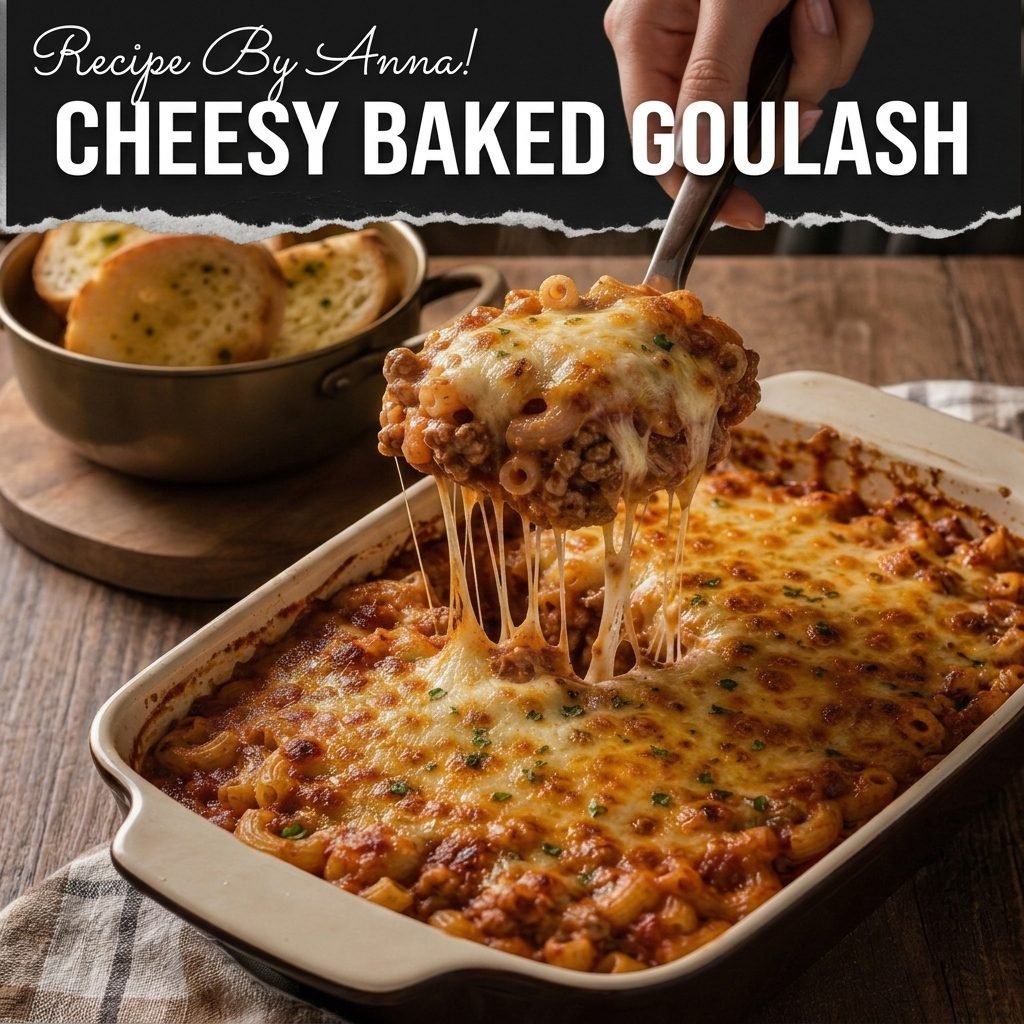
Easy Cheesy Baked Goulash | Quick Family Dinner
Cheesy baked goulash is the casserole half of America grew up on — ground beef and elbow macaroni in a tomato sauce, baked under a blanket of melted cheese until the whole dish smells like a school cafeteria you actually miss. It costs about ten dollars, it feeds six, and it reheats into the best lunch of the week. My version keeps every bit of that comfort-food promise and quietly fixes the two things most recipes get wrong: the pasta goes in undercooked so it finishes in the sauce instead of arriving waterlogged, and the paprika — the spice goulash was named for and American cooks somehow misplaced somewhere over the Atlantic — comes back, bloomed in beef fat where it can actually be tasted.
Let’s be honest about what this dish is, because the name has two families. Hungarian goulash is a paprika-heavy beef stew-soup, centuries old, served in bowls. American goulash is its Midwestern descendant: a pot of beef, macaroni, and tomatoes that church suppers and weeknight cooks turned into a casserole. This recipe is proudly the second one — the church-supper one — with the first one’s spice rack invited back to the table. Two teaspoons of sweet paprika and a pinch of smoked, stirred into the beef for sixty seconds, change the sauce from “fine” to “what did you do to this,” and nobody at the table can ever name what it is. That’s the paprika. It’s happy to work anonymously.
A few honest notes before you start. The bake is short — the casserole only needs enough oven time for the pasta to finish drinking the sauce and the cheese to become part of the dish — so most of the work happens in one pot on the stove. The two-cheese timing is the upgrade worth learning: sharp cheddar goes into the pot, where it melts into the sauce and makes it creamy and orange, and mozzarella goes on top, where the broiler gives you the stretch and the freckled golden lid. And the rest after baking — ten minutes, no cutting, no exceptions — is what turns a soup-ish scoop into a slice that holds its shape. Skim the whole recipe once before you start; the pasta and the sauce need to be moving at the same time, and it’s easier than it sounds once the timetable is in your head.
Why the Oven Earns the Cheese
Stovetop goulash is a fine weeknight dinner, so the fair question is why the oven should get involved at all. The answer is what happens to pasta and cheese in dry heat. The elbows in this recipe are boiled two minutes short of done, then folded into the sauce and baked — and in that half hour, the unfinished pasta drinks seasoned tomato liquid deep into the tube instead of tap water, which is the difference between pasta sitting in sauce and pasta that is sauce. Meanwhile the uncovered top of the casserole loses moisture to the oven’s dry air, the sauce tightens and concentrates, and the flavors that were separate at assembly — beef, tomato, paprika, cheese — become one thing. The oven isn’t extra work; it’s the pot doing flavor work while you set the table.
The two-cheese timing is the other half of the architecture. Cheddar stirred into the hot pot melts invisibly into the sauce, and its fat and milk solids turn a thin tomato sauce creamy, orange, and clingy — that’s the sauce upgrade happening before the dish even reaches the oven. Mozzarella, which is a structural cheese rather than a flavor cheese, goes on top only, where it does the one job cheddar can’t: it melts into a continuous, stretchy lid that browns under the broiler and pulls in strings with every serving. A snowfall of parmesan over the mozzarella browns faster than either and freckles the lid golden. Three cheeses, three jobs, zero redundancy — and if you’ve ever eaten a goulash where all the cheese was piled on top and the sauce underneath was thin and sad, you’ve eaten the missing half of this idea.
Then the details that carry the flavor. The paprika goes into the pot with the garlic for sixty seconds before any liquid arrives — paprika is fat-soluble, and those sixty seconds in hot beef fat are the difference between tasting it and merely having used it. The Worcestershire spoonful is the quiet umami floor under the tomato; it’s the reason people say “it tastes like it simmered all day” about a dish that took an hour. And the ten-minute rest at the end is not a formality: straight from the oven, the sauce is lava-thin and the casserole collapses on the plate. Rested, the pasta and cheese set just enough to slice, the way a lasagna does. I once served it at minute two because the table was restless, and we ate it with spoons. Nobody complained, exactly. But nobody got a slice, either.
⏱️ 1 HR | 🧀 CHEDDAR IN, MOZZARELLA ON | 🌶️ THE PAPRIKA COMEBACK
- Prep Time: 15 minutes
- Stovetop: 20 minutes, pot and pasta together
- Bake Time: 30 minutes plus a short broil
- Rest Time: 10 minutes
- Total Time: 1 hour 15 minutes
- Yield: 6 servings in a 9 by 13 dish
The Goulash Gear
One pot, one dish, nothing fancy:
- Large Dutch oven or deep skillet — big enough for the full pot of sauce and pasta; if it’s oven-safe, you can even bake in it and skip the dish.
- 9 by 13 baking dish — ceramic or glass, the standard casserole footprint.
- Pot for the pasta — salted water at a rolling boil while the beef browns.
- Colander — for draining the elbows two minutes early.
- Wooden spoon — for crumbling the beef and scraping the paprika off the pot bottom.
- Aluminum foil — the covered first bake depends on it.
- Box grater — for the cheddar and the parmesan; pre-grated cheese carries anti-caking powder, and this sauce can taste it.
Ingredients (With Labels)
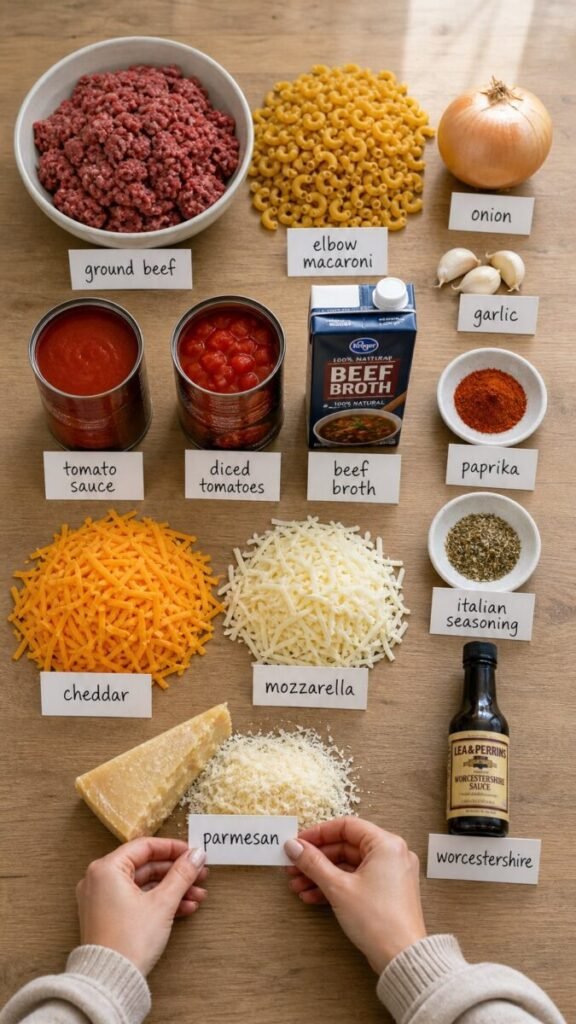
🥩 The Pot Base
- Ground beef: 1 lb, 85% lean
- Onion: 1 medium, diced
- Garlic: 3 cloves, minced
🍅 The Red Sauce
- Tomato sauce: one 15-oz can
- Diced tomatoes: one 14½-oz can, undrained
- Beef broth: ½ cup
- Sweet paprika: 2 teaspoons — the comeback
- Smoked paprika: ½ teaspoon
- Italian seasoning: 1 teaspoon
- Worcestershire sauce: 1 tablespoon
- Salt and pepper: 1 teaspoon salt, ½ teaspoon pepper
🍝 The Pasta
- Elbow macaroni: 2 cups dry, boiled two minutes shy
🧀 The Three Cheeses
- Sharp cheddar: 2 cups shredded — 1 cup stirred in, 1 cup on top
- Mozzarella: 1 cup shredded, low-moisture
- Parmesan: ¼ cup finely grated, for the snowfall
Step by Step How to Make
- Step 1 — Brown the beef, bloom the paprika. Set the pasta water on to boil, well salted. In the Dutch oven over medium-high, brown the beef with the onion, crumbling as it goes, until the beef is no longer pink and the onion has gone soft — 6 to 8 minutes. Drain off the excess fat if there’s a visible pool; a little sheen is flavor, a puddle is a problem. Push the heat to medium-low, add the garlic, both paprikas, and the Italian seasoning, and stir for 60 seconds — the spices should smell toasty and turn the beef rusty red. This is the flavor foundation, and it happens before any liquid joins the pot.
- Step 2 — Build the sauce. Pour in the tomato sauce, the diced tomatoes with their juice, the broth, the Worcestershire, the salt, and the pepper, scraping the bottom of the pot clean as it comes to a simmer. Let it bubble gently for 5 minutes to marry. Taste it — it should be rich, faintly sweet, and a little deeper than you expect; if it tastes flat, it’s usually another pinch of salt, not another ingredient.

- Step 3 — Two-minute-shy elbows. Boil the macaroni in the salted water for exactly two minutes less than the package’s al dente time — usually 6 to 7 minutes. Drain it. The elbows should be pliable but clearly underdone in the center; they’ll finish in the oven, and every minute of boiling you skip is a minute of sauce they drink instead. This is the single most important texture decision in the recipe.
- Step 4 — Combine, with the first cheese. Heat the oven to 375°F. Stir the drained elbows and one cup of the cheddar into the simmering pot, then transfer everything to the baking dish and spread it level. Cover tightly with foil. The cheddar is already disappearing into the sauce as you do this — that’s the creamy-orange upgrade happening ahead of schedule.
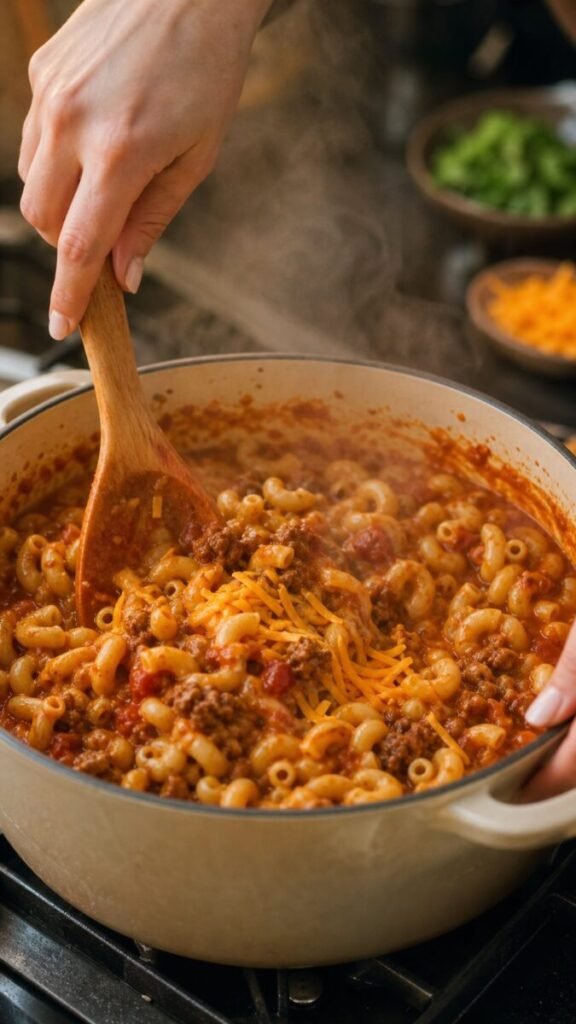
- Step 5 — Bake covered, then lid it and broil. Bake the covered dish for 20 minutes, until the sauce bubbles at the edges and the pasta has finished cooking in it. Pull the dish, raise the oven to broil, and take the foil off. Scatter the mozzarella, the remaining cup of cheddar, and the parmesan snowfall evenly over the top. Back into the oven, close to the broiler, for 2 to 4 minutes — watch it the entire time — until the cheese is fully melted, bubbling, and freckled brown in spots. The gap between golden and black is about ninety seconds, and the broiler does not send a warning.
- Step 6 — The ten-minute rest. Set the dish on a trivet or folded towel on the counter and walk away from it for ten minutes. The bubbles settle, the sauce tightens, the cheese lid sets just enough to cut, and the casserole goes from “served with a spoon” to “served in squares.” Scoop deep — everyone wants the corner pieces with the browned cheese, and there are only four corners, so allocate accordingly. Buttered bread on the side is not a suggestion; it’s the official vehicle for the sauce that’s left on the plate.

Goulash and chili mac are the same week wearing two different spice racks — this is the beef-and-paprika version, and our Cozy Vegetarian Chili Mac is the meatless understudy that shares the billing.
Anna’s Kitchen Notes
85% lean beef, and drain with judgment. A little fat left in the pot after browning is flavor — it carries the paprika and coats the pasta — but a visible pool on top of the crumbles will make the finished casserole greasy, and no amount of cheese hides it. My rule: tilt the pot, and if liquid collects that you could pour, pour it. Ninety-percent lean needs no draining at all and 80/20 needs it twice; 85 is the number that does the thinking for you.
The paprika must be fresh to come back at all. Paprika is a dried spice with a shelf life people ignore — after a year in the cabinet it smells like a library and tastes like red nothing. If your jar is old enough to have opinions, buy a new one, ideally labeled sweet Hungarian. Do the palm test: rub a pinch between your fingers, and if you can’t smell anything sweet and warm within three seconds, the comeback starts at the store. This is the recipe’s headline spice; it deserves a jar that works.
Sharp cheddar, grated at home, always here. The cup that melts into the sauce is doing creamy, orange work, and mild cheddar does it at half strength — the sauce comes out paler and quieter, and the whole casserole notices. Pre-grated cheese is tossed in cellulose to keep it from clumping, which is exactly what you don’t want in a sauce that’s supposed to melt smooth. Two minutes with the box grater, and the difference lands in every serving. I’ve done the side-by-side so you don’t have to; it’s not subtle.
You can bake in the pot if it’s oven-safe. A Dutch oven that goes from stovetop to oven skips the transfer and the extra dish entirely — assemble in the pot, foil over the top, bake, broil, rest, carry to the table in the same vessel. The 9 by 13 dish earns its keep when you’re making the freezer pan or feeding a crowd from a pretty dish, but the one-vessel weeknight version is a legitimately better weeknight. Do whatever your Tuesday tells you.
The rest is where slices are made. I know the dish smells incredible and the cheese is at maximum stretch right at the oven door, and I’m asking for ten minutes anyway. Straight out of the oven, the sauce is thin with heat and runs everywhere; rested, it climbs back up the walls of the macaroni and sets. Use the time to butter the bread and call the table. The cheese will still stretch — mozzarella holds that promise for a good fifteen minutes — and the squares will actually be squares.
The Buttered Bread Clause
Goulash’s official sidekicks are buttered bread and something green and crunchy — the bread for the sauce left on the plate, the green for the fact that dinner is otherwise beige-on-beige. A simple salad with a sharp vinaigrette does the same work hot sauce does, with better manners.
On the comfort-food shelf, this dish keeps company with the rest of the cheese-and-starch division: the Spicy Cheesy Rice Bake is the rice-building member, the Walking Taco Casserole is the crunchy cousin, and the Ultimate Crack Burgers handle the nights the ground beef was earmarked for patties. For a smaller table, the small-batch casseroles have you covered, and on the laziest of weeks, the dump-and-go crockpot chicken fried rice does what this dish does with zero stirring at all.
One Pot, Many Moods
The smoked sausage route. Swap half the ground beef for sliced kielbasa — the dish takes a detour toward its Hungarian roots and comes back smokier and more grown-up. Brown the sausage rounds first, then the beef in what the sausage left behind. Sunday-night energy for the same effort.
The ro-tel version. Replace the diced tomatoes with a can of tomatoes with green chiles, and add a pinch of cayenne with the paprika — the casserole goes southwest and needs the sour cream dollop it’s suddenly asking for. This is the version my spice-friendly relatives request by name, and the name they use is not printable.
The turkey exchange. Ground turkey works cleanly — same browning, same drain judgment, same sauce. Add an extra pinch of salt and a second pinch of smoked paprika, since turkey brings less of its own personality to the pot. The casserole comes out a shade lighter and nobody at the table has ever filed a complaint.
The vegetable supplement. A cup of frozen corn or a diced bell pepper, softened with the onion, folds in without changing the architecture — the corn especially, because its sweetness plays off the paprika. Zucchini works too if you salt and squeeze it dry first; wet zucchini is the enemy of a casserole that sets.
The stovetop shortcut. No oven night? Cook the pasta right in the sauce — add two cups of elbows and an extra cup of broth to the simmering pot, cover, and stir every few minutes until the pasta is tender and the sauce has thickened onto it. Stir in the cheddar, lid the pot with the mozzarella for three minutes off the heat, and you’ve made pan goulash — the weeknight ancestor this casserole was always going to grow up into.
The Helping Count
| Nutrient | Per Serving (1 of 6) |
|---|---|
| Calories | 540 kcal |
| Protein | 31 g |
| Carbohydrates | 46 g |
| Fats | 26 g |
Estimates for the casserole as written, all three cheeses accounted for, buttered bread considered your own business. Thirty-one grams of protein per helping is real dinner territory — the beef and the dairy split the work — and the carbohydrates are mostly pasta, which is to say the point of the dish. It’s comfort food, and it wears the numbers comfortably: made with 85% lean beef, a heavy hand with the tomato, and a measured hand with the cheese, it lands in the same neighborhood as a burger night with better leftovers. As always, estimates — your cheese snowfall varies with your mood, and mine varies with the week I’ve had.
The Second Helping
Baked goulash keeps four days covered in the fridge, and day two is the honest best day — the pasta has finished its slow drink of the sauce, the paprika has settled in, and the flavor is deeper for the overnight. Reheat a scoop gently with a splash of water or tomato sauce to bring the looseness back, either covered in a 350°F oven for 15 minutes or in a lidded skillet over medium-low. The cheese lid, for the record, reheats better than it has any right to.
The freezer takes this dish the way it was built to: assemble through Step 4, foil on, freeze before the bake, up to two months. Bake from frozen at 375°F for about an hour plus the uncovered cheese stage, or thaw overnight and bake as written. A fully baked leftover pan also freezes in portions — the texture softens a shade, the way all baked pasta does, and it still eats like the best thing in the freezer aisle except that you made it. Double the recipe on purpose and you’ve solved two future dinners in one afternoon; this is the meal-prep move I recommend without reservation.
The one thing I’d not do is hold the assembled, cheese-topped dish in the fridge raw for more than a day — the pasta keeps drinking the sauce and the mozzarella goes waxy on me. Assemble and bake same-day, or freeze at the pre-cheese stage and lid it fresh at the oven. Ten minutes of timing saves the whole lid, and the lid is half the reason anyone chose this recipe.
Where It Goes Wrong
Mushy, blown-out pasta. The elbows were boiled to full doneness and then baked for half an hour on top of it — the double cooking turns them to paste. The rule is two minutes shy of the package time, no negotiation, because the oven is the second cooking. If your package says 9 minutes, the pot gets 7 and the oven gets the rest.
A soupy casserole that won’t slice. Either the rest got skipped, the pasta was overboiled and waterlogged before it went in, or the sauce was never allowed to simmer and tighten. The fixes all live upstream: two-minute-shy pasta, a five-minute simmer before the dish goes in, and the ten-minute rest after it comes out. Follow those three and the casserole sets; skip any one and you’re serving a very tasty stew.
Bland red mush despite good ingredients. The paprika went in with the liquid instead of into the hot fat, or the jar was old enough to vote. Bloom the spices for their sixty seconds in the beef fat — that’s where paprika stops being a color and starts being a flavor — and make sure the Worcestershire made it in. The sauce gets tasted at Step 2 for a reason: seasoning the pot is easy, seasoning a finished casserole is archaeology.
A greasy shine on every scoop. The beef fat wasn’t drained, or the 80/20 pound went in unjudged. A spoonful of fat left in the pot is flavor; a lake of it becomes a slick on top of the sauce that the cheese then bakes into. Tilt-and-pour after browning, and the casserole stays rich without going glossy.
A cheese lid that’s rubber or ash. Rubber means low-moisture mozzarella’s bag was actually fresh-grated wet mozzarella, or the cheese went on for the entire covered bake instead of the last stage; ash means the broiler ran unwatched. Cheese goes on after the foil comes off, and the broiler gets your full, standing attention. Two to four minutes, eyes on it, door closed — that’s the entire ceremony.
Dry scorched corners, molten middle. The dish baked uncovered the whole way through. The foil stage is the casserole’s steam shield — it lets the pasta finish in a saucy atmosphere while the top stays protected; only the final cheese stage goes naked. Uncover from the start and the edges go leathery before the center sets, and the corners you were saving become the corners nobody wants.
Goulash Questions
What’s the difference between Hungarian and American goulash?
Hungarian goulash is a soup-stew: big pieces of beef, onions, and a serious amount of paprika in a bowl of broth, centuries old. American goulash is the Midwestern adaptation — ground beef, elbow macaroni, and tomato, cooked in one pot or baked as a casserole. This recipe is the American one, with the Hungarian spice rack (real paprika, bloomed properly) invited back in. Calling it goulash is a family name both dishes answer to, and each is delicious on its own terms.
Can I make it without the oven?
Yes — the stovetop version in my variations is the original weeknight form: simmer the pasta directly in the sauce with extra broth, stir in the cheddar, then lid the pot off the heat for three minutes to melt the mozzarella. You give up the broiled lid and the concentrating effect of the bake, and dinner arrives twenty minutes sooner. On a Tuesday, that’s not a compromise; that’s the plan.
Can I use a different pasta shape?
Any short, tubular shape works — shells, cavatappi, gemelli, penne. The elbows are traditional because the curve holds sauce, and cavatappi actually holds more of it if you can find it. What matters is the two-minute-shy boil and a shape with somewhere for the sauce to live. Long noodles like spaghetti can be broken up in an emergency, and the dish will taste right even while looking like it gave up on presentation.
Can I assemble it ahead of time?
Best practice is same-day, because raw pasta sitting in sauce keeps absorbing it. If you must prep ahead, assemble through Step 4 and refrigerate for up to 24 hours, then bake covered for 30 instead of 20 to compensate for the cold start. For real make-ahead, freeze at the pre-cheese stage — the casserole was born for the freezer, and a second pan in the deep freeze is the whole reason I own two 9 by 13 dishes.
Is there a way to make it gluten-free?
Use gluten-free elbows and you’re most of the way there — check the Worcestershire label, since classic versions contain malt vinegar, and swap to a gluten-free brand or an anchovy-rich splash of fish sauce if it doesn’t. One GF note: gluten-free pasta turns to mush even faster than regular, so pull it at three minutes shy and treat it gently. The sauce never knew the difference in mine.
Why add Worcestershire to a tomato dish?
Because tomato loves umami the way paprika loves fat. Worcestershire is anchored, tangy depth — tamarind, anchovy, molasses — and one tablespoon under a quart of tomato sauce is the reason the pot tastes like it simmered all afternoon. Soy sauce does the same job slightly differently, and a teaspoon of miso does it quietly. Pick one; the sauce deserves a floor.
Can I add sour cream?
You can, and it’s a lovely Midwest move: one big spoonful stirred in off the heat after the bake, before the rest — it goes creamy-tangy through the sauce like a stroganoff that wandered in. The casserole gets softer and a shade pinker, and the cheese lid doesn’t mind at all. Some nights I do it, some nights I want the paprika forward and clean. The dish supports both careers.
American comfort food · Paprika-rich sauce · Golden cheese
Cheesy Baked Goulash
Ground beef and elbow macaroni in a tomato sauce seasoned with sweet and smoked paprika. Sharp cheddar melts into the sauce, while mozzarella, more cheddar, and Parmesan create a golden, bubbling topping.
As an Amazon Associate I earn from qualifying purchases.
Ingredients
The beef base
- 1 lb ground beef, 85% lean
- 1 medium onion, diced
- 3 cloves garlic, minced
The paprika-tomato sauce
- 1 can (15 oz) tomato sauce
- 1 can (14½ oz) diced tomatoes, undrained
- ½ cup beef broth, plus a splash if needed
- 2 teaspoons sweet paprika
- ½ teaspoon smoked paprika
- 1 teaspoon Italian seasoning
- 1 tablespoon Worcestershire sauce
- Up to 1 teaspoon salt, to taste, plus salt for the pasta water
- ½ teaspoon black pepper
The pasta
- 2 cups dry elbow macaroni, approximately 8 oz; check the package measure
The three cheeses
- 2 cups shredded sharp cheddar, divided — 1 cup for the sauce and 1 cup for topping
- 1 cup shredded low-moisture mozzarella
- ¼ cup finely grated Parmesan
The goulash gear
- Large Dutch oven or deep skillet, roomy enough for sauce and pasta
- 9 × 13-inch baking dish; use a manufacturer-approved broiler-safe pan if broiling
- Pasta pot
- Colander
- Wooden spoon
- Aluminum foil
- Box grater
- Instant-read food thermometer
- Oven mitts and a heat-resistant trivet
Broiler-safe matters: oven-safe does not automatically mean broiler-safe. Do not broil in glass. Use ceramic only if its manufacturer explicitly permits broiling. Otherwise, melt the topping at 375°F and skip the broiler.
Undercook, then finish: boil the elbows about 2 minutes short of the package’s al dente time. The covered bake finishes them in the sauce. Check tenderness before adding the cheese topping.
How to make it
-
Preheat and brown the beef
Heat the oven to 375°F and bring a pot of salted water to a boil. In a large Dutch oven or deep skillet over medium-high heat, cook the ground beef and onion for about 6–8 minutes, breaking the meat into small pieces, until the onion softens and the beef is cooked through to 160°F. Drain off any pool of excess fat, leaving a light coating in the pan.
-
Bloom the spices and simmer the sauce
Reduce the heat to medium-low. Add the garlic, sweet paprika, smoked paprika, and Italian seasoning. Stir for 30–60 seconds, just until fragrant, without letting the spices scorch. Add the tomato sauce, diced tomatoes with their juices, broth, Worcestershire, and black pepper. Start with about ½ teaspoon of the measured salt. Scrape the bottom of the pot and simmer gently for 5 minutes. Taste and add more salt only as needed, remembering that the cheeses will add salt too.
-
Boil the macaroni two minutes short
While the sauce cooks, boil the elbow macaroni for about 2 minutes less than the package’s al dente time. It should be pliable but still firm in the center. Drain well without rinsing. Use the package timing rather than assuming all elbows cook at the same speed.
-
Fold in pasta and the first cup of cheddar
Take the sauce off the heat. Stir in the drained macaroni and 1 cup of cheddar until evenly combined. The mixture should look generously saucy; if it has become very thick, stir in a small splash of broth. Transfer to a 9 × 13-inch baking dish, spread evenly, and cover tightly with foil.
-
Bake covered, then add the cheese topping
Bake for about 20 minutes, then carefully lift the foil away from your face. Check that the pasta is tender and the center is hot, reaching 165°F. If the pasta is still firm, cover again and bake another 5–10 minutes; add a splash of hot broth if the mixture looks dry. Scatter the remaining cheddar, mozzarella, and Parmesan evenly over the top. Return uncovered to the 375°F oven for about 5–10 minutes, until the cheese is fully melted.
-
Brown briefly, rest, and serve
For a golden top, broil only if your baking dish is approved for broiler use. Position it at the manufacturer’s recommended distance from the element and watch continuously for roughly 1–3 minutes, removing it as soon as the cheese browns in spots. Follow your oven’s instructions for broiling. Set the hot dish on a dry, heat-resistant trivet and rest for 10 minutes before serving. The sauce will thicken as it rests, though this is a scoopable casserole rather than a guaranteed sliceable bake.
Allergen check: this recipe contains wheat and dairy. Many Worcestershire sauces contain anchovies, so check the label for fish and other allergens. Use care when uncovering the casserole: trapped steam can burn.