
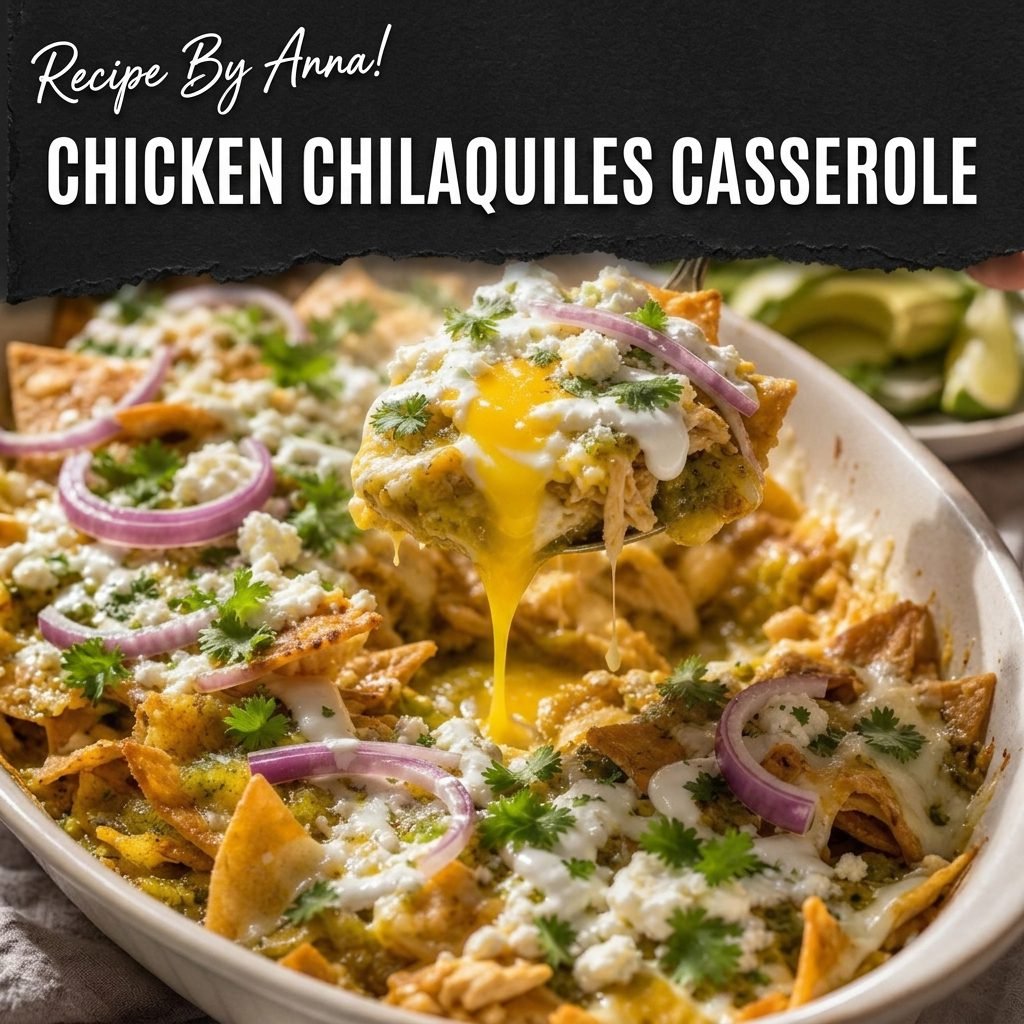
Chicken Chilaquiles Casserole: Easy Baked Mexican Brunch
Chilaquiles is Mexico’s great answer to “what do we do with yesterday’s tortillas” — chips simmered in salsa until they soften but don’t surrender, traditionally finished with crema, queso, and eggs, and served the instant they’re ready because chilaquiles wait for no one. This casserole takes that idea and hands it to the oven so it can feed a brunch table: shredded chicken folded into a jarred-salsa-verde sauce, thick tortilla chips layered underneath, Monterey jack melted through, and eggs cracked right onto the hot casserole for the last ten minutes, so every serving gets its own runny yolk. Fifty minutes, one dish, six happy plates.
The problem with baking chilaquiles is the same problem that makes them magical: chips and time are natural enemies. Left in sauce too long, chips dissolve into mush; that’s not a casserole failure, it’s physics. So this recipe is built around a two-chip architecture — a base layer of chips goes under the sauce and bakes into the soft, saucy, fork-tender chilaquiles texture, while a crown of chips goes on top late in the bake and comes out with crisp, toasted edges. One bite gives you both textures at once, which is exactly what good chilaquiles have always been: soft and crisp in the same mouthful, in a dish that can now sit in the middle of a brunch table instead of being plated one at a time at the stove.
A few honest notes before you start. The chips are the recipe — thin, grocery-aisle-thin chips will give up the ghost, so buy the thick restaurant-style ones and check the bag (more on this in the notes). The make-ahead move is the sauce, not the stack: the verde chicken improves overnight in the fridge, but an assembled casserole left waiting turns into chip soup, so the assembly happens right before baking, and it takes five minutes. And the eggs set the schedule — everything else at the table gets arranged before they go in, because from egg to plate is ten minutes, no loitering. The casserole is easy. The timing is a group project.
The Crisp Question
Let’s settle the central engineering problem out loud, because it decides every choice in this recipe. A traditional chilaquilera simmers chips in salsa for two to four minutes — literally counted — and plates immediately. A casserole asks the chips to survive twenty-five minutes in a 400°F oven, half of it under sauce. The way through is treating the chips as two separate ingredients with two separate jobs. The base chips (about two-thirds of the bag) are deliberately drowned: they soak up the salsa verde as it bubbles and arrive at the table soft and sauced, which is the chilaquiles texture people dream about. The crown chips (the rest) are deliberately protected: they ride on top of the sauce, above the liquid line, and their job is to stay rigid and toast at the tips while everything below them turns silky. The layers meet in every spoonful.
The sauce has to earn its place too, because it’s doing more work than a topping. Jarred salsa verde is the honest shortcut here — tomatillos, chiles, and cilantro already cooked down by professionals — but it gets a ten-minute simmer with shredded chicken and a pinch of cumin, so the chicken seasons the sauce and the sauce seasons the chicken instead of both sitting next to each other politely. A splash of broth keeps it loose enough to soak the base chips without drowning them. That ratio matters more than the brand: you want the chips drinking, not swimming.
Then the eggs, which are the brunch clause of the whole plan. Baked eggs on a hot casserole cook from the bottom up — the whites set against the bubbling sauce while the yolks lag behind — and if you pull the dish when the whites are just opaque, the yolks arrive at the table liquid and ready to become sauce. That’s why the eggs go in at the very end instead of from the start: thirty minutes of baking would turn them into hard-boiled garnish, and the runny yolk is doing real structural work, loosening the saucy layers and enriching every bite. The last-minute toppings — cool crema, salty queso fresco, cilantro, quick-pickled or thinly sliced red onion, avocado — land on the hot surface and balance the whole thing. Heat and cool, soft and crisp, sauce and crunch: the casserole negotiates all of it before your first cup of coffee is finished.
⏱️ 50 MIN | 🥚 BAKED EGGS ON TOP | 🌮 SOFT BASE, CRISP CROWN
- Prep Time: 15 minutes
- Bake Time: 25 minutes in two stages
- Egg Time: 8 to 10 minutes
- Total Time: 50 minutes
- Yield: 6 brunch servings
The Brunch Kit
Nothing exotic — the dish does the work:
- 9 by 13 baking dish — ceramic or glass; deep enough for the sauce to bubble without escaping.
- Large skillet with a lid — for the verde chicken, ten minutes end to end.
- Wooden spoon — for folding the chicken and pressing the base chips.
- Tablespoon or ladle — for making the six egg wells.
- Oven mitts that deserve the name — the dish comes out twice at temperature, once for the crown and once for the eggs.
- Big trivet — the casserole lands in the middle of the brunch table, still bubbling.
- Sharp knife and cutting board — cilantro, onion, avocado: the fresh stuff all happens at the end.
Ingredients (With Labels)
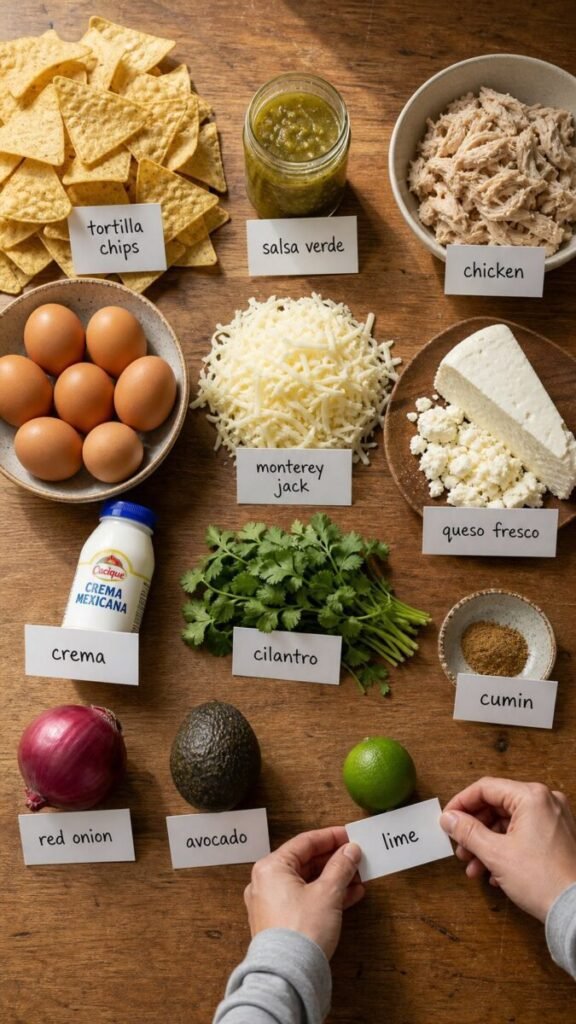
🐔 The Green Base
- Salsa verde: 2 cups (one 16-oz jar)
- Chicken broth: ½ cup
- Ground cumin: ½ teaspoon
- Cooked chicken: 3 cups shredded — rotisserie is the honest shortcut
- Salt: ½ teaspoon, plus more to taste (jars vary)
🌮 The Chips
- Thick corn tortilla chips: 10 oz — restaurant-style, the sturdiest bag in the aisle
🥚 The Brunch Layer
- Eggs: 6 large
- Monterey jack: 1½ cups shredded
🌿 The Finish Line
- Mexican crema or sour cream: ½ cup, for drizzling
- Queso fresco: 4 oz, crumbled
- Cilantro: ¼ cup chopped
- Red onion: ½ cup thinly sliced — quick-pickled if you have ten spare minutes
- Avocado: 1, sliced
- Lime: 1, cut into wedges
Step by Step How to Make
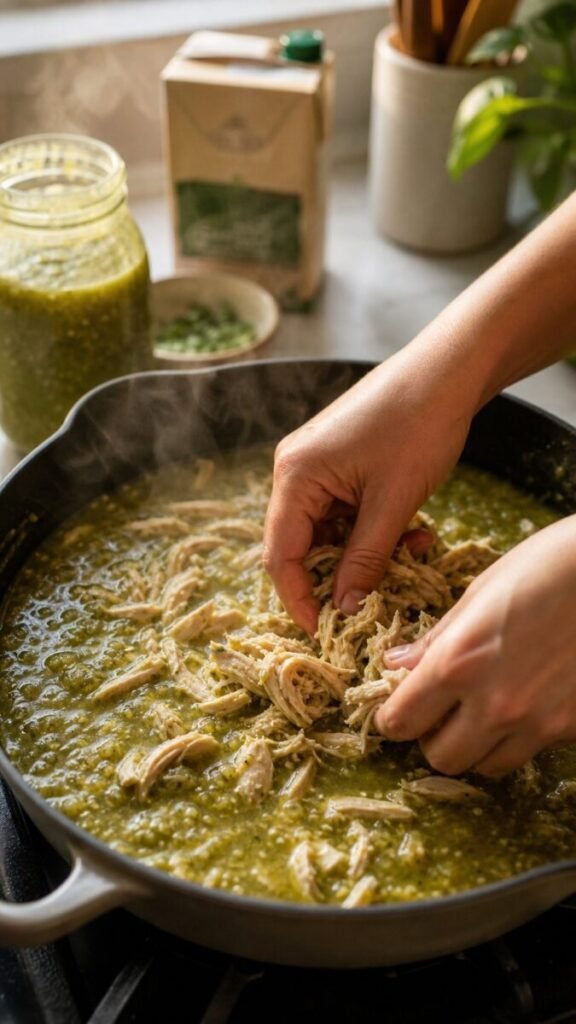
- Step 1 — Verde chicken, ten minutes. Heat the skillet over medium and pour in the salsa verde, broth, and cumin. Let it come to a lazy simmer, then fold in the shredded chicken, cover, and give it 5 minutes to heat through and swap flavors with the sauce. Taste and add salt as needed — jars run from bright to flat, and this is the moment the casserole gets seasoned, not later. The sauce should look loose and glossy, like something a chip would want to marry.
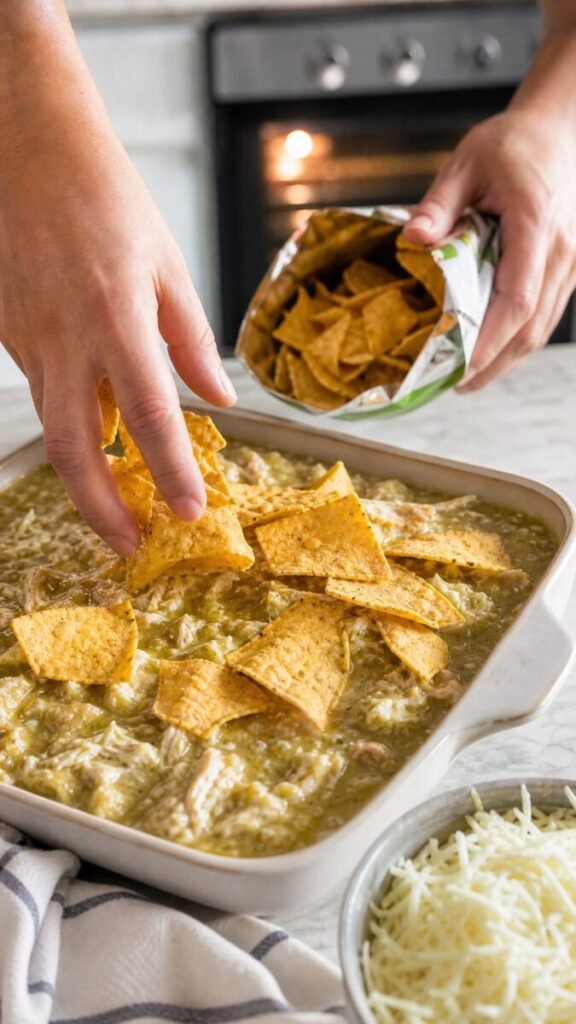
- Step 2 — The base layer. Heat the oven to 400°F. Scatter about two-thirds of the chips across the bottom of the baking dish — an uneven, generous carpet is right. Spoon the verde chicken over, covering every chip, and press down gently so the base chips know they’re supposed to drink. Scatter half the jack on top. Into the oven for 15 minutes, until the sauce bubbles at the corners.
- Step 3 — The crown. Pull the dish out, scatter the remaining chips over the top, and add the rest of the jack. Back in the oven for 10 minutes. The crown chips sit above the sauce line, so instead of softening they toast — golden at the tips, sturdy in the middle — while the base finishes its transformation underneath. This is the whole two-chip idea, happening without any further help from you.
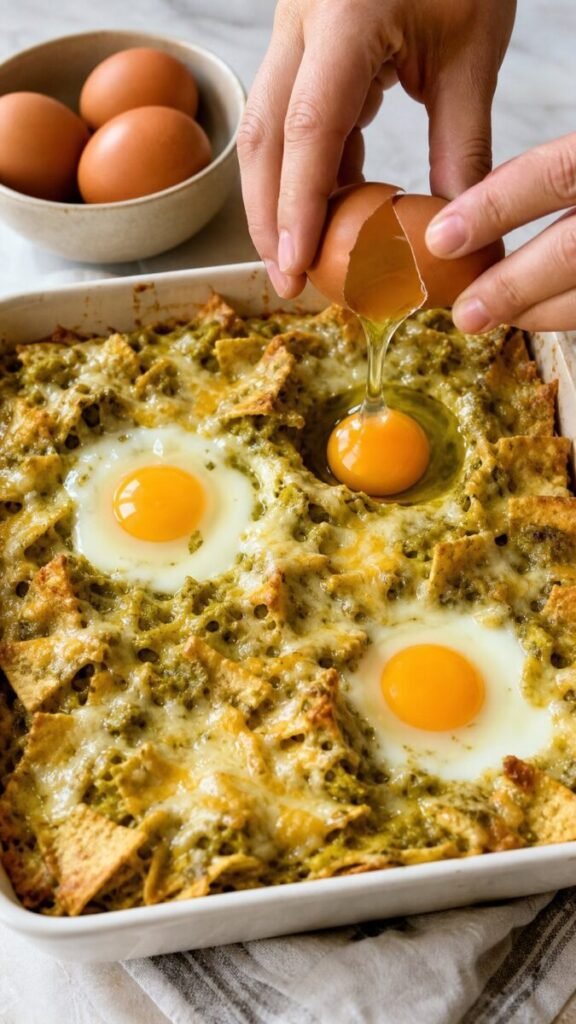
- Step 4 — Eggs on top. Pull the dish out again and turn the oven down to 375°F. Make six shallow wells in the surface with the back of a spoon, spaced evenly, and crack an egg into each. A pinch of salt and pepper over the yolks, then back in for 8 to 10 minutes, until the whites are set and opaque and the yolks still wobble when you nudge the dish. They will keep cooking after they leave the oven — pull them a shade before you think they’re done.
- Step 5 — The fast finish. Give the casserole 2 minutes to settle — the yolks stop sliding, the bubbling calms — then go straight down the finish line: crema in ribbons across the top, queso fresco crumbled everywhere, cilantro scattered, red onion rings dropped across the eggs, avocado and lime wedges arranged along the edges. From this moment the dish is on a clock, and it’s a short one — carry it to the table and serve immediately, because the crown is crispest now and the yolks are runniest now, and chilaquiles have never once waited politely. Coffee’s already made, right?
This is the third brunch bake to live in this kitchen — the Eggs Benedict Casserole brought the hollandaise, the Pancake Sausage Casserole brought the syrup, and this one brings the salsa. Between the three of them, the hosting rotation is fully staffed.
Anna’s Kitchen Notes
Buy chips like they’re structural. Because they are. The base layer needs to absorb sauce for twenty-five minutes and still hold a fork’s worth of casserole together, and a thin chip — the sort that shatters in the dip bowl — has no chance. Look for “restaurant-style” or “cantina-style” on the bag, and do the bend test: a chip that flexes before it snaps is too delicate for this job. My local store’s sturdiest bag lives on the top shelf, which I choose to read as a test of commitment.
The two-chip split is the recipe’s spine. If you take one idea from this post, take this one: sauce below the waterline, crisp above it. The base chips drink on purpose; the crown chips stay dry on purpose. When you serve, dig the spoon all the way down so each plate gets both — the soft saucy bottom and the toasted top — plus a runny yolk. That single spoonful is the whole argument for the casserole existing.
Taste the jar before you trust it. Salsa verde jars range from bright and herbal to cooked and faintly sweet, and the casserole inherits whatever you start with. Taste the simmered sauce in Step 1 and adjust: a pinch of salt if it’s flat, a squeeze of lime if it’s dull, a pinch of sugar if the tomatillos ran tart. Thirty seconds of attention here saves the whole brunch from tasting like it was seasoned over the phone.
Rotisserie chicken is the brunch shortcut that earns its spot. One standard bird yields about three cups of shredded meat, which is exactly this recipe. If you’d rather cook your own, poach a pound of chicken thighs right in the salsa verde with a little extra broth — twenty minutes, then shred — and the chicken comes out flavored all the way through. That’s the Sunday-morning version; the rotisserie is the Saturday-night-panic version, and both casseroles taste like you planned them.
The eggs set the schedule, not you. Baked eggs go from perfect to rubbery in about ninety seconds of extra oven time, and they keep cooking on the counter too — so the table gets set, the coffee gets poured, and the guests get seated before a single egg is cracked. The last ten minutes of this recipe are the brunch itself. Mimosas can wait; the yolks can’t, and they’ve been clear about this from the start.
The Brunch Spread
The casserole is loud, so the rest of the table stays quiet and cool. A Frito Corn Salad is the make-ahead side I reach for — sweet, crunchy, no oven required, and it plays the corn note back at the tortilla chips. Bowls of fruit, orange juice, and something fizzy finish the job without competing.
If the crowd arrives hungry before the casserole goes in, set out something to hold them: our Jalapeño Cream Cheese Dip with the leftover handful of chips from the bag buys you twenty calm minutes. And on hosting weeks, this bake trades shifts with the Pancake Sausage Casserole — one weekend savory, one weekend sweet, and the brunch calendar runs itself.
Different Sundays
Rojos Sunday. Swap the salsa verde for a jar of red salsa or enchilada sauce — same method, same eggs, warmer and deeper flavor. A chopped chipotle in adobo added to the simmer gives it a smoky push. Green one week, red the next: that’s the whole chilaquiles calendar in Mexico, and it works here too.
The Frito route. Replace the crown chips with a layer of Fritos for the last bake — sweeter, sturdier, unmistakably fun. It drifts toward our Walking Taco Casserole territory, which is a fine neighborhood to end up in on a casual Saturday.
The queso drizzle. Skip the jack inside and finish each plate with warm ladles of our Mexican White Cheese Dip instead. It’s the deluxe route and it turns brunch into an event — I save it for holidays and for weekends when someone else is doing the dishes.
Dinner mode. Same casserole, no baked eggs — serve it with a quick fried egg on each plate instead, so every yolk arrives exactly as runny as its owner wants. Fold a can of drained black beans into the verde chicken to make it heartier. Nobody at my table has ever objected to chilaquiles at 7 p.m., and I’ve stopped expecting them to.
Greener still. Skip the chicken and fold two cans of black beans and a cup of corn into the salsa verde — the vegetarian table gets the same brunch, and the eggs carry the protein. The two-chip architecture doesn’t care what’s in the sauce; it only cares that you respect the waterline.
The Sunday Arithmetic
| Nutrient | Per Serving (1 of 6) |
|---|---|
| Calories | 480 kcal |
| Protein | 28 g |
| Carbohydrates | 34 g |
| Fats | 25 g |
Estimates for the casserole as written, toppings included in spirit if not in exact measure — the avocado adds richness and about 60 calories per sixth, and it’s welcome to. Twenty-eight grams of protein per serving comes from chicken, eggs, and two cheeses working together, which is why this eats like a real brunch and not like chips with regrets. The fats are largely the good sort, olive-oil-adjacent and avocado-forward. As always, these are estimates: your crema drizzle arm is between you and your Sunday.
Sauce Now, Stack Later
The split that works: sauce ahead, stack fresh. The verde chicken keeps three days covered in the fridge and genuinely improves overnight — make it Thursday, brunch Sunday, and Step 1 becomes a reheating formality. The assembled casserole, though, does not wait: chips plus sauce plus hours equals chip soup, so the layering happens right before the oven, and it takes about four minutes. Some dishes forgive assembly in advance. This one holds grudges.
Baked leftovers keep two days in the fridge, and here’s the honest part: the eggs will have set firm and the base softens further, so day-two chilaquiles are a different, cozier dish — closer to a tortilla strata, still genuinely good, no longer the crisp-crowned original. Reheat covered at 350°F for about 15 minutes with a splash of salsa to loosen, and crown it with fresh crema and cilantro, which trick a day-old casserole into acting young again.
The freezer gets the sauce only — verde chicken freezes three months beautifully and thaws into a brunch plan. Eggs and chips are both fresh-day performers, so the real make-ahead strategy is the split above plus a toppings tray prepped the night before: onion sliced, cilantro washed, lime cut, crema ready. Come morning, the oven does the cooking and you do about ten minutes of assembly, which is exactly the amount of work a brunch host wants to be seen doing.
Where It Goes Wrong
All-the-way-through mush. Thin chips, or every chip got buried in sauce. The base is supposed to soften and the crown is not — keep the crown above the sauce line, add it only after the first bake, and buy chips that could plausibly be used as shingles. If the bag bends, the casserole folds.
Concrete on the bottom, cold in the middle. The sauce went in cold from the fridge onto a cold dish, and the oven spent its first ten minutes playing catch-up. Simmer the verde chicken until it’s genuinely hot before it meets the chips, and the bake runs on schedule. A straight-from-the-fridge sauce is the most common cause of the underdone center at brunch time.
Rubbery whites, chalky yolks. The eggs stayed too long. Baked eggs have a window of about ninety seconds between “whites just set” and “sad” — pull the dish when the whites are opaque but the yolks still shimmy, and let the carryover finish the job. When in doubt, underdo: the hot casserole is patient in the direction you want.
A bland casserole despite good ingredients. The sauce never got tasted. Jarred salsa verde varies wildly, and it’s the flavor engine of the whole dish — season it in the skillet, not at the table, because salt sprinkled on top of a finished casserole never quite reaches the chips underneath. Thirty seconds of tasting in Step 1 is the entire difference.
Dry pockets of plain chips. The sauce got poured in one spot and hoped for the best. Spoon it across the whole surface and press the base chips in so every one makes contact — a chip that misses the sauce bakes into a dry cracker, and there’s no fixing it after. Coverage is a two-minute job; skip it and you’ll find every dry pocket personally.
The casserole that waited. It sat ten minutes while people found chairs, and the crown went leathery and the yolks went solid. The fix is scheduling, not cooking: table set, guests seated, drinks poured, then eggs in. The dish comes out and goes straight to the middle of the table, still bubbling, and brunch starts on the casserole’s terms. It earned that much.
Chilaquiles Questions
Can I use red salsa instead of green?
Yes — chilaquiles rojos are the classic sibling, and the method doesn’t change a step. Red salsa runs a bit sweeter and deeper; green runs brighter and tangier. If you use enchilada sauce instead of salsa, add a drained can of diced green chiles or a chopped chipotle so the sauce has some texture and personality.
Can I assemble it the night before?
Only if you want chip soup with eggs on it. The verde chicken can be made up to three days ahead — that’s the make-ahead move — but chips meet sauce right before the oven. The assembly is five minutes, which is the price of the soft-crisp texture the whole recipe is built around. Pay it at the last minute.
Can I make it without a runny yolk?
Certainly — bake the eggs a few minutes longer until the yolks are as set as you like, or skip the wells and serve the casserole with eggs cooked separately to order. Fully baked-in yolks will be softly set rather than liquid at the ten-minute mark and firm beyond it. The dish is still excellent; you just lose the built-in sauce, so hand people extra crema.
What if I can only find thin chips?
Two rescues: toast them first — spread on a sheet pan, 8 minutes at 400°F, to drive off moisture and stiffen them — or fry your own from stale corn tortillas cut in wedges, which is the traditional starting point anyway and makes the sturdiest chips of all. Both work. What doesn’t work is thin chips straight from the bag; that path has been tested, on a Tuesday, with witnesses.
How do I scale it for a bigger brunch?
The recipe doubles cleanly into two dishes rather than one deeper one — the chip layers need their shallow bake to crisp properly, and a doubled depth just steams. Double the sauce and chicken in the same skillet in two shifts, and keep the egg timing exactly as written. Two dishes also mean one can come out ten minutes after the first, which a long brunch table will thank you for.
Is it very spicy?
Usually mild — most jarred salsa verde is gentle, family-friendly heat. The spice lives mostly in the finish anyway: pickled onions are tangy rather than hot, and hot sauce at the table lets each plate find its own setting. If your crowd runs spicy, add a diced jalapeño to the simmer or choose a salsa labeled hot.
Can I use leftover turkey or pork instead of chicken?
Any leftover cooked meat works — shredded turkey is traditional in plenty of households, and pulled pork turns the whole dish into something barbecue-adjacent and wonderful. Keep the same three cups. The sauce makes the rules; the protein just rents a room in it.
Weekend brunch · Salsa verde · Oven baked
Chicken Chilaquiles Casserole
Thick tortilla chips, salsa verde chicken, melted Monterey Jack, and eggs baked on top. A saucy base meets a late-added chip crown, finished with crema, queso fresco, cilantro, avocado, and lime.
As an Amazon Associate I earn from qualifying purchases.
Ingredients
The verde chicken
- 2 cups salsa verde — about one 16-oz jar; measure to confirm
- ½ cup chicken broth
- ½ teaspoon ground cumin
- 3 cups shredded fully cooked chicken
- ½ teaspoon salt, or to taste, plus a pinch for the eggs
Chips, cheese & eggs
- 10 oz thick corn tortilla chips, divided
- 1½ cups shredded Monterey Jack cheese, divided
- 6 large eggs; choose pasteurized shell eggs if serving softer yolks
- A pinch of black pepper, for the eggs
Fresh finishes
- ½ cup Mexican crema or sour cream
- 4 oz queso fresco, crumbled
- ¼ cup chopped cilantro
- ½ cup thinly sliced red onion, or prepared pickled red onion
- 1 avocado, sliced
- 1 lime, cut into wedges
The brunch kit
- 9 × 13-inch baking dish, rated for 400°F
- Large skillet with a lid
- Wooden spoon
- Large spoon, for making egg wells
- Measuring cups and spoons
- Instant-read food thermometer
- Oven mitts and a large heat-resistant trivet
- Sharp knife and cutting board
Two layers, two textures: use about two-thirds of the chips underneath the sauce and reserve one-third for the crown. Thick chips work best; “restaurant-style” alone does not guarantee thickness.
Timing: the casserole bakes for 25 minutes before the eggs go in, then needs another 8–12 minutes or longer for the eggs. Allow about an hour overall, rather than counting egg time within the first bake.
How to make it
-
Preheat and prepare the toppings
Heat the oven to 400°F. Set out a room-temperature, oven-safe 9 × 13-inch baking dish. Divide the chips into a larger two-thirds portion and a smaller one-third portion, and divide the Monterey Jack in half. Prepare the fresh toppings before the eggs go into the oven.
-
Simmer the verde chicken
Combine the salsa verde, broth, and cumin in the skillet over medium heat. Bring to a gentle simmer, fold in the cooked chicken, and cover. Heat for about 5 minutes, stirring occasionally, or until thoroughly hot; refrigerated leftover chicken should reach 165°F. Taste and add salt as needed—the salsa, chips, and cheeses already contribute salt. The mixture should be saucy, not soupy.
-
Bake the saucy base
Spread two-thirds of the chips across the baking dish. Spoon the hot verde chicken evenly over them, gently pressing so all the base chips contact the sauce. Scatter half the Monterey Jack over the top. Bake for 15 minutes, until bubbling around the edges and hot in the center. Assemble immediately before baking so the chips do not soak while waiting.
-
Add the crisp crown
Using oven mitts, set the hot dish on a dry, heat-resistant trivet. Scatter the reserved chips over the surface without pressing them into the sauce, then add the remaining Monterey Jack. Bake for 10 minutes, until the cheese melts and exposed chip edges begin to toast. Keep an eye on the chips so they do not burn.
-
Make six wells and bake the eggs
Remove the dish and reduce the oven to 375°F. Gently move aside a few crown chips to make six shallow wells in the saucy layer. Crack one egg into each well and season with a little salt and pepper. Return to the oven and begin checking after 8 minutes; allow 8–12 minutes or longer as needed. For the safest result, cook until both whites and yolks are firm and the egg portion reaches 160°F. For softer yolks, use pasteurized shell eggs and cook until the whites are fully set; a runny yolk is not a reliable indicator of safety.
-
Finish and bring straight to the table
Let the casserole settle for about 2 minutes on a trivet. Drizzle with crema or sour cream, then add queso fresco, cilantro, sliced or pickled red onion, and avocado. Serve immediately with lime wedges, scooping through both chip layers and giving each portion an egg. The exposed chips are crispest just after baking; the sauced base will be intentionally soft.
Egg safety: undercooked eggs can cause foodborne illness. Serve fully cooked eggs to pregnant people, young children, older adults, and anyone with a weakened immune system. Do not rely on carryover heat alone to finish undercooked eggs.