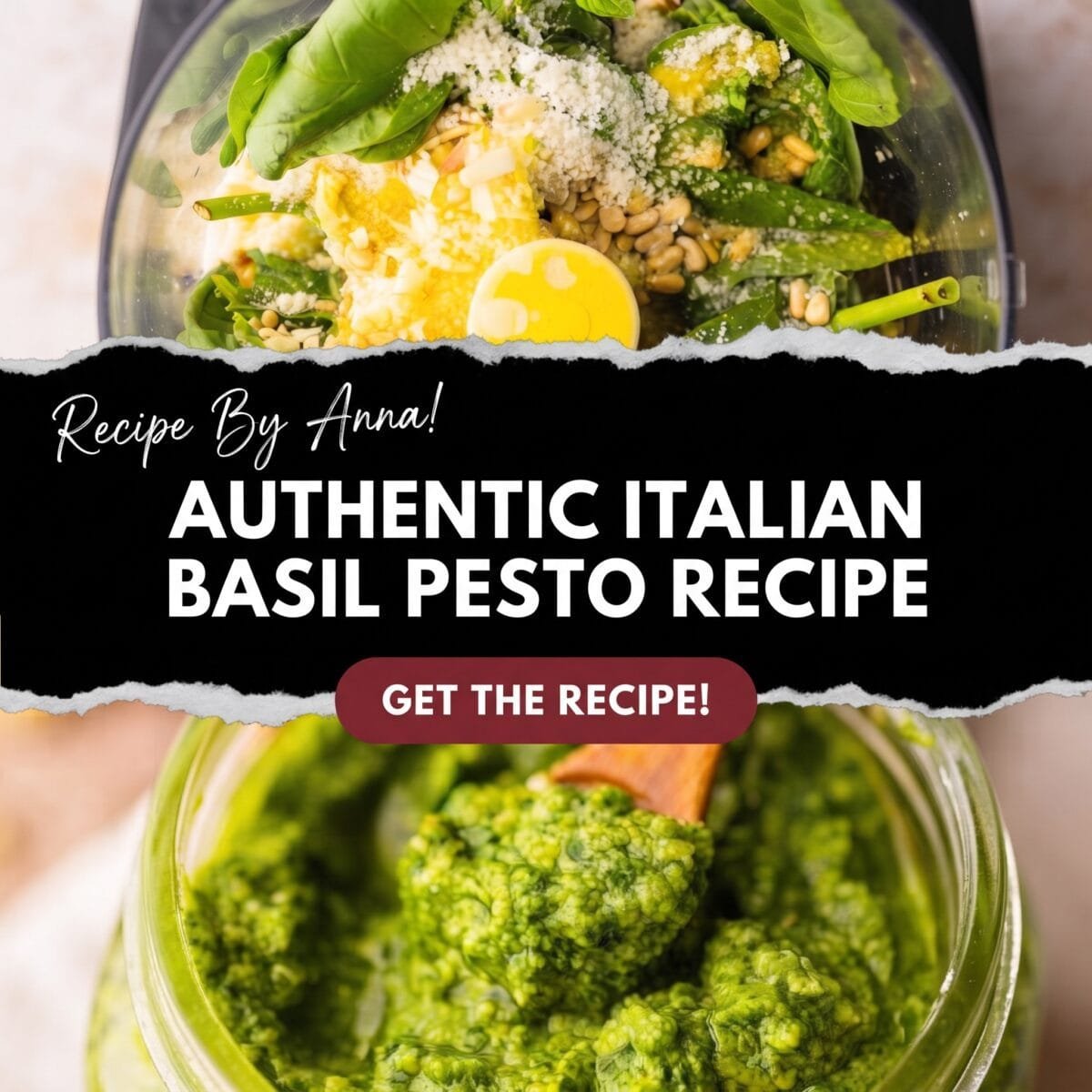
Authentic Italian Basil Pesto Recipe
This Authentic Italian Basil Pesto is the homemade pesto recipe that makes every jar of store-bought pesto taste like a permanent compromise — intensely green, deeply fragrant, with the specific vivid basil flavour that only fresh basil processed within minutes of being picked from the stem can produce, balanced by the nutty richness of toasted pine nuts, the sharp, aged bite of good Parmesan, the sweet heat of garlic, and the grassy depth of a genuine extra-virgin olive oil that is worth tasting on its own.
At 229,000 monthly searches, pesto recipe is one of the highest-volume recipe searches in this collection — because pesto is the most versatile sauce in Italian cooking, the one that makes pasta, pizza, sandwiches, grilled chicken, roasted vegetables, and a dozen other applications immediately better, and because a properly made homemade pesto is so dramatically better than the supermarket alternative that making it once is usually enough to make it a permanent fixture in the kitchen rotation.
The recipe includes the traditional food processor method for speed and consistency, a note on the traditional mortar and pestle technique for anyone who wants the most authentic result, and six variations — pesto without pine nuts, walnut pesto, nut-free pesto, vegan pesto, spinach pesto, and sun-dried tomato pesto — covering every major search direction from one base method.
Why Homemade Pesto Is Worth Making Every Single Time
Fresh basil loses its volatile aromatic compounds — the specific molecules that produce that instantly recognisable basil scent and flavour — within hours of processing. The basil pesto in a jar at the supermarket was made from basil that may have been processed days or weeks ago, then heated for preservation, which drives off whatever aromatics remained after processing. The result is a dark green, slightly bitter, flat-tasting product that shares almost nothing with freshly made pesto beyond the colour and the ingredient list.
Homemade pesto made from fresh basil and consumed within a day is one of the most vivid, most intensely aromatic sauces in all of Italian cooking — bright, grassy, faintly sweet, with a complexity that develops as the garlic, pine nuts, and Parmesan meld with the basil in the olive oil. Made the day before serving, it is even better. Made two weeks ago and stored in a jar, it is a different product entirely.
- Prep Time: 10 minutes
- Total Time: 10 minutes
- Yield: approximately 1 cup (240ml), serves 4 to 6 as a pasta sauce
What You Need
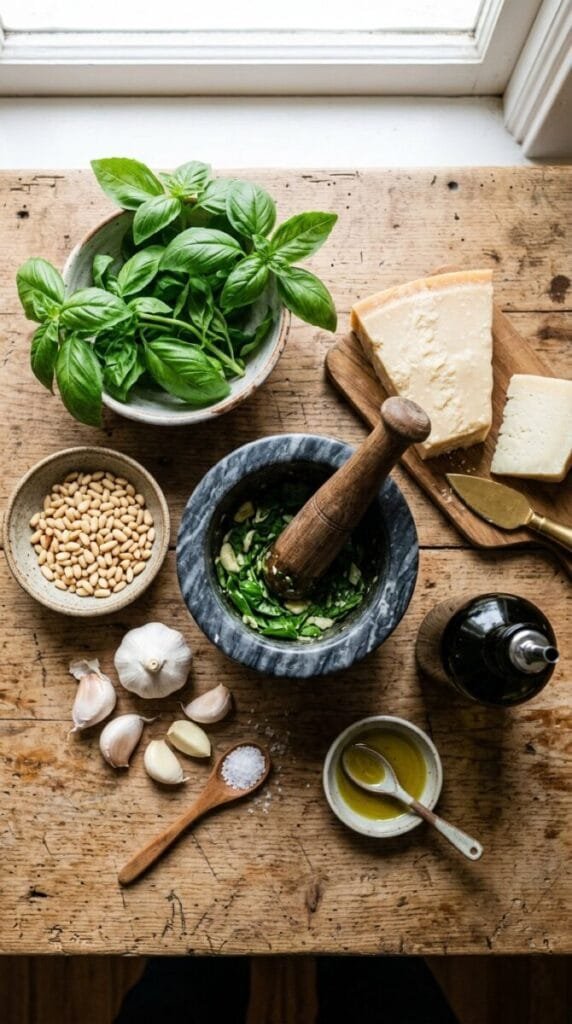
- Fresh basil leaves, packed: 2 cups (50g, approximately 2 large bunches) — the leaves only, no stems; stems are bitter and fibrous
- Pine nuts, lightly toasted: 1/3 cup (45g) — toasting at 350°F for 5 minutes deepens their flavour significantly; watch carefully as they burn quickly
- Garlic cloves: 2 to 3 — start with 2 and add more to taste; the garlic is raw and pungent in pesto and its intensity varies by clove size and freshness
- Parmigiano-Reggiano, freshly grated: 1/2 cup (50g) — Parmigiano-Reggiano specifically, not generic Parmesan; the aged, crystalline, intensely nutty character of genuine Parmigiano-Reggiano is not replicated by domestic Parmesan of equivalent cost
- Pecorino Romano, freshly grated (optional): 2 tablespoons — traditional Genovese pesto uses a blend of Parmigiano and Pecorino; the Pecorino adds a sharper, saltier, more aggressive edge that the Parmigiano alone doesn’t provide
- Extra-virgin olive oil: 1/2 cup (120ml) — use the best quality available; olive oil is the carrier for every other flavour in pesto and a flat, generic oil produces a flat, generic pesto
- Fine sea salt: 1/4 teaspoon to start, then to taste — the Parmesan and Pecorino are both salty; season cautiously and taste before adding more
- Black pepper: 1/4 teaspoon
- Fresh lemon juice: 1 teaspoon (optional — brightens the colour slightly and adds freshness, though not traditional in the most authentic Genovese versions)
How to Make It
Food processor method (fastest and most consistent):
- Toast the pine nuts in a dry skillet over medium heat for 3 to 5 minutes, stirring frequently, until golden and fragrant. Set aside to cool — hot nuts added to the food processor will begin cooking the basil from the heat.
- Combine the basil leaves, cooled pine nuts, garlic, Parmigiano-Reggiano, Pecorino (if using), salt, and pepper in the food processor bowl.
- Pulse 8 to 10 times until the ingredients are roughly chopped and beginning to combine — short pulses rather than continuous processing to avoid generating heat from the blade friction that darkens the basil.
- With the processor running, drizzle the olive oil through the feed tube in a thin, steady stream — adding it slowly allows it to emulsify gradually into the basil mixture rather than pooling separately. Process for 20 to 30 seconds total, stopping when the pesto is smooth but still slightly textured rather than completely uniform — a pesto with some visible basil and nut texture is more interesting than a completely smooth purée.
- Taste and adjust: more garlic if it needs more bite, more salt if it tastes flat, more olive oil if it seems thick, more Parmesan if it needs more umami depth. The pesto should taste vibrant and bold from the bowl because it will be diluted slightly when tossed with hot pasta.
- Transfer to a jar and press a thin layer of olive oil over the surface — the oil layer prevents the basil from oxidising and turning black. Refrigerate immediately.
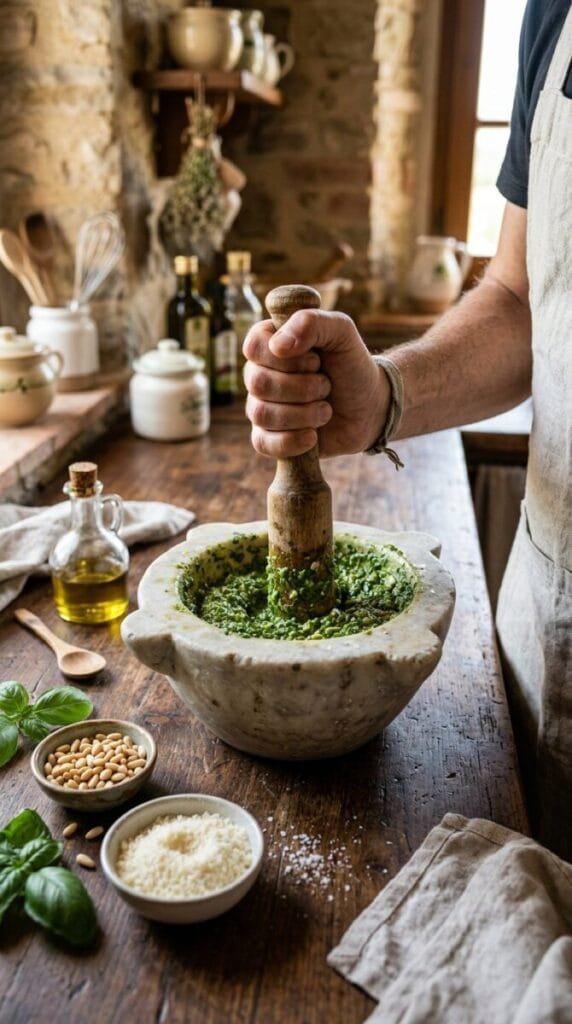
Mortar and pestle method (most authentic, most textured result):
- Pound the garlic and salt together in the mortar until a smooth paste forms.
- Add the pine nuts and pound until broken down into a coarse paste.
- Add the basil leaves in three or four additions, pounding and rotating the mortar between additions rather than grinding in a circular motion — pounding crushes the basil cells and releases their aromatic oils rather than tearing them, which produces a more intensely flavoured pesto with a slightly different character than the food processor version.
- Add the cheeses and stir with the pestle to incorporate.
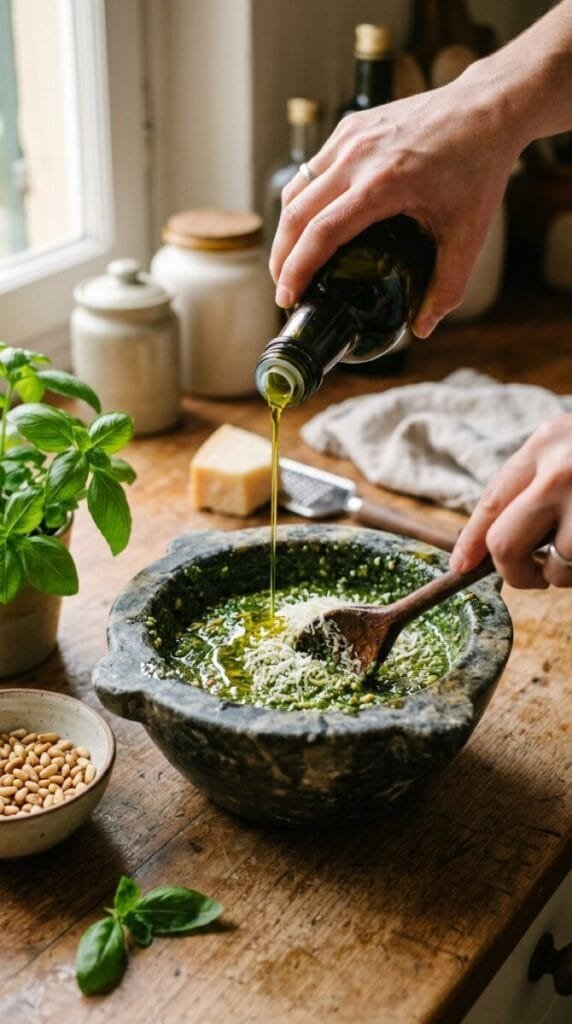
- Stir in the olive oil by hand until fully incorporated. The mortar and pestle pesto is typically coarser, greener, and more intensely basil-flavoured than the food processor version — different in character, not just in texture.
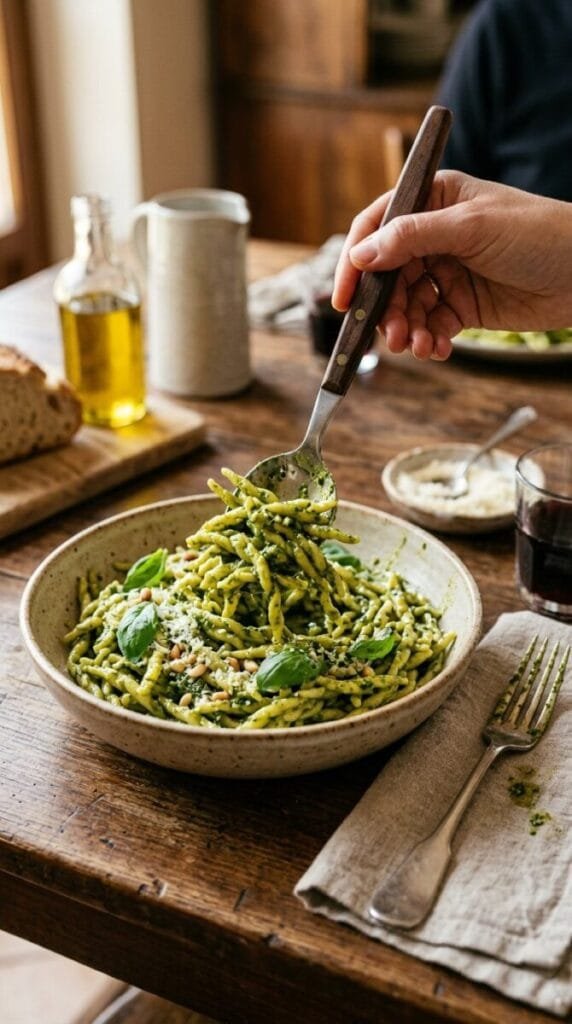
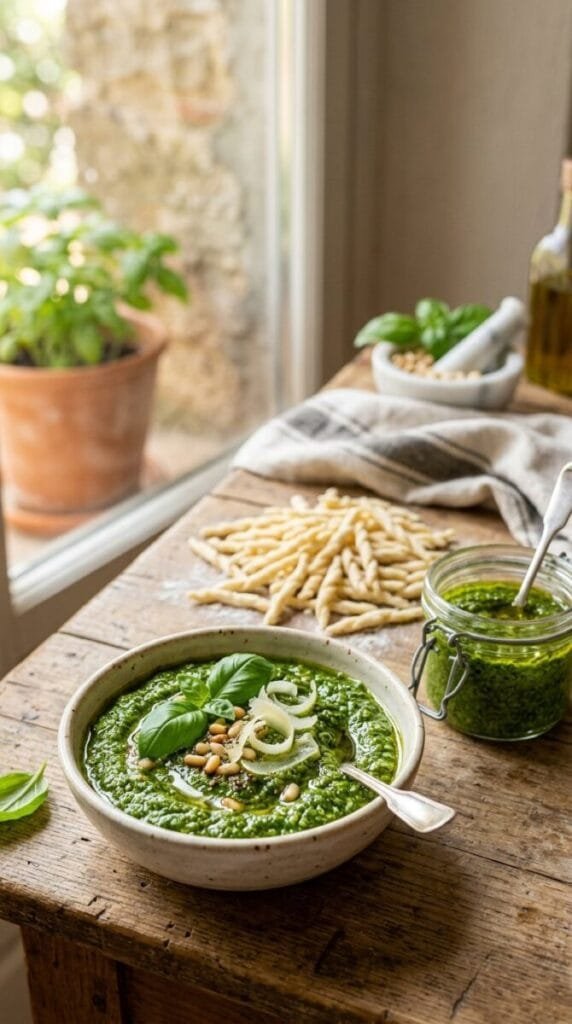
This basil pesto tossed with pasta and served with our Focaccia Bread is the simplest, most satisfying Italian dinner that a kitchen with good ingredients can produce — fresh pesto, pasta cooked in well-salted water, the focaccia for the olive oil on the bottom of the bowl that the bread was made to soak up.
The Basil Oxidation, Pine Nut Toast, and Cheese Quality Details
Basil turns dark — oxidises — when the cell walls are broken and the enzymes inside react with oxygen. This is why store-bought pesto is dark and why homemade pesto darkens in the fridge within a day. Three techniques slow the oxidation: blanching the basil leaves in boiling water for 5 seconds and shocking in ice water before processing (it fixes the bright green colour but mellows the flavour), adding the olive oil to the processor before the basil (the fat coats the cut surfaces and slows oxygen contact), or the simplest — using immediately and covering with an olive oil layer in storage. The most flavourful pesto is the unblanched version eaten within a day; the most visually stable is the blanched version kept for up to a week.
Toasting the pine nuts is the step that most improves the flavour of the finished pesto without changing the recipe — raw pine nuts have a mild, slightly resinous flavour; toasted pine nuts have a deeper, nuttier, more complex flavour that integrates more fully with the basil and Parmesan. The difference is significant enough to taste immediately in side-by-side comparison.
Genuine Parmigiano-Reggiano — the DOP-certified cheese made in Emilia-Romagna using traditional methods — has a flavour complexity from 12 to 36 months of ageing that domestic “Parmesan” doesn’t replicate. According to Serious Eats, Parmigiano-Reggiano’s extended aging process produces glutamate crystals throughout the cheese that are a direct source of umami — the same glutamate that makes monosodium glutamate so effective as a flavour enhancer. These crystals dissolve in the olive oil of the pesto and distribute umami depth throughout the sauce that domestic Parmesan, aged for a fraction of the time, cannot provide in equivalent quantities.
What to Use Pesto On — Beyond Pasta
Pesto pasta is the obvious application and the most searched one — toss with 1 pound of cooked pasta (linguine, trofie, or spaghetti) and 1/4 cup of reserved pasta water to loosen and emulsify. Add halved cherry tomatoes and fresh mozzarella for a complete summer pasta dinner.
On pizza as the base sauce instead of tomato — spread 3 tablespoons over a rolled-out pizza dough and top with fresh mozzarella, thinly sliced zucchini, and pine nuts. The pesto pizza is more delicate and more herb-forward than a tomato-based pizza and is genuinely better with fresh, high-quality mozzarella than with the low-moisture variety.
As a marinade for chicken or salmon — coat both sides of boneless chicken breasts or salmon fillets in 2 tablespoons of pesto and let sit for 30 minutes before grilling or roasting. The olive oil in the pesto bastes the protein as it cooks and the basil-garlic-Parmesan flavours permeate the surface.
On sandwiches and wraps as a spread — replace mayonnaise or mustard with pesto on a turkey, mozzarella, and roasted tomato sandwich for an Italian-inspired lunch that requires no additional seasoning. Our Spring Roll Salad with a tablespoon of pesto stirred into the dressing in place of the peanut butter produces an unexpected Italian-Asian fusion dressing that is genuinely excellent.
Stirred into soups as a finishing element — a tablespoon of fresh pesto stirred into a bowl of minestrone or white bean soup immediately before serving adds freshness and herb complexity that dried herbs added during cooking can’t replicate.
Six Pesto Variations from the Same Base Technique
Pesto Without Pine Nuts (Walnut Pesto) — replace the pine nuts with an equal quantity of toasted walnuts. Walnuts produce a slightly more assertive, earthier pesto than pine nuts — less delicate but more complex, and significantly cheaper. This is the most practical everyday alternative and the one most recommended for anyone who makes pesto regularly and finds pine nut prices prohibitive.
Basil Pesto Recipe Nut Free — replace the pine nuts with 3 tablespoons of toasted sunflower seeds or pumpkin seeds. The sunflower seed version produces a nuttier, slightly more rustic pesto that is genuinely excellent and suitable for nut-free households. Pumpkin seeds (pepitas) add a mild, slightly sweet flavour and a beautiful green colour that complements the basil.
Vegan Pesto — replace the Parmigiano-Reggiano and Pecorino with 4 tablespoons of nutritional yeast for the umami depth the cheese provides, and add 1 extra tablespoon of lemon juice for the sharpness the Pecorino Romano would have contributed. The vegan version is lighter in colour and slightly less rich than the cheese version but has a genuinely good basil flavour and works well in every application the cheese version does.
Spinach Pesto — replace 1 cup of the basil with 1 cup of fresh baby spinach. The spinach adds body, a milder green flavour, and extends the basil without significantly altering the character of the sauce — an excellent way to make a large batch when basil is expensive or to produce a milder, less intensely basil-forward pesto for people who find full-basil pesto too aggressive. The spinach version is also more stable in colour over time as the spinach doesn’t oxidise as quickly as basil.
Sun-Dried Tomato Pesto (Red Pesto / Pesto Rosso) — replace the basil with 1 cup of drained, oil-packed sun-dried tomatoes, reduce the olive oil to 1/4 cup (the sun-dried tomato oil contributes additional fat), and add 1/4 cup of roasted red peppers. Keep the pine nuts, garlic, and Parmesan. The result is a completely different sauce — red, intensely tomato-flavoured, slightly sweet, excellent on pasta, pizza, or as a dip. Not a basil pesto variation in the traditional sense but produced from the same technique.
Arugula Pesto — replace the basil entirely with 2 cups of packed fresh arugula for a peppery, slightly bitter pesto that works particularly well with pasta and grilled meats. Add 1 teaspoon of lemon zest to brighten the arugula’s natural bitterness. The arugula version is the most intensely peppery of all the greens variations and is excellent tossed with orecchiette or penne and topped with shaved Parmesan and extra arugula.
Nutritional Information
| Nutrient | Amount Per Serving (2 tablespoons, 1/8 of the recipe) |
|---|---|
| Calories | 165 kcal |
| Protein | 3 g |
| Carbohydrates | 2 g |
| Fats | 17 g |
These values are estimates for 2 tablespoons of the full recipe — a typical serving size as a pasta sauce is 3 to 4 tablespoons per portion. Pesto is calorie-dense from the olive oil and pine nuts, but the portion size is small and the flavour is concentrated enough that 3 tablespoons of pesto adequately coats 100g of cooked pasta without requiring additional sauce. As a dip or spread, 2 tablespoons is a complete serving.
Storing and Preserving Homemade Pesto
Store in an airtight jar with a thin layer of olive oil pressed against the surface of the pesto in the fridge for up to 5 days — the oil layer prevents oxygen contact and slows the oxidation that turns fresh pesto from bright green to dark olive. The pesto will still darken slightly around the jar’s edges during storage; this is cosmetic and does not affect the flavour.
Freeze in an ice cube tray — portion by tablespoon into the tray, freeze until solid, then transfer the cubes to a freezer bag. Frozen pesto keeps for up to 3 months and a single cube dropped into a saucepan of pasta or soup provides a perfect measured portion of fresh basil flavour mid-winter when fresh basil is unavailable or expensive. This is the most practical preservation method for anyone who grows their own basil and wants to capture a summer harvest for year-round use.
Thaw frozen pesto at room temperature for 20 minutes or add directly from frozen to hot pasta — the pasta’s residual heat melts the pesto cube and the pasta water loosens it to the right coating consistency. Do not microwave to thaw; the heat drives off the volatile aromatic compounds that make fresh pesto worth preserving in the first place.
Mistakes That Produce Bitter or Dull Pesto
Processing continuously without pulsing generates heat from the food processor blade friction that cooks the basil slightly during processing — the heat darkens it, drives off aromatic compounds, and produces a slightly bitter, less vivid pesto than short pulses followed by manual scraping produces. Pulse rather than run, and stop frequently to scrape the sides.
Using garlic that is too old — sprouted, soft, or beginning to yellow inside — produces a sharp, harsh pesto where the garlic is aggressive rather than simply pungent. Fresh, firm garlic with no green sprout inside is the specification; if a green sprout is present in the clove, remove it before using as it is the most acrid part and contributes the sharpest, most unpleasant garlic flavour.
Not tasting and adjusting before serving is the mistake that produces pesto that is technically correct but not quite right — the ratios in this recipe are a starting point, not an absolute formula. Every bunch of basil has slightly different flavour intensity, every garlic clove varies in pungency, and every piece of Parmesan has its own level of saltiness. Taste, adjust, and trust the palate.
Authentic Italian Basil Pesto
A vivid, fragrant homemade pesto made with fresh basil, toasted pine nuts, garlic, Parmigiano-Reggiano, optional Pecorino Romano, and extra-virgin olive oil. Make it quickly in a food processor or use a mortar and pestle for a traditional, textured result.
Why This Recipe Works
Fresh basil provides the vivid color and aromatic flavor that preserved pesto cannot fully retain. Toasted pine nuts add rich, nutty depth, while Parmigiano-Reggiano and optional Pecorino Romano supply saltiness, sharpness, and savory complexity.
Short food-processor pulses limit heat from blade friction and preserve the basil’s color and aroma. Drizzling in the olive oil gradually helps it combine evenly while leaving a little visible basil and nut texture.
Ingredients
Food Processor Method
Toast the pine nuts in a dry skillet over medium heat for 3 to 5 minutes, stirring frequently, until lightly golden and fragrant. Transfer them to a plate and let them cool fully.
Add the basil leaves, cooled pine nuts, garlic, Parmigiano-Reggiano, optional Pecorino Romano, salt, and black pepper to the food processor.
Pulse 8 to 10 times until everything is roughly chopped and beginning to combine. Scrape down the sides as necessary. Avoid continuous processing, which can generate excess heat.
With the processor running, pour the olive oil through the feed tube in a thin, steady stream. Process for 20 to 30 seconds, stopping when the pesto is cohesive but still slightly textured.
Add more garlic for bite, Parmesan for savory depth, salt for balance, olive oil for a looser consistency, or the optional lemon juice for brightness.
Use immediately or transfer the pesto to an airtight jar. Smooth the surface and cover it with a thin layer of olive oil before refrigerating to help limit oxidation.
Mortar and Pestle Method
Pound the garlic and sea salt together in the mortar until they form a smooth paste.
Add the cooled toasted pine nuts and pound them into the garlic until the mixture resembles a coarse paste.
Add the basil in three or four batches. Pound the leaves gently against the mortar, rotating the mortar between additions, until the basil releases its oils and forms a textured green paste.
Add the Parmigiano-Reggiano and optional Pecorino Romano. Stir and press with the pestle until evenly incorporated.
Stir in the olive oil by hand until fully combined. Taste, adjust the seasoning, and serve while the pesto is vivid and aromatic.
Key Technique Notes
Remove tough basil stems before measuring. Thick stems are fibrous and can add bitterness or a stringy texture.
Short pulses reduce heat from blade friction and preserve more color, aroma, and texture than prolonged continuous processing.
Toasting deepens the pine nuts’ flavor, but they must cool before touching the basil so residual heat does not wilt it.
Freshly grated Parmigiano-Reggiano blends more smoothly and provides fuller flavor than pre-shredded cheese.
Olive oil carries every other flavor in the sauce. Use an extra-virgin oil that tastes balanced and pleasant on its own.
Parmigiano and Pecorino are naturally salty. Begin with a small quantity of salt and adjust only after the cheeses have been incorporated.
Helpful Pairing Note
Ways to Use Basil Pesto
Toss with 1 pound of cooked pasta and about ¼ cup reserved pasta water. Add cherry tomatoes and fresh mozzarella for a complete summer pasta dinner.
Spread about 3 tablespoons over pizza dough and top with fresh mozzarella, thinly sliced zucchini, and a few pine nuts.
Coat chicken breasts or salmon fillets with pesto and rest for 30 minutes before grilling or roasting. Follow safe cooking temperatures for the selected protein.
Spread pesto on sandwiches or wraps with turkey, mozzarella, roasted tomato, grilled vegetables, or fresh greens.
Stir a tablespoon into minestrone, tomato soup, or white bean soup immediately before serving for fresh basil flavor.
Spoon pesto over roasted potatoes, zucchini, cauliflower, asparagus, or green beans after cooking.
Six Pesto Variations
Replace the pine nuts with an equal quantity of toasted walnuts. The result is earthier, more assertive, and generally less expensive than traditional pine-nut pesto.
Replace the pine nuts with 3 tablespoons of toasted sunflower seeds or pumpkin seeds. Confirm that all packaged ingredients suit your allergy requirements.
Omit both cheeses and add 4 tablespoons nutritional yeast plus 1 additional tablespoon lemon juice. Adjust salt and olive oil after processing.
Replace 1 cup of basil with 1 packed cup of baby spinach. This creates a milder pesto with additional body and more stable green color.
Replace the basil with 1 cup drained oil-packed sun-dried tomatoes. Add ¼ cup roasted red peppers and reduce the added olive oil to about ¼ cup.
Replace the basil with 2 packed cups of fresh arugula and add 1 teaspoon lemon zest. This variation is peppery and works particularly well with pasta or grilled meats.
Nutrition
| Nutrient | Amount Per Serving |
|---|---|
| Serving Size | 2 tablespoons / ⅛ recipe |
| Calories | 165 kcal |
| Protein | 3 g |
| Carbohydrates | 2 g |
| Fat | 17 g |
Values are estimates for 2 tablespoons of the base recipe. A pasta serving may use 3 to 4 tablespoons. Pasta, bread, meat, vegetables, and other serving additions are not included.
Transfer the pesto to an airtight jar, smooth the surface, and cover it with a thin layer of olive oil. Refrigerate for up to 5 days.
Some darkening around the edges is normal oxidation. An olive oil layer limits air exposure and helps preserve the pesto’s color.
Portion the pesto into an ice cube tray and freeze until solid. Transfer the cubes to a sealed freezer bag and store for up to 3 months.
Thaw at room temperature for about 20 minutes or add a frozen cube directly to hot pasta, sauce, or soup.
Gentle thawing preserves more of the fresh aroma. High microwave heat can dull the basil flavor and cause the cheese and oil to separate.
The basil may have oxidized or become warm during processing. Use short pulses, keep the ingredients cool, and store the finished pesto with an olive oil layer.
Excessive processing, scorched pine nuts, bitter basil stems, or a harsh olive oil can cause bitterness. Process briefly and taste the oil before using it.
Use fresh, firm garlic and begin with 2 cloves. If a green sprout is present, remove it before processing, then add more garlic only after tasting.
Add extra olive oil 1 tablespoon at a time. When serving with pasta, use reserved pasta water to loosen the pesto without making it excessively oily.
Add additional grated Parmigiano-Reggiano, basil, or toasted pine nuts, then pulse briefly until the texture thickens.
Taste before serving. Adjust with salt, garlic, cheese, lemon juice, or olive oil because basil intensity and cheese saltiness vary from batch to batch.