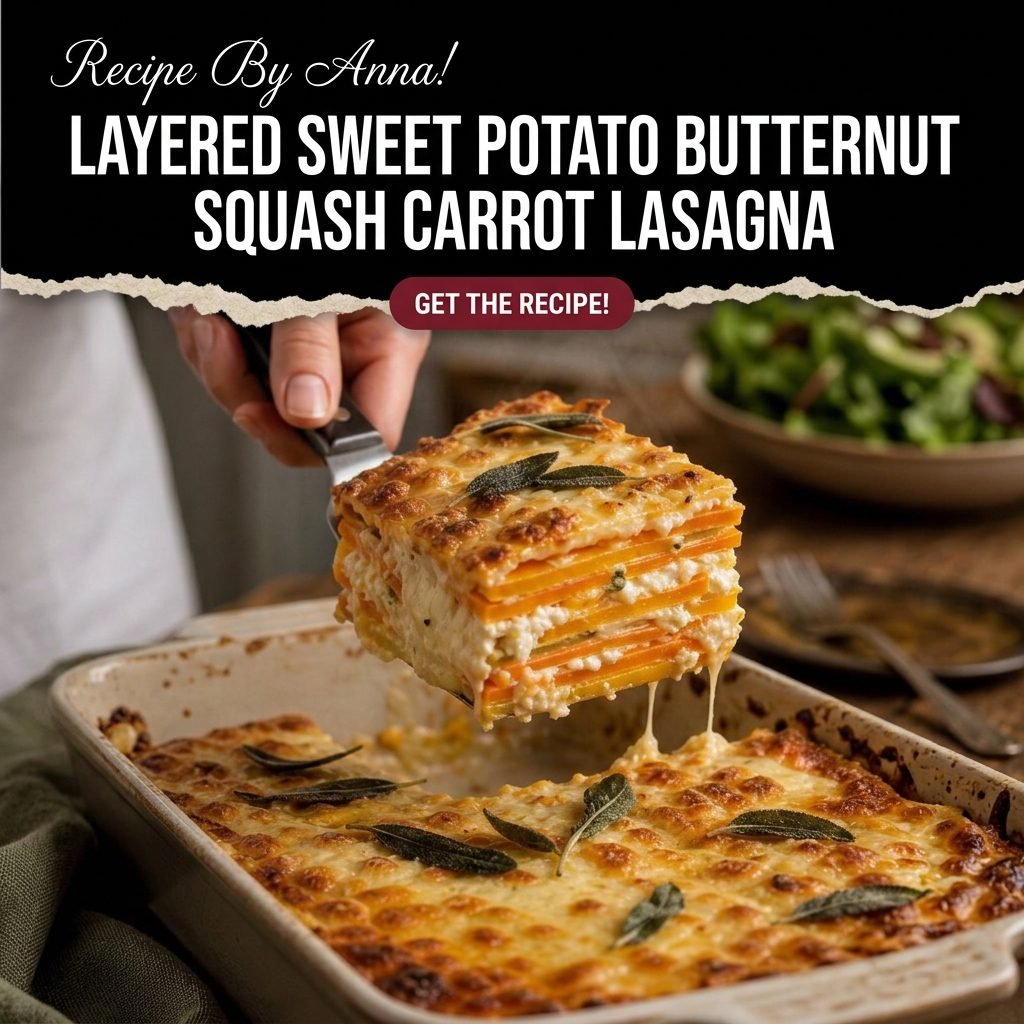
Layered Sweet Potato Butternut Squash Carrot Lasagna
This lasagna uses vegetables instead of noodles. Thin slices of sweet potato, butternut squash, and carrots get layered with ricotta and a sage cheese sauce, then baked until everything is tender. The vegetables turn soft and sweet. The top browns. And each cut slice shows off orange, gold, and cream stripes, which is strange, because the hardest skill involved is slicing.
I make this when I’m feeding a mixed table. There’s no gluten, no meat, and nothing to pick around, so everyone eats the same dinner. It also scales well — the recipe fills a 9×13 dish and serves eight. Most of the work happens in the oven, so once the layers are built, you’re free until it’s time to eat.
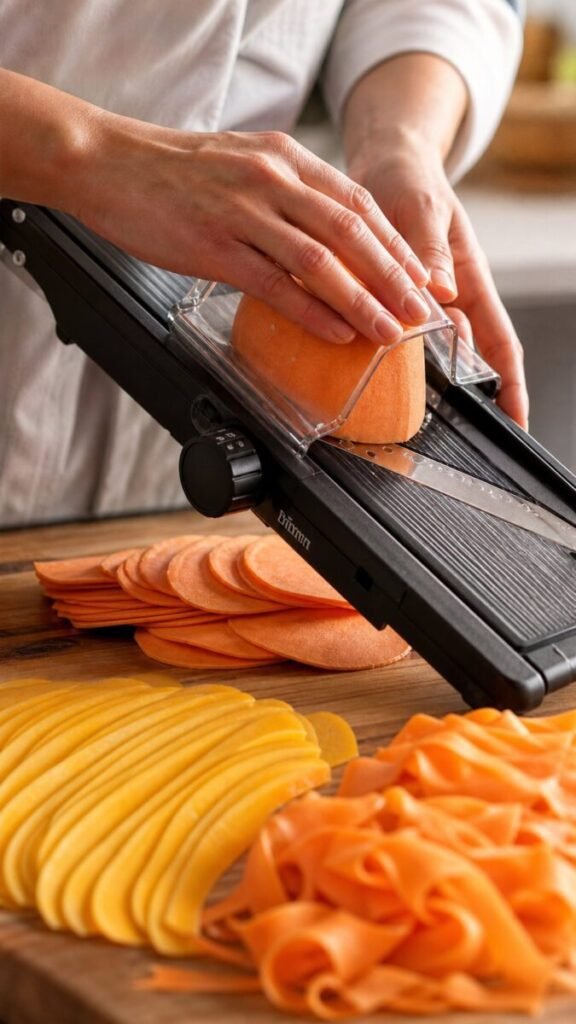
One honest note before you start. The slicing is the whole job. A mandoline makes it quick and gives you even 1/8-inch slices, which is what cooks through properly. A sharp chef’s knife works too, but go thinner than feels necessary and add ten minutes to the bake. Everything else in this recipe is stacking and waiting. Both of those I’m good at.
Why This Lasagna Works
Sweet potato and squash are starchy enough to stand in for pasta. Sliced thin and stacked, they soften in the trapped steam of the covered bake and hold their shape, so the finished dish cuts like a real lasagna. Carrot ribbons are the third layer. They cook down sweet and add color between the paler slices. None of the vegetables need pre-cooking — they arrive raw and bake in the sauce.
Moisture is the one thing to manage. Vegetables release water as they bake, so the sauce is made loose on purpose and used sparingly. Every layer gets a thin coat, never a flood. I learned this the hard way with an early version that came out as soup with ambitions. The sauce also gets gruyère or mozzarella melted in, which thickens it in the oven and glues the layers together as it sets.
Then there’s the rest. Fifteen minutes out of the oven lets the cheese firm up and the layers lock together. Cut early and the first slice slides apart into a pile. I’ve done it. Everyone does it once.
⏱️ 1 HR 55 MIN | 🍠 NO NOODLES | 🧀 SAGE CHEESE SAUCE
- Prep Time: 35 minutes
- Bake Time: 65 minutes (40 covered, 25 browned)
- Rest Time: 15 minutes, and it counts
- Total Time: 1 hour 55 minutes
- Yield: 8 servings (one 9×13 dish)
🍠 The Tools for Layered Sweet Potato Butternut Squash Carrot Lasagna
Eight tools for paper-thin vegetable layers, a silky cheese sauce, and a covered bake you can watch through the glass.

Benriner Japanese Mandoline Slicer with Safety Guard
The single most useful tool for this recipe: even 1/8-inch slices are the difference between tender and crunchy centers.

Victorinox Fibrox Pro 8-Inch Chef’s Knife
The mandoline substitute for hand-slicing, and the knife you will cut the finished lasagna with.

OXO Good Grips Swivel Vegetable Peeler
A vegetable peeler removes the squash skin and shaves the carrots into ribbons for the top layer.

Pyrex Colors Tinted 9×13 Glass Baking Dish with Lid
A 9×13 baking dish holds the layered stack; glass is nice here because you can see the layers from the side.

Cuisinart Chef’s Classic 2-Quart Saucepan
A medium saucepan melts the cheese sauce base before it meets the whisk.

OXO Good Grips 9-Inch Silicone Whisk
A whisk turns the cheese sauce silky and lump-free as it thickens.

Pyrex 4.5-Quart Sculpted Glass Mixing Bowl
A mixing bowl seasons and loosens the ricotta so it spreads into even layers.

Reynolds Wrap Heavy Duty Aluminum Foil
Foil covers the dish for the first bake phase so the vegetables steam-tender before the top browns.
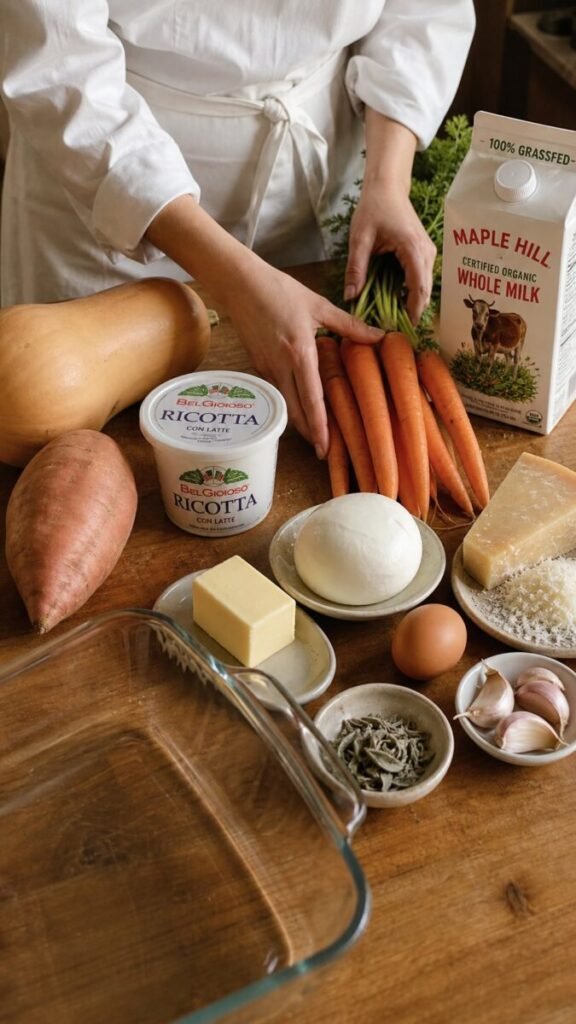
Ingredients (With Labels)
🍠 The Vegetable Layers
- Sweet potato: 1 large (about 1 lb), peeled and sliced 1/8 inch thick the long way
- Butternut squash: 1 medium — slice from the neck only; the seedy bulb goes in the freezer for soup later
- Carrots: 5 large, shaved lengthwise into thin ribbons with a peeler
- Olive oil: 1 tablespoon, plus salt and pepper for the slices
🥣 The Ricotta Layer
- Ricotta: 15 oz, whole milk
- Egg: 1, beaten — it sets the filling so slices hold
- Grated parmesan: 1/2 cup
- Garlic: 2 cloves, finely grated
- Nutmeg: 1/4 teaspoon, plus salt and pepper to taste
- Frozen spinach: 1 cup, thawed and squeezed dry — optional, and worth it for the green layer
🥛 The Sage Cheese Sauce
- Butter: 4 tablespoons
- All-purpose flour: 1/4 cup
- Milk: 3 cups, whole if you have it
- Shredded gruyère or mozzarella: 1 1/2 cups, divided
- Dried sage: 1 1/2 teaspoons
- Salt and pepper: to taste, plus another small pinch of nutmeg
✨ The Top
- Shredded mozzarella: 1/2 cup
- Grated parmesan: 1/4 cup
- Fresh sage leaves: a few, fried in butter for a minute — optional, and they make the dish
Step by Step How to Make
- Step 1 — Slice everything thin. Peel the sweet potato and squash. Slice the sweet potato and the squash neck into 1/8-inch slices, the long way, using the guard on your mandoline. The guard is not optional equipment. Fingertips are not a fair trade for even slices. Shave the carrots into ribbons with the peeler. Pile each vegetable separately and give them all a light sprinkle of salt.
- Step 2 — Mix the ricotta. Stir the ricotta with the egg, parmesan, garlic, nutmeg, salt, pepper, and the squeezed spinach if you’re using it. Taste it on a spoon. It should be a little saltier than you want the finished dish, because the mild vegetables will pull it back a notch.
- Step 3 — Make the sauce. Melt the butter in your saucepan over medium heat, stir in the flour, and cook it for one minute until it smells like toast. Pour in the milk a splash at a time, whisking after each pour — slow here means no lumps later. When the sauce is smooth and thick enough to coat a spoon, stir in 1 cup of the gruyère, the sage, and the seasonings. Take it off the heat. It should pour easily. If it’s thick like pudding, whisk in a little more milk. The vegetables will loosen it in the oven.
- Step 4 — Build the layers. Heat the oven to 375°F (190°C). Spread a thin layer of sauce across the bottom of the dish — just enough to wet it. Now stack: sweet potato slices in overlapping shingle rows, then half the ricotta dotted and gently spread, then a thin layer of sauce. Next, squash slices, carrot ribbons, the rest of the ricotta, and more sauce. Finish with a last layer of sweet potato and the remaining sauce. Overlap everything like roof shingles. Gaps let sauce sink straight through, and a torn slice patches a hole just fine — no one sees the inside of a lasagna.
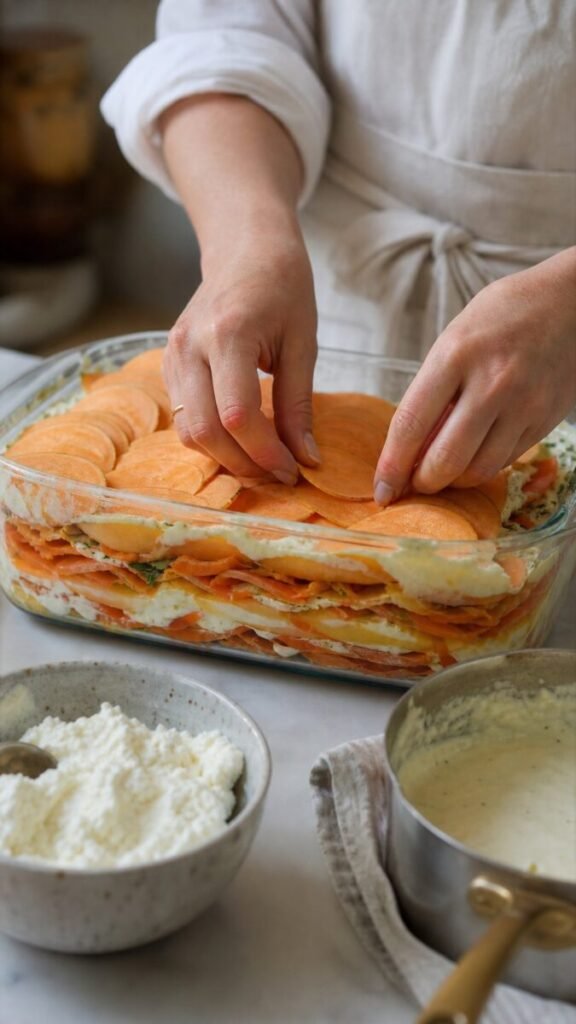
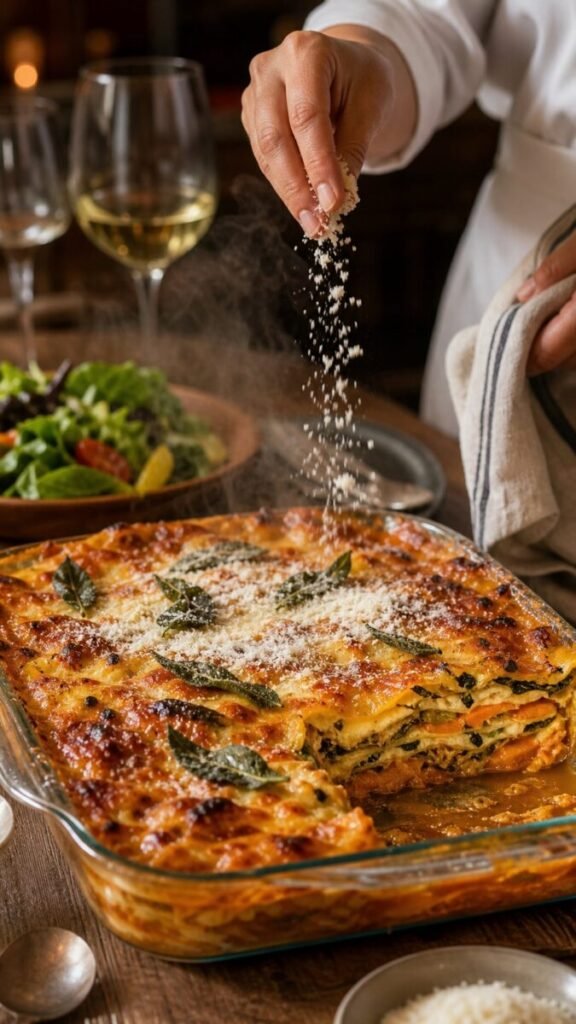
- Step 5 — Bake covered, then brown. Cover the dish tightly with foil and bake 40 minutes. The trapped steam is what cooks the vegetables through. Then pull the foil, scatter the mozzarella and parmesan over the top, and bake another 20 to 25 minutes, until the cheese is browned in spots and the sauce bubbles at the edges. If you want the sage leaves, fry them in a teaspoon of butter while the cheese browns and keep an eye on them — they crisp in about a minute.
- Step 6 — Rest, then cut. Let the lasagna sit 15 minutes before touching it. This is when the layers set. Cut with a sharp knife, straight down rather than sawing. The first slice is usually the messiest — that’s normal, it’s the sacrifice slice, and it still tastes exactly like the rest. Crown each plate with a crispy sage leaf and serve.
If you like vegetables doing the work of a main dish, our Eggplant Napoleon runs on the same idea — roasted eggplant stacked with basil ricotta and a balsamic drizzle. Make that one for a dinner party, this one for a crowd.
Advice From My Kitchen
Use the squash neck, skip the bulb. The neck is solid and slices clean. The bulb is seed city and fights the mandoline every time. Cube whatever’s left, freeze it, and you’ve got a head start on soup for another night.
Thinner beats thicker, always. At 1/8 inch, the slices bake tender in the time listed. At 1/4 inch, you’ll be adding half an hour and crossing your fingers. If your slices run thick, don’t panic — keep the foil on longer and use the knife test below before you call it done.
Go light on the sauce. I keep saying this because it’s the one mistake that ruins the dish. Vegetables are mostly water, and all of it comes out in the oven. A thin coat per layer is plenty. Extra warm sauce at the table fixes anything that feels dry, and nothing fixes soup.
The knife test beats the timer. Ovens run differently and slices run differently. Slide a thin knife into the center of the lasagna at the end of the covered bake. No resistance means done. Resistance means re-cover and give it ten more minutes. My oven regularly takes the full 40 covered minutes plus a few extra.
Assemble in the afternoon, bake at dinner. The built lasagna sits happily in the fridge for hours. Cold from the fridge, add about ten minutes to the covered bake. This is my usual move for guests, because it moves all the real work to a calm part of the day.
What to Serve With It
The lasagna is rich, so keep the sides fresh and green. A simple salad with a sharp vinaigrette is the classic partner — the acidity cuts the cheese. Warm Crispy Olive Oil Focaccia handles the sauce-mopping duty. If you want a second vegetable, Easy Garlic Bok Choy comes together in ten minutes while the lasagna rests. And for bigger appetites or a bigger crowd, a pot of Hearty White Bean Soup stretches the meal without much effort. One of those is enough. The lasagna is the main event and knows it.
Ways to Change It Up
Half-and-half for skeptics — layer two or three cooked lasagna sheets in place of the middle sweet potato layer. Half the table gets noodles, nobody argues, and the dish still looks the part.
Add sausage — brown a half pound of loose Italian sausage, drain it well, and scatter it over the ricotta layers. The meat eaters stop asking questions immediately.
Marinara version — swap half the sage sauce for marinara and add a pinch of Italian seasoning. That version leans closer to a classic lasagna, and it’s the one my kids vote for.
Make it vegan — use cashew ricotta (1 1/2 cups soaked cashews, lemon juice, garlic, nutritional yeast, salt, blitzed smooth), olive oil in place of butter for the sauce, and vegan shreds on top. Our Savoury Lentil Meatloaf covers the same ground with its flax-egg notes if you want a backup plan.
Brown butter finish — skip the fried sage and instead drizzle a spoonful of brown butter over each serving, sage leaves crackled in it. Same flavor, more drama at the table.
The Honest Numbers
| Nutrient | Per Serving (1 of 8) |
|---|---|
| Calories | 340 kcal |
| Protein | 16 g |
| Carbohydrates | 26 g |
| Fats | 19 g |
Estimates for the recipe as written, including the full cheese sauce and toppings. Sixteen grams of protein is solid for a meatless dinner, and the carbs come from vegetables rather than pasta. It eats like comfort food and reads like a balanced plate. That combination doesn’t happen often, so I’ll take it where I find it.
Storing and Reheating
Covered in the fridge, leftovers keep for 3 to 4 days, and the flavor on day two is arguably better once everything has had a night to settle. Reheat a covered portion at 350°F (175°C) for 15 to 20 minutes, or microwave a single square for about 90 seconds. Expect some liquid around the edges on the reheat — vegetables keep releasing water. Pour it off or let a paper towel stand nearby. Both work.
The baked lasagna also freezes well. Cut it into portions, wrap them individually, and freeze up to 2 months. Thaw overnight in the fridge and reheat covered at 350°F until hot in the middle, about 25 minutes. You can also freeze the whole unbaked assembled dish — thaw it fully first, then bake as written from cold, adding ten minutes to the covered phase. A full backup dinner sitting in the freezer is a good feeling, especially in November.
Where It Goes Wrong
Crunchy vegetable centers. Two possible causes: slices cut too thick, or the covered bake cut too short. The knife test is the referee. No resistance in the center means done. Keep the foil on until it passes.
A watery slice. Almost always too much sauce, sometimes cut too soon. Measure your sauce coats honestly, rest the full fifteen minutes, and pour off any pooled liquid before serving. The next batch will be right.
Layers slide apart on the plate. The lasagna was cut hot. The cheese hasn’t set yet, and hot cheese holds nothing together. Waiting is the entire fix, which is annoying, and also free.
Lumpy sauce. The milk went in too fast. Keep the heat at medium, add the milk a splash at a time, and whisk between pours. A few stubborn lumps will whisk out if you keep at it for a minute.
Burnt cheese top. The uncovered phase ran long, or your oven runs hot. Tent the dish loosely with foil the moment the cheese reaches the color you want. In my oven that’s minute 20 of the uncovered bake, on the dot.
Questions People Ask
Do I really need a mandoline?
No, but you need thin slices, and a mandoline is the easy way to get them. With a knife, cut slowly, aim for 1/8 inch, and accept some variation. Slightly thicker slices simply need a longer covered bake — check with the knife test instead of trusting the clock.
Can I use zucchini too?
You can, with one warning: zucchini holds a lot of water. Salt the slices, let them sit 10 minutes, and blot them dry before layering, or use them for just one thin layer. Our Broccoli Cheese Soup is built on the same drain-and-pat principle, so if you’ve made that one, you already know the drill.
Can I assemble it the night before?
Yes, and it’s a good plan. Build it right up to the foil stage, refrigerate overnight, and bake straight from the fridge with about ten extra minutes on the covered phase. The sauce soaks in a little more overnight, which nobody has ever complained about.
Why 1/8 inch specifically?
Because that thickness cooks through in the bake time without falling apart. Thicker slices stay firm in the middle and can leave you with crisp raw centers under a fully cooked top. Thinner ones work fine too — they just melt into the sauce, and the layers get softer. Anywhere between a nickel and a dime’s thickness is the working range.
Can I make it without dairy?
Yes — see the vegan variation above for the cashew ricotta and olive oil sauce route. The vegetables and the layering don’t change at all, and the dish still slices cleanly thanks to the egg-free ricotta’s thickness. It won’t taste like the cheese version, but it holds its own at the table.
How do I get clean slices for serving guests?
Three things: rest the full fifteen minutes, cut straight down with a sharp knife instead of sawing, and let the first slice be the messy one. Wipe the knife between cuts if you’re plating. By the second slice, you’ll look like you do this every week — and from now on, you kind of do.
From the garden · No noodle layers
Layered Sweet Potato, Butternut Squash & Carrot Lasagna with Ricotta & Sage Cheese Sauce
Thinly sliced sweet potato, butternut squash and carrot ribbons replace the noodles in this comforting vegetable lasagna. Layered with garlicky ricotta and sage cheese sauce, it bakes into tender, colorful slices beneath a golden cheese topping.
No noodles does not mean gluten-free: the sauce below contains all-purpose wheat flour. For a gluten-free version, use a gluten-free flour blend suitable for thickening sauces and verify all packaged ingredient labels.
Ingredients
As an Amazon Associate, we earn from qualifying purchases. Ingredient and equipment links below are affiliate links.
The Vegetable Layers
- Sweet potato, peeled and sliced ⅛ inch thick 1 large, about 1 lb / 454 g
- Butternut squash, peeled neck only, sliced ⅛ inch thick 1 medium squash
- Carrots, shaved into thin lengthwise ribbons 5 large
- Olive oil, for the dish and vegetables 1 tbsp
- Salt and black pepper lightly, to taste
The Ricotta Filling
- Whole-milk ricotta, drained if watery 15 oz / 425 g
- Large egg, beaten 1
- Vegetarian Parmesan-style cheese, grated ½ cup
- Garlic, finely grated 2 cloves
- Nutmeg ¼ tsp
- Frozen spinach, optional, prepared as directed on package, cooled and squeezed very dry 1 cup
- Salt and black pepper to taste
The Sage Cheese Sauce
- Butter 4 tbsp
- All-purpose flour ¼ cup
- Whole milk 3 cups
- Vegetarian-friendly Gruyère-style cheese or mozzarella, shredded, divided 1½ cups
- Dried sage 1½ tsp
- Nutmeg a small pinch
- Salt and black pepper to taste
The Golden Topping
- Mozzarella, shredded ½ cup, in addition to the divided cheese
- Vegetarian Parmesan-style cheese, grated ¼ cup
- Fresh sage leaves, optional a few
- Butter, for the optional sage 1 tsp
Cheese allocation: use 1 cup of the divided Gruyère-style cheese or mozzarella in the sauce. Reserve its remaining ½ cup for the topping, alongside the separately listed ½ cup mozzarella and ¼ cup Parmesan-style cheese.
Equipment
- Mandoline with safety guard for even ⅛-inch slices
- Sharp chef’s knife and cutting board for trimming and slicing
- Vegetable peeler for peeling and carrot ribbons
- Deep baking dish 9 × 13 inches
- Medium saucepan and whisk for the cheese sauce
- Mixing bowl and foil for filling and covering
- Food thermometer for checking the egg filling
How to Make It
- Prepare the vegetables and dish Preheat the oven to 375°F (190°C). Use a little of the olive oil to grease a deep 9 × 13-inch baking dish. Peel the sweet potato and squash neck, then slice ⅛ inch thick. Use the mandoline guard and stop before the remaining pieces become too small to grip safely. Shave the carrots into ribbons. Keep the vegetables separate, lightly coat with the remaining oil and season sparingly with salt and pepper.
- Season the ricotta before adding the egg Mix the ricotta, ½ cup Parmesan-style cheese, garlic, ¼ teaspoon nutmeg and optional prepared, well-squeezed spinach. Taste and adjust salt and pepper now, then stir in the beaten egg. Do not taste the filling after adding raw egg.
- Make the sage cheese sauce Melt 4 tablespoons butter in a saucepan over medium heat. Stir in the flour and cook for 1 minute without browning. Gradually whisk in the milk until smooth, then bring to a gentle simmer, stirring until the sauce coats a spoon but still pours easily. Remove from the heat and stir in 1 cup of the divided cheese, the dried sage, a pinch of nutmeg, and salt and pepper to taste.
- Layer the vegetables and filling Spread a thin coating of sauce in the dish. Arrange half the sweet potato slices in overlapping rows. Dot with half the ricotta mixture, gently spread, and add a thin coating of sauce. Layer the squash slices and carrot ribbons evenly, then add the remaining ricotta and another coating of sauce. Finish with the remaining sweet potato and enough sauce to coat the surface. Avoid deep pools of sauce; reserve any excess rather than flooding the dish.
- Bake covered until the vegetables soften Cover tightly with foil and bake for 40 minutes. Carefully uncover a corner and test the center with a thin knife. If the vegetables offer substantial resistance, re-cover and continue in 10-minute increments until nearly tender before adding the topping.
- Add cheese and finish baking Remove the foil. Scatter over the reserved ½ cup divided cheese, the additional ½ cup mozzarella and ¼ cup Parmesan-style cheese. Bake uncovered for 20–25 minutes, until browned in spots and bubbling. A knife should pass easily through the center, and the egg-containing filling must reach at least 160°F (71°C). Loosely cover if the top browns before the center is ready.
- Prepare the optional sage finish If using fresh sage, pat the leaves thoroughly dry. Melt the optional teaspoon of butter in a small pan and cook the leaves briefly, turning as needed, until crisp, about 30–60 seconds. Remove before the butter or leaves scorch.
- Rest and slice Let the lasagna rest for at least 15 minutes. Cut into eight portions with a sharp knife and lift out carefully. Garnish with the optional crisp sage leaves. The first slice may be softer than the remaining portions.
The 1-hour-55-minute estimate assumes evenly cut ⅛-inch vegetables and a 65-minute bake. Squash neck size, dish depth and slice thickness can extend cooking time. Vegetable tenderness and the filling temperature take priority over the timer.
Choose all cheeses with vegetarian-friendly enzymes if serving a vegetarian table; traditional Parmesan and Gruyère commonly use animal rennet. For a gluten-free sauce, select a sauce-suitable gluten-free flour blend and follow its substitution directions.
Nutrition
| Nutrient | Source estimate per serving (1 of 8) |
|---|---|
| Calories | 340 kcal |
| Protein | 16 g |
| Carbohydrates | 26 g |
| Fat | 19 g |
Figures supplied with the original recipe, not independently calculated. They may understate the full cheese and sauce quantities. Squash neck weight, cheese choice and the amount of sauce used affect the result. Nutrition microdata is omitted pending verification.