
Chicken Noodle Soup Recipe — the Best You’ll Ever Make
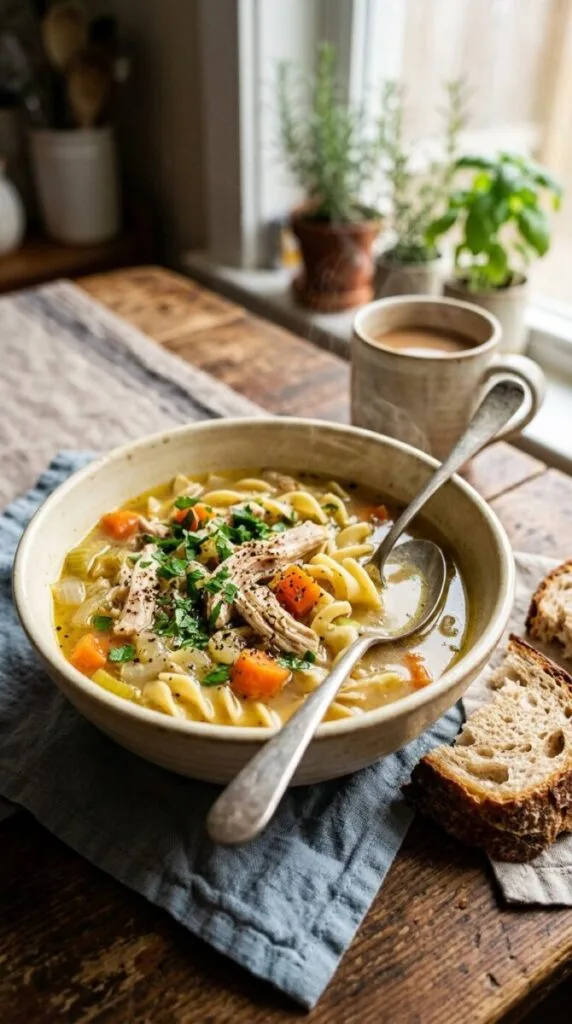
This Chicken Noodle Soup Recipe is the homemade version that makes everything else feel like a placeholder — a deeply golden, genuinely flavourful broth built from chicken pieces, aromatics, and time, with tender shredded chicken, thick egg noodles, sweet carrot rounds, and fresh dill that makes every bowl taste like someone made it specifically for you on the day you most needed it.
Homemade chicken noodle soup at its best is the most comforting thing a kitchen can produce — not because the recipe is technically impressive but because a properly made broth, developed slowly from real chicken and vegetables, produces a depth of flavour that no store-bought version matches and no shortcuts fully replicate. This recipe teaches that broth, and once you know how it works, you won’t want to go back to the carton.
The recipe has three format options: stovetop from scratch (the best, described in full below), crockpot chicken noodle soup (set-it-and-forget-it for a day of hands-off cooking), and rotisserie chicken shortcut (ready in 30 minutes when the energy for a full scratch build isn’t there). All three produce excellent soup; each one earns its place in the rotation for a different type of day.
Why Homemade Broth Makes All the Difference
Store-bought chicken broth is a useful ingredient and a reasonable shortcut. But a broth simmered from chicken pieces, onion, celery, carrot, garlic, peppercorns, and bay leaves for two hours is a different liquid — deeper in colour, richer in body from the collagen released by the chicken bones and connective tissue, and layered in flavour in a way that carton broth simply isn’t and can’t be, regardless of brand or quality.
The collagen is the key element — as it dissolves from the chicken into the surrounding liquid during the long simmer, it gives the broth a body and silkiness that coats the mouth rather than being just a thin, salty liquid with chicken flavour. Cooled homemade chicken broth gels slightly in the fridge; that gel is the gelatin from the collagen, and it is the reason homemade soup produces a warmth and satisfaction that store-bought can’t replicate.
- Prep Time: 20 minutes
- Cook Time: 2 hours 15 minutes (including broth development)
- Total Time: 2 hours 35 minutes
- Yield: 6 to 8 servings
What You Need
For the broth (from scratch):
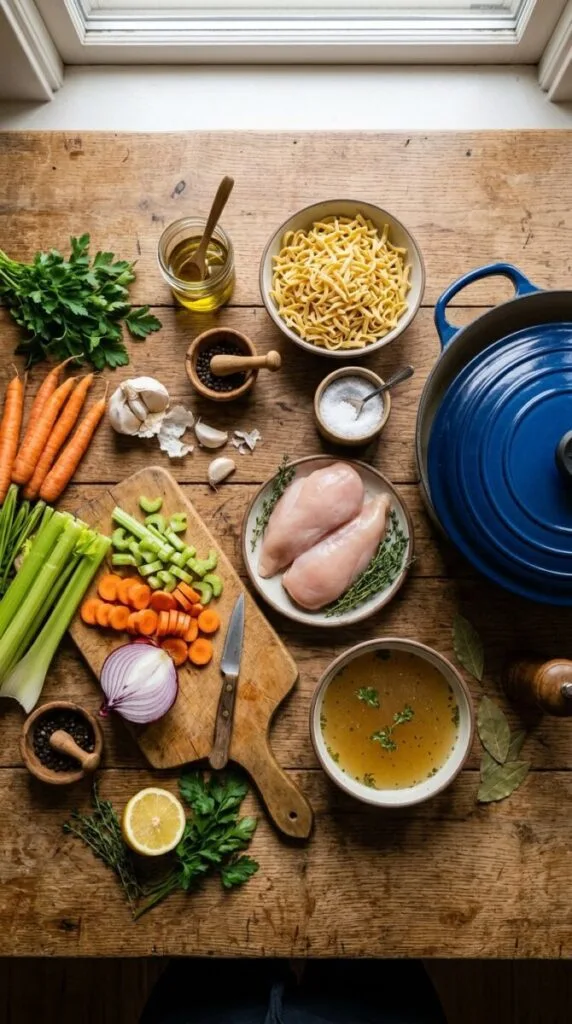
- Bone-in skin-on chicken pieces — thighs, drumsticks, or a combination: 3 lbs (1.35kg) — bone-in skin-on pieces produce the richest, most collagen-dense broth; boneless skinless pieces produce thinner, paler broth
- Yellow onion, halved: 1 large
- Celery stalks with leaves, roughly chopped: 4
- Carrots, roughly chopped: 3 medium
- Garlic cloves, smashed: 6
- Bay leaves: 2
- Black peppercorns: 1 teaspoon
- Fresh thyme sprigs: 4, or 1/2 teaspoon dried
- Fresh parsley stems: a small handful
- Cold water: 10 to 12 cups (2.4 to 2.8 litres) — cold water draws the impurities and fat to the surface more efficiently than starting with hot water
- Fine sea salt: 1 teaspoon (added at the end of broth development rather than the beginning — salt added early concentrates as the broth reduces and can become over-salted)
For the soup:
- Olive oil or butter: 2 tablespoons
- Yellow onion, finely diced: 1 medium
- Celery stalks, sliced into 1/2-inch pieces: 4
- Carrots, sliced into 1/4-inch rounds: 4 medium
- Garlic cloves, minced: 4
- Dried thyme: 1/2 teaspoon
- Dried parsley: 1/2 teaspoon
- Fine sea salt and black pepper: to taste
- Wide egg noodles, uncooked: 8 oz (225g)
- Fresh dill, roughly chopped: 3 tablespoons — dill added at the end is the flavour that makes homemade chicken noodle soup taste finished and specific rather than generic
- Fresh lemon juice: 1 tablespoon — brightens the broth at serving
How to Make It
Building the broth:
- Place the chicken pieces in a large stockpot or Dutch oven and cover with the cold water. Bring to a boil over high heat — a grey-brown foam will rise to the surface as the chicken heats. This foam is coagulated proteins and impurities and should be skimmed off with a ladle or large spoon before proceeding. Skimming produces a clearer, cleaner-tasting broth; unskim and the foam disperses through the broth and produces a cloudier, slightly less clean flavour.
- Once the foam is skimmed and the water is clear, add the halved onion, chopped celery, chopped carrots, smashed garlic, bay leaves, peppercorns, thyme, and parsley stems.
- Reduce to a gentle simmer — small, lazy bubbles at the surface rather than a rolling boil. A vigorous boil emulsifies the fat into the broth and produces a cloudy, greasy result; a gentle simmer produces a clear, golden broth.
- Simmer uncovered for 1 hour 30 minutes to 2 hours until the chicken is falling off the bone and the broth has turned deep golden and smells deeply of chicken and herbs.
- Remove the chicken pieces from the broth and set aside to cool slightly. Strain the broth through a fine mesh sieve into a large bowl or clean pot, discarding all the solids — the onion, celery, carrots, garlic, bay leaves, and herbs have given everything they have to the broth and are spent.
- Season the strained broth with salt, taste, and adjust. The broth should taste deeply of chicken with a background of herbs — if it tastes flat, add more salt; if it tastes thin, return to the heat and simmer uncovered for another 20 minutes to concentrate it.
- Once the chicken is cool enough to handle, pull the meat from the bones, discarding the skin and bones. Shred the meat into bite-sized pieces and set aside.
Building the soup:
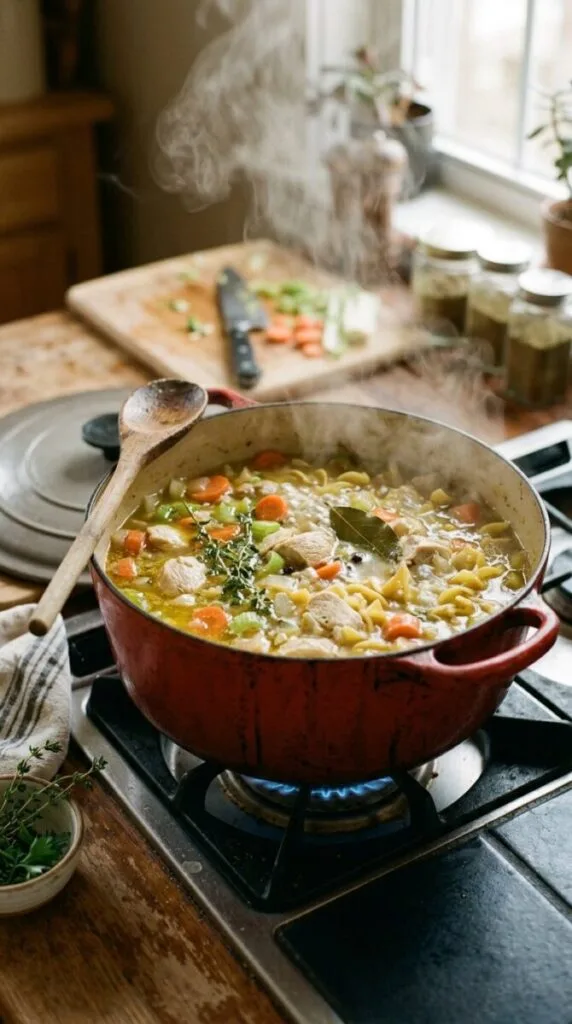
- In the same pot (rinsed), heat the olive oil or butter over medium heat. Add the diced onion and cook for 5 minutes until softened and turning golden at the edges.
- Add the sliced celery and carrot rounds and cook for 3 minutes, stirring occasionally.
- Add the minced garlic, dried thyme, and dried parsley and cook for 60 seconds until fragrant.
- Pour the strained broth back into the pot and bring to a gentle boil.
- Add the egg noodles and cook according to the package directions minus 2 minutes — the noodles will continue cooking slightly in the hot soup after the heat is turned off, so pulling them 2 minutes early produces noodles that are perfectly al dente at serving rather than overcooked and swollen.
- Add the shredded chicken and stir to heat through.
- Remove from heat and stir in the fresh dill and lemon juice. Taste and adjust seasoning.
- Serve immediately in wide bowls with crusty bread alongside.
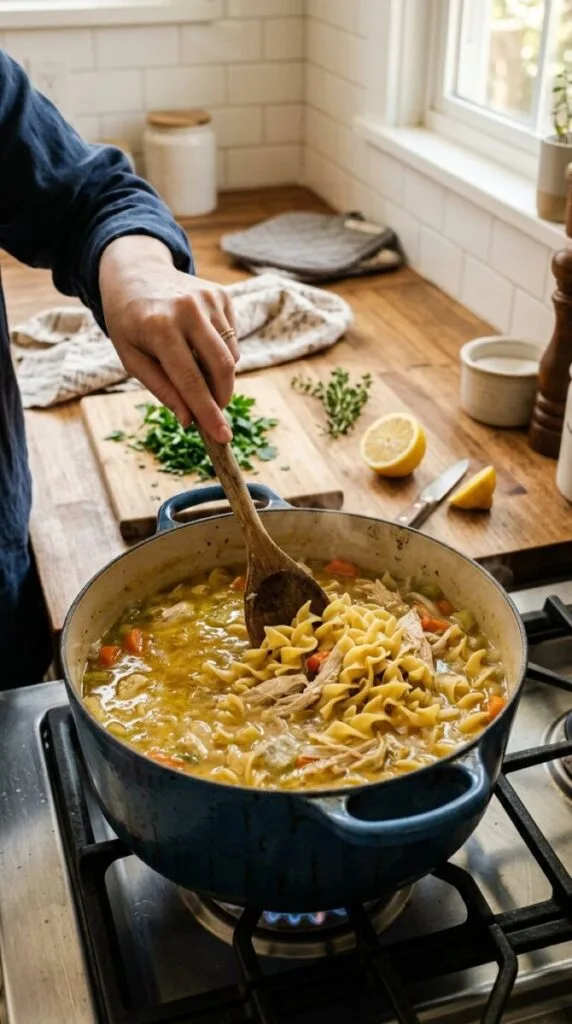
Chicken noodle soup and our Focaccia Bread are the pairing that needs no justification — the warm, olive oil and herb focaccia torn into the golden broth and used to soak up the last of the bowl is the most satisfying thing a bowl of soup can offer beyond the soup itself.
The Three Methods — Stovetop, Crockpot, and Rotisserie
Stovetop from scratch (the recipe above) is the method for the deepest, most developed broth — 2 hours of simmering produces a broth with the collagen, colour, and flavour depth that makes homemade chicken noodle soup worth making specifically rather than opening a can. This is Sunday soup.
Crockpot chicken noodle soup is the method for the hands-off weekday version — place the raw chicken pieces, whole vegetables (onion, celery, carrots), garlic, herbs, peppercorns, and 8 cups of chicken broth in the slow cooker. Cook on low for 6 to 8 hours. Remove the chicken, shred, strain the vegetables, sauté fresh diced celery and carrot separately in a pan for 5 minutes, and add both the shredded chicken and the sautéed vegetables back to the broth. Cook the egg noodles in the broth on high for the final 15 to 20 minutes. The crockpot method produces a slightly less golden broth than the stovetop but a soup that is ready at dinnertime from a morning of no attention.
Rotisserie chicken noodle soup is the 30-minute method — use 1 litre of good quality store-bought chicken broth and 1 rotisserie chicken, meat pulled and shredded. Sauté the onion, celery, and carrots in the pot for 6 to 8 minutes until softened and beginning to caramelise. Add the broth, bring to a boil, add the noodles and cook until tender, then add the shredded rotisserie chicken. Season generously and add the fresh dill and lemon juice. The quality of the store-bought broth matters significantly in this version — choose the best broth available and taste before seasoning.
The Skimming and Gentle Simmer Details That Produce Clear Golden Broth
The cold-water start is the first technical choice that affects broth quality — starting with cold water draws the proteins and fat to the surface slowly as the temperature rises, making them easier to skim as foam before they emulsify into the broth. Starting with hot water causes them to disperse more quickly and produces a cloudier broth even with skimming.
The gentle simmer rather than rolling boil is the second — at a full boil, the turbulence physically mixes fat and protein into the surrounding liquid and permanently emulsifies them into the broth, producing a milky, opaque broth with a slightly greasy mouthfeel. At a gentle simmer, the fat and remaining proteins float to the surface where they can be skimmed or left to settle, and the broth remains clear and golden.
The fresh dill and lemon juice added at the very end of cooking rather than during the simmer is the finishing technique that makes this soup taste specifically like something rather than generically like chicken soup — both ingredients lose their volatile aromatic compounds quickly at heat, and adding them off the heat preserves the brightness and freshness that makes homemade chicken noodle soup identifiable as homemade. According to Serious Eats, fresh herbs added to hot soups during cooking lose 80 to 90 percent of their aromatic compounds within 10 minutes of boiling — adding them after the heat is off preserves these compounds and produces a noticeably more herbal, fresher-tasting soup than the same amount of herb simmered in the broth.
What to Serve Alongside
Crusty bread of any variety — baguette, sourdough, or our Focaccia Bread — is the only side dish that chicken noodle soup genuinely needs. The bread’s purpose is the broth-soaking, and any bread that absorbs liquid well fulfils it completely.
For a slightly more substantial winter meal, our Classic 7 Layer Salad alongside the soup covers both a warm liquid and a cold, composed salad in a combination that makes the meal feel complete and considered rather than just a bowl and something to dip in it.
Variations That Stay True to the Comfort Food Direction
Creamy Chicken Noodle Soup — stir 1/2 cup of heavy cream and 2 tablespoons of cream cheese (beaten smooth first) into the finished soup off the heat. The cream version is richer, more indulgent, and particularly good for a sick-day bowl where the goal is maximum comfort rather than lightness. Reduce the lemon juice by half to balance the richness.
Panera Chicken Noodle Soup copycat — the Panera version is notably more herbed and slightly more buttery than a standard homemade version. Increase the butter to 3 tablespoons for sautéing the vegetables, add 1 tablespoon of fresh thyme leaves (in addition to the dried) to the finished soup, and use a wide flat egg noodle rather than curly. Add a tablespoon of lemon juice and a small handful of flat-leaf parsley at serving — the bright herb finish is the element most associated with the Panera flavour profile.
Healthy Chicken Noodle Soup — use boneless skinless chicken breast instead of bone-in thighs (noting the thinner broth), replace the egg noodles with whole wheat egg noodles or chickpea pasta, reduce the salt by using a low-sodium broth, and increase the vegetable-to-noodle ratio by doubling the carrots and celery. The resulting soup is noticeably lighter but still warming and satisfying.
Nutritional Information
| Nutrient | Amount Per Serving (based on 8 servings, stovetop from scratch) |
|---|---|
| Calories | 295 kcal |
| Protein | 28 g |
| Carbohydrates | 26 g |
| Fats | 8 g |
These values are estimates for the full recipe with bone-in thighs, egg noodles, and the full vegetable quantities, divided by 8 servings. The 28-gram protein count per bowl is notably high for a soup — the combination of shredded chicken thigh meat and the gelatin from the homemade broth produces a genuinely protein-dense bowl that is filling in a way most soups are not.
Storing and the Noodle Problem
Store the soup and the noodles separately whenever possible — noodles in leftover soup absorb the broth during storage and swell to an unpleasant, swollen, starchy texture that also makes the surrounding broth taste starchy and thick. If storing for leftovers, cook only as many noodles as will be eaten in the first serving and cook fresh noodles in the reheated broth for subsequent servings.
If the noodles are already in the soup, store covered in the fridge for up to 3 days — the soup is still very good, the noodles are just softer than ideal. Reheat over medium heat, adding a splash of broth or water to thin the starchy broth back to its original consistency.
The broth (without chicken and noodles) freezes beautifully for up to 3 months — homemade chicken broth is one of the most valuable freezer assets a kitchen can have, ready to become soup, risotto, or a braising liquid. Freeze in 2-cup portions for the most useful serving sizes.
Where This Soup Goes Wrong
Boiling the broth vigorously rather than simmering gently produces a cloudy, greasy broth that is still delicious but lacks the clarity and delicacy of a properly simmered version — once the broth has been boiled vigorously, it cannot be clarified after the fact without advanced techniques. Lower the heat as soon as the foam has been skimmed and maintain the most gentle simmer your stove allows for the full 2 hours.
Adding salt at the beginning of the broth development rather than at the end produces a broth that can become over-salted as the liquid reduces during the 2-hour simmer — the same amount of salt in a reduced broth is more concentrated than in the starting quantity of water. Salt after straining, when you can taste the finished broth and adjust to exactly the right level.
Adding the noodles too early and cooking them through the simmer produces swollen, falling-apart noodles in the finished soup — egg noodles cooked in a hot broth for 8 minutes and then left in the pot will be twice their original size and beginning to dissolve into the broth within 15 minutes of cooking. Cook the noodles until 2 minutes shy of package-directed al dente, serve immediately, and store separately for the best leftover experience.
Homemade Chicken Noodle Soup
A deeply comforting chicken noodle soup made with golden homemade broth, tender shredded chicken, egg noodles, carrots, celery, garlic, fresh dill, and lemon. Includes stovetop, crockpot, and rotisserie chicken methods.
Why This Recipe Works
This homemade chicken noodle soup starts with bone-in, skin-on chicken pieces simmered slowly with onion, celery, carrots, garlic, bay leaves, peppercorns, thyme, and parsley stems. The result is a golden broth with body, flavor, and natural collagen.
Fresh dill and lemon juice are added at the end, not during the long simmer, so the soup tastes bright, herbal, and finished instead of flat or generic.
Ingredients
Instructions
Place chicken pieces in a large stockpot or Dutch oven and cover with 10 to 12 cups cold water. Bring to a boil over high heat.
As grey-brown foam rises to the surface, skim it off with a ladle or spoon. This produces a cleaner, clearer broth.
Add halved onion, chopped celery, chopped carrots, smashed garlic, bay leaves, peppercorns, thyme, and parsley stems.
Reduce to a gentle simmer with small lazy bubbles. Simmer uncovered for 1 hour 30 minutes to 2 hours, until the chicken is falling off the bone and the broth is deep golden.
Remove chicken pieces and set aside to cool. Strain the broth through a fine mesh sieve into a bowl or clean pot. Discard the spent vegetables and herbs.
Season the strained broth with salt and taste. Pull chicken meat from the bones, discard skin and bones, and shred the meat into bite-sized pieces.
In the rinsed pot, heat olive oil or butter over medium heat. Add diced onion and cook 5 minutes. Add celery and carrot rounds and cook 3 minutes more.
Add minced garlic, dried thyme, and dried parsley. Cook for 60 seconds, just until fragrant.
Pour strained broth back into the pot and bring to a gentle boil. Add egg noodles and cook according to package directions minus 2 minutes.
Stir in shredded chicken and cook just until heated through.
Remove from heat. Stir in fresh dill and lemon juice. Taste and adjust salt and pepper.
Serve immediately in wide bowls with crusty bread, focaccia, or extra fresh herbs if desired.
Key Technique Notes
Cold water draws proteins and impurities to the surface gradually, making them easier to skim.
Removing the foam creates a cleaner-tasting, clearer broth instead of a cloudy one.
A rolling boil emulsifies fat into the broth and can make it cloudy and greasy.
Fresh dill and lemon keep their bright flavor when added off heat instead of simmered for a long time.
Helpful Pairing Note
Three Methods
Use the full recipe above for the deepest broth, best color, and richest homemade flavor. This is the best version for a slow Sunday soup.
Add raw chicken, whole vegetables, herbs, peppercorns, and broth to a slow cooker. Cook low 6 to 8 hours, shred chicken, strain broth, then cook noodles in the broth on high for 15 to 20 minutes.
Use good store-bought broth and shredded rotisserie chicken. Sauté fresh vegetables, add broth and noodles, then finish with chicken, dill, and lemon for a 30-minute version.
Store noodles separately whenever possible. Cook fresh noodles in reheated broth for the best texture.
Variations
Stir ½ cup heavy cream and 2 tablespoons softened cream cheese into the finished soup off heat. Reduce lemon juice slightly.
Use 3 tablespoons butter for the vegetables, add fresh thyme and parsley at the end, and choose wide flat egg noodles.
Use boneless skinless chicken breast, whole wheat egg noodles or chickpea pasta, low-sodium broth, and extra carrots and celery.
Add extra fresh dill, parsley, thyme, or chives at the very end for a brighter, greener finish.
Nutrition
| Nutrient | Amount Per Serving |
|---|---|
| Calories | 295 kcal |
| Protein | 28 g |
| Carbohydrates | 26 g |
| Fat | 8 g |
Values are estimates based on 8 servings using bone-in chicken pieces, egg noodles, vegetables, and homemade broth.
Store soup and noodles separately whenever possible. Noodles absorb broth and become swollen during storage.
Store soup in an airtight container in the fridge for up to 3 days. Add broth or water when reheating if needed.
Freeze broth without noodles for up to 3 months. Freeze in 2-cup portions for easy future soups and sauces.
Finished soup can be frozen, but noodles soften after thawing. For best results, freeze broth and chicken only.
The broth was boiled too hard or not skimmed. Keep it at a gentle simmer after removing the foam.
Salt may have been added too early. Season after straining, once the broth has reduced and can be tasted.
Noodles were cooked too early or stored in the soup. Cook them 2 minutes shy of done and serve promptly.
Add more salt for depth, lemon juice for brightness, or fresh dill and parsley for a homemade finish.