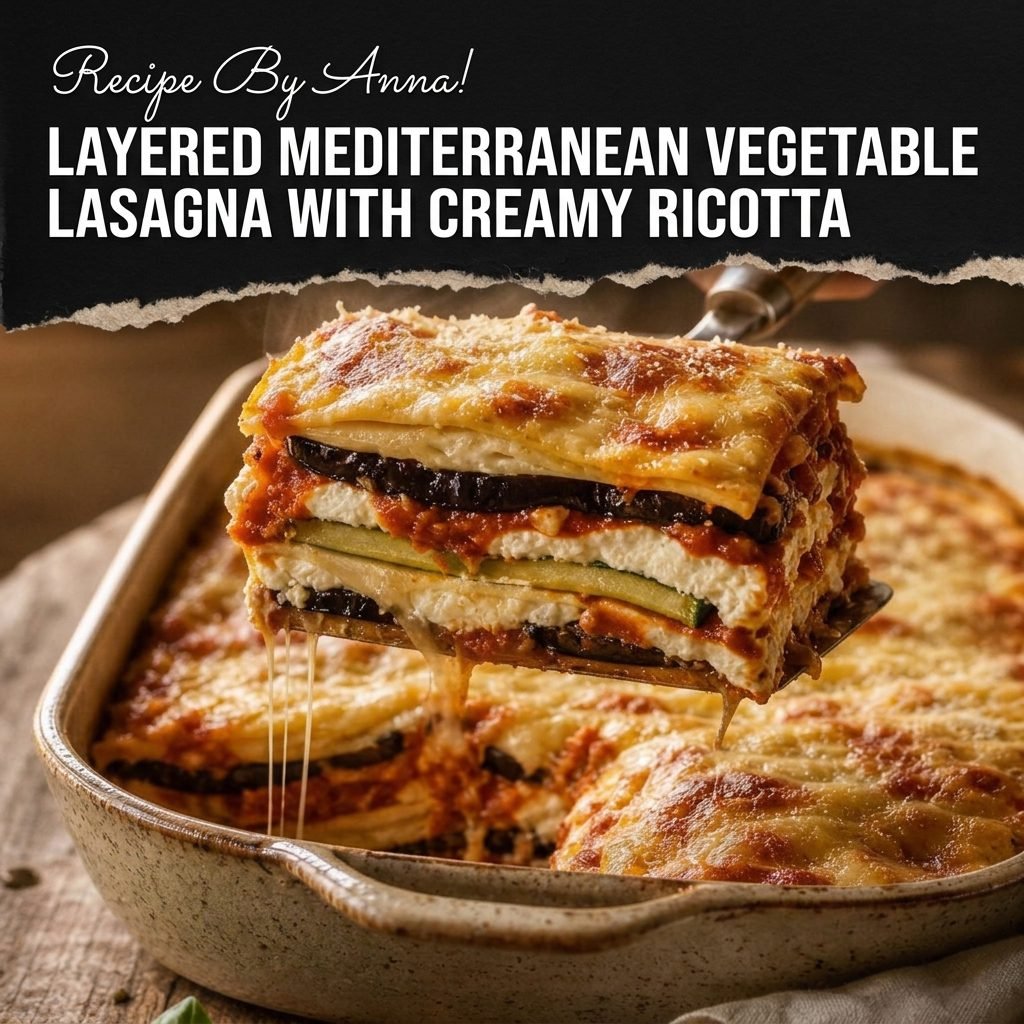
Layered Mediterranean Vegetable Lasagna with Creamy Ricotta
Vegetable lasagna has a reputation problem, and it’s usually soggy. This layered Mediterranean version is built to fix that at the source: the eggplant and zucchini get roasted until their water is gone and their edges are golden, the sauce is a two-minute blender job with actual character, and the ricotta gets whipped with lemon zest until it’s closer to clouds than to paste. Layer it all with no-boil noodles, feta, and mozzarella, bake it until the top bronzes, and you get a lasagna that slices clean — tall edges, visible strata, cheese pull, everything a lasagna owes you.
The Mediterranean part is a specific set of choices, not just a postcard word. There’s no meat and no heavy bolognese: the sauce is roasted red peppers and crushed tomatoes blitzed with garlic, olive oil, and basil — brighter and sweeter than marinara, and it never touches a stove. The cheeses lean Greek: creamy ricotta as the main event, with feta crumbled into the layers for salt and tang. Lemon zest in the ricotta is the detail people can’t place until you tell them, and then they can’t un-taste it, in the best way. Every layer tastes like it vacationed somewhere sunny.
A few honest notes before you start. The two non-negotiables are the roasting and the rest — the vegetables must go into the dish dry, and the lasagna must sit fifteen minutes before slicing, or the whole architecture negotiates with gravity on the plate. No-boil noodles do the work of boiled ones as long as they touch sauce everywhere (one small splash of water in the sauce covers this). And this is a weekend-paced bake, about an hour and forty minutes end to end, with most of it hands-off. The recipe makes nine generous slices in a 9 by 13 dish, and it reheats so well that I’ve started making it specifically for the leftovers.
Why Roasting Comes First
Let’s talk about the water, because water is the entire story of vegetable lasagna. Eggplant and zucchini are mostly water by weight — north of ninety percent for the zucchini — and lasagna bakes covered in steam for the better part of an hour. Put raw vegetables in and that water has exactly one place to go: into your lasagna. The result is the sad, pooling slice that gave vegetable lasagna its reputation. Roasting first flips the equation: a hot oven with oil pulls the water out as steam, concentrates the sugars, and browns the edges, so the vegetables arrive at the lasagna already cooked, already seasoned, and structurally dry. They absorb sauce in the bake instead of leaking water into it. This single step is the difference between lasagna and lasagna soup with noodles in it.
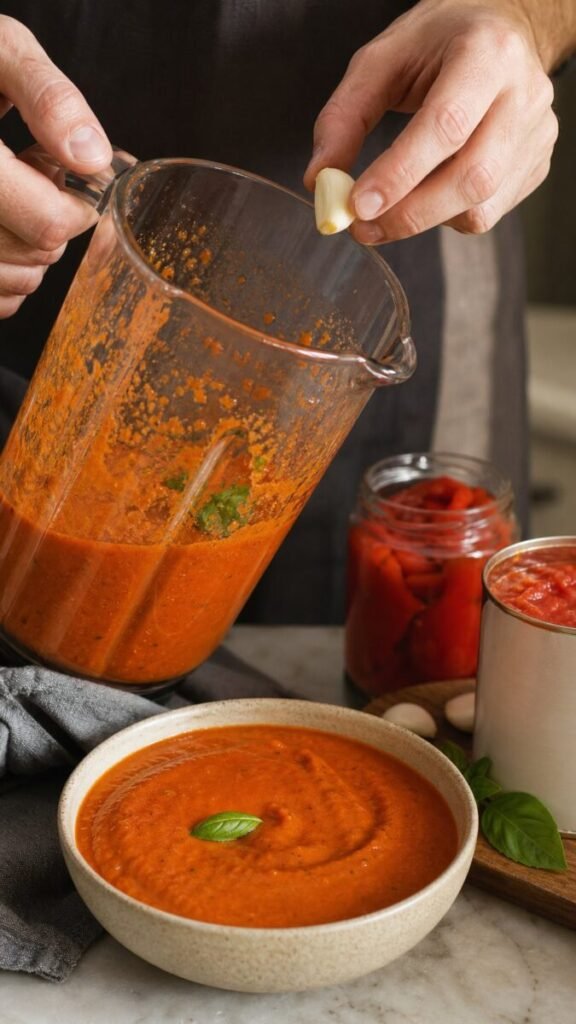
The sauce skips the stove for the same reason — control. Roasted red peppers from a jar are already sweet, smoky, and soft; a can of crushed tomatoes brings body and acid; garlic, olive oil, and a basil leaf round it out. Thirty seconds in the blender and you have a sauce that tastes slow-cooked, because the roasting already happened at the pepper facility, on your behalf. It’s the best deal in the pantry, and it means the sauce tastes bright and fresh after the long bake instead of cooked down into uniform redness.
The ricotta layer is where creaminess lives or dies. Whipping the ricotta with an egg, parmesan, a splash of milk, and the lemon zest changes its texture from dense and scoopable to soft and spreadable — it melts into the layers rather than sitting in them like a slab. The egg sets as it bakes and firms the layer so slices hold their shape; the lemon keeps all that dairy from reading heavy. And the feta, crumbled between the vegetable layers, brings the salty tang that makes each bite taste like it came from somewhere with an ocean view. Every layer has one job, and every job is covered.
⏱️ 1 HR 40 MIN | 🍆 ROASTED, NEVER SOGGY | 🧀 WHIPPED LEMONY RICOTTA
- Prep Time: 30 minutes (including the eggplant sweat)
- Roast Time: 25 minutes
- Bake Time: 45 minutes covered and uncovered
- Rest Time: 15 minutes, non-negotiable
- Total Time: 1 hour 40 minutes
- Yield: 9 generous slices in a 9 by 13 dish
The Layering Kit
Ordinary equipment, well used:
- Two rimmed baking sheets and parchment — the vegetables roast in a single layer or not at all; crowding steams them.
- Blender — thirty seconds of noise for the pepper sauce. A food processor works too.
- 9 by 13 baking dish — ceramic or glass; the lasagna should fill it with intent.
- Offset spatula or butter knife — for spreading the ricotta gently over fragile roasted vegetables.
- Mixing bowls — one for the ricotta, one for tossing vegetables with oil.
- Foil — the covered-then-uncovered bake depends on it.
- Serrated or sharp knife — for slicing through crisp top layers without dragging them.
Ingredients (With Labels)

🍆 The Roasted Vegetables
- Eggplant: 1 large, sliced into ½-inch rounds
- Zucchini: 2 medium, sliced lengthwise into ¼-inch planks
- Olive oil: 3 tablespoons, for tossing
- Salt: 1 teaspoon for sweating the eggplant, plus more for seasoning
🍅 The Two-Minute Pepper Sauce
- Jarred roasted red peppers: 2 large, drained
- Crushed tomatoes: 1 cup, from a can
- Garlic: 1 clove
- Olive oil: 1 tablespoon
- Fresh basil: 2 leaves, plus more for the top
- Water: ⅓ cup — thins the sauce so the no-boil noodles can drink
- Salt and pepper: ½ teaspoon salt, ¼ teaspoon pepper
🧀 The Creamy Ricotta
- Whole-milk ricotta: 15 oz, one tub
- Egg: 1 large
- Parmesan: ½ cup grated, plus extra for the top
- Lemon zest: 1 teaspoon, from a bright lemon
- Milk: 2 tablespoons, to loosen
- Dried oregano: ½ teaspoon
- Salt and pepper: ½ teaspoon salt, ¼ teaspoon pepper
🍝 The Layers and the Top
- No-boil lasagna noodles: 12 sheets
- Mozzarella: 1½ cups shredded, low-moisture
- Feta: ⅓ cup crumbled, divided between layers
Step by Step How to Make
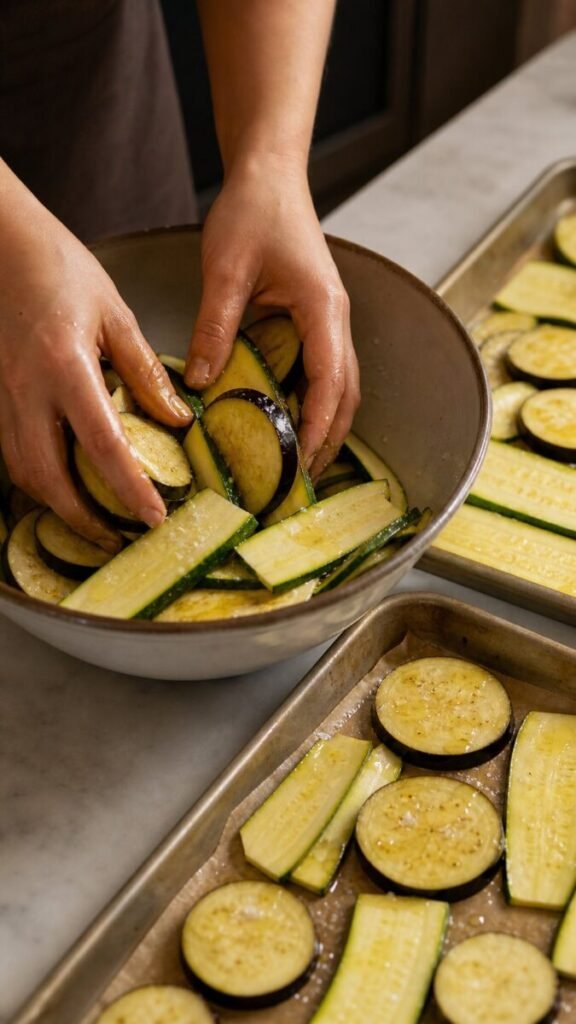
- Step 1 — Sweat, then roast. Lay the eggplant rounds on paper towels and salt both sides; let them sit 15 minutes while the oven heats to 425°F. You’ll see beads of moisture on the surface — that’s the water we’re evicting. Pat thoroughly dry, toss with the zucchini planks, the olive oil, and a good pinch of salt, and spread everything across the two sheets in a single layer. Roast 20 to 25 minutes, flipping once, until the edges are golden and the slices are bendable but dry to the touch. Cool on the pans while you make the rest.
- Step 2 — Blitz the pepper sauce. Into the blender: the roasted peppers, crushed tomatoes, garlic clove, olive oil, basil leaves, water, salt, and pepper. Thirty seconds on high, until it’s a smooth, bright orange-red. Taste it — it should taste like summer, sweet and a little smoky, maybe wanting one more pinch of salt. That’s the entire sauce. There are versions of this recipe that simmer sauce for an hour, and you are not making one of them tonight.
- Step 3 — Whip the ricotta. In the bowl, beat the ricotta, egg, parmesan, lemon zest, milk, oregano, salt, and pepper with a fork or spatula for a full minute, until it’s smooth, soft, and faintly fluffy. It should spread like thick frosting — if it fights the spoon, another tablespoon of milk. Taste. It should be creamy, salty, and just barely lemony; the lemon is a shadow, not a flavor, and it keeps the whole lasagna from sitting heavy.
- Step 4 — Layer in alternating directions. Drop the oven to 375°F. Spread a thin film of sauce over the bottom of the dish. Now build: 4 noodles, half the ricotta spread gently across, then the eggplant rounds laid in rows all pointing one direction, a third of the remaining sauce, and half the feta. Next: 4 noodles, the rest of the ricotta, the zucchini planks laid crosswise — against the grain of the eggplant below — sauce and the remaining feta. Top: the last 4 noodles, the last of the sauce, and all the mozzarella, plus a snowfall of parmesan. The alternating directions are the lasagna’s rebar: the layers lock together and the slices stand tall instead of sliding apart like a stack of cards.
- Step 5 — Bake covered, then golden. Cover the dish tightly with foil, tenting it slightly so it doesn’t graze the cheese, and bake 25 minutes. Then pull the foil and bake 15 to 20 more, until the top is bronzed and bubbly at the corners and the sauce creeps up the edges of the dish. If you want the full bakery finish, two minutes under the broiler — standing there the whole time, because mozzarella and broilers share no patience.
- Step 6 — The rest is the recipe. Pull the lasagna and let it stand 15 minutes before cutting. I know exactly how long fifteen minutes is when something smells like this, and I’m asking anyway: the rest is when the layers set, the cheese stops flowing, and the slices learn to hold their shape. Cut into nine with a sharp knife, wiping it between cuts, and lift the first slice like you’re moving a piece of architecture, which you are. Basil on top, extra parmesan, and the table does the rest.

This is the second lasagna to live in this kitchen — the first is our Sweet Potato Butternut Squash Carrot Lasagna, the autumn-orange sibling. One for October, one for every other month: between them, the lasagna question stays answered.
Anna’s Kitchen Notes
The eggplant sweat, honestly explained. The old claim was that salting removes bitterness; modern eggplant has been bred gentler, so the bitterness argument mostly retired. What salting still does is pull water to the surface — you can watch it bead — which the paper towel then removes, so the slices roast instead of steam. Fifteen minutes, two pinches of salt, one pat-down. It’s the cheapest texture insurance in the produce aisle.
No-boil noodles need a drink. Those stiff sheets cook by pulling moisture from the sauce around them, which is why the recipe thins the pepper sauce with a third of a cup of water. Too little liquid and the noodles stay chalky in the middle; too much and you’re back to the pooling problem. The measure in the recipe is calibrated for it, so resist both urges — to thicken the sauce and to water it further. The lasagna knows what it’s doing.
Whole-milk ricotta, and drain it if it weeps. Part-skim ricotta is looser and grainier, and this recipe’s whole creamy identity rides on the good stuff. If your tub has visible liquid pooled on top when you open it, pour it off before measuring. One tub, one lasagna, no leftover ricotta haunting the fridge — which in my house counts as recipe design.
Spread the ricotta like frosting, not like cement. The roasted vegetables underneath are tender, and a heavy hand with the spatula shoves them around and mixes your careful layers into a swirl. Drop spoonfuls of ricotta across the surface, then spread each one gently until they meet. Thirty extra seconds of gentleness, visible in every clean layer of the finished slice.
The rest has a reason, not just a rule. Straight from the oven, everything inside is flowing — sauce, cheese, and structure are all still deciding what they’ll be. Fifteen minutes of standing lets the egg-set ricotta and the starch from the noodles firm up just enough to slice. I once cut a lasagna at minute three because the table was impatient, and we ate it with spoons. Delicious. Architecturally, a pond.
Beside the Lasagna
The lasagna is the whole show, so the sides just need to be green and sharp. A big salad with bite — our Easy Chickpea Feta Avocado Salad is the house pairing, because its vinegar and avocado play perfectly against all that cheese — or something simpler with a lemony dressing, dressed at the last minute.
If you want the table fuller: Irresistibly Fresh Caprese Bites make a tidy starter while the lasagna rests, and a small pan of Garlic Butter Orzo with Mushrooms and Spinach on the side turns nine slices into a dinner for a crowd with zero extra effort. Bread, strictly speaking, is redundant here — the lasagna has noodles — but I’ve never once stopped anyone from bringing any.
Lasagna, Redirected
The summer version. Same sauces, same cheeses, but swap the roasted eggplant and zucchini for thin-sliced raw summer squash and blistered cherry tomatoes, and bake just until the noodles are done. Lighter, faster, and the entire point of August.
The za’atar route. Stir a teaspoon of za’atar into the ricotta and swap the mozzarella for more feta — the lasagna drifts east toward the same flavors as our Manakish, and suddenly it pairs with yogurt sauce instead of salad. This is my favorite redirect, and it happened by accident the day the mozzarella ran out.
Mushroom-and-spinach build. Sautéed mushrooms and thoroughly squeezed-dry chopped spinach in place of the eggplant — same layering, same sauce. The squeezing is the whole trick again; wet spinach is the eggplant problem wearing a different coat.
The no-oven option. When it’s too hot to bake at all, those exact flavors — roasted peppers, ricotta with lemon, zucchini, feta — assemble into our Mediterranean Quinoa Bowl instead. Same vacation, carry-on luggage.
For the meat table. A layer of browned Italian sausage between the eggplant and the noodles converts the skeptics one slice at a time. I make the vegetarian version as written and set out good grated parmesan and chili flakes instead, and the skepticism has quietly died of starvation.
The Slice Ledger
| Nutrient | Per Slice (1 of 9) |
|---|---|
| Calories | 390 kcal |
| Protein | 18 g |
| Carbohydrates | 32 g |
| Fats | 21 g |
Estimates for the lasagna as written, salad and seconds unaccounted. Eighteen grams of protein per meatless slice comes honestly — ricotta, mozzarella, parmesan, feta, and the egg all chip in — and the vegetables keep the slice lighter than it eats. The fats are mostly olive oil and cheese, which is the Mediterranean way of saying the fat was chosen on purpose. As always, estimates; your feta crumble hand is the variable no table can predict.
Make Two, Freeze One
The assembly is the work, so make it count twice: the lasagna can be assembled up to a day ahead and kept covered in the fridge, then baked straight from cold with ten extra minutes under the foil. Baked leftovers keep four days covered, and a slice reheated at 350°F for 15 minutes tastes so close to fresh that lunch the next day has become the official second serving of this recipe in my house.
Freezing works both ways. Unbaked and frozen tight in the dish (or in a disposable one, to keep your good dish free): up to three months, baked from frozen at 375°F covered for about an hour plus the uncovered stretch. Already baked? Freeze individual slices solid on a tray, then bag them — a single slice reheats from frozen at 350°F for 25 to 30 minutes, which is how this recipe becomes future dinners with no effort at all.
One reheating law: gentle oven, never the microwave at full power, which turns the noodles rubbery and the sauce watery in one decisive act. The lasagna held its structure all the way here; the least we can do is not undo it in ninety seconds of impatience.
Where It Goes Wrong
Watery, pooling slices. The vegetables went in raw or under-roasted, or wet spinach stood in for squeezed spinach. The fix is upstream: roast until the edges gold and the slices feel dry, and pat everything before layering. Water that’s still in the vegetables at assembly will be in the lasagna at dinner, and there’s no step in between that removes it.
Chalky noodle centers. The sauce was too thick or too stingy for no-boil sheets. Keep the third cup of water in the sauce, spread sauce to the edges of every noodle layer, and cover the dish properly for the first bake so the steam does its part. One dry corner is a topping error; a whole chalky layer is a liquid-budget error.
Slices slide apart. The rest got skipped, or the vegetable layers all ran the same direction. Fifteen minutes of standing and the crosswise layering are the rebar and the mortar — both, not either. Cutting hot lasagna is the most forgivable mistake in cooking and the most visible one on the plate.
Dense, slab-like ricotta. It wasn’t whipped, or it was part-skim, or the tub’s liquid went in with the cheese. A full minute of beating with the egg and milk changes the texture completely — spreadable, melty, integrated. The ricotta layer should read as creamy among the vegetables, not as a wall between them.
Heavy, sit-like-a-brick dinner. Too much mozzarella, no lemon in the ricotta, or sauce skipped between layers. The lemon zest is the release valve for all that dairy — one teaspoon, and the whole slice lifts. Skip it and you’ll find out why it’s in there, the filling-heavy way.
Burnt top, cold middle. The foil came off too early, or the broiler wandered. Twenty-five covered minutes come first, every time — the middle needs the steam before the top needs the color. And a broiler is a tool you watch, not a tool you set and leave; the distance between bronzed and black is one glance away.
Lasagna Questions
Can I use regular lasagna noodles instead of no-boil?
Yes — boil them one minute shy of the package time, so they’re pliable but still have bite to finish in the sauce, and drop the extra water from the sauce since the noodles no longer need to drink. Lay them out on damp towels as you go so they don’t glue themselves into a noodle raft. Both routes arrive at the same lasagna; no-boil is just the one that skips a pot.
Do I really need to salt the eggplant?
You can skip it with modern eggplant and a proper roast — the bitterness that made salting famous is mostly bred out. What you’d be skipping is the water removal, which the roasting handles anyway if the slices are dry when they go in. I still salt, because fifteen minutes and two pinches buy insurance and better browning. But if dinner’s behind schedule, the lasagna will survive the shortcut.
Can I make it ahead for company?
That’s its best mode. Assemble up to 24 hours ahead, refrigerate covered, and bake from cold — add roughly ten minutes to the covered stretch. Or freeze unbaked for up to three months and bake from frozen when the weekend arrives. The rest-and-slice ceremony at the end stays exactly the same, which is the part your guests actually see.
What can I substitute for the jarred roasted peppers?
Roast your own: two red bell peppers over a flame or under the broiler until blackened all over, then steam them in a closed bowl for ten minutes and peel. It’s twenty minutes of mostly waiting and the sauce tastes marginally deeper. The jar exists because the difference is small and the pepper is already roasted — I keep both options in rotation by season and energy level.
Is there a vegan version?
A solid one, with two swaps: blend firm drained tofu with the lemon zest, garlic, nutritional yeast, and salt for the ricotta layer, and use a plant-based mozzarella for the top — or go cheese-free on top and finish with a crisp breadcrumb-and-olive-oil scatter instead. The sauce and the vegetables are already plant-based, and the feta simply sits out. The slice won’t set quite as firmly, so extend the rest to twenty minutes.
Why alternate the direction of the vegetable layers?
Structure. Layers running the same direction create slip planes — the slices shear along them the moment the spatula arrives. Run each layer across the grain of the one below and the lasagna interlocks, the way brick walls stagger their seams. It costs nothing, it’s invisible, and it’s the reason the first slice comes out looking like the recipe photo instead of like an apology.
Can I grill the vegetables instead of roasting?
Beautifully — grill marks and a little smoke are a genuine upgrade on the eggplant and zucchini, and the lasagna inherits the char. Same oil, same salt, a few minutes a side over medium heat with the lid down. The rest of the recipe doesn’t notice the difference, but the guests do, and the grill was on anyway.
The Mediterranean Table / Oven-Baked
Layered Mediterranean Vegetable Lasagna with Creamy Ricotta
Roasted eggplant and zucchini layered with lemony ricotta, tangy feta, and a bright roasted-red-pepper sauce. A golden mozzarella top finishes this hearty, meatless lasagna.
As an Amazon Associate I earn from qualifying purchases. Ingredient and equipment links below are affiliate links.
The Method
Check the noodle instructions first: The supplied sauce quantities may not provide enough moisture for 12 no-boil sheets. Measure the blended sauce and follow your noodle brand’s sauce, added-liquid, and covered-baking requirements. Add more crushed tomatoes and the specified liquid as needed before layering. A fixed ⅓ cup of water is not a universal hydration rule.
-
Salt and dry the eggplant
Heat the oven to 425°F (220°C). Arrange the eggplant slices on paper towels and distribute 1 teaspoon salt over both sides. Leave for 15 minutes, then pat away the released moisture thoroughly. Line two rimmed baking sheets with parchment rated for the oven temperature.
-
Roast the vegetables
Brush or toss the eggplant and zucchini with the 3 tablespoons olive oil. Arrange in a single layer, preferably keeping the vegetables on separate pans. Roast for 20–25 minutes, turning halfway and swapping rack positions as needed. Remove slices as they become tender and browned at the edges; thinner zucchini may finish first. Avoid crowding and leave any pooled liquid behind when assembling.
-
Blend and measure the pepper sauce
While the vegetables roast, blend the drained roasted peppers, crushed tomatoes, garlic, olive oil, basil, water, salt, and pepper until smooth. Taste and adjust the seasoning. Check the volume against the no-boil noodle package instructions and supplement with additional crushed tomatoes and liquid as needed. Reserve enough sauce to cover every pasta layer, including all edges and the entire top.
-
Make the lemon ricotta
Beat the ricotta with the Parmesan-style cheese, lemon zest, milk, oregano, and pepper until smooth and spreadable. Taste and add salt only as needed. Then beat in the egg until fully incorporated. Do not taste the mixture after adding the raw egg. If unusually stiff, add a small extra splash of milk.
-
Build three pasta layers
Reduce the oven to 375°F (190°C), or use the temperature specified by your no-boil noodle brand. Spread sauce across the base of the baking dish. Add a single layer of noodles, breaking sheets to fit without heavy overlap. Spread with sauce, half the ricotta, the roasted eggplant, and half the feta. Add the second noodle layer, sauce, the remaining ricotta, zucchini, and remaining feta. Finish with the last noodle layer and enough sauce to cover it completely. Scatter with mozzarella and extra Parmesan-style cheese.
-
Bake covered until the pasta is tender
Cover tightly with foil, tenting it above the cheese. Bake covered for at least 25 minutes, or longer as directed by the noodle package. Check that the pasta is softening throughout; if still firm, keep covered and continue baking. Uncover for the final 15–20 minutes to melt and brown the cheese. The noodles should be tender and the center should reach at least 160°F (71°C) to cook the egg-containing filling. If the top browns first, cover again and continue baking.
-
Rest, slice, and finish with basil
Let the lasagna stand for 15 minutes before cutting. Slice into 9 portions with a sharp knife, wiping the blade between cuts. Lift gently and finish with fresh basil. Resting helps the filling settle, but slice firmness will also depend on sauce quantity, noodle hydration, and how thoroughly the vegetables were roasted.
Allow realistic time: Plan on approximately 1 hour 50 minutes–2 hours 10 minutes, including the eggplant rest, roasting, assembly, baking, and 15-minute final rest. Prepare the sauce and ricotta while the vegetables roast. Your noodle brand may require a longer covered bake.
Bakeware safety: Do not broil glass or ceramic dishes unless the manufacturer explicitly approves broiler use. For a chilled assembled lasagna, follow the dish manufacturer’s guidance on temperature changes; do not assume cold glass can go directly into a hot oven.