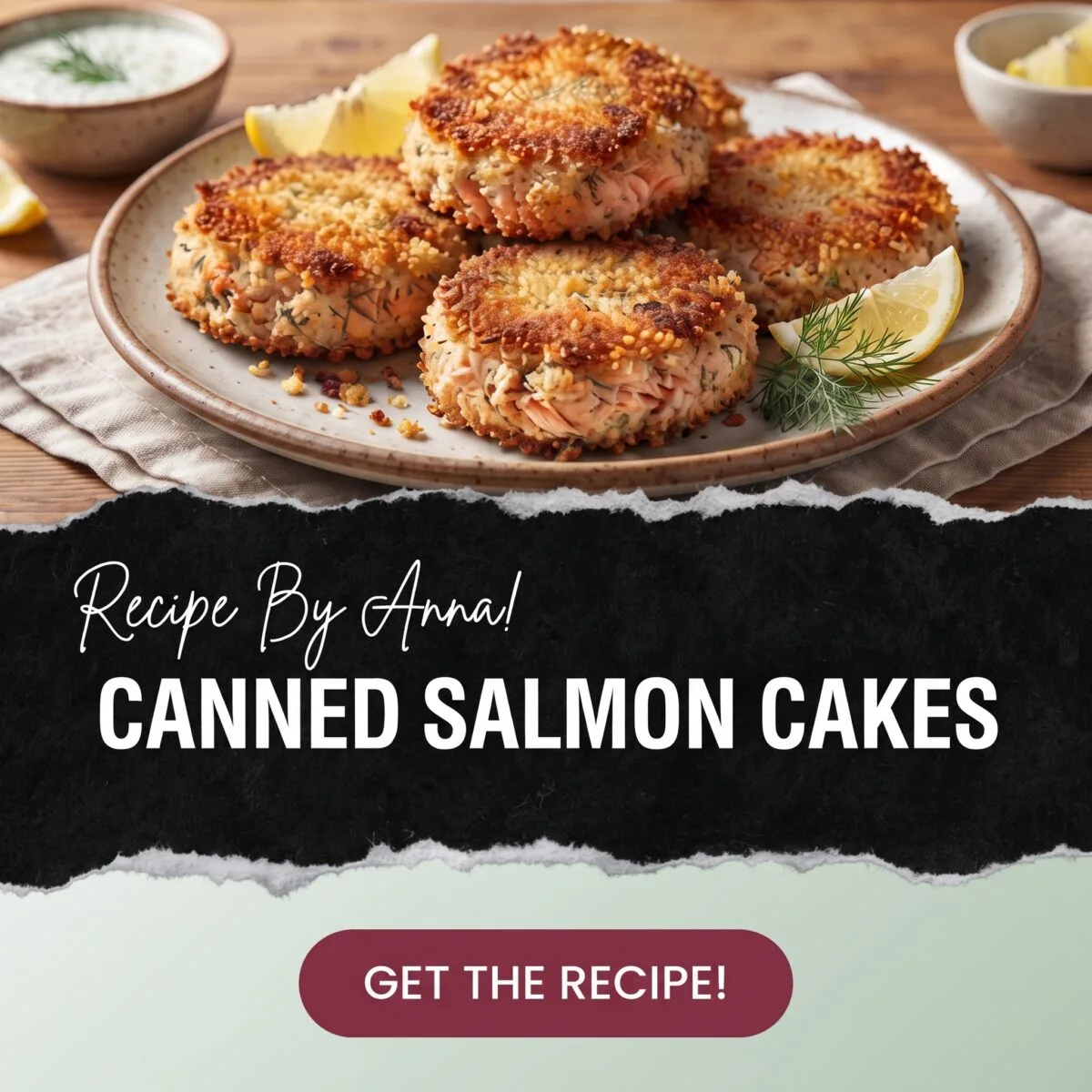
Canned Salmon Cakes — Crispy, Flavorful and Ready in 20 Minutes
These Canned Salmon Cakes are the weeknight dinner that earns a permanent spot in the rotation — golden, shatteringly crispy panko-crusted patties made from canned salmon, diced celery, scallions, Dijon, lemon, and fresh dill, pan-fried in a hot skillet until deeply golden on both sides and served with a tangy dill sauce that makes them taste like something from a seafood restaurant rather than a 20-minute pantry dinner.
Canned salmon is one of the most underrated pantry proteins in home cooking — it is fully cooked, naturally high in omega-3 fatty acids, and significantly cheaper than fresh salmon while producing salmon cakes (also called salmon patties in the American South and Midwest) that are genuinely excellent. The panko breadcrumb crust is what separates this version from the dense, gummy salmon patties that many childhood memories feature — panko crust, hot oil, and patience while the first side forms its crust are the three elements that produce a salmon cake that is crispy enough to shatter slightly when cut and moist, flaky, and properly seasoned inside.
Why Canned Salmon Works as Well as Fresh
Canned salmon is already cooked and naturally flaked — the canning process produces a fully cooked, moist salmon that breaks into natural flakes without any additional preparation. For salmon cakes and patties, where the salmon is broken down, mixed with binders, and re-formed, the starting texture of the salmon matters less than its flavour and moisture content, and canned salmon performs identically to fresh cooked salmon in a formed patty.
Pink canned salmon is milder in flavour and lower in price; red (sockeye) canned salmon is richer, more deeply flavoured, and more similar to fresh wild salmon in both colour and taste. Either works in this recipe; sockeye produces a more intensely salmon-flavoured cake.
- Prep Time: 10 minutes
- Chill Time: 15 minutes (essential for the patties to hold shape)
- Cook Time: 8 to 10 minutes
- Total Time: 35 minutes
- Yield: 8 salmon cakes, serves 4
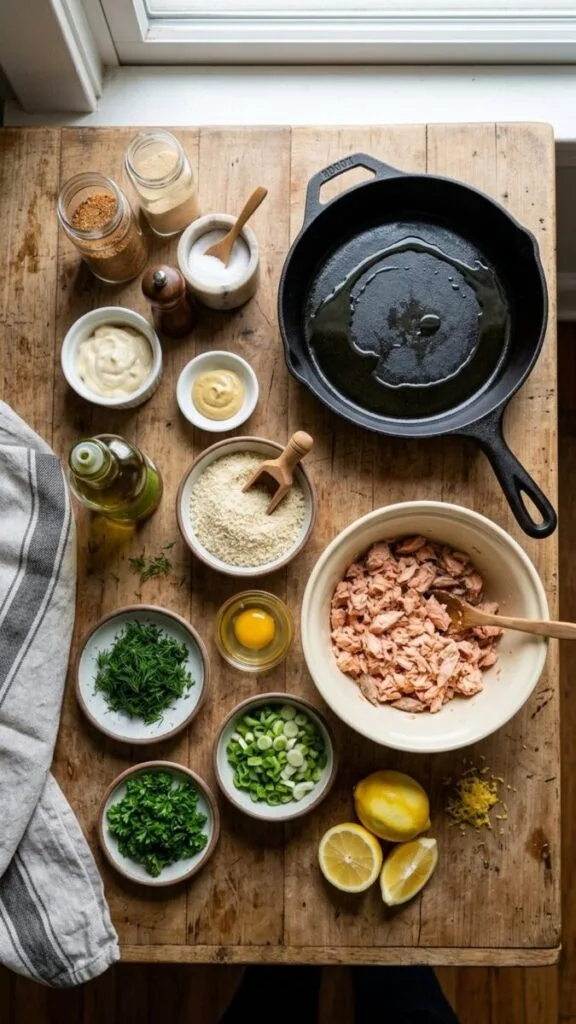
What You Need
For the salmon cakes:
- Canned salmon, drained well: 2 cans (14.75 oz / 418g each) — drain thoroughly and remove any visible bones and skin, or leave the small soft bones in (they are edible and a good calcium source)
- Panko breadcrumbs: 1/2 cup (50g) — panko rather than regular breadcrumbs; panko’s larger, drier flake produces a lighter, crispier crust both inside and outside the patty
- Large eggs: 2
- Celery stalks, very finely diced: 3
- Scallions, thinly sliced: 4
- Dijon mustard: 1 tablespoon
- Mayonnaise: 2 tablespoons
- Fresh lemon juice: 1 tablespoon
- Lemon zest: 1 teaspoon
- Fresh dill, finely chopped: 2 tablespoons — or 1 teaspoon dried
- Garlic powder: 1/2 teaspoon
- Old Bay seasoning: 1 teaspoon — the specific blend for seafood patties that no other spice combination exactly replicates; it can be approximated with celery salt, paprika, and cayenne but Old Bay is worth having
- Fine sea salt: 1/2 teaspoon
- Black pepper: 1/2 teaspoon
For the panko crust coating:
- Panko breadcrumbs: 1/2 cup (50g) — the exterior coating that produces the shattery crust
For cooking:
- Neutral oil (avocado, vegetable, or light olive oil): 3 to 4 tablespoons
For the dill dipping sauce:
- Mayonnaise: 1/3 cup
- Sour cream or plain Greek yogurt: 2 tablespoons
- Fresh dill, finely chopped: 2 tablespoons
- Fresh lemon juice: 1 tablespoon
- Dijon mustard: 1 teaspoon
- Garlic, grated on a microplane: 1 small clove
- Fine sea salt and black pepper: to taste
How to Make Them
Making the dill sauce (make first, refrigerate while forming patties):
- Combine all dill sauce ingredients in a small bowl and stir until smooth. Taste and adjust — more lemon for brightness, more dill for herb intensity, more salt if flat. Cover and refrigerate — the sauce improves significantly with 15 minutes of resting as the garlic and dill steep into the mayonnaise base.
Making the salmon cakes:
- Drain the canned salmon very thoroughly — press it against the inside of the strainer and pat with paper towels to remove as much liquid as possible. Excess moisture in the mixture is the primary cause of patties that fall apart during cooking. Transfer to a large bowl and flake with a fork into small, even pieces, checking for and discarding any skin or bones you prefer to remove.
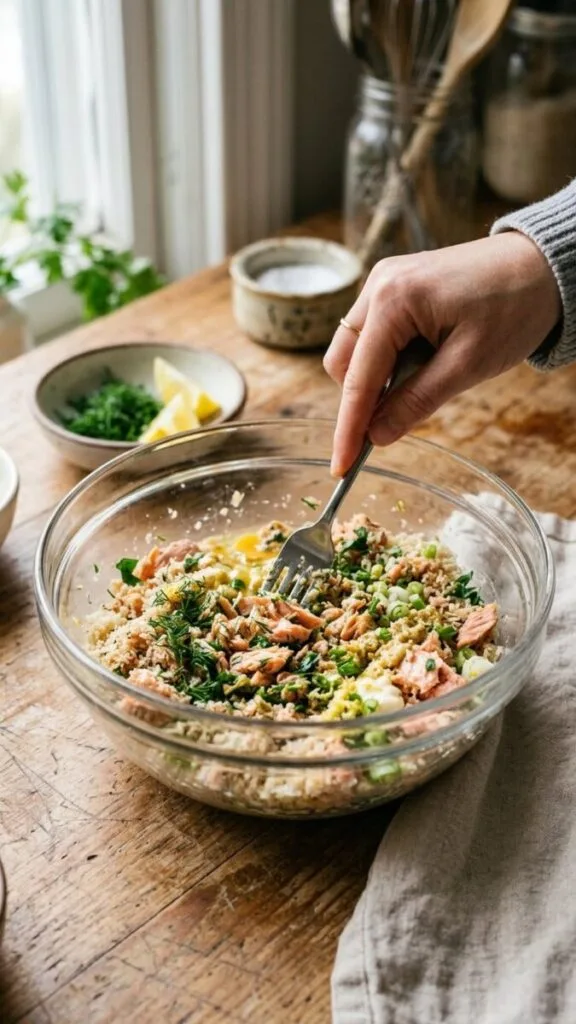
- Add the panko, eggs, celery, scallions, Dijon, mayonnaise, lemon juice and zest, dill, garlic powder, Old Bay, salt, and pepper. Fold together with a fork until completely combined — the mixture should look like a cohesive, slightly sticky mass that holds together when pressed. If it seems too wet, add 1 tablespoon of panko; if too dry and crumbly, add 1 teaspoon of mayonnaise.
- Spread the remaining 1/2 cup of panko in a shallow plate or wide bowl.
- Divide the salmon mixture into 8 equal portions. Form each into a patty approximately 3/4 inch thick and 3 inches across — press firmly so the mixture compacts rather than remaining loose. Press each patty into the panko, coating both sides and the edges.
- Place the coated patties on a plate and refrigerate for 15 minutes — this rest firms the patties and sets the panko coating so it adheres rather than falling off into the pan. Chilled patties hold their shape significantly better during the pan flip than room-temperature ones.

Cooking:
- Heat the oil in a large non-stick or cast iron skillet over medium-high heat until shimmering — the oil should shimmer and move freely in the pan but not be smoking.
- Add the salmon cakes without crowding — cook in two batches if needed; crowded patties steam each other rather than frying individually, producing a softer crust than the recipe intends.
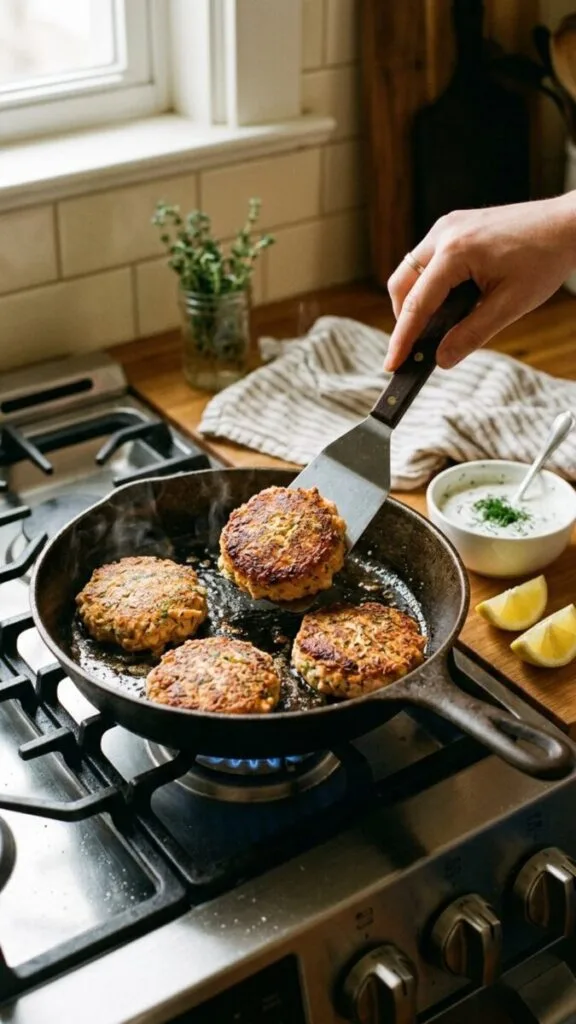
- Cook undisturbed for 3 to 4 minutes on the first side — do not move, press, or check until the 3-minute mark. The golden crust that makes these crispy forms from sustained contact between the panko and the hot oil; interrupting it resets the browning process. After 3 minutes, peek at one edge — it should be visibly golden and the crust should feel firm rather than soft before you flip.
- Flip once with a thin, wide spatula — slide it fully under each patty before lifting and flip in one decisive motion. Cook the second side for 3 to 4 minutes until equally golden.
- Drain on a paper towel-lined plate for 1 minute. Serve immediately with the dill sauce, lemon wedges, and fresh dill.
Salmon cakes alongside our Spring Roll Salad with Peanut Dressing is a cross-cuisine pairing that works far better than it sounds — the crispy, lemon-dill salmon patties against the bright, crunchy, peanut-dressed salad produces a dinner that is simultaneously light and satisfying, with the salad’s texture providing the fresh contrast that a creamy dill-sauced patty specifically needs alongside it.
The Drain Thoroughly, Chill, and Don’t-Move-It Rules
Draining the canned salmon as thoroughly as possible — straining, pressing against the strainer, and patting with paper towels — is the single most important step for patties that hold together. The binding ratio (eggs and panko) in the recipe is calibrated for properly drained salmon; undrained salmon introduces additional liquid that overwhelms the binders and produces a patty that falls apart when flipped or pressed.
The 15-minute refrigerator rest after forming and coating is the step that makes the single biggest difference in the cooking result — cold patties hold their shape during the pan flip while warm patties are soft and prone to cracking or folding at the edges. The chill also sets the panko coating, pressing it into the surface of the patty so it adheres as a crust rather than sliding off into the oil.
Not moving the patties during the first 3 to 4 minutes of cooking is the rule that produces the crispy crust — the golden exterior forms from sustained, direct contact between the panko and the hot oil, and any movement breaks that contact and resets the browning process from the beginning. According to Serious Eats, the Maillard browning reaction in breadcrumb crusts requires sustained surface temperatures above 280°F — any movement that lifts the patty from the pan surface drops the contact temperature back to the oil temperature, typically 350 to 375°F at the surface, and the exposed underside must return to Maillard temperature before browning resumes. Three uninterrupted minutes of contact produce the even, consistent golden crust that sporadic contact cannot.
What to Serve Alongside
The dill dipping sauce is essential rather than optional — the salmon cakes’ mild, slightly briny flavour needs the sharp, herbaceous, creamy sauce alongside to feel complete.
Serve over a simple arugula or mixed green salad dressed with lemon vinaigrette for a light, complete dinner — the peppery arugula and lemon dressing connect directly to the lemon-dill flavour of both the cakes and the sauce. Our Chickpea Beet and Feta Salad is the most complementary composed salad alongside — the earthy beets and lemony vinaigrette provide contrast and freshness without competing with the delicate salmon flavour.
Six Salmon Cake and Patty Variations
Southern Salmon Patties — the Southern version of this recipe uses crushed saltine crackers in place of panko (approximately 15 crackers, crushed fine), adds 1/4 cup of finely diced yellow onion in place of scallions, uses yellow mustard rather than Dijon, and omits the fresh dill. The Southern version is simpler, saltier, and cracker-crusted — more substantial in texture and more deeply savoury than the herb-forward panko version. Fry in a cast iron skillet with a generous amount of oil, or in bacon fat for the most traditional result.
Old Fashioned Salmon Patties — use the same Southern method above but add 1 beaten egg, a tablespoon of flour, and a generous pinch of black pepper as the only seasonings beyond salt. This is the recipe that many households made from a single can of salmon stretching a weeknight dinner — minimal, functional, and nostalgic in all the right ways. Fry in vegetable shortening for the most faithful period result.
Air Fryer Salmon Patties — form and coat the patties as directed. Spray the air fryer basket generously with cooking spray, place the patties without touching, and spray the tops. Air fry at 400°F for 8 to 10 minutes, flipping at the 5-minute mark and re-spraying the exposed side. The air fryer version produces a crust that is genuinely crispy — not quite as golden as the pan-fried version but significantly less oil and no stovetop attention required. Check at 8 minutes; every air fryer cooks differently.
Keto Salmon Patties — replace the panko in both the interior mixture and the exterior coating with finely crushed pork rinds. The pork rind crust is crispier than panko, higher in protein, and produces a genuinely keto-friendly salmon cake. Add 1/4 cup of grated Parmesan to the interior mixture for additional binding in the absence of breadcrumb starch. The keto version has approximately 2 grams of carbohydrates per patty compared to the standard version’s 12.
Fresh Salmon Patties — replace the canned salmon with 1.5 lbs of fresh salmon fillet, skin removed, chopped finely by hand into 1/4-inch pieces (do not use a food processor — it pulverises the salmon into a paste rather than the textured, chunky mixture that produces the best patty). The fresh salmon version has a more delicate, less briny flavour and a slightly more varied internal texture from the hand-chopped fish. Season the fresh salmon version slightly more aggressively than the canned version as it has less natural seasoning.
Lemon Aioli Salmon Cakes — the base recipe served with lemon aioli instead of dill sauce: blend 1/2 cup of mayonnaise, 1 small garlic clove (grated), 2 tablespoons of fresh lemon juice, 1 teaspoon of lemon zest, and a pinch of salt. The lemon aioli is sharper and more garlic-forward than the dill sauce and suits anyone who prefers a more assertive dipping sauce. Add 1 tablespoon of capers, finely chopped, for the most classic seafood aioli direction.
Nutritional Information
| Nutrient | Amount Per Salmon Cake (based on 8 cakes, pan-fried) |
|---|---|
| Calories | 210 kcal |
| Protein | 22 g |
| Carbohydrates | 10 g |
| Fats | 9 g |
These values are estimates for one salmon cake from the base pan-fried recipe without the dill sauce. The 22-gram protein count per patty reflects the combination of canned salmon (approximately 18 grams per patty) and eggs — making two salmon cakes a 44-gram protein dinner at approximately 420 calories, one of the highest-protein, most economical dinners in this collection. The keto version reduces carbohydrates to approximately 2 grams per patty; the air fryer version reduces fat to approximately 5 grams per patty from the lower oil use.
Storing and Reheating
Store cooked salmon cakes in an airtight container in the fridge for up to 3 days. Reheat in a dry skillet over medium heat for 2 minutes per side — the stovetop reheat restores the crispy exterior that the microwave softens completely. The microwave works for convenience at 30-second intervals, but the pan reheat is worth the effort for the crust quality.
Uncooked, formed and chilled patties keep in the fridge for up to 24 hours — make them the morning before dinner and they will be chilled, firmed, and ready to cook in the evening with zero prep work beyond heating the pan.
Freeze uncooked patties (formed, coated, and frozen individually on a parchment-lined sheet before transferring to a bag) for up to 2 months. Cook from frozen at medium heat with a lid on for the first 3 minutes to heat through, then remove the lid and cook uncovered for 2 minutes per side to develop the crust. The frozen version takes approximately 10 to 12 minutes total but produces the same result as the fresh version.
Mistakes That Produce Falling-Apart or Soggy Patties
Not draining the canned salmon thoroughly enough is the most common cause of patties that fall apart in the pan — the excess moisture from poorly drained salmon overwhelms the eggs and panko’s binding capacity. Drain, press against the strainer, transfer to a paper towel, and pat. The salmon should look dry rather than glistening before it goes into the mixing bowl.
Skipping the refrigerator rest and cooking immediately after forming produces warm, soft patties that crack and fold at the edges during the flip — the chill is what firms the mixture and sets the panko coating into a crust that maintains its structural integrity when the spatula slides underneath. The 15 minutes is not a suggestion; it’s the step that makes the flip possible without damage.
Cooking over too-low heat produces salmon cakes that steam in their own moisture rather than developing a crust — the oil must be shimmering and at temperature before the patties go in. If the patties don’t sizzle immediately on contact with the oil, the oil isn’t hot enough. Remove the patties, heat the oil further, and try again.
Canned Salmon Cakes — Crispy and Flavorful
Golden panko-crusted salmon cakes made with canned salmon, celery, scallions, Dijon mustard, lemon, fresh dill, and Old Bay. Pan-fry until crisp and serve with a cool, tangy homemade dill sauce.
Why This Recipe Works
Canned salmon is already cooked, naturally moist, and easy to flake, making it ideal for quick seafood patties. Pink salmon offers a mild, economical option, while canned sockeye provides deeper color and a stronger salmon flavor.
Panko inside the mixture absorbs excess moisture and supports the eggs as a binder. A second layer of panko on the exterior creates a light, crisp crust. Thorough draining, a 15-minute chill, and uninterrupted contact with hot oil help the cakes hold together and brown evenly.
Ingredients
Instructions
Stir together the mayonnaise, sour cream or Greek yogurt, dill, lemon juice, Dijon, grated garlic, salt, and pepper. Cover and refrigerate while preparing the salmon cakes.
Drain the canned salmon in a fine strainer. Press gently against the strainer and pat with paper towels to remove excess liquid. Remove skin and bones if preferred, then transfer the salmon to a large bowl.
Flake the salmon with a fork. Add ½ cup panko, eggs, celery, scallions, Dijon, mayonnaise, lemon juice, zest, dill, garlic powder, Old Bay, salt, and pepper. Fold until evenly combined.
Press a small portion together. It should form a cohesive, slightly sticky mass. If it is too wet, add panko 1 tablespoon at a time. If it is dry and crumbly, add mayonnaise 1 teaspoon at a time.
Spread the remaining ½ cup panko in a shallow dish. Divide the salmon mixture into 8 portions and firmly shape each one into a patty approximately 3 inches wide and ¾ inch thick. Coat the tops, bottoms, and edges with panko.
Arrange the coated patties on a plate and refrigerate for 15 minutes. Chilling firms the mixture and helps the panko adhere during cooking.
Heat 3 to 4 tablespoons of neutral oil in a large nonstick or cast-iron skillet over medium-high heat. The oil should shimmer and move freely but should not smoke.
Add the cakes without crowding the skillet. Cook in two batches if necessary. Leave them completely undisturbed for 3 to 4 minutes, until the underside is deeply golden and firm.
Slide a thin, wide spatula fully underneath each cake and flip in one decisive motion. Cook the second side for another 3 to 4 minutes, until equally crisp and golden.
Transfer to a paper towel-lined plate for about 1 minute. Serve immediately with the chilled dill sauce, fresh lemon wedges, and additional dill.
Key Technique Notes
Excess liquid overwhelms the eggs and breadcrumbs, making the patties soft and difficult to flip. The salmon should appear moist but not wet or glistening.
Fifteen minutes in the refrigerator firms the patties and sets the exterior coating, reducing cracking and panko loss.
The cakes should sizzle immediately when they enter the pan. Oil that is too cool encourages absorption and creates a soft, greasy crust.
Sustained contact with the hot skillet creates the golden crust. Do not move, press, or repeatedly check the cakes during the first 3 minutes.
Wait until the first crust is firm, then use a wide spatula. Repeated flipping increases the risk of cracking and disrupts even browning.
Leave room around every cake so moisture can escape. A crowded skillet traps steam and prevents the panko from becoming crisp.
Helpful Pairing Note
What to Serve Alongside
Serve over peppery arugula dressed with olive oil, lemon juice, salt, and black pepper for a light, fresh dinner.
Pair with Chickpea Beet and Feta Salad for earthy sweetness, acidity, and additional texture.
Crispy roasted potatoes or oven fries turn the salmon cakes into a substantial seafood dinner with familiar flavors.
A chilled cucumber salad with dill and vinegar complements the lemon-dill flavors while cutting through the fried crust.
Serve with lemon rice, brown rice, or quinoa and steamed green vegetables for a complete grain-bowl-style meal.
Place one cake on a toasted bun with lettuce, tomato, pickles, and dill sauce for an easy salmon burger.
Six Salmon Cake Variations
Replace the panko with approximately 15 finely crushed saltine crackers. Use diced yellow onion and yellow mustard, omit the dill, and fry in a cast-iron skillet.
Use crushed crackers, 1 beaten egg, 1 tablespoon flour, salt, and plenty of black pepper for a simple, nostalgic version.
Spray the basket and both sides of the patties with cooking spray. Air-fry at 400°F for 8 to 10 minutes, flipping after 5 minutes and spraying the newly exposed side.
Replace both quantities of panko with finely crushed pork rinds. Add ¼ cup grated Parmesan to the mixture for additional structure and savory flavor.
Replace canned salmon with 1½ pounds skinless salmon fillet, finely chopped by hand into ¼-inch pieces. Avoid using a food processor, which can turn the fish into a paste.
Replace the dill sauce with a mixture of ½ cup mayonnaise, 2 tablespoons lemon juice, 1 teaspoon zest, 1 grated garlic clove, and optional finely chopped capers.
Nutrition
| Nutrient | Amount Per Salmon Cake |
|---|---|
| Serving Size | 1 salmon cake |
| Calories | 210 kcal |
| Protein | 22 g |
| Carbohydrates | 10 g |
| Fat | 9 g |
Values are estimates for one of eight pan-fried salmon cakes without dill sauce. Two cakes provide approximately 44 grams of protein. Exact values vary according to the salmon, mayonnaise, breadcrumbs, and quantity of oil absorbed during cooking.
Cool promptly and refrigerate in an airtight container for up to 3 days. Store the dill sauce in a separate covered container.
Form and coat the uncooked cakes up to 24 hours in advance. Cover and refrigerate until ready to cook.
Reheat in a dry or lightly oiled skillet over medium heat for approximately 2 minutes per side. This method restores more of the original crust than microwaving.
Reheat at 350°F for 4 to 6 minutes, turning once, until hot and crisp.
Microwave in 30-second intervals until hot. The cakes will remain flavorful, but the panko crust will become softer.
Freeze formed and coated cakes individually on a parchment-lined tray, then transfer to a freezer bag. Store for up to 2 months.
Cook over medium heat with the skillet covered for the first 3 minutes. Remove the lid and continue cooking until hot inside and crisp on both sides, approximately 10 to 12 minutes total.
The salmon may be too wet, or the mixture may need more binder. Drain thoroughly and add panko 1 tablespoon at a time until a pressed portion holds together.
They may not have chilled long enough, or the first crust may not be fully set. Refrigerate for 15 minutes and wait until the underside is firm before flipping.
The oil may be too cool or the skillet overcrowded. Preheat until shimmering and cook the cakes in batches with space between them.
Press the coating firmly onto the tops, bottoms, and edges, then chill the coated patties before cooking.
The oil may be smoking or the heat too high. Reduce the heat to medium and allow the centers to warm before the crust becomes excessively dark.
Too much panko or excessive cooking can dry the mixture. Add breadcrumbs gradually and remove the cakes once both sides are golden and the centers are hot.
Add salt, Old Bay, lemon zest, dill, or Dijon after testing a small cooked portion. Serve with lemon wedges and dill sauce for acidity and freshness.