Eggplant Napoleon – Layered Vegetarian Gourmet Recipe
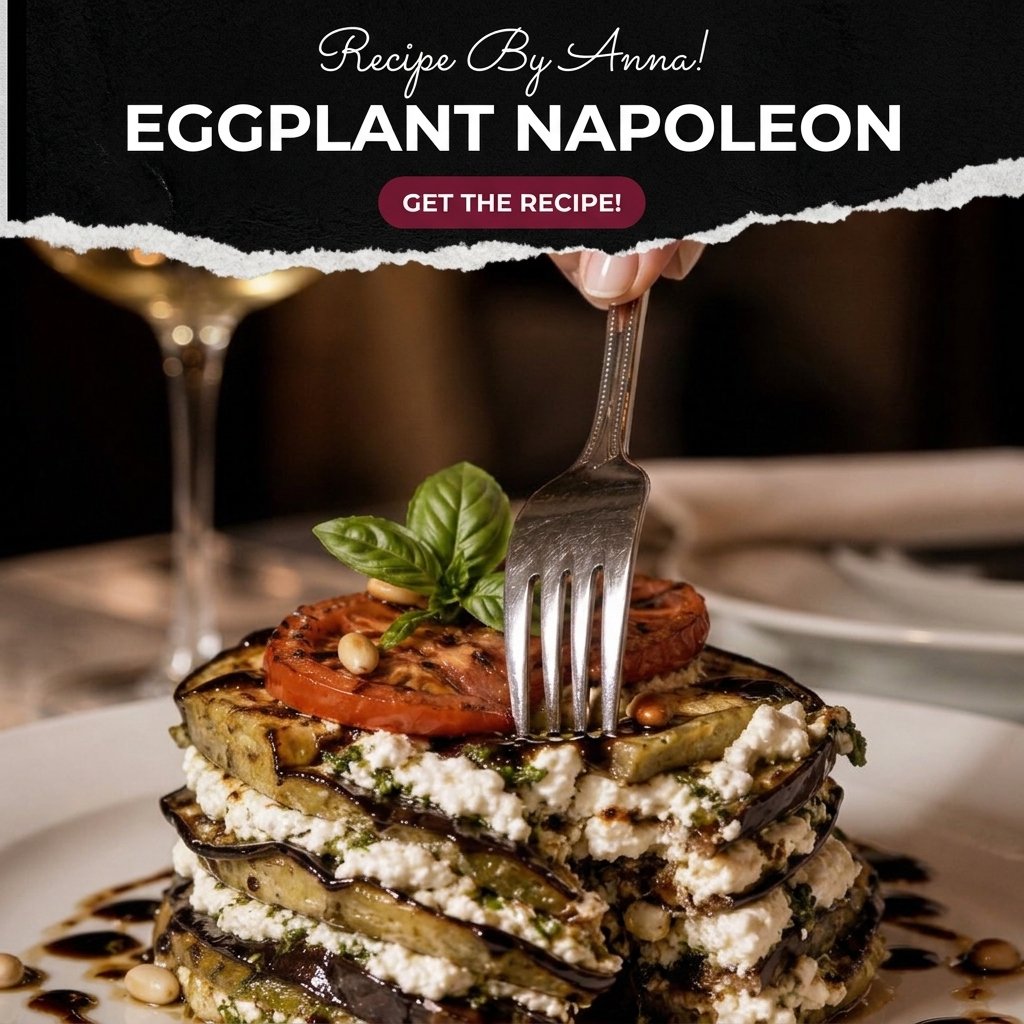
Here’s the fun part about an eggplant Napoleon: it borrows its name from the French pastry — all those crisp, layered, perfectly stacked rectangles — and then swaps the puff pastry and cream for roasted eggplant, herbed ricotta, and tomato. What lands on the plate looks like something from a white-tablecloth restaurant: a tall, golden tower with visible layers, a glossy balsamic drizzle, a basil leaf sitting on top like it was hired specifically for the job. And here’s the secret: it’s roasted vegetables and cheese, stacked. That’s it. The drama is architectural, not technical.
This is the vegetarian dish you make when you want guests to make that noise — the quiet, involuntary “ohhh” when the plate touches the table. It’s a date-night main, a dinner-party centerpiece, and honestly a very smug Tuesday dinner, because once the eggplant is roasted, the hardest remaining skill is “stacking,” which most of us mastered with blocks before we could read. The ricotta filling is creamy and lemony with basil running through it, the roasted tomatoes go jammy and sweet, and the balsamic glaze ties the whole thing together with sweet-tang theater.
And unlike most “gourmet” recipes, this one doesn’t punish you for attempting it. No frying, no pastry, no blowtorch. The oven does the roasting, the food processor (or a bowl and a fork) does the filling, and the assembly is genuinely meditative — layers going up, flavors stacking with them. An hour start to finish, four towers, and every one of them looks like you went to culinary school for a semester you don’t talk about.
Why This Tower Wows
The magic is in the layers, and each one earns its seat. The eggplant is the foundation — sliced thick, salted to draw out bitterness and excess water, then roasted at high heat with olive oil until golden and velvety. Roasting (rather than the traditional frying) keeps the slices sturdy and flavorful without a slick of grease, and it means the towers actually hold their shape instead of sliding around like they’ve had a long lunch. The salt-and-drain step matters more than it looks: eggplant is mostly water, and wet slices steam in the oven while salted ones roast. Ten minutes of salting, a world of texture difference.
The ricotta layer is the flavor engine. Whole-milk ricotta whipped with parmesan, lemon zest, garlic, and a serious amount of basil turns into something cloud-like but deeply savory — and an egg yolk in the mix keeps it set and sliceable after its warm-through in the oven, so the tower cuts cleanly instead of squooshing. Roasted roma tomatoes bring acid and sweetness to cut the richness, toasted pine nuts bring crunch, and the balsamic glaze — reduced on the stove for ten minutes to a syrup — brings the sweet-tang finish that makes every bite taste “restaurant.” Stack them and warm them briefly, and the heat marries the layers just enough to meld without collapsing anything. It’s construction with a payoff you can taste in every forkful, which is more than I ever said about my block towers.
⏱️ 1 HR 10 MIN | 🍆 VEGETARIAN SHOWSTOPPER | 🍽️ NO FRYING
- Prep Time: 25 minutes (includes the eggplant’s 20-minute salt break — it earns it)
- Cook Time: 45 minutes (roasting and glaze-making overlap nicely)
- Total Time: 1 hour 10 minutes
- Yield: 4 tall Napoleons (dinner-party portions)
Tower Support
Basic equipment, one optional machine:
- Two rimmed baking sheets — eggplant on one, tomatoes on the other; they roast side by side like polite coworkers.
- Chef’s knife and board — the eggplant slices need to be an even 1/2 inch, which is the entire structural engineering requirement of this recipe.
- Pastry brush — for oiling the slices; a drizzle and clean hands also work.
- Food processor — whips the ricotta filling silky in seconds; a bowl, a fork, and five minutes of honest stirring get the same result.
- Small saucepan — for the balsamic glaze reduction.
- Offset spatula or butter knife — for spreading the ricotta in even layers as you build. Not required, but it makes you feel extremely professional, and feelings count.
- Paper towels — for blotting the salted eggplant. Underrated team member.
Ingredients (With Labels)
🍆 The Eggplant Layers
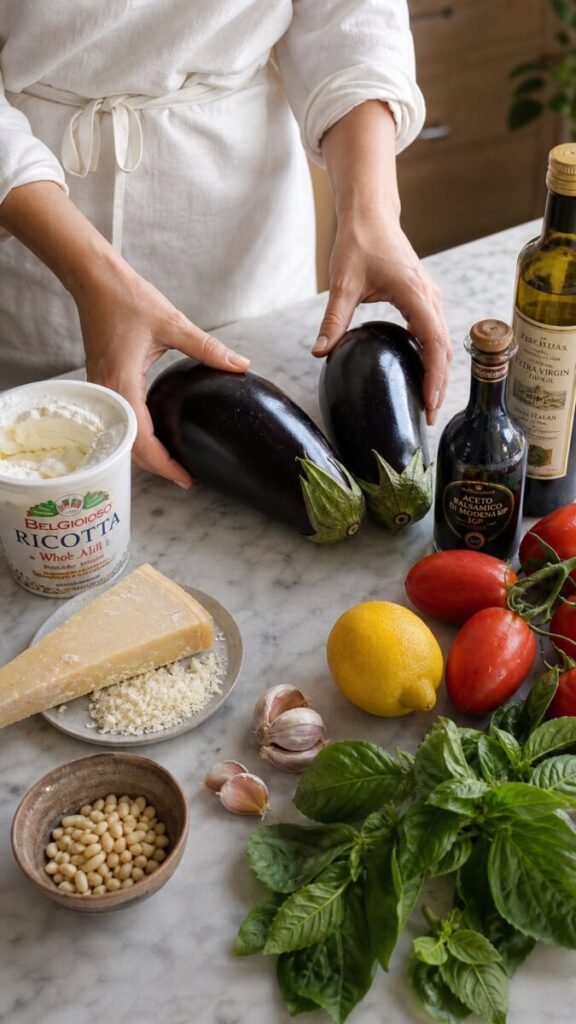
- Large eggplants: 2 (about 2 lbs) — even width matters more than beauty; you’re cutting 16 to 20 slices, 1/2 inch thick
- Olive oil: 1/3 cup, for brushing — plus more as needed; eggplant drinks it like it’s been in the desert
- Kosher salt and black pepper: generously, for drawing and seasoning
🧀 The Ricotta Filling
- Whole-milk ricotta: 15 oz, drained if watery — the cream layer
- Grated parmesan: 1/2 cup — salty depth; vegetarian-label if it matters at your table
- Egg yolk: 1 — sets the filling so towers slice cleanly
- Garlic: 1 clove, finely grated — one is plenty raw; this is a gentle dish
- Lemon: zest of 1/2 lemon — the brightness that keeps richness polite
- Fresh basil: 1/4 cup chopped, plus extra leaves for the tops
- Salt and black pepper: to taste
🍅 The Tomato Layer & Glaze
- Roma tomatoes: 3, sliced 1/2 inch thick, seeds and core removed — romas are meaty and roast without flooding
- Olive oil: 1 tablespoon, for the tomatoes
- Balsamic vinegar: 1/2 cup, plus honey or brown sugar: 1 teaspoon — simmered into a glaze
✨ The Finish
- Pine nuts: 3 tablespoons, toasted in a dry pan until golden — watch them closely; they go from raw to riot quickly
- Extra-virgin olive oil: a final drizzle
- Basil leaves and flaky salt: for the crowning touch
Step by Step How to Make
- Step 1 — Slice and salt the eggplant. Trim the eggplants and cut them into even 1/2-inch slices — a full 16 to 20 of them, choosing the widest, most uniformly sized ones for building (the odd ones become delicious snacks later; the chef’s tax applies). Lay the slices on paper towels and salt both sides generously. Let them sit 20 minutes while you prep everything else. You’ll see beads of moisture on the surface — that’s the salt pulling out bitterness and water. Blot the slices dry. This step is the difference between velvety roasted eggplant and soggy regret, and it only costs you patience you weren’t using anyway.
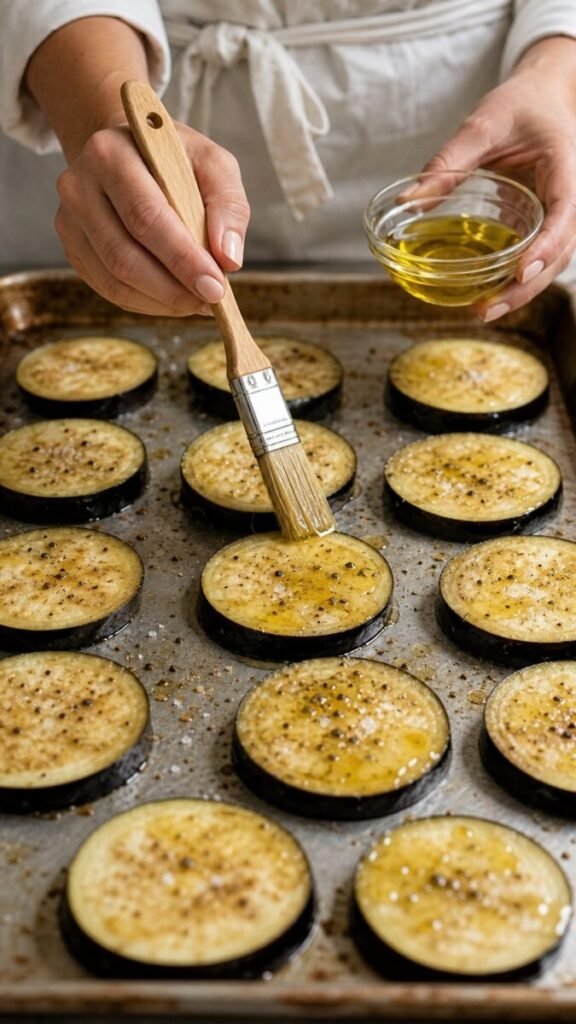
- Step 2 — Roast the vegetables. Preheat the oven to 425°F (220°C). Brush the eggplant slices with olive oil on both sides and lay them on a baking sheet; toss the tomato slices with a tablespoon of oil on a second sheet. Roast the eggplant 20 to 25 minutes and the tomatoes 15 to 20, flipping everything halfway, until the eggplant is deeply golden and tender and the tomatoes have slumped into jammy sweetness. Rotate the sheets if your oven has opinions about evenness.
- Step 3 — Whip the filling. While the vegetables roast, pulse the ricotta, parmesan, egg yolk, grated garlic, lemon zest, chopped basil, and a good grind of pepper in the food processor until smooth and fluffy (or stir it thoroughly in a bowl — same destination, slightly longer road). Taste and adjust the salt. The filling should taste bright, savory, and just rich enough to make you suspicious of how simple it was.
- Step 4 — Reduce the glaze. Simmer the balsamic vinegar with the honey in a small saucepan over medium heat for 8 to 10 minutes, until it coats a spoon and reduces by about half. It thickens more as it cools, so pull it when it’s still slightly runnier than you want. Toast the pine nuts in a dry pan in the last 3 minutes, shaking the pan — they’re done when they smell like cookies and are one shade darker. Do not leave them alone. Pine nuts hold grudges.
- Step 5 — Build the towers. Lower the oven to 375°F (190°C). Now the fun part: on a parchment-lined baking sheet, start each Napoleon with an eggplant slice, spread a layer of ricotta about 1/3 inch thick, add another eggplant slice, more ricotta, and a third eggplant slice — three layers of eggplant, two of filling, like a savory layer cake with a solid work ethic. Crown each tower with a roasted tomato slice and a light press to help it all bond.
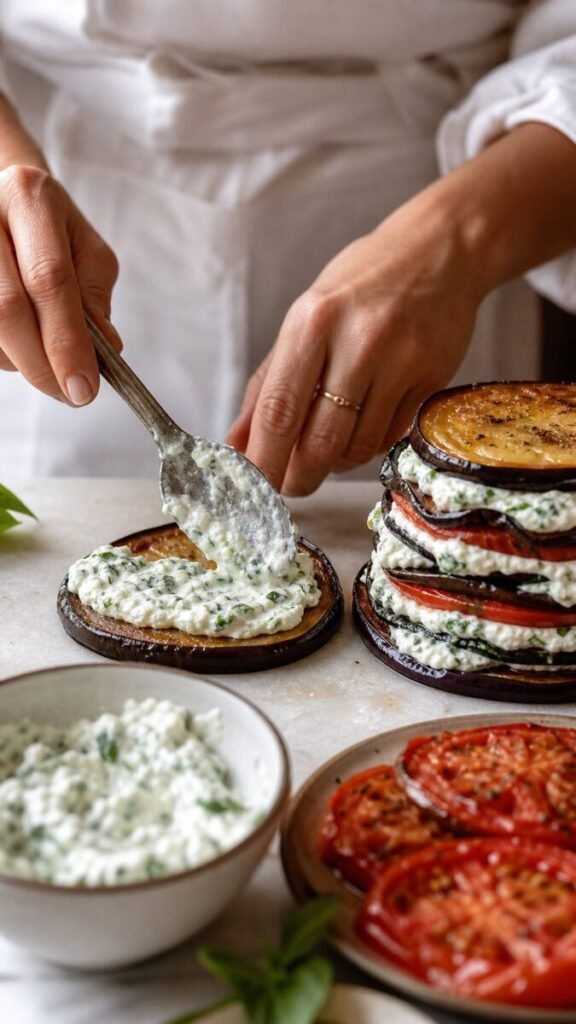
- Step 6 — Warm through. Bake the assembled towers 10 to 12 minutes — just enough to heat the filling through and let the layers settle into each other. You’re not cooking anything at this point; you’re introducing the layers to one another so they arrive at the table as a team.
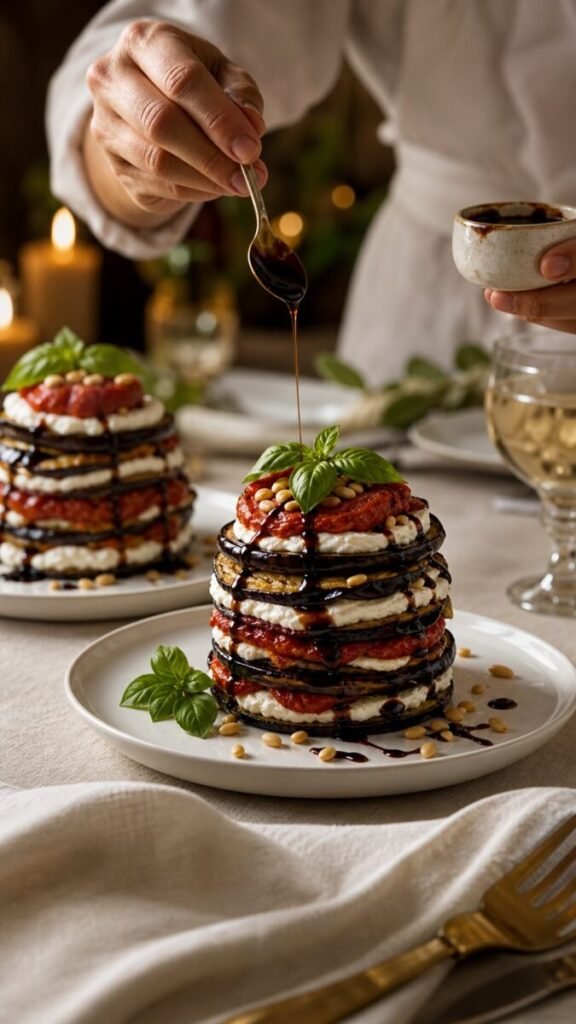
- Step 7 — Plate like a pro. Carefully lift each tower with a wide spatula onto individual plates. Drizzle the balsamic glaze over the top and around the plate (the “around the plate” is 90 percent of the restaurant look), scatter the toasted pine nuts, add a basil leaf or two up top, a thread of extra-virgin olive oil, and a pinch of flaky salt. Serve warm, and accept the applause. You’ve earned it, and the eggplant did most of the work anyway.
For a full Italian-restaurant evening, hand the meat eaters our Quick Chicken Piccata while the eggplant towers hold the vegetarian spotlight — same bright, lemony flavor family, one kitchen, zero complaints. Finish with tiramisu and the illusion is fully funded.
Stack Smarts
Salt, wait, blot. The twenty-minute salt break is the recipe’s quiet hero — it pulls water and bitterness out of the eggplant so the slices roast instead of steam. Skip it and you’ll get watery, rubbery layers that slide apart under their own glamour. Blot firmly afterward; the drier the slice, the sturdier the tower.
Even slices, even tower. Aim for a consistent 1/2 inch — too thin and the layers vanish into mush, too thick and they domino off the plate at first contact. A ruler for the first slice is not overkill; it’s commitment. After that, your eye is calibrated and dinner is impressed.
Ricotta texture check. If your ricotta seems loose or watery straight from the tub, drain it in a fine sieve for 15 minutes first. The egg yolk helps the filling set, but it can’t rescue a soup. Thick, whipped, basil-studded — that’s the goal.
Build on parchment, move once. Assemble the towers on the same parchment-lined sheet they’ll warm on, then move each one exactly once — to the plate. Every extra relocation is a structural risk, and towers, like secrets, weaken with each transfer.
Glaze patience pays. The balsamic needs to actually coat a spoon before it’s done — under-reduced, it runs off the plate and pools into a vinegar puddle; over-reduced, it goes sticky-bitter. Pull it when it’s one shade runnier than the finished look, and remember it thickens as it cools. Also, it’s intensely flavorful: a drizzle, not a downpour. The glaze should accent the tower, not drown it.
On the Plate Beside
These towers are rich and elegant, so keep the sides simple and crisp-edged. A pile of arugula with lemon and olive oil is the classic contrast — peppery greens against creamy ricotta is a restaurant move for good reason. Warm bread is nearly mandatory for the balsamic-mopping duties: our Crispy Olive Oil Focaccia was born for this exact assignment. For a bigger Italian table, start the meal with our Creamy Parmesan Tomato and Cannellini Bean Soup — same flavor family, completely different texture — and close it with no-bake Tiramisu Balls, because an Italian-themed dinner without dessert is just a long appetizer. The full trattoria, no reservation required.
Other Towers to Build
Grilled Summer Version — grill the eggplant slices instead of roasting them and use fresh tomato slices (salted and blotted) with a raw-garlic-free basil pesto layered in with the ricotta. Smoky, charred edges make the towers taste like August on a plate. This is the version for backyard dinner parties.
Baked Marinara Style — spoon a little marinara between the layers and under the towers, top each with mozzarella, and broil until bubbly. It drifts toward eggplant parmesan’s territory, which is excellent company to drift toward. See our Parmesan Tomato Soup for further evidence that tomato and parmesan never miss.
Vegan Cashew Towers — soak 1 1/2 cups of cashews in hot water for 30 minutes, then blend with lemon juice, nutritional yeast, garlic, salt, and basil into a thick “ricotta.” Every other step stays the same, and the towers stay just as tall and dramatically vegan.
Zucchini and Goat Cheese Twist — swap half the eggplant for thick grilled zucchini and mix a few ounces of soft goat cheese into the ricotta for a tangier filling. Zucchini holds less structure than eggplant, so keep those towers to two layers and let them lean on good looks.
Portobello Base Camp — start each tower with a roasted portobello cap instead of the bottom eggplant slice. It adds a meaty, juicy foundation and makes the whole thing heartier for big appetites — a nice bridge for tables straddling the vegetarian line.
Fine-Dining Figures
| Nutrient | Per Napoleon (1 of 4) |
|---|---|
| Calories | 385 kcal |
| Protein | 17 g |
| Carbohydrates | 24 g |
| Fats | 26 g |
Estimates for the towers as written, including the olive oil, glaze, and pine nuts. Seventeen grams of protein from ricotta, parmesan, and the egg yolk is genuinely dinner-worthy, and the fats here are the olive-oil-and-nuts kind — the Mediterranean diet’s favorite kind, and it shows in how satisfied one tower leaves you. Rich-tasting plates don’t have to be heavy plates. This one isn’t.
Leftover Layers
Honesty first: eggplant Napoleons are at their architectural best fresh from the oven — the moment of the drizzle, the clean fork-cut, the applause. Leftovers are still delicious, but they go from “tower” to “delicious collapse” overnight, which is a fine trade for a make-ahead lunch. Store them covered in the fridge for up to 2 days.
To reheat, 12 to 15 minutes at 350°F (175°C) warms them through and firms the layers back up a little — the oven, not the microwave, which tends to leave them softly weeping. A fresh drizzle of glaze and a new basil leaf on the rewarmed tower does impressive cosmetic work, and nobody needs to know it’s a second-day standing ovation.
My favorite leftover move, though, is deconstruction: warm the components separately and plate them as a layered “stack” in a shallow bowl, rustic-style — roasted eggplant, cold-ish ricotta, tomato, glaze, pine nuts. It eats like the world’s most elegant lunch salad, and it takes exactly zero architectural commitment. The recipe works twice; not every dish can say that.
When Towers Fall
Watery, sliding layers. The salt-and-blot step got skipped or rushed — that’s almost always it. Wet eggplant steams soft and lets everything slide. Next time: full 20 minutes of salting, firm blotting, and a hot oven. The tower will hold; the technique is proven.
Rubbery eggplant. Undercooked slices. Roasted properly, eggplant turns silky and melting; undercooked, it’s a pale, chewy argument. The slices should sag when lifted and show deep golden color. When in doubt, five more minutes — you cannot un-chew rubber, but the oven is very forgiving in the other direction.
Runny filling squeezing out. Ricotta that wasn’t drained, or too much filling per layer. Drain the ricotta if it’s loose, keep the layers about 1/3 inch thick, and press gently as you build — the tower should be compressed like a good sandwich, not loaded like a baked potato.
Bitter-tasting dish. Big, old eggplants can carry bitterness even after salting — choose firm, glossy, smaller-to-medium ones that feel light for their size. If bitterness has been an issue at your altitude of eggplant experience, peel strips of skin off in zebra stripes before slicing; most bitterness hides near the skin.
Burnt glaze or pine nuts. Both are two-minute items masquerading as background tasks. The glaze reduces quietly until it suddenly doesn’t, and pine nuts toast on their own schedule, which is “now.” Stay present for both. It’s the difference between a garnish and a cautionary tale.
Tower Talk
Why is it called a Napoleon?
From the pastry — the classic French napoleon (mille-feuille) is a stack of crisp layers built tall. The savory versions borrow the architecture: layered, plated vertically, dramatically drizzled. No actual emperor was involved, though if Napoleon had seen one of these towers, I feel confident he’d have claimed credit.
Can I make it ahead for a dinner party?
Yes, and it’s a great party strategy: roast the eggplant and tomatoes and make the filling and glaze up to a day ahead (refrigerate all of it). An hour before dinner, pull everything to room temperature, build the towers, and do the 12-minute warm-through right before serving. Your guests see only the stacking-and-drizzling finale, which is exactly the part worth watching.
Can I fry the eggplant instead of roasting?
You can — the classic route is a light flour-egg-breadcrumb fry, and it’s delicious in a state-fair-meets-trattoria way. But it adds oil, time, and a wobble in the tower’s structural integrity. Roasting gives you 90 percent of the flavor with 30 percent of the effort and none of the post-frying kitchen smell that lingers into the next day. I roast. My kitchen votes with me.
Is this dish gluten-free?
As written, yes — eggplant, ricotta, tomatoes, and the glaze are all naturally gluten-free, since the “pastry” role is played entirely by a vegetable. Just double-check your balsamic vinegar label if you’re cooking for someone strict, since a few cheap vinegars add caramel color with gluten traces. Otherwise, this is the rare elegant dinner that GF guests never have to ask about.
What do I do with the leftover eggplant ends and odd slices?
The scrappy slices that don’t make the architectural cut are the chef’s snack — hot from the oven with a pinch of salt, they vanish. Any leftovers beyond that fold beautifully into pasta with the extra ricotta, or top a flatbread with the roasted tomatoes. For more vegetable-forward dinners that use up the whole crisper drawer, browse our Mediterranean Quinoa Bowl — nothing elegant is wasted in that kitchen either.
Roasted Eggplant · Herbed Ricotta · Tomato · Balsamic
Eggplant Napoleon with Herbed Ricotta & Balsamic Glaze
Golden roasted eggplant layered with lemon-basil ricotta and topped with roasted tomatoes, balsamic glaze and toasted pine nuts. An elegant vegetarian main with creamy layers and no frying required.
Ingredients
As an Amazon Associate, we earn from qualifying purchases. Ingredient and equipment links below are affiliate links.
For the Eggplant Layers
- Large eggplants, sliced crosswise ½ inch thick 2, about 2 lb / 907 g total
- Olive oil, for brushing ⅓ cup, plus more if needed
- Kosher salt for salting the slices
- Black pepper to taste
For the Herbed Ricotta
- Whole-milk ricotta, drained if watery 15 oz / 425 g
- Vegetarian Parmesan-style cheese, grated ½ cup
- Large egg yolk 1
- Garlic, finely grated 1 clove
- Lemon zest from ½ lemon
- Fresh basil, chopped ¼ cup
- Salt and black pepper to taste, before adding yolk
For the Tomatoes and Glaze
- Roma tomatoes, cored, seeded and sliced ½ inch thick 3
- Olive oil, for the tomatoes 1 tbsp
- Balsamic vinegar ½ cup
- Honey or brown sugar 1 tsp
For the Finish
- Pine nuts 3 tbsp
- Extra-virgin olive oil a light finishing drizzle
- Basil leaves for garnish
- Flaky salt a small pinch, to taste
Equipment
- Rimmed baking sheets 2, plus another if needed
- Chef’s knife and cutting board for even slices
- Pastry brush for brushing oil
- Food processor or mixing bowl and fork for the filling
- Small saucepan for the glaze
- Small skillet for toasting pine nuts
- Offset spatula and wide turner for spreading and lifting
- Paper towels and parchment paper for blotting and lining
- Food thermometer for checking the filling
Four three-layer stacks require 12 similarly sized eggplant slices. The two eggplants may yield extra rounds; roast those separately if the trays would otherwise be crowded. Choose ricotta and Parmesan-style cheese made without animal rennet to keep the dish vegetarian.
How to Make It
- Slice, salt and blot Trim the eggplants and cut crosswise into even ½-inch rounds. Select 12 broad, similarly sized slices for the four stacks. Lightly salt both sides and leave on paper towels for 20 minutes. Blot away moisture and excess surface salt. Meanwhile, preheat the oven to 425°F (220°C) and prepare the remaining ingredients.
- Roast the vegetables Brush the eggplant with olive oil on both sides and season with pepper. Arrange in a single uncrowded layer on a rimmed baking sheet. Coat the tomato slices with 1 tablespoon oil and arrange on a separate sheet. Roast the eggplant for 20–25 minutes, flipping halfway, until golden and completely tender. Roast the tomatoes for 15–20 minutes until softened. Rotate trays as needed; handle the tomatoes gently so they keep their shape.
- Make and season the ricotta filling Pulse or stir the drained ricotta, vegetarian Parmesan-style cheese, garlic, lemon zest, chopped basil and pepper until creamy. Taste and adjust the salt before adding the egg yolk. Mix in the yolk thoroughly, then refrigerate until assembly. Do not taste the filling after the raw yolk has been added.
- Reduce the balsamic glaze In a small saucepan, gently simmer the balsamic vinegar with the honey or brown sugar for about 8–10 minutes, until reduced by roughly half and lightly coating a spoon. Remove from the heat while still pourable; it will thicken further as it cools.
- Toast the pine nuts Toast the pine nuts in a dry skillet over medium-low heat for about 2–3 minutes, stirring or shaking frequently, until lightly golden. Transfer immediately to a plate to stop cooking.
- Build four stacks Reduce the oven to 375°F (190°C). Line a baking sheet with parchment. For each stack, lay down one eggplant slice, spread with about a ⅓-inch layer of ricotta filling, add a second eggplant slice and another thin layer of filling, then finish with a third eggplant slice. Top with roasted tomato slices. Keep the layers level and avoid overfilling; do not force excess filling into the stacks.
- Bake until the egg filling is cooked Bake the assembled stacks, checking from 12 minutes, until the ricotta filling reaches at least 160°F (71°C) in the center. Insert the thermometer from the side into the filling. Allow additional time as needed, especially with chilled filling or thick stacks. This step cooks the raw egg yolk; it is not merely a brief warm-through.
- Plate and finish Let the stacks settle for a few minutes. Use a wide turner to transfer one to each plate. Drizzle lightly with balsamic glaze, scatter with toasted pine nuts and finish with basil leaves, a little extra-virgin olive oil and flaky salt to taste. Serve warm.
*Allow about 1 hour 10 minutes as a starting estimate. It assumes prep during the salt rest and glaze-making during roasting. Extra roasting batches, assembly time and baking the filling to 160°F (71°C) can extend the total. Use doneness rather than the original 10–12-minute final bake as the endpoint.
If filling remains after assembly, bake it separately in a small oven-safe dish until it reaches 160°F (71°C); do not serve the raw egg-containing mixture as a cold spread. Use parchment rated for the temperature at which it will be used.
Nutrition
| Nutrient | Source estimate per Napoleon (1 of 4) |
|---|---|
| Calories | 385 kcal |
| Protein | 17 g |
| Carbohydrates | 24 g |
| Fat | 26 g |
These figures come from the original recipe and have not been independently calculated. They may understate the full ingredient list, particularly the measured oils and cheeses. Actual values depend on how much oil, filling and glaze is used in the four stacks. Nutrition microdata is omitted pending verification.