

Fast Southern Satsuma Breakfast Gumbo
Down on the Gulf Coast, satsuma season is basically a holiday. Those little easy-peel citrus fruits show up by the crateful every winter — sweet, seedless, and small enough to eat three before anyone notices — and every kitchen from Louisiana to Alabama has its own way of celebrating them. This recipe is my favorite: a breakfast gumbo, rich with smoky andouille and a golden roux, brightened at the last minute with fresh satsuma juice, and crowned with a soft poached egg that breaks into the broth like a very delicious sunrise.
Now, before the gumbo elders raise an eyebrow — yes, this is a morning-friendly gumbo, not a four-hour dark-roux project. The roux here is a quick, peanut-butter-golden one, cooked in ten minutes instead of babysat for an hour, which keeps the flavor nutty and gentle instead of deep and brooding. That lighter base is exactly what makes room for the satsuma: its juice and zest wake the whole pot up, the way a squeeze of lemon wakes up a bowl of soup, and the little segments scattered on top pop sweet and cool against the savory broth. Add the egg, and you’ve got breakfast with a Southern accent and a serious case of confidence.
It sounds fancy. It is not. It’s one pot, about fifty minutes, and a bowl of grits or rice doing the heavy lifting underneath. Andouille does the smoky work, the holy trinity (onion, celery, bell pepper) does the aromatic work, and the satsuma does the thing that makes everyone at the table pause mid-spoon and say “wait — what IS that?” in the best possible way. That’s when you smile, sip your coffee, and accept your award.
A Gulf Coast Wake-Up Call
Why does citrus belong in gumbo? Because gumbo, for all its glory, is a deep, dark, savory dish — and deep savory dishes are exactly where a hit of acid and sweetness works like magic. Chefs finish rich soups and stews with vinegar, lemon, or lime all the time; satsuma juice plays the same role but brings that floral, honeyed mandarin character the Gulf Coast loves. The zest carries the aromatic oils, the juice lifts the broth, and the raw segments on top give you cool bursts of sweetness between spoonfuls of smoky andouille. Every bowl does a little sweet-savory dance, and nobody wants the song to end.
The breakfast part is handled by three quiet upgrades. First, the lighter roux — nutty and soft, closer to a morning mood than the coffee-brown classic. Second, the egg: a poached egg on gumbo might sound unusual until you remember that broth-poached eggs have been propping up breakfasts worldwide forever — the yolk melts into the broth and turns it silky. Third, the base: rice is classic, but a scoop of cheese grits under there is so Southern it should come with an accent. The result eats like gumbo and brunch had a very polite, very delicious agreement.
⏱️ 55 MIN | 🍊 CITRUS-BRIGHT | 🍳 EGG-TOPPED
- Prep Time: 15 minutes
- Cook Time: 40 minutes
- Total Time: 55 minutes
- Yield: 4 generous breakfast bowls
🍊 The Stovetop Crew for Southern Satsuma Breakfast Gumbo
Eight tools for a deep roux, poached eggs, bright citrus, and a very Southern morning.

Cooks Standard 6-Quart Stainless Steel Dutch Oven
A heavy pot or Dutch oven is the gumbo’s home; cast iron is traditional and wonderfully even-tempered for the long simmer.

Cuisinart Chef’s Classic 2-Quart Saucepan
A small saucepan poaches the eggs, or soft-boils them if poaching before coffee sounds like too much coordination.

Mr.Art Wood 17-Inch Handmade Wooden Cooking Spoon
A flat-edged wooden spoon or heatproof spatula is the roux’s dance partner for ten straight minutes of stirring.

OXO Good Grips 9-Inch Silicone Whisk
A whisk smooths the roux as the broth goes in and scrapes every bit of flour into service.

Microplane Premium Classic Zester Grater
A microplane grates satsuma zest into fine, fragrant snow; the zest does quiet, heroic work in the bowl.

OXO Good Grips Wooden Citrus Reamer
A citrus juicer squeezes the satsuma juice that brightens the whole pot in the last minutes.

Vollrath 6 oz Stainless Steel Ladle
A deep ladle serves the gumbo broth into bowls over rice, egg, and satsuma.

OXO Steel Slotted Cooking Spoon
A slotted spoon lifts poached eggs from the water like the treasures they are, letting the water drain away.
Ingredients (With Labels)
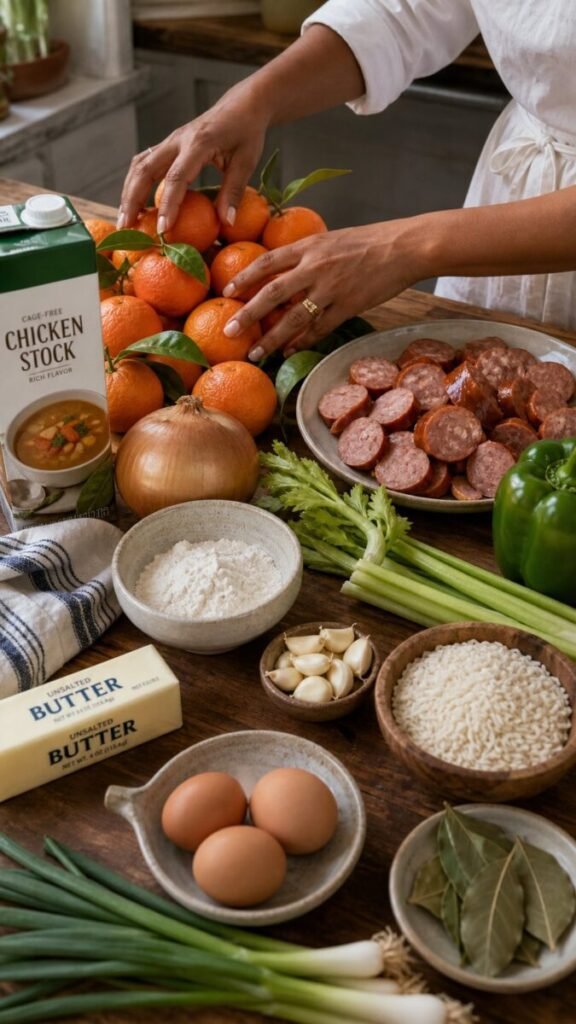
🍊 The Satsuma Side
- Satsumas: 4 — zest of 2, 1/3 cup juice (about 2 fruit), and 1 peeled and segmented for topping; clementines or mandarins pinch-hit beautifully off-season
🥘 The Gumbo Base
- Andouille sausage: 8 oz, halved lengthwise and sliced into half-moons — the smoky backbone; any smoked sausage works in a pinch
- Unsalted butter: 4 tablespoons — for the roux
- All-purpose flour: 1/3 cup — the thickener and the nutty flavor
- Yellow onion: 1 medium, diced
- Celery: 2 stalks, diced
- Green bell pepper: 1/2, diced — the holy trinity, assembled
- Garlic: 3 cloves, minced
- Chicken stock: 4 cups — low sodium, so the salt stays in your hands
- Bay leaf: 1, plus dried thyme: 1/2 teaspoon and cayenne: 1/4 teaspoon (a polite amount; gumbo people know their own tolerance)
- Salt and black pepper: to taste
🍳 The Breakfast Finish
- Large eggs: 4, cold from the fridge (they poach better that way)
- Cooked white rice or cheese grits: about 2 cups, warm — grits are the deep-South move, and nobody’s ever regretted them
- Sliced green onions and Louisiana-style hot sauce: for the table — the hot sauce is less a suggestion and more a family member
Step by Step How to Make
- Step 1 — Brown the andouille. Put your heavy pot over medium heat, add the sliced andouille dry — no oil needed — and let it sizzle and brown for 5 to 6 minutes, stirring now and then, until the edges crisp and the pot smells like a Louisiana morning. Scoop the sausage out and set it aside, leaving every drop of that rendered fat in the pot. That fat is flavor equity, and we’re about to invest it.
- Step 2 — Make the roux. Add the butter to the pot and let it melt into the andouille fat, then sprinkle in the flour and stir constantly with your flat spoon. Keep stirring — slowly, steadily, scraping the whole bottom of the pot — for 8 to 10 minutes, until the roux turns a smooth peanut-butter gold and smells toasty. Do not walk away. Do not check your phone. A roux requires the kind of attention usually reserved for newborns and the last five minutes of a close game.
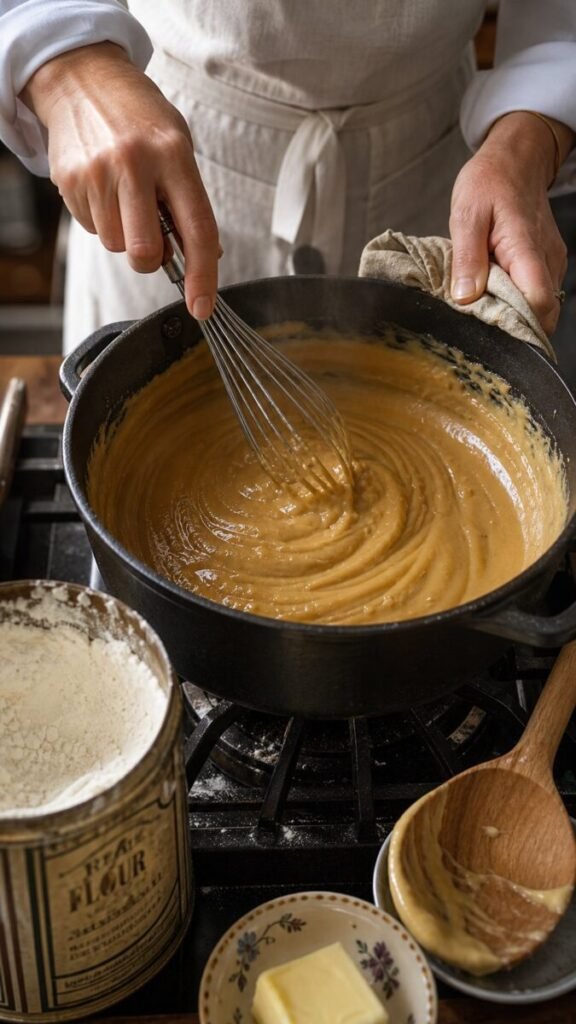
- Step 3 — Stir in the trinity. The moment the roux hits the right color, add the onion, celery, and bell pepper straight into it. This does two jobs: it stops the roux from darkening further and it coats the vegetables in all that toasted flavor. Stir 3 to 4 minutes until the vegetables soften, then add the garlic and stir one minute more.
- Step 4 — Build the broth. Pour in the chicken stock a cup at a time, stirring well after each addition so the roux melts smoothly into the liquid instead of clumping. Add the bay leaf, thyme, cayenne, and the reserved andouille, and let everything simmer gently for 20 minutes, stirring occasionally, until the broth is slightly thickened and deeply savory. Taste and season with salt and pepper — satsumas and stock vary, so let your tongue drive.
- Step 5 — Brighten with satsuma. Drop the heat to low. Stir in the satsuma zest and juice, then let the pot sit for two minutes — hot, but not boiling — so the citrus keeps its bright, fresh edge instead of cooking down to a whisper. This is the moment the gumbo stops being gumbo and starts being breakfast: the broth suddenly smells floral and alive, and you’ll understand the whole point of the recipe in one inhale.
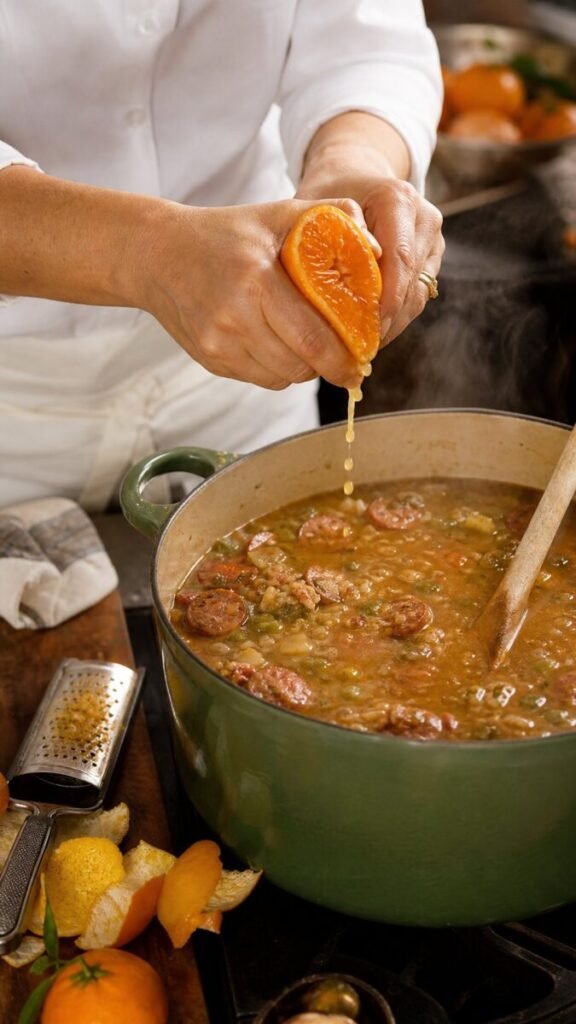
- Step 6 — Top with egg and serve. While the broth rests, poach the eggs: bring a saucepan of water to a bare simmer, swirl it gently, slip in the cold eggs, and cook 3 minutes for molten yolks (or soft-boil for 6 1/2 minutes if you prefer calmer waters). Fill each bowl with warm rice or grits, ladle the gumbo over, and crown with an egg, a few satsuma segments, and a scatter of green onions. Hot sauce goes on the table, not the counter. Trust me on this one.

No Southern breakfast spread is complete without the support staff — warm, flaky Buttermilk Biscuits belong beside this gumbo the way morning belongs beside coffee. Torn, buttered, and used to chase every last drop of broth around the bowl: that’s not a side, that’s a civic duty.
Roux Rules
Color is flavor. A peanut-butter roux gives you nutty and gentle — exactly right for morning. If you push it toward chocolate brown (the classic dinner-gumbo target), the satsuma brightness will get swallowed. Watch the color like it owes you money, and pull it the moment it looks like peanut butter.
Never walk away from a roux. Roux goes from perfect to burnt in a surprisingly short window, and burnt roux tastes like bitter regret — there’s no fixing it, only starting over. Ten minutes of stirring is the recipe’s only real labor. Consider it your morning arm workout; skip the gym, make gumbo.
Cold stock, warm patience. Add the stock gradually, stirring between pours, and the roux will dissolve smoothly every time. Dump it all at once and you’ll be fishing for lumps like it’s a pond. The slow pour takes ninety extra seconds and saves the whole pot.
Citrus goes in last and low. Satsuma juice is volatile — boil it hard and the bright floral notes fade into something flat and vaguely marmalade-ish. Stir it in at the end, off a hard boil, and it keeps its sparkle. The zest is even more delicate; it goes in at the very same moment.
The egg is negotiable; the yolk isn’t. However you cook your eggs — poached, soft-boiled, even fried with crispy lace edges — make sure the yolk stays runny. That molten yolk enriches the broth as it breaks, and it’s half the breakfast argument of the dish. A hard yolk in this bowl is a missed curtain call.
The Southern Table
With biscuits on duty, round out the table with something green and something fresh. Garlicky greens are the classic counterpoint — our Easy Garlic Bok Choy Stir Fry isn’t Southern, but it plays the same bright, green note against the rich broth. For a bigger brunch crowd, start with a pot of our Hearty White Bean Soup as a first course and call it a soup-and-gumbo morning. And if you want a crunchy, crowd-pleasing appetizer while the roux gets stirred, a plate of Crispy Rice Paper Crab Rangoons disappears fast enough to buy you extra cooking time. For the rice-lovers at the table who want seconds in a different format, our Sticky Chicken Rice Bowls are the next-day dinner answer.
Coastal Riffs
Shrimp Boat Version — add a half pound of peeled shrimp to the pot for the final 4 minutes of simmering, before the citrus goes in. Gulf shrimp and satsuma are neighbors for a reason, and this version is pure coastal Louisiana.
Cheese Grits Base — swap the rice for stone-ground cheese grits and you’ve crossed fully into shrimp-and-grits territory, egg on top. This is the version I make when I want brunch guests to applaud, and they do, because grits.
Dark and Smoky Dinner Edition — take the roux to a deep mahogany (add another 10 patient minutes), skip the egg, and serve it for dinner with extra hot sauce. Same recipe, evening formalwear. Gumbo at breakfast, gumbo at dinner — the pot doesn’t care what the clock says.
Turkey Andouille, Lighter Morning — turkey andouille keeps all the smoke with less heaviness, and the satsuma does its usual heroic job of making everything taste intentional. Nobody will call this the diet version; they’ll call it the good version.
Mandarin Pantry Rescue — no satsumas in the crate? Clementines, mandarins, or even a good navel orange split the difference. The dish wants that sweet-tart citrus lift, and it isn’t fussy about the passport.
The Morning Count
| Nutrient | Per Bowl (1 of 4, with rice) |
|---|---|
| Calories | 420 kcal |
| Protein | 20 g |
| Carbohydrates | 30 g |
| Fats | 25 g |
Estimates for the gumbo as written with andouille, one egg, and a scoop of rice (grits and cheese grits will nudge the numbers up, worthily). Twenty grams of protein before nine in the morning is a strong opening, the satsumas bring vitamin C to a breakfast bowl that usually never sees fruit, and the whole thing is sturdy enough to power a Saturday’s worth of errands or a slow porch morning. Both count as balanced.
Gumbo Tomorrow
Here’s a delicious secret: gumbo might be the best leftover in the Southern playbook. The flavors deepen overnight as the smoke, thyme, and stock get better acquainted, and day-two gumbo is a genuine Southern love language. Store it covered in the fridge for up to 3 days — broth only, no eggs or rice in the container — and reheat gently on the stove until steaming.
The fixings are where day-two gumbo shines: poach or soft-boil fresh eggs, warm fresh rice or grits, and cut fresh satsuma segments each time you serve it. The fresh components take ten minutes and make a reheated bowl taste like it was made that morning, because technically, the best parts of it were.
Freezing works well too — again, broth and sausage only. Cool it fully, freeze airtight for up to 3 months, thaw overnight in the fridge, and reheat low and slow with a fresh squeeze of satsuma to bring the brightness back from the cold. Eggs and citrus, always fresh; the gumbo itself travels through time like a champ.
Gumbo Griefs
Burnt roux. The classic heartbreak. If you smell acrid, bitter toast, the roux is gone — there’s no rescue, only a clean pot and a fresh start. Lower the heat, keep stirring, and remember: dark flecks that appear early are usually flour scorching on the pot walls. Scrape them in or wipe them out before they spread the bitterness.
Lumpy broth. Stock added too fast. The fix is patience in the moment — add it cup by cup, stirring each pour smooth — or the save: whisk the simmering broth firmly and the roux lumps usually surrender. A few minutes of whisking diplomacy has rescued many a gumbo.
Thin, watery gumbo. The roux either didn’t cook long enough to thicken or the simmer was too shy. Let the pot bubble gently, uncovered, for another 5 to 10 minutes and watch it tighten up. Gumbo should coat a spoon like it’s proud of itself — anywhere from hearty soup to thin gravy is legitimate, but it should never be broth wearing a costume.
Flat, one-note broth. Usually under-salted or missing acid — and this recipe’s acid arrives with the satsuma. Taste after the citrus goes in: if it still seems shy, add more juice a tablespoon at a time. Juice, salt, juice, salt — that’s the seasoning waltz, and it ends when the broth makes you make a small happy noise.
Rubbery or shredded eggs. Eggs poached in a rolling boil turn into ragged ghosts. Bare simmer, three minutes, and a gentle swirl to keep the whites tidy — or skip the drama entirely with soft-boiled eggs, which are poached in their own private shells like tiny dignitaries.
Gumbo Questions
What exactly is a satsuma?
A small, seedless citrus that’s extra easy to peel — basically nature’s most considerate fruit — with a sweet, floral flavor somewhere between a clementine and a mandarin. Named for Satsuma, Japan, but grown abundantly along the Gulf Coast, where the winters are mild and the satsuma crates pile up in kitchens from November through January. If your store labels them “mandarins” or “clementines,” close enough — the recipe just wants that sweet-tart juice.
Can I make this without a roux?
You can shortcut it — brown the andouille, soften the trinity, dust the vegetables with the flour, and whisk in the stock — and you’ll get a respectable soup. But you’ll miss the nutty depth that makes it gumbo. Ten minutes of stirring is the toll the roux charges, and the flavor it buys is worth every circle of the spoon.
Is this an authentic gumbo?
It’s a respectful morning variation, not a church-fair classic — gumbo tradition runs deep, and dark-roux versions are the historic center of it. Think of this as gumbo’s cheerful breakfast cousin: same technique, same trinity, same andouille soul, wearing citrus and carrying an egg. The dark-roux dinner version is in the variations above for when the purists come over.
Can I make it ahead for a brunch crowd?
Gumbo base, yes — up to three days ahead, and it genuinely improves. Brown the sausage, build the broth, refrigerate. On brunch morning, reheat the pot gently while you poach eggs, warm rice or grits, segment a fresh satsuma, and stir in the zest and juice at the end. Your guests get made-that-morning flavor while you operate with suspicious calm.
What do I do with leftover rice?
If you cooked a big batch and have extra, our Cabbage Fried Rice is the classic next-day move — cold rice is actually better for fried rice, so yesterday’s side becomes tomorrow’s dinner with zero waste and maximum applause.
Satsuma · Andouille · Golden Roux · Poached Eggs
Satsuma Breakfast Gumbo with Andouille & Eggs
A Gulf Coast-inspired breakfast gumbo with smoky andouille, a golden roux and the classic onion, celery and bell pepper base. Fresh satsuma juice and zest brighten the broth, served over warm rice or grits with a poached egg.
Ingredients
As an Amazon Associate, we earn from qualifying purchases. Ingredient and equipment links below are affiliate links.
For the Satsuma Finish
- Satsumas, washed before zesting about 4: zest of 2, ⅓ cup juice, 1 segmented
Zest before juicing. Use as many fruit as needed to measure ⅓ cup juice, and reserve one peeled fruit for the topping; any unused fruit is extra.
For the Gumbo Base
- Fully cooked smoked andouille, halved lengthwise and sliced 8 oz / 227 g
- Unsalted butter 4 tbsp
- All-purpose flour ⅓ cup
- Yellow onion, diced 1 medium
- Celery, diced 2 stalks
- Green bell pepper, diced ½ pepper
- Garlic, minced 3 cloves
- Low-sodium chicken stock 4 cups
- Bay leaf 1
- Dried thyme ½ tsp
- Cayenne pepper ¼ tsp
- Salt to taste
- Black pepper to taste
For the Breakfast Finish
- Large eggs, chilled; pasteurized for soft yolks 4
- White rice or cheese grits, cooked and warm 2 cups cooked
- Green onions, sliced for garnish
- Louisiana-style hot sauce to taste
Equipment
- Heavy pot or Dutch oven for the gumbo
- Saucepan for poaching eggs
- Flat-edged wooden spoon or heatproof spatula for the roux
- Whisk for adding stock
- Fine zester and citrus juicer for the satsumas
- Ladle and slotted spoon for serving and lifting eggs
How to Make It
- Prepare the citrus and base Finely zest 2 washed satsumas, avoiding the white pith. Juice enough fruit to measure ⅓ cup and peel and segment 1 fruit for topping. Set aside separately. Have 2 cups cooked rice or grits ready, or prepare them alongside the gumbo.
- Brown the andouille Heat a heavy pot over medium heat. Add the sliced, fully cooked andouille and brown for 5–6 minutes, stirring occasionally. Transfer to a plate, leaving the rendered fat in the pot.
- Make a golden roux Add the butter and let it melt. Stir in the flour and cook over medium-low to medium heat, stirring constantly and scraping the bottom and corners, until peanut-butter golden and nutty-smelling, about 8–10 minutes. Adjust the heat as needed; color matters more than the clock. If the roux develops burnt flecks or an acrid smell, discard it, clean the pot and start again.
- Soften the vegetables Carefully stir in the onion, celery and bell pepper; the hot roux may steam and sputter. Cook for 3–4 minutes until the vegetables begin to soften, stirring frequently. Add the garlic and cook for 1 minute more.
- Add the stock and simmer Gradually add the chicken stock, whisking the first additions smooth before pouring in more. Add the bay leaf, thyme, cayenne and browned andouille. Bring to a gentle simmer and cook uncovered for 20 minutes, stirring occasionally, until lightly thickened.
- Poach the eggs Near the end of simmering, bring a saucepan of water to a bare simmer. Crack each egg into a small cup, then gently slide it into the water. Poach without crowding, in batches if needed. For pasteurized eggs with soft yolks, begin checking at 3 minutes and cook until the whites are set. Otherwise cook until both whites and yolks are firm. Lift out with a slotted spoon and drain.
- Finish with satsuma Remove and discard the bay leaf. Reduce the heat to low and stir in the satsuma zest and ⅓ cup juice. Warm gently for 2 minutes without boiling hard. Taste and adjust with salt and black pepper.
- Build the breakfast bowls Divide the warm rice or grits among four bowls, about ½ cup each. Ladle the gumbo over the base and top each bowl with an egg, satsuma segments and sliced green onions. Serve immediately with hot sauce at the table.
*Timing assumes the eggs are poached during the simmer and the rice or grits are already cooked or prepared concurrently. Heating the stock, cooking egg batches or taking the roux slowly can extend the total time.
Soft or runny eggs carry a foodborne-illness risk. Use pasteurized shell eggs if serving soft yolks. For pregnant people, young children, older adults and anyone with a weakened immune system, cook both whites and yolks firm.
Nutrition
| Nutrient | Per 1 bowl with rice and egg (4 total) |
|---|---|
| Calories | 420 kcal |
| Protein | 20 g |
| Carbohydrates | 30 g |
| Fat | 25 g |
Estimates supplied with the original recipe, not independently calculated. Actual values vary with sausage brand, fruit size and portion size. Using cheese grits instead of rice changes the nutrition.