
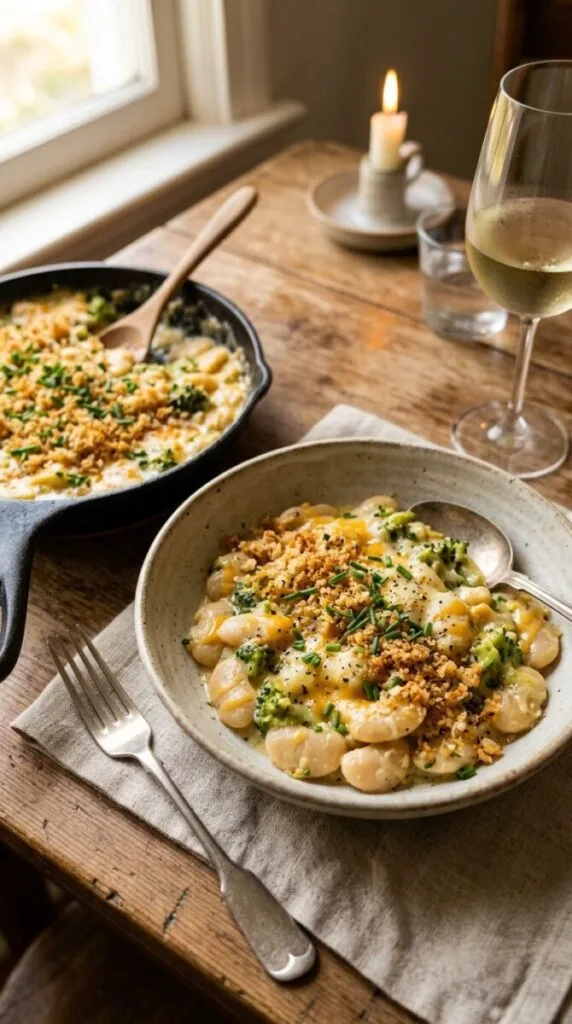
Broccoli-Cheddar Butter Beans Recipe
These Broccoli-Cheddar Butter Beans are the 25-minute skillet dinner that turns two of the most beloved comfort food flavours — broccoli cheddar soup and creamy butter beans — into a single pan meal that is simultaneously the most satisfying vegetarian weeknight dinner and the recipe most likely to make anyone who tries it immediately want to make it again.
The concept is simple: large, creamy butter beans braised in a garlic-and-mustard broth, finished with a generous amount of sharp cheddar stirred in off the heat to produce a thick, glossy cheese sauce that coats every bean, with broccoli florets blanched to bright green and tender and folded through at the end so they keep their colour and their slight crunch. The result tastes like a broccoli cheddar soup that decided to be something more substantial — protein-dense, deeply satisfying, and genuinely complete as a dinner rather than just a side dish or a starter.
Why Butter Beans Specifically
Butter beans — also called lima beans in their mature, dried and canned form — are significantly larger than most white beans and have a creamy, almost buttery interior that absorbs surrounding sauces without losing their structural integrity. In a braise with cheese sauce, this means each bean becomes coated in the cheddar and mustard sauce while remaining distinct and toothsome — providing a texture contrast between the creamy sauce and the slightly firm bean that smaller white beans can’t provide at the same scale.
Canned butter beans are fully cooked and ready to braise — they need only 5 to 8 minutes of simmering to warm through and absorb the surrounding broth before the cheese goes in.
- Prep Time: 10 minutes
- Cook Time: 15 minutes
- Total Time: 25 minutes
- Yield: 4 servings
🍽️ Equipment I Need
This one is comfort food with almost no effort — creamy butter beans, tender broccoli, and a blanket of melted sharp cheddar. It comes together in a single oven-safe skillet, so cleanup is quick. Here’s the gear that makes it easy:
- Box Grater — the single biggest upgrade you can make to this recipe. The OXO Good Grips 4-Sided Box Grater lets you shred a block of sharp cheddar fresh, and fresh cheese melts into a far creamier, glossier sauce than the pre-shredded bagged kind (which is coated in starch and turns grainy). The detachable container catches and measures the shreds with zero mess.
- 12-Inch Oven-Safe Skillet — your one-pan workhorse. The Cuisinart Chef’s Classic Nonstick Hard-Anodized 12-Inch Skillet is wide enough to hold the broccoli and beans in a single layer, and it’s oven-safe up to 500°F so you can go straight from the stovetop to the broiler to get that bubbling, golden cheese top. The nonstick surface means the creamy sauce releases cleanly instead of sticking.
- Stainless Colander — rinse and drain, done right. The OXO Good Grips 5-Quart Stainless Steel Colander gives you plenty of room to rinse canned butter beans and drain the broccoli after blanching, with raised feet that stay stable in the sink.
- 8-Inch Chef’s Knife — for cutting broccoli into even, bite-size florets that cook through at the same rate. The Victorinox Fibrox Pro 8-Inch Chef’s Knife also makes quick work of dicing onion and mincing garlic for the base of the dish.
- Large Cutting Board — this extra-large 17.6-inch bamboo cutting board gives you space to break down a whole head of broccoli and chop your aromatics without crowding, and the juice groove keeps the counter tidy.
- Measuring Cups & Spoons — for getting the sauce proportions right. The OXO Good Grips Stainless Steel Measuring Cups measure the broth or cream, while the matching measuring spoons keep the spices, mustard, and salt balanced. Etched markings and magnetic handles keep the set organized.
- Silicone Spatula Set — the right tool for stirring without smashing. The OXO Good Grips 3-Piece Silicone Spatula Set folds the beans and broccoli into the sauce gently instead of crushing them, then scrapes every bit of that cheddar sauce out of the pan. Heat-resistant and safe for your nonstick skillet.
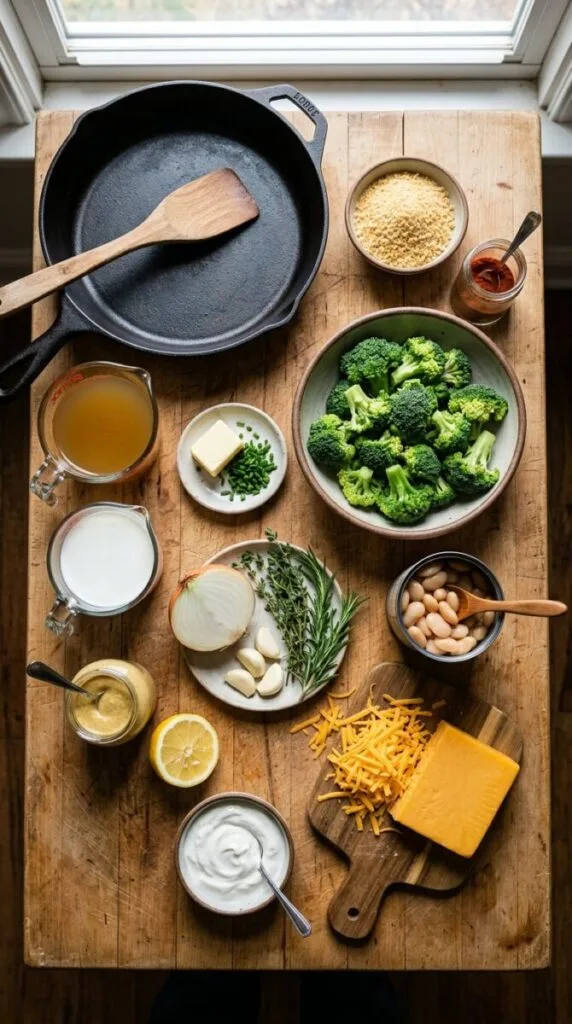
What You Need
- Olive oil or butter: 2 tablespoons
- Yellow onion, finely diced: 1 medium
- Garlic cloves, minced: 5
- Red pepper flakes: 1/4 teaspoon
- Dijon mustard: 1 tablespoon — the mustard does two things: it adds a sharp, slightly tangy edge that makes the cheddar flavour taste brighter, and it acts as an emulsifier that helps the melted cheese incorporate smoothly into the broth rather than clumping
- Vegetable broth: 3/4 cup (180ml)
- Heavy cream: 1/4 cup (60ml)
- Canned butter beans, drained and rinsed: 2 cans (15 oz / 425g each)
- Worcestershire sauce: 1 teaspoon (use soy sauce for vegan)
- Fine sea salt: 1/2 teaspoon
- Black pepper: 1/2 teaspoon
- Broccoli, cut into small florets: 3 cups (approximately 1 medium head)
- Sharp cheddar cheese, freshly shredded: 1 1/2 cups (150g) — freshly shredded from a block; pre-shredded contains anti-caking agents that prevent smooth melting and produce a grainy rather than glossy sauce
- Lemon juice: 1 tablespoon
- Fresh chives or parsley: 2 tablespoons, finely chopped
For serving:
- Crusty bread or sourdough for dipping
- Extra sharp cheddar for grating over
- Hot sauce
How to Make It
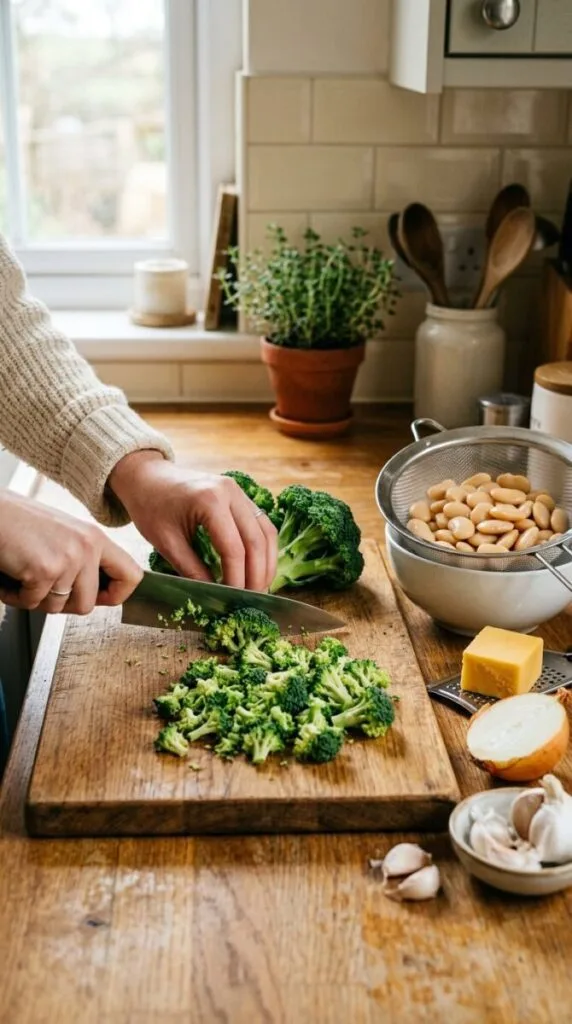
- Blanch the broccoli first: bring a pot of well-salted water to a boil. Add the broccoli florets and cook for 2 minutes exactly — 2 minutes produces bright green, slightly tender broccoli that holds its colour through the final folding; longer and the broccoli turns drab and mushy. Drain immediately and transfer to a bowl of ice water (or run under cold water) to stop the cooking and lock the colour. Set aside.
- Heat the olive oil or butter in a large, wide skillet over medium heat. Add the onion and cook for 5 to 6 minutes until softened and translucent.
- Add the garlic and red pepper flakes and cook for 60 seconds until fragrant.
- Add the Dijon mustard and stir for 30 seconds — cooking the mustard briefly mellows its sharpest raw edge while preserving the flavour and emulsifying property.
- Add the vegetable broth, heavy cream, Worcestershire sauce, salt, and pepper. Stir to combine and bring to a gentle simmer.
- Add the drained butter beans and simmer for 5 to 7 minutes, stirring gently occasionally, until the beans have absorbed some of the broth and the liquid has reduced slightly to a saucy consistency. The broth should look thick enough to coat the back of a spoon — if it seems thin, simmer for 2 more minutes uncovered.
- Remove the skillet from heat — the cheese must go in off the heat to melt smoothly rather than breaking into an oily, grainy mess. Add the shredded cheddar in three additions, stirring vigorously between each addition until fully melted before adding the next. Adding cheese in stages allows each addition to incorporate into the surrounding liquid before the next is added, producing a glossy, cohesive sauce rather than separated cheese.
- Stir in the lemon juice.
- Fold in the blanched broccoli gently — fold rather than stir to keep the florets intact. The residual heat from the beans and sauce will finish warming the broccoli through without cooking it further.
- Taste and adjust seasoning. Scatter the fresh chives or parsley over the top and serve immediately, directly from the skillet, with crusty bread for the sauce.
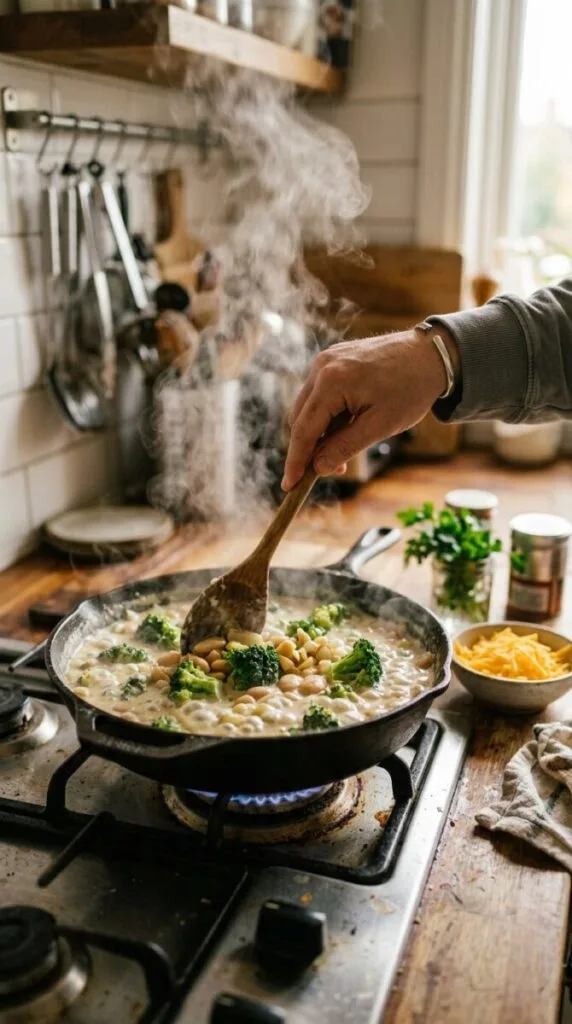
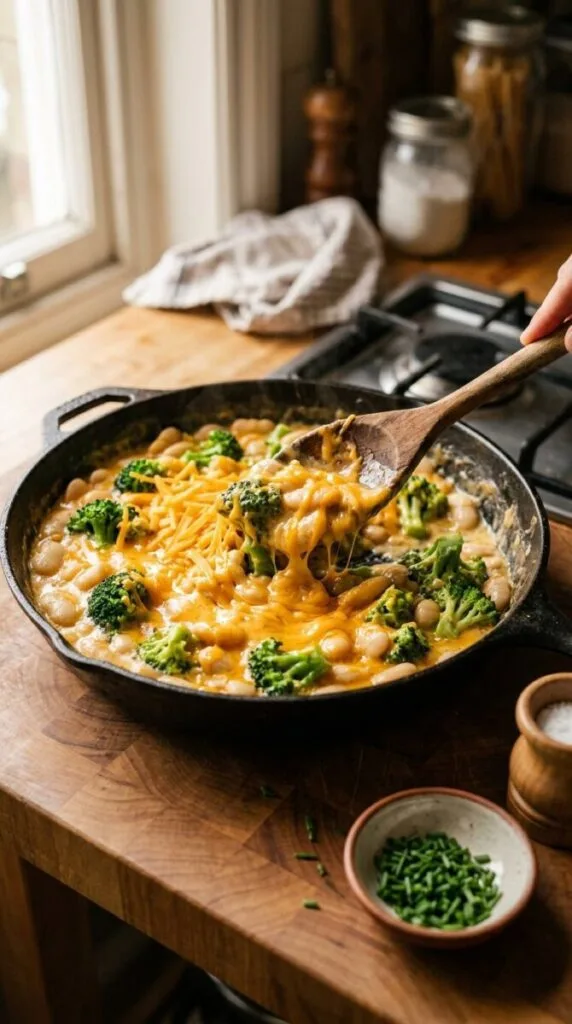
Broccoli-cheddar butter beans and our Focaccia Bread is the combination that makes this dish complete — the olive oil and herb focaccia is specifically designed for the kind of thick, glossy sauce that pools in the skillet, and tearing it into the cheesy broth is the entire point of serving bread alongside this recipe.
The Off-Heat Cheese, Staged Addition, and Dijon-as-Emulsifier Details
Removing the pan from heat before adding the cheese is the single most important technique step — cheese added to actively simmering liquid separates almost immediately because the high temperature causes the fat in the cheese to break free of the protein matrix and pool separately, producing an oily, grainy sauce rather than the glossy, cohesive one the recipe should produce. Off the heat, the residual warmth is sufficient to melt the cheddar without the temperature being high enough to break the emulsion.
Adding the cheddar in three staged additions rather than all at once allows each addition to fully incorporate before the next creates additional fat that needs to emulsify — a single large dump of cheese into the broth overwhelms the liquid’s capacity to incorporate it gradually and produces a broken sauce. Three small additions, with vigorous stirring until each is completely melted, is the method that produces a smooth, glossy result from the same quantity of cheese.
Dijon mustard as an emulsifier is the specific ingredient that stabilises the cheese sauce beyond what the cream and broth alone could manage — mustard contains mucilage, a water-soluble polymer that helps bind fat and water together in the same way that egg lecithin does in a mayonnaise. According to Serious Eats, mustard’s emulsifying properties are potent enough that a tablespoon can stabilise several times its weight in fat-water mixtures — which is why cheese sauces made with Dijon are significantly more stable than those made without, and why the mustard is specified in the recipe rather than being optional.
What to Serve Alongside
Crusty bread is the primary accompaniment — essential, not optional. The cheese sauce that coats the beans is the most scoopable, dippable element in the recipe and bread is the correct vehicle for it.
Over steamed rice or farro as a grain bowl for a more substantial dinner — the broccoli-cheddar butter beans become a saucy topping that turns a simple grain into a complete, protein-rich meal. Our Veggie Rice Bake is the rice direction that connects most naturally to this recipe — both are cheesy, vegetable-forward one-dish dinners in the same comfort food category, and making both in the same week covers the same flavour direction from two entirely different formats.
Variations That Expand This Recipe’s Range
Marry Me Butter Beans — the viral butter bean format that inspired a thousand Pinterest pins: instead of broccoli and cheddar, add 1/2 cup of drained, oil-packed sun-dried tomatoes, 1/2 cup of chicken or vegetable broth, 1/4 cup of heavy cream, 1 teaspoon of Italian seasoning, and finish with fresh basil and Parmesan rather than cheddar. The Marry Me butter beans are richer, more Italian-herb forward, and more dramatically sauced than the broccoli-cheddar version — a different direction from the same technique and the most searched butter bean variation on Pinterest by a significant margin.
Creamy Butter Beans (base version) — the broccoli-cheddar recipe without the broccoli or cheddar: butter beans braised in garlic-mustard broth and finished with cream and a small amount of Parmesan. Serve over toast with a fried egg on top. This is the most minimal, most elegant version — a 15-minute dinner that tastes like it came from a European café.
Vegan Butter Beans — replace the heavy cream with full-fat coconut cream, the cheddar with 3/4 cup of nutritional yeast + 2 tablespoons of cashew cream, the Worcestershire with soy sauce, and the butter with olive oil. The vegan version has a slightly different flavour character from the dairy version — the coconut cream adds a faint sweetness and the nutritional yeast provides a cheesy, umami depth — but is genuinely creamy, satisfying, and plant-complete.
Spicy Harissa Butter Beans — replace the Dijon with 2 tablespoons of harissa paste, omit the cheddar and cream, and instead finish with a drizzle of olive oil and a squeeze of lemon. Use chickpeas or a mix of chickpeas and butter beans for textural variation. Add baby spinach at the end to wilt. The harissa version is the most North African-inspired direction and works well with feta crumbled over at serving and flatbread alongside — a completely different flavour profile from the same butter bean base.
Canned Butter Beans (weeknight pantry version) — this is the base recipe exactly as written, named for the search term. Two cans of butter beans, pantry aromatics, a handful of broccoli from the freezer if fresh isn’t available, and whatever sharp cheddar is in the cheese drawer. The most accessible, most practical version of the recipe that requires nothing beyond pantry staples and produces dinner in under 25 minutes.
Nutritional Information
| Nutrient | Amount Per Serving (based on 4 servings) |
|---|---|
| Calories | 420 kcal |
| Protein | 22 g |
| Carbohydrates | 38 g |
| Fats | 20 g |
These values are estimates for the full recipe divided by 4 servings without bread. The 22-gram protein count comes from the combination of butter beans (approximately 14 grams per serving) and cheddar cheese (approximately 8 grams per serving) — a high-protein vegetarian dinner from a 25-minute skillet recipe. The vegan version with nutritional yeast and coconut cream reduces to approximately 340 calories and 16 grams of protein per serving.
Storing and Reheating
Store covered in the fridge for up to 3 days — the beans continue absorbing the cheese sauce during storage and the day-two version is thicker and more cohesive than the freshly made dish. The broccoli softens slightly from the residual heat of the sauce during storage but remains pleasant and green rather than drab.
Reheat on the stovetop over medium-low heat with 2 to 3 tablespoons of vegetable broth or water stirred in — the broth restores the loose, saucy consistency that thickens considerably during refrigeration. Do not reheat on high heat; the cheese in the sauce will break and the glossy emulsion will separate into greasy pools on the surface. Low and slow, with the added liquid, restores the original texture faithfully.
The microwave works at 50 percent power in 60-second intervals with a splash of water stirred in between each — the lower power level prevents the cheese from overheating and breaking. At full power the cheese in the sauce separates immediately.
Mistakes That Produce Grainy or Broken Cheese Sauce
Adding cheese to the skillet while it is still on the heat and the liquid is actively simmering produces broken, oily, grainy sauce — the high temperature separates the fat from the cheese protein immediately on contact. Remove the pan from the heat completely and wait 30 seconds before the first addition of cheese.
Using pre-shredded cheese produces a gritty, clumpy sauce because the anti-caking agents (usually potato starch or cellulose) prevent the cheese strands from melting cleanly into the surrounding liquid — they melt in clumps rather than smoothly, producing a sauce with visible stringy cheese pieces rather than a uniform gloss. Shred fresh from a block immediately before using.
Not blanching the broccoli before folding it into the hot beans produces either overcooked, drab broccoli (if folded in raw and stirred through the hot beans long enough to soften) or undercooked, crunchy broccoli (if folded in raw and served immediately). The 2-minute blanch is the step that produces broccoli that is exactly right — bright green, slightly tender, and completely in contrast with the creamy beans — without requiring any additional timing decisions at the skillet stage.
Broccoli-Cheddar Butter Beans
Creamy butter beans braised in garlic-and-mustard broth, finished with sharp cheddar and bright green broccoli. The cheese melts into a thick, glossy sauce for a satisfying high-protein vegetarian dinner ready in just 25 minutes.
Why This Recipe Works
Large butter beans have creamy interiors but remain distinct during a short braise. They absorb the garlic-and-mustard broth while retaining enough structure to provide a substantial, satisfying texture.
Blanching the broccoli separately keeps it bright green and slightly crisp. Removing the skillet from the heat before adding freshly shredded cheddar prevents the cheese from overheating and separating into a grainy, oily sauce.
Ingredients
Instructions
Bring a pot of well-salted water to a boil. Add the broccoli and cook for exactly 2 minutes, until bright green and slightly tender.
Drain immediately and transfer the broccoli to ice water, or rinse thoroughly under very cold water. Drain well and set aside.
Heat the olive oil or butter in a large, wide skillet over medium heat. Add the onion and cook for 5 to 6 minutes, until softened and translucent.
Add the garlic and red pepper flakes. Cook for approximately 60 seconds, stirring continuously, until fragrant.
Stir in the Dijon mustard and cook for 30 seconds. This mellows its raw sharpness while preserving the tang and emulsifying properties.
Pour in the broth and cream. Add the Worcestershire sauce, salt, and black pepper. Stir thoroughly and bring to a gentle simmer.
Add the drained beans and simmer gently for 5 to 7 minutes, stirring occasionally. The liquid should reduce enough to coat the back of a spoon. Simmer for 2 more minutes if needed.
Take the skillet completely off the heat and wait about 30 seconds. Do not add the cheddar while the liquid is actively simmering.
Add the freshly shredded cheddar in three additions, stirring vigorously until each portion is fully melted and incorporated before adding the next.
Stir in the lemon juice, then gently fold in the blanched broccoli. Taste and adjust the seasoning. Finish with chives or parsley and serve immediately with crusty bread.
Key Technique Notes
A brief blanch makes the broccoli bright green and crisp-tender. Longer cooking can produce soft, drab florets.
Their large size and creamy interiors make the dish feel more substantial. Cannellini beans work but create a different texture.
High heat can force fat out of the cheese protein, creating greasy pools and a grainy sauce. Residual heat is sufficient to melt the cheddar.
Adding cheddar gradually allows every portion to emulsify before more fat and protein enter the sauce.
Pre-shredded cheese contains anti-caking ingredients that can interfere with smooth melting and produce a gritty texture.
The liquid should coat a spoon before the cheddar is added. Cheese cannot correct an excessively thin, watery base.
Helpful Pairing Note
What to Serve Alongside
Serve with sourdough, focaccia, or toasted country bread for dipping into the creamy cheddar sauce.
Spoon the saucy beans and broccoli over white or brown rice for a larger, more filling grain-bowl dinner.
Nutty, chewy grains provide textural contrast with the creamy beans and soft cheese sauce.
Pair with Veggie Rice Bake for an abundant, vegetable-forward comfort-food spread.
A crisp salad with lemon vinaigrette provides acidity and freshness alongside the rich cheese sauce.
Add an egg to each serving for extra protein and a rich yolk that blends naturally with the cheddar sauce.
Recipe Variations
Omit the broccoli and cheddar. Add ½ cup oil-packed sun-dried tomatoes and Italian seasoning, then finish the creamy beans with Parmesan and fresh basil.
Omit the broccoli and most of the cheddar. Braise the beans in the garlic-mustard broth, finish with cream and Parmesan, and serve over toast.
Use olive oil, soy sauce, full-fat coconut cream, ¾ cup nutritional yeast, and 2 tablespoons cashew cream in place of the dairy ingredients.
Replace the Dijon with 2 tablespoons harissa. Omit the cream and cheddar, add spinach, and finish with olive oil, lemon, and optional feta.
Substitute two cans of cannellini beans. Stir gently because the smaller beans can break down more easily than butter beans.
Blanch frozen florets for about 1 minute instead of 2, drain thoroughly, and fold them into the finished sauce as directed.
Nutrition
| Nutrient | Estimated Amount Per Serving |
|---|---|
| Serving Size | ¼ of the recipe |
| Calories | 420 kcal |
| Protein | 22 g |
| Carbohydrates | 38 g |
| Fat | 20 g |
Values are estimates for one-fourth of the complete recipe without bread or additional toppings. Exact nutrition varies by bean, cheddar, cream, broth, and serving size.
Cool promptly and refrigerate in an airtight container for up to 3 days. The beans will continue absorbing the sauce as they rest.
Stir in 2 to 3 tablespoons of broth, water, milk, or cream to restore the original saucy consistency.
Reheat gently over medium-low or low heat, stirring regularly. Do not bring the cheese sauce to a hard simmer.
Microwave at 50 percent power in 60-second intervals, stirring and adding liquid between intervals as needed.
Freezing is not recommended. Dairy-based cheese sauce can separate after thawing, and the broccoli may become soft and watery.
The skillet was probably too hot when the cheddar was added. Remove it from the heat, wait 30 seconds, and incorporate the cheese gradually.
Pre-shredded cheese or adding all the cheddar at once can cause clumping. Shred a block freshly and use three additions.
Simmer the broth and beans uncovered until the liquid coats the back of a spoon before removing the skillet from the heat.
Add warm broth, milk, or cream 1 tablespoon at a time, stirring gently until the desired consistency returns.
The broccoli was likely cooked too long. Blanch for exactly 2 minutes, chill immediately, and fold it in only at the end.
Butter beans are delicate once hot. Stir and fold gently rather than vigorously after they enter the skillet.
Adjust with salt, Dijon, lemon juice, black pepper, hot sauce, or extra sharp cheddar immediately before serving.