Homemade Monkey Bread with Cinnamon and Caramel
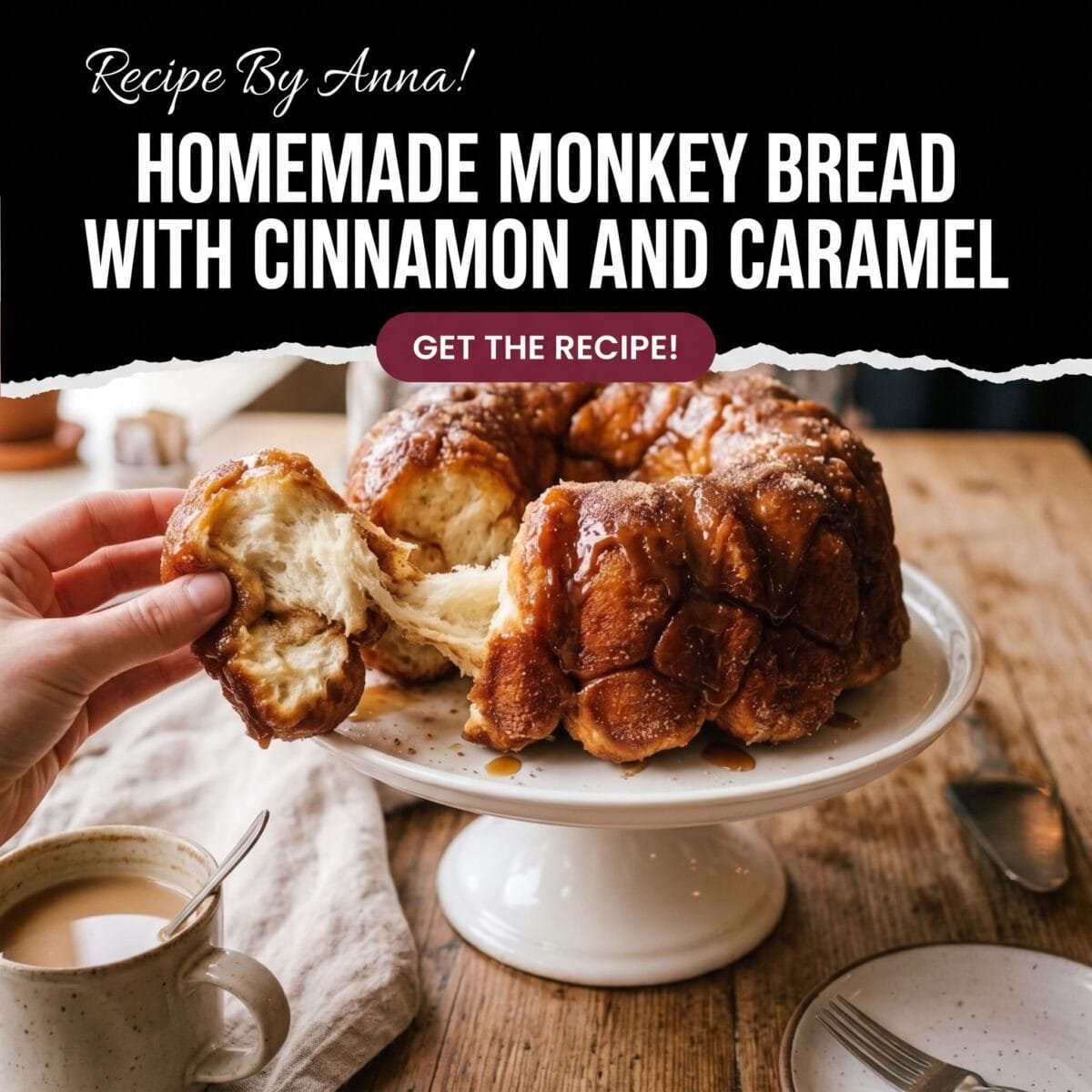
This Homemade Monkey Bread is the pull-apart breakfast bake that produces the kind of Saturday morning moment people remember — a golden Bundt of individually rolled, cinnamon-sugar-coated dough balls that bake together into one gloriously sticky, caramel-drenched, utterly irresistible pull-apart bread that comes to the table looking impressive and gets dismantled piece by piece in the way only monkey bread allows, with every pull releasing a trail of sticky caramel and warm cinnamon that makes each bite independently perfect.
At 137,000 monthly searches, monkey bread recipe easy is one of the most searched breakfast baking terms on Pinterest — and the reason is the combination of spectacle and simplicity that makes monkey bread unlike any other baked good. It looks like it required professional skill and a significant effort. It requires rolling dough balls and arranging them in a pan. The caramel sauce that coats and fills every crevice during baking produces the gooey, sticky, pull-apart quality that makes monkey bread the specific experience it is — not a coffee cake, not a cinnamon roll, but monkey bread specifically, and genuinely incomparable.
This recipe offers two paths: a from-scratch yeasted dough that produces a more complex, slightly chewy bread with genuine depth, and a canned biscuit shortcut that produces the same sticky, caramel-drenched result in 40 minutes with no rise time. Both are covered fully below. Both are worth making. Choose based on the morning and the energy available.
Why Monkey Bread Is the Best Pull-Apart Bake
The individual dough balls coated in cinnamon sugar before baking serve two purposes — the coating creates a slightly caramelised, slightly crispy exterior on each ball where the sugar meets the hot pan, and the individual pieces produce the pull-apart quality that makes monkey bread a communal, interactive breakfast rather than a slice-and-serve one. There is something specifically satisfying about pulling a piece of monkey bread that no other breakfast bake replicates.
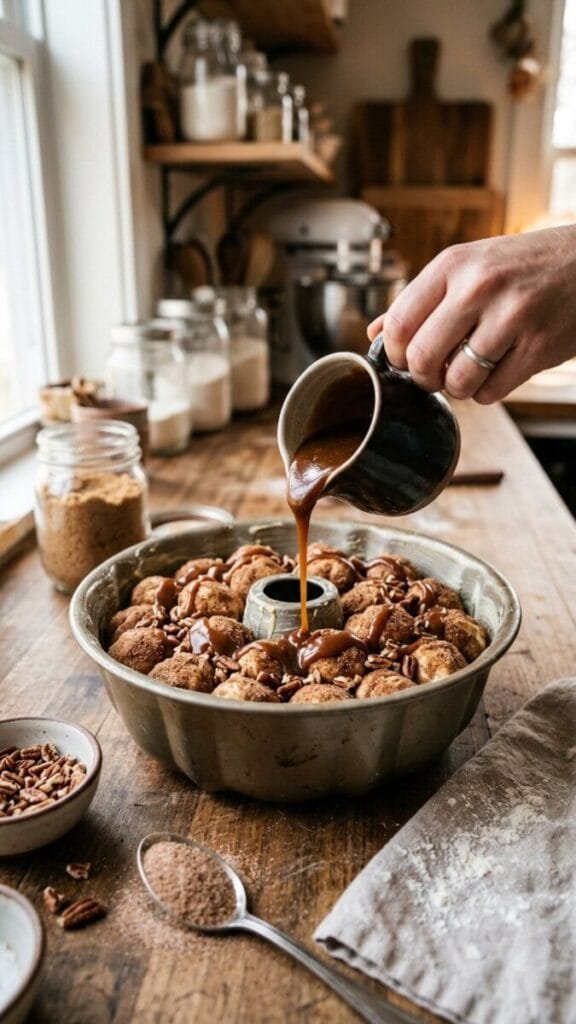
The brown butter and brown sugar caramel sauce poured over before baking pools at the bottom of the Bundt pan, rises through the spaces between the dough balls as the bread bakes, and when inverted becomes a coating that drapes over and between every piece in a way that makes the whole bread glisten.
- From-scratch version: Prep 25 min, Rise 1.5 hours, Bake 35 min — Total 2.5 hours
- Canned biscuit version: Prep 15 min, Bake 35 min — Total 50 minutes
- Yield: one 10 to 12-cup Bundt pan, serves 10 to 12
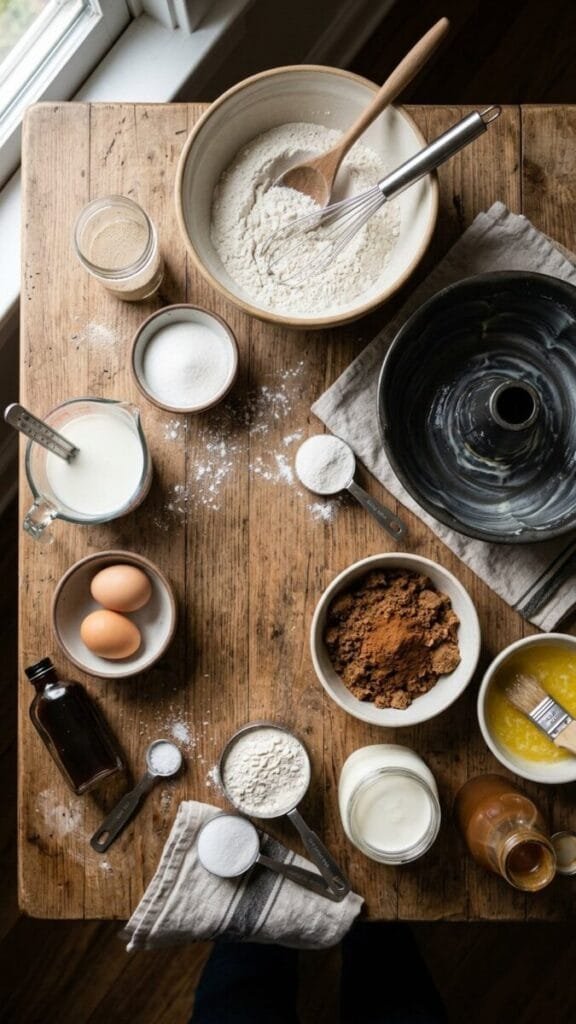
What You Need
Option A — From-Scratch Dough:
- Whole milk, warmed to 110°F: 1 cup (240ml)
- Active dry yeast or instant yeast: 2 1/4 teaspoons (1 packet)
- Granulated sugar: 2 tablespoons
- All-purpose flour: 3 1/2 cups (440g)
- Fine sea salt: 1 teaspoon
- Unsalted butter, softened: 4 tablespoons (56g)
- Large egg: 1
- Pure vanilla extract: 1 teaspoon
Option B — Canned Biscuit Shortcut:
- Refrigerated flaky biscuit dough (not Grands — standard size): 3 cans (7.5 oz / 212g each), each biscuit cut into quarters
For the cinnamon sugar coating:
- Granulated sugar: 3/4 cup (150g)
- Ground cinnamon: 2 teaspoons
- Ground nutmeg: 1/4 teaspoon
For the caramel sauce:
- Unsalted butter: 3/4 cup (170g / 1.5 sticks)
- Light brown sugar, packed: 1 cup (200g)
- Heavy cream: 3 tablespoons
- Pure vanilla extract: 1 teaspoon
- Ground cinnamon: 1/2 teaspoon
- Fine sea salt: 1/4 teaspoon
Optional:
- Chopped pecans: 1/2 cup, scattered between layers for crunch
- Powdered sugar glaze: 1 cup sifted powdered sugar + 2 to 3 tablespoons milk + 1/4 teaspoon vanilla, drizzled over the warm inverted bread
How to Make It
Option A — Making the from-scratch dough:
- Combine the warm milk, yeast, and 1 teaspoon of the sugar in a large bowl and let stand for 5 minutes until foamy — if the yeast doesn’t foam, it is dead and the bread won’t rise; start with fresh yeast.
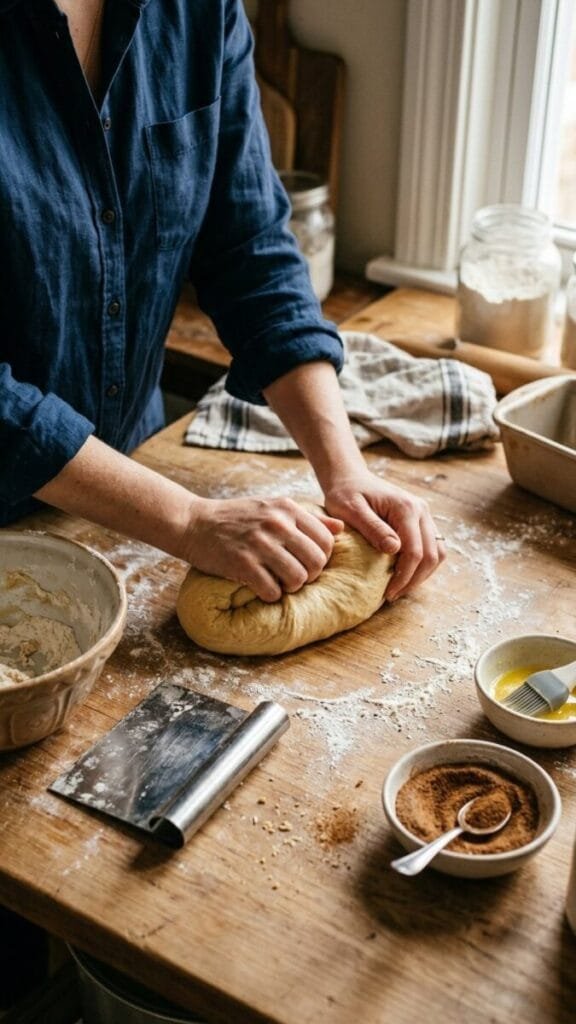
- Add the remaining sugar, flour, salt, softened butter, egg, and vanilla and mix until a shaggy dough forms, then knead for 6 to 8 minutes until smooth and slightly tacky — or knead with a stand mixer using the dough hook on medium for 5 minutes.
- Cover and let rise in a warm place for 1 to 1.5 hours until doubled in size. Punch down, then proceed to rolling the balls.
- Tear the risen dough into approximately 40 to 45 equal pieces and roll each into a smooth ball — the balls don’t need to be perfectly uniform, just roughly similar in size so they bake evenly.
Option B — Using canned biscuits:
- Open the biscuit cans and separate each biscuit. Cut each biscuit into quarters — a standard 7.5 oz can of 10 biscuits yields 40 pieces, perfect for a Bundt pan. No shaping required; the quartered biscuit pieces go directly into the cinnamon sugar coating.
Making the caramel sauce:
- Melt the butter in a small saucepan over medium heat and cook, stirring occasionally, until the milk solids at the bottom of the pan turn golden and the butter smells toasted and nutty — 5 to 6 minutes of browning. The brown butter adds significant depth to the caramel sauce beyond what plain melted butter produces.
- Add the brown sugar, heavy cream, vanilla, cinnamon, and salt and stir until the sugar is dissolved and the sauce is smooth. Bring to a simmer for 1 minute. Remove from heat.

Assembling and baking:
- Preheat the oven to 350°F (175°C). Generously grease a 10 to 12-cup Bundt pan with butter or non-stick spray — every crevice and the center tube. Monkey bread has a reputation for sticking because of the caramel; generous greasing is the only prevention.
- Stir the granulated sugar, cinnamon, and nutmeg together in a wide bowl or zip-lock bag.
- Working in batches, toss the dough balls or biscuit pieces in the cinnamon sugar until completely coated and shake off any excess. Place them in the prepared Bundt pan — scatter the first layer, add a handful of pecans if using, continue layering, and add another handful of pecans between layers.
- Pour the warm caramel sauce evenly over all the dough pieces — pour slowly to allow it to run down between the pieces rather than pooling on the surface only. If using the from-scratch dough, let the assembled pan rest for 20 minutes for a second brief rise before baking.
- Place the Bundt pan on a foil-lined baking sheet to catch any caramel that bubbles over during baking.
- Bake at 350°F for 30 to 35 minutes until the top is deeply golden and a skewer inserted in the thickest section comes out with no wet dough. The bread will look very dark because of the caramel — this is correct; it is not burning.
- Cool in the pan for exactly 5 minutes — no more, no less. Less than 5 minutes and the caramel is still completely liquid and runs everywhere when inverted. More than 5 minutes and the caramel begins solidifying and the bread sticks to the pan permanently. Place a serving plate over the pan, hold both firmly, and invert in one confident motion. Let the pan sit inverted for 30 seconds to allow all the caramel to drip down onto the bread before lifting the pan.
- Drizzle the powdered sugar glaze over the warm inverted bread if using. Serve immediately.
Homemade monkey bread and our Sourdough Discard Cinnamon Rolls are the two celebration morning bakes in this collection — the cinnamon rolls are the classic individual-portion format, the monkey bread is the shared pull-apart format. Both make a Saturday morning feel like an occasion. Both produce a kitchen that smells like cinnamon and brown sugar for the rest of the day.
The Brown Butter Caramel and the 5-Minute Inversion Window
Browning the butter before making the caramel sauce is the upgrade that produces a noticeably more complex, more interesting caramel than plain melted butter — the Maillard compounds in browned butter (pyrazines, furanones, diacetyl) add toasted, nutty, almost toffee-like depth to the caramel that regular butter cannot contribute. The 5 extra minutes of browning produce a caramel sauce that tastes developed and deliberate rather than just sweet and buttery.
The 5-minute inversion window is the most critical timing instruction in the entire recipe — too short and the caramel is liquid and runs before it has the chance to pool on the bread; too long and it solidifies against the Bundt pan walls and the bread comes out in sections rather than whole. Exactly 5 minutes from the oven to the plate inversion is the narrow window that produces a cleanly inverted, caramel-draped bread. Set a timer the moment the bread comes out of the oven.
The foil-lined baking sheet under the Bundt pan is not optional — caramel in a hot oven has a tendency to bubble over the sides of even a full-sized Bundt pan, and caramel on a bare oven rack is extremely difficult to clean and produces smoke. The foil catches everything. According to King Arthur Baking, monkey bread caramel expands to approximately twice its room-temperature volume when it reaches baking temperature — the volume increase explains why even a pan that looks only half full of caramel sauce can overflow a standard Bundt pan during baking.
What to Serve Alongside
Monkey bread is a complete breakfast on its own — the bread, the caramel, and the cinnamon sugar together produce a meal that needs nothing alongside except coffee or tea and whatever accompanies a celebratory morning in your household.
For a full brunch spread where monkey bread is the centrepiece, our Easy Greek Yogurt Fruit Dip with seasonal sliced fruit provides the fresh, light counterpoint that makes the sweet, rich monkey bread feel balanced alongside — the cold, tangy yogurt dip against the warm, sticky caramel bread covers every texture and flavour extreme on the table.
Variations on Classic Monkey Bread
Monkey Bread with Canned Biscuits (the easy shortcut version) — this is Option B above, named explicitly for the search term. Using Pillsbury or store-brand refrigerated biscuit dough produces monkey bread in 50 minutes with no yeast, no kneading, and no rise time — the result is slightly less chewy and complex than the from-scratch dough but equally sticky, equally caramel-drenched, and genuinely indistinguishable from the from-scratch version in a pull-apart piece consumed warm from the pan.
Rhodes Monkey Bread — use frozen Rhodes dinner rolls as the dough base. Thaw overnight in the fridge, then use each roll as one dough ball — no rolling required. The rolls provide a yeast-leavened dough with overnight rise convenience that bridges the from-scratch quality and the no-effort shortcut. This is the most popular method for anyone who wants the yeasted bread quality without making dough from scratch.
Sourdough Monkey Bread — replace the from-scratch dough with a simple sourdough discard dough: combine 1 cup of active sourdough discard, 2 cups of flour, 1 tablespoon of sugar, 1 teaspoon of instant yeast, 1/2 teaspoon of salt, and 2 tablespoons of softened butter. Knead, rise, and proceed as directed. The sourdough version has a subtle tang alongside the cinnamon and caramel that makes the whole bread taste more complex — the tang and the sweet are an excellent combination.
Overnight Make-Ahead Monkey Bread — assemble the bread completely (dough balls in cinnamon sugar, caramel poured over) the night before, cover tightly with plastic wrap, and refrigerate overnight. Remove from the fridge 30 minutes before baking to allow it to come slightly to room temperature, then bake as directed. The overnight rest allows the yeasted from-scratch dough to develop a deeper, more complex flavour and produces the tallest, most impressive rise of any method — this is the version worth making the night before a holiday morning when you want fresh-baked monkey bread at 9am without waking at 6am to start it.
Nutritional Information
| Nutrient | Amount Per Serving (based on 12 servings, from-scratch dough) |
|---|---|
| Calories | 445 kcal |
| Protein | 6 g |
| Carbohydrates | 68 g |
| Fats | 17 g |
These values are estimates for the full from-scratch recipe with the full caramel sauce and cinnamon sugar coating, without pecans or glaze, divided by 12 servings. Monkey bread is an indulgent celebration bake and these values reflect that accurately. The canned biscuit version is approximately 415 calories per serving from the lower-fat biscuit dough base.
Make-Ahead, Storing, and Reheating
Monkey bread is unquestionably best within 30 minutes of inverting — warm, gooey, with the caramel at its ideal sticky-but-pourable consistency and the bread at its softest. It deteriorates in quality as it cools and the caramel hardens.
Store leftovers covered at room temperature for up to 2 days. To reheat: microwave individual pulled pieces for 20 to 25 seconds until warm and the caramel softens, or cover the entire bread with foil and warm in a 300°F oven for 12 to 15 minutes. The reheated version is genuinely good — the caramel loosens and the bread warms to almost its original texture.
The overnight assembly method (described in Variations) is the best make-ahead approach — full assembly the night before, refrigeration, then a 30-minute counter rest and a standard bake produces fresh-baked monkey bread with more flavour development than same-day made, at the cost of only 15 minutes of assembly the night before rather than 30 minutes the morning of.
Mistakes That Cause Sticking or Uncooked Dough
Insufficient greasing of the Bundt pan is the single most common reason monkey bread comes out in pieces rather than whole — the caramel that makes this bread delicious is also what sticks it permanently to an under-greased pan. Use softened butter applied with a pastry brush reaching every curve and crevice of the Bundt, or spray generously with non-stick spray. The center tube, the bottom of the curves, and the top edge all need coverage.
Inverting too late after 10 or more minutes allows the caramel to begin hardening against the Bundt pan walls — once cooled caramel sets, it is effectively glue holding the bread to the pan. If you have exceeded the 5-minute window, place the pan back in the oven for 2 to 3 minutes to re-liquefy the caramel, then invert immediately. The reheating buys another narrow inversion window.
Under-baking produces doughy pockets in the center of the bread — the dark colour from the caramel makes it difficult to gauge doneness by appearance alone. Use the skewer test in the thickest section of the bread, not the outer edge where it will always be done first: it should come out with no wet dough, just a few dry crumbs from the cinnamon sugar coating.
Homemade Monkey Bread with Cinnamon and Caramel
A sticky, golden pull-apart monkey bread made with cinnamon-sugar dough pieces and a glossy brown butter caramel sauce. Make it from scratch with yeasted dough or use the fast canned biscuit shortcut.
Why This Recipe Works
Monkey bread works because every dough piece is coated in cinnamon sugar before baking, giving each pull-apart bite its own caramelized, spiced surface.
Brown butter caramel runs between the dough pieces, pools in the Bundt pan, and becomes a glossy coating when the bread is inverted. The exact 5-minute inversion window helps the bread release cleanly.
Ingredients
Instructions
Combine warm milk, yeast, and 1 teaspoon sugar. Let stand 5 minutes until foamy. Add remaining sugar, flour, salt, butter, egg, and vanilla. Mix and knead 6 to 8 minutes, then cover and rise 1 to 1½ hours until doubled.
For scratch dough, punch down and roll into about 40 to 45 small balls. For canned biscuits, separate biscuits and cut each into quarters.
Melt butter in a saucepan over medium heat and cook 5 to 6 minutes until golden and nutty. Stir in brown sugar, cream, vanilla, cinnamon, and salt. Simmer 1 minute, then remove from heat.
Preheat oven to 350°F / 175°C. Generously grease every crevice of a 10 to 12-cup Bundt pan, including the center tube.
Stir granulated sugar, cinnamon, and nutmeg in a wide bowl or zip-top bag. Toss dough balls or biscuit pieces in the cinnamon sugar until fully coated.
Add coated dough pieces to the Bundt pan in layers, scattering pecans between layers if using.
Pour warm caramel slowly and evenly over the dough pieces so it runs down between them. If using scratch dough, let the assembled pan rest 20 minutes before baking.
Place Bundt pan on a foil-lined baking sheet. Bake for 30 to 35 minutes, until deeply golden and a skewer inserted into the thickest section comes out without wet dough.
Set a timer as soon as the pan leaves the oven. Cool in the pan for exactly 5 minutes before inverting.
Place a serving plate over the Bundt pan, hold both firmly, and invert in one confident motion. Let the pan sit upside down for 30 seconds before lifting.
Drizzle with powdered sugar glaze if using. Serve warm while the caramel is sticky and soft.
Key Technique Notes
Brown butter gives the caramel a toasted, nutty, toffee-like flavor that plain melted butter cannot match.
Too early and caramel runs everywhere; too late and caramel glues the bread to the pan.
Caramel sticks aggressively. Coat every curve, crease, and the center tube of the Bundt pan.
Caramel can bubble over while baking. A foil-lined baking sheet catches drips and prevents oven smoke.
Helpful Pairing Note
Variations
Use 3 cans refrigerated biscuit dough, cut each biscuit into quarters, coat in cinnamon sugar, layer, caramel, and bake. Ready in about 50 minutes.
Use thawed frozen Rhodes dinner rolls as dough balls. This gives yeasted texture without making dough from scratch.
Use sourdough discard dough for a subtle tang that balances the sweet cinnamon caramel.
Assemble completely the night before, cover, and refrigerate. Rest 30 minutes at room temperature, then bake fresh in the morning.
Add ½ cup chopped pecans between layers for crunch and a nutty praline-style flavor.
Drizzle warm inverted bread with powdered sugar glaze for an extra sweet bakery-style finish.
Nutrition
| Nutrient | Amount Per Serving |
|---|---|
| Calories | 445 kcal |
| Protein | 6 g |
| Carbohydrates | 68 g |
| Fat | 17 g |
Values are estimates based on 12 servings using the from-scratch dough, full caramel sauce, and cinnamon sugar coating, without pecans or glaze.
Monkey bread is best within 30 minutes of inverting, while the caramel is warm, sticky, and soft.
Store leftovers covered at room temperature for up to 2 days.
Microwave individual pieces for 20 to 25 seconds, or warm the whole bread covered at 300°F for 12 to 15 minutes.
Assemble the night before, refrigerate, rest 30 minutes at room temperature, then bake for fresh morning monkey bread.
The Bundt pan was not greased enough or the bread was inverted too late. Grease thoroughly and invert at 5 minutes.
The bread was inverted too soon. Wait the full 5 minutes so the caramel thickens slightly.
The bread was underbaked. Test the thickest section with a skewer, not just the outer edge.
If scratch dough yeast does not foam in warm milk after 5 minutes, start again with fresh yeast.