

Easy Rice Pilaf Recipe
We have all been there. You have spent forty-five minutes crafting the perfect lemon-herb roasted chicken or a beautifully seared piece of salmon, only to realize your side dish is… well, a bit sad. Maybe it is a pile of plain, unseasoned white rice that looks more like a cloud of disappointment than a gourmet accompaniment. Friends, life is too short for boring carbs. It is time to upgrade your kitchen game with an easy rice pilaf recipe that actually tastes like it came from a five-star Mediterranean bistro.
Rice pilaf is the “little black dress” of side dishes. It is elegant, it goes with everything, and once you know the basic technique, you can dress it up or down depending on the occasion. But do not let the fancy name fool you. “Pilaf” is really just a method of cooking rice where you toast the grains in fat before adding liquid. This simple step transforms the texture from sticky and clumped to individual, fluffy grains infused with rich, savory flavor. Plus, it makes your kitchen smell like a dream. Let’s dive into how to master this fluffy rice side dish without breaking a sweat.
🤩 Why You’ll Obsess Over This Recipe
If you are still reaching for those yellow boxes of “Rice-a-Something” at the grocery store, I am here to stage a friendly intervention. This homemade rice pilaf is lightyears better in terms of flavor, and you actually know what is in it (shocker: no weird preservatives or “natural flavors” that require a chemistry degree to understand). Here is why this recipe is going to become your new weeknight obsession:
- Texture Perfection: Because we toast the rice first, each grain stays separate. No mushy, porridge-like situations here!
- Maximum Flavor: By using a combination of butter, aromatics, and broth, we are layering flavors from the bottom up.
- One-Pot Wonder: Less cleanup means more time to binge-watch that show you’ve been meaning to finish.
- Picky-Eater Approved: Even the most stubborn eaters usually can’t resist the buttery, savory goodness of a well-made pilaf.
Honestly, the best part is the smell. When that butter starts bubbling and the onions begin to soften, your family will wander into the kitchen asking, “What smells so good?” You can just smirk and tell them you’re a culinary genius. Don’t worry, your secret is safe with me.
🛒 Ingredients You’ll Need
To make the best rice pilaf tips come to life, you need high-quality basics. You probably have most of these in your pantry already!
- Long-Grain Rice: Basmati or Jasmine are the gold standards here. They have less starch, which helps keep the grains separate.
- Butter or Olive Oil: I prefer butter for that classic French-style richness, but olive oil works great for a vegan version.
- Aromatics: One small yellow onion (finely diced) and two cloves of garlic. This is the flavor foundation.
- Orzo or Vermicelli (Optional): Adding a handful of tiny pasta bits gives it that classic “pilaf” look and a lovely textural contrast.
- Chicken or Vegetable Broth: Using broth instead of water is non-negotiable if you want actual flavor.
- Salt and Pepper: To taste, obviously.
- Fresh Herbs: Parsley, dill, or chives for a pop of color and freshness at the end.
👩🍳 Step-by-Step Instructions
Follow these steps closely, and I promise you will never have a rice fail again. We are going for “fluffy masterpiece,” not “sticky wallpaper paste.”
Step 1: Rinse Your Rice
I know, I know—you want to skip this. Don’t. Place your rice in a fine-mesh sieve and run cold water over it until the water runs clear. This removes excess surface starch, which is the number one cause of gummy rice.
Step 2: Sauté the Aromatics
Melt your butter in a medium saucepan over medium heat. Add the finely diced onion and sauté for about 3-4 minutes until they are translucent and soft. Add the garlic (and the orzo, if using) and cook for another minute. Your kitchen should smell heavenly right about now.
Step 3: The Toasting Phase
Add your rinsed and drained rice to the pot. Stir it constantly for 2-3 minutes. You want the grains to be coated in the butter and look slightly translucent at the edges. Some might even get a little golden brown. This “toasts” the starch and seals the grain.
Step 4: The Simmer
Pour in your broth and add a pinch of salt. Bring it to a rolling boil, then immediately turn the heat down to the lowest setting. Cover the pot with a tight-fitting lid.
Step 5: The No-Peeking Rule
Set a timer for 15-18 minutes (depending on your rice type). Do not lift the lid. Seriously. Lifting the lid lets out the steam that is doing all the hard work. Just walk away. Go check your emails or talk to your dog.
Step 6: The Rest and Fluff
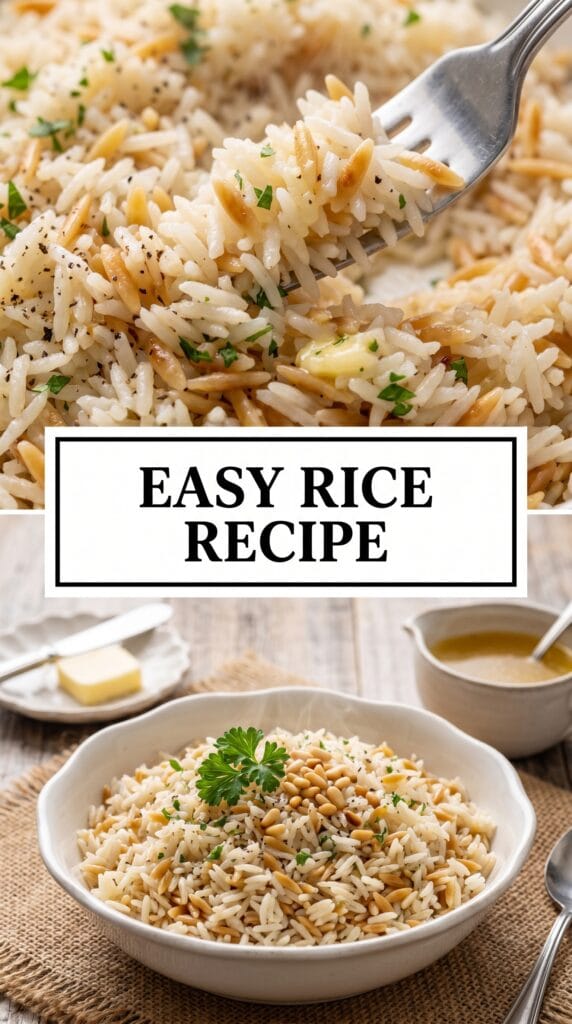
Once the timer goes off, remove the pot from the heat but keep the lid on for another 5-10 minutes. This lets the moisture redistribute. Finally, remove the lid, fluff with a fork (never a spoon!), and stir in your fresh herbs.
🔄 Substitution Suggestions
Missing an ingredient? Don’t panic. This easy rice pilaf recipe is flexible.
- No Broth? Use water plus a bouillon cube or a spoonful of “Better Than Bouillon” paste. If you only have water, add extra salt and maybe a bay leaf to compensate for the lost flavor.
- Different Grains: You can use brown rice, but keep in mind it requires more liquid and a significantly longer cooking time (usually 45 minutes).
- The Fat: If you are avoiding dairy, use a high-quality avocado oil or extra virgin olive oil. It gives the dish a more Mediterranean vibe.
- The Pasta: If you don’t have orzo or vermicelli, just leave it out! The rice is the star anyway.
🍗 What to Pair
This pilaf is a social butterfly; it gets along with everyone. Here are some of my favorite ways to serve it:
With Protein: It is the perfect bed for Lemon Garlic Shrimp, Baked Salmon, or Grilled Chicken Thighs. The rice soaks up any extra juices or sauces beautifully.
Vegetarian Vibes: Serve it alongside roasted chickpeas, grilled halloumi, or a big tray of Mediterranean roasted vegetables (think zucchini, bell peppers, and red onion).
Holiday Feast: This is a great alternative to mashed potatoes for Thanksgiving or Christmas dinner. It feels special but requires half the effort of peeling five pounds of spuds.
🔗 You may also like: Easy Puff Pastry Twists Make Great Appetizers
📊 Nutritional Information
While I am firmly in the “butter makes everything better” camp, this dish is actually quite balanced. One serving (roughly 3/4 cup) generally contains:
- Calories: 180-210 kcal
- Carbohydrates: 35g
- Protein: 4g
- Fat: 5-7g (depending on the amount of butter used)
- Fiber: 1g
To boost the fiber, you can always stir in some cooked peas or sautéed spinach at the very end!
💡 Pro Tips for the Perfect Batch
If you want to achieve “legendary” status in your household, keep these best rice pilaf tips in mind:
1. Use a heavy-bottomed pot: This ensures even heat distribution so the rice at the bottom doesn’t scorch while the top is still raw.
2. The Fork is Mightier than the Spoon: When you fluff the rice, always use a fork. A spoon will mash the grains together, turning your beautiful pilaf into a sad clump.
3. Season the Liquid: Taste your broth before you cover the pot. It should taste slightly “too salty.” The rice will absorb that salt as it cooks, resulting in a perfectly seasoned final product.
4. Use a Kitchen Towel: If your lid isn’t super tight, place a clean kitchen towel over the pot before putting the lid on. This creates a better seal and traps every bit of steam inside.
🌈 Easy Variations to Try
Once you’ve mastered the base homemade rice pilaf, you can start experimenting with these fun variations:
- Lemon Herb Pilaf: Stir in a tablespoon of lemon zest and a squeeze of fresh lemon juice at the end. Perfect for fish!
- Mushroom Pilaf: Sauté sliced cremini or shiitake mushrooms with the onions until they are deeply browned and caramelized.
- Nutty Crunch: Add toasted pine nuts, slivered almonds, or pistachios right before serving for a delightful crunch.
- Middle Eastern Flair: Add a pinch of cinnamon, some ground cumin, and a handful of dried currants or raisins for a sweet and savory profile.
❄️ How to Store & Reheat
Rice pilaf makes for excellent leftovers. You can store it in an airtight container in the refrigerator for up to 4 days.
To Reheat: Avoid the microwave if possible, as it can dry the rice out. Instead, put it in a skillet with a splash of water or broth, cover it, and heat on low until warmed through. If you must use the microwave, cover the bowl with a damp paper towel to create steam.
Freezing: Yes, you can freeze it! Let it cool completely, then store in a freezer bag for up to 3 months. To reheat from frozen, just pop it in a pan with a bit of liquid.

⚠️ Common Mistakes to Avoid
Using the Wrong Ratio: Usually, the ratio is 1 part rice to 1.5 or 2 parts liquid. Check your rice package! Too much liquid = mush. Too little = crunchy bits that get stuck in your teeth.
Stirring While Cooking: This is the cardinal sin of rice making. Stirring releases starch and breaks the grains. Set it and forget it!
Not Letting it Rest: That 10-minute rest after the heat is off is where the magic happens. Don’t skip it just because you’re hungry.
❓ FAQ
Can I use a rice cooker?
Yes! You can still sauté the onions and toast the rice in a pan, then transfer everything to your rice cooker and hit the “white rice” setting. It works like a charm.
Why is my rice still hard?
This usually happens if the heat was too high and the liquid evaporated too quickly, or if your lid wasn’t tight enough. Add two tablespoons of broth, put the lid back on, and let it steam on the lowest heat for another 5 minutes.
Is rice pilaf gluten-free?
If you use only rice and broth (and ensure your broth is certified gluten-free), then yes! Just make sure to omit the orzo or vermicelli, as those are wheat-based pastas.
✨ Final Thoughts
There you have it—a foolproof, easy rice pilaf recipe that will elevate any meal from “meh” to “marvelous.” It is a humble dish, but when done right, it truly shines. Whether you are cooking for a fancy dinner party or just trying to survive a Tuesday night, this pilaf has your back.
The next time you are tempted to just boil a pot of plain water, remember: the butter is waiting, the onions are ready, and your taste buds deserve better. Go forth and fluff that rice with confidence! And if you happen to eat half the pot directly from the stove… well, I won’t tell anyone. Happy cooking!