

Cinnamon Scones Recipe — Sweet, Simple and Bakery-Quality
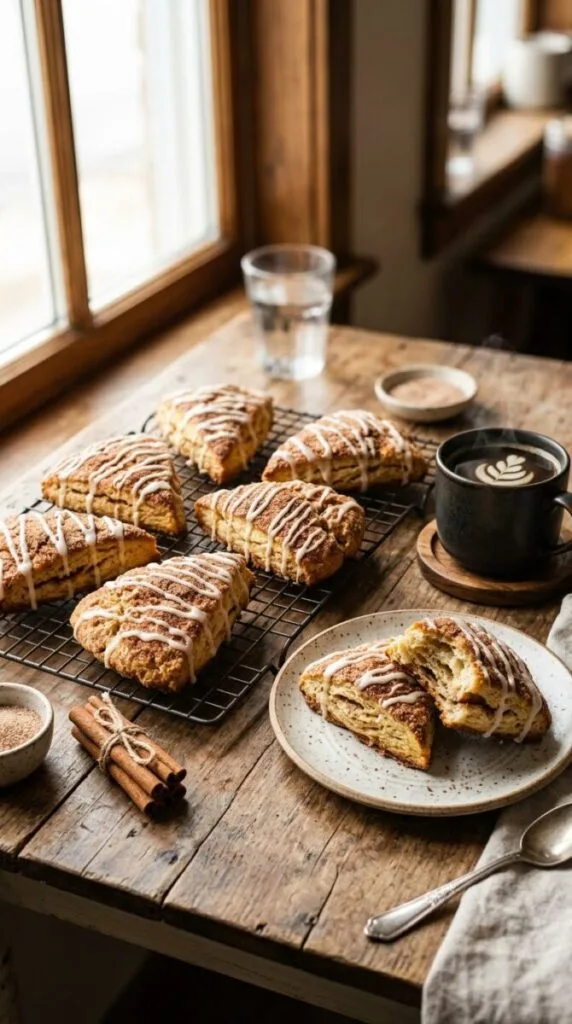
These Cinnamon Scones are the easy scones recipe that produces something genuinely bakery-worthy from a home kitchen — tall, flaky, warmly spiced triangles with a golden, cinnamon-sugar-dusted exterior that shatters slightly on the first bite and a soft, tender interior that is somehow simultaneously crumbly and light, with cinnamon running through every layer from the inside out.
Scones occupy a specific morning baking niche between a biscuit and a quick bread — they require less technique than a croissant and produce more layered, more interesting results than a standard muffin. The cold butter technique that produces their characteristic flakiness is the same method used for pie dough and biscuits: working cold butter into flour until pea-sized pieces remain, then adding cold liquid minimally until the dough just barely holds together. The result is a dough that bakes into distinct, buttery layers that pull apart satisfyingly when the scone is broken.
This recipe produces a cinnamon scone that earns the “easy” label — one bowl, cold ingredients, 12 minutes of active work, and 18 minutes in the oven. It also serves as the base for six variations including cinnamon roll scones with cream cheese glaze, apple cinnamon scones, cinnamon chip scones, and a Panera-style cinnamon crunch scone.
Why Cold Butter Is the Non-Negotiable for Flaky Scones
The butter in a scone dough must be cold — genuinely, straight-from-the-fridge cold — because the visible butter pieces that remain in the dough when it goes into the oven are what create the flaky layers. As the oven heat reaches those butter pieces, they release steam that pushes the surrounding dough upward and outward into distinct, separated layers. Softened or melted butter incorporates fully into the surrounding flour and produces a scone that is more like a cake in texture — dense, tender, and cakey — rather than the flaky, layered result that defines a proper scone.
- Prep Time: 15 minutes
- Chill Time: 15 minutes (optional but recommended)
- Cook Time: 18 to 20 minutes
- Total Time: 50 minutes
- Yield: 8 scones
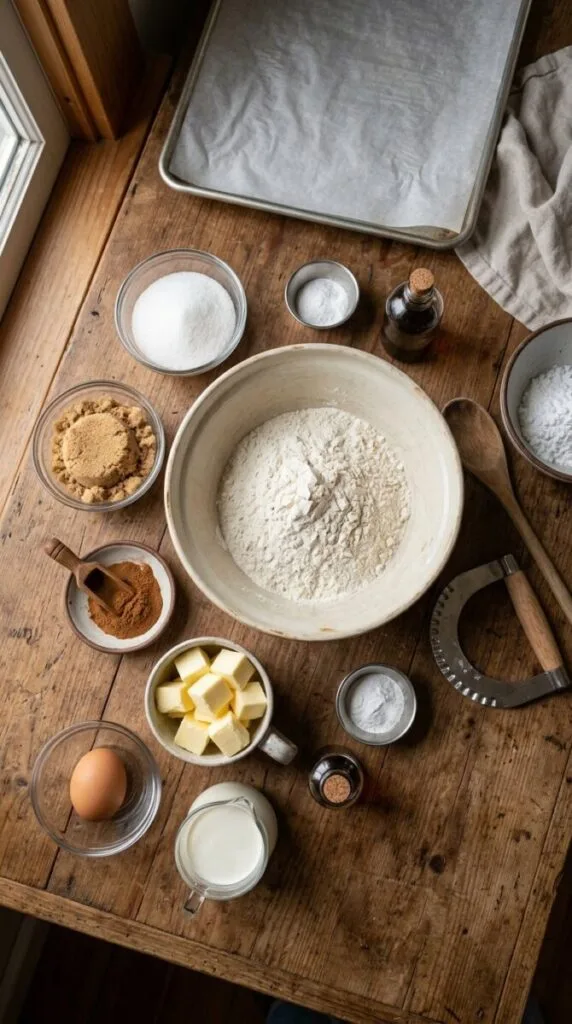
What You Need
For the scones:
- All-purpose flour: 2 cups (250g), plus extra for dusting
- Granulated sugar: 3 tablespoons
- Light brown sugar, packed: 2 tablespoons
- Baking powder: 1 tablespoon — a full tablespoon; this amount produces the rise that makes a scone tall rather than flat
- Fine sea salt: 1/2 teaspoon
- Ground cinnamon: 2 teaspoons
- Ground nutmeg: 1/4 teaspoon
- Unsalted butter, cold and cut into 1/4-inch cubes: 6 tablespoons (85g) — return the cubed butter to the fridge for 5 minutes after cutting if it has softened while you measured
- Heavy cream: 1/2 cup (120ml), cold
- Large egg: 1, cold
- Pure vanilla extract: 1 teaspoon
For the cinnamon sugar topping:
- Heavy cream: 2 tablespoons (for brushing)
- Granulated sugar: 2 tablespoons
- Ground cinnamon: 1/2 teaspoon
For the vanilla glaze (optional but recommended):
- Powdered sugar, sifted: 1 cup (120g)
- Heavy cream or whole milk: 2 to 3 tablespoons
- Pure vanilla extract: 1/4 teaspoon
- Pinch of cinnamon
How to Make Them
- Preheat the oven to 400°F (200°C) and line a baking sheet with parchment paper.
- Whisk the flour, both sugars, baking powder, salt, cinnamon, and nutmeg together in a large bowl until completely combined.
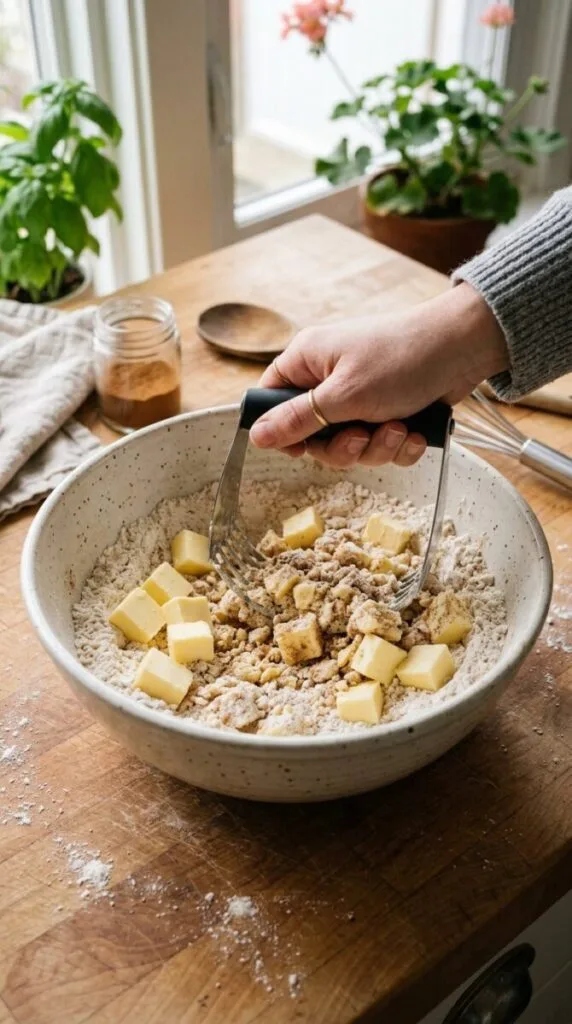
- Add the cold butter cubes to the flour mixture and work them in using your fingertips, a pastry cutter, or a food processor — press and squeeze the butter pieces into the flour until the mixture looks like coarse crumbs with visible pea-sized butter pieces throughout. Some pieces can be as large as small marbles; some can be fine and sandy. This variation produces the most interesting, layered scone interior. Work quickly — the goal is to distribute the butter before the heat from your hands warms it.
- Whisk the cold cream, egg, and vanilla together in a small bowl until combined.
- Pour the cream mixture into the butter-flour mixture and stir with a fork or spatula until the dough just barely comes together — it should look shaggy, slightly dry, and uneven rather than smooth. Do not knead, do not press it into a smooth ball. Turn the dough out onto a lightly floured surface.
- Press the dough together gently into a rough rectangle, then fold it in thirds (like a letter) and press flat again. Repeat this fold once more — these two folds create the layered structure that produces flaky layers in the baked scone. The dough will look crumbly and rough throughout; this is correct.
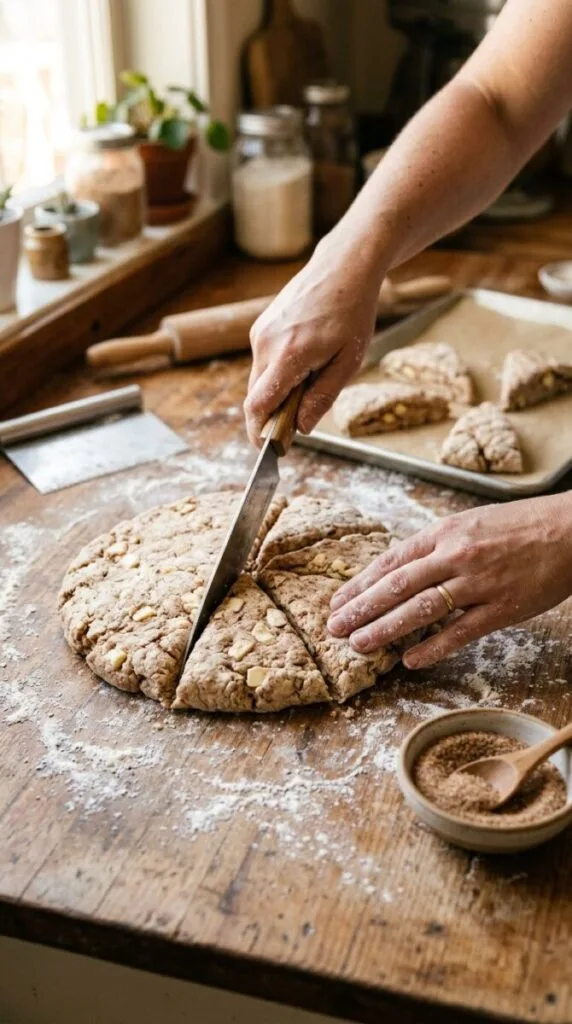
- Pat the dough into a circle approximately 7 to 8 inches in diameter and 1 inch thick. Cut into 8 equal wedges with a sharp knife or bench scraper — a single, clean cut rather than a sawing motion produces cleaner edges that rise more evenly.
- Transfer the wedges to the prepared baking sheet with 1 inch between each. Refrigerate for 15 minutes — this firms the butter back to cold after handling and produces a taller, flakier scone than dough baked immediately after shaping.
- Brush each scone generously with heavy cream. Stir the cinnamon sugar together and sprinkle over the cream-brushed surface.
- Bake at 400°F for 18 to 20 minutes until the tops are golden brown and the edges look set and dry. The scones should look visibly golden — paler scones are undercooked and will be doughy inside.
- Cool on the baking sheet for 10 minutes before glazing — glaze applied to very hot scones runs off before it can set. Drizzle the vanilla glaze in a thin stream over the warm (not hot) scones and allow to set for 5 minutes before serving.

Cinnamon scones and our Sourdough Discard Cinnamon Rolls are the two cinnamon-forward morning bakes that cover every energy level and time window — the cinnamon rolls are the celebration bake that takes 2 hours and produces something spectacular, the scones are the 50-minute everyday bake that produces something you will make every other weekend once you know the recipe. Both belong in the autumn morning rotation.
The Cold Butter, the Two Folds, and the Refrigerator Rest
The two letter-folds before cutting is the technique borrowed from laminated doughs — it does not produce the dozens of layers that croissant dough achieves, but it creates distinct strata within the scone that pull apart into clearly separated layers when broken rather than a uniform, undifferentiated crumb. One fold is minimal; three or more folds overwork the gluten and toughen the scone. Two folds is the right number for a scone that is neither too crumbly nor too tough.
The 15-minute refrigerator rest after shaping is the step that makes the single biggest quality difference — it firms the butter that was softened during handling and returns it to the cold state where it produces steam-puff flakiness rather than absorbing into the flour. A scone cut and baked immediately after shaping is noticeably less tall and less flaky than an identical scone rested for 15 minutes in the cold.
Cutting with a sharp, single-press motion rather than a sawing motion produces a cleaner edge at the side of each wedge — a clean edge allows the scone to rise evenly from the cut surface, while a dragged or sawed edge compresses the layers at the side and prevents the full rise from that direction. According to King Arthur Baking, dragging a knife or cutter through scone dough seals the cut edges by compressing the layers together — the same way pressing on the side of a puff pastry prevents it from rising at that edge — and produces a scone that rises unevenly, higher in the center than at the sides.
What to Serve Alongside
A cup of English Breakfast tea or a flat white coffee is the most natural morning accompaniment — the warm, slightly sweet, warmly spiced cinnamon scone against a strong, slightly bitter tea or coffee is one of the most satisfying morning pairings in British baking tradition.
Clotted cream and a thin layer of preserves alongside a cinnamon scone for a proper cream tea — spread the clotted cream first, then the jam, and resist the impulse to add more than a small amount of each. The scone is the vehicle and the cream and jam are the accent, not the topping.
Six Cinnamon Scone Variations
Cinnamon Roll Scones — after the two letter-folds, roll the dough out into a rectangle approximately 9×12 inches and 1/4 inch thick. Brush with 2 tablespoons of melted butter, then scatter a mixture of 3 tablespoons of light brown sugar, 1 1/2 teaspoons of cinnamon, and a pinch of salt evenly over the surface. Roll the dough up tightly from the long edge into a log, slice into 8 rounds, and place cut-side up on the baking sheet. Brush with cream and bake as directed. Glaze with a cream cheese glaze (4 oz softened cream cheese + 1 cup powdered sugar + 3 tablespoons cream + vanilla) instead of the vanilla glaze. The result is a crossbreed of a cinnamon roll and a scone — swirled, layered, and indulgent.
Apple Cinnamon Scones — fold 3/4 cup of peeled, finely diced firm apple (Honeycrisp or Fuji) into the dough at the very end, after the cream has been incorporated, with 2 to 3 additional strokes. The apple adds pockets of sweet, slightly tart fruit throughout the scone and makes this variation the most appropriate autumn one — particularly good with a caramel drizzle in place of the vanilla glaze.
Cinnamon Chip Scones — fold 3/4 cup of cinnamon chips (available in most baking aisles; not cinnamon candy but the dairy-based baking chips flavoured with cinnamon) into the dough. The cinnamon chips melt slightly during baking and create pockets of intensified cinnamon flavour concentrated at each chip location — like a chocolate chip scone but with cinnamon as the intense flavour element.
Cinnamon Raisin Scones — plump 1/2 cup of raisins by soaking in hot water for 10 minutes, draining thoroughly, and patting dry before folding into the dough. The plumped raisins stay moist during baking rather than burning or drying out, and the cinnamon-raisin combination is one of the most classic British scone directions.
Cinnamon Crunch Scones (Panera-style) — make a cinnamon crunch topping by combining 1/4 cup of granulated sugar, 2 tablespoons of brown sugar, 1 teaspoon of cinnamon, and 1 tablespoon of melted butter into a coarse, slightly wet mixture. Spread over the cream-brushed scone tops before baking — the sugar mixture caramelises during baking into a crunchy, glassy topping that shatters when bitten in the specific way that Panera’s cinnamon crunch scones are known for.
Cinnamon Sugar Scones — this is the base recipe with an increased cinnamon sugar topping (double the quantities) and no glaze, leaning into the simplest, most unembellished version of the cinnamon scone. The heavier cinnamon sugar coating bakes into a crispy, almost caramelised exterior crust that is more textured and more caramelised than the standard amount — excellent for anyone who wants the crunch of the sugar topping as the primary experience.
Nutritional Information
| Nutrient | Amount Per Scone (based on 8 scones, with glaze) |
|---|---|
| Calories | 295 kcal |
| Protein | 4 g |
| Carbohydrates | 40 g |
| Fats | 13 g |
These values are estimates for the full recipe with the vanilla glaze divided by 8 scones. The fat comes primarily from the butter and cream — these are genuinely indulgent morning pastries rather than a light breakfast option, and the values reflect that honestly. A scone without the glaze reduces to approximately 250 calories.
Storing These So They Stay Flaky
Scones are at their absolute best on the day they are baked — the flaky exterior begins softening as moisture from the interior migrates outward during storage, and the crunch of the cinnamon sugar topping gradually softens overnight. Store at room temperature in an airtight container for up to 2 days; after that, refrigerate for up to 4 days.
To restore the fresh-baked quality: warm individual scones in a 325°F oven for 6 to 8 minutes — the gentle oven heat re-crisps the exterior and warms the interior back to its original texture far more effectively than a microwave, which softens rather than re-crisps.
Unbaked cut scone wedges freeze beautifully — freeze on the parchment-lined baking sheet until solid, then transfer to a freezer bag and freeze for up to 3 months. Bake from frozen at 400°F for 22 to 24 minutes without thawing. Having a stash of frozen unbaked scones means fresh-baked cinnamon scones on any morning with 25 minutes’ notice.
Where These Can Go Wrong
Overworking the butter into the flour until the mixture looks like fine, uniform sand rather than coarse crumbs with visible butter pieces produces a dense, cakey scone without the flaky layers — the butter pieces need to remain visible and distinct in the dough for the steam-puff layer separation to occur in the oven. Work quickly, work cold, stop when pea-sized pieces remain.
Adding too much liquid and overworking the dough to make it smooth produces a tough, dense scone from overdeveloped gluten — the dough should look shaggy, crumbly, and slightly dry when it comes together. If a few dry bits of flour are still visible at the bottom of the bowl when the dough is first turned out, that is correct. Press them in gently during the fold rather than adding more liquid.
Skipping the refrigerator rest and baking immediately after shaping produces a noticeably shorter, less flaky scone — the butter has been warmed by handling and needs 15 minutes in the cold to return to the state where it produces the steam-puff flakiness the recipe depends on. The 15-minute rest costs nothing and is the single most impactful quality step in the recipe.
Cinnamon Scones
Tall, flaky, bakery-quality cinnamon scones with a tender layered interior, cinnamon sugar topping, and optional vanilla glaze. Simple, cozy, and ready in under an hour.
Why This Recipe Works
These cinnamon scones use cold butter, cold cream, and a short refrigerator rest to create tall, flaky layers. The butter pieces release steam in the oven, pushing the dough into a tender, layered crumb.
Two quick letter-folds create structure without overworking the dough, while the cinnamon sugar topping adds a crisp, sweet exterior and the vanilla glaze gives the scones a bakery-style finish.
Ingredients
Instructions
Preheat the oven to 400°F / 200°C and line a baking sheet with parchment paper.
Whisk flour, granulated sugar, brown sugar, baking powder, salt, cinnamon, and nutmeg together in a large bowl until fully combined.
Add cold butter cubes and work them into the flour with your fingertips or a pastry cutter until the mixture looks like coarse crumbs with visible pea-sized butter pieces.
Whisk cold heavy cream, egg, and vanilla together in a small bowl until combined.
Pour the cream mixture into the flour-butter mixture and stir with a fork or spatula until the dough just barely comes together. It should look shaggy and slightly dry.
Turn dough onto a lightly floured surface. Press into a rough rectangle, fold in thirds like a letter, press flat, then repeat one more time.
Pat dough into a 7 to 8 inch circle about 1 inch thick. Cut into 8 wedges using a sharp knife or bench scraper with clean downward cuts.
Transfer wedges to the prepared baking sheet with 1 inch between each. Refrigerate for 15 minutes to firm the butter before baking.
Brush each scone with heavy cream. Stir sugar and cinnamon together, then sprinkle generously over the cream-brushed tops.
Bake for 18 to 20 minutes, until the tops are golden brown and the edges look set and dry.
Cool on the baking sheet for 10 minutes. If glazing, whisk powdered sugar, cream or milk, vanilla, and cinnamon until smooth.
Drizzle glaze over warm, not hot, scones. Let set for 5 minutes before serving.
Key Technique Notes
Cold butter pieces release steam in the oven, creating the flaky layers that define a proper scone.
Two folds create visible layers without overworking the dough or making the scones tough.
A short refrigerator rest firms the butter after handling and produces taller, flakier scones.
Use a sharp knife or bench scraper and press straight down. Sawing can compress the layers at the edges.
Helpful Pairing Note
Variations
Roll dough into a rectangle, brush with melted butter, sprinkle with brown sugar and cinnamon, roll into a log, slice into rounds, and glaze with cream cheese glaze.
Fold ¾ cup finely diced peeled Honeycrisp or Fuji apple into the dough before shaping. Finish with vanilla glaze or caramel drizzle.
Fold ¾ cup cinnamon baking chips into the dough for pockets of concentrated cinnamon flavor.
Soak ½ cup raisins in hot water for 10 minutes, drain and pat dry, then fold into the dough.
Top with a mixture of granulated sugar, brown sugar, cinnamon, and melted butter before baking for a crunchy Panera-style finish.
Double the cinnamon sugar topping and skip the glaze for a crisp, simple, cinnamon-forward exterior.
Nutrition
| Nutrient | Amount Per Scone |
|---|---|
| Calories | 295 kcal |
| Protein | 4 g |
| Carbohydrates | 40 g |
| Fat | 13 g |
Values are estimates based on 8 scones with vanilla glaze. Without glaze, each scone is approximately 250 calories.
Scones are best the day they are baked, when the exterior is crisp and the interior is tender and flaky.
Store in an airtight container at room temperature for up to 2 days.
Warm individual scones in a 325°F oven for 6 to 8 minutes to re-crisp the exterior.
Freeze cut wedges until solid, then transfer to a freezer bag for up to 3 months. Bake from frozen at 400°F for 22 to 24 minutes.
The butter was worked in too much or got too warm. Keep visible cold butter pieces in the dough.
The dough was overmixed or too much liquid was added. Stop when the dough is shaggy and just holds together.
The dough may not have been chilled before baking. Refrigerate shaped scones for 15 minutes.
Sawing through the dough can seal the layers. Cut straight down with a sharp knife or bench scraper.