
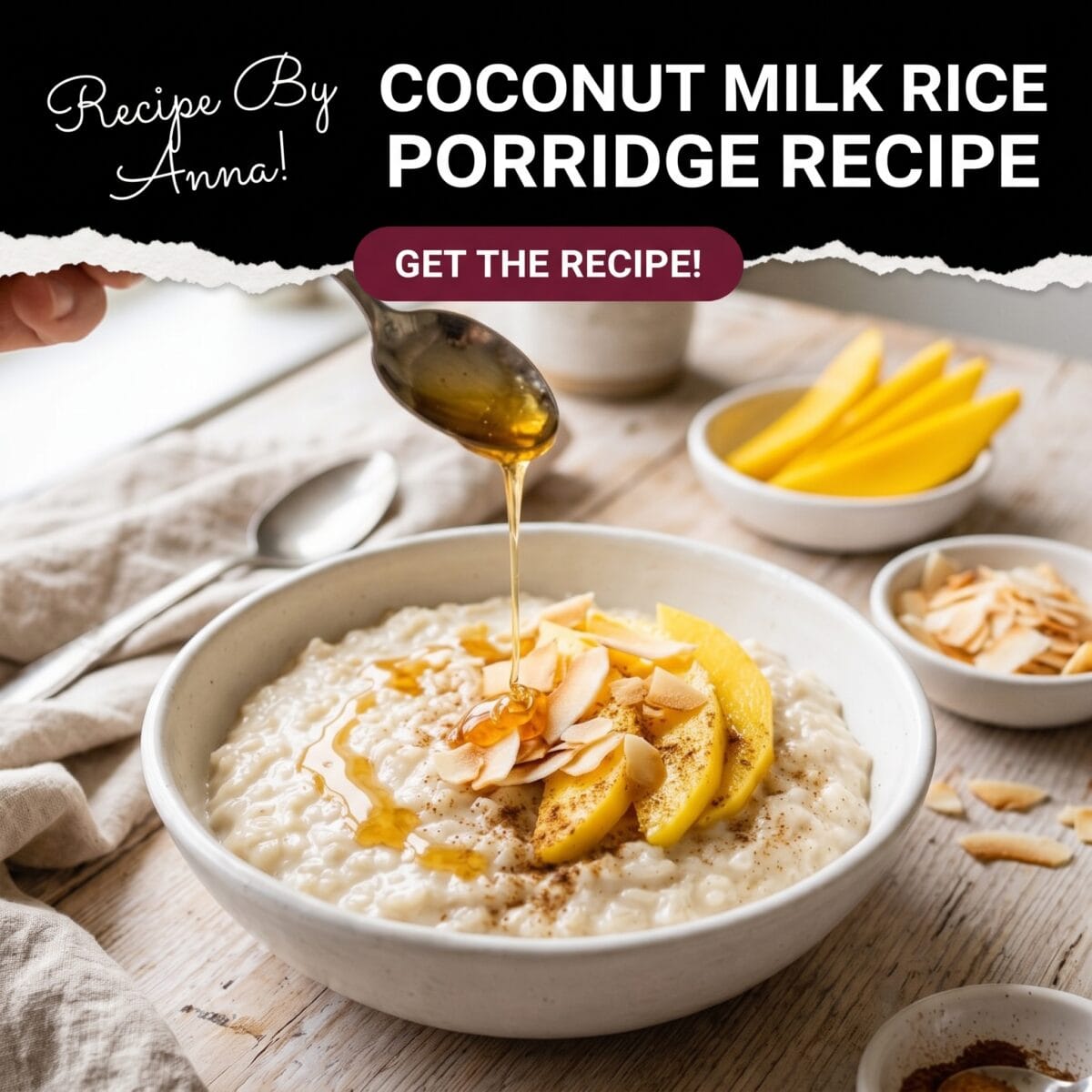
Coconut Milk Rice Porridge Recipe
This Coconut Milk Rice Porridge is the warm, creamy, deeply comforting bowl that sits somewhere between congee, arroz con leche, and a Southeast Asian rice pudding — rice slow-cooked in coconut milk until each grain has swelled and softened into a thick, silky porridge that is rich without being heavy, subtly sweet without needing much added sugar, and fragrant with lemon zest and vanilla in a way that makes the kitchen smell like something worth waking up for.
Coconut milk rice porridge appears in some form across most of Southeast Asia, the Caribbean, and Latin America — it is the breakfast and comfort food that transcends regional cooking because rice and coconut milk are independently available nearly everywhere and together produce something that needs almost no additional flavouring to be satisfying. The version here is a gentle, universally approachable interpretation that works for breakfast, a light dessert, or a warming afternoon bowl.
It requires one pot, twenty-five minutes of simmering with occasional stirring, and very little else — the kind of recipe that rewards a Sunday morning when the only agenda is a slow, warming breakfast and nowhere particularly urgent to be.
Why This Bowl Is Worth Making Over Standard Oatmeal
The coconut milk provides a richness and creaminess that no amount of oat-to-water ratio adjustment achieves in a standard porridge — the medium-chain fatty acids in coconut fat produce a satisfying, sustained energy that keeps hunger at bay longer than the equivalent calories from grain and water alone. The rice also provides a completely different textural experience from oats — each grain remains just barely distinct within the creamy liquid, giving the porridge both body and a soft, almost custardy resistance to the spoon.
It is also naturally dairy-free and gluten-free from the base recipe with no substitutions required, which makes it one of the most genuinely inclusive breakfast options in this collection.
- Prep Time: 5 minutes
- Cook Time: 25 to 30 minutes
- Total Time: 30 to 35 minutes
- Yield: 4 servings
What You Need
For the porridge:
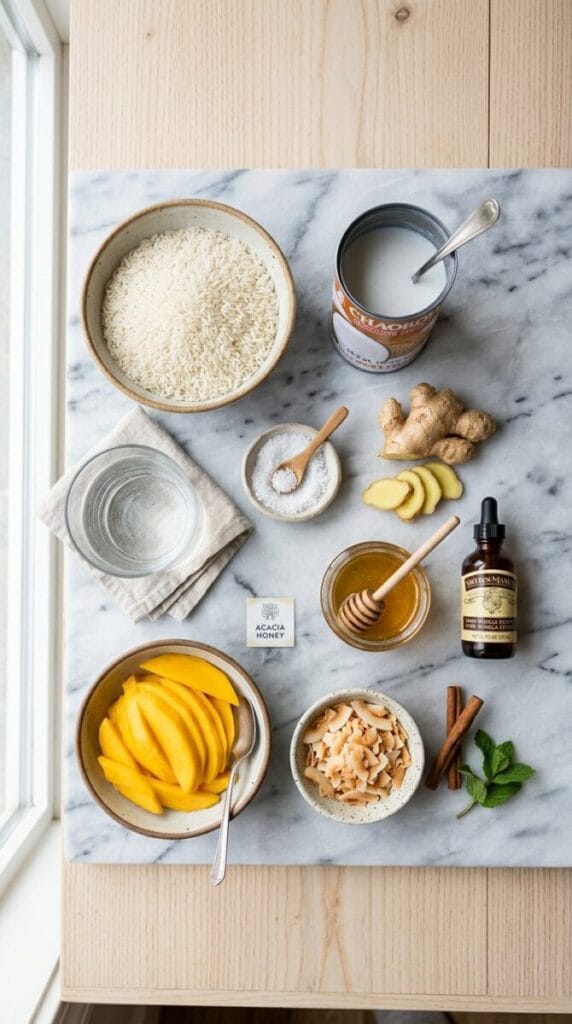
- Jasmine rice or short-grain white rice, rinsed: 1 cup (185g) — rinsed to remove excess surface starch that would make the porridge gluey rather than creamy
- Full-fat canned coconut milk: 1 can (13.5 oz / 400ml)
- Water: 2 cups (480ml)
- Granulated sugar or palm sugar: 2 tablespoons — adjust to taste depending on how sweet you want the base
- Fine sea salt: 1/4 teaspoon
- Lemon zest or lime zest: 1/2 teaspoon
- Pure vanilla extract: 1 teaspoon
- Pandan leaf, tied into a knot: 1 (optional — adds a grassy, floral Southeast Asian fragrance that transforms the porridge)
Topping suggestions:
- Fresh mango, sliced: the most natural pairing
- Toasted coconut flakes: for crunch and coconut intensity
- Fresh or frozen mixed berries: for a fruity, tartness contrast
- Banana, sliced: simple and satisfying
- Honey or maple syrup: for extra sweetness at serving
- Sesame seeds or chopped toasted peanuts: for crunch and depth
- Fresh mint: for brightness
How to Make It
- Rinse the rice in cold water until the water runs mostly clear — 2 to 3 rinses removes enough surface starch to produce a creamy rather than gluey porridge while leaving enough starch to thicken the coconut milk as it cooks.
- Combine the rinsed rice, coconut milk, water, sugar, salt, lemon zest, and pandan leaf if using in a medium saucepan and stir to combine.
- Bring to a gentle boil over medium-high heat, stirring occasionally to prevent the rice from sticking to the bottom of the pan before the liquid is moving.
- Reduce to a steady simmer over medium-low heat — the coconut milk should be gently bubbling rather than aggressively simmering. Too high a heat scorches the coconut milk at the bottom of the pan, which gives the porridge a slightly bitter flavour that cannot be fixed.
- Cook for 25 to 30 minutes, stirring every 3 to 4 minutes, until the rice grains are completely soft, the mixture has thickened to a creamy porridge consistency, and a spoon dragged across the bottom of the pan briefly holds its track before the porridge fills back in.
- Remove the pandan leaf if used. Stir in the vanilla extract off the heat.
- The porridge will continue thickening as it sits off the heat and as it cools — if it thickens more than desired, stir in a splash of coconut milk or water to loosen it to the right consistency before serving.
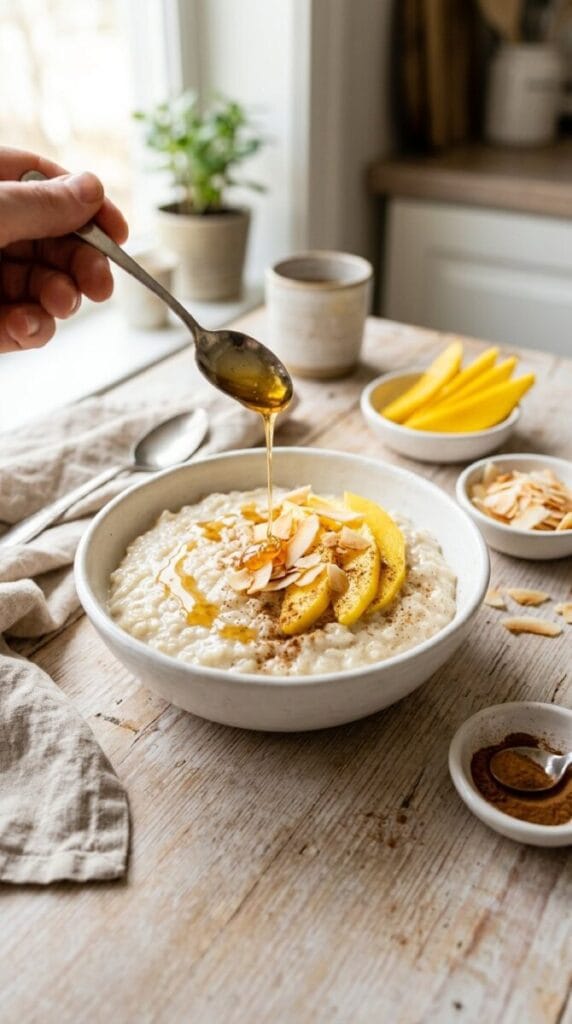
- Ladle into bowls, add toppings generously, and serve immediately.

Coconut milk rice porridge and our Chia Seed Pudding Recipe together cover the full spectrum of make-ahead and fresh-cooked morning bowls — the chia pudding is assembled in 5 minutes the night before and requires no cooking, while this porridge is 30 minutes of warming stovetop cooking on the morning itself. Both belong in the same breakfast rotation for different types of mornings.
The Coconut Milk and Heat Details That Matter
Full-fat canned coconut milk is the only coconut product that produces the right porridge texture — the carton or light coconut milk has too much water content and produces a thinner, less satisfying result that doesn’t develop the characteristic creaminess of a proper coconut rice porridge. The can’s high fat content emulsifies into the starch from the rice as it cooks and creates the thick, velvety texture that makes this porridge genuinely satisfying as a breakfast rather than just warm.
Low, steady heat is essential for coconut milk cooking — high heat separates the fat from the liquid in coconut milk and produces a greasy-looking porridge with oil floating on the surface. Once the porridge reaches a boil, reducing to a gentle simmer and keeping it there produces a consistently smooth, uniform mixture. If the coconut milk does begin to separate slightly, vigorous stirring while off the heat almost always brings it back together.
The rinsing step removes the surface starch from the rice that would otherwise cook into a thick, gluey porridge rather than a creamy one — the distinction is important. Gluey porridge is dense and heavy; creamy porridge is flowing and light. Three rinses under cold water is the right amount — too many rinses also removes the starch that thickens the coconut milk, producing a thin soup rather than a proper porridge. According to Serious Eats, the difference between rinsed and unrinsed rice in a liquid-heavy dish like porridge is entirely about the ratio of surface starch to interior starch — surface starch dissolves immediately and creates a thick, sticky paste, while interior starch released gradually during cooking creates a smoother, more gradually thickened liquid that produces a creamier result.
What to Serve Alongside
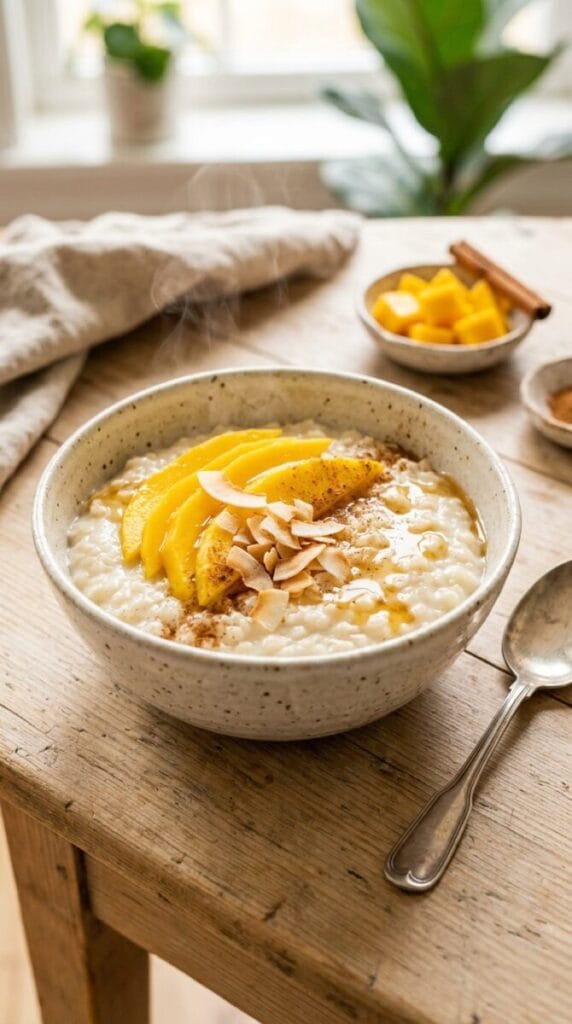
This porridge works as a standalone breakfast with generous toppings — fresh mango and toasted coconut flakes are the most natural combination and the one that makes this taste most like something from a Thai or Balinese breakfast buffet.
For a full breakfast spread, serve this alongside our Easy Greek Yogurt Fruit Dip with seasonal sliced fruit — the cold, creamy, tangy yogurt dip provides a contrasting temperature and flavour to the warm, sweet, coconut-rich porridge, and together they make a genuinely complete breakfast spread for a leisurely weekend morning.
Variations That Take This in Different Directions
Add 1 teaspoon of ground turmeric and a 1/2 inch piece of fresh ginger (peeled and sliced) to the porridge during cooking for a golden, warmly spiced version — remove the ginger before serving and top with a drizzle of honey and black sesame seeds. The turmeric and ginger direction makes this feel more medicinal and warming, particularly good during colder months.
Stir 2 tablespoons of matcha powder dissolved in 2 tablespoons of warm water into the cooked porridge just before serving for a matcha coconut rice porridge with an earthy, slightly bitter green tea note against the sweet coconut base — top with red bean paste and mochi for a Japanese-inspired bowl.
Make a savoury version by omitting the sugar, vanilla, and lemon zest and replacing them with a teaspoon of fish sauce (or soy sauce for a vegan version), a sliced green onion, and a minced garlic clove cooked in the pot for 60 seconds before the rice goes in. Top with a soft-boiled or poached egg, a drizzle of sesame oil, sliced green onions, and a pinch of white pepper for a version that is closer to congee than a sweet porridge — warming and deeply satisfying in an entirely different direction from the sweet version.
Nutritional Information
| Nutrient | Amount Per Serving (without toppings) |
|---|---|
| Calories | 310 kcal |
| Protein | 4 g |
| Carbohydrates | 42 g |
| Fats | 14 g |
These values are estimates based on one can of full-fat coconut milk and 1 cup of jasmine rice divided by 4 servings, without toppings. Adding fresh mango (approximately 60 calories per 100g) and toasted coconut flakes (approximately 35 calories per tablespoon) is the recommended topping approach and adds approximately 100 to 150 calories per bowl depending on quantity.
Making It Ahead and Reheating
The porridge thickens significantly as it cools — what looks like a properly poured consistency hot will be considerably thicker cold from the fridge. This is expected and normal. Store in an airtight container in the fridge for up to 4 days.
To reheat, transfer the desired portion to a small saucepan with 2 to 3 tablespoons of coconut milk or water and stir over medium-low heat until warmed through and returned to a creamy consistency — the added liquid reverses the thickening that happened during storage. The microwave also works in 90-second intervals with stirring between each, adding a tablespoon of liquid if the consistency is too thick.
The porridge does not freeze well — the rice grains become mushy and the coconut milk separates on thawing, producing a thin, grainy result that doesn’t resemble the original. Make only as much as will be eaten within four days.
Where This Can Go Wrong
Cooking at too high a heat causes the coconut milk to separate and scorch at the bottom of the pan — the low simmer is not negotiable and the scorched bottom flavour contaminates the entire pot. If you notice a slightly nutty or bitter smell from the bottom while stirring, immediately reduce the heat and add a splash of water, stirring vigorously off the heat before returning to low.
Not stirring often enough allows the rice to settle and stick at the bottom of the pan, particularly during the first 10 minutes when the porridge is still thin and the rice can sit undisturbed against the hot pan surface — stir every 3 to 4 minutes throughout and scrape the bottom of the pan with each stir to keep everything in motion.
Using light coconut milk or coconut milk from a carton rather than full-fat canned produces a thin porridge that doesn’t develop the characteristic creaminess regardless of how long it cooks — the fat content in full-fat coconut milk is not optional for this result and cannot be compensated for by cooking longer or adding less water.
Creamy Coconut Milk
Rice Porridge
A warm, silky rice porridge simmered with full-fat coconut milk, vanilla, and bright citrus zest. Naturally dairy-free, gluten-free, and perfect with fresh mango, toasted coconut, or your favorite toppings.
Ingredients
Instructions
Rinse the rice in cold water two or three times, until the water runs mostly clear. This removes excess surface starch while leaving enough starch behind to create a creamy texture.
Add rinsed rice, coconut milk, water, sugar, salt, lemon or lime zest, and optional pandan leaf to a medium saucepan. Stir well to combine.
Bring the mixture to a gentle boil over medium-high heat, stirring occasionally so the rice does not settle and stick to the bottom of the pan.
Reduce heat to medium-low. Keep the porridge at a gentle simmer rather than a hard boil to prevent the coconut milk from separating or scorching.
Cook for 25–30 minutes, stirring every 3–4 minutes and scraping the bottom of the pan. The rice should be tender and the porridge should be thick, creamy, and spoonable.
Remove the pandan leaf, if using. Stir in the vanilla extract off the heat. If the porridge is thicker than you prefer, loosen it with a splash of coconut milk or water.
Kitchen Notes
Full-fat canned coconut milk is essential for a rich, velvety porridge. Carton coconut milk is much thinner and will not create the same result.
A steady, gentle simmer prevents the coconut milk from separating and helps prevent scorching on the bottom of the saucepan.
Stir every few minutes, scraping the bottom of the pot each time. This keeps the rice moving and protects the coconut milk from burning.
The porridge thickens as it rests. Stir in a little water or coconut milk whenever you want a looser, silkier consistency.
Easy Variations
Add 1 teaspoon ground turmeric and several slices of fresh ginger during cooking. Remove ginger before serving and top with honey and black sesame seeds.
Stir 2 tablespoons of matcha dissolved in warm water into the finished porridge for an earthy green-tea version. Try it with red bean paste or mochi.
Skip sugar, vanilla, and zest. Add garlic, green onion, fish sauce or soy sauce, then serve with a soft-boiled egg and sesame oil.
Top generously with ripe mango, toasted coconut flakes, chopped peanuts, and an extra drizzle of coconut milk for a dessert-like breakfast bowl.
Store cooled porridge in an airtight container in the refrigerator for up to 4 days.
Add 2–3 tablespoons coconut milk or water per serving and warm gently over medium-low heat, stirring until creamy again.
Warm in 90-second intervals, stirring between each interval. Add a splash of liquid if the porridge has thickened too much.
Freezing is not recommended. Rice becomes mushy and the coconut milk can separate once thawed.