
Cottage Cheese Cheesecake Recipe
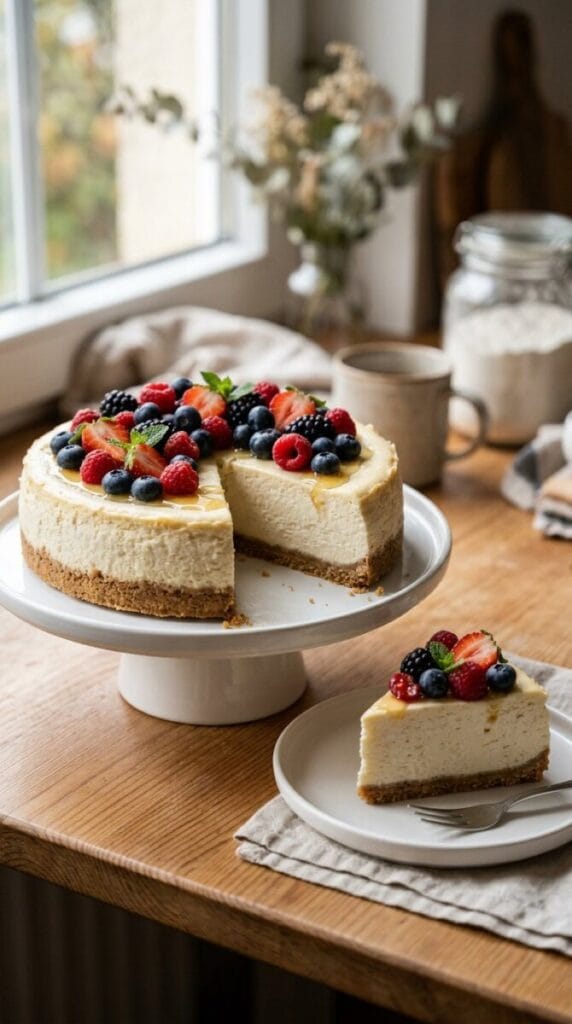
This Cottage Cheese Cheesecake is the high-protein dessert that genuinely earns that description — a baked cheesecake where blended full-fat cottage cheese replaces most of the cream cheese, producing a filling that is noticeably lighter in texture and significantly higher in protein than a traditional cheesecake while still being creamy, properly set, and unmistakably cheesecake-like in every way that matters.
The cottage cheese trend that swept social media was built on the realisation that blended cottage cheese — smooth, neutral, protein-dense — behaves almost identically to cream cheese in baked applications. This cheesecake takes that discovery to its most satisfying conclusion: a full, properly baked cheesecake with a graham cracker crust, a vanilla-forward filling, and the structural integrity to slice cleanly and hold its shape on a plate, at approximately half the fat of a traditional New York cheesecake and with nearly double the protein per slice.
The key is the blending step — cottage cheese not blended completely smooth produces a lumpy, grainy filling that bakes into a cheesecake with visible curd texture. Blended until genuinely smooth, it is indistinguishable from cream cheese in the filling and the finished cheesecake holds its own against any full-fat version in both texture and flavour.
Why Cottage Cheese Works as a Cheesecake Base
Cottage cheese and cream cheese share the same fundamental dairy profile — both are fresh, acid-set cheeses with a mild, slightly tangy flavour and a fat content that contributes to creamy texture. The difference is the form: cottage cheese is curdy and wet, cream cheese is smooth and spreadable. Blending removes that difference completely and what remains is a smooth, thick dairy base that behaves identically to cream cheese in a baked cheesecake — it sets when heated with eggs, holds its structure when cooled, and provides the richness and slight tang that makes cheesecake taste like cheesecake.
The protein advantage is significant — 1 cup of full-fat cottage cheese contains approximately 25 grams of protein compared to approximately 8 grams in 1 cup of cream cheese. A slice of this cheesecake provides approximately 18 to 20 grams of protein per slice, which places it firmly in the high-protein dessert category without any protein powder or supplement.
- Prep Time: 20 minutes
- Cook Time: 50 to 55 minutes
- Chill Time: 4 hours minimum, overnight preferred
- Total Time: 5 hours 15 minutes total, 20 minutes active
- Yield: one 9-inch cheesecake, 10 to 12 slices
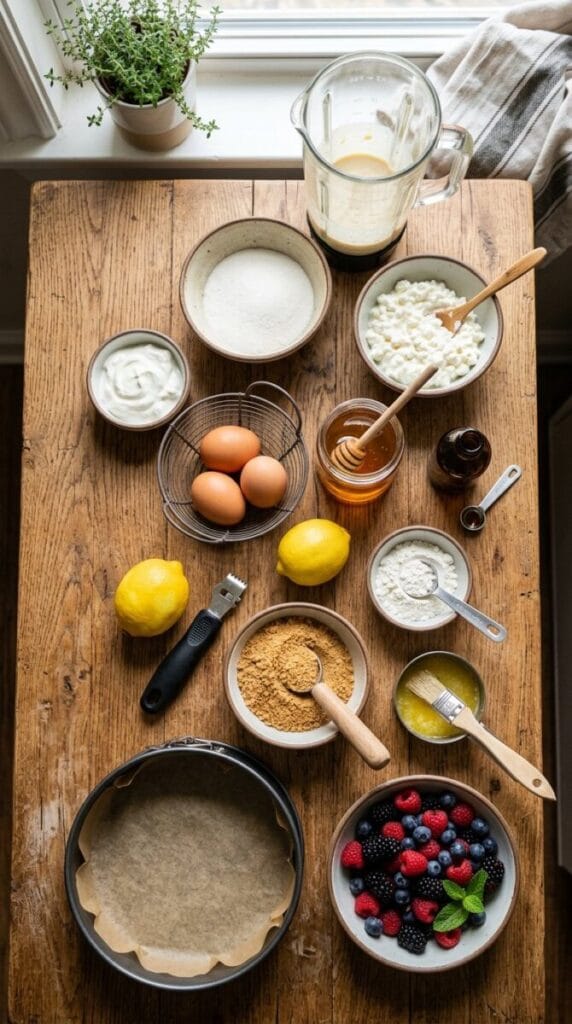
What You Need
For the graham cracker crust:
- Graham cracker crumbs: 1 1/2 cups (150g) — about 10 full graham crackers, processed to fine crumbs
- Granulated sugar: 2 tablespoons
- Ground cinnamon: 1/4 teaspoon
- Unsalted butter, melted: 5 tablespoons (70g)
For the cottage cheese cheesecake filling:
- Full-fat cottage cheese: 2 cups (450g) — full-fat produces the creamiest result; low-fat or non-fat cottage cheese has a higher water content that can produce a slightly less set, more watery filling
- Full-fat cream cheese, at room temperature: 8 oz (226g) — a full block provides the structural fat and richness that pure cottage cheese alone cannot quite replicate; the combination produces a better result than either ingredient alone
- Granulated sugar: 3/4 cup (150g)
- Large eggs: 3
- Full-fat plain Greek yogurt or sour cream: 1/4 cup (60g) — adds tang and helps the filling set to a creamy rather than rubbery texture
- Pure vanilla extract: 2 teaspoons
- Lemon juice: 1 tablespoon
- Lemon zest: 1/2 teaspoon
- Cornstarch: 2 tablespoons — provides additional structural stability for a filling that is slightly higher in water content than an all-cream-cheese cheesecake
- Fine sea salt: 1/4 teaspoon
For topping options:
- Fresh strawberry compote or berry sauce
- Fresh fruit — sliced strawberries, blueberries, or mango
- A simple sour cream topping (1/2 cup sour cream + 1 tablespoon sugar + 1/4 teaspoon vanilla, spread over the hot cheesecake immediately after it comes from the oven)
- Honey drizzle and crushed pistachios
How to Make It
The critical first step — blending the cottage cheese:
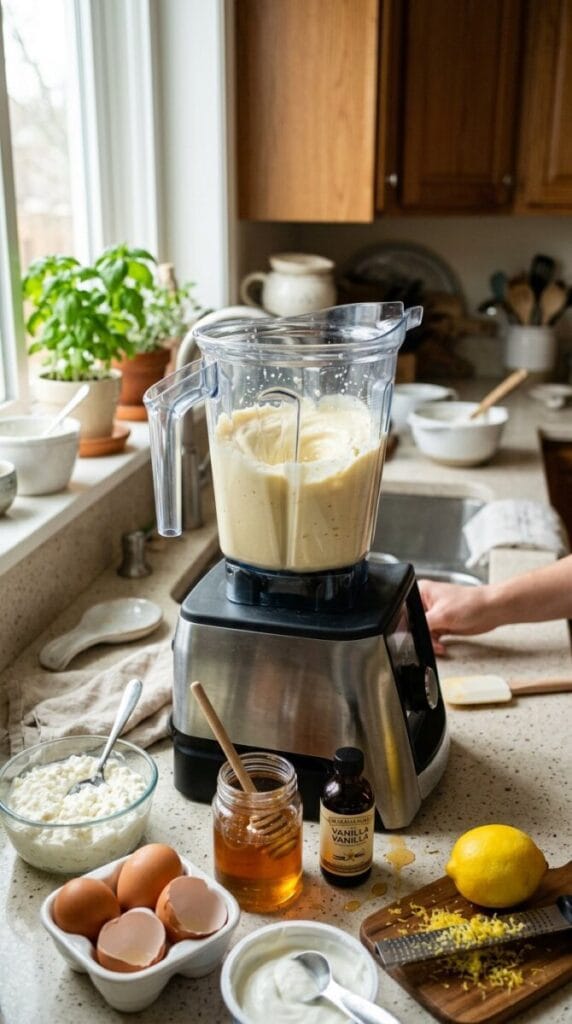
- Place the cottage cheese in a high-speed blender or food processor and blend on high for a full 60 seconds — stop and scrape down the sides, then blend for another 30 to 45 seconds until the cottage cheese is completely, genuinely smooth with no visible curds remaining. Hold the blender up to the light and look through the mixture — if any texture is visible, keep blending. The cottage cheese must be smoother than you think it needs to be; any residual texture produces a noticeably grainy filling.
- Transfer to a bowl and set aside — the blended cottage cheese should look and flow like a thick Greek yogurt or a loose cream cheese.
Making the crust:
- Preheat the oven to 325°F (165°C).
- Combine the graham cracker crumbs, sugar, cinnamon, and melted butter in a bowl and stir until the crumbs are evenly moistened — the mixture should hold its shape when pressed together.
- Press firmly into the bottom and 1 inch up the sides of a 9-inch springform pan — use the bottom of a measuring cup to press the crust to a compact, even thickness. An even crust bakes and releases more cleanly than an uneven one.
- Bake for 10 minutes until lightly golden and fragrant. Set aside to cool slightly while making the filling.

Making the filling and baking:
- Beat the room-temperature cream cheese in a large bowl until completely smooth — at least 1 minute with a hand mixer on medium speed.
- Add the blended cottage cheese and beat until fully combined and smooth.
- Add the sugar and beat for 1 minute until incorporated.
- Add the eggs one at a time, beating on low speed after each addition until just combined — overbeating the eggs incorporates air that expands in the oven and can cause the cheesecake to rise dramatically and then collapse and crack as it cools.
- Add the Greek yogurt, vanilla, lemon juice, lemon zest, cornstarch, and salt and beat on low until just combined.
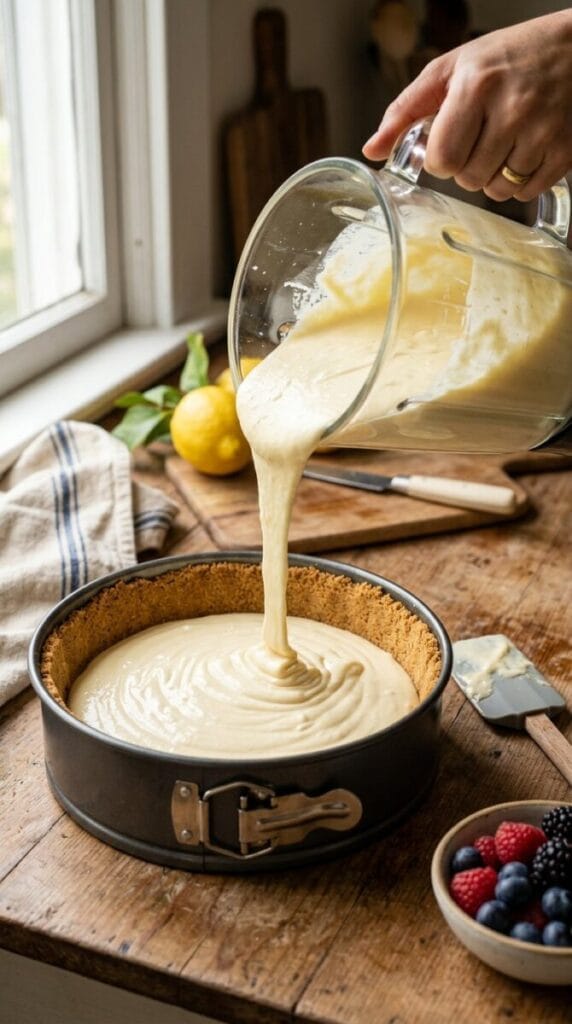
- Pour the filling over the pre-baked crust and smooth the surface.
- Place the springform pan on a baking sheet and bake at 325°F for 50 to 55 minutes until the edges are set and the center has a gentle wobble — a 3-inch circle in the very center should jiggle like set gelatin when the pan is shaken. The cheesecake will look slightly underdone — this is correct.
- Turn off the oven, crack the door 2 inches, and leave the cheesecake in the oven for 1 hour — this gradual cooling prevents the surface crack that results from rapid temperature change.
- Remove from the oven, run a thin knife around the edge of the pan to release the cheesecake from the sides, and cool completely at room temperature for 1 hour before covering and refrigerating for at least 4 hours, overnight preferred.
- Release the springform ring, transfer to a serving plate, and add toppings before slicing.
Cottage cheese cheesecake alongside our Perfect New York Style Cheesecake makes the most instructive dessert comparison on this site — the two cheesecakes use the same structural principles and the same baking method, and tasting them side by side makes the cottage cheese version’s lighter, slightly airier texture immediately apparent alongside the denser, richer cream cheese version. Both are excellent; they are simply different.
Why the Blending Step Defines the Entire Result
Cottage cheese contains casein protein arranged in curds — small, solid spheres of coagulated protein suspended in a watery whey liquid. Those curds do not dissolve during baking; they remain as distinct particles unless mechanically broken down by blending before the filling is mixed. A filling made with insufficiently blended cottage cheese produces a cheesecake with a visible grainy texture that no amount of perfect baking technique can resolve.
The blending time matters — 30 seconds in most blenders is not enough to fully break down the casein curds. A full 60 to 90 seconds on high speed, with a scrape-down and second blend, produces the completely smooth result required. The difference between 45 seconds of blending and 90 seconds is immediately visible in the texture of the blended cottage cheese, and even more visible in the finished cheesecake.
Combining cottage cheese with cream cheese rather than using cottage cheese alone produces a better cheesecake than either ingredient used exclusively — the cream cheese provides the fat and structural density that pure cottage cheese lacks (resulting in a slightly watery, less rich filling on its own), while the cottage cheese provides the protein boost and lightened texture that an all-cream-cheese filling doesn’t have. According to The Kitchn, blended cottage cheese is significantly lower in fat than cream cheese — approximately 5 grams of fat per 100g for full-fat cottage cheese versus 34 grams per 100g for cream cheese — which is why a combination produces a filling that has more protein than all-cream-cheese while retaining more structural richness than all-cottage-cheese.
What to Serve Alongside
A simple strawberry compote — 2 cups of fresh or frozen strawberries simmered with 2 tablespoons of sugar and 1 teaspoon of lemon juice for 8 minutes until thickened — is the most natural topping that bridges the slight tang of the cottage cheese filling with a sweet, bright fruit note.
For a dessert table, this cheesecake alongside our Panna Cotta gives guests two different creamy, set dairy desserts in completely different textures — the panna cotta trembles and flows from a spoon while the cheesecake holds a clean slice — and the contrast between them makes each taste more interesting than it would on a table where only one creamy dessert was present.
Variations That Stay High-Protein
Make it a no-bake cottage cheese cheesecake — blend the cottage cheese as directed, beat with the cream cheese, sugar, vanilla, and lemon as above, but replace the eggs and cornstarch with 2 teaspoons of powdered gelatin bloomed in 2 tablespoons of cold water and dissolved in 2 tablespoons of warm cream, then folded into the filling. Pour over a pre-baked or chilled crust and refrigerate for 6 hours minimum. The no-bake version is softer than the baked version and must be served cold, but avoids the oven entirely and produces a lighter, mousse-like texture.
Add 1/2 cup of peanut butter to the filling alongside the blended cottage cheese and cream cheese for a peanut butter cottage cheese cheesecake — reduce the sugar to 1/2 cup to account for the peanut butter’s sweetness. Top with a dark chocolate ganache. The peanut butter and cottage cheese combination is one of the highest-protein cheesecake fillings possible, reaching approximately 25 grams of protein per slice.
Replace the graham cracker crust with an almond flour and butter crust (1 1/2 cups almond flour, 3 tablespoons melted butter, 1 tablespoon sugar, pressed and baked at 325°F for 12 minutes) for a lower-carbohydrate version that works for anyone avoiding refined grain products while keeping the high-protein filling intact.
Nutritional Information
| Nutrient | Amount Per Slice (based on 10 slices, without topping) |
|---|---|
| Calories | 320 kcal |
| Protein | 18 g |
| Carbohydrates | 28 g |
| Fats | 15 g |
These values are estimates for the full recipe including the graham cracker crust divided by 10 slices, without toppings. The 18-gram protein per slice reflects the combined cottage cheese and cream cheese filling — significantly higher than a traditional cheesecake slice at approximately 6 to 8 grams of protein. Adding a strawberry compote topping adds approximately 35 calories and 1 gram of additional fibre per slice.
Storing This Cheesecake
Store covered in the springform pan (sides removed) or transferred to a covered container in the fridge for up to 5 days — the cheesecake actually improves in flavour and texture from day one to day two as the filling fully sets and the vanilla and lemon flavours develop. Day-two cottage cheese cheesecake is reliably better than day-one.
Freeze individual slices wrapped in plastic and sealed in a freezer bag for up to 2 months — the protein structure of the cottage cheese filling is stable at freezer temperatures and the texture after thawing is virtually identical to fresh-baked. Thaw overnight in the fridge for the best result. Do not freeze with a fruit topping already applied — add the topping fresh after thawing.
Where This Can Go Wrong
Under-blending the cottage cheese is the most common and most impactful mistake — the word “smooth” in the recipe instruction means genuinely, completely smooth with zero visible texture, which takes longer in most home blenders than you expect. If you are not sure whether the blending is complete, it isn’t — blend for another 30 seconds and check again.
Beating the eggs on high speed after adding them to the filling incorporates too much air into the batter, which causes the cheesecake to puff dramatically in the oven, crack across the surface as the air expands, and then sink as it cools — the crack you see on an over-beaten cheesecake is not from temperature change but from excess air. Beat the eggs on low speed for exactly long enough to incorporate them — 15 to 20 seconds per egg — and stop as soon as they are combined.
Skipping the in-oven cooling after baking is the step most often cut when time is short and the one that most determines the surface appearance — the rapid temperature change of moving a hot cheesecake to a cold countertop causes the surface to contract faster than the interior, creating the surface crack that makes a home cheesecake look amateur. The 1-hour in-oven rest with a cracked door brings the temperature down gradually and produces a smooth, uncracked surface that is the visual difference between a cheesecake that photographs well and one that needs fruit topping to disguise a structural failure.
Cottage Cheese Cheesecake
A creamy baked cheesecake made with blended full-fat cottage cheese, cream cheese, vanilla, lemon, and a golden graham cracker crust. Lighter than classic cheesecake, but still smooth, sliceable, and properly rich.
Why This Recipe Works
Blended cottage cheese behaves like a smooth, thick dairy base in cheesecake. Once the curds are fully broken down, it bakes with eggs and cream cheese into a creamy, tangy filling that slices cleanly.
The combination of cottage cheese and cream cheese gives the best result: cottage cheese adds protein and a lighter texture, while cream cheese adds richness, fat, and classic cheesecake structure.
Ingredients
Instructions
Add cottage cheese to a high-speed blender or food processor. Blend on high for 60 seconds, scrape down the sides, then blend another 30 to 45 seconds until completely smooth with no visible curds.
Preheat oven to 325°F / 165°C. Set out a 9-inch springform pan.
Stir graham cracker crumbs, sugar, cinnamon, and melted butter until evenly moistened. The mixture should hold its shape when pressed together.
Press the crust firmly into the bottom and about 1 inch up the sides of the springform pan. Use the bottom of a measuring cup for an even layer. Bake for 10 minutes, then cool slightly.
Beat room-temperature cream cheese in a large bowl for at least 1 minute on medium speed until completely smooth.
Add the blended cottage cheese and beat until smooth. Add the sugar and beat for 1 minute until incorporated.
Add eggs one at a time, beating on low speed just until combined after each addition. Do not overbeat, or the cheesecake can puff, collapse, and crack.
Add Greek yogurt or sour cream, vanilla, lemon juice, lemon zest, cornstarch, and salt. Beat on low speed only until just combined.
Pour filling over the pre-baked crust and smooth the top. Place the springform pan on a baking sheet. Bake for 50 to 55 minutes, until the edges are set and the center still has a gentle 3-inch wobble.
Turn off the oven, crack the door about 2 inches, and leave the cheesecake inside for 1 hour. This gradual cooling helps prevent cracks.
Remove from the oven, run a thin knife around the edge, and cool at room temperature for 1 hour. Cover and refrigerate at least 4 hours, preferably overnight.
Release the springform ring, transfer to a serving plate, and top with strawberry compote, fresh fruit, honey, pistachios, or your preferred topping before slicing.
Key Technique Notes
Cottage cheese curds do not disappear during baking. Blend until the mixture is genuinely smooth before mixing the filling.
Beating eggs on high adds air, which can make the cheesecake puff, collapse, and crack.
The center should jiggle like set gelatin. A cheesecake that looks fully firm in the oven is usually overbaked.
The cheesecake finishes setting in the fridge. Overnight chilling gives the cleanest slices and best texture.
Helpful Pairing Note
Variations
Skip eggs and cornstarch. Use 2 teaspoons powdered gelatin bloomed in cold water and dissolved in warm cream, then fold into the blended filling and chill for at least 6 hours.
Add ½ cup peanut butter to the filling, reduce sugar to ½ cup, and top with dark chocolate ganache. This version can reach about 25g protein per slice.
Replace the graham crust with 1½ cups almond flour, 3 tablespoons melted butter, and 1 tablespoon sugar. Press and bake at 325°F for 12 minutes.
Simmer 2 cups strawberries with 2 tablespoons sugar and 1 teaspoon lemon juice for 8 minutes until thickened. Cool before spooning over the cheesecake.
Nutrition
| Nutrient | Amount Per Slice |
|---|---|
| Calories | 320 kcal |
| Protein | 18 g |
| Carbohydrates | 28 g |
| Fat | 15 g |
Values are estimates based on 10 slices, including the graham cracker crust and no topping. Strawberry compote adds approximately 35 calories per slice.
Store covered in the fridge for up to 5 days. The flavor and texture improve from day one to day two.
Wrap individual slices in plastic and seal in a freezer bag for up to 2 months. Thaw overnight in the refrigerator.
Do not freeze with fruit topping already added. Add compote, fruit, honey, or nuts after thawing.
The cottage cheese was under-blended. Blend until there are absolutely no visible curds.
Eggs may have been overbeaten, or the cheesecake cooled too quickly. Mix eggs on low and cool in the oven.
Low-fat or non-fat cottage cheese can add excess water. Full-fat cottage cheese gives the creamiest, most stable filling.
The cheesecake was not chilled long enough. Chill at least 4 hours, and overnight if possible.