How to Make Sweet Soy Butter Korean Rice Cakes at Home
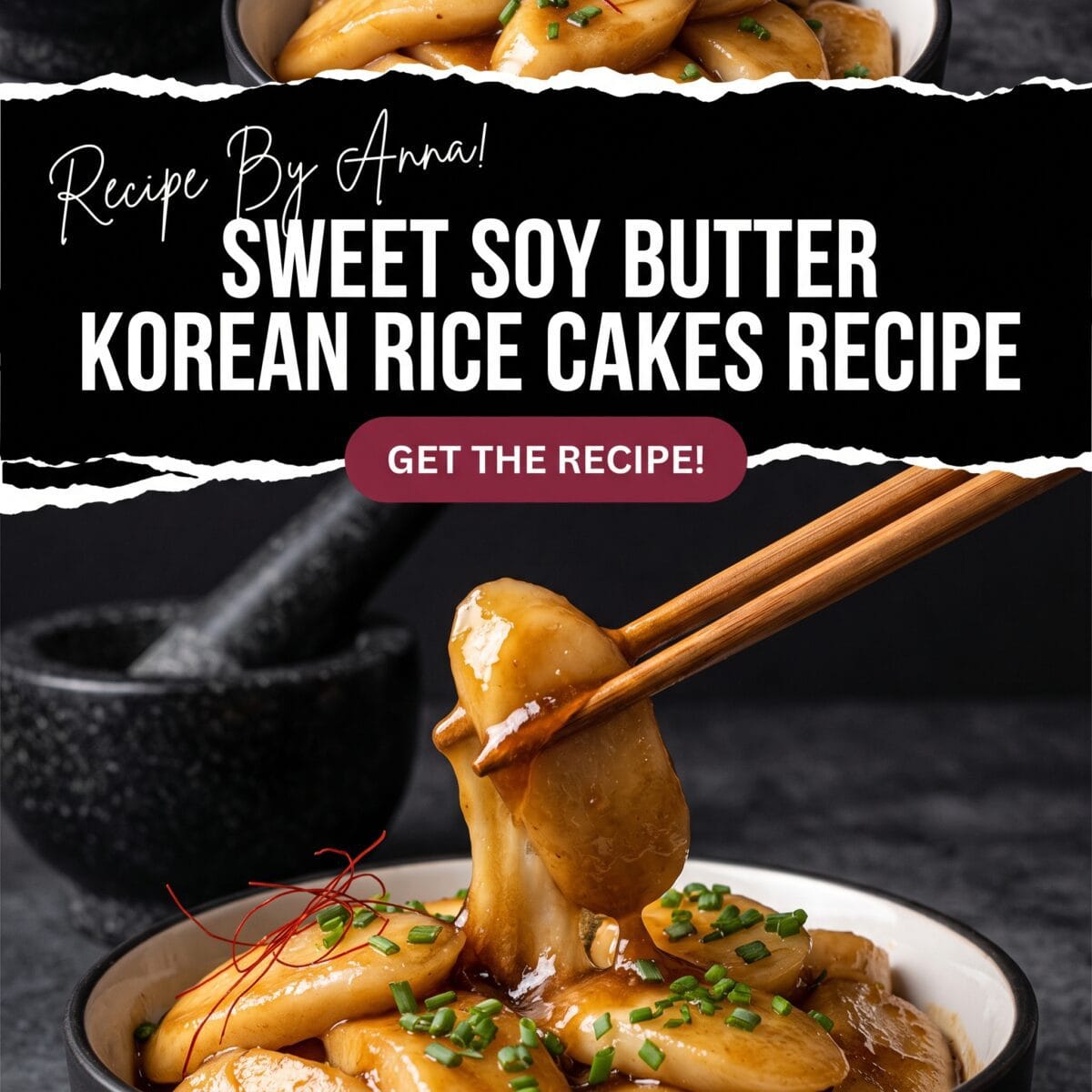
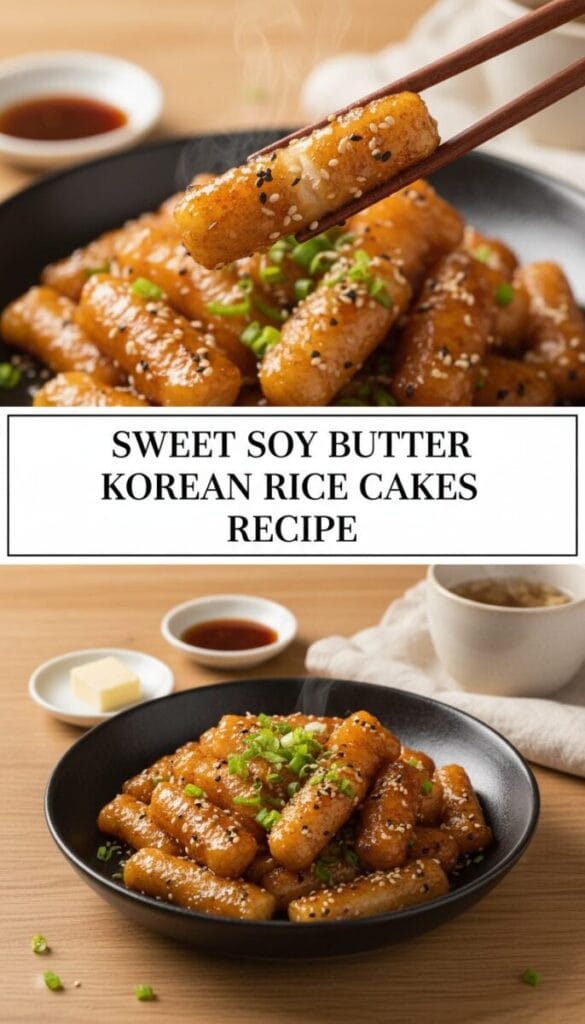
These Sweet Soy Butter Korean Rice Cakes are the weeknight dish that sounds complicated, looks impressive, and genuinely takes about fifteen minutes once the rice cakes are soaked — chewy, slightly crispy tteok coated in a glaze of soy sauce, butter, honey, and garlic that caramelises into something sticky, golden, and impossible to stop eating.
Tteok, the Korean rice cake used in this dish, is worth getting to know if you haven’t already. They’re made from glutinous rice flour pressed into cylindrical or oval shapes, and they have a uniquely dense, chewy texture that stays firm through cooking rather than going soft the way pasta would. The cylinder shape (tteokbokki tteok) is the most common and easiest to find, and the chew is the whole point — it’s what makes each bite satisfying in a way that a regular noodle dish simply isn’t.
The sweet soy butter glaze is the Korean-Japanese fusion detail that puts this dish in a category of its own — the butter rounds out the soy sauce into something richer and more complex, the honey adds caramel sweetness that promotes the browning, and the combination coats every chewy cylinder in something that behaves almost like a lacquer as it sets.
Jump to RecipeWhy This Recipe Is Worth Adding to Your Regular Rotation
Fifteen minutes of active cooking from a handful of pantry staples and you have something that tastes like it came from a Korean street food stall — that ratio of effort to reward is genuinely hard to beat.
It also works as a side dish, a snack, an appetiser, or a light main depending on what you put alongside it — few dishes this simple are this flexible across different meal contexts.
- Prep Time: 5 minutes, plus 20 to 30 minutes soaking time for the rice cakes
- Cook Time: 12 to 15 minutes
- Total Time: 35 to 40 minutes
- Yield: 2 to 3 servings as a side, 2 as a main
What You’ll Need
- Korean rice cakes (tteokbokki tteok, cylinder shape): 400g (about 14 oz)
- Unsalted butter: 2 tablespoons (28g)
- Garlic cloves, minced: 3
- Low-sodium soy sauce: 3 tablespoons
- Honey: 2 tablespoons
- Brown sugar, packed: 1 tablespoon
- Sesame oil: 1 teaspoon
- Rice wine or mirin: 1 tablespoon
- Gochugaru (Korean chilli flakes): 1/2 teaspoon (optional, for heat)
- Black pepper: 1/4 teaspoon
- Water: 3 tablespoons
- Neutral oil: 1 tablespoon, for searing
- Toasted sesame seeds: 1 tablespoon, for garnish
- Green onions, thinly sliced: 2, for garnish
How to Make Them
- Soak the rice cakes in cold water for at least 20 to 30 minutes if they are refrigerated or frozen — this softens them enough to cook through quickly and prevents them from staying hard in the centre. If using freshly made or shelf-stable rice cakes, you can skip the soak and go straight to cooking.
- Drain the soaked rice cakes and pat completely dry with paper towels — excess moisture prevents searing and turns the glaze watery rather than sticky.
- Whisk the soy sauce, honey, brown sugar, sesame oil, rice wine, gochugaru if using, black pepper, and water together in a small bowl and set the sauce aside.
- Heat the neutral oil in a large non-stick skillet or cast iron pan over medium-high heat until shimmering.
- Add the rice cakes in a single layer and press them gently against the pan — sear without moving for 2 to 3 minutes until a golden crust forms on the bottom.
- Flip the rice cakes and sear the other side for another 2 minutes — they should be lightly golden and slightly crispy on the outside while still chewy inside.
- Reduce the heat to medium and push the rice cakes to one side of the pan.
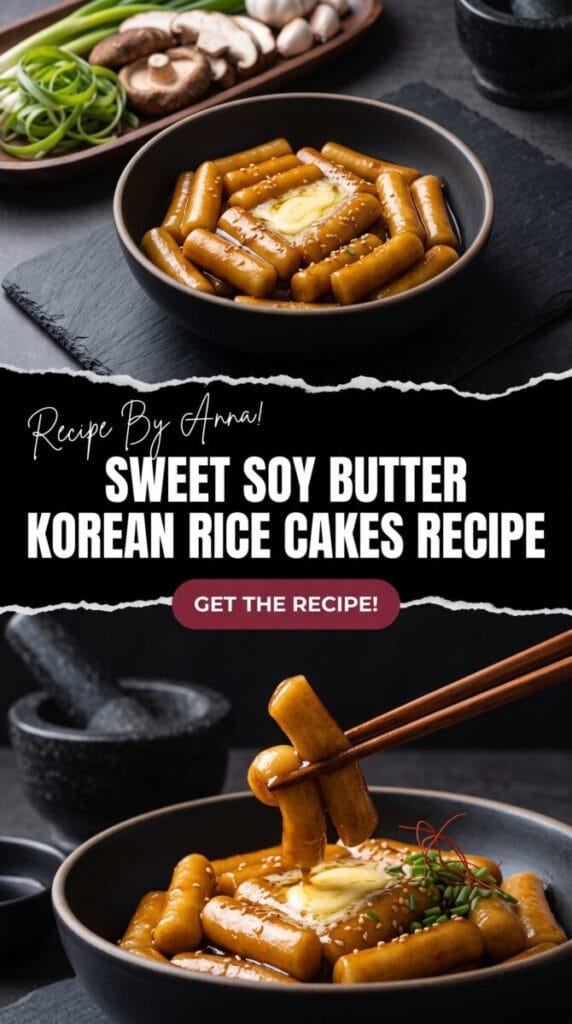
- Add the butter to the empty side of the pan and let it melt, then add the minced garlic and cook in the butter for 30 to 45 seconds until golden and fragrant.
- Pour the prepared sauce over the rice cakes and garlic butter and toss everything together quickly to coat.
- Cook for 2 to 3 minutes, stirring frequently, until the sauce thickens, reduces, and coats every rice cake in a glossy, caramelised glaze.
- Remove from heat and drizzle the sesame oil over the top if you haven’t added it to the sauce already.
- Transfer to a serving plate immediately and garnish with toasted sesame seeds and sliced green onions.
If you love chewy, sauced Korean-inspired dishes, our Caramelised Soy Chicken in Garlic Ginger Broth uses almost the same sweet soy and garlic building blocks in a completely different format — a great companion recipe for the same weeknight flavour mood.
The Details That Turn Good Into Great
Drying the rice cakes thoroughly after soaking is not optional if you want a sear. Water on the surface of the rice cakes creates steam the moment they hit the hot oil, which drops the pan temperature, prevents browning, and dilutes the sauce when it goes in. Paper towels and a few extra seconds of drying genuinely change the outcome.
Searing before saucing is the step most pan-cooked rice cake recipes skip, and it’s the step that creates the textural contrast that makes this dish interesting — a slightly crispy, golden exterior that holds the chew underneath rather than a uniformly soft rice cake that’s just coated in sauce. The sear takes 5 minutes and is entirely worth it.
Adding the butter and garlic after the sear rather than at the start of cooking prevents the garlic from burning during the high-heat sear phase — burnt garlic taints the entire glaze with bitterness that no amount of honey corrects. Melt the butter in the residual heat after the sear, let the garlic bloom gently in it, and only then add the sauce. According to Serious Eats, garlic begins to burn at around 350°F — well below the searing temperature needed for rice cakes — which is why sequencing the garlic after the high-heat step is a technique decision, not a preference.
Watch the sauce reduction carefully in the final 2 to 3 minutes — the honey and sugar in the glaze can go from perfectly caramelised to scorched in under a minute once the moisture evaporates. Keep the heat at medium rather than medium-high for this final stage and stir constantly.
What to Serve Alongside
These rice cakes work naturally alongside other Korean-inspired dishes — a simple cucumber banchan, steamed edamame, or a fried egg on top for a more substantial meal are all practical options that come together while the rice cakes are cooking.
For a complete Asian-inspired dinner with these as a side, our Easy Garlic Bok Choy Stir-Fry is the fastest green vegetable that shares the garlic-sesame flavour profile and cooks in the same fifteen-minute window — a genuinely practical pairing where both dishes are done at the same time.
Variations That Change the Whole Direction
Add 1 to 2 tablespoons of gochujang (Korean red chilli paste) to the sauce for a spicy version that moves the dish from sweet and savoury toward the bold, spicy-sweet flavour of traditional tteokbokki. Start with one tablespoon since gochujang varies significantly in heat level between brands.
Stir in a tablespoon of cream cheese during the final sauce stage for a viral internet variation that sounds unlikely but produces a genuinely creamy, slightly tangy glaze that balances the soy and honey beautifully — the cream cheese melts into the sauce rather than sitting in chunks.
Add thinly sliced fish cakes (eomuk) to the pan after the sear step for a more traditional Korean street food direction — they absorb the sauce beautifully and add another layer of texture without changing the cooking time.
For a completely different way to use the same sweet-savoury soy and sesame flavour profile in a quick weeknight dinner, our Sticky Chicken Rice Bowls hit the same notes in a protein-forward bowl format that works well on nights when you want something more filling than a side dish of rice cakes.
Nutritional Information
| Nutrient | Amount Per Serving (based on 3 servings) |
|---|---|
| Calories | 390 kcal |
| Protein | 6 g |
| Carbohydrates | 68 g |
| Fats | 10 g |
These values are estimates based on standard tteok and full measurements of butter and honey, divided by 3 servings. Rice cakes are naturally high in carbohydrates as a rice-flour-based ingredient — this dish is not low-carb, but the portions are satisfying enough that a smaller serving works well as a side alongside a protein.
Where to Find Korean Rice Cakes
Tteokbokki tteok are available in the refrigerated or frozen section of any Korean grocery store and most large Asian supermarkets. They are increasingly available in the international food aisle of mainstream grocery chains in areas with larger Asian communities.
Online ordering from Korean grocery delivery services is the most reliable option if local stores don’t carry them — they ship refrigerated or frozen and keep for several weeks once received.
Avoid substituting with Japanese mochi or Chinese rice cakes — the textures are different in ways that affect how they behave in this specific glaze. Korean tteokbokki tteok has a specific density and chew that is the point of the dish.
Storing and Reheating
Store leftovers in an airtight container in the fridge for up to 2 days. The rice cakes will harden noticeably as they cool and firm up completely in the fridge — this is normal and expected behaviour for tteok.
Reheat in a non-stick skillet over medium heat with a splash of water (about 2 tablespoons) — the water rehydrates the rice cakes and loosens the glaze back to a sauce consistency as it heats. Stir frequently for 3 to 4 minutes until the rice cakes are soft and chewy again and the sauce has re-coated everything. The microwave works in a pinch but tends to make the rice cakes unevenly textured, with some spots rubbery and others still hard.
Where This Recipe Can Go Wrong
Skipping the soak on refrigerated or frozen rice cakes is the most common mistake — unsoftened tteok are very dense and will stay hard in the centre even after several minutes in the pan, since the surface crisps long before the interior has time to soften. Twenty to thirty minutes in cold water is not optional for cold rice cakes.
Crowding the pan during the sear stage prevents browning for the same reason crowding causes problems in every pan-seared dish — the accumulated moisture from closely packed rice cakes creates steam rather than direct heat contact, and you end up with pale, soft rice cakes rather than a golden crust. Sear in batches if your pan isn’t large enough to spread them in a single layer with some space between.
Letting the sauce reduce too far on high heat burns the sugar and honey in the glaze before the sauce has had a chance to coat the rice cakes evenly — the glaze goes from perfect to scorched in under a minute once most of the liquid is gone. Medium heat and constant stirring in the final stage is the difference between a glossy caramel glaze and a sticky, slightly bitter coating.
How to Make Sweet Soy Butter Korean Rice Cakes at Home
Course: AppetizersDifficulty: Easy2
servings5
minutes20
minutes390
kcalIngredients
400g (14 oz) Korean rice cakes (tteokbokki tteok)
2 tablespoons unsalted butter
3 garlic cloves, minced
3 tablespoons low-sodium soy sauce
2 tablespoons honey
1 tablespoon packed brown sugar
1 teaspoon sesame oil
1 tablespoon mirin or rice wine
½ teaspoon gochugaru (optional)
¼ teaspoon black pepper
3 tablespoons water
1 tablespoon neutral oil
1 tablespoon toasted sesame seeds
2 green onions, thinly sliced
Directions
- If using refrigerated or frozen rice cakes, soak them in cold water for 20–30 minutes. Drain well and pat completely dry with paper towels.
- In a small bowl, whisk together the soy sauce, honey, brown sugar, sesame oil, mirin, gochugaru (if using), black pepper, and water.
- Heat the neutral oil in a large non-stick skillet over medium-high heat.
- Arrange the rice cakes in a single layer and sear for 2–3 minutes until lightly golden.
- Flip the rice cakes and cook for another 2 minutes until both sides are lightly crisp.
- Reduce the heat to medium and push the rice cakes to one side of the pan.
- Add the butter to the empty side of the skillet. Once melted, stir in the minced garlic and cook for 30–45 seconds until fragrant.
- Pour the prepared sauce into the skillet and toss the rice cakes until evenly coated.
- Continue cooking for 2–3 minutes, stirring constantly, until the sauce thickens into a glossy glaze.
- Transfer to a serving plate immediately.
- Garnish with toasted sesame seeds and sliced green onions before serving.
Notes
- Soaking refrigerated or frozen rice cakes helps them cook evenly and stay soft inside.
Dry the rice cakes well before searing to achieve a crispy exterior.
Sear the rice cakes before adding the sauce for the best texture.
Keep the heat at medium when reducing the glaze to prevent the honey from burning.
Add a fried egg, fish cakes, or sautéed vegetables for a heartier meal.
For extra spice, stir in 1–2 tablespoons of gochujang with the sauce.