Cream Cheese Frosting – Smooth, Creamy and Stable Every Time
This Cream Cheese Frosting recipe solves the problem most people have with it — the sliding, the weeping, the tangy-but-soupy result that refuses to hold a swirl or stay put on a cake more than an hour after it’s frosted. This version is silky, stable, and genuinely pipeable, thanks to a specific ratio and a method that keeps it thick without making it stiff.
The key is starting with cold cream cheese, not room-temperature cream cheese, and beating it separately from the butter before the two ever meet. That single reversal of the standard method is what eliminates the loose, almost runny texture that makes most homemade cream cheese frosting frustrating to work with.
Once you have this ratio and method locked in, it becomes the frosting you reach for first on carrot cake, red velvet, banana cake, spice cake, and anything else that calls for something with a little tang.
Jump to RecipeWhy This Version Stays Put
Most cream cheese frosting recipes tell you to bring everything to room temperature before you start. That produces a soft, flavorful frosting that’s lovely to taste but nearly impossible to pipe cleanly or use on a stacked layer cake without it sliding.
This recipe uses cold cream cheese beaten until smooth before anything else touches it, then adds softened butter for richness and powdered sugar for structure. The cold cream cheese acts as the stabilizing backbone the whole batch builds on.
- Prep Time: 10 minutes
- Total Time: 10 minutes
- Yield: about 3 cups, enough to frost a 2-layer 8-inch cake or 24 cupcakes
What Goes Into It
- Full-fat cream cheese, cold straight from the fridge: 16 oz (452g), two standard bricks
- Unsalted butter, softened to room temperature: 1/2 cup (113g)
- Powdered sugar, sifted: 3 cups (360g)
- Pure vanilla extract: 2 teaspoons
- Fine sea salt: 1/4 teaspoon
- Heavy cream: 1 to 2 tablespoons, only if needed to adjust consistency
How to Make It Correctly
- Take the cream cheese directly from the fridge and cut each brick into eight pieces — do not let it come to room temperature.
- Beat the cold cream cheese in a stand mixer fitted with the paddle attachment, or with a hand mixer, on medium-high speed for 2 to 3 full minutes until it is completely smooth, creamy, and lump-free. Scrape down the bowl twice during this step.
- Add the softened butter to the beaten cream cheese and mix on medium speed for another 2 minutes until fully combined and fluffy. The mixture will look slightly curdled at first — keep mixing and it will smooth out completely.
- Reduce the mixer to low and add the sifted powdered sugar one cup at a time, mixing until each addition is incorporated before adding the next.
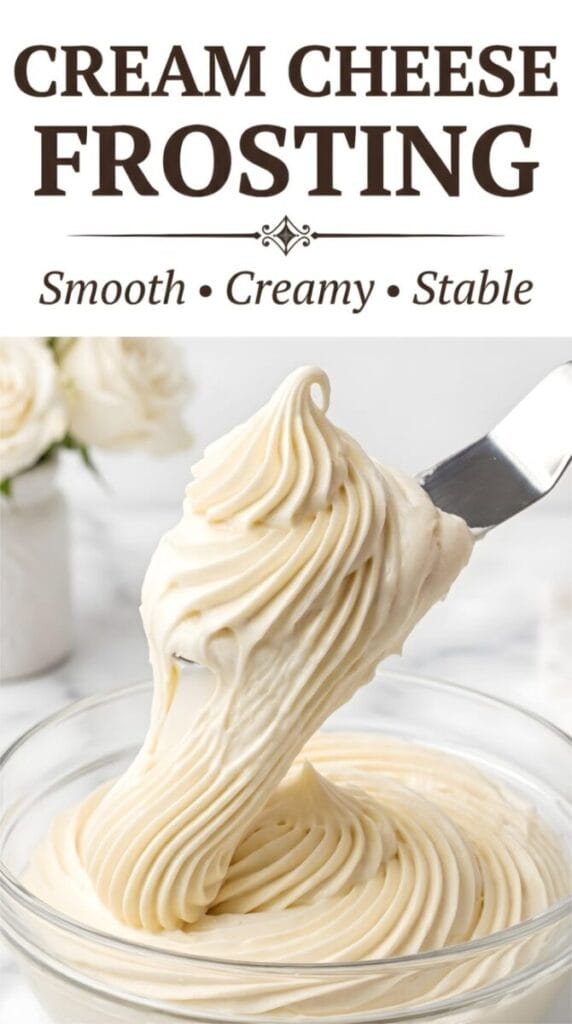
- Add the vanilla extract and salt, then increase the speed to medium and beat for 1 final minute until the frosting is smooth, thick, and holds a soft peak when you lift the beater.
- Taste and adjust — more powdered sugar for sweetness and structure, a tablespoon of heavy cream if it’s too stiff to spread comfortably, a pinch more salt if the sweetness is too sharp.
- Use immediately or cover tightly and refrigerate until needed.
This frosting was made for our Homemade Carrot Cake — the classic pairing that never gets old. The cake recipe is straightforward and comes together in one bowl, so the two together make a genuinely manageable bake-from-scratch project.
The Technique Details That Make It Stable
Cold cream cheese is the foundation of the whole method. Warm or room-temperature cream cheese loses its structure the moment it’s beaten and mixed with butter — the fat softens to the point where the frosting can’t hold its shape under the weight of a cake layer or the heat of a room. Cold cream cheese beaten until smooth first keeps the fat structure intact while still producing a completely lump-free result.
Sifting the powdered sugar is not optional if you want a frosting without any grainy texture. Powdered sugar clumps easily in the bag, and those clumps don’t fully dissolve during mixing the way people assume they do. Thirty seconds with a sifter saves ten minutes of beating that still might not fully fix it. According to King Arthur Baking, sifting powdered sugar before adding it to any frosting is the single most effective step for achieving a smooth, professional-quality texture without overbeating.
Don’t rush the beating time at the beginning. Two to three minutes on medium-high just for the cream cheese seems like a lot before anything else is added, but that’s the step that eliminates every trace of lumpiness. A frosting with lumpy cream cheese cannot be fixed after the sugar is in — the sugar binds the texture and those lumps stay.
How Much This Recipe Makes and When to Scale It
Three cups of frosting covers a 2-layer 8-inch round cake with a generous crumb coat and a thick outer layer, or frosts 24 standard cupcakes with a piped swirl on each one.
For a 3-layer cake, a sheet cake, or a project where you want extra frosting for decorating or filling, scale the recipe up by half — 24 oz of cream cheese, 3/4 cup of butter, 4.5 cups of powdered sugar.
For 12 cupcakes with a simple spread rather than a piped swirl, half the recipe is plenty — 8 oz of cream cheese, 1/4 cup butter, 1.5 cups powdered sugar.
Flavored Variations That Work With This Base
Lemon cream cheese frosting: replace the vanilla extract with 1 tablespoon of fresh lemon juice and 1 teaspoon of lemon zest. The acidity brightens the tang of the cream cheese without making it sour, and it’s a beautiful match for a blueberry or poppy seed cake.
Brown butter cream cheese frosting: brown the butter first, chill it back to solid softened consistency, then use it in place of the regular butter. It adds a nutty, caramel-like depth that takes the frosting from good to extraordinary on a banana cake or spice cake.
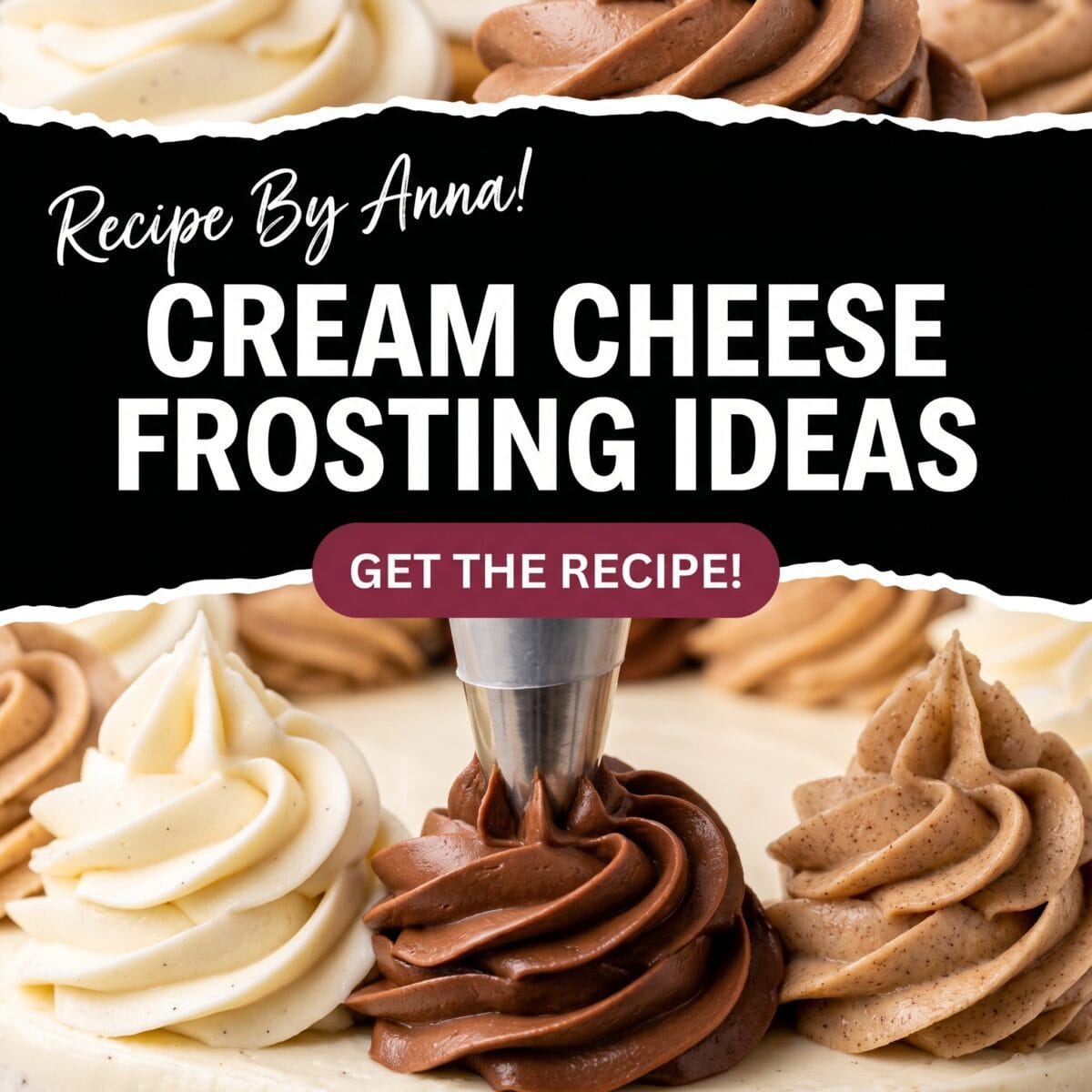
Cinnamon cream cheese frosting: add 1 teaspoon of ground cinnamon with the powdered sugar for a version that pairs naturally with our Apple Fritter Muffins or any warm-spiced bake instead of a plain vanilla glaze.
Chocolate cream cheese frosting: add 1/3 cup of sifted unsweetened cocoa powder with the powdered sugar. Reduce the sugar by 1/4 cup since cocoa adds bitterness that balances the sweetness. Rich, tangy, and excellent on a dark chocolate layer cake.
Nutritional Information
| Nutrient | Amount Per Serving (about 2 tablespoons) |
|---|---|
| Calories | 130 kcal |
| Protein | 1 g |
| Carbohydrates | 16 g |
| Fats | 7 g |
These values are estimates based on the full batch divided by approximately 24 servings of 2 tablespoons each. The amount per serving will vary significantly depending on how thickly you apply the frosting.
Storing, Making Ahead, and Bringing It Back to Life
This frosting keeps in an airtight container in the fridge for up to 5 days. It will firm up considerably in the fridge — this is actually the point, since a chilled cake with chilled cream cheese frosting holds its shape and slices cleanly without the layers sliding.
To use cold frosting that’s too stiff to spread, let it sit at room temperature for 10 to 15 minutes and then beat it briefly with the mixer before applying. Do not microwave it — uneven heating melts the fat and can break the emulsion, leaving you with a greasy, separated frosting that can’t be fixed.
Frosted cakes and cupcakes should be stored in the fridge and pulled out 20 to 30 minutes before serving so the frosting softens slightly and the flavor comes through fully. Cold frosting straight from the fridge tastes dull and muted compared to the same frosting at a slightly warmer temperature.
Cream cheese frosting also freezes well. Freeze it in an airtight container for up to 2 months, thaw overnight in the fridge, then beat briefly to restore the smooth texture before using. Our Easy Box Mix Turtle Cake is another great candidate for this frosting if you want to use the batch across two projects without making it twice.

The Mistakes That Turn Cream Cheese Frosting Into a Problem
Using low-fat or whipped cream cheese is the most common culprit behind frosting that won’t hold its shape — both have a much higher water content than full-fat block cream cheese, and that extra water prevents the frosting from ever setting firm. Always use full-fat block cream cheese, not the spreadable kind in a tub, not the reduced-fat version.
Adding too much liquid too early is the second biggest mistake. Heavy cream should be added only after the full batch is mixed and only if the frosting is genuinely too stiff to spread — not as a standard step. One tablespoon too many of liquid at this ratio can take the frosting from perfectly stable to too soft to pipe in about thirty seconds.
Beating the frosting too long after the sugar is in incorporates air, which lightens the color but also loosens the structure and can lead to a frosting that looks beautiful in the bowl but spreads too softly on the cake. Once the sugar is fully combined and the frosting is smooth, stop mixing.
Cream Cheese Frosting – Smooth, Creamy and Stable Every Time
Course: DessertCuisine: AmericanDifficulty: Easy24
servings9
minutes10
minutes130
kcalIngredients
16 oz (2 blocks) full-fat cream cheese, cold
1/2 cup unsalted butter, softened
3 cups powdered sugar, sifted
2 teaspoons vanilla extract
1/4 teaspoon fine sea salt
1 to 2 tablespoons heavy cream (optional, for consistency)
Directions
- Cut the cold cream cheese into small chunks and place in a large mixing bowl.
- Beat the cream cheese with a hand mixer or stand mixer for 2 to 3 minutes until completely smooth and lump-free.
- Add the softened butter and beat for 2 more minutes until fluffy and fully combined.
- Reduce the mixer speed to low and gradually add the powdered sugar, one cup at a time.
- Add the vanilla extract and salt.
- Beat on medium speed for 1 minute until smooth and creamy.
- If needed, add 1 tablespoon of heavy cream at a time to reach your desired consistency.
- Use immediately or refrigerate until ready to frost cakes or cupcakes.
Notes
- Always use full-fat block cream cheese, not whipped or spreadable cream cheese.
Starting with cold cream cheese helps create a thicker, more stable frosting.
Sift the powdered sugar to prevent lumps.
Avoid overmixing after adding the sugar, which can make the frosting too soft.
For best piping results, chill the frosting for 15 to 20 minutes before decorating.