

Cozy Vegetarian Chili Mac — One-Pot Comfort
Some dinners are projects, and some dinners are hugs. Chili mac is a hug. It’s everything good about a simmering pot of chili — smoky cumin, tomatoes, beans, corn — and everything good about mac and cheese, fused into one dish that cooks in a single pot in about thirty minutes. The elbows simmer right in the chili itself, drinking up all that seasoned tomato broth as they cook, and then cheddar gets folded through the whole pot at the end until every noodle wears a melty, spicy coat. No draining. No second pot. No meat, and I promise you’ll never once miss it.
This is the vegetarian version, built to satisfy the hungriest people you know. Black beans and kidney beans bring the heft and protein, corn brings little bursts of sweetness, and the chili seasoning does the heavy flavor lifting. It’s a certified crowd-pleaser: kids love it because mac and cheese, adults love it because it tastes like game day and couch blankets, and the cook loves it because there’s exactly one pot to wash. Around here, that last part earns a standing ovation. The dish itself is just dinner.
And the timing is what makes it a weeknight hero. Ten minutes of chopping and stirring, a short simmer to build the chili base, ten minutes for the pasta to cook right in the sauce, cheese, done. Thirty minutes, start to finish, and most of that is the pot doing the work while you stay out of its way. Monday nights could learn a thing or two from this recipe. Some of them already have.
Why This Pot Wins
The one-pot magic here is liquid math. Elbow macaroni cooks in roughly three cups of liquid, so the chili base is built with exactly enough broth for the pasta to absorb — the sauce thickens itself as the noodles cook, turning what starts as a brothy chili into a glossy, clinging sauce without a single drop of draining or a slurry in sight. Every bit of flavor you put in the pot stays in the pot. It’s the most honest kind of cooking: nothing leaves, nothing wasted, everything seasoned.
The vegetarian depth comes from layering. Onions and bell pepper build the aromatic base, and the spices — chili powder, cumin, smoked paprika, oregano — get bloomed in the hot fat for thirty seconds before anything liquid joins, which wakes up their oils and doubles their impact (a little trick that makes people think you simmered all day, which you did not, and I’ll never tell). The beans go in with their seasonings and a few minutes of simmering to meld, the tomatoes bring acid and body, and the cheddar finale is stirred in off the heat so it melts into a smooth, creamy blanket instead of a greasy string pile. Soy sauce in the base? Yes — one small spoonful, for umami depth that stands in exactly where ground beef used to stand. Nobody will clock it. Everybody will taste it.
⏱️ 30 MIN | 🌱 MEATLESS | 🍝 ONE POT
- Prep Time: 10 minutes
- Cook Time: 20 minutes
- Total Time: 30 minutes
- Yield: 5 generous bowls
One-Pot Lineup
Short list, on purpose:
- Deep skillet, sauté pan, or Dutch oven — anything with a lid and heavy bottom; the pasta needs room to swim and stir.
- Wooden spoon — for stirring from the bottom, which this recipe asks of you often (the pasta will thank you by not sticking).
- Chef’s knife and board — one onion, one pepper, a few cloves of garlic. That’s the whole chopping workload.
- Can opener — beans and tomatoes do the heavy lifting tonight; cans are the sous chefs.
- Box grater — for the cheddar, freshly grated from the block. It melts smoother than the pre-shredded bag, which carries anti-caking starch like a grudge.
- Lid or foil — for the final cheese-melt minute, if you like it bubbly.
Ingredients (With Labels)
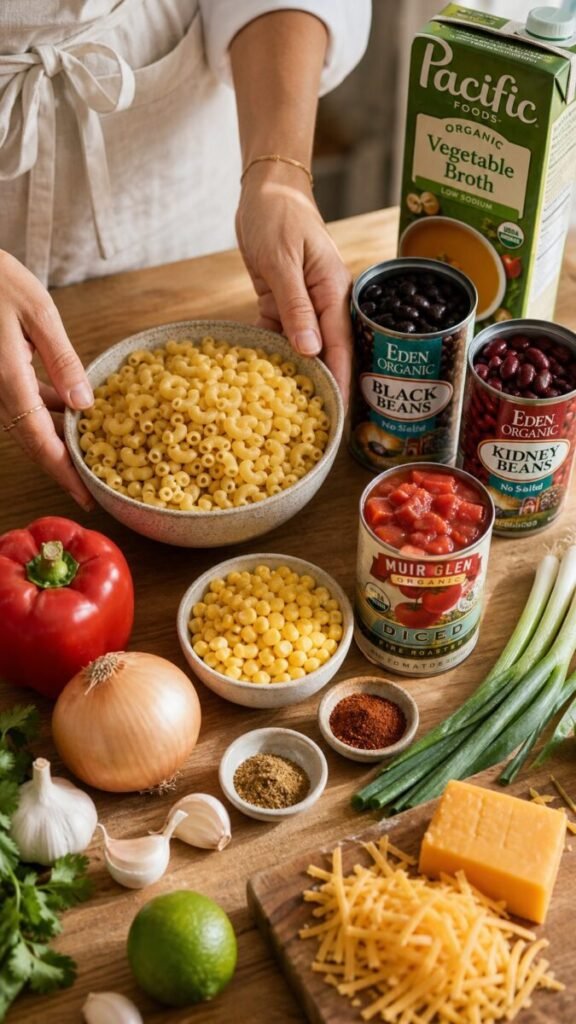
🧅 The Aromatics & Spices
- Olive oil: 2 tablespoons
- Yellow onion: 1 medium, diced
- Red bell pepper: 1, diced — red for sweetness and color; any color works
- Garlic: 3 cloves, minced
- Chili powder: 2 tablespoons
- Ground cumin: 1 tablespoon
- Smoked paprika: 1 teaspoon — the cozy, campfire note
- Dried oregano: 1 teaspoon, plus cayenne: 1/4 teaspoon (or to taste — you know your table)
- Soy sauce: 1 tablespoon — the secret umami player; use tamari to keep it gluten-free
🍅 The Chili Body
- Diced tomatoes: 1 can (14.5 oz), with their juices
- Vegetable broth: 3 cups — this is the pasta’s cooking liquid, so measure it honestly
- Black beans: 1 can (15 oz), drained and rinsed
- Kidney beans: 1 can (15 oz), drained and rinsed — pinto works too
- Corn: 1 cup — frozen (no thawing) or canned, drained
🧀 The Mac & Cheese Finish
- Elbow macaroni: 8 oz (about 2 cups) — shells and cavatappi are excellent substitutes
- Sharp cheddar: 1 1/2 cups grated, plus more for serving
- Milk: 1/4 cup — for the creamy finish
- Salt and black pepper: to taste
🥑 The Topping Bar
- Sliced green onions, fresh cilantro, and lime wedges — the fresh finish
- Sour cream or Greek yogurt, avocado slices, and hot sauce — build your own cozy
Step by Step How to Make
- Step 1 — Sauté the vegetables. Heat the olive oil in your pot over medium heat. Add the onion and bell pepper with a pinch of salt and cook 4 to 5 minutes, until softened and just picking up color at the edges. Stir in the garlic and cook one minute more, until fragrant. This little sauté is where the sweetness starts — no rushing it.
- Step 2 — Bloom the spices. Add the chili powder, cumin, smoked paprika, oregano, and cayenne directly to the pot and stir for 30 seconds, until the spices smell toasty and turn one shade deeper. That half-minute is doing an hour’s worth of flavor work — bloomed spices in hot oil release their aromatic oils, and skipping it is the most common reason chili tastes dusty instead of deep.
- Step 3 — Build the chili. Pour in the diced tomatoes with their juices, the vegetable broth, both cans of beans, the corn, and the soy sauce. Stir well, scraping up any spices stuck to the bottom (that stuck layer is flavor concentrate — bail it out). Bring to a gentle boil and let it bubble for 5 minutes so the flavors start marrying. It already smells like the good part of the week.
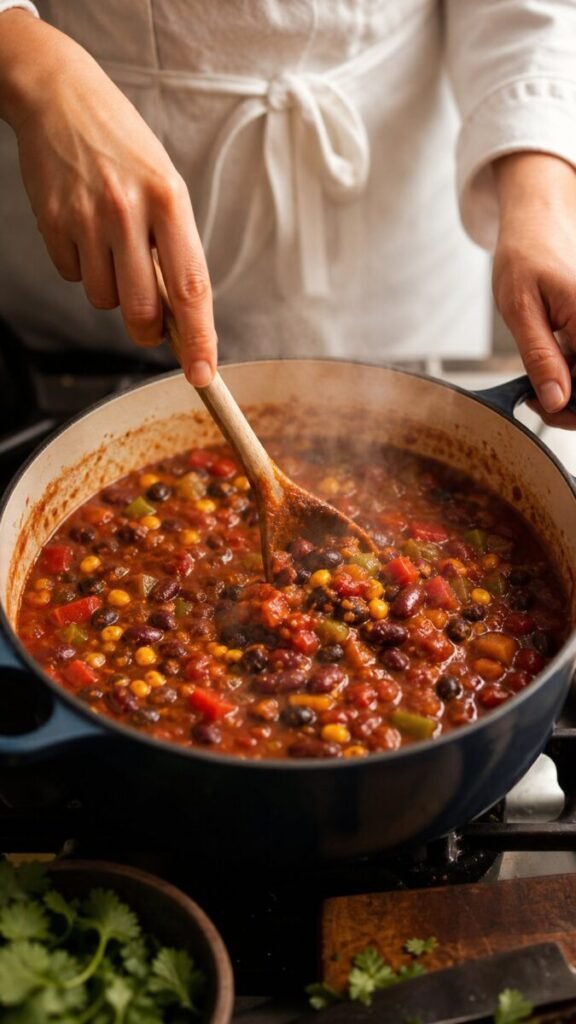
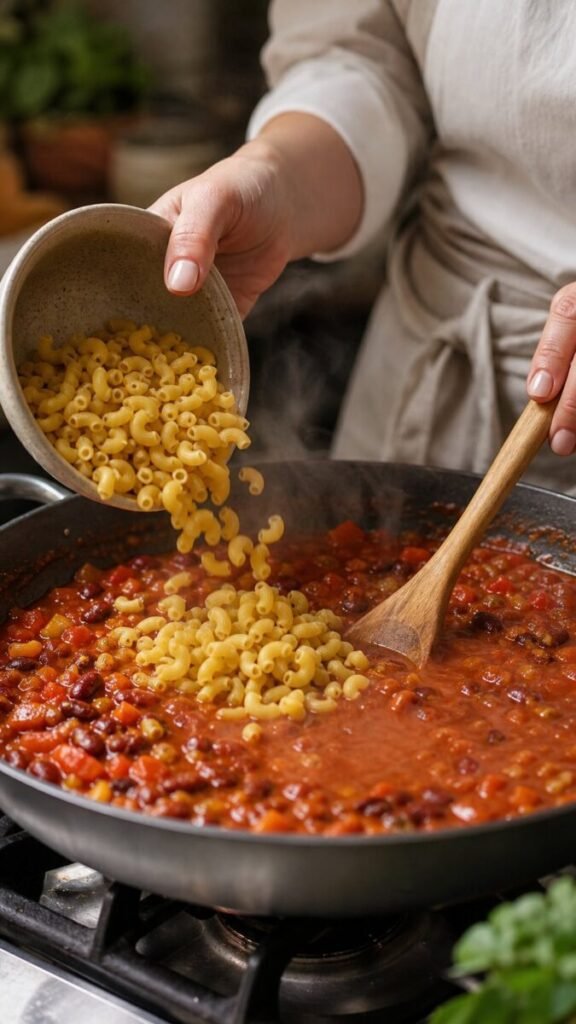
- Step 4 — Add the pasta. Stir in the dry elbow macaroni, reduce the heat to a steady medium simmer, and cook 9 to 11 minutes, stirring every minute or so and always from the bottom of the pot. The pasta cooks right in the chili, absorbing seasoned broth into every curve. Taste a noodle at minute 9: it should be just tender with a hint of bite, because it keeps softening in the hot pot after the heat’s off.
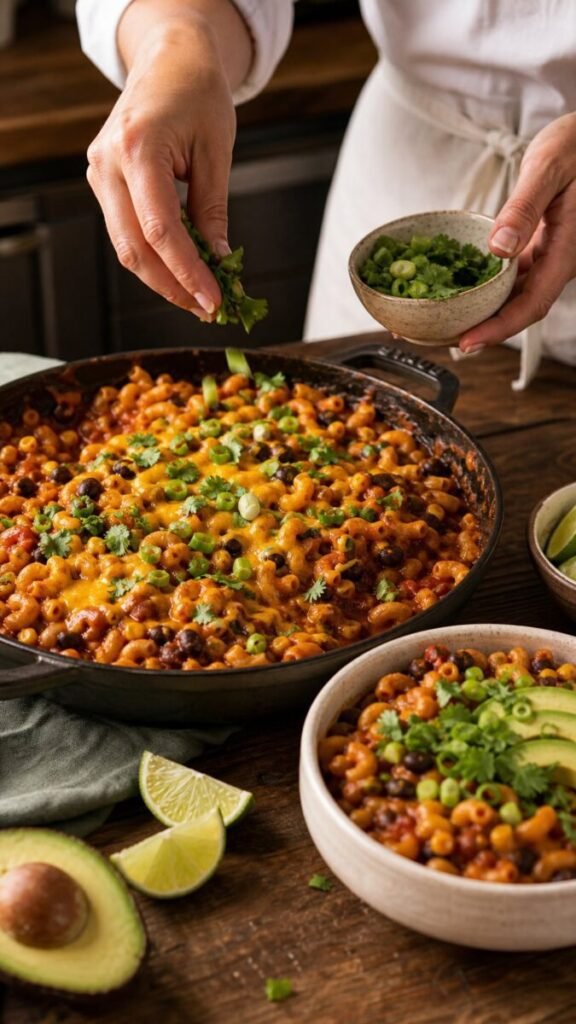
- Step 5 — Cheese it, off the heat. When the pasta is done, the sauce should be thick and glossy, clinging to the noodles. Kill the heat. Stir in the milk, then add the cheddar one handful at a time, stirring until each handful melts before the next joins. Off the heat is the rule — boiling cheese sauce is how you get grainy, greasy disappointment, and this pot deserves better. Let it rest 5 minutes; the sauce thickens to a perfect spoon-coating consistency while you set out the toppings.
- Step 6 — Top it your way. Ladle into bowls and set out the whole topping bar: green onions, cilantro, a squeeze of lime, sour cream, avocado, extra cheddar, hot sauce. A squeeze of lime at the end is the quiet showstopper — that hit of acid makes all the tomato and cheese flavors pop like a fitted sheet finally folding right. Serve hot, and accept requests for the rest of your life with grace.
Beans and tomatoes run in the family — our Creamy Parmesan Tomato and Cannellini Bean Soup is this pot’s gentler cousin: same pantry logic, same one-bowl comfort, completely different mood. Chili mac for the wild weeks, cannellini soup for the quiet ones.
Pot Luck (The Good Kind)
Measure the broth honestly. The 3 cups is the pasta’s cooking liquid — too little and the noodles fight for it, too much and you’ve made chili soup (also delicious, but a different recipe). If the pot looks dry before the pasta is tender, add hot broth or water a splash at a time. The pasta, not the clock, decides.
Stir from the bottom, every minute. Pasta sitting in a thickening sauce wants to settle and stick. A quick bottom-scraping stir each minute keeps everything moving and the pot bottom clean. It’s one minute of attention in ten — the best insurance policy in the recipe.
Rinse the beans. Canned bean liquid is starchy and cloudy, and it can taste tinny. A quick rinse in a colander means a cleaner-tasting chili — fifteen seconds, noticeable difference.
The lime is not optional. Or at least, it shouldn’t be. A heavy, cheesy, tomato-y pot needs a flash of acid at the end to taste balanced — the same reason great chili garnishes with sour cream and why tomato soup pairs with grilled cheese. One wedge, squeezed over the bowl, and everything gets louder in the best way.
Taste at the end, then salt. Broth, soy sauce, canned tomatoes, and cheddar all bring salt at slightly different volumes, so the only reliable move is tasting the finished pot and seasoning then. If it tastes flat rather than bland, it wants lime or a dash of hot sauce before it wants salt.
Alongside the Pot
The pot is a full meal on its own, but a couple of supporting acts make it a spread. Something green and crisp cuts the richness — our Easy Vegetarian Cabbage Noodle Stir brings crunch and comes together in minutes. For the crunch-lovers who treat toppings as a food group, a plate of Crispy Onion Parmesan Chips on the side gets demolished before the chili mac even cools. And if you’re feeding a vegetarian crowd and want a second main, our Veggie Rice Bake rounds out the table without a single repeat flavor. Weeknight rotation, fully staffed.
Chili Mac Detours
Three-Bean Upgrade — add a can of pinto beans alongside the black and kidney, or swap in chickpeas for one of them. More beans, more texture, more of everything that makes the dish filling. Bean people know.
Spicy Sichuan Direction — double the cayenne, add a spoon of chili crisp at the end, and you’re drifting toward dan-dan territory — heat lovers should see how our Sichuan-Style Dan Dan Noodles handle noodle-plus-chili-heat for inspiration. Same cravings, different passport.
Sweet Potato Skillet — dice one small sweet potato small and simmer it in the chili base until tender before adding the pasta. It drinks up the chili seasoning and adds sunny, caramel-sweet bites that play beautifully against the cheddar.
Chili Mac Cups for Kids — spoon the finished chili mac into muffin tins, top with a little extra cheddar, and broil until bubbly. Little servings, crispy cheese edges, and suddenly the pickiest table in town has a favorite food. Parenting hack, kitchen disguise.
White Chili Mac — swap the diced tomatoes for an extra cup of broth, use white beans and green chiles, and finish with pepper jack instead of cheddar. Same technique, gentler, greener, completely lovable. It’s the chili mac that went on a spa retreat and came back glowing.
Bowl Budget
| Nutrient | Per Bowl (1 of 5, before toppings) |
|---|---|
| Calories | 490 kcal |
| Protein | 19 g |
| Carbohydrates | 71 g |
| Fats | 14 g |
Estimates for the pot as written, toppings on their own conscience. Nineteen grams of protein and a serious fiber count from the double beans — this is one of the rare comfort dishes where the second bowl is arguably a responsible decision. Arguably. I’ve made the argument. I stand by it.
Second-Day Story
Chili mac is an elite leftover — the flavors deepen overnight, and lunch the next day tastes like the pot got a second, better audition. Store it covered in the fridge for up to 4 days.
One honest note: the pasta keeps absorbing sauce as it sits, so day-two chili mac is thicker, almost casserole-proud. That’s not a flaw — add a splash of broth or water while reheating, low heat, stirring, and it loosens right back up. The microwave works for single bowls: 60 to 90 seconds, stir halfway, splash of liquid on top.
Freezing gets a qualified yes: freeze fully cooled portions airtight for up to 2 months and accept that the pasta will be a touch softer after thawing. Reheat gently with a splash of broth and a fresh handful of cheddar, which rewrites all kinds of history. For meal-prep lunches, I freeze in single portions and consider them future favors to myself — the kindest thing a Tuesday can open.
Where the Pot Bites Back
Pasta stuck to the bottom. Heat too high or stirring too shy. The pasta stage wants a steady, gentle simmer and a bottom-scraping stir every minute. If you smell toasting that isn’t spice-related, lower the heat immediately and keep the spoon moving.
Mushy, blown-out noodles. They overcooked — either too long on the heat or kept cooking in a too-hot pot. Pull the pasta at just-tender (taste at minute 9), and remember the pot stays hot after the burner’s off. Elbows go from perfect to paste on a short schedule.
Brothy, soup-thin sauce. Under-simmered pasta or a generous broth pour. Uncover and simmer a few extra minutes — the pasta drinks and the sauce reduces. It should coat a spoon like it means it.
Grainy, oily cheese. The cheese boiled. Add cheddar only off the heat, a handful at a time, and it stays silky. If it’s already grainy, a splash of milk and gentle stirring usually pulls it back together — the sauce just needs a peace talk.
Bland chili, sad kitchen. Almost always unbloomed spices or a missing finish. Hit the spices in hot oil for those thirty seconds, and end with the lime wedge and a final salt check. Flat-tasting usually means it wants acid and salt, not more chili powder — season smart, not just harder.
Chili Mac Chatter
Can I make chili mac vegan?
Yes, easily. Skip the cheddar and milk in the finale and stir in a cup of nutritional yeast plus a half cup of unsweetened plant milk, or use vegan shredded cheese (add it off the heat, same rule). Top with avocado, cilantro, and lime instead of sour cream. The chili base is already vegan — the beans, corn, tomatoes, and spices never needed any help.
Can I use a different pasta shape?
Absolutely — any small shape with curves and nooks works: shells, cavatappi, rotini, ditalini. The elbows are traditional and hold sauce well, but the pot is not fussy about geometry. Just keep the cooking time honest and taste early — whole wheat and GF pastas each run on their own clocks, so check the package and test a minute before it says to.
How do I make it gluten-free?
Swap in gluten-free pasta (a sturdy shape like GF shells holds up best to stirring), use tamari instead of soy sauce, and confirm your broth is certified gluten-free. The rest of the recipe is naturally GF. GF pasta can drink broth a little faster, so keep a splash of extra broth handy for the finale.
Can I make chili mac in an Instant Pot?
Yes — sauté the vegetables and bloom the spices on the sauté setting, add everything except the cheese, seal, and cook on high pressure for 5 minutes, followed by a quick release. Stir in the cheddar and milk afterward with the heat off. The stovetop version gives you more stirring control, but the pressure cooker version is a genuine weeknight cheat code — dinner from cupboard to table in under 30 minutes without watching the pot.
It’s too spicy — how do I fix it?
Dairy and sweetness are the fire extinguishers: stir in extra cheese, a spoonful of sour cream, or a splash of milk, and serve with avocado. If the whole pot ran hot, a little extra corn or a pinch of brown sugar smooths the burn. Next time, drop the cayenne to a pinch — you can always add heat at the table, but you can’t un-spice a pot. Physics is stubborn that way.
What if I want extra protein?
The beans already carry it well, but for bigger numbers stir in a cup of cooked lentils, a crumbled spiced veggie burger, or extra cheese and a soft-boiled egg on top (trust me). For more meatless mains with the same satisfying energy, our Mediterranean Quinoa Bowl keeps the protein-and-cozy program running all week.
Two Beans · Elbow Macaroni · Sharp Cheddar · One Pot
One-Pot Vegetarian Chili Mac with Beans & Cheddar
A hearty meatless chili mac with black beans, kidney beans, corn and smoky spices. Elbow macaroni cooks directly in the tomato broth, then sharp cheddar and a splash of milk turn everything into a creamy, comforting one-pot dinner.
Ingredients
As an Amazon Associate, we earn from qualifying purchases. Ingredient and equipment links below are affiliate links.
For the Aromatics and Spices
- Olive oil 2 tbsp
- Yellow onion, diced 1 medium
- Red bell pepper, diced 1
- Garlic, minced 3 cloves
- Mild American-style chili powder blend, not pure ground hot chile 2 tbsp
- Ground cumin 1 tbsp
- Smoked paprika 1 tsp
- Dried oregano 1 tsp
- Cayenne pepper ¼ tsp, or to taste
- Soy sauce or tamari 1 tbsp
For the Chili Base
- Diced tomatoes, with juices 1 can, 14.5 oz / 411 g
- Vegetable broth 3 cups, plus extra as needed
- Black beans, drained and rinsed 1 can, 15 oz / 425 g
- Kidney beans or pinto beans, drained and rinsed 1 can, 15 oz / 425 g
- Frozen corn or canned corn, drained 1 cup
For the Mac and Cheese Finish
- Elbow macaroni, dry 8 oz / 227 g, about 2 cups
- Sharp cheddar, freshly grated, vegetarian-friendly enzymes 1½ cups, plus extra for topping
- Milk ¼ cup
- Salt to taste
- Black pepper to taste
Optional Toppings
- Green onions, sliced, optional to taste
- Fresh cilantro, chopped, optional to taste
- Lime wedges, optional for squeezing over bowls
- Sour cream or plain Greek yogurt, optional to taste
- Avocado, sliced, optional to taste
- Hot sauce, optional to taste
Equipment
- Large Dutch oven with lid or deep sauté pan roomy, heavy-bottomed
- Wooden spoon for frequent stirring
- Chef’s knife and cutting board for the vegetables
- Can opener 1
- Box grater for the cheddar
- Colander for rinsing beans only
How to Make It
- Sauté the vegetables Heat the olive oil in a large, heavy-bottomed pot over medium heat. Add the onion and bell pepper with a small pinch of salt. Cook for 4–5 minutes, stirring occasionally, until softened. Add the garlic and cook for 1 minute.
- Bloom the spices Stir in the chili powder blend, cumin, smoked paprika, oregano and cayenne. Cook for about 30 seconds, stirring constantly, until fragrant. Do not let the spices scorch.
- Build the chili base Add the diced tomatoes with their juices, 3 cups vegetable broth, drained beans, corn and soy sauce or tamari. Stir well, scraping the bottom of the pot. Bring to a gentle boil, then simmer for 5 minutes.
- Cook the pasta in the chili Stir in the dry elbow macaroni and cook uncovered at a steady, gentle simmer for about 9–11 minutes, or until just tender. Stir every minute, scraping along the bottom. Start tasting at 9 minutes and use the pasta package as a guide. If the mixture becomes dry before the pasta is done, add hot vegetable broth a small splash at a time. Do not drain.
- Fold in the milk and cheddar Remove the pot from the heat while the sauce is still slightly loose. Stir in the milk, then add the cheddar a handful at a time, stirring until each addition melts before adding the next. Taste and season with salt and black pepper. Do not boil the cheese sauce.
- Rest and add toppings Let stand for 5 minutes so the sauce thickens. Divide among five bowls and finish with your choice of green onions, cilantro, lime wedges, sour cream or Greek yogurt, avocado, extra cheddar and hot sauce.
*The original 30-minute estimate does not fully allow for heating the chili base, melting the cheese and the 5-minute rest. Plan on about 40–45 minutes. Pasta brand, pot width and simmer strength affect cooking time and how much additional broth is needed.
Choose cheddar made with microbial or other vegetarian-friendly enzymes. Tamari alone does not make this dish gluten-free: the pasta must also be gluten-free, and broth, tamari and seasoning labels should be checked.
Nutrition
| Nutrient | Per 1 bowl (⅕ of recipe) |
|---|---|
| Calories | 490 kcal |
| Protein | 19 g |
| Carbohydrates | 71 g |
| Fat | 14 g |
Estimates supplied with the original recipe, not independently calculated. Optional toppings and extra cheese are excluded. Actual values vary by brands, ingredient measurements and portion size.