

5-Ingredient Strawberry Sago
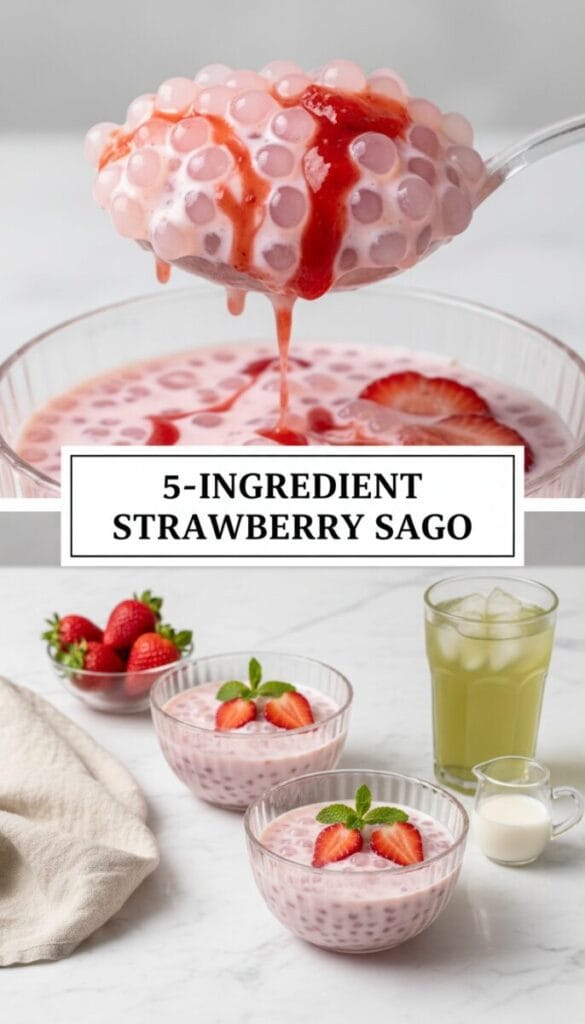
This 5-Ingredient Strawberry Sago is the chilled Asian dessert drink that looks far more involved than it actually is — plump, chewy sago pearls swimming in a lightly sweetened strawberry coconut milk base, served cold and beautiful in a glass with fresh berries on top.
Sago is a popular dessert across Southeast Asia, Hong Kong, and many parts of East Asia, served at dim sum restaurants, dessert cafes, and hawker stalls year-round. The classic version uses mango, but the strawberry variation has become equally beloved for its bright color and the way fresh berry sweetness plays against the richness of coconut milk. It’s the kind of dessert that surprises people who haven’t had it before — refreshing, creamy, and satisfying all at once without being heavy.
Five ingredients, one pot, served cold from the fridge — it’s exactly what summer dessert should be.
Jump to RecipeWhy This Deserves a Permanent Spot in Your Summer Dessert Lineup
It’s genuinely make-ahead friendly — the whole thing needs at least an hour in the fridge to chill properly, which means you can make it the morning of a party and it’s better for having had the time to sit.
It also scales effortlessly, double or triple the recipe with zero extra effort, which makes it one of the easiest high-impact desserts you can bring to a crowd.
- Prep Time: 10 minutes
- Cook Time: 15 minutes
- Chill Time: 1 hour minimum
- Total Time: 25 minutes active, 1 hour 25 minutes total
- Yield: 4 servings
The Full Five Ingredients
- Small white sago pearls (not tapioca): 1/2 cup (80g), dry
- Fresh strawberries, hulled: 2 cups (300g), divided
- Full-fat coconut milk: 1 can (13.5 oz / 400ml)
- Granulated sugar: 3 to 4 tablespoons, to taste
- Cold water or coconut water: 1/2 cup (120ml), to adjust consistency
Optional but worth it: a small pinch of fine sea salt to balance the sweetness, and a few extra whole strawberries for garnish.
How to Make It Step by Step
- Bring a medium pot of water to a rolling boil — use at least 4 cups of water so the sago pearls have room to move freely and cook evenly.
- Add the dry sago pearls and cook over medium heat, stirring frequently to prevent them from sticking together or to the bottom, for 12 to 15 minutes until the pearls are almost completely translucent with just a tiny white dot remaining in the center of each one.
- Drain the sago immediately through a fine mesh sieve and rinse under cold running water for 30 to 60 seconds to stop the cooking and remove excess starch — this is what keeps the pearls separate and bouncy rather than clumped into a solid mass.
- Blend 1 cup of the strawberries with the sugar in a blender until completely smooth to make the strawberry base — taste and add more sugar if the berries are less sweet than expected.
- Dice or slice the remaining 1 cup of strawberries into bite-sized pieces and set aside.
- Combine the blended strawberry mixture, coconut milk, and cold water or coconut water in a large bowl and whisk together until smooth and evenly combined.
- Stir the cooled sago pearls and diced strawberries into the coconut strawberry base.
- Taste the mixture now before chilling — adjust the sweetness, add a pinch of salt if it tastes flat, and thin with a little more water if it’s thicker than you’d like.
- Cover and refrigerate for at least 1 hour, or up to overnight, until thoroughly chilled.
- Stir well before serving since the coconut milk and fruit will settle slightly, then ladle into glasses or bowls and garnish with a few whole or halved strawberries on top.
If you love fresh strawberry desserts that come together easily, our Strawberry Spinach Salad with Feta is worth having in the same week — it uses the same peak-season berries in a completely savory direction that balances a dessert-heavy spread beautifully.
The Sago Details That Make or Break the Texture
Sago and tapioca pearls are different things and behave differently — sago is made from the starch of the sago palm while tapioca is made from cassava root. Small white tapioca pearls are a reasonable substitute and are much easier to find at most grocery stores, but they take slightly longer to cook and produce a marginally chewier texture. If you’re in an area with an Asian grocery store, small white sago pearls are usually stocked alongside other dessert ingredients and are worth using for the more delicate, softer chew they produce.
The cold water rinse immediately after draining is not optional — without it, the residual heat continues cooking the pearls and the surface starch causes them to clump together into a gel mass within minutes of being drained. Rinse thoroughly until the water running off them is clear, then transfer to the coconut mixture or a bowl of cold water to hold them until you’re ready to assemble.
According to The Kitchn, the tiny remaining white dot at the center of each pearl when you pull them from the boiling water is the signal to drain — they will finish cooking from residual heat and be perfectly soft by the time they’ve chilled. Cooking until the center dot is completely gone results in pearls that are mushy and overcooked.
What to Serve Alongside It
Strawberry sago is light enough to follow almost any meal without feeling like too much, which makes it a natural end to a heavier dinner or a refreshing addition to a summer dessert table.
It works especially well alongside other chilled, fruit-forward desserts. Our Red White and Blue Cheesecake Salad shares the same summer-berry freshness and cold-from-the-fridge convenience, making the two an easy pair for a warm-weather gathering where guests can try both.
Variations That Are Worth Making
Swap the strawberries for ripe mango — either fresh or thawed frozen — for the original and arguably still the most classic version of this dessert. Two ripe mangoes blended smooth with the same quantity of coconut milk is the starting point for every variation that followed.
Mix strawberry and lychee for a floral, tropical version — use half a can of lychees in syrup (drained), blend them with the strawberries, and reduce the added sugar since the lychee syrup brings plenty of its own sweetness.
For a richer, more indulgent bowl, add a spoonful of condensed milk in place of some of the sugar — it adds a caramel-like sweetness and extra creaminess that takes the dessert solidly into the treats-not-snacks category.
Nutritional Information
| Nutrient | Amount Per Serving |
|---|---|
| Calories | 265 kcal |
| Protein | 2 g |
| Carbohydrates | 38 g |
| Fats | 13 g |
These values are estimates based on full-fat coconut milk and 3 tablespoons of added sugar, divided by 4 servings. Using light coconut milk reduces the fat to about 6 grams per serving with minimal impact on flavor.

Storing and Keeping It Fresh
Store covered in the fridge for up to 2 days. The sago pearls will continue absorbing liquid as they sit and the dessert will thicken overnight — this is completely normal. Stir in a splash of coconut milk or cold water before serving to bring it back to the right consistency.
Do not freeze this dessert — freezing causes the sago pearls to become hard, grainy, and unpleasant in texture when thawed, and the coconut milk can separate. Make it fresh within 2 days of when you plan to serve it.
If you’re meal prepping for the week, keep the cooked sago pearls stored separately in a bowl of cold water in the fridge for up to 2 days, and the coconut strawberry base in a separate container, then combine them an hour before serving. This method prevents the pearls from soaking up all the liquid and gives you a better texture than mixing everything at once.
Things That Go Wrong and How to Avoid Them
Undercooked sago pearls are the most common issue — they look translucent on the outside before the center is cooked, so the visual check alone is unreliable. The better test is pressing one between your fingers: a properly cooked pearl will feel uniformly soft all the way through with no hard or gritty center. If in doubt, give them another two minutes.
Skipping the cold water rinse leads to gluey, clumped pearls that have stuck together into a mass — once that happens it cannot be fully fixed. The rinse is a 30-second step that determines whether the texture of the whole dessert works or doesn’t.
Using light coconut milk makes the base noticeably thinner and less creamy, which throws off the balance between the rich dairy component and the fresh fruit. Full-fat coconut milk is the right choice here for a dessert that feels indulgent even though it’s light enough to eat after a big meal.
5-Ingredient Strawberry Sago
Course: DessertCuisine: Southeast AsianDifficulty: Easy4
servings10
minutes59
minutes265
kcalIngredients
½ cup small white sago pearls
2 cups fresh strawberries, hulled, divided
1 (13.5-ounce) can full-fat coconut milk
3–4 tablespoons granulated sugar, or to taste
½ cup cold water or coconut water
Pinch of fine sea salt (optional)
Extra strawberries, for garnish
Directions
- Bring a medium saucepan of water to a rolling boil.
- Add the sago pearls and cook for 12 to 15 minutes, stirring frequently, until the pearls are mostly translucent with only a tiny white center remaining.
- Drain the cooked sago in a fine-mesh sieve and rinse under cold running water for 30 to 60 seconds. Set aside to cool completely.
- Blend 1 cup of the strawberries with the sugar until completely smooth.
- Slice or dice the remaining strawberries into bite-sized pieces.
- In a large bowl, whisk together the strawberry puree, coconut milk, and cold water (or coconut water) until smooth.
- Stir in the cooled sago pearls and diced strawberries.
- Taste and adjust the sweetness if needed. Add a pinch of salt for extra flavor or a little more water if you prefer a thinner consistency.
- Cover and refrigerate for at least 1 hour until thoroughly chilled.
- Stir well before serving and garnish with fresh strawberries.
Notes
- Rinse the cooked sago well to prevent the pearls from sticking together.
Full-fat coconut milk creates the richest, creamiest texture.
Taste the strawberry puree before chilling and adjust the sugar depending on how sweet your berries are.
Coconut water adds a light tropical flavor, while plain water keeps the dessert richer.
This dessert tastes even better after a few hours in the refrigerator.